Last updated: May 2026 — prices and logistics verified May 2026.
Nha Trang is a seafood city. Not in the “the brochure says so” sense — in the fishing boats come in every morning and the market price moves accordingly sense.
This is also a city with a specific scam you should know about before you sit down anywhere near the beach: some restaurants quote one price for seafood “by weight,” bring you a beautifully arranged plate, then add phantom line items — “preparation fee,” “sauce fee,” “service charge” — that push the bill 40–60% above what you thought you agreed to. The fix is simple: agree on the total price before it goes to the kitchen, or better, eat two streets inland where this dynamic doesn’t exist.
This guide covers the actual dishes — including two you can only really get here — and where to find them without navigating a six-language laminated menu.
The Nha Trang Dishes You Have to Try
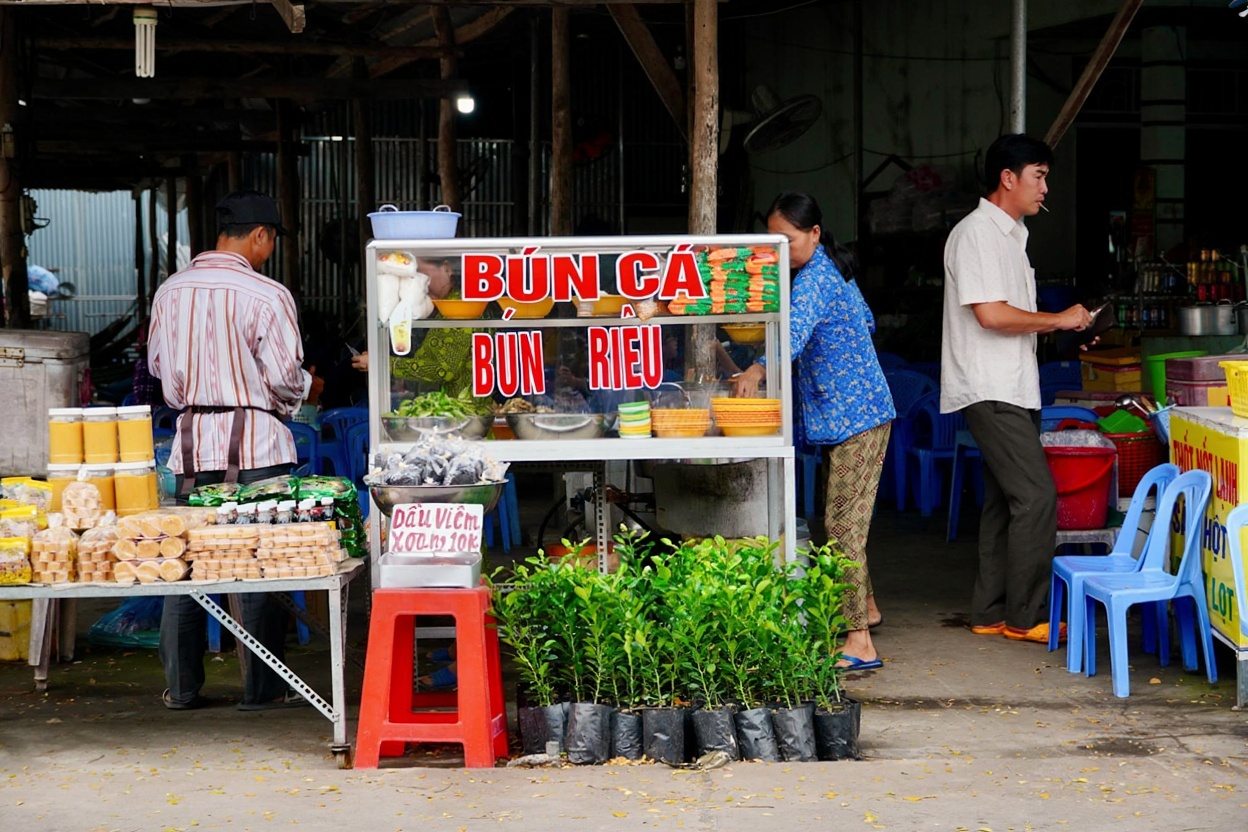
Bún Cá — Fish Noodle Soup
This is the one. Bún cá (say: boon ca) is a fish noodle soup specific to the south-central coast — lighter broth than phở, built around fresh white fish rather than beef or pork, usually topped with fish cake slices and fresh herbs. It’s eaten for breakfast, and the best versions are gone by 9am.
The broth is the thing that separates a good bowl from a forgettable one. The proper version is built from fish bones and heads, simmered until sweet and clear — nothing murky about it, nothing heavy. A subtle sourness from tomato, offset by the clean marine sweetness of the fish. You get thick round rice noodles (bún), two or three slices of poached white fish, a chunk of chả cá (fish cake), and a small pile of fresh herbs. Bean sprouts and lime on the side. A thin slice of fresh chilli if you want it.
A bowl runs 40,000–60,000 VND (~$1.50–$2.50) at a proper stall. You’ll know you’re at the right place when there’s no English menu and a crowd of locals leaning over bowls before 8am. The broth has a subtle sweetness from the fish bones — nothing like the heavy pork stock of bún bò Huế, nothing as rich as the marrow-dense phở of Hanoi. It’s a coastal city’s breakfast food. Light, clean, built for the heat.
If you eat one meal that defines this city, make it bún cá before 8am at a market stall.
Bánh Căn — Clay-Pot Rice Pancakes
Small rice flour pancakes, each cooked individually in clay moulds over charcoal, usually topped with a quail egg or small shrimp and served with a fish sauce dipping broth. Bánh căn (say: ban can) is a snack, not a meal — you order 8–12 pieces and eat them hot off the griddle.
The clay pot technique is specific to this region — the pots hold heat differently than a regular pan and give the bottom of each pancake a slightly crispy crust while the inside stays soft. You can’t really replicate it elsewhere. The charcoal smoke that hangs around the stall is part of the experience.
Price: 5,000–8,000 VND per piece (~$0.20–$0.30). You’ll find stalls all around Chợ Đầm (Đầm Market, 12.2441° N, 109.1919° E) and on side streets near the train station. Look for women crouching over a griddle of 20 small clay pots — the smoke and the sound of cracking quail eggs give them away before you see them.
Order extra dipping sauce. The broth — a thin fish sauce with a bit of shrimp paste and fresh chilli — is what ties it all together.
Nem Nướng Ninh Hòa — Grilled Pork Rolls
Technically from Ninh Hòa, a town 30km north of Nha Trang — but sold throughout the city and freshest here. Nem nướng (say: nem nuong) are charcoal-grilled pork sausages, served with rice paper, fresh herbs, cucumber, star fruit slices, and a thick peanut-and-liver dipping sauce. You wrap everything yourself at the table.
The sausage itself has a slightly bouncy texture from the pork being pounded rather than minced, and a faint sweetness that contrasts with the rich, heavy dipping sauce. The wrapping ritual is half the point — you make each roll yourself, stuff it as full as possible, then inevitably fail to get it into your mouth without losing some of it. Everyone at the table does this. It’s part of the format.
A plate of 5–6 pieces with the full wrapping kit runs 60,000–90,000 VND (~$2.50–$3.50). Restaurants around Nguyễn Thiện Thuật street do good versions. Ask for nem nướng cuốn (the wrap version) versus nem nướng đĩa (just the grilled sausages on a plate).
Chả Cá — Nha Trang Fish Cake
Not to be confused with Hanoi’s chả cá (the turmeric-fried fish dish). Nha Trang chả cá is a firm, slightly springy fish cake made from fresh white fish — often mackerel or threadfin — pounded smooth, mixed with small amounts of shrimp paste and fish sauce, then steamed or fried. You’ll find it in your bún cá, fried as a street snack (10,000–15,000 VND each), or served cold as a side dish at seafood restaurants.
The texture is bouncy in a way that fresh fish cake never is outside Southeast Asia — nothing like the processed fish cake you get in supermarkets. The flavour is clean and faintly sweet. It’s good on its own with a dab of chilli sauce, and it’s what makes a proper bún cá bowl feel complete.
Look for stalls selling fried chả cá as street snacks near the market area — the sign usually says just “chả cá chiên” (fried fish cake). A couple of pieces make a good addition to a bánh căn session.
Bánh Mì Nha Trang
Nha Trang’s take on the Vietnamese sandwich leans heavy on the chả cá filling — a local variation you don’t see in Hanoi or Ho Chi Minh City. The bánh mì here often includes a spread of the local fish cake paste instead of or alongside the standard pâté, with the usual pickled vegetables, spring onion, and fresh chilli.
Price: 15,000–30,000 VND (~$0.60–$1.20) from street carts. Better ones have a small queue by 7am and are sold out by 9. The bread is thinner-crust here than the northern style — crispier, lighter, goes stale faster but eats better fresh.
Where to Eat Seafood in Nha Trang
The formula is simple: avoid any restaurant with its own English menu board and a photo of every dish laminated on the wall outside.
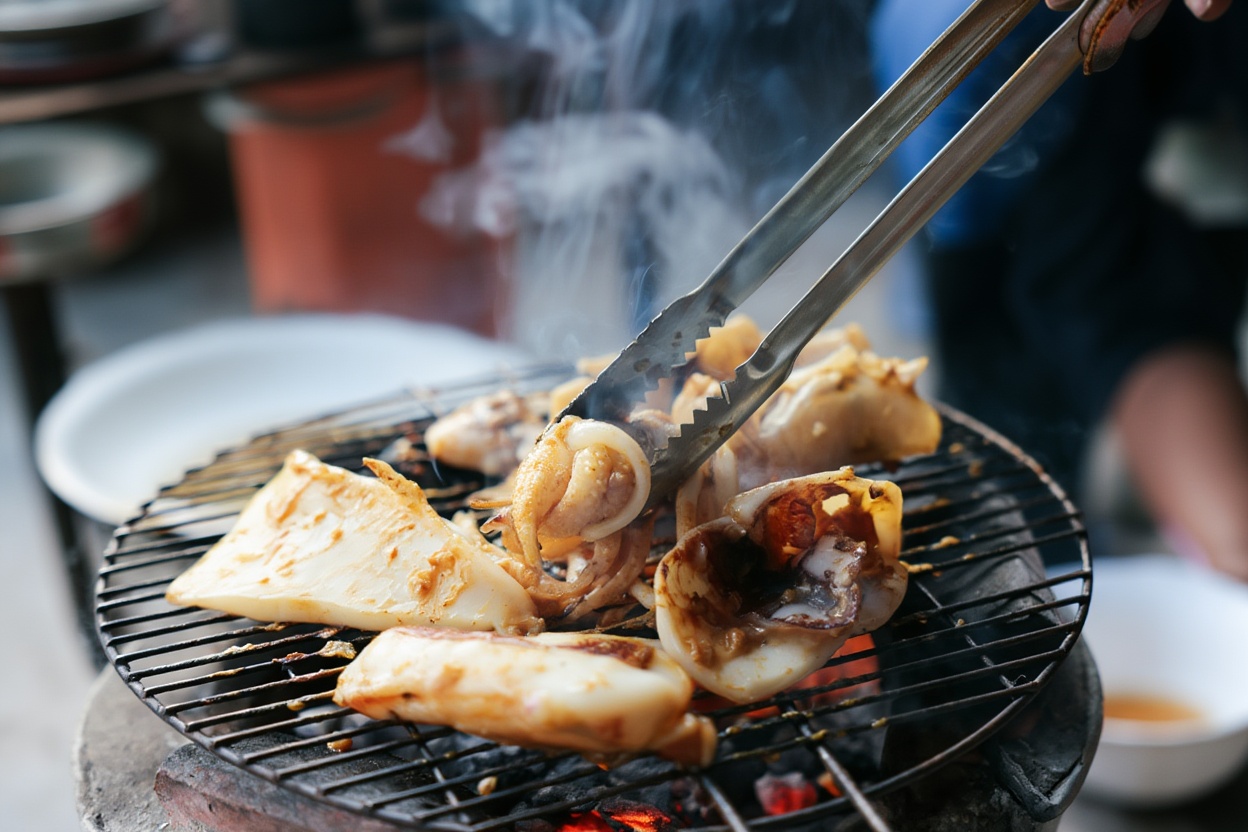
The streets one and two blocks back from Trần Phú — particularly Nguyễn Thiện Thuật and Bùi Thị Xuân — have local seafood restaurants where you choose your fish from a display at the front door and pay by weight. These places have no tablecloths, plastic chairs, and better squid than anything on the beachfront strip.
How to order by weight: look at the display, point at what you want, ask “bao nhiêu một ký?” (how much per kilo?). They’ll tell you a number. Nod, watch them weigh it, note the weight. When the bill comes, check: weight × price per kilo + any drinks = the number on the paper. If it doesn’t, ask them to break it down. Most places are honest. A few aren’t. You’ll know which by whether the explanation makes sense.
Budget: 150,000–300,000 VND (~$6–$12) per person for a full seafood meal with rice, morning glory (rau muống xào tỏi — stir-fried with garlic, essential), and a cold Bia Saigon.
What to order:
- Mực nướng (grilled squid) — 120,000–180,000 VND/kg (~$5–$7) — charcoal-grilled with salt and lemongrass. The squid here is notably fresh.
- Tôm hấp (steamed prawns) — 200,000–350,000 VND/kg (~$8–$14) — steamed with ginger and lemongrass, dipped in salt-lime-chilli.
- Cá hồng nướng (grilled red snapper) — 150,000–250,000 VND/kg (~$6–$10) — whole grilled fish, usually with lemongrass and chilli in the cavity.
- Ốc (various shellfish and snails) — ordered by plate rather than weight, 60,000–120,000 VND per plate — the coconut snails in particular are worth asking for if you see them.
- Cua rang muối (salt-and-pepper fried crab) — 250,000–400,000 VND/kg (~$10–$16) — messy, worth it, bring napkins.
⚠Real Talk
The seafood restaurants near Phố Tây (the backpacker street) still cater to tourists even when they look local. Walk an extra block east, away from the cluster of motorbike rental shops and Western-style breakfast cafes. The restaurants that don’t have any menu in the window — where someone comes out and gestures at the ice display — those are the ones.
Chợ Đầm Market — The Best Morning in Nha Trang
Chợ Đầm (12.2441° N, 109.1919° E) is Nha Trang’s main covered market, a ten-minute walk from the beach. It opens at 5am and the food section is at its best between 6am and 8:30am — after that, the breakfast stalls wind down and the produce vendors take over the morning shift.
The ground floor has women selling bánh căn, bún cá, and bánh mì stuffed with chả cá and eggs. The smell downstairs in the morning is layered — charcoal smoke from the bánh căn griddles, fish stock bubbling from the bún cá pots, the sharp sweetness of pineapple being cut for a fruit stall nearby. It is distinctly Vietnamese in a way that Trần Phú boulevard isn’t.
Upstairs is dry goods, fabric, and the seafood wholesale section where you can see the morning catch before it disperses to restaurants. The dried seafood section sells bags of dried shrimp (tôm khô), dried squid (mực khô), and various fish products — good items to bring home if your luggage allows.
Go hungry. Eat at whatever stall has the most locals at it. Point at what the person next to you ordered. This works every time and has never produced a bad meal.
★Jake’s Pick
The bún cá stall on the ground floor of Chợ Đầm, run by a woman who sets up around 5:30am and is usually sold out by 8:30. No sign, no English, no menu — just a pot of fish broth and a stack of bowls. 45,000 VND. The broth is sweet and clean and tastes like the South China Sea smells on a good morning. I’ve been to Nha Trang four times and eaten at this stall every time I’ve been.
Nha Trang Food by Budget
Eating by Neighbourhood
The Backpacker Zone: Bùi Thị Xuân and Nguyễn Thiện Thuật
This is where independent travelers eat and where the price-to-quality ratio is best. Local seafood restaurants sit alongside bánh mì carts, bún shops, and the occasional vegetarian rice place (cơm chay, say: kum chai). You don’t need to walk more than five minutes to eat very well here.
The key rule: the restaurants with plastic stools and hand-written specials on a whiteboard tend to be better than the ones with printed menus and photos. This is true everywhere in Vietnam but especially in Nha Trang where the tourist layer adds an extra markup at any place with an English sign.
Around Chợ Đầm Market: Best for Breakfast
The market and the streets immediately surrounding it are the breakfast epicentre. Bún cá from 5:30am, bánh căn from 6am, bánh mì carts from 6:30am. By 9am the breakfast scene winds down and the area becomes a lunch destination for market workers — com bình dân (say: kum bing zan, rice plates with various cooked toppings) for 40,000–60,000 VND.
The Northern Beach Area: Towards Hon Chong
Walking north from the main tourist strip towards the Hon Chong promontory, the restaurants get progressively less touristy. Small local seafood places, a few hải sản (seafood) restaurants popular with Vietnamese families on weekends, and some of the better bún cá spots outside the market. If you’re staying in a hotel in the northern beach area, you’re actually in a better food zone than the resort strip.
Trần Phú Boulevard: Eat Breakfast Here, Nothing Else
The beachfront road has a few Vietnamese breakfast spots that open early for hotel workers and beach-walkers — these are fine. For anything else — lunch, dinner, seafood — you’re paying a significant location premium for the same quality (or worse) than you’d get two streets back. The exception is if you want an air-conditioned restaurant with English-speaking staff and a predictable menu at predictable prices — a few of the mid-range restaurants on Trần Phú are legitimately good, they’re just not where the value is.
Coffee and Drinks in Nha Trang
Coffee culture here leans southern — strong, sweet, and usually served over ice (cà phê đá, say: ca feh da). The standard order is cà phê sữa đá (iced milk coffee) — dark Vietnamese drip coffee over a thick layer of condensed milk and ice. It costs 25,000–40,000 VND at a local cafe. Don’t pay 70,000+ VND for it at a place with a chalkboard menu near the beach.
The Vietnamese drip (phin) method produces a concentrated cup — sweeter and more syrupy than espresso, with a slightly earthier flavour from the Robusta-heavy blend. If you want something closer to a Western black coffee, ask for cà phê đen đá (black iced coffee), which is the same drip without the condensed milk. If you want the broader picture on eating well across the country, our Vietnam food guide covers the same rules applied nationwide.
Fresh coconut water (nước dừa, say: nook-dew-ah) from a street cart: 15,000–20,000 VND. The vendor hacks the top off a green coconut in front of you and hands it over with a straw. In 35-degree heat, this is the smartest drink decision you can make. The ones sold in the beach area charge 30,000–40,000 VND for the same coconut — the markup is pure location.
Sinh tố (say: sin-toh, fresh fruit smoothies) are everywhere — 30,000–50,000 VND for a full glass of whatever’s in season. Mãng cầu (say: mang cow, custard apple) and thanh long (say: tan long, dragon fruit) smoothies are particularly good in this region and available October–March when other fruits are thin.
Fresh sugarcane juice (nước mía, say: nook me-ah) — 10,000–15,000 VND from street carts where a machine presses the cane in front of you, usually with a squeeze of kumquat (tắc). Tastes like concentrated green grass sweetness. Good.
Desserts and Sweet Things
Nha Trang has a solid chè (say: cheh) culture — the catch-all Vietnamese word for sweet dessert drinks and puddings. A bowl of chè from a street vendor runs 20,000–35,000 VND and comes in dozens of variations: chè đậu xanh (mung bean with coconut milk), chè trôi nước (glutinous rice balls in ginger syrup), chè bắp (sweet corn with coconut milk).
Look for small chè stalls around the market area in the afternoon, usually operated by older women with a row of glass containers showing the day’s options. Point at two or three different varieties, get a combination bowl, pay 25,000 VND. This is good.
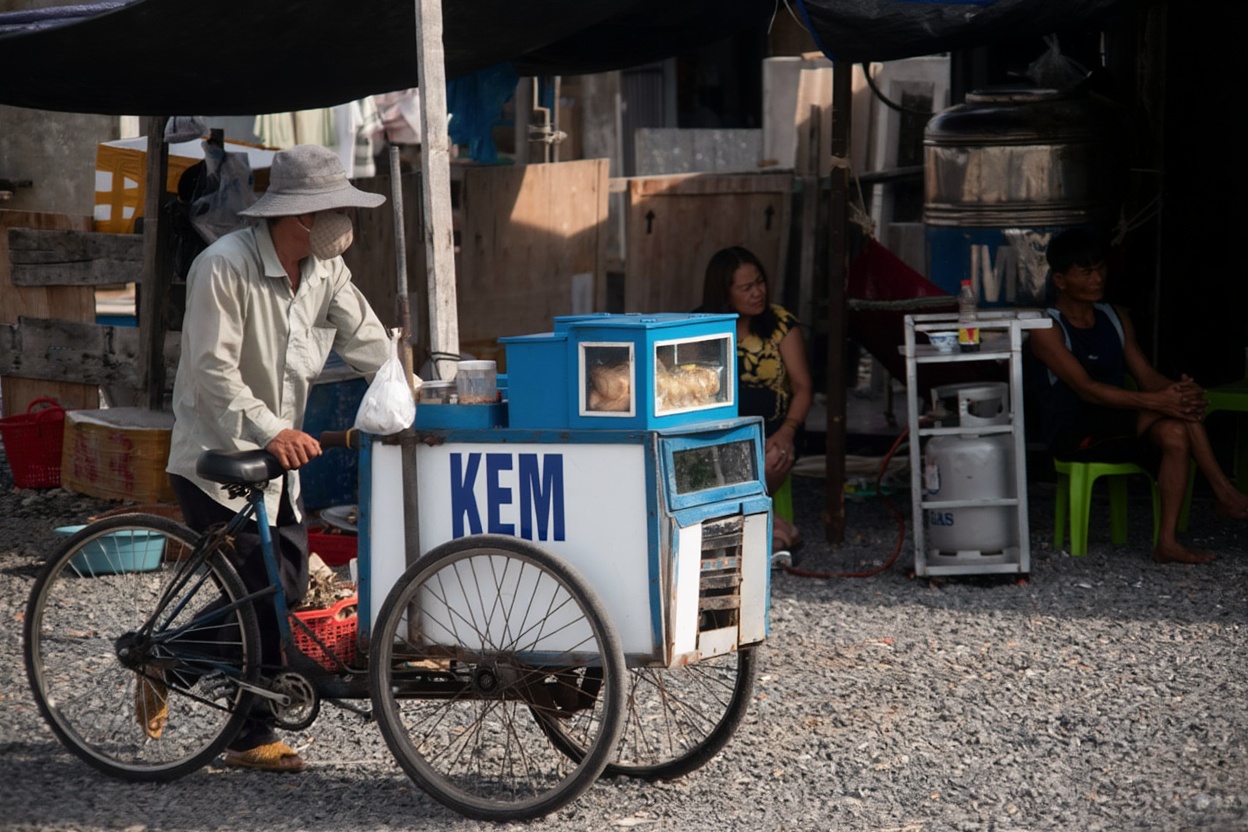
Kem dừa (coconut ice cream) is the beach dessert — scooped into a half-coconut shell, 30,000–50,000 VND from carts along the promenade. Quality varies. The best ones have fresh coconut flesh mixed through the ice cream itself rather than just coconut flavouring.
The Food Scam You Need to Know
This is specific to Nha Trang and worth a dedicated section.
Some seafood restaurants near the beach operate a bait-and-switch on the “by-weight” pricing. Here’s how it works: the staff shows you beautifully displayed fresh seafood, quotes you a reasonable price per kilogram, and you agree. The seafood comes back looking great. Then the bill arrives and it includes line items you never agreed to: “preparation fee” (100,000–200,000 VND), “sauce fee” (50,000 VND), “service charge” (10–15%), sometimes even a “cold towel fee.” The total is 40–60% above what you mentally calculated.
The protection is simple:
- Before it goes to the kitchen, ask: “Tổng cộng bao nhiêu?” (total how much?). Get a number.
- Or avoid beachfront places entirely and eat at local restaurants where this dynamic doesn’t operate.
- Any restaurant where staff aggressively beckon you in from the street, showing off their seafood display — walk past.
This doesn’t mean all seafood restaurants on or near the beach are scams — it means the ones that rely on tourist walk-in traffic have incentives to inflate bills that local restaurants don’t. The fix is eating where locals eat.
A Day of Eating in Nha Trang
6:30am — Chợ Đầm: Bún cá or bánh căn. Sit with the market workers. 45,000–80,000 VND.
9am — Coffee: Backstreet cafe on Bùi Thị Xuân, cà phê sữa đá with condensed milk pooling at the bottom of the glass. 30,000 VND.
11am — Bánh mì snack: The cart near the train station area does a chả cá version. 20,000 VND. This is not a meal but it makes the gap between breakfast and lunch manageable in the heat.
1pm — Lunch, seafood: Nguyễn Thiện Thuật restaurant, point at the squid and the prawns, order morning glory on the side. Two people, 400,000–500,000 VND including cold beers.
4pm — Coconut water: From the cart on the promenade. 15,000 VND. Swim first, coconut after.
7pm — Nem nướng dinner: A nem nướng Ninh Hòa restaurant on the backstreets, full wrap kit, two plates between two people. 200,000 VND.
9pm — Chè: From a street vendor near the market, combination bowl. 25,000 VND. Walk home.
Total spend: around 400,000–500,000 VND (~$16–$20) for a full day of excellent eating. The equivalent meals on Trần Phú would cost three times that and be worse.
What to Skip
The Nha Trang Night Market near the beach exists primarily for tourists — overpriced, mediocre food, lots of neon and ambient music you didn’t ask for. Fine to walk through once to see it, not worth eating at.
Restaurant buffets on the beach strip — typically 300,000–500,000 VND per person, mediocre seafood quality, usually with a karaoke soundtrack. Unless you specifically enjoy that combination, skip it.
Any restaurant with seafood touts actively flagging you in from the street — see the scam section above. Walk past.
The food is genuinely excellent in Nha Trang. You just have to know where not to eat, and the answer is always the same: anything within 30 metres of the resort hotels on Trần Phú.
Nha Trang Food FAQ
Is Nha Trang good for vegetarians?
Workable, not great. The cuisine here is built around seafood and pork. Most Vietnamese restaurants will have vegetable dishes — rau muống xào tỏi (morning glory stir-fried with garlic) is universal, and tofu dishes appear on most menus. There are a handful of chay (vegetarian, sometimes Buddhist) restaurants near the backpacker area. But this isn’t Hoi An — your options narrow significantly if you don’t eat fish or seafood. A vegetarian can eat well here; they just won’t eat the dishes the city is actually known for.
Where is the best seafood in Nha Trang?
The best-value seafood is at the local pick-by-weight restaurants on Nguyễn Thiện Thuật and Bùi Thị Xuân streets, one to two blocks from the beach. Point at what you want from the ice display, agree on price before it goes to the kitchen, and check the weight ticket when it arrives. For the most specific Nha Trang seafood experience, look for places that have ốc (shellfish) on the menu — the variety of snail and shellfish dishes in Nha Trang is wider than almost anywhere else in Vietnam.
What are the best restaurants in Nha Trang?
The best eating experiences in Nha Trang aren’t at restaurants — they’re at market stalls and plastic-stool places that don’t have names. Chợ Đầm market for breakfast, local seafood places on the backstreets for dinner. For a mid-range sit-down meal with proper service, look for places popular with Vietnamese families on the streets parallel to the beach — these tend to be honestly priced and legitimately good.
How much does food cost in Nha Trang?
Breakfast from a market stall: 40,000–80,000 VND (~$1.50–$3). Street snacks: 10,000–50,000 VND. A full seafood dinner at a local restaurant: 150,000–300,000 VND per person (~$6–$12) including rice and drinks. The tourist strip costs 3–4x more for comparable or worse food. A full day of excellent eating — breakfast through dessert — should cost around 400,000–500,000 VND (~$16–$20) if you avoid Trần Phú entirely.
Two things worth sorting before you land: a Vietnam eSIM so you have data the moment you clear customs, and travel insurance — medical costs for uninsured foreigners in Vietnam are significant.
Airalo eSIMs activate instantly. Buy before departure — airport SIM queues in Vietnam can take 30+ minutes.
The Bottom Line on Nha Trang Food
Nha Trang is genuinely one of the best seafood cities in Vietnam. The fishing fleet, the fresh daily market, the regional dishes you can’t find anywhere else — bún cá, bánh căn, nem nướng Ninh Hòa — the food here earns serious attention.
The trick is walking two streets back from the beach. The gap between local prices and tourist prices in this city is wider than almost anywhere else in the country — same fish, same kitchen techniques, sometimes the same fishing boat, multiplied by three or four because the restaurant can see the ocean from its window. Close that gap and you’ll eat exceptionally well for almost nothing.
The scam is real and documented. The food is excellent. Both things are true simultaneously. Navigate correctly and Nha Trang becomes one of the best places to eat in all of Vietnam.
For what to do with the rest of your time in the city, the Nha Trang Travel Guide covers the full picture — islands, the Cham towers, timing, and exactly which version of Nha Trang you’re walking into.
If you’re still planning your time in the city, the Nha Trang things to do guide covers islands, Cham towers, and the beaches worth your time.