Updated: May 2026

The good news first. Vietnam’s scam density is lower than its reputation suggests. Solo female travelers walk Hanoi’s Old Quarter at midnight without incident. Motorbike trips through the mountains don’t end in robbery. The scam problem is real but narrow: a cluster of well-known schemes targeting travelers who haven’t done their research, mostly in the first 24 hours after arrival.
“Not having scam taxis as your ‘Welcome to Vietnam’ seems like a good starting place.” — ho_chi_mizz, r/VietNam
That’s accurate. Airport arrivals are where most first-contact scams happen. Know three things before you land and you’ve neutralized the majority of the risk.
The Airport Scam: Fake Grab Apps and Price-Switch Rides
You land at Noi Bai (Hanoi) or Tan Son Nhat (HCMC). You’re tired. Someone approaches you — sometimes in the taxi queue, sometimes near the exit. He offers a ride. You tell him your hotel. He pulls out a phone, opens what looks exactly like the Grab app, taps in your destination, turns the screen around to show you a price.
It’s not the Grab app. It’s a screenshot, or a copycat interface, or just a calculator set to a number. You get in the car.
The scam has two variants. In the gentler version, you arrive at the hotel and the price has quietly doubled since the screen-show. In the aggressive version, the driver stops somewhere in the middle of the city and refuses to go further unless you pay five times the original price.
“They drive you halfway, stop the car in a random spot and demand five times the price to finish the ride. You tell him your hotel. He quickly punches it into his phone, turns the screen around to show you. It looks exactly like the Grab app. It has your destination. It has a fixed price, but it is a fake app or just a screenshot.” — documented, Vietnam Scams 2026
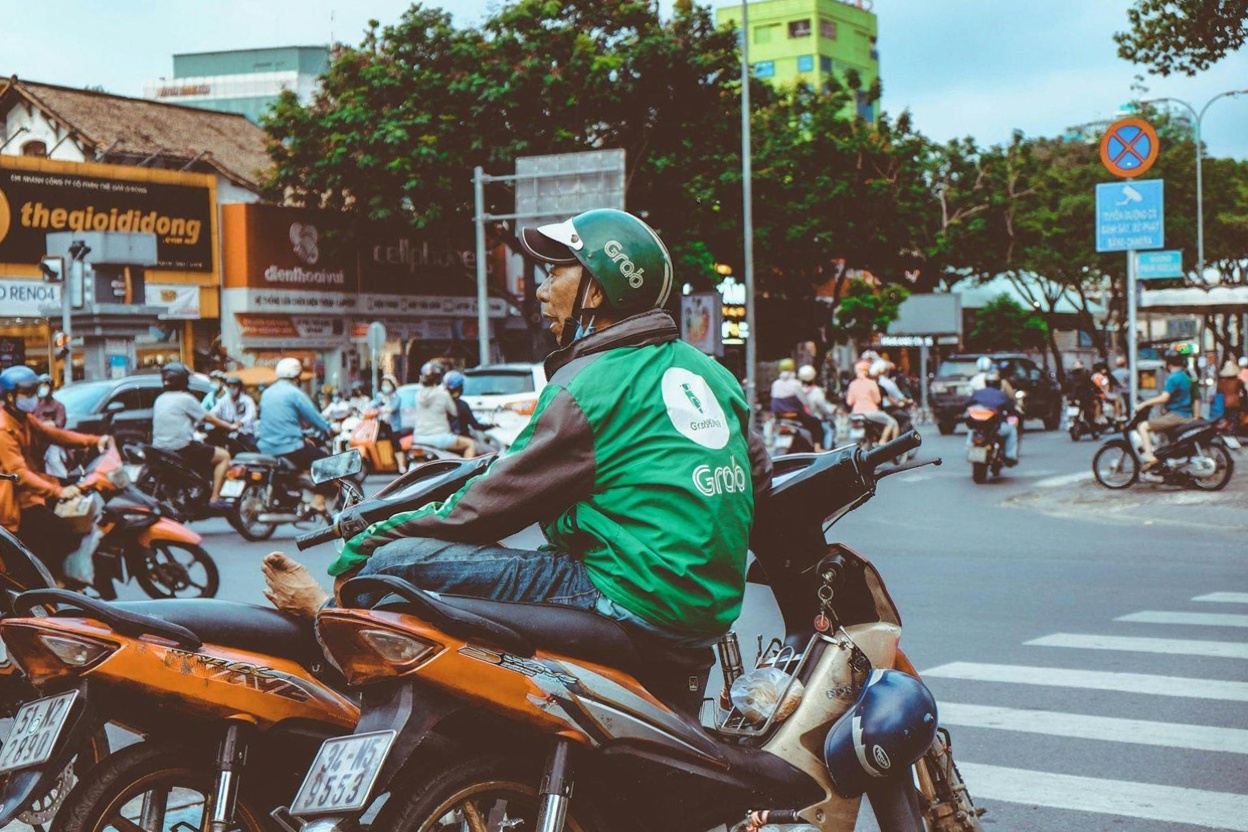
The defense is simple: Open the real Grab app on your own phone before you exit customs. Book a ride yourself. Watch the driver name and car plate appear in the app before you walk to the pickup zone. Never get into a car that approached you — only get into the car you called.
If you don’t have a SIM yet, airport Grab pickups usually have a counter inside the terminal where staff can book for you. Alternatively, Vietnam’s airports have official taxi stands with fixed-rate metered cabs. In HCMC, look for Vinasun (white) or Mai Linh (green) as the legitimate operators — other taxis copy these color schemes, so the company name on the side matters.
The Hue Friendly Local Scam
This one takes longer to unfold and hits harder emotionally than financially — because it requires you to believe someone is genuinely befriending you, which they are, sort of, right up until they aren’t.
The setup: You’re walking near your hostel in Hue. An older Vietnamese man — 60s to 70s, well-dressed, excellent English, often with a specific hook (a connection to your home country, a family member in your city, a Harley Davidson parked nearby) — strikes up a conversation. He’s curious, warm, knowledgeable about the area. He invites you to eat.
You go. The restaurant he chooses is nearby but not anywhere you’d have found yourself. The food is fine. When the bill arrives, it’s six times what it should be.
“Just got hit with a scam in Hue, Vietnam and want to warn other travelers. I was walking near my hostel looking for food when an elderly Vietnamese man (60s-70s, friendly, well-spoken) stopped me. We started chatting. He was curious about where I was from (USA), mentioned he had family in Denver and San Francisco… He invited me to eat with him.” — Suspicious_Salt_2864, r/backpacking (627 upvotes)
Multiple threads document this. The same scam runs in different cities under different covers — Hanoi, Da Nang, HCMC. The Hue version involving an elderly man on a Harley has appeared in at least five separate Reddit posts. It’s the Vietnamese variant of a scam pattern that runs across Southeast Asia (called the “tea house scam” in China, “art gallery scam” in other countries).
“It seems to me that man has adapted the ‘Tea House’ ‘Art Gallery’ scams you see in different Asian cities.” — PaleozoicQueen, r/backpacking
How to identify it: Unprompted approach + immediate invitation to go somewhere that isn’t where you were heading. The tell is that they suggest a location, not you. A genuine local offering a recommendation will point and describe. A scammer walks you there personally.
The practical defense: eat where you chose before leaving the hostel, not where someone walks you. If you do accept an invitation and the restaurant doesn’t have prices on the menu, ask before ordering or leave before sitting.
Motorbike Rental Damage Claims
The most consistent scam complaint across Vietnam. Every city has a version — Hanoi, HCMC, Hoi An, Da Lat all documented repeatedly. The mechanism: you rent a motorbike for a few days. When you return it, the shop claims you caused damage that was there before you picked it up. They’ve already priced the “repair” at a few hundred dollars. Your passport may be in their hands as collateral.
“Motorbike rental scams are one of the most consistent complaints from tourists across Vietnam, Hanoi, Ho Chi Min City, Hoyan, and Dalat in particular. No documentation means no defense. A 2-minute photo session at the start will protect your deposit every single time.” — Vietnam Travel Mistakes 2026
Book Tours & Activities — VietnamKlook has the widest selection for Vietnam and is usually the cheapest. KKday is strong on day trips and local experiences.
ote>
“You may find your passport being held hostage while the owners demand money for damages you didn’t even cause. The motorbike hire company staff will come and ‘steal’ their motorbike back from you.” — BackpackersBlog
The complete defense:
- Film a 60-second walkaround video before touching the bike — every side, every panel, close-ups of any existing scratches
- Never leave your passport as deposit. Offer a cash deposit instead (1–3 million VND is typical). Any shop that insists on passport collateral is either running this scam or setting up for it
- Book from shops with verified Google Maps reviews — not a shop that approaches you on the street
- Photograph the shop name, address, and the bike plate before you leave
The video timestamp proves the bike’s condition before you touched it. Every decent shop accepts this. Shops that refuse or get hostile about you documenting the condition at pickup are telling you something.
Taxi Scams and the Hotel Switch
Outside the Grab ecosystem, taxis are still the Wild West in Vietnam. Three scams run regularly:
The meter trick: The driver runs the meter but has tampered with it — it ticks faster than it should. You don’t notice until you’re in front of a 300,000 VND fare for a 5km trip. Defense: use Grab, or agree on a price before getting in any non-metered cab.
The hotel switch: A taxi driver picks you up from the airport and claims your booked accommodation is closed, flooded, under renovation, or “very bad.” He knows a better place. The better place pays him a commission — typically 200,000–500,000 VND per tourist delivered. Call your hotel directly from the car before agreeing to any redirect. Your hotel is not closed. This happens enough that most hotels specifically tell you to ignore taxi claims and call them directly.
E-Visa Mirror Sites
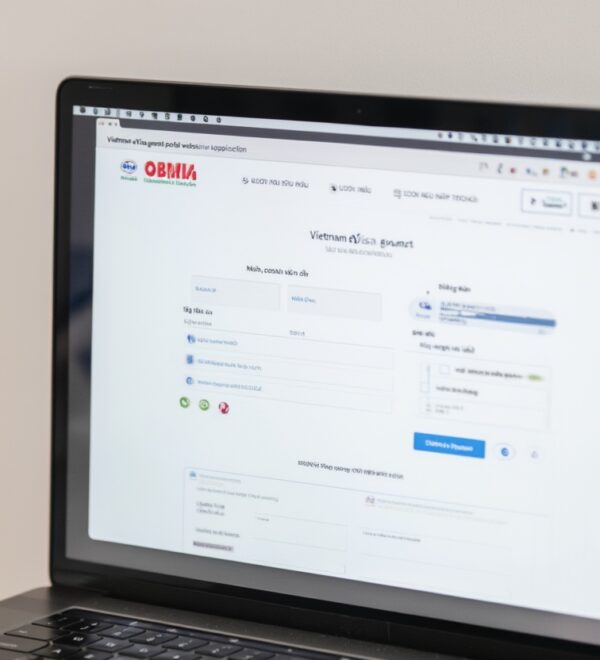
Vietnam’s official e-visa costs $25 USD for single entry and $50 USD for multiple entry. The application takes about 20 minutes at the official site: evisa.immigration.gov.vn. That’s it.
“Even though some third-party sites are legit, they overcharge you way too much for an application which you can do yourself in 20 minutes from the official site and it’s quite easy, trust me.” — Reddit, r/VietNam
The mirror sites charge $30–60 for the same application, then sometimes add “passport photo fees” or “processing fees” on top. Some add a second charge at the airport claiming you need additional documentation. The official site’s URL is evisa.immigration.gov.vn — any other URL processing a Vietnam visa application is a third-party middleman charging you extra for something you can do yourself for free in 20 minutes.

Money Switching at Markets and Exchanges
This one is pure sleight of hand. You hand over a 500,000 VND note (roughly $20). The vendor or exchange operator counts it back, flicks through the bills, and somewhere in the motion exchanges part of your money for smaller denominations — 5,000 notes instead of 50,000 notes — while the counting keeps your eyes busy.
“They use sleight of hand to switch whatever money you give them for smaller denominations. Then comes the real performance — they put on a dramatic show and make it appear that you’re trying to rip them off.” — BackpackersBlog
“Unfortunately, I saw many people fall for this scam, especially in Hanoi.” — BackpackersBlog
This scam runs at market stalls, small shops, and informal currency exchange spots. The loss is usually small — a few dollars — but the drama of being accused of cheating after it happens can be jarring enough that tourists just accept it and leave.
Defense: Pay with small bills or exact amounts where possible. When receiving change, count it slowly and deliberately before pocketing it. If you exchange currency, use a bank or ATM rather than street changers. Vietnamese dong comes in sizes that are easy to confuse — the red 500,000 note ($20) and the orange 50,000 note ($2) look different but the 200,000 ($8) and 20,000 ($0.80) can trip you up when you’re jet-lagged and new to the currency.
One underrated defense: before any transaction where large bills are involved, take 10 seconds to look at the denominations you’re handing over and say them out loud. “This is 500,000 VND.” It sounds obvious. It closes the gap that sleight-of-hand counting exploits, which depends on you not being certain of what you handed over in the first place.
Fake Business Names
Vietnam has no central registry that prevents a new business from naming itself almost identically to an established one. The scam is simple: a legitimate tour company called “Mekong Explorer Tours” gets good reviews. Scammers open “Mekong Explorer Tour” or “Mekong Explorers Tours” next door with a near-identical sign.
“A common scam in Vietnam is multiple, completely different businesses operating all under the same name… A reputable business called Mekong Tours might be copied by using names like Mekong Tour, Mekong Guest Tours, or Mekong Touring.” — BackpackersBlog
This runs across tour companies, guesthouses, and transport booking agencies. The copycat operates on the reputation of the legitimate business while delivering an inferior product or outright fraud.
Defense: Search the specific name on Google Maps and read the reviews. If the business has almost no reviews or the reviews started very recently, that’s a signal. Look at the oldest reviews — a legitimate operator usually has a review history going back years, not weeks. Book through official websites rather than walking into a storefront that approached you on the street. When in doubt, ask your hostel — they’ll know which operators are legitimate in the area and which are running a lookalike off the corner.
The “unofficial tour desk” at budget guesthouses is a related trap. The guesthouse earns commission from whatever tour operator they sell you — which is not always the most reputable one. For any tour of significant cost (Ha Long Bay overnight, Ha Giang loop, Phong Nha cave tours), do your own research on GetYourGuide, Klook, or directly through operators with strong TripAdvisor histories.
The Smaller Stuff Worth Knowing
The free sample bait: A vendor offers you a free taste of something — fried donuts, fruit, snacks. You accept. Tasting triggers a social obligation and the vendor smoothly talks you into buying. Not technically a scam — you’re not being charged more than the listed price — but the “free” framing is manipulative. Just say no if you don’t intend to buy.
Unofficial eSIM booths at airports: Legitimate SIM cards from Viettel, Vietnamobile, or Mobifone are sold at official carrier booths inside arrivals. Unofficial booths in the arrivals hall sell the same product at 2–3x the price with no service advantage. The carrier booths are clearly labeled with the network logo.
Fake Facebook hotel bookings: Travelers have lost 10 million VND ($400+) booking hotels through Facebook fan pages that don’t represent the actual hotel. Deposits are collected, rooms don’t exist. Book hotels through Booking.com, Agoda, or the hotel’s own official website. Never pay a deposit via Facebook Messenger to an unofficial page.
ATM “convenience fees”: Most Vietnamese ATMs add their own transaction fee on top of whatever your bank charges. The combined hit can be 3–5% of the withdrawal amount. Use Citibank or HSBC ATMs where possible (lower local fees) and withdraw larger amounts less frequently to minimize the fee-per-dollar ratio.
What Actually Matters: The Honest Summary
| Scam | Risk Level | Primary Defense |
|---|---|---|
| Fake Grab / airport transport | High (day 1) | Book Grab on your own phone before exiting customs |
| Hue/Hanoi “friendly local” restaurant | Medium | Don’t go to restaurants with people who approach you |
| Motorbike rental damage claims | High (renters) | Film walkaround video, never leave passport as deposit |
| Fake taxi / hotel switch | Medium | Use Grab; call hotel directly if driver claims it’s closed |
| E-visa mirror sites | High (pre-trip) | Use evisa.immigration.gov.vn only |
| Money switching | Low–Medium | Count change immediately; pay exact amounts |
| Fake business names | Medium (tours) | Search Google Maps + read reviews before booking |
| ATM fees | Low (passive) | Use bank ATMs; withdraw larger amounts less often |
What I Got Wrong
Year two in Vietnam. I’d been renting motorbikes without issue for twelve months across six cities. By then I’d stopped doing the walkthrough video because nothing had happened and the whole routine felt paranoid.
Rented a bike from a shop on a street in Da Nang I’d never used before. Three days in the hills near Bà Nà. When I returned it, the shop owner pointed at a scratch on the left panel near the footpeg. Deep gouge, fresh edges. I knew I hadn’t done it — the only place I’d parked was against walls, not kerbs or posts. But I had no video, no photos from pickup. I had nothing.
We went back and forth for twenty minutes. He wanted 800,000 VND (~$32). I paid 400,000 and left. I’d stopped doing the one thing that makes this unwinnable for the shop.
I’ve done the video every single time since. It takes ninety seconds. No shop has tried anything since — though I suspect that’s at least partly because the phone-out routine signals that you know the game.
Frequently Asked Questions
Is Vietnam safe for tourists?
Yes. Vietnam has very low rates of violent crime against tourists. The scam risk is real but specific — it targets arrivals who haven’t done their research on transport and tour bookings. Travelers who use Grab, book accommodation through established platforms, and document rental equipment have smooth trips overwhelmingly. The country is far safer than its scam reputation suggests.
What is the most common scam in Vietnam?
Motorbike rental damage claims are the most consistently reported scam across Vietnam, particularly in Hanoi, HCMC, Hoi An, and Da Lat. The fake transport scam (fake Grab app or unofficial taxis) is the most common on arrival days. Both are neutralized by the same approach: document everything, use official apps.
How do I avoid scams in Vietnam?
Three habits cover 90% of the risk: (1) Download Grab and book your own rides rather than accepting transport offers; (2) Film a video of any rented vehicle before you take it; (3) Only apply for your Vietnam e-visa at evisa.immigration.gov.vn. Everything else is standard travel awareness — count change, don’t follow strangers to restaurants, and book tours through verified operators with Google Maps reviews.
Are Vietnamese people scammers?
No. The scam problem is a small number of operators running well-documented schemes, mostly concentrated around airports, tourist transport, and motorbike rentals. The overwhelming majority of interactions Vietnamese people have with tourists are genuine and often remarkably generous. A bad experience with a taxi tout at the airport is not representative of Vietnamese hospitality.
What should I do if I get scammed in Vietnam?
For small amounts (under $50), the practical reality is that recovery is difficult. Report to tourist police if you have documentation. For larger losses — fake bookings, significant overcharges — Vietnam’s tourist police in major cities have an improving record of taking these complaints seriously, particularly since 2024. Document everything: screenshots, receipts, photos of the business. The tourist police helpline in many cities operates in English.
Vietnam’s scam problem is solvable. Every major scam here has a simple, 2-minute defense. The airport transport scam dies when you open Grab before you land. The motorbike damage scam dies when you film the bike at pickup. The e-visa scam dies when you use the official URL. Most of the risk is concentrated in the first 24 hours — once you’re settled, using Grab, and renting from reviewed operators, day-to-day life in Vietnam is remarkably hassle-free.
The country is worth the research. It rewards it more than most. Five years living here and the interactions I remember are overwhelmingly people being genuinely good — the neighbor who walked me to a hospital at midnight when my Vietnamese failed, the market vendor who chased me down to return a phone I’d set down. The scam operators are a small fraction of a fraction. Learn to recognize them and the rest of Vietnam is yours.
For more on navigating Vietnam as a solo traveler, the Vietnam solo travel guide covers safety, routes, and what’s actually worth being cautious about. If you’re arriving in Hanoi first, the Hanoi motorbike scam guide has more detail on the rental damage scheme specifically. For a broader overview of staying safe and prepared, the Vietnam travel tips guide covers everything from transport to money to cultural basics.
FAQ
What are the most common scams in Vietnam?
Taxi scams (rigged meters or fake apps — use Grab exclusively). Motorbike rental damage scams (photograph existing scratches before riding). Overcharged restaurant bills (check the menu price before ordering; bill should match). Shoe shine scams (shoeshiner starts work without asking, demands 200,000 VND). Cyclo tours with no agreed price. Fake tour operators selling Ha Long Bay cruises on non-existent boats.
How do you avoid taxi scams in Vietnam?
Use Grab (Vietnam’s Uber equivalent) for every ride in cities. The app shows the price upfront, the driver’s name and plate, and has GPS tracking. If you must take a street taxi, use official companies only: Mai Linh (green, nationwide) or Vinasun (white/green, mostly south). Refuse any taxi that approaches you — always hail or call.
Is Vietnam full of scams?
No — this is overstated. The vast majority of interactions in Vietnam are straightforward. Common scam targets are travelers in high-tourist areas who don’t ask prices before engaging services. The scams are almost entirely economic (you pay too much) rather than physical. Being a moderately cautious traveler eliminates most risk.
What should I do if I’m overcharged at a Vietnamese restaurant?
Check the bill against the menu before paying. If it doesn’t match, point out the discrepancy — mistakes are common, deliberate overcharging is less so. If it persists, pay what the menu says and leave. Rarely escalates. Most overcharging comes from ‘tourist menus’ that don’t show prices — always ask for the menu price before ordering drinks especially.
Are there scams on Vietnamese trains or buses?
Less common than city scams. On overnight buses: watch your bag in the luggage compartment (not a frequent issue but reported). On trains: vendors sometimes quote inflated prices to foreigners — buy food from the main canteen rather than individual vendors. Bus station touts will try to redirect you to unofficial transport — go directly to the official ticket window.