
Last updated: May 2026 — prices and logistics verified May 2026.
Bac Ha Sunday market is one of the last genuinely local hill-tribe markets in northern Vietnam — our Bac Ha market guide covers what to actually expect and how to get there without a group tour.
Mu Cang Chai is one of the few places left in northern Vietnam that still rewards the effort of getting there — our Mu Cang Chai guide has the logistics and the honest timing advice.
Five years ago, I flew into Hanoi on a one-way ticket with a rough plan to “see the north” in three weeks.
I did. Then I stayed for five years.
Northern Vietnam has a way of doing that. Not because it’s comfortable — it isn’t, always. The bus to Ha Giang takes five hours on roads that occasionally narrow to one lane. The overnight train to Sapa rattles like a machine that’s been held together by goodwill and WD-40. Hanoi in July is 35°C and humid enough to feel personal.
But the landscape here — the northern karst highlands, the rice terraces folding down into valleys, the Nho Que River sitting jade-green at the bottom of a gorge that drops 500 meters — this is the part of Vietnam that makes people change their itineraries and extend their visas.
This guide covers what each destination actually is, how much time you need, what it costs, and what I got spectacularly wrong on my first loop through the north.

What Northern Vietnam Actually Covers
The north is roughly everything above the 18th parallel — in practical terms, everything north of Ninh Binh, which sits at the edge of the Red River Delta before the central coast begins.
For planning purposes, you’re working with five anchor destinations. They are not compact.
Hanoi sits in the middle of the delta. Ha Giang is a five-hour drive northwest, hard against the Chinese border. Ha Long Bay is 3.5 hours east along the coast. Ninh Binh is 90 minutes south. Sapa is eight hours northwest via overnight train. You cannot efficiently hop between them without planning transport time as real travel time — not just a blip on an itinerary.
Travelers on r/solotravel consistently flag this: “12 days only — stick to the north. 12–14 days is about right to do north. Sapa, Ha Giang, Ninh Binh, and Ha Long/Lan Ha/Cat Ba.” That’s not a relaxed pace. That’s moving.
ℹKnow Before You Go
Northern Vietnam is not a compact region. Ha Giang to Ha Long Bay is a full day of transit. Budget two nights minimum per destination — three for Ha Giang and Sapa. The travelers I see most frustrated in the north planned it like they were going around Europe.
The Five Destinations — Honest Overview of Each
Hanoi — Your Base, Not Just a Gateway
Most people treat Hanoi like a stopover — two nights, Old Quarter walk, egg coffee, then a bus to somewhere more photogenic. Those people miss the best city in the country.

Hanoi is loud, chaotic, and not immediately legible. The traffic in the Old Quarter sounds like a disagreement between a thousand Honda engines. The pavements are mostly parked motorbikes. The coffee shops are half underground — best ones require ducking through a doorway that doesn’t look like it leads anywhere.
Give it three days minimum. Five if you want to actually feel it.
I’ve written a full Hanoi travel guide covering neighborhoods, where to stay, and what to eat. For practical first-time planning, start with things to do in Hanoi — it covers the attractions worth your time and the ones that have become performance pieces for tourists. And the Hanoi Old Quarter vs West Lake accommodation guide will save you half a day of confused booking. The Hanoi travel guide covers neighborhoods, coffee shops, and local spots that take three days minimum to feel properly.
⚠Real Talk
Hanoi Train Street is still worth a look if you’re already nearby, but it’s been fully commercialized — vendors charge 20,000–50,000 VND (~$0.80–$2) to stand in what used to be a free alley and watch a train pass. The trains still run. The atmosphere is more theater than experience. Worth 20 minutes, not a pilgrimage.
Ninh Binh — Better Than Ha Long Bay for Most Travelers
Ninh Binh is 90 minutes south of Hanoi and gets labeled “the inland Ha Long Bay,” which is both accurate and a disservice. The limestone karsts are similar, but here you move through them — by rowboat through cave systems, by bicycle along flooded rice paddies, on foot up 500 steps to Mua Cave’s summit for a view that stops mid-sentence.

The two main circuits are Trang An (UNESCO-listed, longer boat route, temple complex mid-route, serious cave systems) and Tam Coc (shorter, more crowded, vendors selling things from boats alongside you). Trang An beats Tam Coc on almost every measure — more caves, more temples, fewer people, and the boat tour costs roughly the same: 200,000–250,000 VND (~$8–10).
The full breakdown is in the Ninh Binh travel guide, and things to do in Ninh Binh covers the sites worth adding. Getting from Hanoi to Ninh Binh is easier than most people expect — direct buses from Giap Bat station, 80,000–120,000 VND (~$3–5), no advance booking required for the journey itself.
Time needed: one night minimum, two nights if you want to explore Hoa Lu and Mua Cave without rushing.
Ha Giang Loop — The Best Four Days in Northern Vietnam
If I had to pick one destination in all of northern Vietnam without any caveats, it’s this.
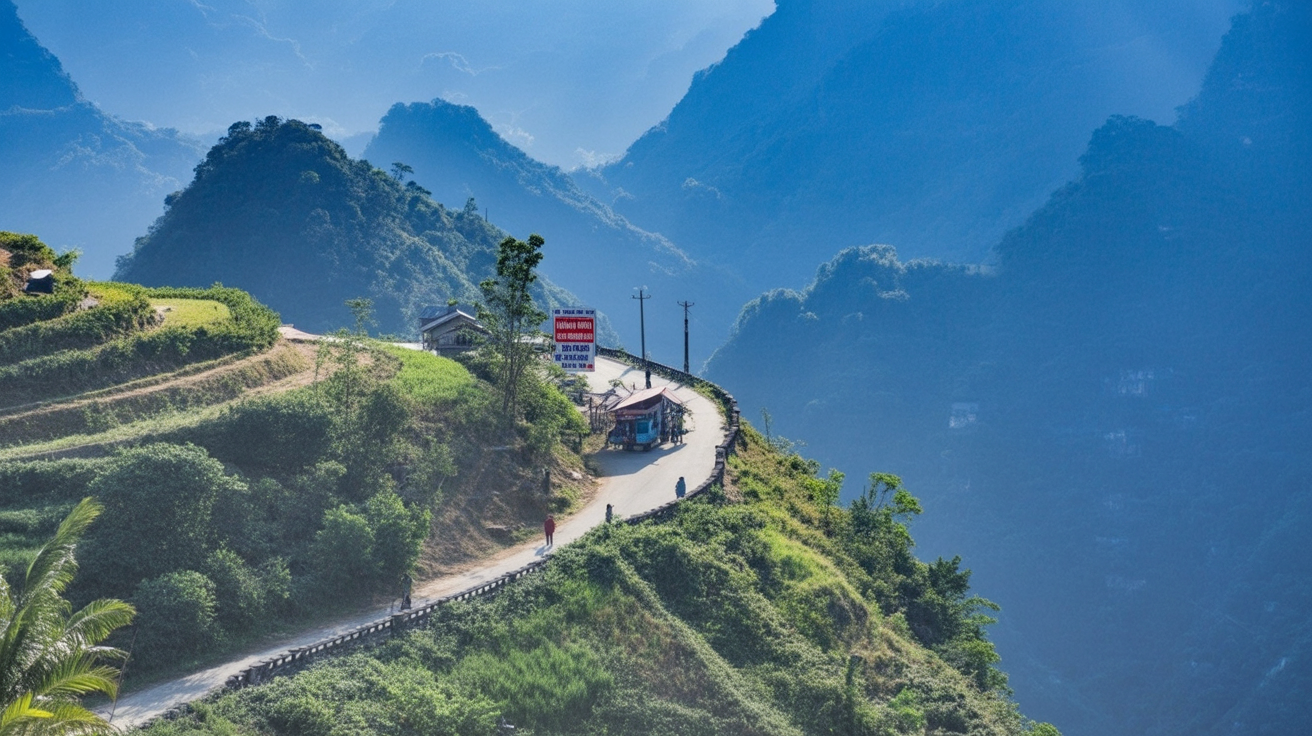
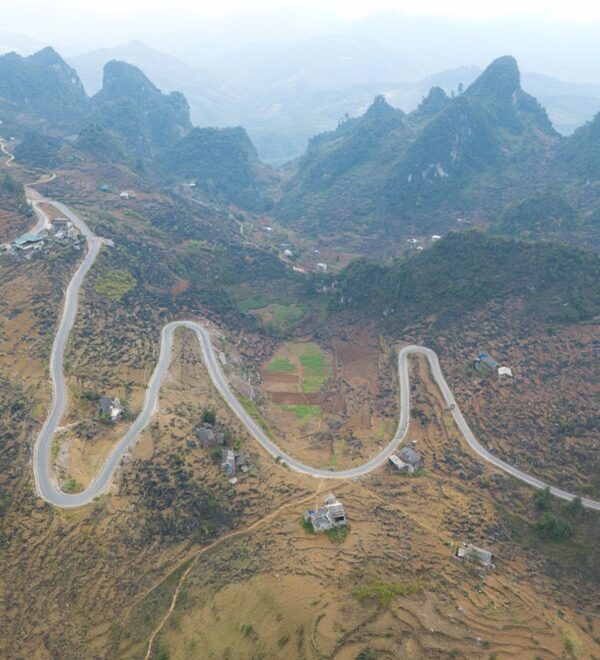
The loop is a 350km motorbike circuit through the highest terrain in Vietnam. Limestone peaks nothing like Ha Long Bay’s — these are jagged, vertical, covered in cloud most mornings. The Nho Que River below Ma Pi Leng Pass (say: mah pee leng) is jade-green and sits so far down the gorge you feel slightly dizzy looking at it. The Sunday market in Meo Vac smells like wood smoke and corn wine and sounds like a village — not a tourist attraction, because it mostly isn’t one yet. The Ninh Binh travel guide covers everything from boat routes to accommodation and the best way to structure your time there.
You need four days minimum. Most people do three and spend the last day wishing they’d had one more.
The loop requires a restricted area permit — 230,000 VND (~$9), bought at the Ha Giang police station on arrival (verified May 2026). Motorbike rental in Ha Giang runs 150,000–250,000 VND (~$6–10) per day depending on bike type. Read the full Ha Giang Loop guide before you go. For timing, the best time for Ha Giang matters more here than almost anywhere in the north — the tam giác mạch (say: tam jac mac) buckwheat flowers bloom in October and November and turn the plateau pink.
→Who It’s For
The Ha Giang Loop is for travelers with at least basic motorbike experience who aren’t in a rush. If you’ve never ridden a semi-automatic before, the mountain passes are a dangerous place to learn. The Ha Giang jeep tour vs self-drive guide covers the alternative option that uses the same roads without the riding.
Ha Long Bay — The Most Famous View in Vietnam. Book It Right.
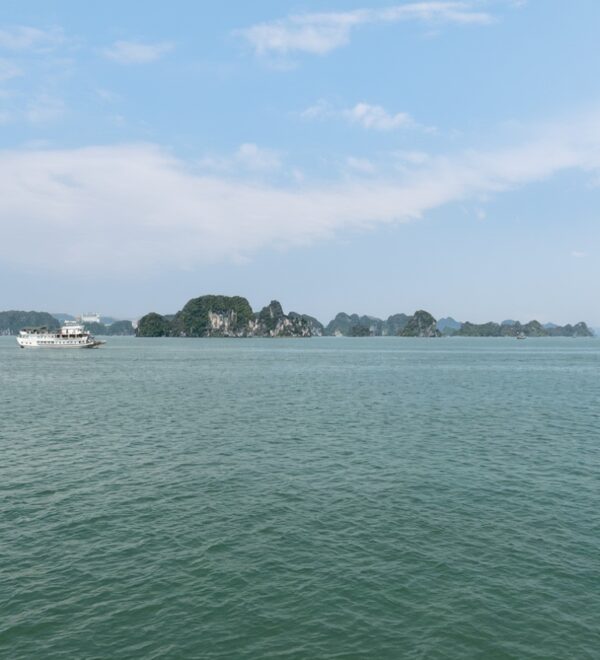
Ha Long Bay has the most iconic scenery in the country and the most variable quality of experience. On a well-chosen cruise — small boat, calm weather, good operator, two nights — it earns every superlative. On a bad one, you’re on a diesel boat with 40 strangers anchored alongside 15 identical boats, eating buffet food while a guide reads facts from a laminated card.

The difference between versions is almost entirely: boat size, operator quality, and how many nights you book. One night is not enough — the bay reveals itself slowly and the best moments (dawn on the water, kayaking into a floating fishing village) need time. Two nights, small boat, itinerary that covers both Ha Long and Lan Ha Bay — that’s the setup worth having.
Read the Ha Long Bay cruise guide for what each price point actually delivers, and the Hanoi to Ha Long Bay transport guide for how to get there. Most operators include the 3.5-hour van transfer in the cruise price — if yours doesn’t, ask why.
Sapa — The Landscape Is Real. The Town Is Something Else.
Sapa the terrain is one of the most impressive things in northern Vietnam. Hmong villages at altitudes where your ears pop walking uphill. Rice terraces that fold down into Muong Hoa Valley in steps so precise they look architectural. Trails where you can walk three hours without seeing a tour bus.
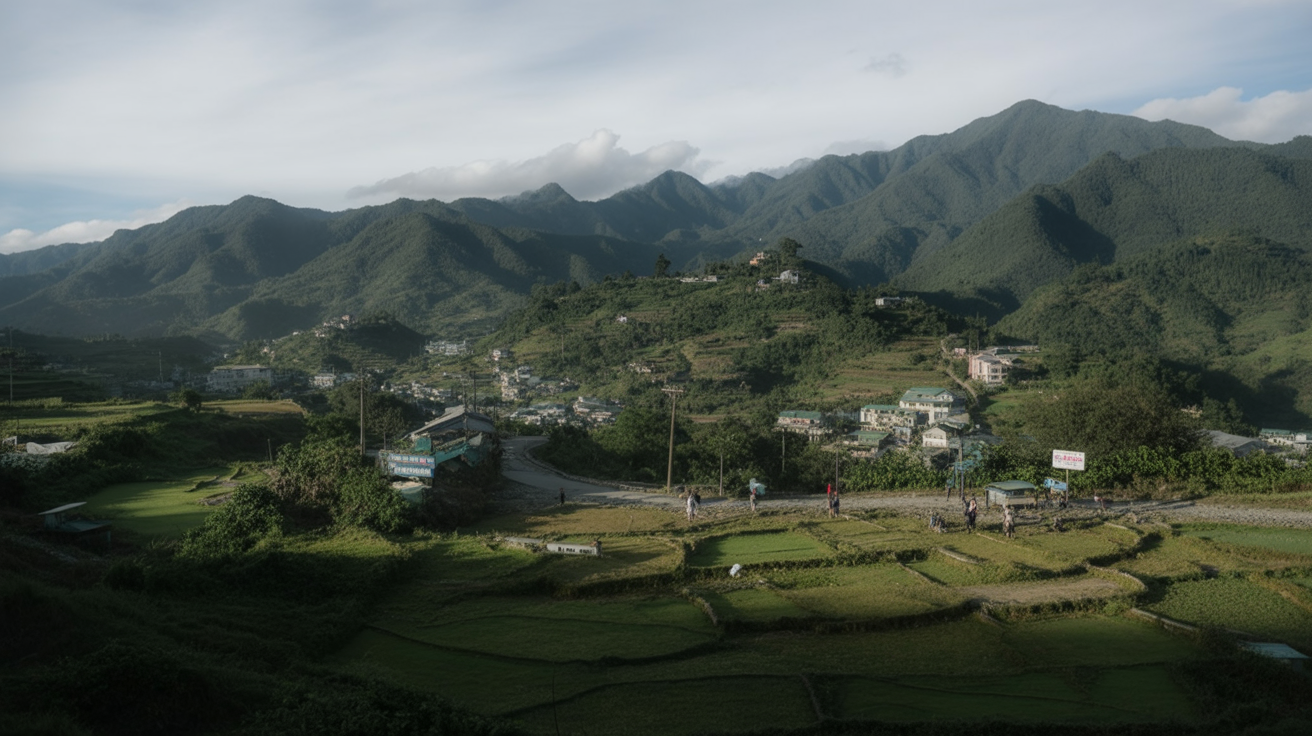
Sapa the town is a different story. It got overdeveloped in a rush. The main drag is a strip of hotels, souvenir shops, and restaurants that look like they were designed for a mountain resort concept rather than a specific place. The Fansipan cable car now drops 600 people per hour onto the summit of Vietnam’s highest peak.
But you don’t need to spend much time in town. The move is to stay outside — in Lao Chai, Ta Van, or one of the village homestays along the main trekking routes. Walk out at 6am before the mist burns off the valley. The view from the trail above Ta Van at that hour, with the paddy water reflecting grey sky and the smell of cook-fire smoke coming from somewhere below — that’s worth the overnight train.
For the full breakdown: Sapa travel guide, where to stay in Sapa (the village vs town question answered), and Hanoi to Sapa transport — book the overnight train early, the Hanoi–Lao Cai route fills weeks in advance during high season.
How Long Do You Actually Need in Northern Vietnam?
This is the question I get most. The honest answer: it depends on whether you want to see things or experience them. You can “do” the north in seven days. But you’ll leave feeling like you drove past it at speed.
If you have 10 days: pick three destinations. The most rewarding short-north combination is Hanoi + Ha Giang Loop + Ninh Binh. If you have 7 days, do Hanoi + Ha Giang only — it’s the pairing most likely to make you regret having a return flight.
For specific day-by-day routing, see the North Vietnam itinerary guide. If you’re building a wider Vietnam trip with the north as one piece, the 2-week Vietnam itinerary and 3-week itinerary both have northern route options.
What It Actually Costs in Northern Vietnam
The north is one of the most affordable parts of Vietnam for independent travelers. Hanoi runs slightly cheaper than Saigon day-to-day. Ha Giang and Ninh Binh are cheaper still. Ha Long Bay is where the budget spikes — a 2-night cruise is the single biggest per-day expense anywhere in the north, and it’s not optional if you’re going to do Ha Long properly. Start with the Sapa travel guide for the full breakdown on trekking routes, village homestays, and what the town versus the valley actually offers.
When to Visit Northern Vietnam
The north has four actual seasons — this matters more here than anywhere else in Vietnam, which is mostly just “dry” and “wet.”
October to April is the safest window for most destinations. Cool and largely dry. Comfortable for Hanoi (15–25°C), safe roads for Ha Giang, clear visibility for Ha Long Bay. Rice terrace harvest in Sapa happens October–November — the paddies turn gold and the valley smells like cut grain.
September to October specifically: the best time for Ha Giang. The buckwheat flowers bloom across the Dong Van plateau — pink and red against grey limestone, one of the most visually strange landscapes anywhere in the country. Crowds are lower than November. Book Ha Giang accommodation in advance.
June to August: hot in Hanoi (35°C+, humidity at 80%+, feels like wearing a warm wet towel). Mountain roads in Ha Giang carry landslide risk after heavy rain — the loop is doable but requires checking road conditions each morning. Sapa in July has the brightest green terraces of the year, and the rain usually comes in short afternoon bursts rather than all-day drizzle.
January to February: cold in the highlands. Sapa can drop to 5°C. Ha Giang at elevation can hit near-freezing at night. Most travelers pack for Hanoi weather and get genuinely cold in the mountains. Bring a proper layer — not a light jacket.
↗Insider Tip
Tết (Vietnamese Lunar New Year — late January or February) is not a good time to travel the north. Buses and trains fill weeks in advance. Restaurants run by families close for 3–5 days. The cities empty out as Vietnam collectively goes home. Plan your trip 2 weeks before or after Tết unless you’ve booked every element in advance.
Getting Between Destinations
Hanoi is the hub. Everything starts and returns here.
Ha Giang: direct overnight buses from My Dinh station, 180,000–250,000 VND (~$7–10), 5 hours. Ninh Binh: direct buses from Giap Bat station, 80,000–120,000 VND (~$3–5), 90 minutes. Sapa: overnight train Hanoi–Lao Cai (8 hours), then 30-minute minibus up the mountain — book the train weeks ahead in high season. Ha Long Bay: 3.5 hours by limousine van, usually included in your cruise package.
Routing between destinations without backtracking to Hanoi is possible but slow. Ha Giang to Sapa directly is 7–8 hours on mountain roads. Most travelers — and most bus schedules — route back through Hanoi between stops. This is annoying but realistic.
The Hanoi day trips guide covers the Ninh Binh option in detail — it’s the most efficient way to add a day trip from the capital without committing to overnight accommodation.
What I Got Wrong My First Time Through the North
I arrived in Ha Giang in March 2022 with two days blocked off. A motorbike forum said the loop “takes about 3 days” and I figured I’d move fast.
Day one: rained out in the afternoon. Not light rain — the kind that comes horizontal off the limestone and turns the road into a stream. I parked at a guesthouse in Dong Van (say: dong van) and spent 18 hours watching cloud move across the plateau. The owner brought out corn wine at 9pm and we sat in silence because we didn’t share a language. The ceiling was corrugated tin and the rain hit it like applause.
Day two: the sun came back. The valley below Ma Pi Leng was so clear you could see individual rocks in the Nho Que River below. I stood on the pass for forty minutes. Then I had to ride fast to catch my bus back to Hanoi and missed everything after Meo Vac.
The lesson, obvious in retrospect: every destination in northern Vietnam punishes a rushed schedule. The distances are real, the roads are slow on purpose, and the moments that actually matter — the light at 6am on the Dong Van plateau, the mist burning off the Muong Hoa Valley above Sapa, the sound of an approaching boat in the silence inside a Trang An cave — those require time to find.
Build one buffer day per destination. Mountain weather in the north doesn’t negotiate.
Two things worth sorting before you land: a Vietnam eSIM so you have data the moment you clear customs, and travel insurance — medical costs for uninsured foreigners in Vietnam are significant.
Airalo eSIMs activate instantly. Buy before departure — airport SIM queues in Vietnam can take 30+ minutes.
Northern Vietnam — Frequently Asked Questions
How many days do I need in northern Vietnam?
Minimum 12 days if you want to cover all five destinations (Hanoi, Ninh Binh, Ha Giang, Ha Long Bay, Sapa). Realistically, most travelers who attempt all five in under two weeks leave wishing they’d had more time. If you have 7–10 days, pick two or three destinations and do them slowly. Ha Giang + Hanoi is the best short-north combination — more rewarding per day than any other pairing.
Is northern Vietnam better than southern Vietnam?
Depends on what you’re after. The north has more dramatic scenery — mountain passes, karst landscapes, highland trekking. The south has beaches, the Mekong Delta, and a faster urban energy in Saigon. Most first-time visitors with 2–3 weeks prefer the north because the landscape variety is higher and the distances between major sights are manageable. Repeat visitors often come back specifically for Ha Giang, which has no equivalent in the south.
What’s the cheapest destination in northern Vietnam?
Ha Giang and Ninh Binh are the cheapest day-to-day. Accommodation in both runs 150,000–300,000 VND (~$6–12) for a clean guesthouse room. Ha Long Bay is the most expensive — the overnight cruise is a fixed cost of $80–200 USD per person regardless of how you travel elsewhere. Sapa has expanded its price range dramatically over the last five years; you can still find basic homestays for 250,000 VND (~$10), but the town-center hotels have crept up.
Can I do northern Vietnam without a tour?
Yes — and it’s the better way to do most of it. Hanoi, Ninh Binh, and Ha Giang are straightforward as independent travel. Ha Long Bay requires booking a cruise operator but you do this directly, not through an agency. Sapa is easy independently — overnight train to Lao Cai, minibus up. The one exception: if you’ve never ridden a motorbike, the Ha Giang Loop is genuinely dangerous solo. The Ha Giang jeep tour covers the same route with a driver and is not a compromise.
One destination that doesn’t make it into most northern
If the northeast is your focus, add Ba Be Lake to the itinerary — Vietnam’s largest natural freshwater lake sits in Bac Kan Province, 70km west of Cao Bang, with Tay village homestays and zero cruise ships on the water.
Vietnam guides yet: Cao Bang province, 4–5 hours northeast of Hanoi. It’s home to Ban Gioc — Vietnam’s largest waterfall — and shares a border with China. The crowds haven’t found it. Worth adding 2–3 days if your timeline allows, especially if you’re already doing Ha Giang.
Northern Vietnam takes time. That’s the honest summary.
The travelers who get the most out of it are the ones who stop trying to see everything and start trying to understand a few things well. Ha Giang isn’t a box to tick — it’s a place where the road itself is the point. Ninh Binh isn’t just “the inland Ha Long Bay” — sit in Trang An at 7am before the tour groups arrive, listen to your rower’s oars in the cave water, and you’ll understand why that comparison is lazy. Even Hanoi, which most people treat like a transit hub, rewards the traveler who stays long enough to get genuinely lost in it.
Start with the North Vietnam itinerary guide — it maps out the best routing depending on how many days you have. If you’ve already decided on Ha Giang, go straight to the Ha Giang Loop complete guide. It’s the trip that most changes how people think about what travel actually means. For the full country comparison, the Vietnam travel guide breaks down north vs south vs central across every trip length.