
Last updated: May 2026 — prices and logistics verified May 2026.
Ha Long Bay doesn’t have to cost what the premium operators charge — our budget Ha Long Bay cruise guide breaks down what you actually give up at the lower price points and where the floor is.
Kayaking Ha Long Bay from your cruise gets you into caves and lagoons that the bigger boats can’t reach — our Ha Long Bay kayaking guide covers what to look for when booking.
The 1-star version is usually a day tour or a budget overnight with 40 passengers, departing at noon and hitting Sung Sot Cave at the same time as every other boat from Hanoi. The 5-star version is usually a 2-night mid-range or luxury cruise that anchors away from the main traffic, has time on the water at dawn, and reaches parts of the bay the day tours never touch.
The limestone karsts rising from emerald water are real. They are exactly as dramatic as advertised. The question is whether the structure of your cruise lets you experience them — which depends entirely on format, duration, and timing, not on how many stars the boat has.
This is the Ha Long Bay cruise guide that explains why the reviews split the way they do and how to end up in the right category.
What a Ha Long Bay Cruise Actually Is
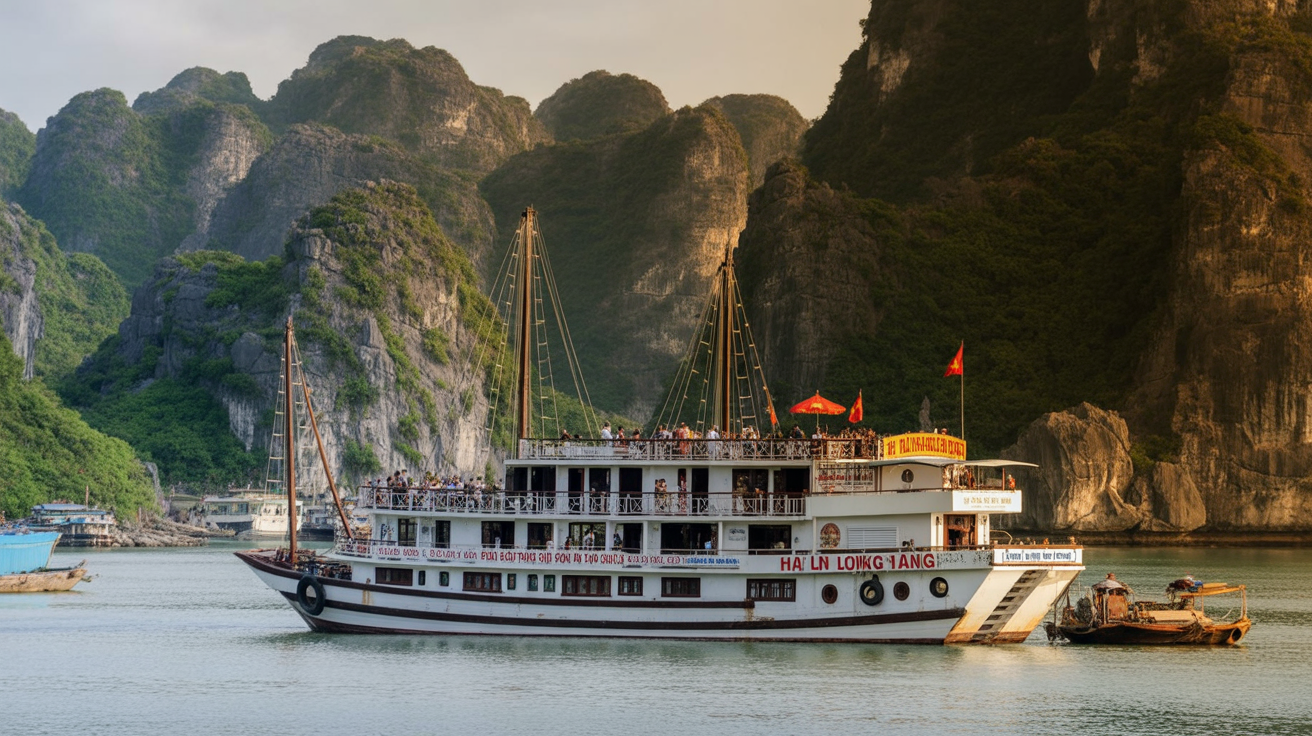
A Ha Long Bay cruise is a 1–3 night stay on a wooden junk boat (traditional Vietnamese sailing vessel style, though modern boats use diesel engines rather than sails) anchored in the UNESCO World Heritage Bay. The boat is both transport and accommodation — your cabin is on the vessel, meals are served on board, and activities (kayaking, cave visits, cooking classes) depart from the boat directly.
The cruise format solves the core problem of Ha Long Bay tourism: the bay is 1,553 km² with 1,600+ islands, and the best parts are hours from the pier. A day tour spends 3.5 hours getting there from Hanoi, has 4 hours on the water, and spends 3.5 hours getting back. An overnight cruise arrives at noon and is still on the water the next morning. The boat stays where the scenery is while you sleep.
Specifically: overnight cruises anchor in the bay overnight and depart before sunrise activities. You wake up already surrounded by karst formations. You’re on deck before the day trip boats have left Hanoi. The 6am light on the water — still surface, mist lifting from the limestone, the occasional fishing boat crossing — is the image in every Ha Long Bay photograph that’s ever made someone book a ticket to Vietnam. It is only accessible to people staying on the water.
1-Night vs 2-Night vs 3-Night: What Changes
This is the most important decision after deciding to do an overnight at all.
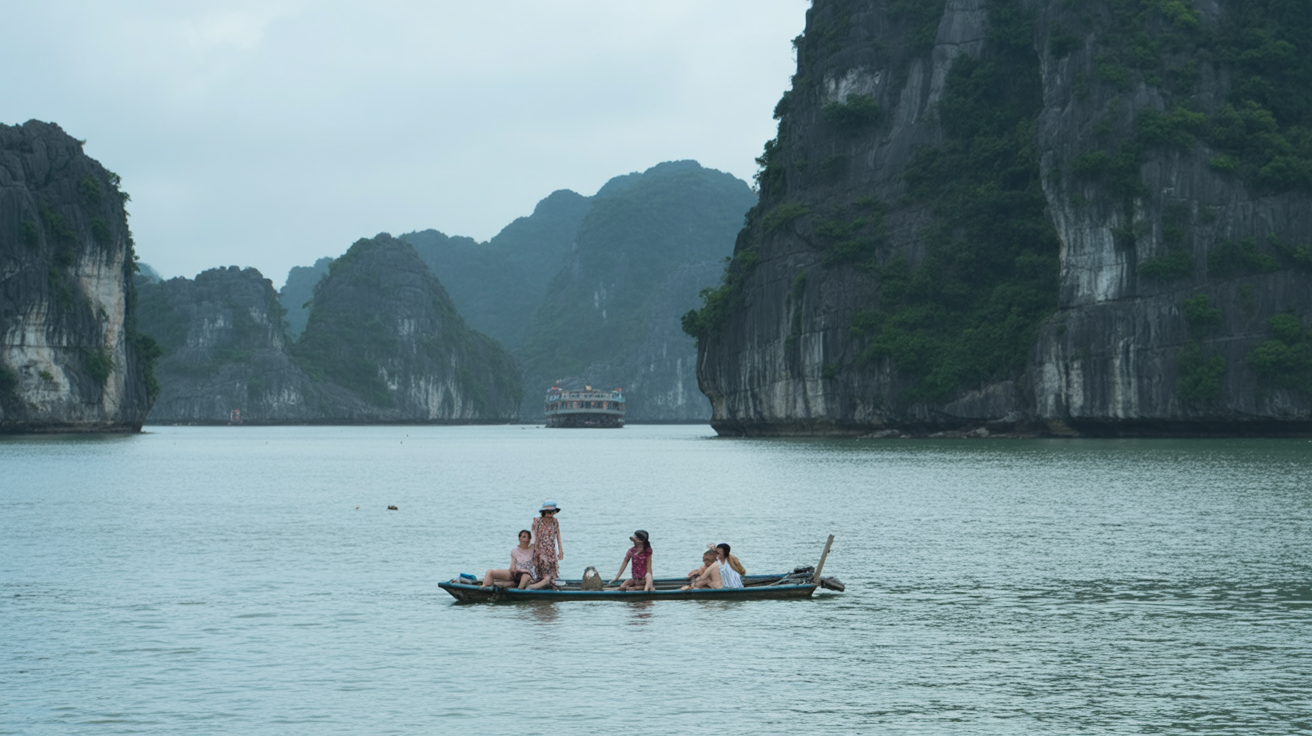
1-night / 2-day: Depart Hanoi morning, arrive pier noon. Afternoon: sailing, one cave visit, one kayaking session. Anchor overnight — dinner, optional squid fishing from the deck. Morning: tai chi at sunrise on the top deck, cooking class or second kayaking, return to pier midday, Hanoi by evening. You get the sunrise. You get the cave. You get a full morning on the water. Most travelers feel it’s enough for a “Ha Long Bay experience” — and most travelers also feel they’d have wanted more time if they’d had it. The 1-night format is the minimum worth doing; it’s not the version you’ll remember most vividly.
2-night / 3-day: Day 1 covers the main Ha Long Bay circuit — Sung Sot Cave or Thien Cung Cave, Titov Island viewpoint, kayaking in a Ha Long Bay lagoon. Night 1 anchors somewhere quieter than the main Ha Long area. Day 2 moves toward Bai Tu Long Bay (say: by too long) — less visited, larger caves, floating fishing village visits, more extensive kayaking. Night 2 deep in the bay. Morning of Day 3: a slower morning, tai chi, then leisurely return to pier. Arrive Hanoi late afternoon. The second night is when Ha Long Bay stops feeling like a tour — the floating fishing village visit, the depth of the Bai Tu Long section, and the fact that you’ve been on the water long enough to stop orienting and start experiencing make this format the one most people describe as having changed something about the trip. This is the format I’d take, and the one I’d recommend without qualification to anyone with the time and budget.
3-night / 4-day: Available on select operators, extending further into Bai Tu Long Bay or including Lan Ha Bay sections. Right for serious kayakers, underwater photographers, and anyone who specifically wants more remote territory than the 2-night itinerary covers. Most standard Vietnam itineraries don’t need this unless Ha Long Bay is the primary reason for the entire trip.
Budget vs Mid-Range vs Luxury: What the Price Difference Buys
Ha Long Bay cruises cover a wider price range than almost any other single tourism product in Vietnam. Understanding what actually changes with price prevents both overpaying for things you don’t need and underpaying for a compromised experience.
Budget Cruises (3,100,000–6,600,000 VND / ~$120–250 per person, 2D/1N)
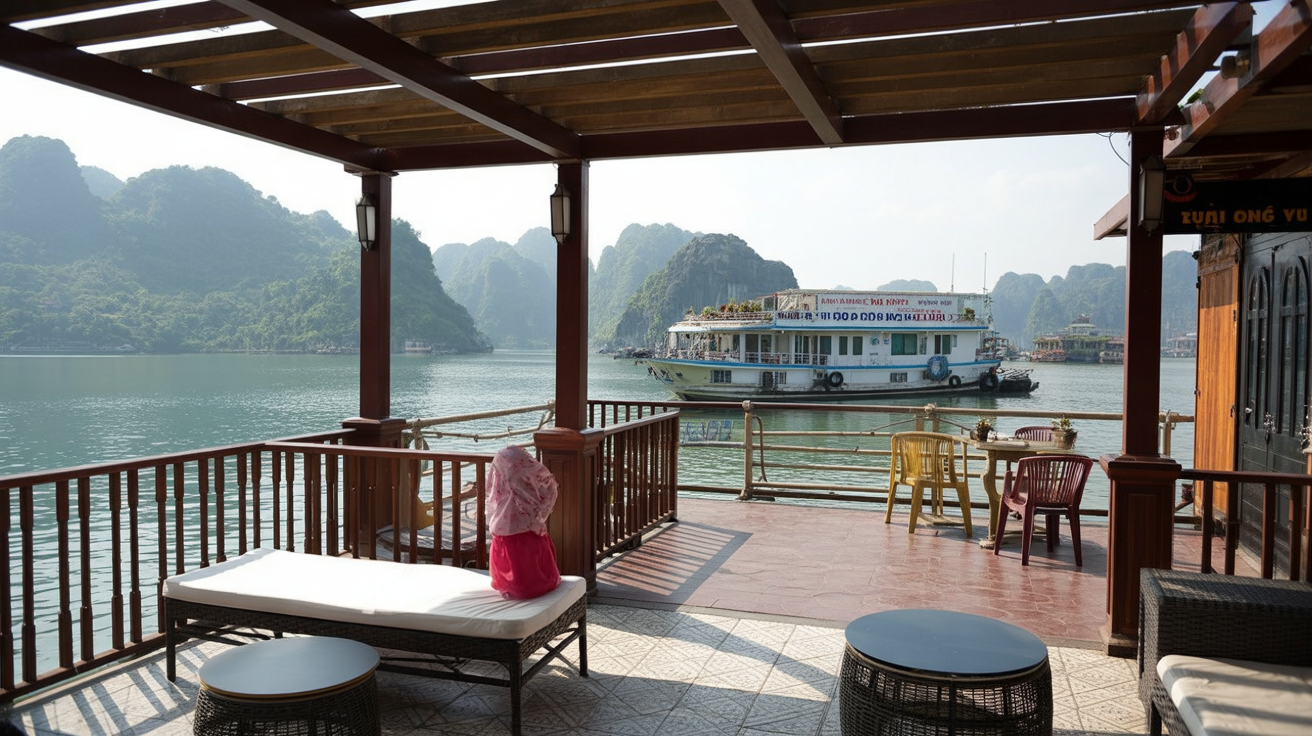
Carina Cruise, Rosy Cruise, Valentine Cruise, and the generic “Ha Long Bay overnight” packages from Hanoi travel agencies fall in this bracket. What you’re getting: a wooden junk boat with 20–40 passengers in basic but private en-suite cabins (double bed, private bathroom, air conditioning), set menus three times a day (typically a seafood spread — quality varies), shared kayaks, and the same Ha Long Bay circuit every boat runs. The guide is usually competent; the cave entry fees are usually included.
What budget cruises compromise on: cabin size (often small — 9–12m², thin walls between cabins), boat age (some budget operators run older vessels with maintenance that shows), group density (40 people trying to board kayaks at the same schedule creates friction), and flexibility (the day’s activities are scheduled and rushed). The bay itself looks identical to what you’d see on a luxury boat. The onboard experience is noticeably different.
Mid-Range Cruises (6,600,000–13,100,000 VND / ~$250–500 per person, 2D/1N)
Era Cruise, Ambassador Cruise, Pelican Cruise, Alova Gold Cruise, Indochina Junk routes (mid category). Groups of 12–20 passengers. Private cabins with larger square footage (14–20m²), some with private balconies over the water. Set-menu meals with proper courses rather than shared platters. More personalized guide attention. Itineraries that include both Ha Long and Bai Tu Long Bay on a 2-night format.
The mid-range bracket is where the experience meaningfully upgrades from a group tour to something that feels personal. With 14 passengers instead of 40, the kayak session has everyone on the water at the same time without queuing. The cooking class happens around a table rather than in a crowd. The guide has time to actually talk to you about the limestone formation in front of you rather than just moving the group to the next stop.
This is the price range I’d recommend for most travelers — meaningful upgrade from budget, and the luxury gap is primarily aesthetics rather than experience quality.
★Jake’s Pick
Era Cruise for the 2-night format in the mid-range. The 14-passenger maximum stays small enough that the kayaking and cave sections never feel rushed. The itinerary specifically goes into Bai Tu Long Bay on day 2 — a bigger deal than it sounds, because Bai Tu Long is where the floating fishing village visit happens. Book directly on their website for the best price.
Luxury Cruises (13,100,000–26,000,000+ VND / ~$500–1,000+ per person, 2D/1N)
Paradise Cruises, Indochina Junk (Dragon Legend, Violet), Bhaya Cruises, Genesis Cruises. Groups of 8–16 passengers on vessels that have spa facilities, private balconies on each cabin, multi-course set menus with wine pairing options, and some with private beach access. The Indochina Junk Dragon Legend 3-night itinerary is the most referenced luxury option: Ha Long Bay day 1, Bai Tu Long Bay day 2 with a private beach BBQ, a floating fishing village visited by bamboo boat on day 3 — a specific combination that can’t be replicated on budget or mid-range boats.
The honest luxury assessment: the scenery doesn’t change. The karsts look identical from any boat. What luxury buys is physical comfort (significantly better cabins and food), smaller groups, and access to private locations (private beach, private fishing village anchorage) that aren’t available to mid-range or budget boats due to permit exclusivity. If you’re on a honeymoon or celebrating something that warrants a significant spend, the luxury format delivers. If you’re a standard backpacker or budget-conscious independent traveler, the mid-range version provides 90% of the experiential value at 40–50% of the cost.
Ha Long Bay Cruise Itinerary: What to Expect Each Day
The standard 2-night itinerary, used with variations by most mid-range operators:
Day 1 — Arrival and Ha Long Bay
7:30–8:30am: Limousine van pickup from your Hanoi Old Quarter hotel. 3–3.5 hours to the pier (International Cruise Terminal at Hon Gai or Tuan Chau Marina). Noon: Check-in, welcome drinks, and lunch while the boat sails into the bay. 1:30–2pm: First cave visit — most commonly Sung Sot (Surprising Cave, say: soong soat) or Thien Cung Cave (say: tyen koong). Both have enormous chambers, stalactite formations, and LED lighting installed to dramatize the formations. Sung Sot is larger and more impressive; Thien Cung is less crowded on most itineraries. 3:30pm: Kayaking through a lagoon or arch — the quality of this session depends heavily on which lagoon your boat anchors near. The better operators choose spots away from the cluster of boats near the main cave sites. 5pm: Return to boat, optional Titov Island beach stop or swimming at a beach with permitted access. Sunset drinks on the top deck. 7pm: Dinner — the full seafood spread, the quality of which is a reasonable proxy for the overall cruise quality. Evening: squid fishing from the deck (a light lowered into the water attracts squid to the surface, then you pull them up with a basic line). Some people find this entertaining; most people find it interesting for 20 minutes and then go to bed. Getting from Hanoi to Ha Long Bay pier is included in most cruise packages — our Hanoi to Ha Long Bay guide covers what’s included, which pier to confirm, and what to do if you arrive early.
Day 2 — Bai Tu Long Bay and the Fishing Village
5:45–6am: Tai chi on the top deck. The activity itself is optional — most people who attend do about 15 minutes of guided movement and then abandon the tai chi for the actual point, which is sitting on the bow with a coffee watching the mist lift off the karsts. The physical sensation: cold deck railing, slightly damp air, the boat rocking very gently, the silence of a bay with no other boats visible.
7:30am: Breakfast while sailing deeper into Bai Tu Long. 9am: Second kayaking session — usually more extensive on day 2 as the boat moves into less-trafficked territory. The Bai Tu Long sections have narrower passages, cave arches that require ducking, and lagoons that some operators allow free kayaking in rather than guided group paddles. 11am: Floating fishing village visit. Vung Vieng village (say: voong vieng) — the most referenced stop — involves transferring to small bamboo boats paddled by local residents. The village has floating houses, fish farm enclosures, and the kind of operational complexity that comes from people actually living on water. 12:30pm: Lunch. 2pm: Cooking class on the upper deck (spring roll assembly or nem nuong, say: nem noo-ong). 4pm: Return toward the pier. Dinner on board while returning. Pier arrival 7–8pm. Return to Hanoi by 10:30–11pm.
Caves, Activities, and What’s Actually Worth Doing
Ha Long Bay activities divide into two categories: ones that justify the whole trip and ones that are fine but forgettable.
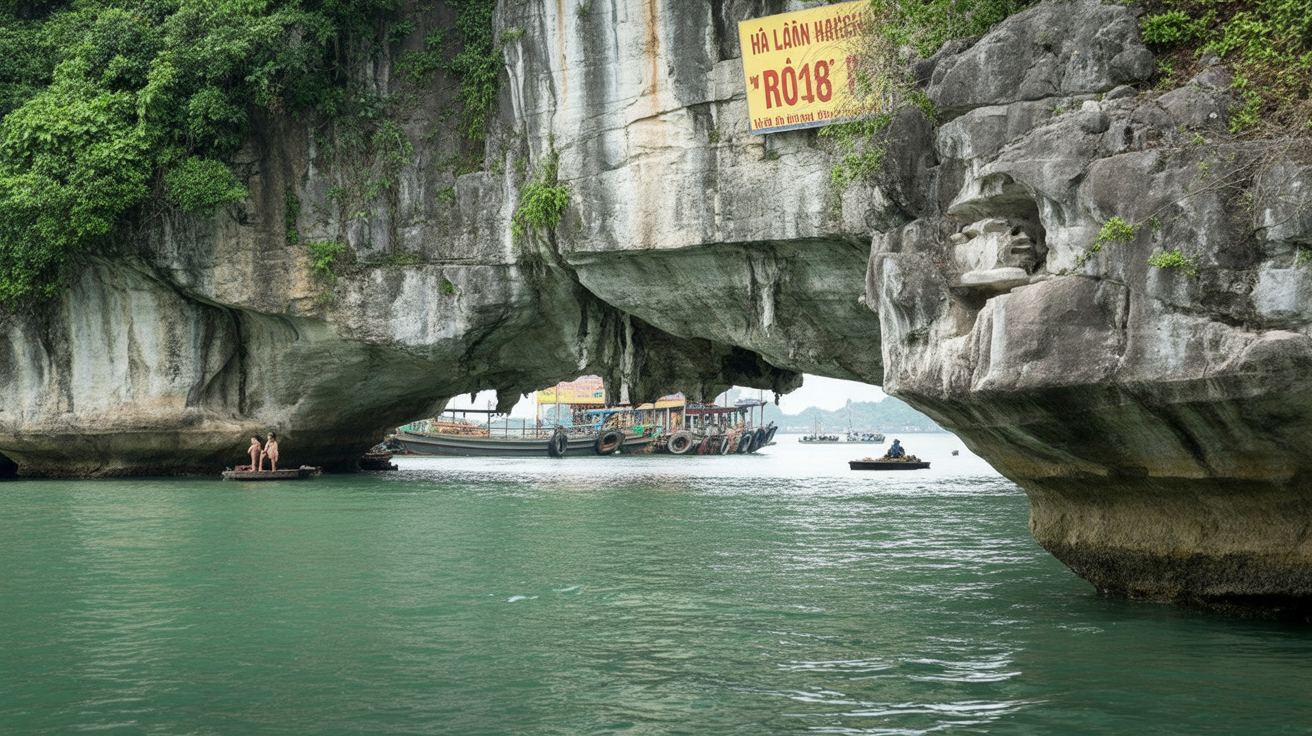
Worth it — kayaking: The one activity most people name when you ask what changed the trip. Kayaking into a lagoon ringed by vertical karsts at water level, with the boat invisible and no other boats audible, produces a specific quality of presence that the deck view cannot. Hard-shell kayaks over inflatables — ask your operator which they use. The Bai Tu Long sections are better for free kayaking; Ha Long sections are more guided.
Worth it — Sung Sot Cave before 10am: The largest and most spectacular cave in Ha Long Bay. LED-lit chambers with stalactite formations 20 metres high. On an overnight cruise at 8–9am, before the day tour boats arrive, you walk through in relative peace. At noon on a day tour, you’re in a queue. Same cave, different experience. Most overnight cruise itineraries schedule Sung Sot early for exactly this reason.
Worth it — Vung Vieng floating village: Not a museum piece — a working fishing community that has adapted to tourism without abandoning the fishing operation. The bamboo boat transfer lets you enter the village at water level, passing under the lines hanging between houses. The guides who paddle these boats have lived here. The fish farm sections smell powerfully of brine and close quarters. It’s the most human experience on the standard Ha Long cruise circuit.
Optional — cooking class: Fine for 30 minutes. Most boats run spring roll assembly that you eat immediately after. A pleasant way to pass the afternoon sailing hour rather than a culinary education.
Skip — squid fishing: Twenty minutes of watching a light attract squid, pulling up one or two, then watching everyone else do the same. Better than nothing; not worth building your itinerary around.
Booking: How and Where
Three legitimate booking channels exist for Ha Long Bay cruises:
Direct from the cruise company: Best price (10–15% cheaper than agency rates), clearest understanding of exactly which boat and cabin type you’re booking. Era Cruise, Ambassador Cruise, and Paradise Cruises all have English-language direct booking with transparent cabin category pricing. Required: email confirmation with cabin category and itinerary details in writing.
Through your Hanoi accommodation: Convenient, usually market price. The guesthouse takes a small commission but typically matches or is close to direct pricing, and you have a person to contact if something changes. Ask specifically which cruise company — not just “overnight cruise” — and ask to see the itinerary before confirming.
Online travel agencies (Klook, Viator, GetYourGuide): Useful for last-minute availability or comparison. Often 10–15% above direct pricing. Fine if convenience is the priority; suboptimal if price matters.
Avoid: Street tour offices in Ha Long city or tourist strip tour agencies that can’t tell you the specific boat name and cabin category. “Ha Long Bay 2-night cruise” without specifics is not a product description — it’s a category that includes boats ranging from poor to excellent quality.
ℹKnow Before You Go
Cruise prices quoted in USD include: transport Hanoi ↔ pier, all meals, cave entry fees, kayaking, and cooking class. Alcohol, spa services, premium cave excursions, and tips are extras. Some budget operators quote boat-only prices that require separate transport booking — confirm transport inclusion before comparing prices.
What to Bring on a Ha Long Bay Cruise
The packing list changes with season (see the Ha Long Bay weather guide for seasonal context) but year-round essentials: Timing matters more for Ha Long Bay than almost anywhere in north Vietnam — our Ha Long Bay best time guide breaks down what each season actually looks like on the water, including why October is the specific month to target.
Essentials: Motion sickness medication (the bay can have significant swell in June–September and during weather systems; if you’re susceptible, take it before boarding not after), reef-safe sunscreen (the cave walk surfaces and kayaking sessions are in direct sun for extended periods), waterproof dry bag for kayaking (your phone will get wet without one), and comfortable shoes with grip for cave walking (uneven, wet, limestone surfaces).
October–April: Light jacket or fleece for evenings on the deck. The temperature drops 3–5°C when the boat is moving, and the top-deck dinner service is usually after dark.
June–September: Lightweight rain jacket for deck time (rain comes fast and heavy), a change of dry clothes for the kayak session return, and adjusted expectations for photography days. Ha Long Bay fits naturally into a broader northern itinerary — our northern Vietnam guide shows how to combine it with Hanoi, Ninh Binh, and Ha Giang.
Budget Summary: Ha Long Bay Cruise All-In Costs 2026
Jake’s Confession: The First Ha Long Bay Trip
I booked the cheapest Ha Long Bay overnight I could find through a travel agency on Mã Mây Street in Hanoi’s Old Quarter. One night, 40 USD, “meals included.” The boat had 36 passengers. Our guide — who was good at his job and did not deserve the situation — was managing 9 groups simultaneously at Sung Sot Cave. The kayaking ran 40 minutes with a hard-shell kayak that had a slow leak in one hull. The cooking class was spring roll assembly for 36 people around a table designed for 12. The dinner buffet was good.
The scenery was extraordinary the entire time. The karsts at 6am were exactly what I came for. The issue was that the logistics of 36 people on a budget cruise consumed the bandwidth that should have been spent on the scenery. I was managing group timing instead of being in the landscape.
Six months later I did a 2-night mid-range cruise with 16 passengers. The difference was the same bay and a completely different experience. The kayaking ran 90 minutes with a competent guide who found a lagoon our group could explore independently. Sung Sot Cave at 8am before the day boats arrived from Hanoi. Dinner for 16 people around a table designed for 20, with a guide who had time to explain what the floating fishing village we were anchoring near was actually for.
The budget version isn’t dishonest. The mid-range version is the Ha Long Bay worth having.
What Happens If the Cruise Is Cancelled
Ha Long Bay cruises operate year-round but cancel when weather conditions make the bay unsafe. Typhoons (active June–September), tropical storms, and severe weather systems all trigger cancellations. Operators monitor conditions and notify passengers 24–48 hours in advance where possible.
Standard operator policy: full refund or reschedule if the operator cancels. For traveler-initiated cancellations, policies vary — most operators allow changes with 48+ hours notice, some charge 20–50% of the fee for cancellations within 24 hours of departure.
Travel insurance: if your Vietnam trip includes a Ha Long Bay cruise in June–September, confirm your insurance covers weather-related cancellation. The premium is small. The refund logistics of a cancelled cruise without insurance when you have onward flights booked are significant. SafetyWing’s standard plan covers trip interruption; World Nomads’ Explorer plan covers adventure activity cancellations. Either is adequate for the Ha Long Bay window.
If your cruise is cancelled mid-trip (the weather turns after departure): operators navigate to a sheltered area or return to pier. Activities adjust rather than the whole cruise cancelling — most rainy days in Ha Long Bay still involve cave visits and sheltered kayaking; it’s only typhoon-level conditions that force an early return. I have been on a Ha Long Bay cruise that got caught in a tropical storm on day 2, and the visual experience of limestone karsts in high wind and heavy rain is, genuinely, impressive. Cold, dramatic, and memorable in a way that a clear day never is.
Ha Long Bay vs Lan Ha Bay Cruise: Which to Book
Ha Long Bay has the better cruise infrastructure — full range of budget to luxury, Hanoi direct routing, more operators at every price point. Lan Ha Bay (accessed via Cat Ba Island) has fewer boats on the water, swimming is allowed, and kayaking is freer. They’re genuinely different experiences rather than the same product at different quality levels.
For most travelers doing a standard Vietnam circuit: Ha Long Bay 2-night mid-range is the right answer. For travelers who prioritize kayaking and lower boat density over cruise service quality: Lan Ha Bay from Cat Ba is better (see the full Cat Ba Island guide). If time allows, the combined format — Ha Long Bay 2-night that includes a Lan Ha Bay section on day 2 — covers both without the Cat Ba routing step.
Klook has the widest selection for Vietnam and is usually the cheapest. KKday is strong on day trips and local experiences.
ant.
Airalo eSIMs activate instantly. Buy before departure — airport SIM queues in Vietnam can take 30+ minutes.