The limousine van on the mountain road — the last 30km is the deciding factor
Hanoi to Sapa: Train vs Bus vs Car (2026 Options)
Sapa sits 320km northwest of Hanoi, which sounds straightforward until you look at a topographic map and see the last 30km of the journey: a series of switchbacks climbing from the Lao Cai valley floor to a mountain town at 1,600 metres. That final hour is where the quality of your transport choice reveals itself. On a good vehicle, with good suspension and a competent driver, it’s dramatic and fine. On a no-name sleeper bus that’s been running the Hanoi–Sapa route for eight years on the cheapest possible maintenance schedule, it is something else entirely.
Limousine van is the best option for most travelers — 5–6 hours direct, 600,000–950,000 VND (~$23–36)
Overnight sleeper bus works but quality varies wildly — avoid the cheapest listings
Night train to Lao Cai is comfortable but adds a 1-hour minibus connection at the end
Overnight travel is better than daytime — arrive at dawn, full day in Sapa
Book 3–7 days ahead for Sep–Oct and Mar–Apr; day-before booking fine in low season
Bottom line: pay the extra 200,000 VND for the limo van — your neck will thank you
✈ Search Flights to Vietnam
Last updated: May 2026 — prices and logistics verified May 2026.
I made the mistake on my first trip. Booked the cheapest listing on the booking site. Couldn’t sleep on the mountain section. Arrived at 5:30am with my jaw clenched and a headache that required two hours of lying horizontal in the homestay before I felt human again. The extra 200,000 VND for the limousine van would have been the best 200,000 VND I’d spent in Vietnam.
Here is everything you need to know to get from Hanoi to Sapa without making the same call.
Your Options — The Short Version
There are three realistic ways to get from Hanoi to Sapa: overnight limousine van, overnight sleeper bus, or night train to Lao Cai followed by a shuttle minibus. A fourth option — private car — exists but costs ten times more and doesn’t offer ten times the experience. A fifth option — flying — doesn’t apply: there’s no airport in Sapa.
The limousine van on the mountain road — the last 30km is the deciding factor
TRANSPORT COMPARISON 2026
Hanoi → Sapa — All Options
Option
Cost
Duration
Door-to-door?
Limousine van (VIP)
600,000–950,000 VND (~$23–36)
5–6 hrs
✓ Yes
Sleeper bus (standard)
360,000–600,000 VND (~$14–23)
6–7 hrs
✓ Yes
Night train + shuttle
350,000–700,000 VND (~$13–27) + 50,000 (~$2)
9–10 hrs total
No (2 legs)
Private car
2,600,000–3,900,000 VND (~$100–150)
4–5 hrs
✓ Yes
vietnamunlock.com — All prices 2026.
Limousine Van — The Best Option for Most Travelers
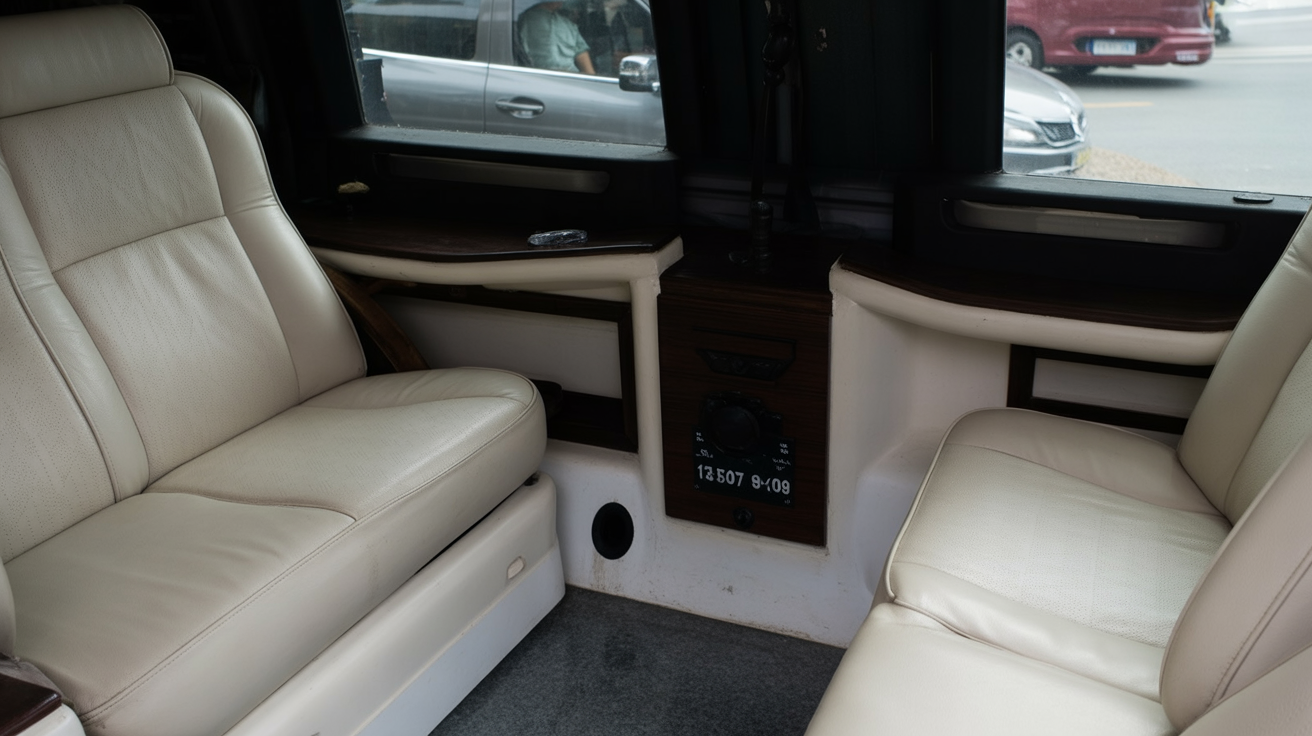
The limousine van runs 9–16 seats in airline-style reclining chairs, usually with individual reading lights and USB charging. The vehicles are newer, better maintained, and — critically — smaller than full-size sleeper buses, which means they take the mountain switchbacks at a less terrifying angle. Pick-up is typically from your hotel in the Hanoi Old Quarter area; the driver sends a WhatsApp message the day before to confirm your exact address.
VIP limousine van interior — individual seats, charger, actual leg room
Departure times cluster around 9–10pm, arriving in Sapa between 3–5am. Yes — 3am sounds terrible. In practice: you sleep most of the flat highway section, wake up for the mountain climb, arrive just before dawn, and have your first Sapa sunrise while your hotel back in Hanoi is still asleep. The timing is actually perfect for a mountain trip.
Reputable companies running the Hanoi–Sapa limousine van route:
Hung Thanh Bus — consistently recommended, good pick-up coverage in Old Quarter
King Express — newer fleet, similar price, reliable on-time record
Sapa Shuttle — slightly more expensive, includes hotel drop-off in Sapa town center vs bus station
Eco Sapa — budget end of the limo van category, still adequate
Book through the company website directly or via 12go.asia / Baolau — both aggregate most operators and let you compare times and prices. Avoid the unlisted operators that appear on some guesthouses’ booking walls for 150,000 VND cheaper: the saving disappears in the quality of the vehicle.
ℹKnow Before You Go
Sapa-bound limousine vans pick up from multiple points across Hanoi’s Old Quarter and Hoan Kiem area. When booking, confirm your hotel address is in the pick-up zone — some operators cover Ba Dinh and West Lake areas, others don’t. If you’re staying far from the Old Quarter, arrange your own taxi to a central pick-up point rather than waiting for a van that may or may not come to your door. For everything else about the city, our Hanoi travel guide has the full picture.
Overnight Sleeper Bus — What You’re Actually Getting
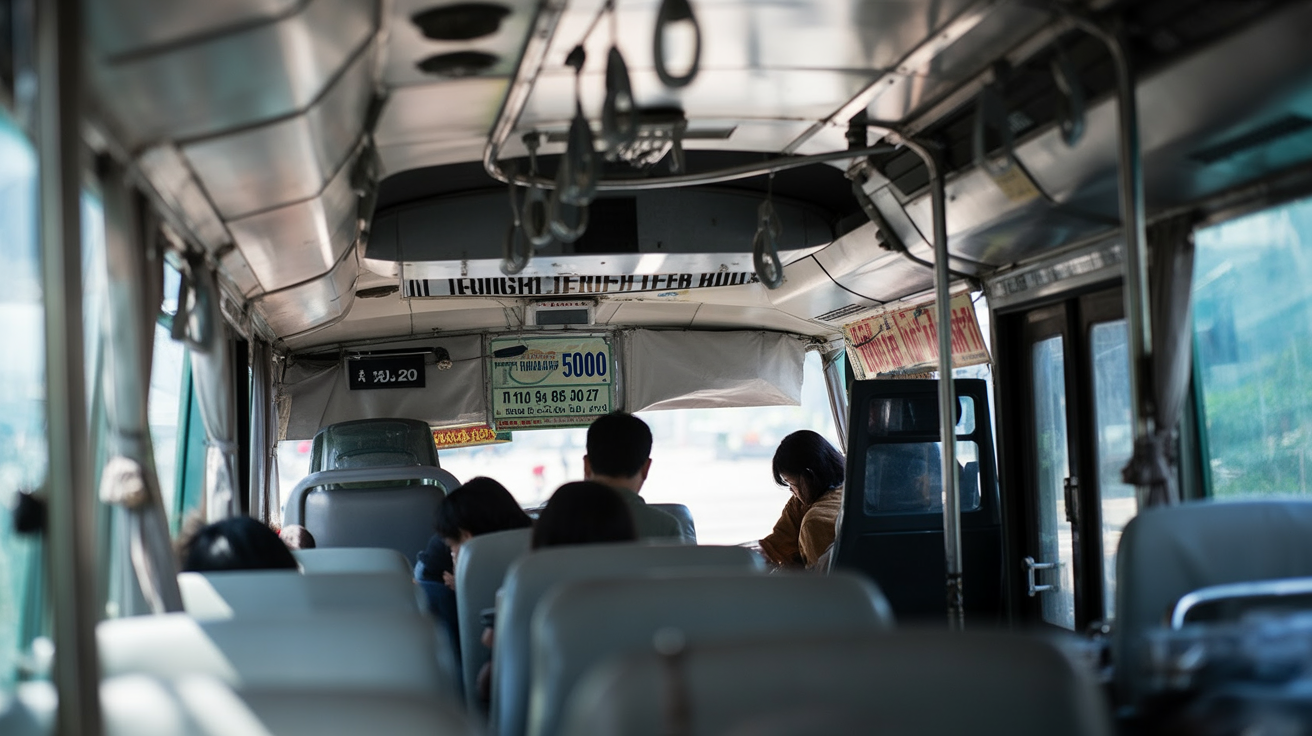
The standard sleeper bus has angled pod-style berths stacked two high, 40 berths per bus. It is not as comfortable as it photographs. The pods are sized for Vietnamese body proportions — at 180cm or above, your feet will extend past the end of the berth and into the aisle divider. The pillow is a plastic-wrapped rectangle. The blanket, if offered, is thin. The air conditioning runs at approximately the temperature of a commercial freezer.
The overnight sleeper bus — functional, not comfortable, but it gets you there
None of this is a dealbreaker. People sleep in these buses every night of the year across Vietnam. The issues specific to the Sapa run are twofold: the mountain section after Lao Cai is 30km of switchbacks, and some operators drive those switchbacks faster than others. On a good driver + good bus, you stay mostly asleep. On a bad combination, the combination of curves, bad suspension, and recycled air becomes unpleasant.
bus works. Millions of travelers have done this route and most arrive fine. What the forum posts don’t emphasize is that there’s a meaningful quality range between operators, and the difference between the best and worst sleeper bus option costs around 150,000–200,000 VND (~$6–8). That’s the price of two coffees. Pay it.
Departure times for sleeper buses are similar to limo vans: 9–10pm from Hanoi, arriving 4–6am in Sapa. Some operators run morning departures (5–6am) arriving in the early afternoon — this works if you want to see the highway scenery, but you lose half a day in Sapa and arrive tired in the afternoon rather than rested at dawn.
Night Train to Lao Cai — The Scenic Option
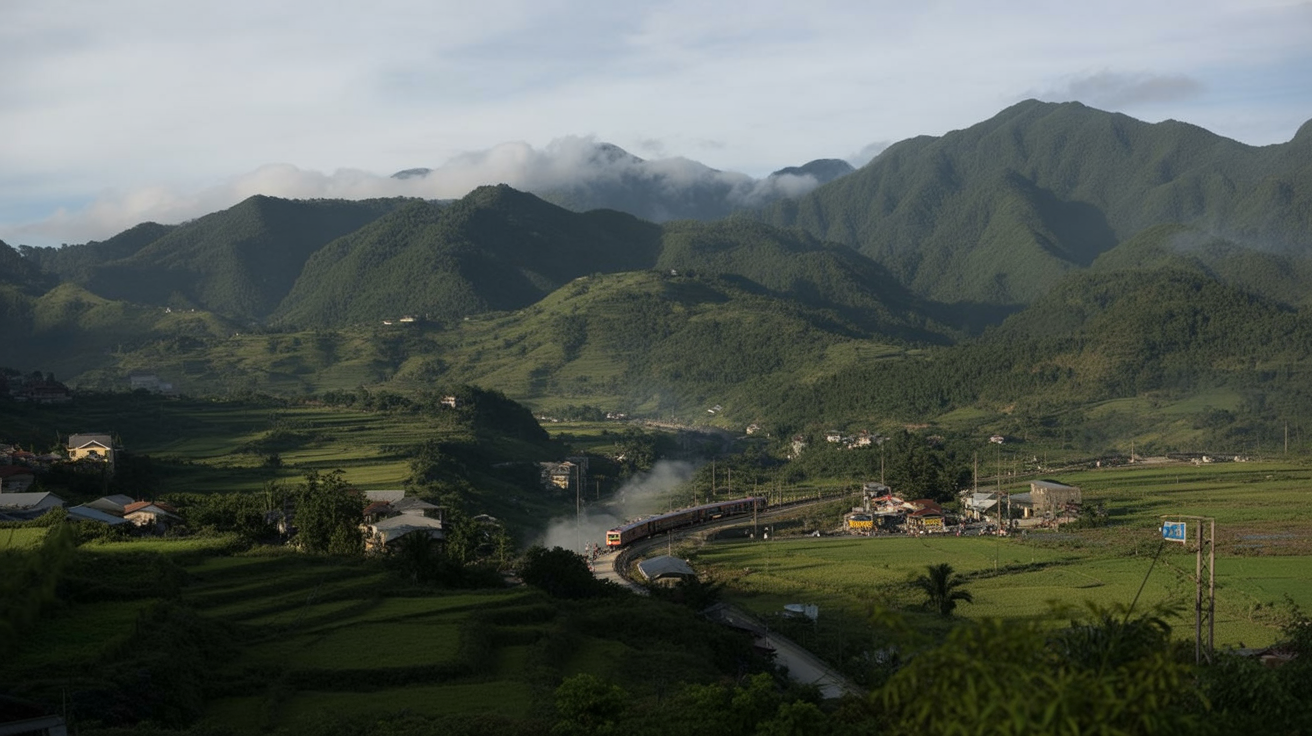
The overnight train from Hanoi to Lao Cai runs nightly, departing Hanoi around 9–10pm and arriving in Lao Cai at 5–7am. Lao Cai is the provincial capital at the valley floor, 38km below Sapa — you then need a minibus or shared van to Sapa, 50,000–80,000 VND (~$2–3), 1 hour.
The Hanoi–Lao Cai night train — the valley views at dawn are the pay-off
The train runs two classes of sleeper: soft sleeper (4-berth cabin, 300,000–650,000 VND/~$11–25 depending on berth position and train type) and hard sleeper (6-berth, cheaper, noisier). Soft sleeper is the correct choice for this journey. The cabins are clean, the berths are proper beds, the motion of the train on flat track is conducive to actual sleep in a way the bus switchbacks are not.
The Victoria Express and Sapaly Express are private operator trains that run the same route with higher-quality cabins — wood-paneled 2- and 4-berth cars, more comfortable beds, slightly more expensive at 500,000–900,000 VND (~$19–34). If you care about the experience of the journey, not just the endpoint, the private trains are worth the premium.
→Who It’s For
The night train suits travelers who want to sleep well on the way there, don’t mind the two-step connection in Lao Cai, and have a bit of extra time. Rail enthusiasts, couples looking for a slightly more atmospheric journey, and anyone who got motion sick on a Vietnamese mountain bus before. If you’re on a tight schedule and just need to be in Sapa by 6am, the limo van is faster door-to-door.
One practical consideration: the minibus from Lao Cai train station to Sapa runs from around 5:30am when the overnight trains arrive. They wait for the trains — you’ll see the minibuses outside the station exit, prices posted. Negotiate or just confirm the standard 50,000 VND rate before getting in.
Private Car — When It Actually Makes Sense
A private car from Hanoi to Sapa costs 2,600,000–3,900,000 VND (~$100–150) for the vehicle, typically a 4–7 seater. Split between four people that’s 650,000–975,000 VND (~$25–37) per person — comparable to a limousine van ticket for a genuinely more comfortable and flexible journey.
The case for private car: you leave when you want (no 9pm departure fixed point), you can stop at the Silver Waterfall or O Quy Ho Pass on the way up without asking anyone’s permission, and you can organize the return journey through the same driver. The case against: it costs more solo or as a pair, and the 4-hour daytime drive is one of the less interesting road journeys in northern Vietnam — most of it is expressway.
For groups of 4+ people doing a multi-day Sapa trip with flexible plans: private car makes financial and logistical sense. For solo travelers or couples: the limo van is the better value.
Daytime vs Overnight — The Timing Question
Every serious option on this route runs overnight. This is deliberate.
Overnight travel means you don’t lose a day of your north Vietnam itinerary to transit. You sleep on the bus (more or less), arrive at dawn, and have a full day ahead of you in the mountains. The alternative — leaving Hanoi at 8am, arriving in Sapa at 2–3pm — gives you an afternoon in Sapa and leaves you paying for accommodation for a night you didn’t properly use.
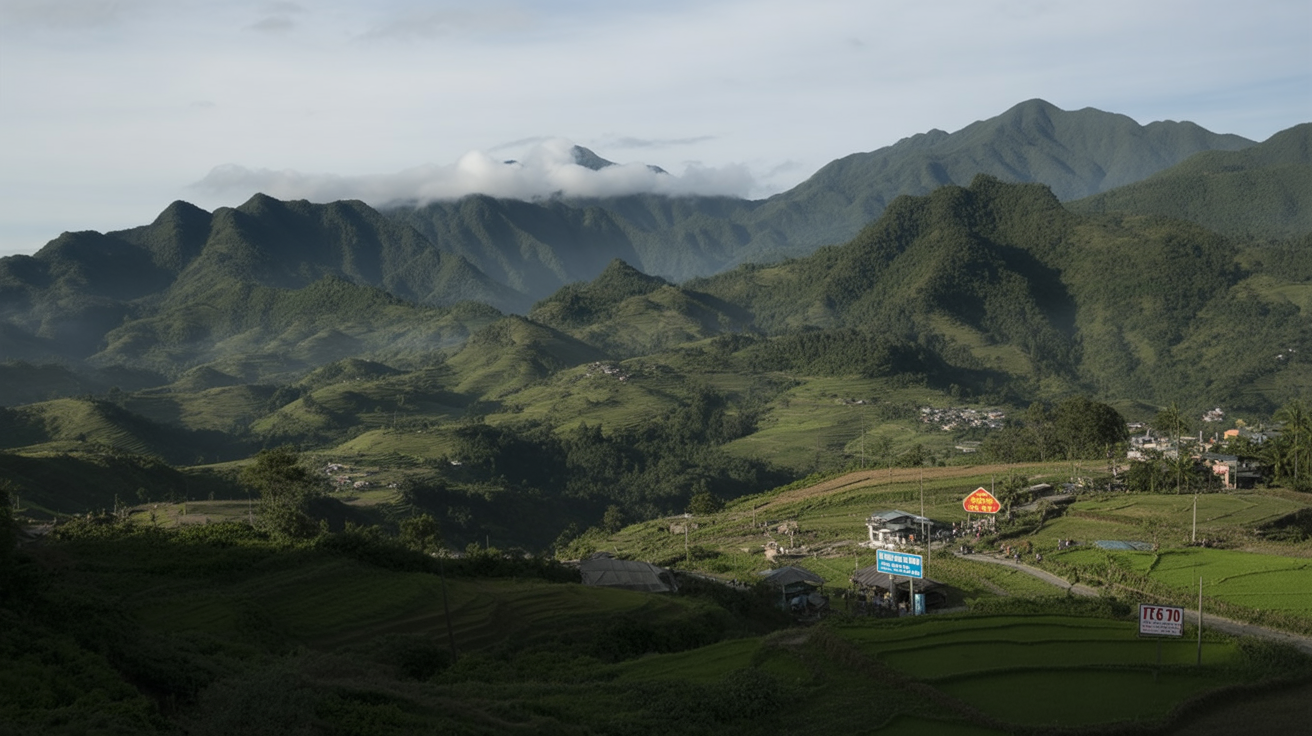
Arriving at dawn — the mist on the valley is the reward for the overnight journey
The overnight approach also means you see Sapa at its best time of day — early morning, before the tour groups arrive from town, before the mist burns off entirely, when the mountain air is cold enough to see your breath. This is not available to people who sleep in until 9am and take a morning bus.
↗Insider Tip
The best light in Sapa is 6–8am. The worst crowds are 10am–2pm. Arriving overnight gets you the former. Arriving on an afternoon bus gets you the latter. This is the real reason overnight is the correct choice — not just the time-saving.
Which Bus Company to Book and Where
The booking ecosystem for Hanoi–Sapa is a mix of aggregator sites, hotel reception desks, and walk-in booking offices along Hàng Bạc Street (say: hang bak) in the Old Quarter. The hotels and guesthouses get a commission — which is fine, but it means they push whatever company they have a deal with rather than the best option for you.
For the limo van, book directly: Hung Thanh’s website, King Express via their Facebook page or website, or 12go.asia. The aggregators show real-time availability and let you compare departure times across operators.
For the sleeper bus: FUTA Bus Lines (futabus.vn) and The Sinh Tourist (thesinhtourist.vn) have direct online booking. Ticket offices are on Dinh Tien Hoang Street near Hoan Kiem Lake and in the Pham Ngu Lao backpacker area.
For the train: booking.vr.com.vn is the national rail site — works in English, requires a passport number, confirms by email. Victoria and Sapaly Express have their own booking sites. Book the train at least a week ahead in peak season (September–October and March–April) — soft sleeper lower berths sell out first.
ℹKnow Before You Go
Prices fluctuate. A limo van seat that costs 650,000 VND on a Tuesday in February will cost 950,000 VND on a Friday in October. The same seat booked on the day can cost more than one booked a week ahead. Check availability as soon as your Sapa dates are fixed — there’s no advantage to waiting.
Arriving in Sapa at 4am — What Actually Happens
The limo van drops you at either your hotel address or a central Sapa point depending on the operator. The sleeper bus drops at Sapa bus station, 1.5km from the town center. The train gets you to Lao Cai bus station, from which minibuses run to Sapa from 5:30am.
At 4–5am in Sapa town, the streets are quiet and cold. The mountain air at this hour smells of pine and damp stone. A few xe ôm drivers are always awake near the bus station, running on thermos coffee and professional optimism. The first price offered for a ride to accommodation anywhere other than central Sapa will be inflated — 200,000–300,000 VND for what should cost 50,000–80,000 VND to Ta Van. Decline politely and negotiate or walk toward the main road where the prices normalize.
If you’re heading to a Ta Van village homestay: message your host the night before to confirm arrival time. Many will arrange a motorbike pickup at a fixed rate — usually 50,000–80,000 VND. Pre-arranged is better than negotiating at 4:30am in the cold. Where you sleep is the single biggest decision in a Sapa trip — our Sapa accommodation guide breaks down the Ta Van village homestays versus Sapa town hotels, with specific places and honest prices.
If you’re arriving by night train in Lao Cai: shared minibuses wait outside the train station. 50,000–80,000 VND per seat, leaves when full (usually 10–15 min wait). Don’t pay for a “private transfer” — the shared minibus is fine and the 1-hour ride through the valley as dawn breaks is one of the better incidental experiences on this route.
Getting Back from Sapa to Hanoi
The return journey uses the same options in reverse. Most travelers take the evening departure: buses and vans leave Sapa around 6–9pm, arriving in Hanoi by midnight–2am. This lets you use your last day in Sapa fully — morning trek, afternoon at leisure, evening departure.
The train return option involves taking a minibus from Sapa to Lao Cai in the late afternoon, then boarding the overnight train back to Hanoi — arriving at Hanoi station around 5–6am. This is comfortable but requires an extra 1-hour transfer and means arriving in Hanoi before the city wakes up.
Book the return journey before you leave Hanoi. Sapa has booking offices and guesthouses can arrange it, but peak season slots sell fast — particularly the 6pm Friday and Saturday departures that fill with domestic tourists. A return ticket booked in advance removes one logistical decision from your time in the mountains.
→Who It’s For
The train return suits travelers continuing their north Vietnam itinerary onward from Hanoi and who need a good night’s sleep before the next leg. The bus or van return suits people going straight back to Hanoi for a flight the following morning — arriving midnight means a few hours at the hotel before an early transfer.
What to Bring for the Overnight Journey
The overnight bus or van from Hanoi to Sapa crosses a 1,500-metre altitude difference and the vehicle air conditioning runs independently of whatever the mountain temperature is doing outside. The result: it can be warm in Hanoi when you board and genuinely cold by the time you reach Sapa’s elevation. The bus doesn’t adjust. Bring layers.
Specific packing recommendations for the overnight journey:
Neck pillow — the bus berths angle you at 30–40 degrees. A travel pillow makes the difference between sleeping and not.
Warm layer or jacket — pack it accessible, not buried in your main bag in the hold
Ear plugs or noise-canceling headphones — Vietnamese bus drivers play Vietnamese pop music at conversation-ending volume until around 11pm
Water and light snack — buses stop at a highway rest area around midnight, but the food there is poor and overpriced
Motion sickness tablets if needed — take them before departure, not when the switchbacks start. Dramamine or Vietnamese equivalent (Nautamine) is available at any Hanoi pharmacy for 30,000–50,000 VND (~$1–2)
Cash — have 200,000–300,000 VND in small bills ready for the xe ôm on arrival and the first morning’s coffee in Sapa
One thing to leave at the hotel: large suitcases. The bus hold fits them but you’ll regret dragging a 25kg roller bag down a Ta Van village footpath. A 30-litre day pack or small duffel for the Sapa portion is practical. Most Hanoi guesthouses will hold your main luggage while you’re in the mountains.
Coming from Other Cities — Not Just Hanoi
If you’re building a broader north Vietnam itinerary and coming to Sapa from somewhere other than Hanoi, the logistics change.
From Ha Giang: There’s no direct transport. Return to Hanoi (8–10 hours by sleeper bus from Ha Giang) and take the overnight connection to Sapa from there. Alternatively, route via Lao Cai: Ha Giang → Bac Ha (Sunday market stopover) → Lao Cai → Sapa. This is a reasonable 2-day journey if the Bac Ha timing works.
From Da Nang or further south: Fly to Hanoi (1 hour, 500,000–1,500,000 VND/~$19–57), then take the overnight to Sapa. The flight saves 15 hours of bus travel on the central Vietnam section. On a 2-week itinerary going north-to-south or south-to-north, this is the efficient routing.
From Cat Ba Island / Ha Long Bay: Take the hydrofoil or bus back to Hanoi, connect to the Sapa overnight. Allow a half-day buffer in Hanoi between the Ha Long return and the Sapa departure — rushing this connection is stressful and occasionally impossible if the Ha Long boat runs late.
↗Insider Tip
If you’re doing Ha Giang Loop then Sapa on the same trip, the sequence matters. Ha Giang is harder to reach — better to do it first when you have more energy — and Sapa is easier to exit (more transport options). Do Ha Giang → Hanoi → Sapa, not the reverse. The Ha Giang recovery period also benefits from having Sapa’s more comfortable accommodation afterward.
Common Mistakes First-Timers Make on This Journey
After watching a lot of people get this wrong over the years, a few patterns emerge:
Booking the cheapest listing without checking reviews. The Hanoi–Sapa route has operators ranging from excellent to actively bad. A 100,000 VND saving on a bus ticket is not worth three hours of motion sickness on the mountain road. Check Google Reviews for the specific operator, not just the platform rating.
Not confirming pick-up location and time. Limo vans send a driver to your hotel. That driver has your booking confirmation on his phone. If your hotel address is in a narrow alley, he needs the name of the nearest main street. Send the full address plus landmark when you book, and confirm the pick-up time by WhatsApp the afternoon before departure.
Underestimating how cold Sapa is. People arrive from 35°C Hanoi in shorts and sandals for a 10°C Sapa morning. The mountain market stalls sell cheap fleeces — but they’re synthetic and not warm enough. Bring a real layer from Hanoi.
Booking for one night. One night in Sapa — arriving at 5am, leaving by 7pm — gives you a single day. That day will be fine and forgettable. Two nights gives you a full day, a village overnight, a morning in the rice terraces at dawn. The trip goes from “I went to Sapa” to “I understand why people talk about Sapa.” The extra night costs 150,000–200,000 VND at a homestay. Book it.
Is a Day Trip from Hanoi to Sapa Worth It?
Technically possible. Not recommended.
The math: leave Hanoi 6am, arrive Sapa 11–12pm, have 4 hours in the mountains, leave 4pm, arrive Hanoi midnight. You’ve spent 16 hours in transit for 4 hours in Sapa, during the worst hours of the day (10am–2pm is peak crowd time, midday sun kills the terrace light), and you’ve seen nothing of the valley or villages that make Sapa worth coming for.
Book Tours & Activities — Sapa
Klook has the widest selection for Vietnam and is usually the cheapest. KKday is strong on day trips and local experiences.
2 nights. The ideal is 3 nights. If your 2-week Vietnam itinerary can’t accommodate 2 nights in Sapa, cut something else — or skip Sapa entirely and don’t regret the choice. A rushed Sapa day trip often leaves people underwhelmed and confused about what the fuss is about.
Frequently Asked Questions
What is the cheapest way to get from Hanoi to Sapa?
Standard sleeper bus, cheapest operator: around 300,000–360,000 VND (~$11–14). This is the price point where quality becomes a genuine concern — vehicles are older, the mountain section is more uncomfortable, and on-time performance is less reliable. The cost difference between this and a quality limo van is approximately 300,000–600,000 VND (~$11–23). For a single overnight journey, that delta is worth considering seriously.
Is the Hanoi to Sapa train worth it?
Yes, if comfort and experience are priorities. The Victoria Express and Sapaly Express private trains run wood-paneled sleeper cabins that are genuinely pleasant — better sleeping conditions than either the bus or the state rail standard class. The practical trade-off is the two-step journey: you arrive in Lao Cai, not Sapa, and need the Lao Cai–Sapa minibus connection on top. For travelers who enjoy rail journeys for their own sake, this is not a trade-off. For travelers who just want to wake up in Sapa, the limo van is more direct.
Do I need to book in advance?
Shoulder and low season (November, January–February, May–August): 2–3 days ahead is usually fine. Peak season (September–October rice harvest, March–April spring): book 7–14 days ahead, especially for weekend departures and private trains. The Friday night departures from Hanoi before a long weekend sell out entirely weeks in advance during peak months.
Where does the Hanoi–Sapa bus depart from?
It depends on the operator. Limo van companies typically do hotel pickup within the Old Quarter area — confirm your exact address when booking. Some operators have a fixed departure point near the My Dinh bus station (southwest of the city center) — if this is the case, you’ll need a 20–30 minute taxi ride there from the Old Quarter. The state sleeper buses depart from My Dinh Bus Station. Always confirm the pick-up point when booking, not after.
Before You Go
Two things worth sorting before you land: a Vietnam eSIM so you have data the moment you clear customs, and travel insurance — medical costs for uninsured foreigners in Vietnam are significant.
Airalo eSIMs activate instantly. Buy before departure — airport SIM queues in Vietnam can take 30+ minutes.
The Bottom Line
Take the overnight limousine van. Pay 600,000–950,000 VND, book it a few days ahead, confirm your hotel address for pick-up, bring a neck pillow and a warm layer (the van air conditioning runs cold), and arrive in Sapa at dawn with a full day ahead of you.
The night train is the atmospheric alternative if you’re doing the journey for the journey’s sake. The standard sleeper bus works if budget is tight, but pick FUTA or The Sinh Tourist and not the cheapest listing available.
Then book 2 nights minimum — ideally in Ta Van village, not in Sapa town — and give the place the time it needs. The Muong Hoa Valley trek alone justifies every minute of the journey there and back. For what’s genuinely worth your time and what to skip, see our Sapa things to do guide — including how long Fansipan’s Saturday queue actually runs.
“I moved here on a 3-month trial run. That was 5 years ago. I’ve since been to all 63 provinces, ridden every loop worth riding, and eaten things I still can’t name. This blog is what I wish existed when I landed.”