Last updated: May 2026 — prices and logistics verified May 2026.
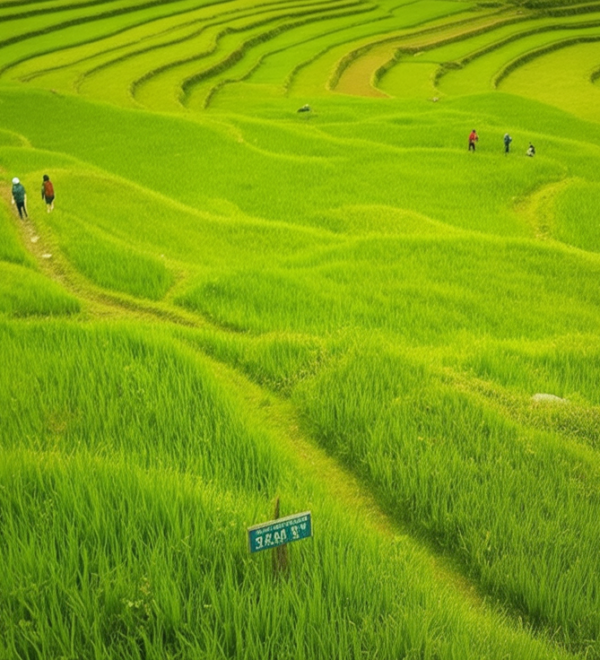
What I expected: a sleepy mountain village with a market and some walking trails. What I found: a functioning tourist town with concrete hotels, a Sun World cable car station, and souvenir shops selling identical embroidered bags for the same price as in Hanoi. The terraces were real. The village atmosphere was not in the town.
The gap between “Sapa the idea” and “Sapa the place” catches a lot of first-timers. The fix is simple once you know it: the actual Sapa experience — the rice terraces, the H’mong communities, the mountain silence — exists 7km below the town, in the Muong Hoa Valley villages. The town is logistics infrastructure. The valley is the reason to come.
This is the guide that would have saved me that first confused day of wandering a tourist town looking for something it wasn’t trying to be.
What Sapa Actually Is
Sapa (say: sa pa) sits at 1,600 metres in the Hoang Lien Son (say: hwang lien son) range of northwest Vietnam, 320km from Hanoi. The French colonial administration established it as a hill station in 1903 — a retreat from the lowland heat — and the architecture from that era still shapes the town’s upper section, though most of the original buildings have been replaced or buried under concrete.
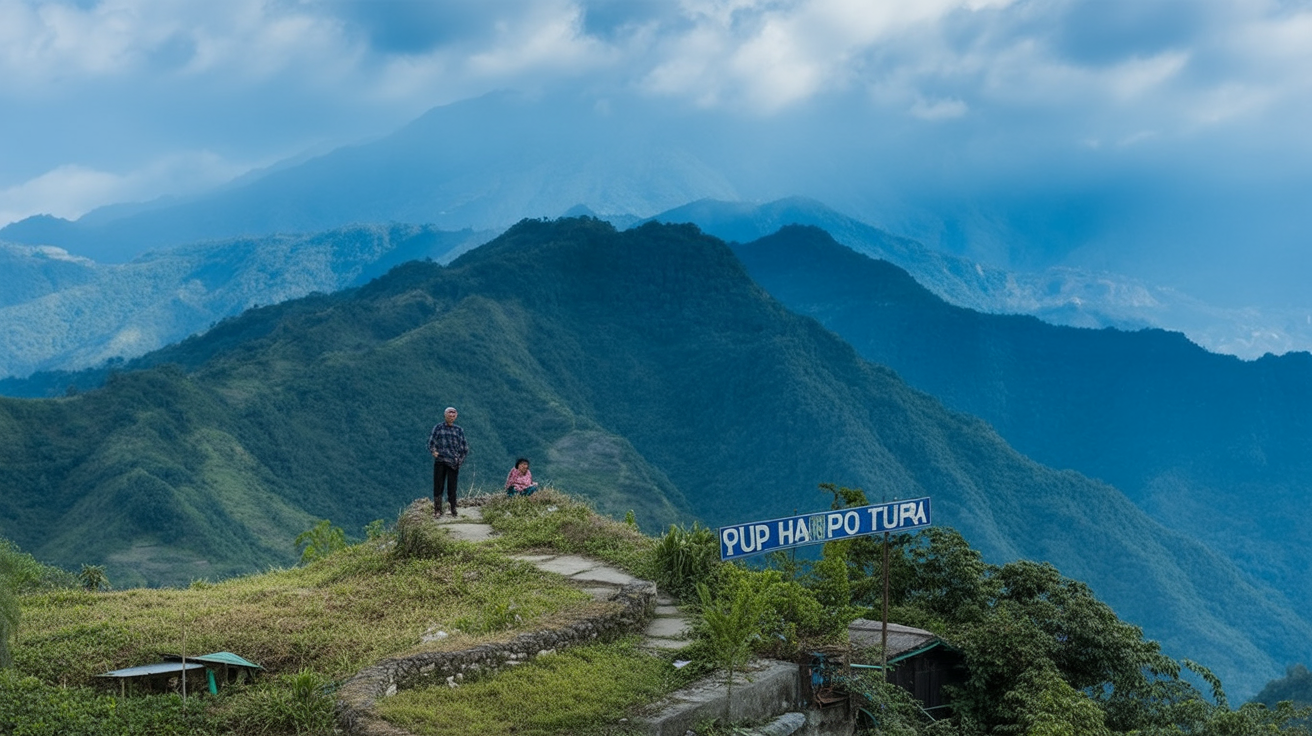
Fansipan (say: fan-see-pan) rises to 3,143 metres directly above the town — Indochina’s highest peak, now accessible by Sun World cable car in 15 minutes or by a serious 2-day summit trek. The Muong Hoa Valley drops from the town’s eastern edge into a basin of rice terraces 400 metres below, where Black H’mong communities have farmed the same hillsides for 300 years. Red Dao villages sit 12km north; Giáy communities live in the lower valley near the river.
The town itself has around 10,000 permanent residents but receives far more visitors — Vietnamese domestic tourists on weekend buses from Hanoi, Chinese day-trippers from the border at Lao Cai, and international travelers doing the Sapa leg of a north Vietnam itinerary. The result is a town that is genuinely mixed: functioning community, functioning tourist market, and a cable car station that produces a specific variety of Saturday chaos.
⚠Real Talk
Sapa town gets dismissed as “too touristy” on travel forums. This is partly fair and partly lazy. The town’s central market is authentic — Vietnamese and H’mong traders selling produce, clothing, and livestock at prices for locals, not tourists. The Saturday night square fills with domestic Vietnamese families doing what Vietnamese families do at mountain resorts. The tourist layer is real; it’s not the only layer.
The Communities You’ll Meet in the Sapa Valley
The Sapa area is home to several distinct ethnic minority groups, each with different territory, dress, and cultural practice. Knowing who you’re actually meeting matters — treating everyone as generically “hill tribe” is the equivalent of confusing Vietnamese, Thai, and Lao culture because they’re all in Southeast Asia.
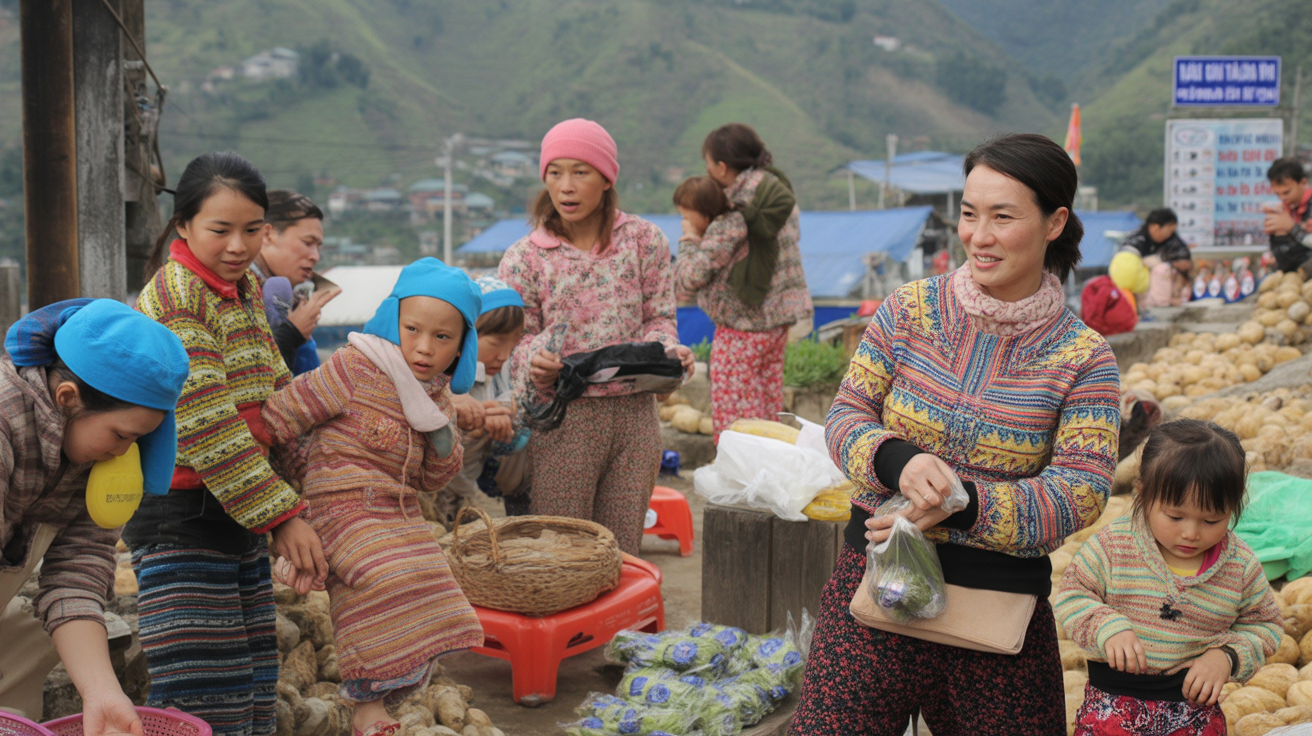
Black H’mong (H’mông Đen, say: hmong den): The dominant group in the Muong Hoa Valley and Sapa town area. Recognizable by deep-indigo hemp cloth — dyed by hand using a process that stains the weavers’ arms blue-black up to the elbow. The women are the most visible cultural face of Sapa: they work as guides, run homestays, sell crafts at the market, and have built an impressive informal English vocabulary from decades of dealing with international tourists. The men are less visible in the tourism economy but run the agricultural labor.
Red Dao (Dao Đỏ, say: dao do): Live primarily north of Sapa toward Tả Phìn village, identified by striking red-embroidered headdresses and silver jewelry. The herbal bath tradition comes from Red Dao communities — a genuine medical practice, not a tourism invention. Less commercially integrated than the H’mong; the Tả Phìn area feels quieter and less rehearsed than the main Muong Hoa Valley routes.
Giáy (say: zay): Live in the lower Muong Hoa Valley near the river, particularly around Ta Van village. Closer culturally to the lowland Vietnamese in dress and practice than the H’mong or Dao. The multi-ethnic character of the valley — H’mong upper terraces, Giáy lower terraces — is visible when you walk the full 15–18km route and notice the change in dress and architecture as you descend.
ℹKnow Before You Go
The H’mong women who approach tourists in Sapa town to sell bracelets and offer “free” guide services are not free — the expectation of purchase comes later. This is not a scam exactly, but it’s a transaction dressed as friendship. Hire your guide through Sapa O’Chau (a social enterprise employing local women) or your homestay directly. The guides are the same people — the difference is that the agency version has a clear price upfront and your money goes to a fair wage.
Photographing people in the valley: ask first, always. Most people will agree and some will decline. The standard tourist reflex of photographing H’mong women from close range without acknowledgment is uncomfortable to watch and produces worse photos than taking time to actually interact. The best Sapa photographs happen when you’ve slowed down enough to be invited rather than extracting.
Getting to Sapa from Hanoi
The standard route is a 5–6 hour overnight journey by limousine van or sleeper bus, departing Hanoi at 9–10pm and arriving in Sapa at 4–6am. The overnight timing is not a bug — it’s the format that lets you arrive at dawn and use a full day in the valley without losing transit time.
The limousine van (600,000–950,000 VND/~$23–36) is the better option for most travelers: individual reclining seats, hotel pick-up in Hanoi’s Old Quarter, newer vehicles that handle the mountain switchbacks more comfortably than the standard sleeper bus. The sleeper bus (360,000–600,000 VND/~$14–23) works but quality varies — book FUTA Bus Lines or The Sinh Tourist, not the cheapest listing on the aggregator site.
12Go covers most Vietnam routes — sleeper buses, trains, and island ferries. Compare schedules and book in advance during peak season (Dec–Feb, Jun–Aug).
The night train Hanoi → Lao Cai is the scenic alternative: 8–9 hours in a proper sleeper cabin (Victoria Express or Sapaly Express: 500,000–900,000 VND/~$19–34 for private cabin), arriving in Lao Cai where minibuses run to Sapa for 50,000–80,000 VND (~$2–3). Comfortable, more atmospheric, and involves one more step than the direct bus.
Full breakdown of all transport options and company recommendations: Hanoi to Sapa guide.
When to Visit Sapa
Timing determines what you find when you arrive. The rice terraces look fundamentally different across the year — four distinct landscape modes, each worth seeing, one genuinely difficult to work with.
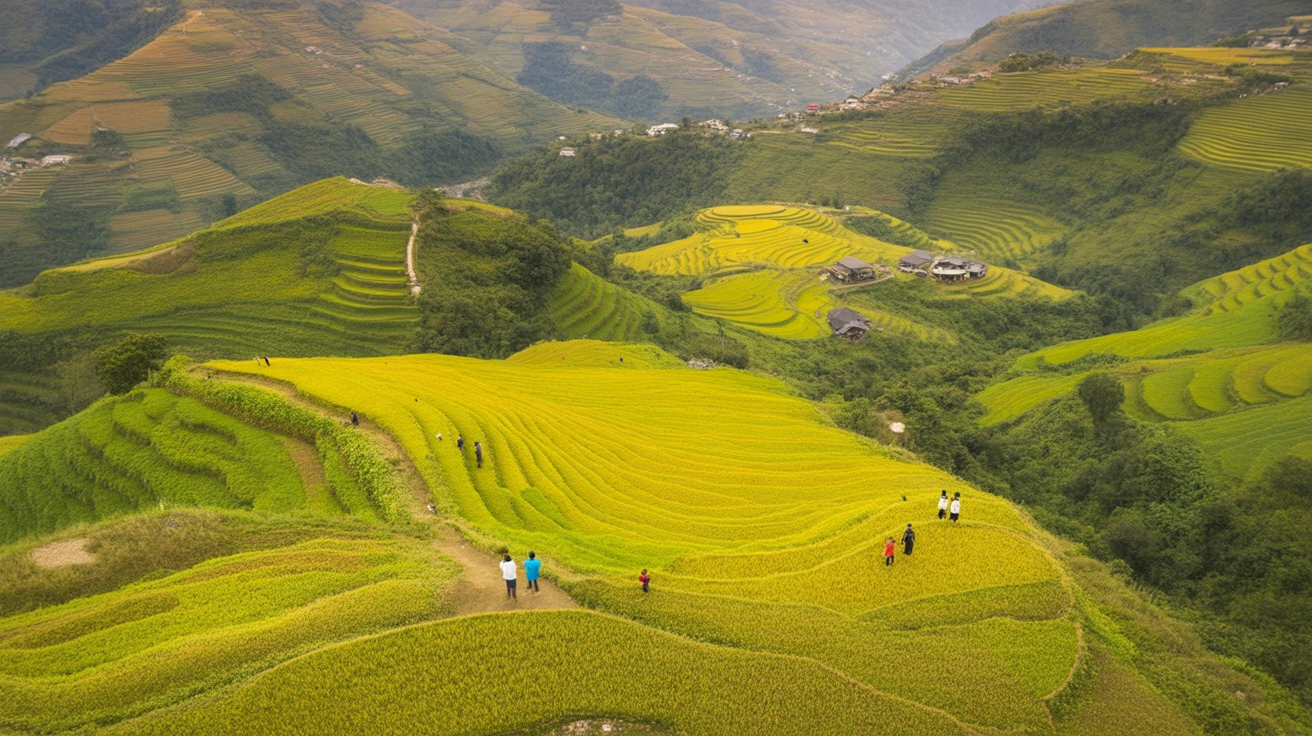
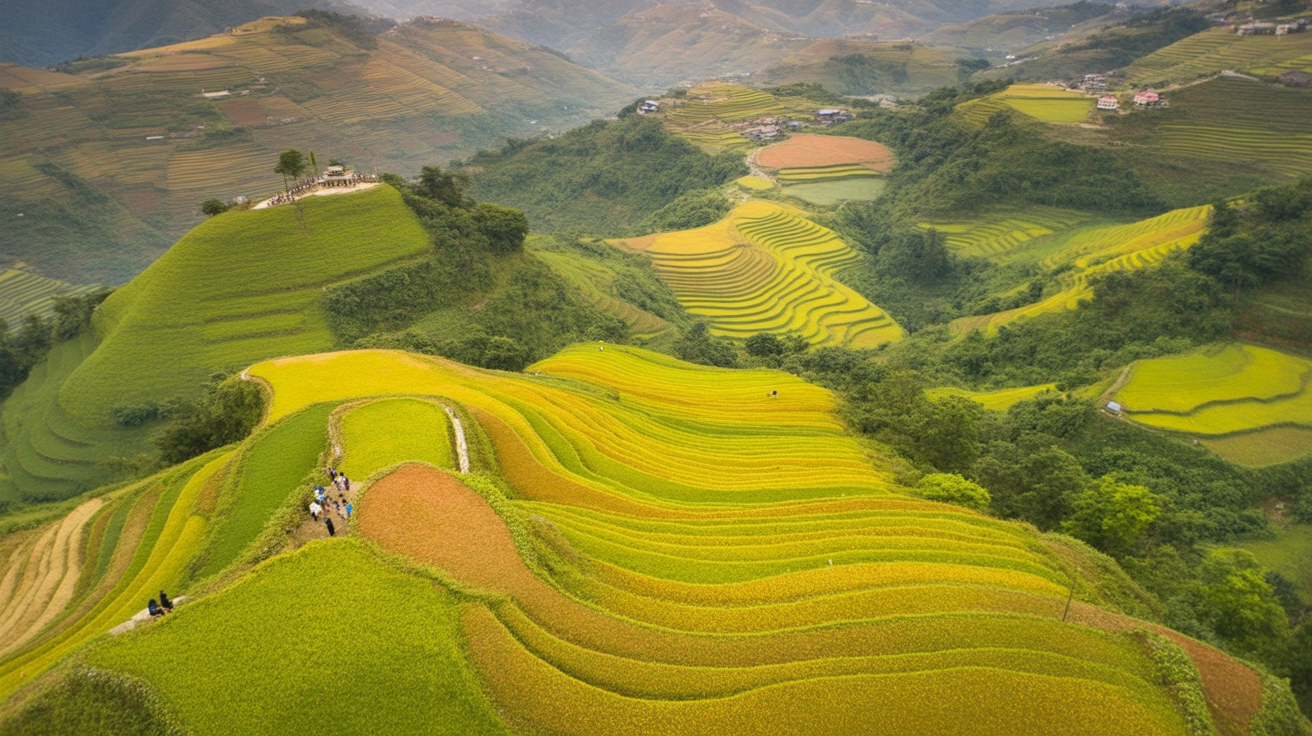
September–October (best overall): The paddies turn from green to gold as harvest approaches. Lower valley terraces ripen first, upper paddies follow. By early October the full Muong Hoa Valley is amber-gold. Weather is clear in the mornings with afternoon cloud. This is the most visited season and the most crowded — book accommodation 3–4 weeks ahead. The terraces at 7am in October, with valley mist still sitting below the ridge line, are the images you came for.
March–April (excellent): Planting season. The terraces are flooded — standing water reflects the sky, new rice is electric green, the geometry of the terrace system is most visible. Fewer tourists than October. Peach blossoms on the higher ridge paths in late March. A genuinely different and equally rewarding version of the landscape.
December–January: Cold, clear, post-harvest grey. The terraces are stripped to stubble, which reveals the architectural structure of the carved hillside in a way that the growing season obscures. The best weather window for the Fansipan summit trek — clear skies, no leeches, snow possible above 1,800m. Not a landscape photography trip, but a serious mountain experience.
June–August: Heavy monsoon. The rice grows tall and dense, the terraces are full green, and persistent cloud reduces valley visibility on most days. Leeches are active on the trails from May through August. Doable but not the Sapa most people plan for. If August is your only window, adjust expectations rather than cancel — the mountains in monsoon have their own atmosphere, and the villages are less crowded.
Where to Stay in Sapa
The single most important accommodation decision you’ll make for a Sapa trip: stay in the valley, not the town.
Sapa town has a full range of accommodation — dorm beds from 120,000 VND (~$4.55), guesthouses from 300,000 VND (~$11), mid-range hotels from 800,000 VND (~$30), and high-end options up to 4,000,000+ VND (~$150+). It has restaurants, ATMs, booking offices, gear shops, and easy bus station access. It does not have rice terraces outside the window or H’mong grandmothers making rice wine before breakfast.
>Ta Van homestay at dawn — 7km from town, a different world
Ta Van village (7km from town, 30 min by xe ôm at 50,000–80,000 VND): Family homestays from 150,000 VND (~$6)/person including breakfast and dinner. The H’mong Sisters Homestay is the most-referenced option; Ta Van Ecostay runs 650,000–920,000 VND (~$25–35) for a private room with hot shower. Phori’s House (1,050,000–1,580,000 VND/~$40–60) has Instagram-famous bungalows with terrace views. Wake up in the valley, walk out the door into the rice fields.
Tả Phìn village (12km north of town): Red Dao community homestays, 150,000–200,000 VND/person. Less visited than Ta Van, different ethnic community, home of the traditional herbal bath.
High-end option: Topas Ecolodge (18km from town, 3,900,000–7,800,000 VND/~$150–300) — stone bungalows on a mountain ridge, solar-powered, genuinely remote. The best hotel experience in the Sapa area, for those whose budget allows.
Full area breakdowns and specific guesthouse guidance: where to stay in Sapa.
Things to Do in Sapa
The organizing principle for Sapa activities is the same as for accommodation: what happens in the valley is worth your time, what happens in the town center is secondary.
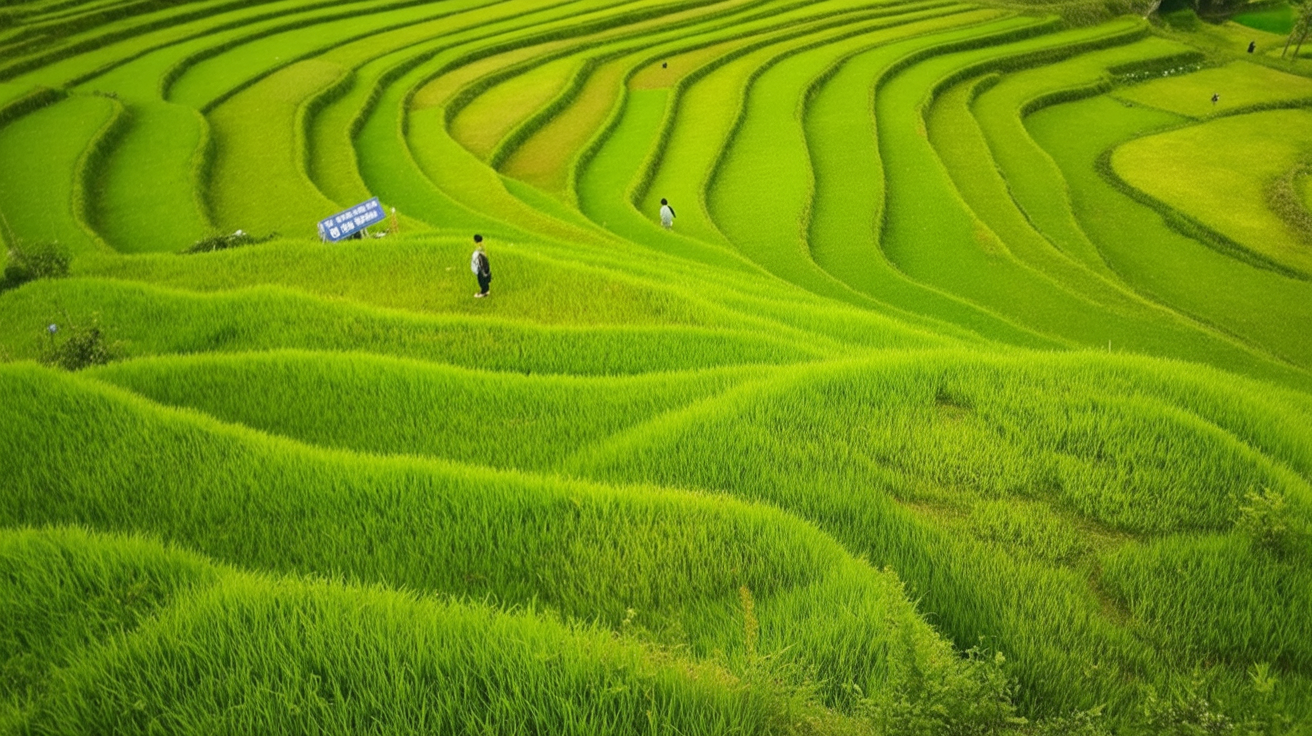
Trekking Muong Hoa Valley: The essential Sapa activity. The footpath from the valley rim to Ta Van and Lao Chai runs 15–18km over 5–6 hours, through active H’mong farming communities, past irrigation channels, between terrace walls taller than your head. Hire a local guide — 300,000–500,000 VND/day (~$11–19). The overnight format (guide + homestay dinner and breakfast: 800,000–1,300,000 VND/~$30–50) is better still.
Klook has the widest selection for Vietnam and is usually the cheapest. KKday is strong on day trips and local experiences.
car (750,000 VND + 150,000 VND funicular/~$28+6) or by serious 2-day summit trek (~1,300,000–1,950,000 VND/person including guide and mountain shelter). The cable car is worth it mid-week on a clear day; the queue on Saturdays runs 75–90 minutes. The trek is the version worth telling people about afterward.
Bac Ha Sunday Market: 70km from Sapa, the Flower H’mong market that runs weekly and represents what Sapa’s markets looked like before the tourism infrastructure arrived. Arrive before 9am. A day trip costs 400,000–650,000 VND (~$15–25)/person via shared transport.
Herbal bath in Tả Phìn: A Red Dao tradition — 20–30 mountain plants boiled and poured into a wooden tub. After two days of trekking, a religious experience for the legs. Cost: 100,000–200,000 VND (~$4–8).
Full activity guide with pricing, timing, and what to skip: things to do in Sapa. For trekking specifics: Sapa trekking guide.
How to Spend 2, 3, or 4 Days in Sapa
Most Sapa trips run 2–4 nights. The difference between them is not more of the same — each extra day unlocks a different landscape or community.
2 nights (3 days) — the minimum viable Sapa trip:
Day 1: Arrive at 4–6am from Hanoi overnight bus. Check into Ta Van homestay. Sleep until 8am. Morning walk through the lower Muong Hoa Valley from the homestay — no guide needed for the main path between Ta Van and Lao Chai, about 4km. Afternoon rest and homestay dinner. Early night.
Day 2: Full guided trek with local H’mong guide — Muong Hoa Valley rim to valley floor and back, 15–18km, 5–6 hours. Bring water (2L minimum), snacks, and a rain layer. End the day with the herbal bath if your legs demand it (or your guide’s mom runs one). Second homestay night.
Day 3: Morning free in the valley — photography, market stall, second coffee before the xe ôm back up to Sapa town. Catch the afternoon bus back to Hanoi (departs 1–2pm, arrives Hanoi 7–9pm).
3 nights (4 days) — the better trip: Add Day 3 as a Bac Ha Sunday market day trip (Sunday only, 70km, 400,000–650,000 VND/person via shared transport). Or use Day 3 for the O Quy Ho Pass motorbike loop — the 50km pass west of Sapa descends through cloud forest to the valley below before climbing back. Dramatic road, moderate riding skill required.
4 nights (5 days) — for serious trekkers: Replace the standard guided day trek with an overnight in the deep valley — guide leads you deeper into the Muong Hoa system, sleeps in a more remote village (guide arranges, 400,000–600,000 VND/person for accommodation and meals), returns next morning. Alternatively, use the extra day for the Fansipan summit trek (2 days, 19km, mandatory guide).
→Who It’s For
The 2-night format is right for travelers on tight schedules who want to experience the valley without the full commitment. The 3+ night format is for people who came to Sapa specifically — not fitting it into a packed 10-day Vietnam circuit. If Sapa is the only reason you’re in northern Vietnam, give it 3 nights minimum.
Food in Sapa
Sapa’s food scene divides cleanly into two categories: tourist restaurants in town and actual local food.
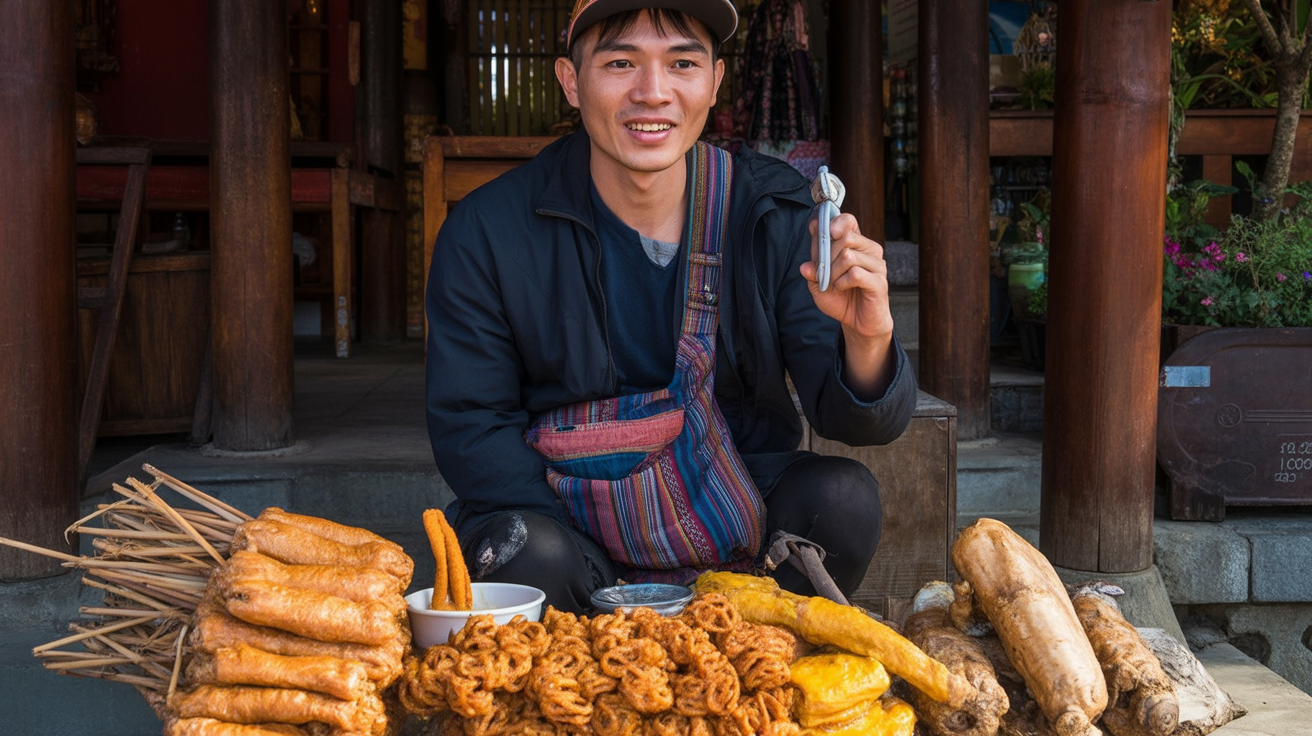
Local dishes worth seeking out:
Thắng Cố (say: tang co): A traditional H’mong stew made from horse meat, organs, and mountain spices — cooked in a cauldron and sold at Sapa market and some village stalls. An acquired taste. The smell hits from 30 metres. Genuinely traditional, genuinely good once you get past the production method.
Black Chicken (gà đen, say: ga den): H’mong black-boned chicken, typically grilled or stewed. Smaller, leaner, and more flavorful than conventional Vietnamese chicken. Available at valley homestays and the better local restaurants in town. A whole chicken for two people runs 150,000–250,000 VND (~$6–9).
Corn wine (rượu ngô, say: roo-oh ngo): Clear mountain grain spirit, somewhere between vodka and something homemade in a barn. The village version is stronger than the bottled version. A shot at a homestay costs nothing — it’s hospitality. A bottle from the market: 30,000–60,000 VND (~$1–2).
Wild mountain vegetables: The best homestay meals include a spread of locally foraged vegetables — bitter greens, bamboo shoots, mushrooms — cooked simply. Better than anything on the Sapa town restaurant menus.
For town restaurants: the street running southeast from the market square has a cluster of Vietnamese options serving rice dishes and hotpot at local prices. The uphill streets toward the church square have tourist restaurants with English menus and prices to match. The former is better food and better value.
Budget and Costs in Sapa
What you spend in Sapa depends entirely on where you sleep and eat. The cost gap between a Ta Van homestay trip and a Sapa town hotel trip is significant:
The single biggest cost variable: accommodation in Sapa town vs village homestay. A town hotel at $35/night changes your daily budget substantially; a Ta Van homestay at $7 (including dinner and breakfast) is one of the best value propositions in northern Vietnam.
ATMs: Vietcombank and Agribank branches on Cầu Mây Street (say: co my) in Sapa town. Fees: 33,000–55,000 VND (~$1.25–2.10) per withdrawal. No ATMs in the villages — withdraw before you go down.
Practical Information
Altitude and cold: At 1,600m, Sapa is cooler than most of Vietnam year-round. Summer highs reach 22–25°C; winter nights drop to 5–10°C. Pack a proper warm layer regardless of when you visit — the temperature drops sharply at dusk and the mountain air at dawn in any season requires a jacket.
Connectivity: Sapa town has reliable 4G from all Vietnamese operators (Viettel, Mobifone, Vinaphone). Village areas have variable signal — Ta Van has decent coverage, remote trails have gaps. Download offline maps (Maps.me covers the valley trails) and save your accommodation address before leaving town.
Health: Altitude sickness is uncommon at 1,600m but some people feel lightheaded on arrival, particularly coming from Hanoi’s sea level in a single overnight journey. Give yourself a few hours to adjust before strenuous trekking. Leeches on trails from May–August: prevention is DEET on boots and lower legs; removal is salt or hand sanitizer. Travel insurance that covers mountain trekking is worth checking before you go — SafetyWing covers most activities at standard rates.
Motorbike rental: Available in Sapa town, 150,000–250,000 VND (~$6–9)/day for a 110cc semi-automatic. The mountain roads require riding experience — the switchbacks on the O Quy Ho Pass are not the place to learn. If you’re not confident on mountain roads, hire a xe ôm driver instead.
Fog and visibility: Sapa valley fog is not decorative. On bad days the visibility drops to 20–30 metres and the rice terraces completely disappear. This happens most often in July–August and December–February. There’s no reliable way to predict a clear day more than 12 hours ahead. Check Windy.com for cloud base forecasts — it’s more accurate than general weather apps for mountain conditions. If you arrive to fog, wait: conditions often clear by mid-morning.
Language: Sapa town has good English coverage at hotels, guesthouses, and tour operators. The H’mong women working as guides often speak functional English developed entirely through tourism — no formal education required. In the villages, English disappears. Your guide is your communication line; trust them.
Cash: Bring enough for your full Sapa stay from Hanoi or withdraw at the Vietcombank ATM on Cầu Mây Street before heading to the valley. Village homestays, guides, and market stalls are cash only. 1,000,000–1,500,000 VND per person per day (for a valley-based budget trip) is enough buffer; more if you’re adding Fansipan or Bac Ha.
Who Sapa Is (and Isn’t) For
Sapa works exceptionally well for: independent travelers who want cultural immersion with physical activity, trekkers comfortable with moderate mountain terrain, photographers with flexible timing around seasonal terrace changes, and anyone willing to sleep in a village rather than a hotel.

Sapa is harder for: travelers with serious mobility limitations (the valley access involves uneven terrain), people who need reliable air conditioning (villages don’t have it), anyone expecting a “pristine mountain village” in the town itself (it’s not), and families or travelers with seniors who can’t manage 15km of mountain footpath (consider Ninh Binh as an alternative — boat tours are accessible to most mobility levels).
The cable car at Fansipan has opened Sapa to a different category of visitor than the trekking community — weekend day-trippers who arrive from Lao Cai for the gondola ride and leave the same afternoon. These visitors coexist with the longer-stay trekking community without major friction, but they do change the weekend atmosphere in town considerably. If you want Sapa without that weekend layer: arrive Tuesday, leave Friday.
Frequently Asked Questions
How many days do you need in Sapa?
Minimum 2 nights (3 days). Day 1: arrive at dawn, morning in the valley, afternoon rest. Day 2: full Muong Hoa Valley trek with guide, overnight in Ta Van. Day 3: morning in the lower valley, return to Sapa for evening bus. Three nights allows you to add Bac Ha market (Sunday only) or the O Quy Ho Pass motorbike loop. One night is not enough — the logistics consume it.
Is Sapa safe for solo travelers?
Yes. Solo trekking is the main consideration — trails branch without signs, and getting lost in the lower valley adds hours. Hire a guide for your first day. For solo female travelers specifically: Sapa is generally safe; the H’mong women who work as guides and homestay hosts are experienced with international solo women travelers. Standard travel awareness applies: tell someone your intended route, carry a charged phone, don’t push trails beyond your ability in poor weather.
What is the difference between Sapa and Ha Giang?
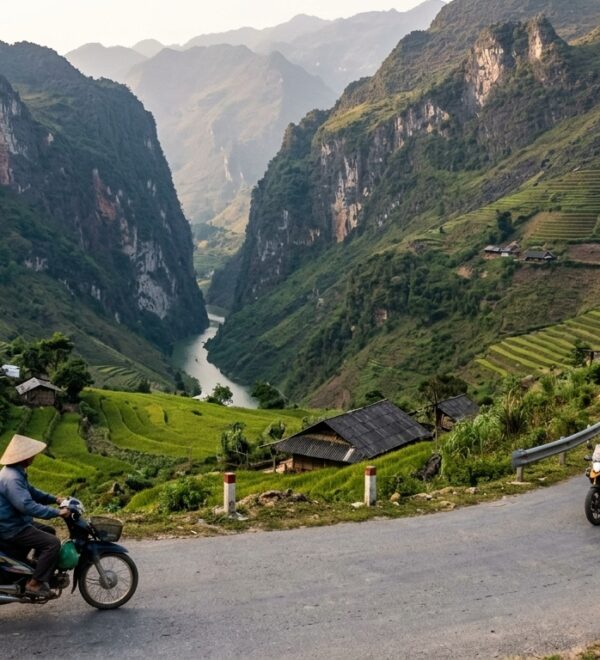
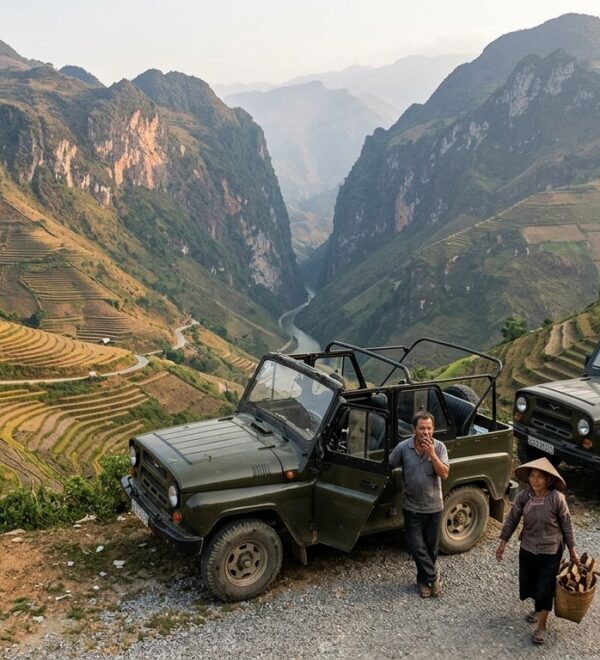
Sapa is easier to access (5–6 hours from Hanoi vs 8–10 for Ha Giang), has better accommodation infrastructure, and features rice terrace landscape with village trekking as the primary activity. Ha Giang is a motorbike or jeep tour through dramatic limestone karst passes — a more remote, more physically demanding trip. On a 2-week itinerary, you can do Sapa first (accessible, gentle introduction to north Vietnam mountain culture) and Ha Giang second (harder, wilder, the circuit that most people say changes the way they see the country). They’re not competing — they’re sequential.
Can you combine Sapa with Ninh Binh or Ha Long Bay?
Yes — both are common additions to a north Vietnam circuit. The typical sequence: Hanoi → Ninh Binh (2 nights) → back to Hanoi → overnight bus to Sapa (2–3 nights) → return to Hanoi → Ha Long Bay (2 nights overnight cruise). This covers the three major northern landscapes — karst river valley, mountain rice terraces, limestone sea karst — in about 10 days. See the full north Vietnam itinerary for the routing with transport details.
Two things worth sorting before you land: a Vietnam eSIM so you have data the moment you clear customs, and travel insurance — medical costs for uninsured foreigners in Vietnam are significant.
Airalo eSIMs activate instantly. Buy before departure — airport SIM queues in Vietnam can take 30+ minutes.
The Version of Sapa Worth Having
The Sapa that gets written about — on forums, in travel magazines, in the photographs that make people book the flight — is not in the town center. It’s in the valley below, in the village homestays, on the footpaths between terraces, at the kitchen table of a family who’s been farming this hillside for generations.
Getting to that version requires one specific decision: don’t stay in Sapa town. Everything else follows. The guide who takes you through the valley works from the village. The terrace landscape is outside your homestay window, not a viewpoint you visit. The food is on the family table, not a restaurant menu.
Two nights minimum. Village accommodation. Local guide on the trail. September or October for the gold, March for the mirrors. The town exists to supply logistics — bus tickets, ATMs, gear. Use it for that. Sleep in the valley.
For the full northern circuit, our northern Vietnam guide covers how to sequence these destinations efficiently.