Last updated: May 2026 · Jake Morrison · 5 years in Vietnam
April has a specific heat signature — one that rewards planning and punishes people who show up expecting March conditions. The central coast reaches its annual temperature peak this month — Hoi An’s ancient town at 2pm in late April is 32°C with no cloud cover. It’s the version of central Vietnam that looks exactly like the brochure but requires a bit more planning than February. The strategy is the same as any hot climate: mornings and evenings outside, middle of the day somewhere with shade, a fan, and a cold drink.
The north in April is genuinely different from January: Hanoi is warm enough for T-shirts most of the day, Ha Giang is excellent for the Loop, and the first green of the rice season starts to show in the lowlands around Ninh Binh. It’s not the dramatic harvest gold of October or the fluorescent terraces of May-June, but April north Vietnam has a freshness — the trees are putting out new leaves, the light is sharper than in the humid summer — that’s its own kind of good.
April at a Glance — The Whole Country Works
April is the rarest thing in Vietnam’s weather calendar: a month where every major travel region is simultaneously viable. The central coast rain season ended in March. The northern mountain cold season is over. The southern monsoon hasn’t started. The window is narrow — it closes in May for the south and goes to full heat in June for the central coast — but April sits inside it cleanly.
North Vietnam in April — Warm, Green, Uncrowded
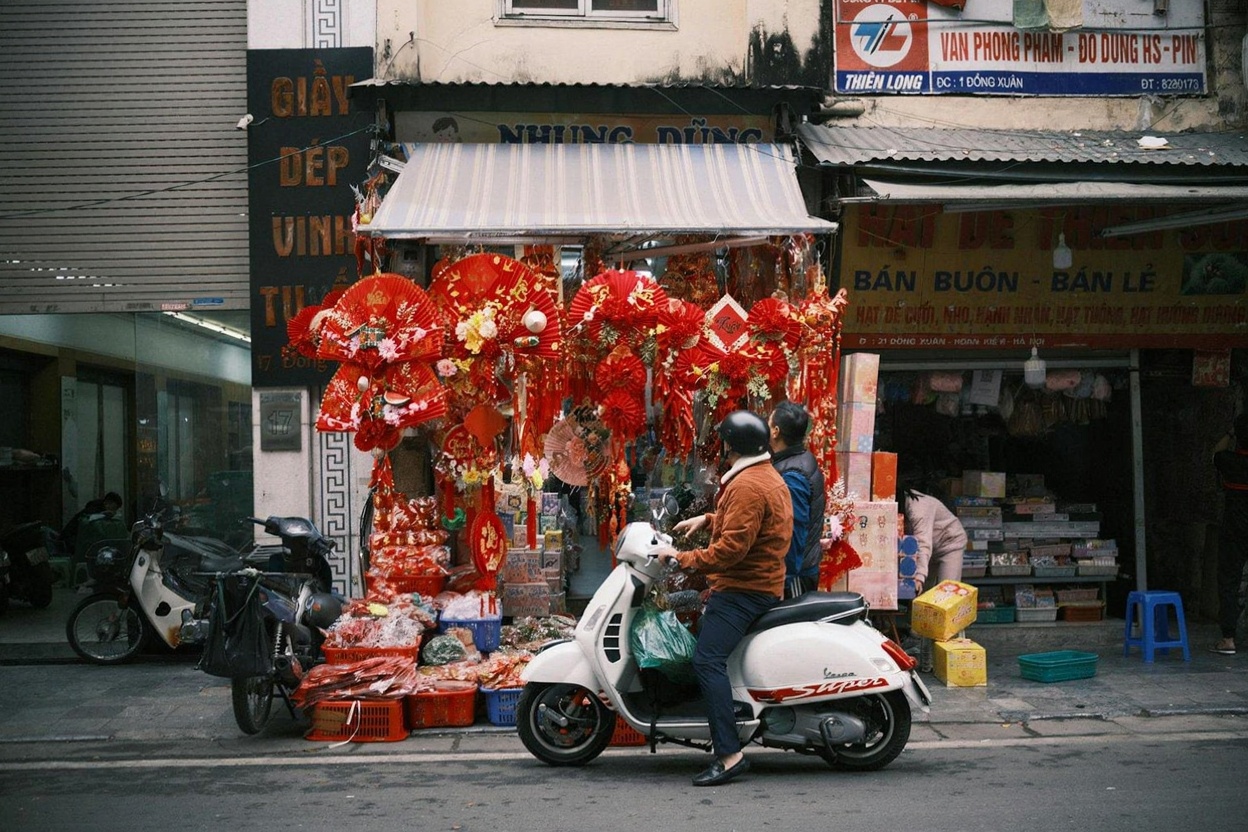
Hanoi in April is the city without excuses. Not January cold, not July humid, not October-crowded. The temperature sits at 23–30°C — warm enough for everything, cool enough for the evenings to be comfortable. The Old Quarter street food scene runs full capacity, the Hoan Kiem Lake morning walkers are out, the rooftop bars have their entire menu operational rather than the abbreviated cold-season list.
Ha Giang in April: the Loop is excellent. The buckwheat flowers are long gone, but the valley below Dong Van has new green from the spring planting. The Ma Pi Leng Pass at 1,200m sits at 18–22°C in April — riding weather, not cold weather. The guesthouses in Dong Van and Meo Vac are at their lowest occupancy of the year before the summer surge starts in May. Prices are lower than October and the trails at Lung Cu flagpole are quieter.
Sapa in April has something October doesn’t: the early rice season green. The first paddies are freshly planted — small green shoots in water-filled terraces, the Muong Hoa Valley reflecting sky on calm mornings. It’s a different aesthetic from October’s harvest gold, and it’s technically the “beginning of the photogenic window” that peaks in May-June. April is the preview: less vivid but less crowded, and the trekking conditions are good without the summer heat that makes June Sapa hikes sweaty. For a full breakdown of how April stacks up against every other month, see our best time to visit Vietnam guide.
Ninh Binh in April is worth including in any northern itinerary. The boat tours at Trang An operate in warm, clear conditions — 26–28°C at river level, no mist, the limestone karst formations clean and sharp against blue sky. The rice paddies around Tam Coc begin showing their spring green. Late April is when the paddy fields start their most photogenic phase and the tourist infrastructure handles it without the summer-peak overload.
The Hang Mua viewpoint (Đỉnh Múa — say: dinh moo-a) in Ninh Binh climbs 500 steps to a ridge overlooking the Tam Coc valley. In April, the climb is warm (26–28°C) but manageable before 9am. After that, the direct sun on the stone steps gets uncomfortable. Entry is 100,000 VND (~$3.80). At the top: the whole valley spread below in new-season green, the karst peaks rising above it, the river channels threading through. It earns the climb. Go early, bring water, take the shaded path down rather than the same exposed steps you came up.
Ha Long Bay in April: one of the better months for a cruise. The temperature (24–28°C on the water) is warm without being oppressive, the sky is clear after the winter fog lifts, and the tourist season is building but hasn’t yet hit the saturation of June–August. A 2-night cruise on a mid-range boat runs 2,500,000–4,000,000 VND (~$95–152) per person including meals and activities. April is the last comfortable month before the summer heat makes the sun deck exhausting and the snorkelling visibility starts dropping. If Ha Long Bay is on the itinerary, April morning excursions on kayak — paddling into the cave entrances with the limestone walls dripping with vegetation — are in their best window.
Central Vietnam in April — Peak Dry, Peak Heat
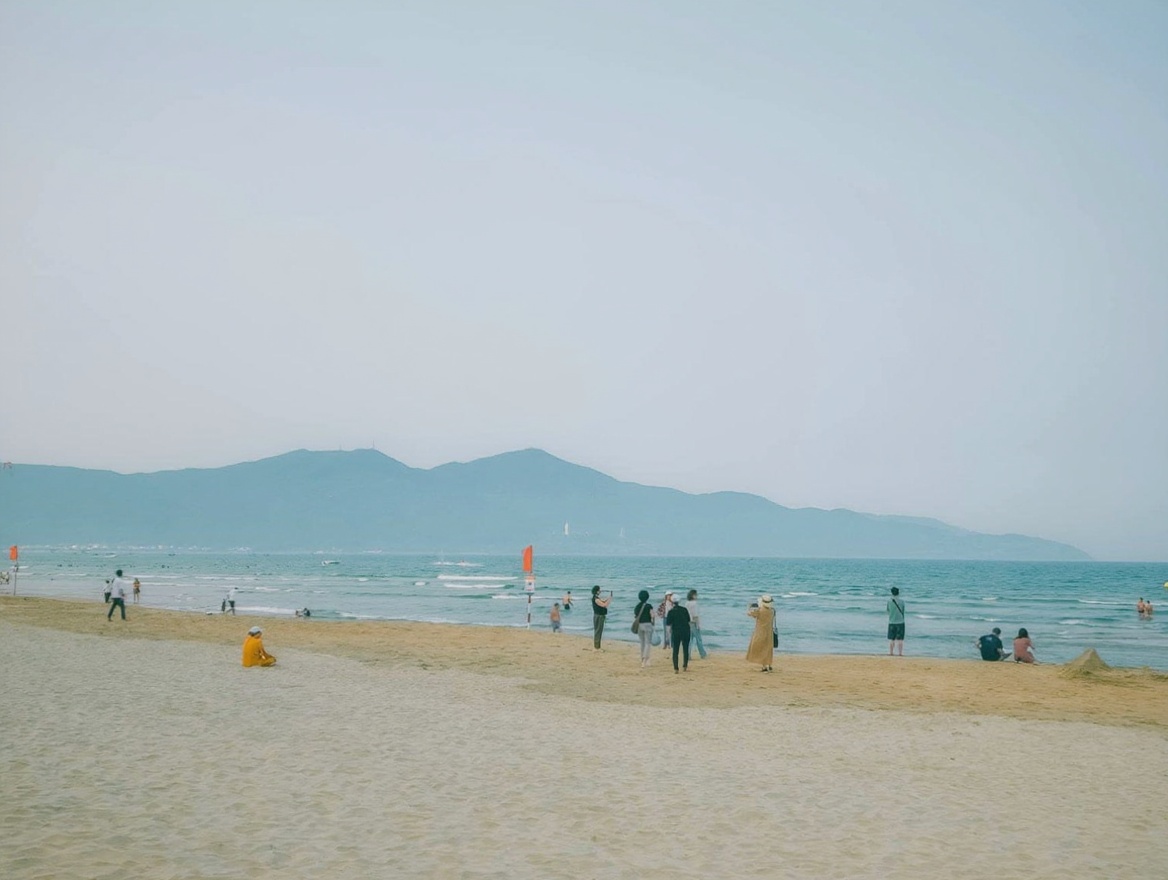
April is the hottest month on the central coast. Da Nang and Quy Nhon average 28–33°C. Hoi An and Hue push 27–32°C. Rain days drop to 4–8 per month — the dry season is at its absolute deepest. For beach travelers, April is the optimal window: the sea temperature is 27–28°C, the water is calm, the sky stays clear from dawn to dusk most days.
The heat management strategy for central Vietnam in April: prioritise morning activities (6am–10am) and evening activities (5pm–9pm). The middle of the day — specifically 11am–3pm on the coast — is genuinely hot. Not dangerous, but not comfortable for sustained walking in direct sun. The ancient town of Hoi An at noon in April is 32°C on stone paving with minimal shade. The correct move: sit in a covered café on Nguyen Thai Hoc Street with a fresh coconut (25,000 VND, ~$0.95) until 4pm, then walk the riverside in the softer afternoon light.
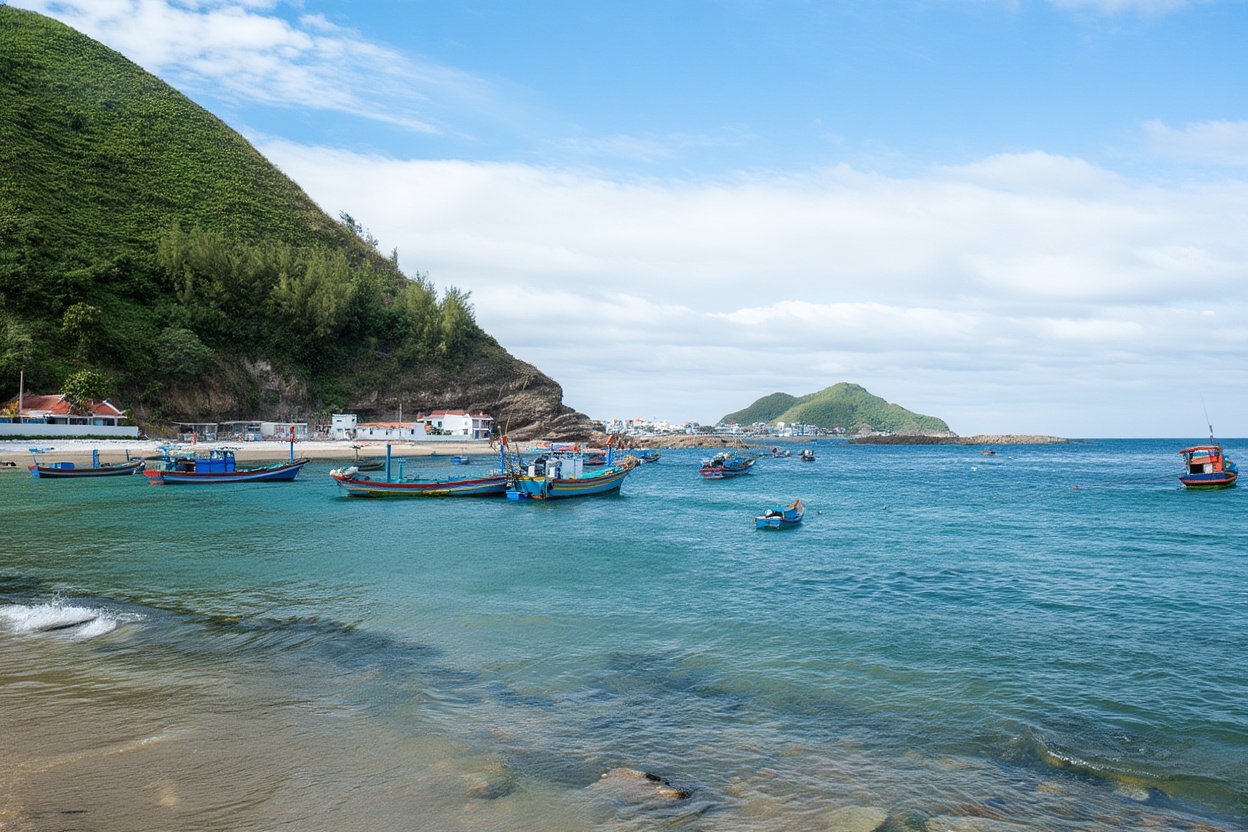
The beaches in April deserve specific attention. My Khe in Da Nang, Bai Xep and Ky Co in Quy Nhon, An Bang beach in Hoi An — all of them are in peak condition: clear water, calm surf, warm temperatures, not yet crowded with the domestic summer holiday rush that fills them in June–August. April is arguably the best beach month on the central coast. The water is warm, the sky is clear, and the person next to you on the sand is more likely to be a European in the shoulder season than a Vietnamese family in the national holiday rush.
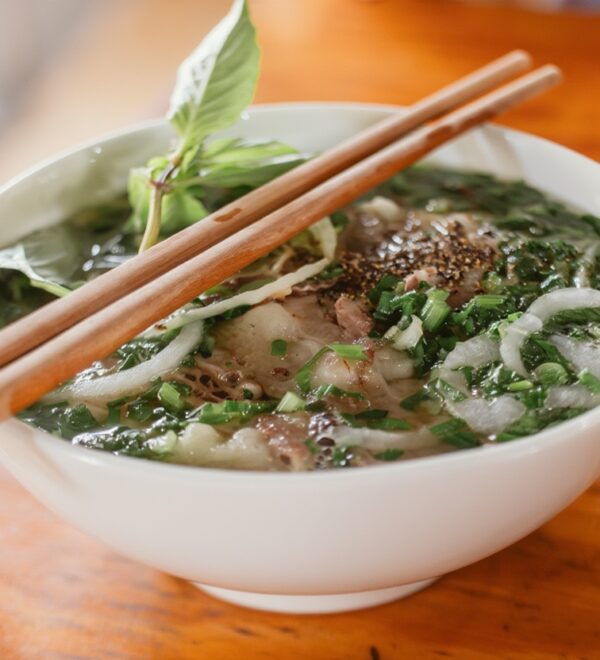
Hue in April for the food and culture traveler: the imperial tombs and the citadel are in clear light and warm temperatures. The Perfume River boat trips work. The local food scene — the bún bò Huế (say: boon baw hway) at 40,000–60,000 VND (~$1.50–2.30), the bánh bèo (say: bahn bay-oh) rice cakes at 20,000 VND per plate — is at full operation with no weather disruption.
South Vietnam in April — Final Dry Season Window
April is the last month of dry season in the south before the monsoon arrives in May. HCMC runs 32–36°C — the hottest month in the city’s calendar. It’s the kind of heat that empties the outdoor café terraces between 11am and 3pm and makes the indoor malls suddenly appealing. The rain is still minimal (5–8 days in April), but the humidity starts to build — it’s a heavier, more pressing heat than March.
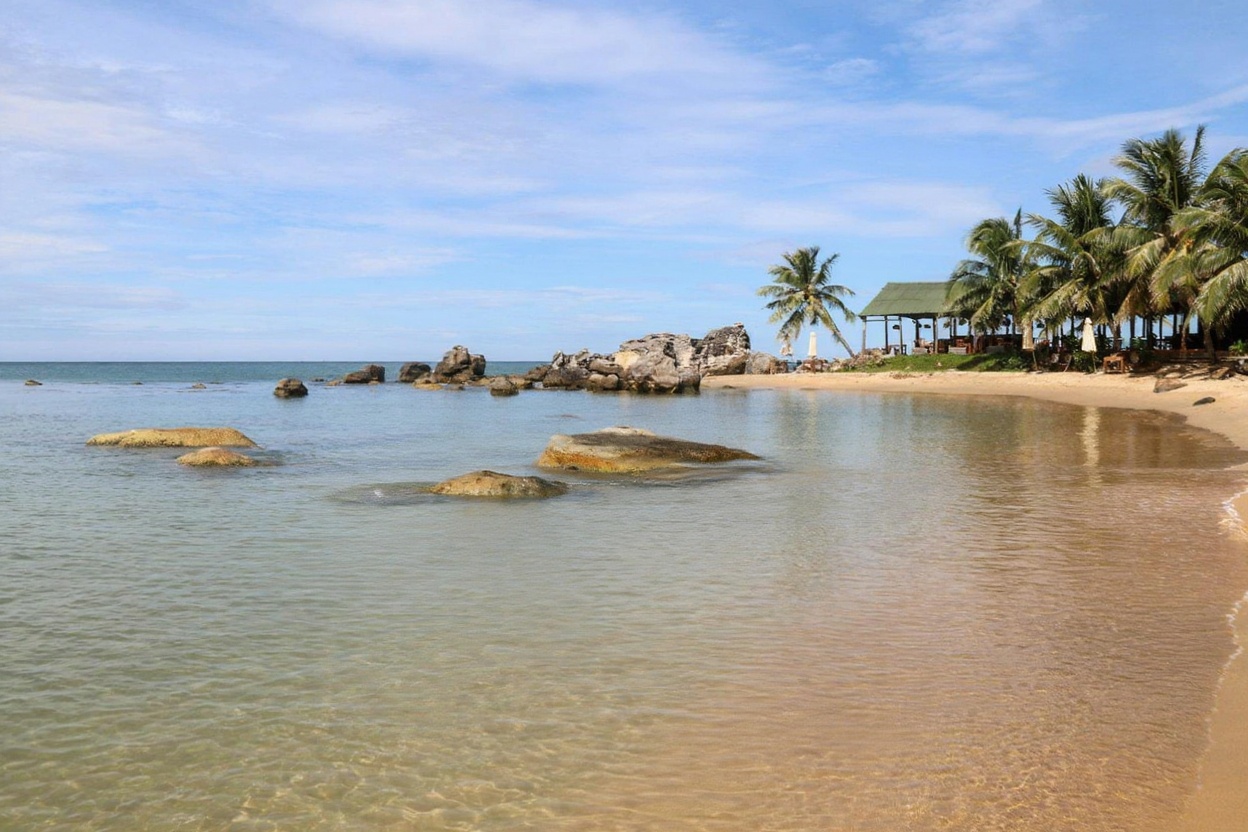
Phu Quoc in April is still operating in dry season mode but you can feel the transition coming. Seas are calm most days, beaches clear, snorkelling visibility good. By late April, some afternoon clouds build over the mountains in the island’s interior — a preview of what May brings. If you’re choosing between a March and an April Phu Quoc trip, March has marginally better conditions. April is still good, just not quite as reliable in the final week.
The HCMC–Mekong combination in April: the delta is entering its dry, low-water phase. Floating market boat tours still operate, the channels are navigable, but the lush flooded landscape of October-November is replaced by a more parched, earthier version of the delta. It’s still worth the day trip or overnight from HCMC. The Cai Rang floating market operates at 5am regardless of season, and the heat of April doesn’t reach the river channels until mid-morning.
Con Dao in April is in its final peak window before the monsoon. The beaches are at their best — Con Son beach and Bai Loi are calm, the National Park hiking trails are clear, and the turtle nesting season begins in April (sea turtles nest on Con Dao beaches from April through November — night walks with park rangers to witness nesting are available for a small fee, around 100,000–150,000 VND, ~$3.80–5.70 per person). April is arguably the best month to visit Con Dao: late enough in the dry season that the island is fully operational, early enough in nesting season that it’s a genuine experience rather than a tourist performance. Flights from HCMC to Con Son Island (Côn Đảo — say: kawn dao) run 45–50 minutes and cost 800,000–1,500,000 VND (~$30–57) return.
A note on HCMC’s April heat: 32–36°C sounds alarming but the city has an infrastructure for it that most visitors don’t use properly. The covered markets — Ben Thanh, An Dong, Binh Tay in Cholon — are shaded and cross-ventilated. The malls (Vincom on Dong Khoi, Saigon Centre, Diamond Plaza) are air-conditioned and free to enter. The riverside bars along Ton Duc Thang Street catch the Saigon River breeze from 4pm. The night food markets on Pham Ngu Lao Street and Ham Nghi run 5pm–midnight when the city temperature drops 4–6°C from its midday peak. HCMC in April rewards the traveler who moves with the city’s rhythm rather than against it.
The Best April Route — Using the Month Properly
Most travelers who get April wrong do one of two things: they spend too much time in the south during the hottest part of the day, or they skip the central coast entirely because they assume April heat means avoid. Both mistakes leave something on the table.
The April routing that works for most travelers on a 2-week trip: fly into Da Nang. Spend 2 nights in Hoi An (Ancient Town evenings, beach mornings at An Bang), 2 nights in Da Nang (My Khe Beach, Marble Mountain in morning, Dragon Bridge Sunday night), then bus south to Quy Nhon for 2 nights (the beaches at this time of year are at their clearest, the food street on Ngo Van So is running full capacity). Fly Hanoi from Quy Nhon. Spend 2 nights in Hanoi, then 3–4 days in either Ha Giang (Loop) or Ninh Binh + Sapa. Fly out from Hanoi.
The logic of this central-first route in April: you arrive on the coast at peak beach condition, before the domestic summer holiday surge fills the beaches in May-June. You end in the north, which is cooler (23–30°C) and more comfortable for cultural sightseeing than the coast at 33°C.
Alternative route for heat-averse travelers: fly into Hanoi, spend the first week in the north (Ha Giang, Ninh Binh, Hanoi), then fly to Da Nang for the coast in the second week. Arrive at the coast in late afternoon, do beach activities at the bookend hours of the day, use the hotel pool from noon to 3pm. This structure works well for families and travelers who aren’t built for sustained tropical heat but still want the central coast in its best season.
The Hai Van Pass (say: day high van) in April is worth doing if you’re connecting Da Nang and Hue. Clear sky, 28–30°C, the coastal views from the summit crisp and unobstructed. Hire a motorbike or private car for the pass — don’t do it by open tour bus, which doesn’t stop. The summit takes 30 minutes if you stop for photos. Leave Da Nang by 7am, arrive in Hue for a late breakfast bún bò Huế at one of the market-adjacent stalls (40,000–50,000 VND, ~$1.50–1.90) by 10am. For a full breakdown of how to structure your time across regions, see our Vietnam itinerary guide.
The April 30 Holiday — What Travelers Need to Know
April 30 is Reunification Day — the anniversary of the fall of Saigon in 1975, marking the end of the Vietnam War and the reunification of the country. Combined with May 1 (International Workers’ Day), Vietnam gets a 3–5 day national holiday window that triggers the largest domestic travel surge outside of Tet.
What this means in practice: trains from Hanoi and HCMC to beach destinations book out 2–3 weeks ahead. Flights are full. Popular beach towns (Quy Nhon, Da Nang, Phu Quoc, Mui Ne) fill up with domestic tourists. Accommodation prices rise 30–60% for the holiday window itself (April 28–May 2 approximately).
ℹKnow Before You Go
The April 30 holiday is predictable and plannable — it’s not a surprise, it’s a date in the calendar. If your travel dates fall across this window, book transport and accommodation at least 2 weeks ahead. If your travel dates are flexible, book around it: arrive in your destination before April 27 or after May 3, skip the surge entirely.
The holiday itself is worth experiencing if you’re in a city. HCMC holds commemorative events near the Reunification Palace and along Nguyen Hue walking street. Hanoi’s Hoan Kiem Lake has activities. It’s one of the more significant dates in Vietnamese national life — the streets have a specific energy on April 30 that is different from any other day of the year.
Two things worth sorting before you land: a Vietnam eSIM so you have data the moment you clear customs, and travel insurance — medical costs for uninsured foreigners in Vietnam are significant.
Airalo eSIMs activate instantly. Buy before departure — airport SIM queues in Vietnam can take 30+ minutes.
FAQ — Vietnam in April
Is April a good time to visit Vietnam?
Yes — one of the best months overall. The whole country is simultaneously in good condition: north warm and clear, central coast at peak dry season, south in its last reliable dry window before the monsoon. The main variable is the April 30 national holiday: if your dates overlap, book transport and accommodation 2 weeks ahead. Otherwise, April is straightforward and consistently delivers good conditions.
Is it too hot in Vietnam in April?
Hot, but manageable with the right approach. The central coast and south hit 30–36°C at peak midday. The adjustment is simple: outdoor activities in the morning and evening, shade and air conditioning from 11am–3pm. The heat is not extreme by Southeast Asian standards. Singapore, Bangkok, and Jakarta run similar temperatures year-round — Vietnam in April is not an unusual challenge for tropical travelers. The north (Hanoi 23–30°C) is more comfortable and doesn’t require significant heat management.
What is Reunification Day in Vietnam?
April 30 marks the fall of Saigon in 1975, the day North Vietnamese forces entered the city and the Vietnam War effectively ended. Combined with May 1 (International Workers’ Day), it creates a major national holiday that triggers domestic travel. HCMC and Hanoi hold public commemorations. Many shops and businesses close on April 30 itself. It’s a significant date in Vietnamese national identity — the country treats it seriously, without the tourist-facing festival atmosphere of Tet.
April vs March — which is better for Vietnam?
Both are excellent; the choice depends on your tolerance for heat and your preferred itinerary. March: slightly cooler on the central coast (23–28°C vs 27–33°C in April), the north is still warming up, the south is fully dry. April: hotter everywhere, peak beach conditions on the central coast, the north is fully warm. For beach-focused itineraries, April’s calmer and clearer sea conditions give it a slight edge on the central coast. For full-country trips at comfortable temperatures, March is more forgiving.
Are there any festivals or events in Vietnam in April worth planning around?
Reunification Day (April 30) is the main national event — not a tourist festival but a significant national commemoration with public events in HCMC and Hanoi. Thanh Minh (grave-sweeping festival, falling in early April on the lunar calendar) is observed quietly at family level — you might see families visiting cemeteries but it doesn’t affect traveler logistics. The Hue Festival (held every two years in even years) falls in late April-early May in applicable years — a major arts and culture event with performances in the Imperial City. Check the current year for exact dates as the Hue Festival schedule shifts.
Can I see turtles in Vietnam in April?
Yes — Con Dao is the best place in Vietnam for sea turtle experiences, and the nesting season begins in April. Female sea turtles come ashore at night on Con Dao beaches to lay eggs from April through November. Con Dao National Park runs guided night-watching tours (100,000–150,000 VND, ~$3.80–5.70 per person) from the park office. The experience is not guaranteed every night — it depends on which turtles come ashore — but April and May are consistent opening months. Book through Con Dao National Park directly, not through tour operators.