Last updated: May 2026
Da Nang has a reputation problem. It’s sandwiched between two places that travel writing obsesses over — Hoi An (lanterns, tailors, 500-year-old merchant streets) and Hue (imperial citadel, royal tombs, the most complex food culture in Vietnam). By comparison, Da Nang is just a city: wide roads, good beaches, a dragon bridge that spits fire on weekends.
That’s not a bad thing. One Reddit user got it right: “Da Nang is a more chill city and not as hectic as Saigon or Hanoi. You’ve got a great beach, loads of bars and restaurants, and Marble Mountain is well worth going to.” Another added: “Da Nang deserves at least 3 to 5 days on its own. Very clean, great weather, great places to eat. Wish I was in Da Nang right now.” A third, sitting on My Khe Beach on arrival day: “I feel already kinda… bored? Bit worried is 4 nights too much now.”
All three are telling the truth. Da Nang rewards people who know what it is. Here’s how to use it.
My Khe Beach — The Main Draw
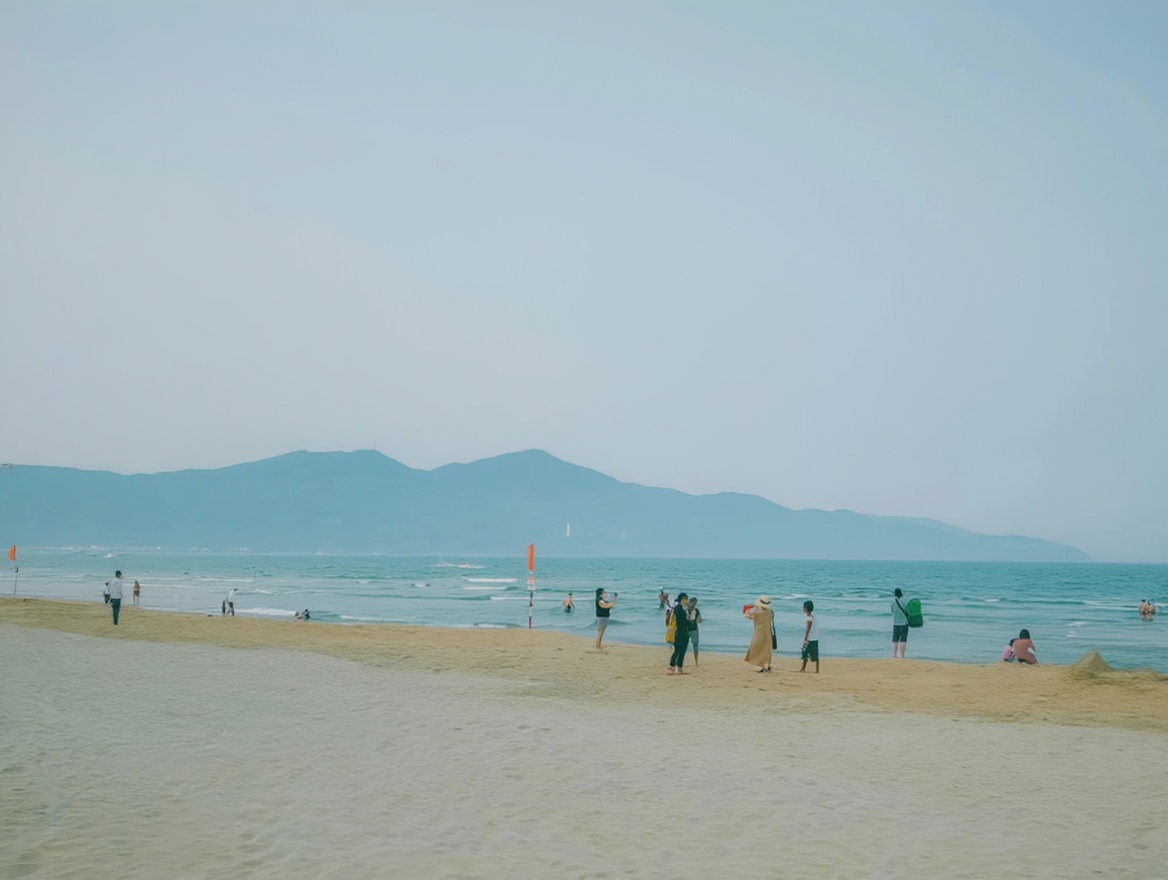
My Khe (say: mee kheh) stretches 30 km south from the Son Tra peninsula along the edge of the city. It is, by any reasonable measure, an excellent urban beach: wide, clean, consistent surf, and largely uncrowded outside of the July–August Vietnamese summer holiday peak. The water is warm from April through November. The sand is pale and fine. Sunbeds and umbrellas rent for 30,000–50,000 VND (~$1.15–1.90) from the beach clubs that line the promenade; you can also just put down a towel on the public sections for free.
The honest caveat is the sun. “Don’t be fooled by the nice weather, the UV rays will smoke you” is a direct Reddit quote from someone who learned this the hard way. Da Nang’s central Vietnam position means strong sun from March through September, and the sea breeze makes it feel cooler than it is. Sunscreen, reapplied properly, is not optional here.
My Khe has waves from October through March — consistent 1–2 metre swell, surfable for beginners and intermediates. Surf schools line the promenade: lessons run 350,000–500,000 VND (~$13.30–18.98) per session including board rental, typically 90 minutes in the water with an instructor. April through September is calmer for swimming but the surf disappears. The beach itself is well-maintained year-round; Da Nang city council runs a visible cleaning operation from 5–7am that keeps it noticeably cleaner than most Vietnamese beaches of comparable size.
ℹKnow Before You Go
“No swimming” signs appear at some sections of My Khe when rip currents or jellyfish are present. These are enforced by lifeguards in peak season. Check the flag system: green = safe, yellow = caution, red = no swimming. Don’t treat them as suggestions — the rip currents off My Khe are fast and several drownings occur each year.
Son Tra Peninsula — The Underrated Half-Day
Son Tra (say: son tra) is a forested mountain peninsula jutting into the sea north of Da Nang’s city centre — 15 minutes by Grab from the beach strip, but feeling entirely separate from the city. The road up through the jungle is one of the better drives in central Vietnam: switchbacks through old-growth forest, occasional red-shanked douc langurs visible in the canopy (one of the most endangered primate species in Asia), and views west over Da Nang Bay that make the city look implausibly compact.
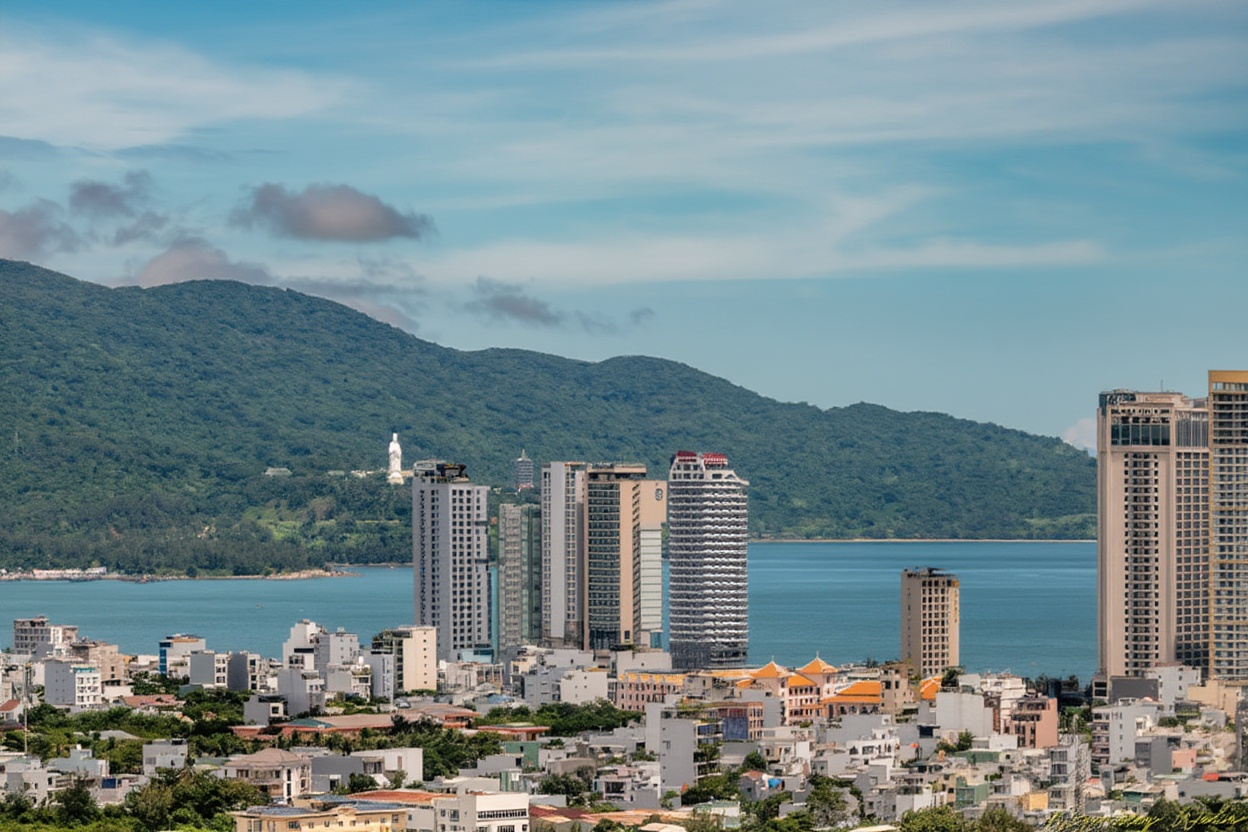
At the top sits Linh Ứng Pagoda, home to the 67-metre Lady Buddha statue that appears in every Da Nang photograph. The statue faces the sea — specifically, according to tradition, to protect fishermen from storms. Up close it’s genuinely impressive: 17 storeys tall, with 21 smaller Bodhisattva figures around the base. The pagoda complex itself is active and well-maintained; the incense smoke drifts across the forecourt with the sea wind in a way that’s hard to replicate at more crowded sites.
The langur watching is best early morning (6–8am) on the road before the pagoda — the monkeys are most active in the cool hours. No guarantee of sightings, but the road is worth driving slowly regardless. The beaches on the south side of the peninsula (Bãi Tiên Sa) are small, quiet, and almost entirely tourist-free — a different Da Nang experience from My Khe.
Dragon Bridge — Free, Spectacular, Weekend Only
The Dragon Bridge (Cầu Rồng) crosses the Hàn River in the city centre — a 666-metre steel bridge built in the shape of a dragon, opened in 2013 for Da Nang’s tourism push. On Saturday and Sunday nights at 9pm, the dragon breathes fire and then water from its mouth for about 15 minutes. It’s free. It’s genuinely spectacular. The riverside fills up early.
Position yourself on the east bank (Trần Hưng Đạo road side) for the best angle on the fire and water effects. The west bank works but puts you at the wrong angle for the head. Arrive by 8:30pm for a good spot; the show is over by 9:20pm and the crowd disperses quickly. The riverside restaurants and cafes along both banks are reasonable places to eat before the show — overpriced by Vietnamese standards but fair for the setting. The crowd is a good mix of Vietnamese families, domestic tourists, and international visitors; the fire breathing gets a genuine collective reaction regardless of who’s watching.
Outside of weekend nights, the bridge is still worth seeing lit up in the evening — the LED dragon scales change colour in sequence across the full length of the bridge — but don’t make a specific trip for it on a weekday. It’s a walk-by, not a destination. The riverside promenade (Bạch Đằng street on the west bank) is a decent evening walk regardless: the Hàn River is wide here, the breeze comes off the water, and the city lights reflect in a way that makes Da Nang look more dramatic than it does by day.
Cham Museum — Don’t Skip This One
The Cham Museum (Bảo tàng Điêu khắc Chăm) holds the world’s largest collection of Cham sculpture — over 300 pieces, spanning 7th to 15th century AD, from a Hindu civilisation that dominated central Vietnam for nearly a thousand years before being absorbed into the Vietnamese kingdom. The museum opened in 1919; the building itself, French colonial with Vietnamese roof ornaments, is handsome in a way that most provincial museums aren’t.
The collection is not well-publicised, which means it’s quiet even on busy Da Nang days. You’ll likely share it with a dozen people at most. The pieces are extraordinary: the dancing Shiva reliefs from Trà Kiệu (9th century), the Ganesha from Đồng Dương, the ceremonial altars from My Son. These aren’t fragments — they’re complete panels and statues, carved from sandstone in styles that connect directly to Angkor-period Cambodian art while being unmistakably their own tradition.
Entrance: 60,000 VND (~$2.30). Allow 1.5 hours. Open daily 7am–5pm. Located at 2 Tháng 9 street, central Da Nang, walkable from the riverside. No photography restrictions inside the main halls.
★Jake’s Pick
The Cham Museum is the single best reason to stay in Da Nang itself rather than treating it purely as a transit base for Hoi An. Most people skip it. The ones who go tend to describe it as the thing they remember most about the city. Go in the morning when the light hits the open-air courtyards well.
Han Market and Con Market — For the City, Not the Souvenirs
Chợ Hàn (Han Market) is Da Nang’s central covered market — three floors of fresh produce, dry goods, street food, fabric, and tourist souvenirs. The ground floor wet market (seafood, meat, vegetables) is the reason to go: this is where the city shops. The smell of fresh fish and Đà Nẵng-style bánh mì (a regional variant, denser and more herb-heavy than the Hoi An version) at 6am is specific to this place.
The tourist floors sell the same marble carvings and silk items available at every market in central Vietnam, at market prices rather than the Non Nước village prices where they’re actually made. Browse if you enjoy it; don’t come specifically for souvenirs.
Chợ Cồn (Con Market), 10 minutes west on foot, is larger, cheaper, and almost entirely tourist-free. Better for day-to-day goods — cheap clothing, local snacks, household items — and the kind of food stalls that don’t have English menus. This is the more honest market experience if you want to see the city operating for itself.
For eating: the Hàn Market ground floor has a handful of bún bò Huế (spicy Hue-style beef noodle soup, say: boon baw hweh) stalls that open at 6am and are gone by 9am. A bowl costs 30,000–50,000 VND (~$1.15–1.90). This is breakfast. The restaurants on Trần Phú street facing the river have better coffee and worse prices; trade-off is the Hàn River view.
Getting Around Da Nang
Da Nang is large and spread out — not a walking city in the way that Hoi An or Hue’s old quarters are. The practical options:
For the full breakdown on getting in from the airport — Grab prices, the Hoi An direct option, and when fast track is worth it — see the Da Nang airport guide.
12Go covers most Vietnam routes — sleeper buses, trains, and island ferries. Compare schedules and book in advance during peak season (Dec–Feb, Jun–Aug).
For the full breakdown on getting in from the airport — Grab prices, the Hoi An direct option, and when fast track is worth it — see the Da Nang airport guide.
Grab: Works reliably throughout Da Nang and the surrounding area. GrabBike (motorbike) is faster through traffic and costs 30–50% less than GrabCar. From the city centre to My Khe Beach: 30,000–50,000 VND (~$1.15–1.90). To Son Tra pagoda: 60,000–90,000 VND (~$2.30–3.40). To the Marble Mountains: 80,000–120,000 VND (~$3.05–4.55).
Motorbike rental: 150,000–250,000 VND (~$5.70–9.50) per day from rental shops near the beach strip. Good for Son Tra Peninsula (the switchback road is much better at your own pace), Hai Van Pass, and combining multiple stops without Grab waits. Da Nang traffic is significantly lighter than Hanoi or Saigon — manageable for riders with some Vietnam experience.
Bicycle: The city has a cycle path running along the beachfront from the Dragon Bridge south past My Khe. Rentals available from most hotels and guesthouses for 50,000–80,000 VND (~$1.90–3.05) per day. Practical for the beach strip; not practical for Son Tra or the Marble Mountains.
Hai Van Pass — For the Road, Not the Destination
Hai Van Pass (Đèo Hải Vân, say: hay van) is a mountain pass 30 km north of Da Nang on the road to Hue, climbing to 496 metres above the Trường Sơn range before descending to Lăng Cô Beach. It was made famous in Vietnam as a set piece on Top Gear in 2008. The road is genuinely one of the most scenic drives in Southeast Asia — the coast visible on both sides of the ridge, the South China Sea east and Da Nang Bay west.
The pass is best done by motorbike, rented in Da Nang for 150,000–250,000 VND (~$5.70–9.50) per day. The one-way ride takes about 45 minutes; most people do it as part of the Da Nang–Hue overland section rather than a pure day trip. If you’re moving between cities, taking the mountain road rather than the tunnel is the obvious choice — the tunnel is 30 minutes faster and misses the entire point.
At the top: a Vietnamese military fort remnant (used by the French, then the Americans, then the North Vietnamese Army in sequence) with views in both directions, and a few stalls selling drinks and instant noodles. The views from the summit looking south to Da Nang Bay are among the better panoramas in central Vietnam — the city compressed against the coast, the Marble Mountains visible as a cluster of limestone bumps against the flat coastal plain. It’s the road that justifies the trip, not the summit, but the summit earns 20 minutes.
Note for non-riders: the pass can be done as a tour from Da Nang, typically bundled with Hue stops for 800,000–1,200,000 VND (~$30.40–45.60) per person. This works if you don’t ride — but the bus windows somewhat defeat the point of a mountain road. The Reunification Express train between Da Nang and Hue also traverses the pass at the coastal base — the Hai Van tunnel bypasses the mountain, but the old coastal route (ask for a seat on the sea side) offers one of the more scenic rail stretches in Vietnam.
What Da Nang Is Not Great For
Being honest: Da Nang doesn’t have the concentrated cultural density of Hue or the heritage atmosphere of Hoi An. A visitor who arrived expecting the same quality of “walking around and stumbling into things” experience that those cities offer is going to feel like something’s missing.
One thing Da Nang does have that most guides overlook: the Da Nang Pink Cathedral on Trần Phú — a genuine French Gothic church from 1923 with a famous rooster weathervane, free to enter, and worth the 15-minute visit.
One thing Da Nang does have that most guides overlook: the Da Nang Pink Cathedral on Trần Phú — a genuine French Gothic church from 1923 with a famous rooster weathervane, free to enter, and worth the 15-minute visit.
The city also has a significant nightlife and massage industry that can feel overwhelming if you’re not expecting it. One Reddit commenter described Son Tra at night with straightforward clarity. The bar strip along the beach is functional rather than atmospheric. None of this is a secret or a problem — it’s just worth knowing what you’re arriving into.
For most itineraries, Da Nang works best as a comfortable, affordable base for exploring the central Vietnam cluster — the Marble Mountains to the south, Hoi An 30 km down the coast, the Hai Van Pass and Hue to the north. Two to three nights is the right allocation for most travellers. The city is also genuinely pleasant to eat in: the central Vietnam food tradition — mì Quảng (turmeric noodles), bánh xèo (sizzling crepe), bún chả cá (fishcake noodle soup) — is well-represented at the market stalls and local restaurants between the river and the beach. Budget about 60,000–100,000 VND (~$2.30–3.80) per meal at places without English menus; double that in tourist-facing restaurants. For the best regional food in central Vietnam, Hoi An’s food scene runs deeper — but Da Nang feeds you well enough for the days you’re based here.
Jake’s Confession
I spent three days in Da Nang before my first visit to the Cham Museum. Every morning I walked past the museum sign on the way to the beach and told myself I’d go “later.” It was a museum. Museums could wait.
On my last afternoon, with two hours to kill before a night bus to Hue, I finally went in. I stayed for two and a half hours. The dancing Shiva relief from Trà Kiệu — a sandstone panel about 1.5 metres tall, carved in the 10th century, the figure in mid-motion in a way that still looks kinetic — is one of the better pieces of sculpture I’ve seen anywhere in Southeast Asia. The room was almost empty. A security guard was reading something on his phone. The sculpture was just there, in a case, receiving approximately no attention from anyone.
I went back to Da Nang the following year specifically to see it again. The museum was my first stop that time — doors open at 7am, bought the ticket before anyone else arrived. Don’t wait until the last afternoon. More practically: don’t let the word “museum” make the decision for you. This one is different.
Two things worth sorting before you land: a Vietnam eSIM so you have data the moment you clear customs, and travel insurance — medical costs for uninsured foreigners in Vietnam are significant.
Airalo eSIMs activate instantly. Buy before departure — airport SIM queues in Vietnam can take 30+ minutes.
Frequently Asked Questions
How many days do you need in Da Nang?
Two to three nights covers the main attractions well: My Khe Beach, Son Tra Peninsula, the Dragon Bridge (time for a weekend night), the Cham Museum, and a day trip to either Hoi An or the Marble Mountains. Four nights is workable if you add Hue as a day trip via Hai Van Pass and slow the pace down. Five nights or more starts to feel like padding unless you’re specifically here to surf or work remotely. Da Nang is a comfortable city rather than a deep cultural destination — plan around that.
Is Da Nang worth visiting?
Yes, with calibrated expectations. Da Nang is Vietnam’s third city: clean, well-organised, great beach, reasonable prices, and centrally positioned between Hoi An and Hue. It’s not as immediately atmospheric as either of those cities, but it’s significantly more comfortable as a base. Most travellers doing central Vietnam use it as an arrival hub (Da Nang International Airport is well-connected) and a place to decompress between more intensive cultural stops.
What is Da Nang best known for?
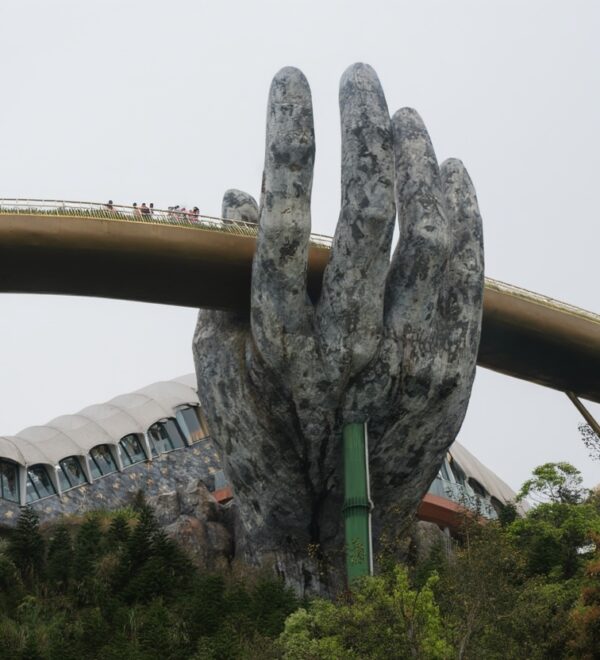
My Khe Beach and the Dragon Bridge are the most-photographed features. The Marble Mountains (10 km south) and Ba Na Hills (40 km west, home to the Golden Bridge) are the most popular day trip activities. Among travellers who know it well, the Cham Museum is consistently cited as the most genuinely impressive cultural site. Da Nang is also a gateway city — its airport serves as the main entry point for Hoi An and Hue.
When is the best time to visit Da Nang?
February to May is the sweet spot: dry, warm (25–32°C), clear skies, and the surf from the preceding months has settled. June through August is peak Vietnamese summer holiday season — crowded beaches and higher accommodation prices. September through November brings rain and occasional typhoon risk; the city can flood during heavy storms. December through January is cooler (18–22°C) and drier — good for sightseeing and walking, less ideal for beach days. If you choose Hoi An, our things to do in Hoi An guide covers the highlights worth your time. If you’re heading to Hue from Da Nang, the Hai Van Pass is one of Vietnam’s best coastal drives — well worth taking the mountain road over the tunnel. For the full picture on the city, see our Da Nang travel guide.