Updated May 2026
The Beach That Built a City — And What It Actually Looks Like
Da Nang didn’t become central Vietnam’s biggest tourist city because of its history. It became one because of 30 km of coast.
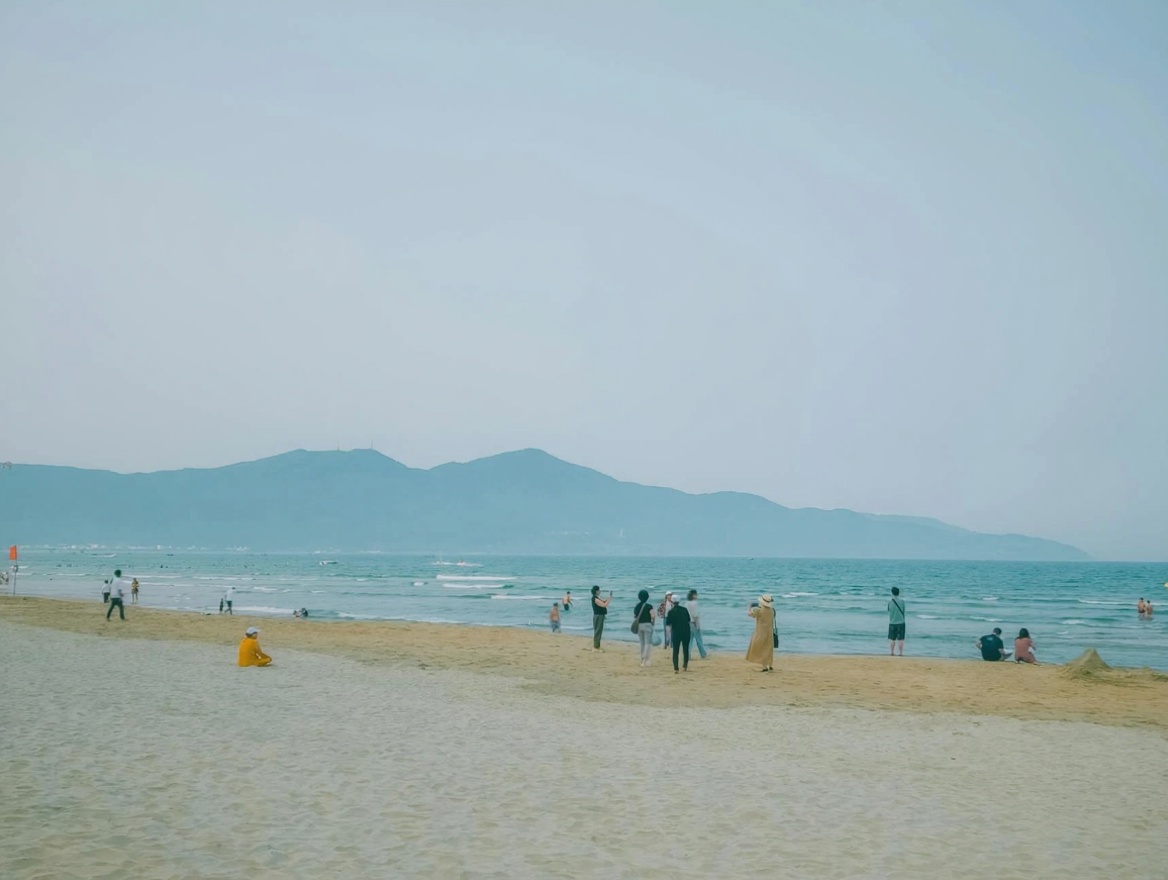
My Khe Beach runs essentially the entire length of the city’s eastern edge. Wide. Clean. Easy to get to. At 6am, it looks like a sports ground — locals jogging, elderly couples doing tai chi, teenagers playing volleyball in the low light. By 9am, the sunbeds are out and the resort guests have arrived.
One 8-year resident writing for Ahoy Vietnam described what happened over the years: “They’ve turned what was a pretty simple and not the cleanest beach into a pretty nice and active area. It’s really a night-and-day difference in cleanliness and activity from eight years ago.”
That’s the honest version. The beach has genuinely improved. It’s also been comprehensively built up — the northern stretch near the city centre is backed by a wall of four and five-star hotels, and the infrastructure is now fully oriented toward beach tourism.
The question isn’t whether My Khe is good. It clearly is. The question is which part of it — and whether My Khe is even the right beach for what you’re looking for.
⚠Real Talk
A TripAdvisor reviewer said what many think: “Danang beach is more like a city beach, with many high rise hotels all around, not really an enjoyable place for nature lovers.” That’s accurate. If you want undeveloped coastal scenery with jungle coming down to the water, Da Nang is not Phu Quoc. What it is: the best-maintained urban beach in Vietnam, with excellent infrastructure, consistently clean sand, and everything within easy reach.
My Khe Beach: Which Part to Choose
My Khe isn’t one beach — it’s a continuous stretch with three distinct characters depending on where you position yourself.
Central My Khe (near Vo Nguyen Giap and Pham Van Dong streets): This is the resort zone. High-rise hotels, consistent sunbeds and umbrellas at 40,000 VND (~$1.50) per day, lifeguards in roped-off swimming areas from October to March (when surf peaks), and a dense cluster of restaurants and bars. Peak season this strip fills up. Accommodation prices here run at a premium — 20–30% more than the same room further north.
Northern My Khe (heading toward Son Tra Peninsula): Same beach. Fewer hotels. Quieter. An 8-year local resident put it in a forum post: “If you go slightly north along the coast to an area called Son Tra, the tourism levels become more tolerable while still having plenty of places to eat and very easy beach access.” The Sala Danang Beach area is referenced as the starting point — north of that, conditions improve further toward the Radisson.
Southern My Khe (heading toward Non Nước / Marble Mountains): The beach gradually transitions into Non Nước Beach, the quieter strip near the Marble Mountains. Less resort infrastructure, more local. A natural combination with a morning at Thủy Sơn.
The Beaches Nobody Comes For — But Should
Da Nang has beaches beyond My Khe that most visitors never reach. They require a motorbike or a Grab — but they offer something the main strip cannot.
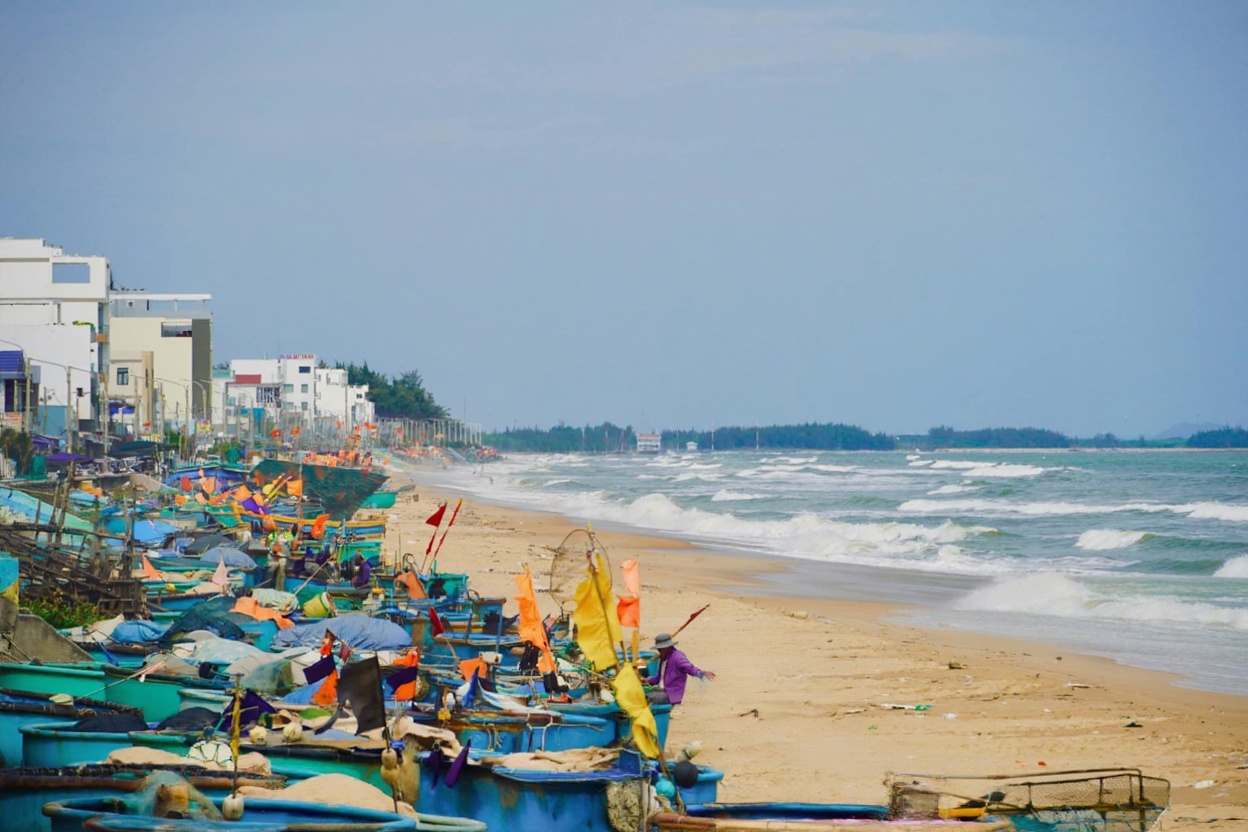
Nam O Beach (15 km north of central Da Nang): This is not a resort beach. Nam O is an active fishing village. In the morning, boats come in and local women sort through the catch on the sand. One Google reviewer described it clearly: “We watched fishermen bring in their morning catch, tried fresh sea urchin prepared on the spot, and walked the incredible reef formations during low tide. A completely different experience than the resort beaches.”
There are no sunbeds. No beach clubs. The draw is the reef at low tide — tidal pools full of crabs, sea urchins, and small fish — and the sense that tourism has not yet arrived to package it up. Get there before 9am to see the fishing boats. Grab from central Da Nang: roughly 100,000–130,000 VND (~$3.80–4.95).
Xuan Thieu Beach (between Nam O and My Khe): Reddish sand — visually unlike anything else on the Da Nang coast. One photographer visiting in April 2024 wrote: “The reddish sand creates an otherworldly landscape, especially during the golden hour. We visited at 5:30 AM to catch fishermen launching their boats against the sunrise.” Far less developed than My Khe. Worth the early start.
Bai Da (Son Tra Peninsula): Not a swimming beach — rocky, with tidal pools. “We spent hours exploring the tidal pools during low tide, discovering colorful crabs, sea urchins, and small fish trapped in natural aquariums,” wrote one TripAdvisor reviewer in March 2024. “Bring water shoes as the rocks can be sharp.” The landscape looks geological in a way that My Khe’s manicured sand does not.
Lang Van Beach (Son Tra Peninsula, requires hike): One reviewer called it “the highlight of our Vietnam trip.” After a forest hike, the beach appears with no one else in sight, crystal-clear water, fish visible around your legs. It is not the beach for people who want sun loungers and cocktails. It is the beach for people who want to earn their swim.
For context on the Son Tra Peninsula overall — the Lady Buddha temple, the motorbike loop, the wildlife — the Da Nang things to do guide covers the full day out there.
Surf Season vs Swimming Season
Da Nang has two beach modes and they are meaningfully different.
October–March (northeast monsoon): This is when swells arrive. My Khe gets consistent surf from October through March, with peak conditions in November and December. Waves reach 1–2 metres on the better days. Multiple surf schools operate along the beach — lessons run around 300,000–500,000 VND (~$11.40–19) per session. The water is rougher, the beach less resort-friendly, and rip currents are a real consideration. Swimming outside the roped lifeguard zones is genuinely dangerous in peak swell conditions.
February–September (dry season, swimming conditions): The South China Sea flattens out. Water temperature stays around 26–28°C. This is when My Khe becomes the classic resort beach — calm, clear (mostly), and built for swimming and sunbathing. Peak tourist season runs June–August, when Vietnamese domestic tourists arrive and the beach fills considerably.
ℹKnow Before You Go
Water quality fluctuates after heavy rainfall. One TripAdvisor reviewer observed: “This morning when we looked out from the window just found the sea was half blueish green and half grey.” After significant rain, bacteria counts rise and the water discolours visibly. Check local conditions after storms, especially October–November. In the dry season, this is not an issue.
Watersports and Beach Activities
My Khe is not a passive beach. The infrastructure for activities is well-developed and reasonably priced by global standards.
Surfing: October through March is the window. Multiple surf schools operate along the central strip — look for boards stacked on the sand and instructors in rashguards. Lesson prices run 300,000–500,000 VND (~$11.40–19) per 90-minute group session. Board rental without instruction is around 100,000–150,000 VND (~$3.80–5.70) per hour. Beginners have actually had good experiences here — the waves during peak swell are consistent and not too steep on the southern end of the beach near Non Nước. Experienced surfers looking for challenge should note that Da Nang is not known for its surf — it’s a learner and intermediate beach, not a reef break.
Klook has the widest selection for Vietnam and is usually the cheapest. KKday is strong on day trips and local experiences.
vary by operator — expect 300,000–500,000 VND (~$11.40–19) per ride. The views over the coastline from 100 metres up are worth it once. The operators are generally legitimate, but agree on price before strapping in.
Kayaking and paddleboarding: Available for hire along the central strip. Stand-up paddleboarding has grown considerably — rental runs 100,000–150,000 VND (~$3.80–5.70) per hour. Good option outside surf season when the water is flat. The calm period April–September is the paddleboard window.
Swimming: Free, in designated zones marked by buoy ropes and monitored by lifeguards during peak season. Outside these zones — particularly during swell season — rip currents are present. The ocean bottom drops off relatively quickly in some sections. Don’t swim outside roped areas October–March. Parents with children should stick to the central supervised sections.
Beach volleyball: Courts are set up along the promenade and there’s usually a game in progress before 8am and after 5pm. Locals play seriously — watching a pickup game at 6am while the light is still low is one of those simple My Khe moments that doesn’t make it onto the reels.
The Morning Walk: What Da Nang Actually Does at Dawn
The beach boulevard (Võ Nguyên Giáp road) runs parallel to My Khe for several kilometres. Wide footpath on the beach side, palm trees planted at regular intervals, garbage bins that are actually used.
Before 7am, this stretch is entirely local. Elderly Vietnamese couples walk slowly and deliberately, arms behind backs. Younger residents run in groups. A woman has set up a cart at the same spot every morning for what appears to be years — selling bánh mì (say: bahn mee) and black cà phê trứng (say: ca feh trung, egg coffee). The vendors who serve tourists haven’t arrived yet. The beach chairs aren’t out. The light is flat and the air is noticeably cooler than it will be in two hours.
The 8-year resident posting on the Ahoy Vietnam blog captured it well: “The walking path along the beach is excellent and extends several kilometers up the coast toward Lady Buddha. I’m on here several times per week to walk or run.”
This is the version of Da Nang beach that doesn’t photograph well — low light, ordinary activity, no drama. It’s also the version worth waking up for. UV intensity at My Khe climbs fast after 10am. The beach at noon is hot in a way that makes the morning feel like a different location entirely.
Where to Eat Near My Khe
The beachfront restaurant strip along central My Khe serves a mix of seafood and tourist menus. Quality varies considerably. The safe approach: walk one block inland from the beach and look for places where the seating is plastic and the menu is in Vietnamese first.
Bún bò Huế (say: boon boh hway): The spicy beef noodle soup from Huế is widely available in Da Nang and markedly better here than in Hanoi, which is too far from central Vietnam to do it properly. Look for shops open from 6–10am that serve it as a breakfast dish. The broth should be dark red with lemongrass and shrimp paste. Street price: 40,000–60,000 VND (~$1.50–2.30).
Mì Quảng (say: mee kwang): Da Nang’s signature noodle dish. Wide, flat turmeric-yellow noodles, minimal broth — more like a dressed noodle salad than a soup. Topped with peanuts, herbs, and either pork, shrimp, or chicken. Ask any local for their recommendation. A good bowl costs 35,000–55,000 VND (~$1.35–2.10).
Seafood on the promenade: The restaurants north of central My Khe toward Son Tra serve the freshest seafood. Grilled squid, steamed clams in beer, and whole snapper are all available at reasonable prices — expect a meal for two with drinks to run 300,000–500,000 VND (~$11.40–19). Avoid restaurants with laminated English-heavy menus facing the beach — these exist to catch tourists and price accordingly.
Cà phê (say: ca feh): Vietnamese coffee at beach cafes runs 25,000–50,000 VND (~$0.95–1.90). The Vietnamese drip style — a metal phin filter, condensed milk underneath — is available everywhere. The cold version, cà phê đá (say: ca feh da), is mandatory at 10am when the heat arrives.
What I Got Wrong About My Khe
I’d seen enough beach-at-golden-hour reels to arrive with a specific image of My Khe in my head. Wide, empty sand. Warm evening light. Fishermen in the distance.
I showed up the second week of November. The tail end of typhoon season.
The water was the colour described in that TripAdvisor review — “half blueish green and half grey.” The swell was significant. The roped-off swimming area was closed. The beach was being used, but by Vietnamese families watching the waves from the promenade, not swimming in them. The Instagram version of My Khe had been filmed in March.
I spent two days resenting a beach that had done nothing wrong. Then I rented a motorbike and went north toward Son Tra. Rode through the peninsula, stopped at Man Thai Beach — which is exactly the kind of beach the reels had shown me, just without anyone on it. Ate bánh mì (say: bahn mee) from a woman with a cart and sat on a concrete wall watching the sea.
The lesson: My Khe is what it is — a clean, well-run urban beach. If the timing or the weather doesn’t cooperate, the alternative is not to wait. The alternative is to go north and find the coast that hasn’t been photographed yet.
Practical Notes
Sunbeds and umbrellas: Available along the central My Khe strip at 40,000 VND (~$1.50) per day. No pressure to buy anything to use them — but the beach boys do approach. A polite wave-off works fine.
Motorbike rental: The best way to explore beyond My Khe. Rental from Da Nang city costs around 150,000–200,000 VND (~$5.70–7.60) per day for a semi-automatic. The Son Tra Peninsula road (Hoàng Sa road) is one of the better coast road drives in central Vietnam — 30 km circuit, sea views the entire way, can be done in two hours or stretched into a half-day.
From Hoi An: The Hoi An to Da Nang transfer guide covers every way to make the 30 km journey — bus, Grab, private car. Beach access from Hoi An is straightforward; An Bang Beach (near Hoi An) is also worth a morning if the Da Nang beaches are rougher.
Timing: The beach is at its best at dawn and early morning. The walking path from central My Khe north toward Son Tra is genuinely excellent for a run or walk — wide, palm-lined, empty before 7am. By 10am the sun is serious and the UV is intense regardless of cloud cover. One r/DaNang regular described doing 10km walks here every morning — admiring the beach and the locals exercising at 6am, noting it as the part of Da Nang he’d miss most. That’s the early My Khe experience. The 11am version is very different.
One Week at Da Nang Beach: Who It’s Actually For
Honest question worth answering: is a week at Da Nang beach enough, too much, or the right amount?
One solo traveller on r/solotravel put it clearly: “Da Nang was the only place in Vietnam where I could easily imagine staying for 2 years, not weeks. Especially if beach is your priority, look no further.” Another, more measured: “Touristy stuff? 1 week is too much. Non touristy stuff and just chill? Yea lots of places to explore.”
Both are right. If you want to tick off Da Nang attractions — Dragon Bridge, Marble Mountains, Ba Na Hills, Lady Buddha — that fills 3–4 days. If you want to swim in the morning, eat at local noodle shops, cycle up the Son Tra Peninsula road, and generally stop moving — a week goes by without effort.
Da Nang is the most liveable city in central Vietnam. The beach is the primary reason people stay longer than they planned. The infrastructure for independent travel is excellent. And the beaches beyond My Khe — the ones you reach by motorbike before breakfast — are genuinely underdeveloped in a way that beach destinations in Thailand and Bali are not.
→Who It’s For
My Khe central strip: First-time visitors, resort-seekers, families with young children who want facilities and lifeguards. North My Khe / Son Tra: People staying 4+ days who’ve done the central strip and want a quieter version of the same thing. Nam O, Xuan Thieu, Bai Da: Travellers with a motorbike, an early alarm, and no agenda. These beaches don’t reward passivity — they reward showing up early and moving slowly.
Two things worth sorting before you land: a Vietnam eSIM so you have data the moment you clear customs, and travel insurance — medical costs for uninsured foreigners in Vietnam are significant.
Airalo eSIMs activate instantly. Buy before departure — airport SIM queues in Vietnam can take 30+ minutes.
Frequently Asked Questions
Is My Khe Beach worth visiting?
Yes — with managed expectations. My Khe is a high-quality urban beach: clean, well-maintained, with good infrastructure. It is not an undeveloped tropical beach. The northern stretch toward Son Tra is quieter and offers a more local feel than the central resort strip. Worth 2–3 hours minimum; worth building your stay around if beach access is your priority in Da Nang.
When is the best time to go to Da Nang beach?
February–May is the ideal window — dry season, warm water, manageable crowds. June–August has peak tourist season with domestic visitors. October–November is typhoon season; swells arrive and the beach can close for swimming. Surf conditions are best October–March if that’s your priority.
Which Da Nang beach is best for families?
Central My Khe has roped-off supervised swimming zones and is the safest option for children during calm season. Pham Van Dong Beach further north on the Son Tra Peninsula has children’s play zones and is described in one family review as “clearly designed with families in mind.” Nam O and the tidal pool beaches are not suitable for small children — too rocky and unstructured. For a broader look at the region, our central Vietnam guide covers the full picture from Hue to Hoi An. For a broader overview of the city beyond the coast, the Da Nang travel guide covers everything from transport to day trips.
Are there quiet beaches near Da Nang?
Several. North: Xuan Thieu Beach (reddish sand, mostly empty), Nam O Beach (working fishing village, no facilities). Son Tra Peninsula: Bai Da and Lang Van Beach (requires a hike, completely empty). South toward Hoi An: Non Nước Beach near the Marble Mountains is calmer than central My Khe. All require a motorbike or Grab — they’re not walkable from the city centre.
Is the water clean at Da Nang beach?
Generally yes during dry season (February–September). After heavy rainfall — especially October–November — water quality drops noticeably and the sea can discolour. The central beach strip has had years of improvement and maintenance. Avoid swimming after significant storms regardless of season.
FAQ
What is the best beach in Da Nang?
My Khe Beach (China Beach) is the main city beach — 8km of consistent sand, decent waves, and good facilities. For calmer water: Non Nuoc Beach at the southern end near Marble Mountain, more sheltered. For the least crowds: the quieter stretches between My Khe and Hoa Hai further south. Da Nang’s beaches are solid but not Vietnam’s most spectacular — Hoi An’s An Bang Beach (30 minutes south) is better for atmosphere.
Is Da Nang beach clean?
My Khe and Non Nuoc beaches are reasonably clean — regular maintenance by the city. Water quality is good. Some beach litter at the busy access points on weekends; quieter sections are cleaner. Overall Da Nang beaches are among the better-maintained urban beaches in Southeast Asia.
When is the best time to swim at Da Nang beach?
May to August for the calmest seas and best swimming conditions. September to January brings northeast winds and rougher surf — waves can be strong enough to make swimming difficult and the beach flags sometimes go red. February to April is transitional — increasingly calm. Check the daily flag system on the beach: red flag means no swimming.
Can you surf at Da Nang?
Beginner surfing is possible September–January when the northeast swell brings waves to My Khe Beach. Wave height typically 0.5–1.5 meters — not for experienced surfers but good for beginners. Several surf schools operate on the beach during this period: lessons from 200,000–400,000 VND per session with board included.
How far is Da Nang beach from the city center?
My Khe Beach starts 3km east of the central district — a 10-minute Grab ride or 20-minute walk from the Da Nang Dragon Bridge. The beach is accessible along the My Khe street that runs parallel to the shore. Most beach accommodation is along or near Vo Nguyen Giap Street, which runs the full length of the beach.