Last updated: May 2026
The most common accommodation mistake in Hoi An: picking a hotel based on photos and ignoring where it actually is.
Hoi An is a small city with very different neighbourhoods in a very small area. A “5-minute walk to Old Town” can mean 5 minutes of atmosphere or 5 minutes of navigating a busy road past motorbike repair shops, depending on which direction you’re coming from. The area decision matters more than the thread count.
Here’s how to think about it.
 central Vietnam — the area decision matters more than the specific property” loading=”lazy” width=”1200″ height=”675″ style=”width:100%;height:auto;”>
The Three Core Decisions First
Before you look at a single hotel, answer these three questions:
Do you want to walk out the door into the Ancient Town? If yes → Old Town or An Hội Islet.
Do you want beach access as part of your stay? If yes → An Bang Beach or Cửa Đại.
Are you on a tight budget? If yes → Cẩm Nam neighbourhood or hostels on the Old Town perimeter.
Most people want option 1. Most people also don’t account for the noise, the price premium, or the full moon night booking crunch until they’re already trying to book. Read the area breakdown before you commit.
Old Town and Minh An — The Centre
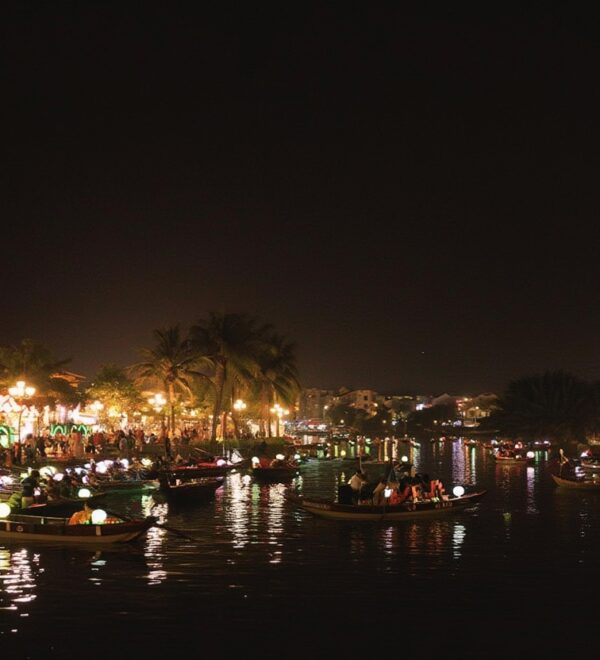
Staying inside or immediately adjacent to the Ancient Town pedestrian zone gives you the closest possible access — roll out of bed, walk two minutes, and you’re in the lantern-lit streets. For a short trip (1–2 nights), this is worth the premium.

What “inside the Old Town” means in practice: narrow alleys, no motorbike access to your door, someone else carrying your luggage the last 200 metres. The old merchant buildings that make Hoi An beautiful also mean no lift, low doorframes, and rooms that get warm quickly in summer. The best Old Town boutiques lean into this — timber floors, courtyard gardens, staff who’ve been there fifteen years.
The honest downside: noise. The Old Town is a party destination as much as a heritage site. Restaurants play music, vendors call out, and karaoke echoes from the An Hội island night market across the river until late. An r/digitalnomad user who spent two weeks in Hoi An put it plainly: “insanely crowded and therefore louder. Regardless of where you book a room in the town you’ll have loud neighbours and locals throwing karaoke parties every night.”
Full moon nights push this further — the town is at maximum capacity once a month, and Old Town accommodation sells out weeks in advance with significant price increases.
Which Old Town Neighbourhood
The Ancient Town area is divided into four sub-neighbourhoods, and the differences matter. The best-located streets for accommodation cluster in Minh An (the heart of the tourist zone — Trần Phú, Nguyễn Thái Học, Lê Lợi), Cẩm Phô (just north, quieter), Sơn Phong (east side, closest to the Thu Bon River — 1-minute walk to Old Town entry), and Cẩm Châu (further east, more local, slightly cheaper).
The mistake is booking something listed as “Old Town” that’s actually in a transitional zone on the northern or eastern edges — technically Hoi An city, functionally a different stay. Check the actual pin on Google Maps against the pedestrian zone boundary before confirming.
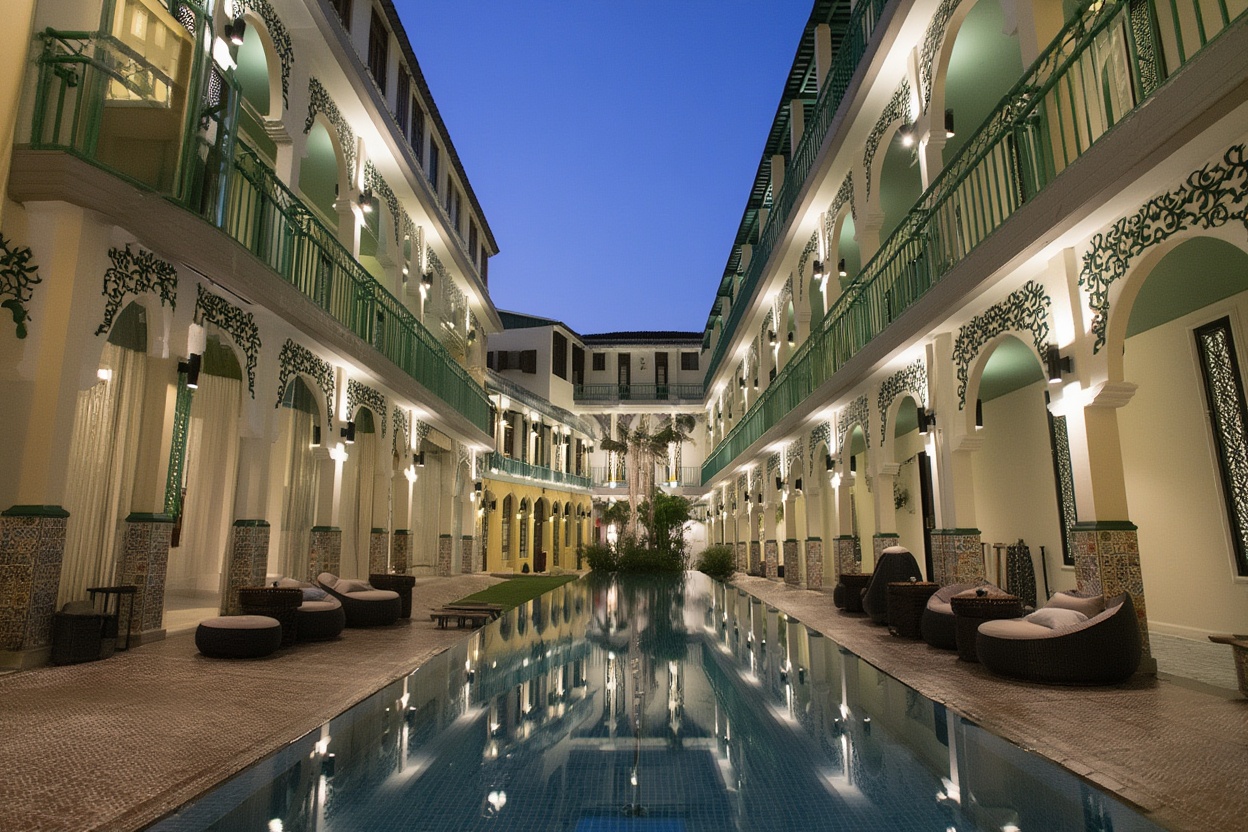
Hoi An Historic Hotel sits on the Sơn Phong edge: 4-star, pool, one minute from Old Town entry. Midpoint of the price range and one of the most reliably reviewed properties for this location class.
Old Town: What to Budget
Budget guesthouses on the Old Town perimeter: 400,000–700,000 VND (~$15–27) for a private room with AC. Expect clean, functional, tight on space. These fill fast in peak season (Feb–Apr).
Mid-range boutique hotels: 1,200,000–2,500,000 VND (~$45–95) per night. This is where Hoi An earns its reputation — 200-year-old buildings with polished concrete floors, four-poster beds, staff who know every tailor in town. Worth it if you can afford it.
⚠Real Talk
Hoi An is 30–50% more expensive than Da Nang or Hue for equivalent accommodation quality. That premium exists because people pay it. If you’re budget-conscious, the Old Town is not where you get value — it’s where you get atmosphere. Separate those two things in your planning.
An Hội Islet — The Smart Middle Ground
An Hội (Cồn Phố) is the small island directly across the footbridge from the Old Town. It’s technically not in the Ancient Town zone but it’s a 5-minute walk — two footbridge crossings and you’re on Trần Phú street.
What you gain: noticeably quieter nights. The karaoke carries across the river but doesn’t penetrate the way it does in the middle of the Old Town. Better value — same boutique quality for 15–25% less. And the riverside views from An Hội at dusk, with the Old Town lit up opposite, are better than anything you see from inside the Old Town itself. You’re watching it from across the water rather than being inside the crowd.
What you trade: the immediate “step out the door into history” feeling. You’re five minutes away, not two.
This is where I’d stay for a 3-night trip. Close enough for full access to everything, removed enough to sleep properly. The An Hội night market is also here — small but genuinely local in feel compared to the tourist-facing Old Town market — and the row of seafood restaurants along the riverbank at the northern tip of the island is one of the better dinner settings in the area.
↗Insider Tip
Rooms on the upper floors of An Hội guesthouses with a river-facing aspect get the lantern reflections across the water at night — the Old Town lit up on the opposite bank. Ask specifically for a river-view room on a high floor when booking. Worth the minor upgrade cost if available.
An Bang Beach — Resort Mode
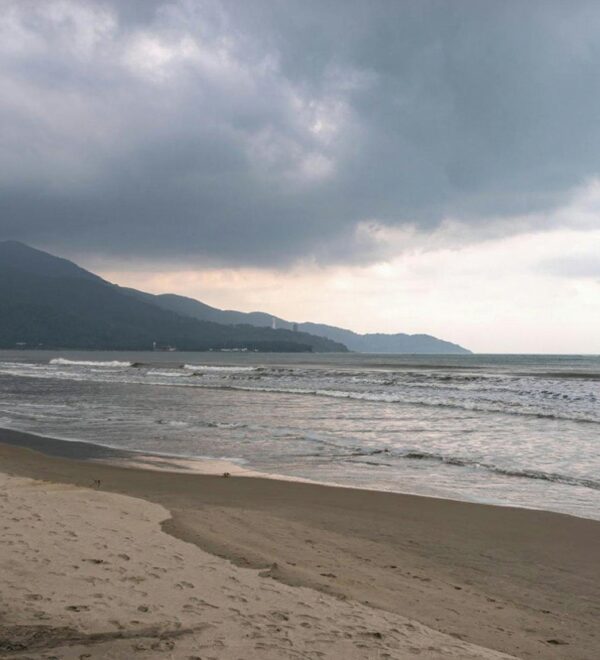
An Bang is Hoi An’s beach neighbourhood, 3 km northeast of the Ancient Town. What was a quiet fishing beach a decade ago is now a strip of boutique hotels, beach clubs, and cafe-restaurants running parallel to a genuinely excellent stretch of sand.
The case for An Bang: if your trip priorities are roughly 40% beach, 40% town, 20% food — this base makes sense. You’re 20 minutes from the Old Town by bicycle (rentals available everywhere for 50,000–80,000 VND / ~$1.90–3.05/day) or 50,000–100,000 VND (~$1.90–3.80) by Grab.

AIRA Boutique Hoi An Hotel and Life Beach Villa are the two most consistently recommended An Bang properties. Life Beach Villa gets the “tranquil oasis in the jungle” description from a guest review — private, lush garden, short walk to the water.
Price range at An Bang: mid-range hotels run 1,500,000–3,000,000 VND (~$57–114). Beach villas and boutique resorts push 3,000,000–6,000,000+ VND (~$114–228) during peak season.
What An Bang is not right for: if you’re here primarily for the Ancient Town, the lantern festival, and the food — every day trip from the beach adds a transport cost and a decision point. Over 3 nights it adds up in time and money.
→Who It’s For
An Bang is for travellers doing Hoi An as part of a beach-and-culture combination — a few days in town, a few days by the water, all within cycling distance. Not ideal for people on a single-purpose cultural trip who want maximum time in the Old Town.
Cẩm Nam — The Local Option
Cẩm Nam is the neighbourhood across the river on the south side of the Old Town — residential, quiet, almost no tourist infrastructure. Guesthouses here run 300,000–500,000 VND (~$11–19) for a private room with AC — the lowest prices in the central Hoi An area.
It’s a 10-minute walk over the footbridge to the Ancient Town. The neighbourhood has actual residents going about their days — women hanging laundry, kids on bicycles, food stalls selling Cao Lầu to locals not tourists at local prices.
The trade-off is obvious: you’re away from the action and there’s no scene here. For independent travellers who want to be near but not in the tourist zone — and who want to save 200,000–400,000 VND (~$7.60–15.20) per night — this works well. The bicycle is essential from Cẩm Nam; rent one from your guesthouse (usually 50,000–80,000 VND / ~$1.90–3.05 per day) and the morning commute across the footbridge takes six minutes.
Hostel Options: Who They’re For
Hoi An has a solid hostel scene if you’re budget-travelling or solo and want to meet people. Dorm beds run 150,000–250,000 VND (~$6–10).
Tribee Hostel has the most consistent recommendation across multiple sources — clean, AC dorms, staff who organise activities. Gets the “best value dorms” tag from traveller reports across 3+ independent sources. One of the few properties in Hoi An where the hostel social scene actually works without keeping the whole building awake.
Reu Boutique Hotel — not a hostel, but worth mentioning for solo travellers willing to spend more. A Reddit user who changed their booking to Reu at the last minute called it “EXCEPTIONAL in every way — stylish, serene, truly special.” A second commenter read that thread and booked immediately: “We love everything about the Reu. The service, breakfasts, rooms are amazing.” Newer property, building a reputation fast, and the cooking class offered through their riverside restaurant — market tour, garden walk, fish pond — is one of the better morning activities in the area.
One property worth flagging by its address rather than by recommendation: Dechiu Hotel at 23 Nguyễn Phan Vinh, Cẩm An. Rates run from 2,160,000 VND (~$82) — but the location is isolated. One review notes bluntly: “not much to do in the immediate area, no other facilities besides the cafe, breakfast not included.” Functional if you specifically want quiet and don’t mind the commute. Not an obvious choice for most visitors.
Booking Timing: What Actually Matters
Hoi An’s accommodation market has real pressure points.
Peak season (Feb–April): Book Old Town hotels 4–6 weeks ahead. An Bang beach properties 3–4 weeks. The specific week of Vietnamese New Year (Tết) is essentially impossible to book last-minute at any reasonable price.
Full moon nights: The 14th day of each lunar month. Old Town accommodation within 500 metres of the pedestrian zone sells out fast and prices jump 20–30%. If your dates include a full moon, book the moment you know your travel window.
Last-minute booking platforms: Avoid Agoda at the last minute specifically — multiple traveller reports flag price doubling on late bookings. Booking.com and the hotel directly are generally better for last-minute rates.
Direct booking advantage: During off-season (May–September), calling or messaging a guesthouse directly often gets you 15–25% below the listed OTA rate. Especially true in Cẩm Nam and the Old Town perimeter guesthouses.
Budget Summary by Type
Cửa Đại Beach vs An Bang Beach — Not the Same Thing
Hoi An has two beach areas, and they’re different enough to matter when booking.
An Bang Beach (3 km northeast of Old Town) is the more developed, more social option — beach clubs, decent food, backpacker guesthouses alongside boutique resorts, a surfable shore when the swell arrives. This is where most non-resort travellers end up, and it earns its reputation. The beach is long, clean enough, and the water is swimmable outside of typhoon season.
Cửa Đại Beach (5 km east of Old Town, at the river mouth) used to be Hoi An’s main beach before significant erosion took out large sections of shoreline over the past decade. Some hotels still market Cửa Đại heavily — and the 5-star resorts (Four Seasons, Palm Garden, Victoria) are genuinely excellent. But the public beach section is rougher and more exposed than An Bang. If you’re not at a resort with its own beach infrastructure, An Bang is the better choice.
The practical test: if the hotel listing says “Cửa Đại Beach” and shows a photo of a pristine shoreline, check recent Google reviews for anything mentioning erosion or beach quality. The resort-side is fine. The public access section is uneven. For most independent travellers without a dedicated resort booking, An Bang Beach is the safer and more enjoyable choice of the two. For a full breakdown of crowds and weather patterns by month, see our Hoi An best time to visit guide.
How Many Nights and Where: A Quick Decision Tree
Hoi An works on different timelines depending on what you’re here for.
1 night: Stay in Old Town or An Hội Islet. You want maximum proximity for the early morning window and the lantern evening. Don’t spread your one night across a beach base with a commute.
2 nights: An Hội Islet gives the best return. You have time for the morning rush at the Ancient Town, an afternoon at An Bang, and an evening back in the Old Town without rushing. Quiet enough to sleep well.
3–4 nights: Consider splitting — 2 nights near the Old Town (An Hội), 1–2 nights at An Bang. Or commit to An Hội for the full stay if you’re focused on the cultural side. The daily bicycle ride to the beach (50,000–80,000 VND / ~$1.90–3.05 rental) is genuinely easy.
5+ nights: An Bang makes sense as a base if you’re treating this as a holiday with day trips into town, not a cultural deep dive. The quieter pace and better beach access balances out the daily transport cost.
Jake’s Confession: I Booked the Wrong Neighbourhood
My second trip to Hoi An, I booked a guesthouse I found on Google Maps that was technically “in the Old Town area” — the listing photo showed a narrow tile-floored alley with a lantern overhead, which is exactly the image Hoi An sells.
What I didn’t check: it was on the northeast side of the Old Town, in a transitional neighbourhood between the heritage zone and a modern road full of hardware stores and motorbike parts. A 12-minute walk to the Japanese Covered Bridge — not terrible, but not what I’d pictured when I booked on the strength of “Old Town views” in the listing photos.
I’ve since learned to check two things before booking anywhere in Hoi An: the exact GPS coordinates on a map showing the pedestrian zone boundary, and whether the address is on the correct side of the Thu Bon River. Fifteen seconds of due diligence saves the wrong-neighbourhood experience.
Two things worth sorting before you land: a Vietnam eSIM so you have data the moment you clear customs, and travel insurance — medical costs for uninsured foreigners in Vietnam are significant.
Airalo eSIMs activate instantly. Buy before departure — airport SIM queues in Vietnam can take 30+ minutes.
Frequently Asked Questions
Where is the best area to stay in Hoi An?
Depends on your priorities. For maximum atmosphere and walkability: Old Town or Minh An neighbourhood — expensive, sometimes noisy, worth it for a 1–2 night stay. For the best balance of access and value: An Hội Islet, 5 minutes from Old Town by footbridge. For beach access alongside town visits: An Bang Beach, 3 km northeast. For budget travel with local character: Cẩm Nam, across the river, 10 minutes from Old Town. The area decision matters more than the specific hotel.
How much do hotels cost in Hoi An?
Budget dorm beds run 150,000–250,000 VND (~$6–10) per night. Budget private rooms cost 400,000–700,000 VND (~$15–27). Mid-range boutique hotels in or near the Old Town run 1,200,000–2,500,000 VND (~$45–95). Beach resorts at An Bang start around 1,500,000 VND (~$57) and go up to 6,000,000+ VND (~$228) for the nicer properties. Peak season (February–April) adds 30–50% to these prices. Hoi An overall runs 30–50% more expensive than Da Nang or Hue for equivalent quality.
Is it worth staying in Hoi An Old Town?
Worth it for 1–2 nights if you want the full immersion: lanterns outside your window, 2-minute walk to every site, the atmosphere of being inside the UNESCO zone at dawn when it’s empty. Not worth it for 3+ nights unless budget isn’t a concern — the noise, higher prices, and narrow access alleys become friction over a longer stay. For a 3-night trip, An Hội Islet gives you 90% of the access for noticeably less money and quieter sleep.
When should I book accommodation in Hoi An?
Peak season (February–April): book Old Town hotels 4–6 weeks ahead, An Bang beach properties 3–4 weeks. Full moon nights fill up fastest — Old Town accommodation near the pedestrian zone sells out with 20–30% price premiums. Outside peak season, 1–2 weeks is generally sufficient. Avoid last-minute Agoda bookings specifically — multiple travellers report last-minute prices doubling on that platform. Book direct or through Booking.com for better last-minute rates.
Should I stay in Hoi An or Da Nang?
If the Ancient Town is your primary reason for being here, stay in Hoi An — the early morning window (6–8:30am before crowds arrive) requires an overnight stay. If you want a larger city, proper beach infrastructure, and cheaper accommodation with Hoi An as a day trip, Da Nang works. The 30 km between them is 45 minutes by Grab. Many travellers split their time: 2 nights in Hoi An for the town experience, 1–2 nights in Da Nang for My Khe Beach and the wider city. Both bases are valid. For a complete guide to attractions, food, timing, and daily routes around the city, see our Hoi An travel guide. Before locking in your area, check our Hoi An things to do guide to match your neighbourhood choice with your actual itinerary priorities.