An Bang Beach is fifteen minutes from Hoi An Ancient Town and a completely different vibe — our An Bang Beach guide covers how to get there, what the beach is actually like, and where to eat.
Hoi An has more cooking classes than anywhere else in Vietnam and more variation in quality — our Hoi An cooking class guide breaks down what to look for and which market visits are actually worth it.
Updated May 2026
Hoi An is the most photographed town in Vietnam.
It’s also the most misunderstood.
People show up expecting a peaceful, lantern-lit village. What they find is a tourist machine running at full capacity — tour buses at 10am, “authentic” restaurants that haven’t had a local customer in years, and tailors quoting prices that assume you’ve never negotiated in your life.
And then evening falls. The lanterns come on. The Thu Bon River turns orange. The motorbikes get pushed out and the streets belong to people again.
I almost skipped Hoi An on my first trip south. I’d been in Hanoi too long, gotten cynical about tourist towns. A friend in Da Nang talked me into two nights. I stayed three weeks.
This is what I’d tell myself before that first visit.
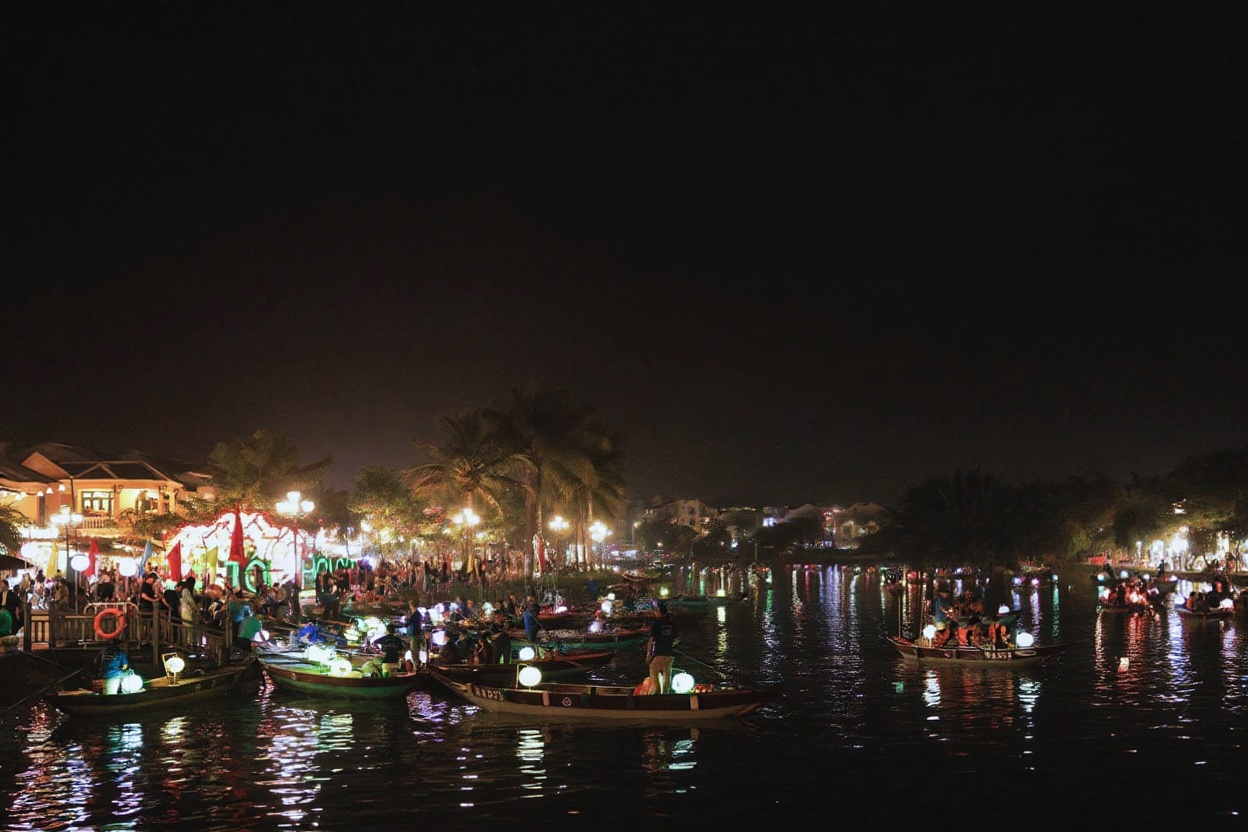 Hoi An Ancient Town at dusk — the lanterns earn the reputation” loading=”lazy” width=”1200″ height=”675″ style=”width:100%;height:auto;”>
The Ancient Town: What You’re Actually Paying to See
The Phố cổ (say: foh-koh) — Old Town — is a 30-hectare grid of 15th–19th century merchant houses, assembly halls, and temples sitting where the Thu Bon (say: too-bon) river bends toward the sea. Three cultures built it in layers: Vietnamese, Chinese, Japanese. You can see the architectural handwriting shift from street to street.
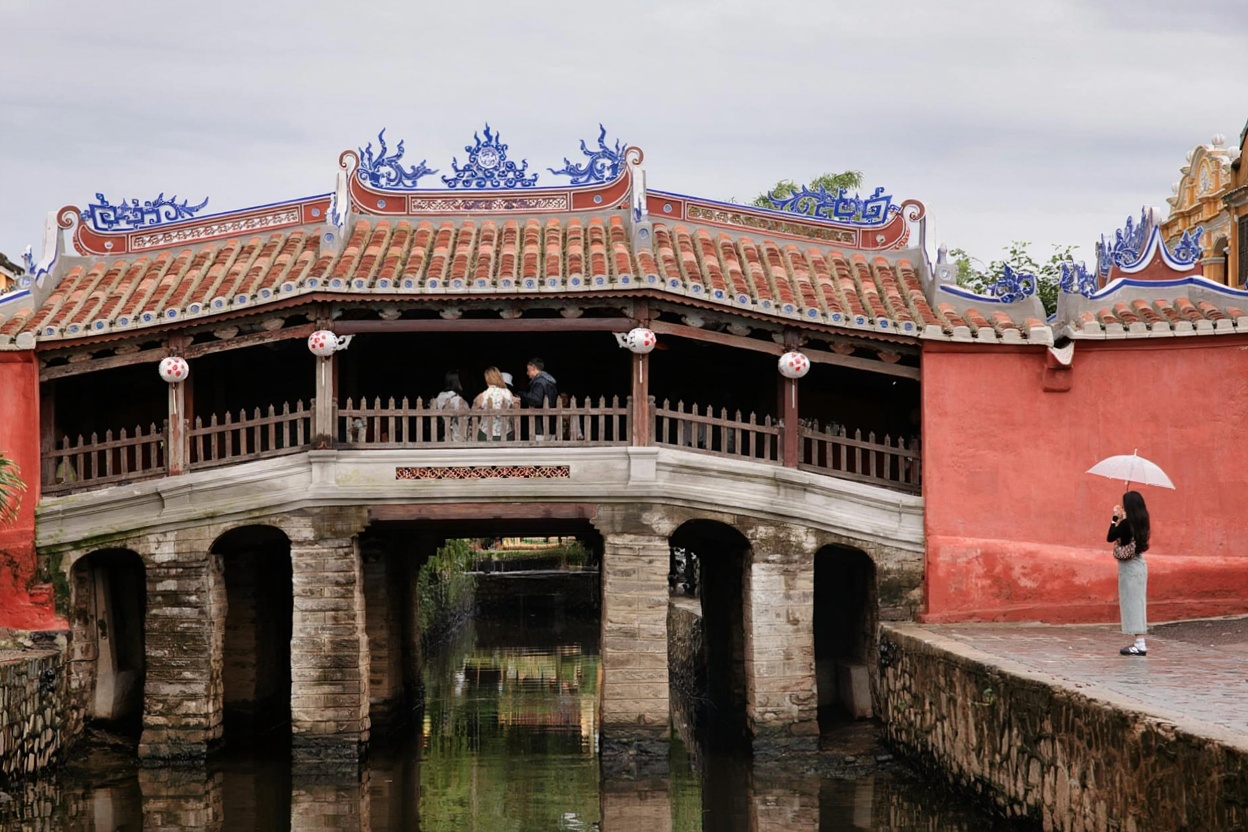
The ticket system trips people up. You buy a pass — 120,000 VND (~$5) — that gives you entry to 5 of 22 designated attractions. The list includes ancient merchant houses, assembly halls, a museum, and the Japanese Covered Bridge (Chùa Cầu, say: chooa-kow). Pick the ones you actually want before you buy — the ticket booths have the full list. Valid 10 days.
The Covered Bridge is on everyone’s list and on the 20,000 VND bank note. It’s small. It’s 1593 years old. The small pagoda attached to it smells like incense that’s been burning continuously since before America existed. Worth one of your five tickets.
For merchant houses: Tấn Ký Old House at 15.8771° N, 108.3287° E is the best-preserved example — a Japanese-Vietnamese hybrid from 200 years ago, still occupied by the seventh generation of the same family. Narrow, dark, teak-panelled. The ceiling is a 2-metre-high marvel of interlocking wood that required zero nails.
The Fujian and Cantonese Assembly Halls are legitimately impressive and mostly skipped by visitors who don’t know what they’re looking at. These were trading clan headquarters in the 18th century. The Fujian one has a garden courtyard and a 300-year-old ceremonial oven that you’ll walk past without noticing if nobody tells you what it is.
ℹKnow Before You Go
Ancient Town entry to walk the streets is free. The 120,000 VND (~$5) ticket is only needed to enter specific sites. You can wander the Old Town’s yellow-walled lanes, sit at river cafés, and shop tailors without buying anything. Many first-timers waste a ticket on a site they spent 8 minutes in — pick 5 that match your actual interests.
Timing matters more than people realise. Before 9am the streets belong to locals doing morning routines and the light is low and yellow. By 10:30am the tour buses arrive. By noon it’s shoulder-to-shoulder. Go early for the Ancient Town interior. Come back at 6pm for the street atmosphere when the lanterns turn on and the vehicles thin out.
→Who It’s For
The Ancient Town is worth 2 full days for anyone interested in pre-colonial architecture, Vietnamese-Chinese-Japanese cultural layering, or just walking beautiful old streets without a specific agenda. If you need constant stimulation or famous landmarks — it’ll underwhelm. What makes it work is slowing down, not rushing between sites.
The Food That Only Exists Here
Three Hoi An dishes are genuinely impossible to replicate elsewhere. This isn’t marketing copy — there are documented reasons why.
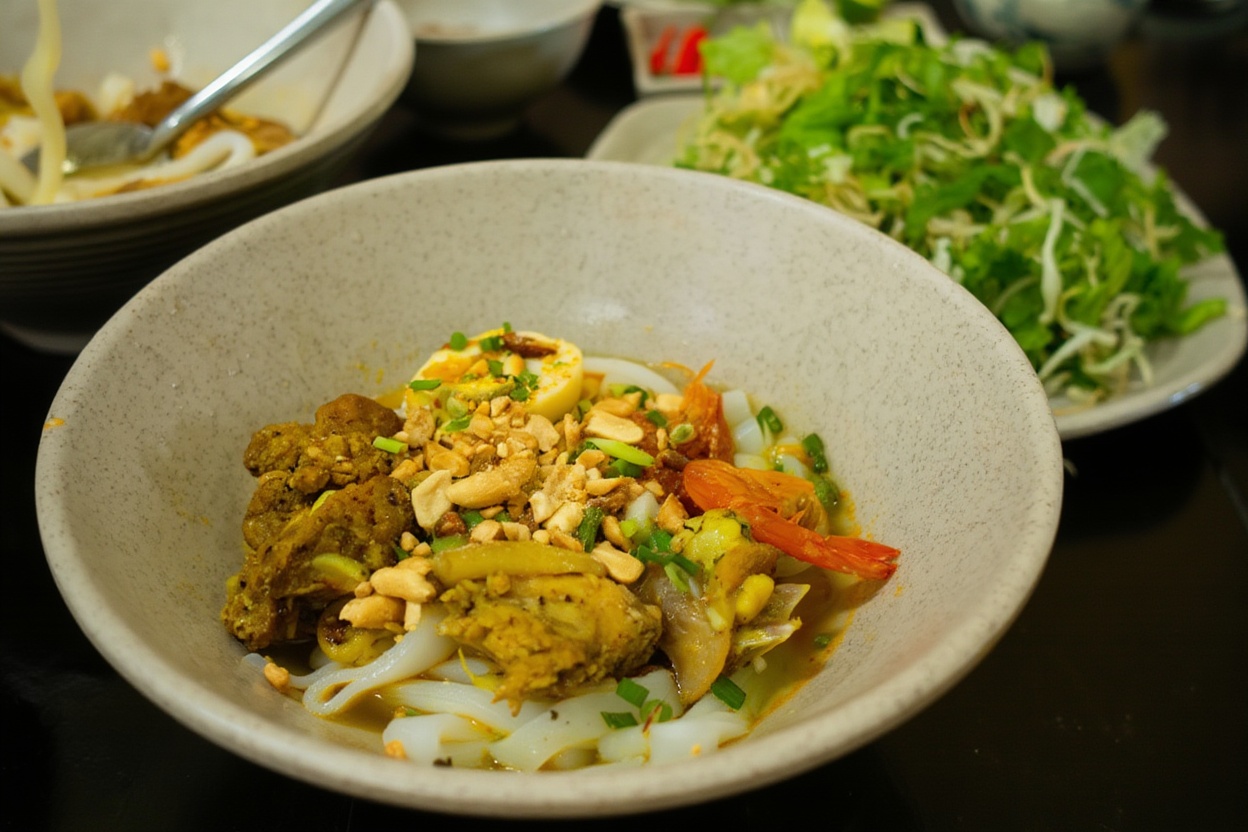
Cao lầu (say: cow-low) is a noodle dish made with water drawn specifically from Ba Le Well in the Old Town and lye ash from wood fires on the Cham Islands. Both affect the noodle texture in ways that are genuinely replicable only here. You’ll know a fake one by the texture — it should be thick, chewy, almost al dente in a very un-Vietnamese way. Order it with the croutons. Don’t skip the croutons. Find it at any market-facing hole-in-the-wall on Trần Phú or Nguyễn Thái Học streets — not at the tourist restaurants with English menus out front.
Bánh bao vạc (say: bahn bow vak) — White Rose dumplings — are made by exactly one family in Hoi An and sold exclusively to restaurants in town under a supply agreement. Translucent rice wrappers filled with shrimp, steamed, served with crispy shallots and a dipping sauce. They look like white roses. They taste like nothing you’ve had before. A plate runs 40,000–60,000 VND (~$1.60–2.40).
Cơm gà (say: kum-gah) — Hoi An chicken rice — is not unique to the town but the local version is. Yellow rice cooked in chicken broth, shredded chicken, herb salad, ginger fish sauce. The best version is at the market stalls on Trần Phú, 40,000–55,000 VND (~$1.60–2.20).
★Jake’s Pick
Bánh mì Phượng at 37 Trần Phú. Anthony Bourdain called it “the world’s best bánh mì” in 2009. It’s still the best bánh mì in Hoi An, possibly Vietnam. 25,000–35,000 VND (~$1–1.50). Queue moves in 3 minutes. They’ve been making the same thing for 40 years and have no intention of changing it.
The Hội An Market at 15.8784° N, 108.3299° E has a downstairs wet market (7am–10am, before the tour groups arrive) and an upstairs cooked food section. If you can get someone to walk you through what you’re seeing — a guesthouse owner, a guide, anyone with context — the colour and smell overload makes sense. Without it, it’s just overwhelming.
⚠Real Talk
Hoi An has hundreds of restaurants. Most of them are fine. A significant number are serving dishes invented for tourists — “traditional” plates that no Vietnamese person has ever ordered. The tell: if the menu has photos of every dish AND an English-language description of how authentic it is, it isn’t. Walk where locals are eating. If the menu is handwritten on a chalkboard or there are no prices listed, you’re in the right place.
The Tailors: What Nobody Tells You
Hoi An’s tailor reputation is real. Five hundred tailors operate within a 10-block radius. They can make a custom suit, dress, or ao dài (say: ow-zai) in 24–48 hours. Most do exactly that — 24 hours, one fitting, done.
The problem is one fitting in 24 hours is not how good tailoring works. For a full breakdown of what to prioritize, our Hoi An things to do guide covers the full list by interest type.
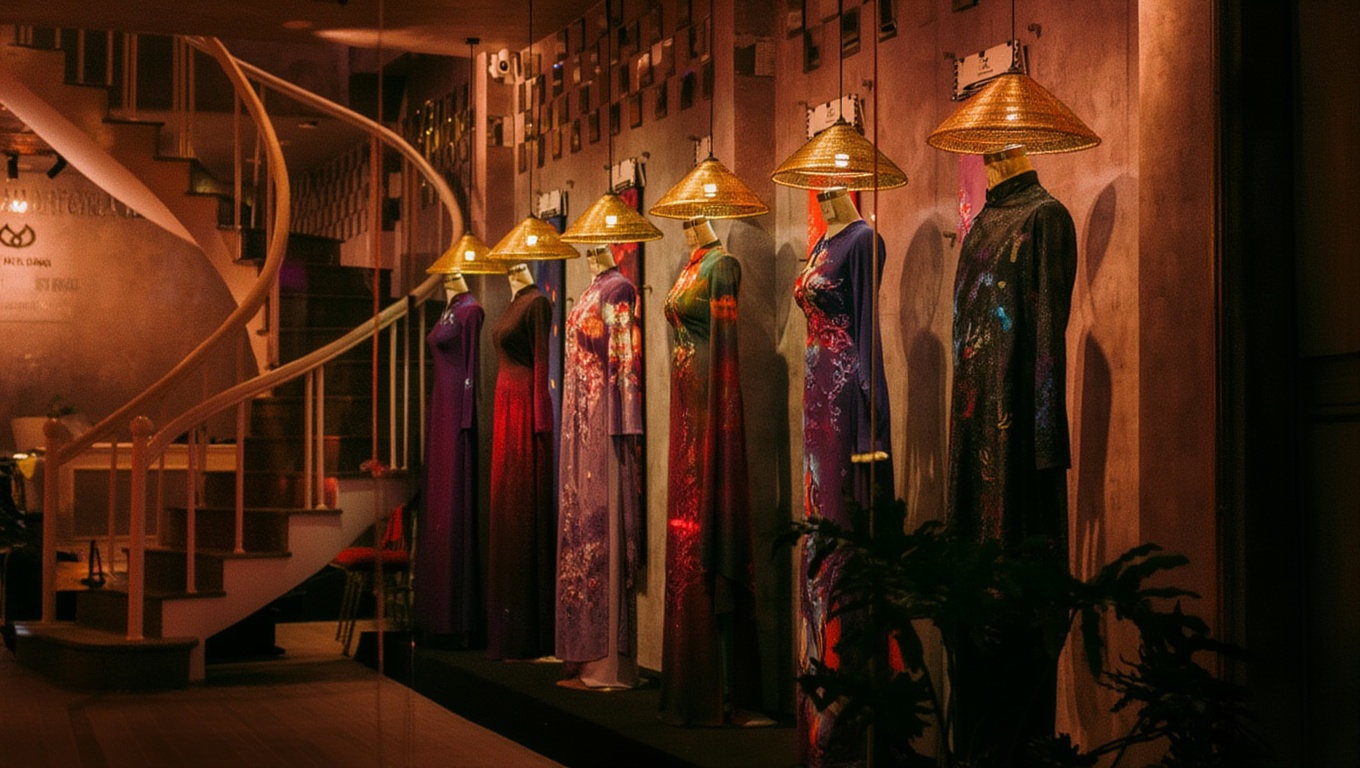
If you want something that actually fits well, you need 3–4 days and at least two fittings. One after the initial cut. One after the first adjustment. Anything less and you’re gambling on proportion. I’ve seen people leave with suits that fit like a sack because they were flying out the next morning.
Price signal: Old Town tailors on Trần Phú and Lê Lợi charge 30–50% more than the same-quality shops on Trần Hưng Đạo (say: chan-hung-dow) street, 10 minutes on foot outside the Old Town zone. The Old Town ones have better lighting and a more comfortable sales pitch, but the fabric and skill aren’t meaningfully different.
ℹKnow Before You Go
Bring reference photos, not just vague descriptions. “I want a blazer that fits well” tells a tailor nothing. Screenshots of exactly the silhouette, collar, and button style you want change the conversation entirely. Fabric samples they show you look different in artificial light — ask to take the sample outside to see it in daylight before committing.
What actually matters in a Hoi An tailor: the cutting room. Ask to see where the cutting happens. If they’re cutting by hand with a pattern they’ve drawn themselves, you’re at a real tailor. If they hand you a catalogue and ask you to point at things, you’re at a shop that outsources to a factory.
Coconut Basket Boats: The Tourist Trap That’s Worth It
I’ll be honest about what happened the first time I did this.
I booked the “authentic coconut forest experience” through my guesthouse. Showed up at Cam Thanh village at 10am. There were about 80 other tourists there. The guides were spinning baskets in circles with a practiced performance. Someone in the group started filming a TikTok immediately. A Reddit commenter back home would have written it off as the most embarrassing tourist experience in Vietnam.

Then our guide — a guy named Hùng who’d been doing this for 11 years — started doing things with that circular basket I still don’t fully understand. Spinning it 360 degrees. Catching the rhythm of the current. Making a boat that looks like a salad bowl perform like something designed by engineers. The 50 minutes went faster than any boat ride I’ve taken before or since.
The thung chai (say: toong-jai) — coconut basket boat — is from the Cham Islands fishing tradition. The circular shape was designed to slip through heavy surf. Hùng’s family has been fishing this river for three generations. None of that is in the brochure. You get it if you ask.
Cam Thanh village is 3km from the Ancient Town at 15.8563° N, 108.3667° E. Motorbike or bicycle to get there. Cost: 150,000–200,000 VND (~$6–8) per person. Morning is better for light; afternoon is better for fewer people.
→Who It’s For
Anyone who can handle 50 minutes in a circular boat that spins without warning. It’s not for people with vertigo or motion sickness. It’s 100% for people who are willing to look like a tourist because the actual experience underneath the Instagram surface is genuinely good.
The Lantern Festival: When to Go and What It Actually Is
On the 14th day of every lunar month — the full moon — Hội An Ancient Town turns off its electric lights, bans vehicles from the Old Town, and lights every street with paper lanterns.
Residents float lanterns on the Thu Bon River with a wish folded inside.

The lanterns are 10,000 VND (~$0.40) each. The ceremony is not performative — local families actually participate. The ambience is different from every other night in Hoi An: quieter, slower, the glow consistent and warm rather than the competing neon of the normal tourist night.
The practical catch: if you’re there in January, February, April, or October (peak tourist months), Full Moon Night is shoulder-to-shoulder. The experience is intact but the intimacy is gone. The best version of it is in a shoulder month — May, June, late November — when the tourist volume is lower.
↗Insider Tip
Get to the Japanese Covered Bridge area by 6:30pm — before the main tourist wave arrives at 7:30pm. The 30 minutes from 6:30–7pm, when locals are setting up and the light is just fading, is the best the Old Town looks all month. The bridge at that light with the candles just starting to reflect on the water is the photograph nobody posts because they were still stuck in traffic when it happened.
Where to Stay in Hoi An
Three neighborhoods. Each for a different type of trip.
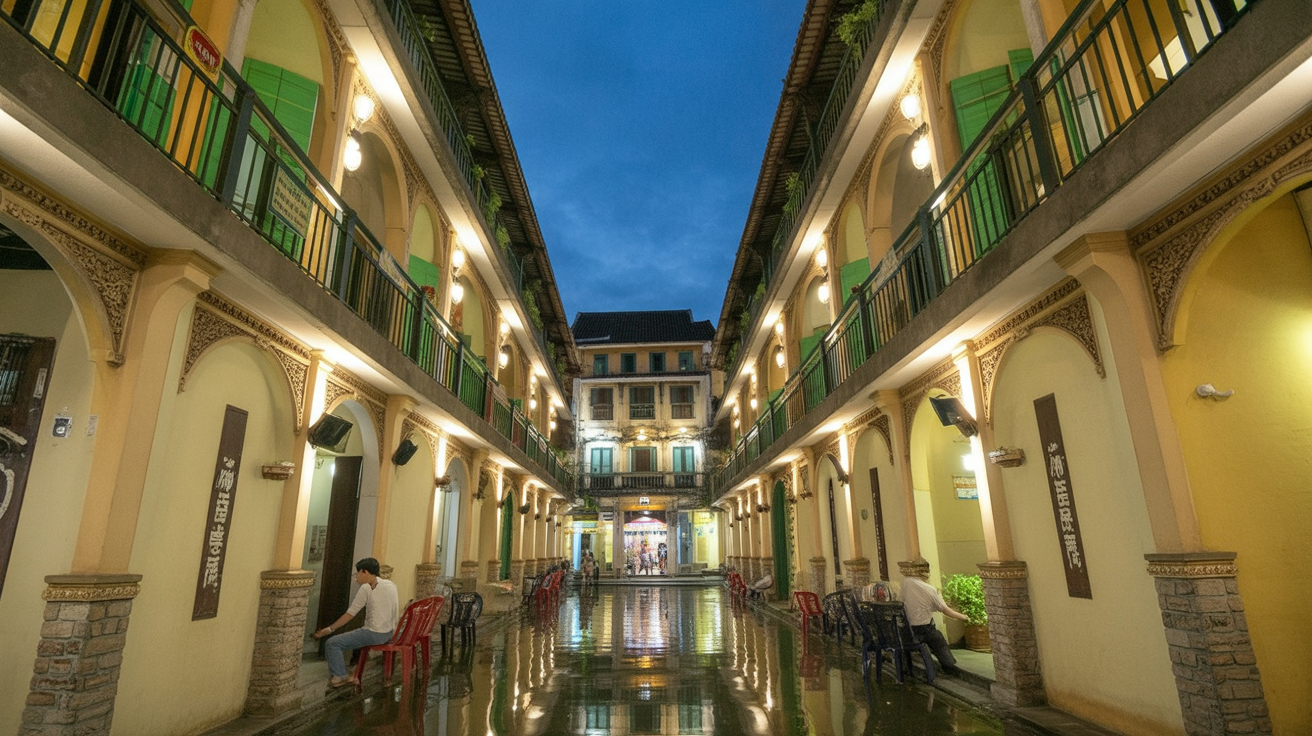
Old Town (Phố cổ): No motorbikes after 7am. Walking distance to every attraction, restaurant, and tailor. The trade-off is price — the same quality room costs 40–60% more inside the Old Town boundary than 10 minutes outside it. Best for: first-timers who want maximum access and are willing to pay for it.
insula across the walking bridge): The bar district. Loud nights. Central location. Works well for people who plan to be out until midnight; bad for everyone else. Proximity is great, sleep quality is not.
How to Get to Hoi An
Hoi An has no train station and no airport. Da Nang (30km north) is your arrival point.
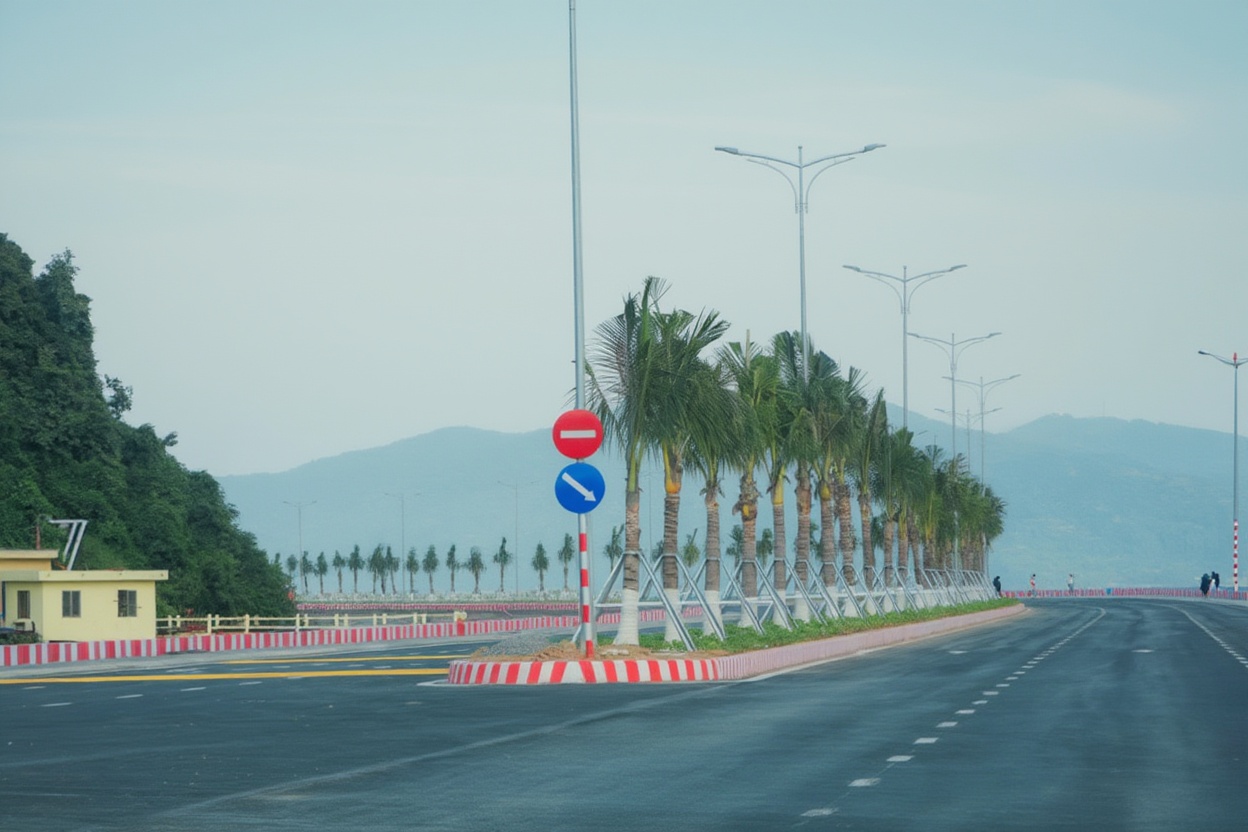
From Da Nang airport: Grab (Vietnam’s Uber) runs 200,000–250,000 VND (~$8–10), takes 35–45 minutes depending on traffic. Official airport taxis charge 380,000–450,000 VND (~$15–18) for the same trip. The Grab price is accurate — don’t negotiate from the taxi rank.
12Go covers most Vietnam routes — sleeper buses, trains, and island ferries. Compare schedules and book in advance during peak season (Dec–Feb, Jun–Aug).
From Da Nang train station: Same deal. Grab to Hoi An runs 180,000–230,000 VND (~$7–9). Journey from Hanoi to Da Nang by train takes 14–16 hours on the Reunification Express (say: đường sắt thống nhất, doo-ong-sat-tong-nyat). Book at least 3 days ahead for the SE trains — the soft sleeper berths sell fast.
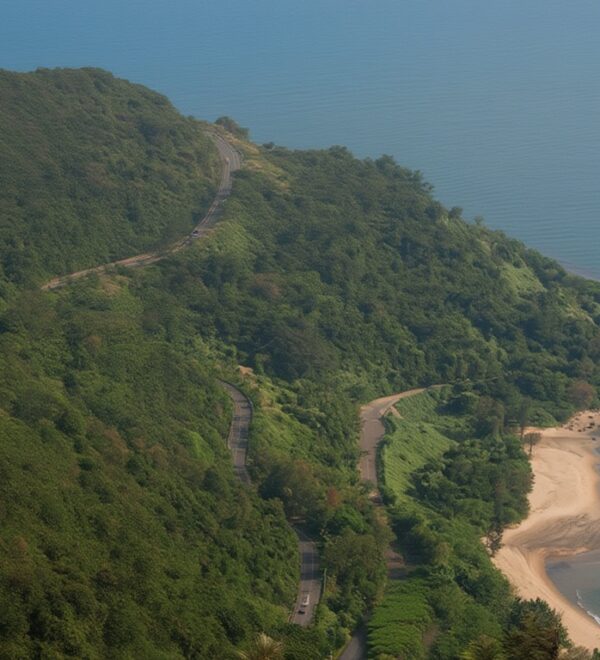
From Hue: 4-hour journey. Options: shared minibus from Hue’s backpacker area (160,000–200,000 VND, ~$6–8), private car (around 1,200,000–1,500,000 VND, ~$48–60 for the vehicle), or Da Nang train then taxi. The coastal road via Hai Van Pass on a motorbike is one of the better road trips in Vietnam — 3 hours, views you’ll still be talking about years later.
↗Insider Tip
Base in Hoi An, day-trip Da Nang — not the other way around. This is the unanimous verdict from every expat and long-term traveler I’ve spoken to. Da Nang has beaches and the Golden Bridge at Ba Na Hills, but it doesn’t have Hoi An’s streets at night. You need that. Da Nang doesn’t need you to sleep there.
Day Trips Worth the Time
Three day trips from Hoi An that aren’t a waste of a day.

My Sơn Sanctuary (say: mee-son) — 30km west of Hoi An, a complex of 70 Cham Hindu temples from the 4th–13th centuries, half of them intact. UNESCO World Heritage. The scale surprises people — you’re walking through actual jungle to reach structures covered in 1,000-year-old carvings. Morning tours leave from Hoi An at 8am and get you back by 1pm. Cost including transport and entry: around 350,000–500,000 VND (~$14–20). Don’t skip this.
Klook has the widest selection for Vietnam and is usually the cheapest. KKday is strong on day trips and local experiences.
5 minutes. The morning vegetable market and farm-to-table cooking classes here are the most grounded version of the Hoi An “authentic experience” story. Cooking class: around 350,000–450,000 VND (~$14–18) including market visit and lunch.
Marble Mountain (Ngũ Hành Sơn) — 10km north toward Da Nang, five marble and limestone hills containing Buddhist shrines and caves carved into the rock face over 200 years. Entry is 40,000 VND (~$1.60). The views from the top over Da Nang beach and the South China Sea are better than most things you’ll pay 10x more for. Half-day trip on a motorbike or bicycle with a Grab back.
Two things worth sorting before you land: a Vietnam eSIM so you have data the moment you clear customs, and travel insurance — medical costs for uninsured foreigners in Vietnam are significant.
Airalo eSIMs activate instantly. Buy before departure — airport SIM queues in Vietnam can take 30+ minutes.
Frequently Asked Questions
How many days do you need in Hoi An?
Three nights minimum, four if you want tailored clothing. Two nights is enough to hit the Ancient Town highlights and eat the key dishes — but you’ll feel rushed. The third day is when the pace slows and Hoi An starts to make sense beyond the Instagram version. Four nights works well if you’re adding a half-day cooking class, My Son, or want time with a Hoi An tailor for a proper fitting.
When is the best time to visit Hoi An?
February to April: dry, low-to-mid tourist volume, manageable heat (25–30°C). May and June have heat but fewer crowds. July and August are peak volume and hot. September to November is flood season — Hoi An floods badly in October, sometimes with streets underwater for days. December and January are cool (20–25°C) and very crowded around Christmas and Tết. See the full Hoi An best time guide for month-by-month breakdown.
Is Hoi An worth it if you’ve already done Hanoi and HCMC?
Yes, because it’s completely different from both. Hanoi is a working capital city with edge and grit. HCMC is a metropolis with momentum. Hoi An is a 400-year-old trading port where the entire economy runs on tourism — which sounds worse than it is. The architecture, the food, and the scale are all unlike anything else in Vietnam. The comparison that makes sense is: if Hanoi is a city you live in, Hoi An is a place you visit for the same reason people visit Kyoto or Dubrovnik.
Is Da Nang or Hoi An better as a base?
Hoi An for almost everyone. Da Nang has beaches, a larger restaurant scene, and easier logistics — but it doesn’t have Hoi An’s streets at night, its food, or the specific atmosphere of a town you can walk end-to-end in 20 minutes. The only case for basing in Da Nang: you’re flying in/out and want minimal transit, you specifically want beach time with good surf, or you’re on a business trip. For leisure travel of 3+ days, Hoi An wins the base argument every time.
What scams should I watch for in Hoi An?
Tailor overcharging is the most documented — always agree on the full price before fabric is cut, and don’t pay the full amount until after final fitting. Ancient Town ticket touts sell the same 120,000 VND (~$5) pass for 200,000–250,000 VND — buy directly from the official booths at the Ancient Town entry points. Motorbike taxi drivers at the bus drop-off point often quote 3–4x the Grab price to Old Town — just open Grab from the drop-off spot instead. If you’re planning the broader region, our central Vietnam guide covers the full Hue–Da Nang–Hoi An corridor in one place.