Last updated: May 2026
I’ve been to Hoi An Ancient Town more times than I’ve been to any single place outside Hanoi. I’ve gone during Tet (mistake), midday in August (bigger mistake), and at 6:30am on a Tuesday in March when the market women were still setting up and the whole town smelled like river water and charcoal.
The 6:30am visit is the one I recommend.
Here’s everything you need to know — including what one recent Reddit post, scored 188 upvotes, described as feeling “like hell.”

What the Ancient Town Actually Is
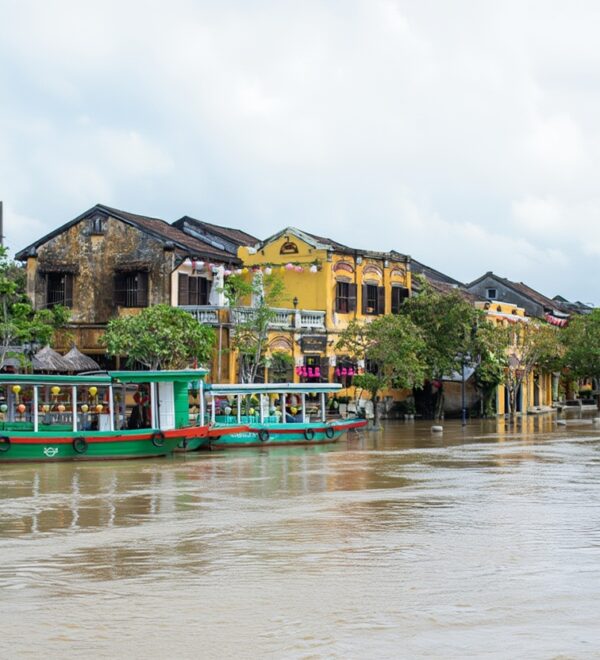
Hoi An was a major Southeast Asian trading port from the 15th to 19th century. Japanese, Chinese, Dutch, and Indian merchants all kept houses and warehouses here. The Thu Bon River gave direct sea access.
When the river silted up in the late 19th century and Da Nang took over as the regional port, Hoi An was essentially bypassed by modernity. The result: 1,107 timber-frame buildings that survived the 20th century mostly intact. No bombing, no urban development, no socialist concrete blocks replacing the merchant houses.
UNESCO listed it as a World Heritage Site in 1999. Since then, visitor numbers have climbed every year.
The Ancient Town (Phố Cổ Hội An) is a compact grid of streets covering roughly 2 km². The core is walkable in 30 minutes end-to-end, though you could spend days exploring the side streets and assembly halls if you slow down enough. The lanes branching off the main streets — especially around Phan Chu Trinh and Hoàng Văn Thụ — are significantly quieter and give a better sense of residential life than the main tourist corridor.
The Ticket System: What You’re Actually Buying
The Ancient Town ticket costs 120,000 VND (~$4.55) per person. It allows entry to 5 heritage sites chosen from a list of 22 — assembly halls, old houses, museums, and the Japanese Covered Bridge.
Buy tickets at the ticket booths on Lê Lợi street and at several other points around the perimeter of the Old Town.
The honest note on enforcement: it’s inconsistent. Ticket checkers stand at the main attraction entrances. Street-walking, riverside strolling, shopping, and eating inside the Old Town require no ticket. If your plan is to wander the streets, drink coffee in a courtyard cafe, and buy things from tailor shops — you’ll never be asked for a ticket.
If you want to enter any of the 22 listed sites, you need one.
ℹKnow Before You Go
The ticket is per-person, not per-site. You present your ticket at each attraction and they stamp it. 5 sites per ticket. After that, you’d need to buy another. In practice, 5 sites is more than most visitors have energy for in a day.
Which 5 Sites to Use Your Tickets On
Not all 22 are equal. Here’s the practical ranking — use your 5 stamps wisely:
1. Japanese Covered Bridge (Chùa Cầu) — 15.8773° N, 108.3265° E — Built in 1593, still on the 20,000 VND note. The most photographed structure in Hoi An. Cross it early morning when there’s no queue. It’s small — the whole structure is about 18 metres long — but architecturally unlike anything else in Vietnam. Use one ticket here.
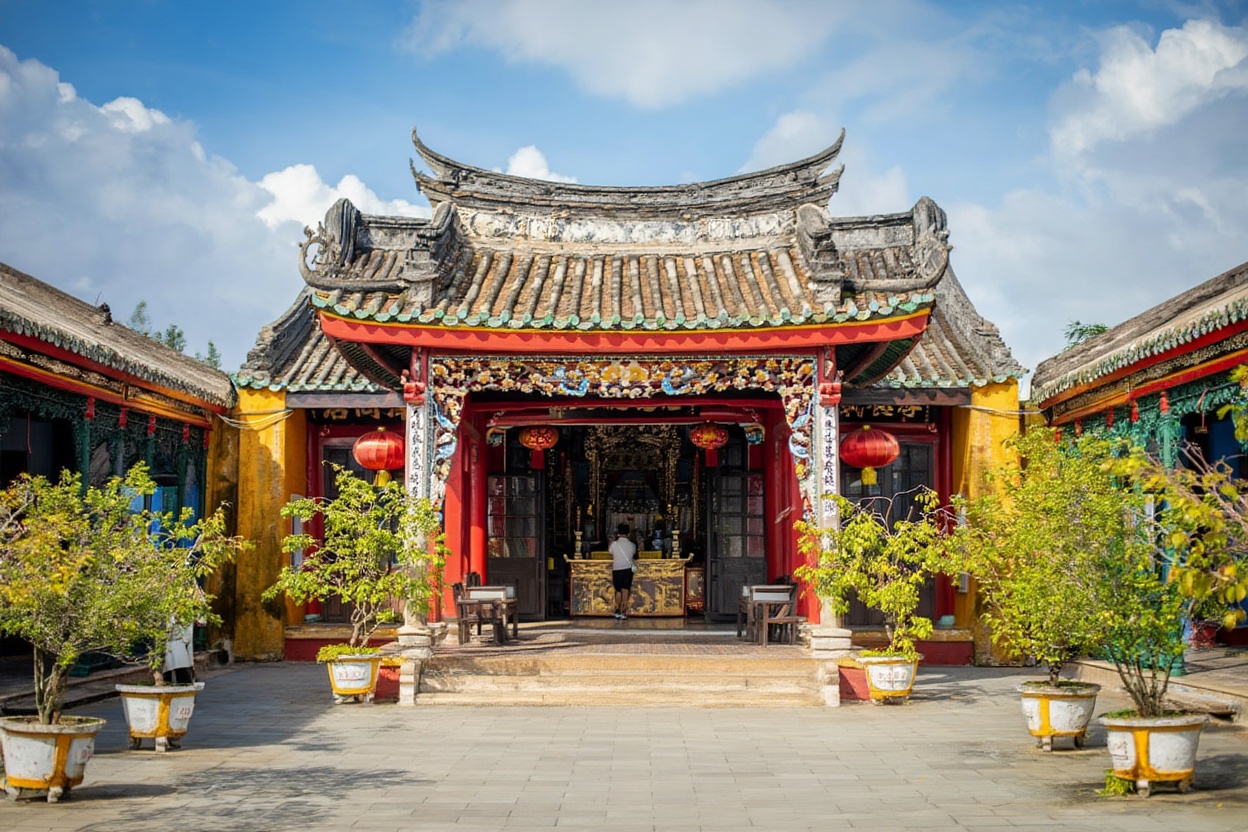
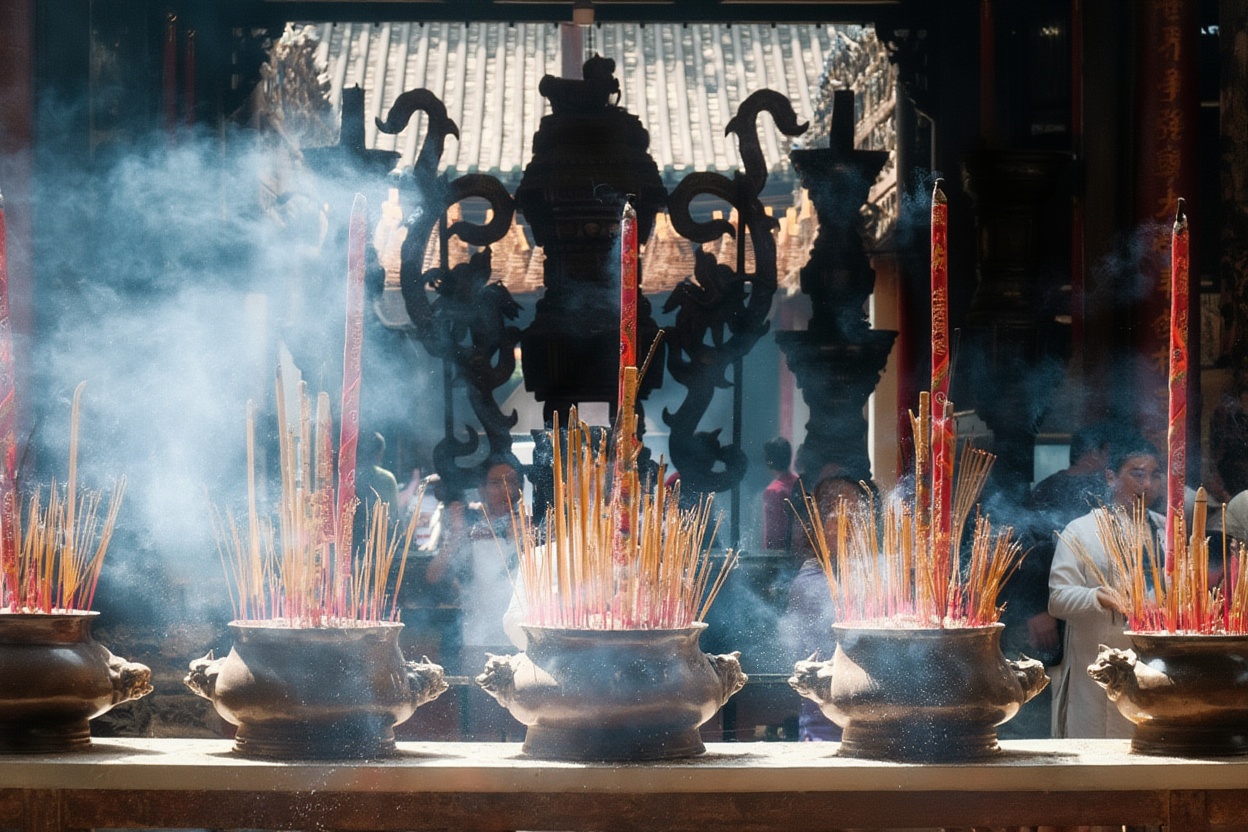
2. Phước Kiến Assembly Hall (Hội Quán Phước Kiến) — 15.8788° N, 108.3301° E — Built by the Fujian Chinese community in 1697, this is the most ornate assembly hall in Hoi An. Incense smoke hangs in the air like low cloud. Red and gold everywhere. A goddess shrine in the main hall. If you only use your ticket for two things, make it this and the Covered Bridge.
3. Tấn Ký Old House (Nhà Cổ Tấn Ký) — 15.8793° N, 108.3303° E — A 200-year-old merchant house still occupied by the same family. Seven generations. The architecture blends Vietnamese, Chinese, and Japanese elements — wood carvings, low ceilings, a well in the back courtyard. The guide speaks basic English. Give it 20 minutes. The flood marks on the doorframe show how high the water came in 1999 — the worst flood year in modern memory, when the Thu Bon rose over 4 metres.
4. Quảng Đông Assembly Hall (Hội Quán Quảng Đông) — 15.8791° N, 108.3310° E — Cantonese assembly hall from 1885. Less crowded than Phước Kiến, equally detailed. The courtyard garden is quiet in the morning. A tortoise pond sits at the entrance — the animals are very old, fed offerings by local worshippers who visit on the 1st and 15th of each lunar month.
5. Trần Family Chapel (Nhà Thờ Tộc Trần) — 15.8793° N, 108.3320° E — A 200-year-old ancestral chapel. Smaller than the assembly halls, more intimate. Family photos on the altar alongside lacquer panels. Worth 15 minutes if you’re interested in how Vietnamese ancestor worship intersects with the town’s Chinese cultural heritage.
→Who It’s For
The ticket trail is worth doing if you’re genuinely interested in the history and architecture. If you’re primarily here for the atmosphere, the food, and the lanterns — you can skip every ticketed site and have a full, worthwhile day. The streets themselves are free.
The Streets That Don’t Cost Anything
Most of what makes Hoi An worth a visit requires zero ticket.
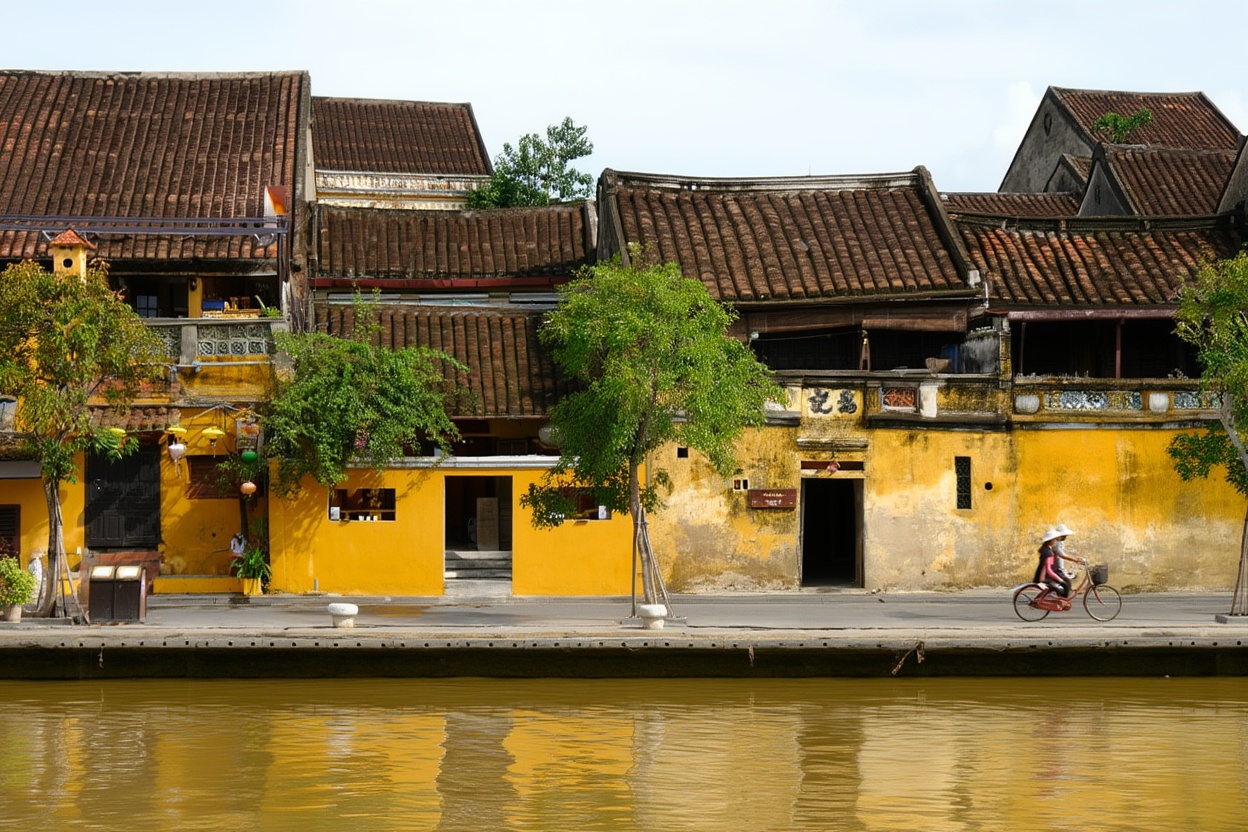
Trần Phú street — the main historic spine — runs east-west through the heart of the Old Town. Lined with merchant houses, tailor shops, cafes, and the entry to most assembly halls. This is the tourist corridor and it shows, but the buildings themselves are real.
Nguyễn Thái Học street — one block south — is slightly quieter, has better restaurants, and gives a different angle on the same architecture.
The riverfront (Bạch Đằng street) — where the Thu Bon River runs along the south side of the Old Town. Sit at one of the riverside cafes in the early morning with a cà phê sữa đá (iced coffee with condensed milk, say: cah-fay soo-ah dah) and watch the fishing boats come in. This costs whatever the coffee costs — about 30,000–50,000 VND (~$1.15–1.90).
Cầu Ngói Thanh Toàn neighbourhood, on the eastern edge — less visited, actual residents going about their days rather than curating an experience for you.
The Crowd Reality: When to Go and When to Stay Away
There’s no diplomatic way to say this: Hoi An Ancient Town between 10am and 5pm during peak season is genuinely overwhelming.
A Reddit post by Jodhpur1016, scored 188 upvotes: “It seemed like hell to me. I get overstimulated easily, and even on a Monday night, the crowds…” They went at night, which is actually the calmer version. Daytime is worse.
TojokaiNoYondaime, another r/VietNam user: “At night it’s like flocks of tourists from all directions all head into the town and occupy every corner.”
REALITY-DN, r/VietNam: “Old Town just becomes more and more overtouristed, and the actually worthwhile things become less and less.”
These aren’t exaggerations. But the answer is timing, not avoidance.
Avoid Tết entirely. TojokaiNoYondaime on r/VietNam: “Hoi An during Tet is a f***ing nightmare, it’s flooded with an endless sea of people… there was one time people got caught up in a 10 km traffic jam just outside of the town for hours.”
The week of the Vietnamese National Day long weekend (September 2nd) is another window to avoid if possible. Domestic tourist numbers spike sharply during this period, making the Ancient Town as congested as peak February even outside the main tourist season. If those dates overlap with your trip, arrive very early or adjust expectations.
The Lantern Festival — What’s Real and What’s Sold to You
This is the single most misunderstood thing about Hoi An.
There are two different things happening under the name “lantern festival”:
The Real One: Once a month, on the 14th day of the lunar calendar, the Ancient Town switches off its electric street lights. The only illumination comes from paper lanterns hung across the streets and candles floating on the Thu Bon River. The atmosphere changes completely. This happens twelve times a year. It’s free. It’s worth planning around.
The Tourist Product: Every night, tour operators sell lantern-release experiences on the river. These exist 365 days a year. Klook lists them daily. The lanterns themselves are real; the “festival” framing is not. On a regular night, you’re releasing a lantern into the river with 200 other tourists doing the same thing simultaneously. It’s fine, but it’s not a festival.
Gilles_in_Rosas on r/travel: “The real lantern night, the one where the streetlights are switched off and the city’s atmosphere truly transforms, happens once a month, on the full moon. The rest of the time, you can release lanterns because it’s become a permanent tourist activity… If you want ‘the moment,’ aim for the full moon.”
↗Insider Tip
Google “Hoi An full moon 2026 dates” before you book. The lunar calendar means it falls on different Gregorian calendar dates each month. If your travel window overlaps with a full moon, even by one day — structure your time to be in Hoi An for it. Prices for accommodation go up 20–30% on full moon nights, but it’s worth it.
Getting Around Inside the Old Town
The main streets of the Ancient Town are pedestrian-only from 9am to 9:30pm (slightly shorter in winter). Motorbikes are not permitted. Cycles are technically allowed but often impractical in the crowds.
Walking is the only way to see it properly. The core zone takes 30 minutes to cross on foot. In practice you’ll walk much more — narrow side streets, courtyard cafes, the riverfront path.
12Go covers most Vietnam routes — sleeper buses, trains, and island ferries. Compare schedules and book in advance during peak season (Dec–Feb, Jun–Aug).
Cycle rickshaws (xích lô, say: sick-loh) are available on the perimeter. Useful for getting between the Old Town and your accommodation if you’re staying outside the pedestrian zone. Negotiate a price before you get in — 50,000–80,000 VND (~$1.90–3.05) for a short trip is reasonable.
Day Trip vs Staying Overnight
Most visitors arrive from Da Nang as a day trip — 30 km, 45 minutes by Grab, and they’re back at their Da Nang hotel by 9pm. This works perfectly fine for a surface-level visit: tick the main sites, eat Cao Lầu, release a lantern at sunset, leave.
But staying at least one night changes what’s available to you.
Klook has the widest selection for Vietnam and is usually the cheapest. KKday is strong on day trips and local experiences.
can if you stayed overnight.
The full moon night is a similar case. It starts around 7–8pm and peaks after 9pm. If you’re day-tripping from Da Nang and need to get back, you’ll leave before it reaches full atmosphere.
Minimum recommendation: 2 nights. One evening to get your bearings and eat properly. One early morning to see the town before the crowds. One full day to move slowly through everything else.
→Who It’s For
Day-tripping is fine if Hoi An is one stop among many and your primary interest is ticking it off. Staying overnight is for people who actually want the town — the quiet it’s capable of, the full moon version, the market at dawn. Both are valid. Just know what you’re signing up for.
Practical Notes Before You Go
Shoes matter. The Ancient Town streets are cobblestone, uneven, and often wet near the river. Sandals are fine for the main drag; comfortable closed shoes are better if you’re doing the ticketed sites and spending hours on foot.
Cash over card. Most market stalls, street food vendors, and smaller cafes inside the Old Town are cash only. Bring sufficient VND before entering — there are ATMs on the perimeter but not many inside. Small notes (10,000–50,000 VND) are useful for street food and tips.
Bring something to carry water. There’s no shortage of places to buy bottled water inside (10,000–20,000 VND), but between ticketed sites in the heat of the day you’ll drink more than you expect. Hoi An sits at the heart of the region — our central Vietnam guide covers how to connect it with Hue, Da Nang, and Phong Nha.
Photography note. Most ticketed sites allow photography inside. A few ancestral houses ask you not to photograph specific altars — follow the signage and the guide’s direction. The main streets are public space; photograph freely. Early morning gives dramatically better light than midday for the yellow walls.
Dress appropriately for sites. Assembly halls and ancestral chapels are active places of worship. Shoulders and knees covered is the standard expectation. Light cotton works for both the modesty requirement and the heat. Most sites have fabric wraps available at the entrance if you arrive unprepared — 5,000–10,000 VND (~$0.20–0.40) deposit.
Jake’s Confession: I Planned the Wrong First Visit
My first time inside Hoi An Ancient Town was at 2pm on a Saturday in April. Peak season. I’d arrived by bus from Da Nang, checked in, and gone straight out.
I lasted 45 minutes before retreating to a cafe with a ceiling fan and a cold Tiger Beer, which at 2:30pm felt like the only reasonable response. The streets were impenetrable — tour groups moving in blocks, vendors calling from every doorway, the heat radiating off the stone pavement. I bought a Cao Lầu I could barely taste because I was too hot and overstimulated to actually eat it properly. For a full breakdown of the destination beyond the Ancient Town, our Hoi An travel guide covers accommodation, day trips, and getting there. For a full breakdown of how to spend your time, see our Hoi An things to do guide. For options across every budget and distance from the Old Town, see our Hoi An where to stay guide.
I came back at 6:30am the next day. The same streets, same yellow walls, same buildings — completely different town. Three other people walking. A woman selling bánh mì from a cart. The Japanese Covered Bridge empty for the first time I’d ever seen it photographed without a crowd. That’s the visit I remember.
Time of day is the single most important planning decision you’ll make in Hoi An.
Two things worth sorting before you land: a Vietnam eSIM so you have data the moment you clear customs, and travel insurance — medical costs for uninsured foreigners in Vietnam are significant.
Airalo eSIMs activate instantly. Buy before departure — airport SIM queues in Vietnam can take 30+ minutes.
Frequently Asked Questions
How much does it cost to enter Hoi An Ancient Town?
Walking the streets of the Ancient Town is free. The ticket — 120,000 VND (~$4.55) per person — is required only to enter the 22 listed heritage sites (assembly halls, old merchant houses, museums). You choose 5 from the list. If your plan is to wander, eat, shop, and sit by the river, you can do the full day without buying a ticket. If you want to go inside the Japanese Covered Bridge, Phước Kiến Assembly Hall, or any old house, you need the ticket.
What is the best time to visit Hoi An Ancient Town?
6:00–8:30am, without question. The streets are empty, the light is soft, and you can actually move. Second best is late afternoon from 5:30pm onwards when the heat breaks and the lanterns come on. Avoid 10am–4pm during peak season (February–April) — the crowds are intense and the heat compounds everything. The monthly full moon night, when streetlights go off and only lanterns light the town, is worth planning your whole trip around if you can.
What are the best things to see in Hoi An Ancient Town?
Japanese Covered Bridge (Chùa Cầu) — built 1593, still on the 20,000 VND note. Phước Kiến Assembly Hall — most ornate Chinese assembly hall, incense smoke and red lacquer. Tấn Ký Old House — 200-year-old merchant house, seven generations of the same family. The riverfront at dawn. The Central Market food court. None of these require more than half a day if you’re focused.
Is Hoi An Ancient Town too touristy?
Yes and no. The main streets (Trần Phú, Nguyễn Thái Học) are heavily touristed during the day. The UNESCO designation and the Instagram algorithm have made certain spots basically impossible to experience quietly between 10am and 5pm. But at the right times — early morning, weekday evenings outside peak season — the town is genuinely atmospheric. The architecture is real, the history is real, and the food is excellent. The crowds are also real. Plan around them rather than pretending they don’t exist.
Is the Hoi An lantern festival every night?
No. The genuine lantern night — when the town switches off its electric street lights and is lit only by paper lanterns and river candles — happens once a month on the 14th day of the lunar calendar. Tour operators sell lantern-release experiences every night, which is a different and much more commercial version. If you want the real atmosphere, look up the full moon date during your travel window and plan to be in Hoi An for it. Full moon nights are busier and slightly more expensive for accommodation, but the atmosphere is worth it.