Updated: May 2026
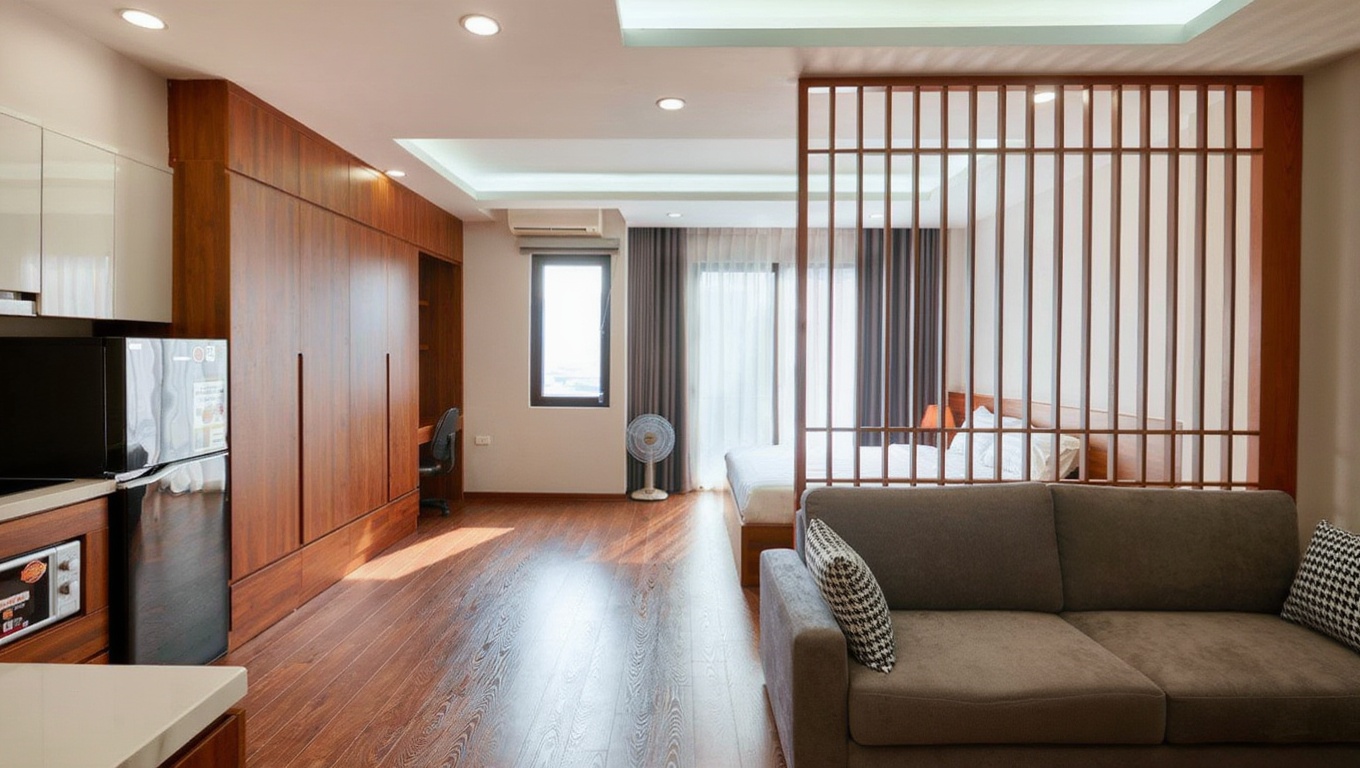
A practical context: Vietnam has been a backpacker destination since the late 1990s and the infrastructure built for that market is mature. What’s called a “budget hotel” here would qualify as a mid-range hostel in Western Europe. The floor will be tiled. The sheets will be clean. The air-con will work. Bathrooms in private rooms are almost always en-suite. The things that go wrong at Vietnamese budget accommodation are not cleanliness — they’re noise, location, and communication issues.
Types of Budget Accommodation in Vietnam
Mini-hotels (khách sạn nhỏ): The dominant format for budget travel in Vietnam. Family-run, 6–20 rooms, often in a converted shophouse. Private en-suite rooms with AC and hot water at 150,000–400,000 VND/night ($6–16). The quality varies enormously at this price point — some are excellent, some have noise problems or surprise fees. The key is to read recent reviews rather than relying on star ratings.
Hostels: Found throughout tourist cities. Party hostels (Hanoi’s Ta Hien area, HCMC’s Bến Thành district) offer dorm beds for 80,000–200,000 VND ($3–8) with rooftop bars, social events, and free breakfast. Quieter boutique hostels exist alongside them — read the description and recent reviews for the actual vibe. Many hostels offer private rooms (200,000–500,000 VND / $8–20) that compete directly with mini-hotels and often win on facilities.
Guesthouses (nhà nghỉ): More basic than mini-hotels, often family accommodation with some rooms rented out. The cheapest private room option at 100,000–200,000 VND ($4–8) in cities, even cheaper in rural areas. AC may be extra, bathrooms may be shared, breakfast is unlikely. Functional for budget travelers who mainly need a clean room to sleep in.
Homestays: More common outside of cities — in Sapa, Ha Giang, the Mekong Delta, and other rural areas. From 150,000–300,000 VND/person ($6–12) including meals in many cases. The authentic accommodation experience for rural Vietnam — staying with a local family, eating what they eat. Quality and privacy vary; reviews are essential.
Price Reality by City
| City | Dorm Bed | Budget Private | Mid-Range Private | Notes |
|---|---|---|---|---|
| Hanoi | 80,000–150,000 VND ($3–6) | 200,000–400,000 VND ($8–16) | 500,000–900,000 VND ($20–36) | Old Quarter location premium; quieter options in Tay Ho |
| HCMC | 100,000–200,000 VND ($4–8) | 250,000–500,000 VND ($10–20) | 600,000–1,200,000 VND ($24–48) | Highest prices; District 1 has best location options |
| Hoi An | 100,000–200,000 VND ($4–8) | 200,000–450,000 VND ($8–18) | 500,000–1,000,000 VND ($20–40) | Ancient Town proximity raises prices; An Bang Beach area is cheaper |
| Da Nang | 80,000–150,000 VND ($3–6) | 200,000–350,000 VND ($8–14) | 400,000–800,000 VND ($16–32) | Good value overall; My Khe Beach area convenient |
| Hue | 70,000–130,000 VND ($3–5) | 150,000–300,000 VND ($6–12) | 350,000–700,000 VND ($14–28) | Most affordable major city; excellent value |
| Nha Trang | 80,000–150,000 VND ($3–6) | 200,000–400,000 VND ($8–16) | 450,000–900,000 VND ($18–36) | Beach proximity adds premium |
| Ha Giang | 50,000–100,000 VND ($2–4) | 100,000–200,000 VND ($4–8) | 200,000–400,000 VND ($8–16) | Very cheap; homestays on the loop are often included in guide packages |
| Ninh Binh | 80,000–130,000 VND ($3–5) | 150,000–300,000 VND ($6–12) | 350,000–700,000 VND ($14–28) | Tam Coc area slightly pricier |
The Booking Platforms: What Works in Vietnam
Booking.com: The largest inventory for Vietnam budget accommodation. Most mini-hotels and guesthouses are listed here. The review system is functional but needs calibration: filter by “Most Recent” rather than “Top Reviewed” — hotels change, staff changes, and a 9.2 score from 2022 means little if recent reviews mention noise problems or different management.
Agoda: Strong Vietnam coverage, often has deals that Booking.com doesn’t, and vice versa. Worth checking both for any property you’re seriously considering. Agoda occasionally has promotional rates on mid-range hotels in HCMC and Hanoi that undercut Booking significantly.
Hostelworld: Specifically for hostels. Better review calibration for the hostel context than Booking.com (reviews only from people who’ve actually stayed). Essential for comparing party vs. quiet hostel atmosphere — the “atmosphere” ratings section gives you a quick read on the social intensity of a property.
Direct booking: Some Vietnamese budget hotels offer a small discount (50,000–100,000 VND) for direct booking or payment in cash. Worth asking when you check in — “Tôi có thể trả tiền mặt để được giảm giá không?” (say: Toy co the tra tyen mat day dook yam ya khong? — “Can I pay cash for a discount?”). Not always available but not unusual.
What to Look For (and What to Ignore)
Star ratings: Largely meaningless in the Vietnamese budget context. A 2-star mini-hotel with recent 9+ reviews is better than a 3-star one with recent 7.5 reviews. Vietnamese star ratings reflect facilities ticked off a government list, not actual quality of experience. Ignore stars; read reviews.
The noise problem: The single most common complaint at Vietnamese budget accommodation. Causes: street noise (especially in Hanoi’s Old Quarter where narrow streets create echo chambers), karaoke from adjacent venues (Vietnam has one of the highest per-capita karaoke densities in the world — this is a real issue near entertainment districts), thin walls between rooms, early-morning breakfast preparation, and construction (Vietnam is building constantly). Solutions: book upper floors, ask for rear-facing rooms, bring earplugs regardless, and specifically search for reviews mentioning “quiet” in your search criteria.
Location over facilities: At the budget level, the most important factor is where the hotel sits relative to what you’re doing. A $10 room near the train station is worth more than a $10 room on the outskirts of town if you’re spending all day walking between sites. Vietnamese cities have dramatic location gradients — a 2km difference can mean 45 minutes of daily transport cost in time and money.
Free breakfast reality: Many Vietnamese budget hotels advertise “free breakfast.” The reality ranges from actual breakfast (bánh mì, eggs, fruit, coffee) to a complimentary piece of toast and instant coffee. Read reviews that specifically mention breakfast quality before factoring it into your price comparison.
Surprise fees to watch for: Early check-in or late check-out fees (50,000–100,000 VND), charges for keeping luggage after checkout (should be free; some charge), charges for “room cleaning” mid-stay (not standard), and tourist tax (sometimes added, sometimes included, sometimes just made up). Ask for the full rate inclusive of everything at check-in, before you put your bags down.
Where to Stay by City: Budget-Specific Advice
Hanoi: The Old Quarter is the most convenient location but has the worst noise problems — narrow streets, late-night drinking on Ta Hien, early morning delivery trucks. Tay Ho (West Lake) has better budget options with calmer streets. Ba Dinh and the area around Ho Chi Minh Mausoleum is quiet and slightly further from the main sights. Pick 3–4 candidate properties, check their location on Google Maps, and read their most recent noise-related reviews before booking.
Hoi An: Ancient Town area is convenient but the premium is steep for budget stays. An Bang Beach (4km from town) has cheaper guesthouses with free bikes provided to reach the old town. The area between Highway 1 and the Ancient Town has good mid-budget options a 15-minute walk from the main sights.
k correctly.
Always provided at 200,000+ VND rooms: Air conditioning (remote on the wall, may need asking for), hot water shower (check it works on arrival — the “hot” handle may be the cold side depending on plumbing), WiFi (speeds vary; ask about speed if you need to work), towels, soap and shampoo (in small sachets — not luxury amounts), and a room key (sometimes a magnetic card, sometimes a metal key with a comically large fob).
Sometimes provided, sometimes extra: Breakfast (verify whether included or charged), minibar items (never free, always charged — read the card prices before consuming anything), laundry service (usually available at 30,000–80,000 VND/kg, typically next-day), iron and board (request from reception — usually available on request).
Bring yourself: A universal power adapter if needed (Vietnam uses two-pin flat or round plugs — most rooms have both types but not always), a small padlock if you’re switching between hostels with lockers, earplugs and an eye mask for light/noise control, and a microfiber travel towel if you’re staying at the very bottom of the price range where towels may be unavailable or small.
One item travelers consistently undervalue: a small flashlight or headlamp. Power cuts are occasional in some smaller towns and rural guesthouses. Having light independent of your phone (which you may need for the map simultaneously) is genuinely useful about once every 10 nights in rural Vietnam.
Negotiating Rate: When It Works and When It Doesn’t
Negotiating accommodation prices in Vietnam is not rude — it’s expected in the mini-hotel and guesthouse market, particularly in lower-footfall destinations or during low season.
When negotiating works:
- Directly at the property, in person (never via Booking.com — those prices are already platform-discounted)
- During low season (June–August in the north, the rainy season generally)
- For longer stays — three nights plus gives you bargaining leverage for a modest discount
- When you’re one of the first to arrive in the morning with the property not yet full
- When paying cash (offer “tôi trả tiền mặt” — I’ll pay cash — for potential 10–20% off the card rate)
When it doesn’t work:
- High-season weekends and Vietnamese public holidays when rooms sell out
- Properties with confirmed bookings ahead of you
- International hostel chains that use fixed pricing systems
- Any property clearly running at high occupancy
The negotiating approach: ask the front desk directly, “Giá tốt nhất là bao nhiêu?” (say: Yah tot nyut la bow new-oo? — “What is your best price?”). Don’t make an aggressive counter-offer — state that you’ll pay cash for a discount or ask if there’s a rate for longer stays. The interaction is commercial and straightforward, not confrontational.
Laundry: The Budget Traveler’s Essential Service
Vietnam’s laundry services are one of the country’s genuine quality-of-life advantages for long-term travelers. Most budget hotels offer in-house laundry (30,000–80,000 VND per kg, next-day) and street-side laundromats (dịch vụ giặt ủi, say: dik voo yat oo-ee) charge 20,000–40,000 VND/kg with same-day turnaround in many cases.
This matters for packing: budget travelers in Vietnam routinely carry 5–7 days of clothes and do laundry twice a week rather than packing two weeks’ worth. A 3kg load of clothes costs about 90,000–150,000 VND ($3.60–6) and comes back folded and wrapped. The infrastructure is ubiquitous in every tourist area.
One important detail: always leave laundry by 8–10am for same-day return. Afternoon drop-offs get returned the following day. In tourist-dense areas like Hoi An or Hanoi’s Old Quarter, drop-off laundry services are on every street — your hotel reception can usually point to the nearest one.
Checking In: What to Do on Arrival
Budget hotels in Vietnam sometimes have flexible check-in policies that aren’t communicated in advance. A few things worth doing on arrival at any budget property:
Inspect the room before accepting it. Turn on the AC and confirm it cools. Test the hot water (run it for 30 seconds — some water heaters are slow). Check that WiFi works in the room, not just at reception. Look at the window — does it face the street or a quieter interior? If the room is significantly worse than what was shown in photos, you can request a different room or a rate adjustment.
Klook has the widest selection for Vietnam and is usually the cheapest. KKday is strong on day trips and local experiences.
Ask “Giá đã bao gồm tất cả chưa?” (say: Yah da bao gum tat ka choo-a? — “Does the price include everything?”). Some hotels add a service charge, tourist tax, or breakfast charge after the fact. Getting clarity at check-in is easier than disputing at checkout.
Confirm checkout time. Standard checkout in Vietnam is 12pm noon. If you have a late flight, ask about late checkout (sometimes free, sometimes 50,000–100,000 VND extra). If you need to leave bags, clarify that luggage storage is available — it should be free at any decent property.
Take a photo of the room when you check in. Not standard paranoid tourist behavior — just a practical record if there’s any dispute about room condition at checkout. Takes five seconds, stored in your camera roll. In the (rare) situation where a property claims you caused damage, you have a timestamp record of the room’s condition when you arrived. Most Vietnamese budget hotels are honest; this protects you against the uncommon case where they aren’t.
Booked a highly-rated 300,000 VND guesthouse in Hanoi’s Old Quarter for my first week. 9.4 on Booking.com, hundreds of reviews, location looked perfect.
The room was clean. The staff were helpful. The views from the balcony showed the beautiful rooftop chaos of the Old Quarter. Also: every morning at 5:30am, a garbage truck worked the alley below. Every night until 2am, a group of backpackers had a very loud time on the street directly under my window. The walls transmitted every word of every conversation in the adjacent rooms.
None of this was in the recent reviews because the recent reviews were all from people who’d slept through it or accepted it as the Old Quarter experience. They weren’t wrong — this is the Old Quarter experience. I just hadn’t read specifically for noise complaints and hadn’t understood that the famous narrow-alley atmosphere is also an acoustic tunnel.
Now I filter reviews by lowest-rated before booking anywhere in a noisy tourist district. The 4- and 5-star reviews tell you about the best case. The 1- and 2-star reviews tell you about the failure modes. Both matter.
Two things worth sorting before you land: a Vietnam eSIM so you have data the moment you clear customs, and travel insurance — medical costs for uninsured foreigners in Vietnam are significant.
Airalo eSIMs activate instantly. Buy before departure — airport SIM queues in Vietnam can take 30+ minutes.
Frequently Asked Questions
What is the cheapest accommodation in Vietnam?
Dorm beds at hostels run 80,000–150,000 VND ($3–6) in most cities. Basic guesthouse rooms with shared bathrooms start at 100,000–150,000 VND ($4–6). In rural areas and small towns, private rooms at local guesthouses cost as little as 100,000–200,000 VND ($4–8) with AC and en-suite bathroom. The cheapest destination in Vietnam for accommodation overall is Hue and the smaller towns of central Vietnam.
Is it better to book Vietnam hotels in advance or on arrival?
Book in advance during peak season (November–March in the south, June–August nationally) and around Vietnamese public holidays. During low season, walking in and negotiating at mini-hotels in person can get you 20–40% off posted rates. For major budget hostels in tourist cities, book 1–3 days ahead for private rooms; dorm beds rarely sell out except during holidays.
What does a budget hotel room include in Vietnam?
Most budget mini-hotels in Vietnam (200,000–400,000 VND / $8–16) include: private room with en-suite bathroom, air-conditioning, hot water shower, TV, WiFi, and usually a small desk. Breakfast is sometimes included, sometimes extra. Towels, soap, and shampoo are standard. At the lower end (under 200,000 VND), AC may cost extra or not exist, and bathrooms may be shared.
How do I find a quiet hotel in Vietnam?
Specifically search for recent reviews mentioning “quiet” or filter for the lowest-rated reviews to see what the noise complaints are. In the listing description, look for whether the property is on a main road or in a smaller alley. Upper floors reduce street noise significantly. Properties described as being in a “residential area” or “away from nightlife” are generally quieter than those advertising their proximity to restaurants and bars. In Hanoi specifically, avoid the immediate Ta Hien/Bia Hoi corner area if quiet sleep is important — that area doesn’t sleep.
Can I negotiate hotel prices in Vietnam?
Yes, at mini-hotels and guesthouses, particularly in person and during low season. The approach: ask “Giá tốt nhất là bao nhiêu?” (what is your best price?) and offer to pay cash. Discounts of 10–30% below the posted rate are achievable during low season. During peak season (November–March in the south, summer holidays everywhere), rooms often sell at full posted rates because demand is genuine. International hostel chains use fixed pricing — negotiating with them won’t work.
Is it safe to store valuables at budget hotels in Vietnam?
Reasonably safe with basic precautions. Most budget hotels don’t have in-room safes, but theft from rooms is not a common complaint in Vietnam — it happens but is not widespread. Standard precautions: keep your passport and large amounts of cash on your person or in a security bag inside your closed bag. Don’t leave cameras and electronics visible in the room when you’re out. At hostels, always use a locker for valuables (bring a small padlock — hostel lockers often don’t include one). Reception can usually keep valuables in a secure box if you ask.
Vietnam’s budget accommodation market is genuinely competitive and quality is high relative to price. The research effort pays off: spend 15 minutes reading recent reviews filtered by lowest-rated before committing to any property, and you’ll avoid the main failure modes. Everything else — clean rooms, working AC, helpful staff — Vietnam delivers reliably at the budget level. For the price of a coffee in Sydney, you can sleep somewhere clean, cool, and central in Vietnam. That math doesn’t change regardless of where you land on the backpacker-to-mid-range spectrum.
For a full breakdown of daily costs across all categories, the Vietnam budget guide covers food, transport, and activity costs alongside accommodation with realistic per-day spending figures by travel style. The Vietnam itinerary guide has accommodation recommendations city by city for the most common travel routes, including which neighborhoods to prioritize in each destination. The Vietnam budget travel guide breaks down daily costs across food, transport, and accommodation with realistic per-day figures by travel style.
FAQ
What is the cheapest type of accommodation in Vietnam?
Hostel dormitories start at 80,000–150,000 VND/night ($3–6) in most cities. Private rooms in budget guesthouses (nhà nghỉ) start at 200,000–350,000 VND/night ($8–14). The cheapest accommodation clusters around backpacker streets: Hang Bac/Ma May in Hanoi, Pham Ngu Lao/De Tham in Saigon, Nguyen Thi Minh Khai in Hoi An.
Are budget hotels in Vietnam clean and safe?
Most are — Vietnam’s budget guesthouse sector is competitive and cleanliness standards are generally adequate. Check for: working AC, clean bathroom, and whether the sheets look freshly changed. Read recent reviews on Booking.com or Agoda (filter to 7+ rating). Cheap places around backpacker streets are usually fine; the cheapest places in bus stations or train station areas can be lower quality.
What’s the best app to book budget accommodation in Vietnam?
Booking.com has the widest inventory and allows free cancellation on most properties. Agoda often has better rates for Asian properties. Hostelworld for dormitory bookings. Walk-in rates at guesthouses are often 20–30% cheaper than online for unplanned nights — worth negotiating in person if you’re flexible.
Should I book accommodation in advance in Vietnam?
High season (November–March for most of Vietnam, July–August for the north) — book at least a few days ahead, especially in Hoi An and Ninh Binh where good budget places fill up. Low and shoulder seasons — walk-in rates are available. Full moon nights in Hoi An and Vietnamese public holidays book out 2–4 weeks ahead.
What’s the difference between a hostel, guesthouse, and nhà nghỉ in Vietnam?
Hostel (nhà trọ du lịch): dorm beds plus private rooms, social atmosphere, usually English-speaking staff. Guesthouse (nhà khách): family-run, private rooms only, varies widely in quality. Nhà nghỉ: literally ‘rest house’ — basic private rooms, often cheaper, less English spoken. For budget travelers, guesthouses and hostels in tourist areas are the best balance of price and quality.