
Vietnam’s visa on arrival (VOA) system is still technically available in 2026, but it’s been largely superseded by the Vietnamese e-Visa for most practical purposes. The e-Visa costs the same ($25), processes faster, works at all entry points including land borders, and eliminates the need to buy an approval letter from a third party. For most people reading this in 2026, the honest advice is: get the e-Visa instead.
That said, understanding what visa on arrival is, how it works, and when it might still apply is worth the ten minutes. The VOA ecosystem is also full of scam services selling overpriced approval letters to travelers who don’t know they have better options. Understanding the system protects you from wasting money.
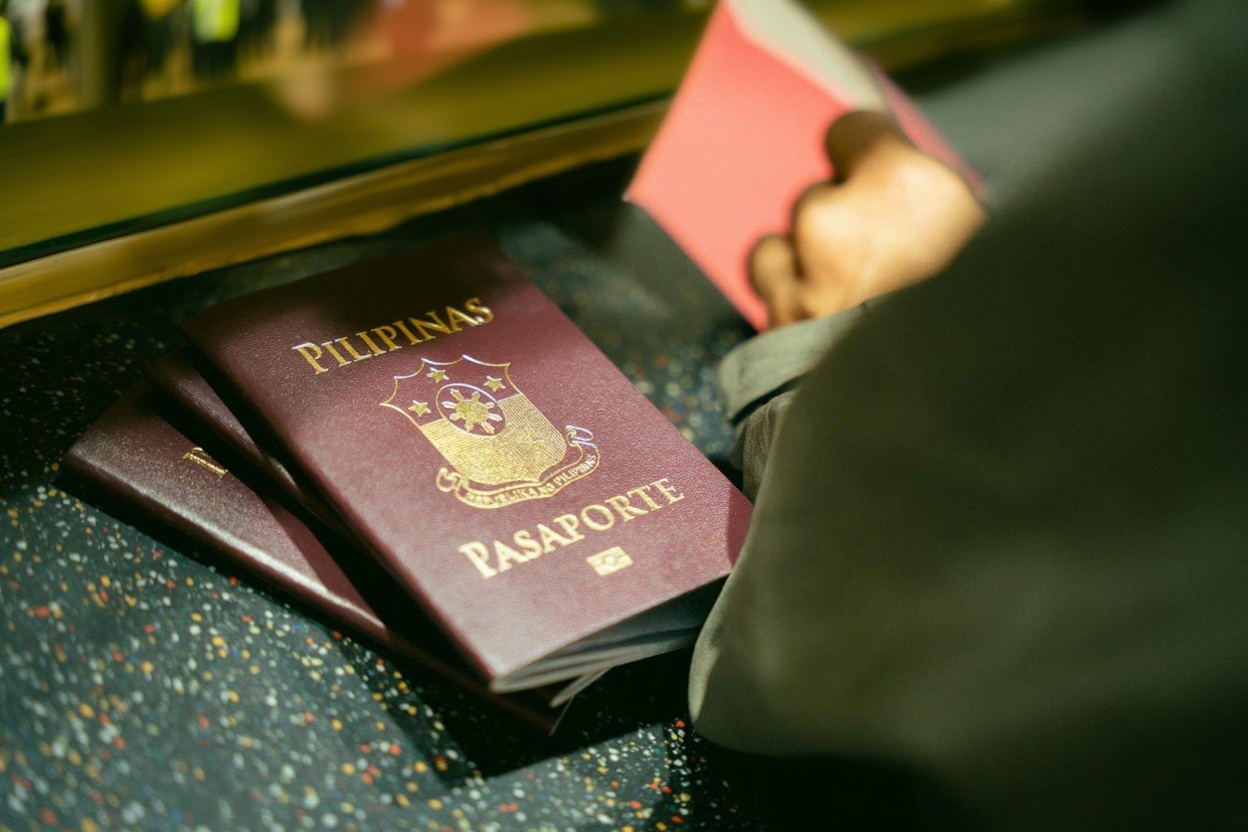
What Is Vietnam Visa on Arrival?
Visa on arrival is a pre-approval system where you arrange visa authorization before traveling but receive the physical visa stamp when you land at a Vietnamese airport immigration counter. The process works in two stages.
Stage 1 — Before departure: You submit an application through a Vietnamese government-authorized travel agency or an approved third-party service. They provide an approval letter — a PDF document confirming you’ve been pre-cleared for a Vietnamese visa. Airlines require evidence of visa clearance before letting you board to Vietnam, and this letter is what satisfies that requirement.
Stage 2 — At the airport: After landing at a Vietnamese international airport, you go to the “Visa on Arrival” window (a separate desk from the standard immigration queues). You present your approval letter, two passport photos, a completed entry form, and pay the stamping fee. An officer stamps the visa into your passport. Then you join the standard immigration line to get your entry stamp.
The total cost: approval letter fee ($8–25 depending on the service) plus stamping fee ($25–50) = $33–75. This equals or exceeds the $25 e-Visa, with the added steps of buying a letter from a third party and spending time at the VOA desk on arrival. For a full breakdown of what you’ll pay across all visa options, see our Vietnam visa cost guide.
Visa on Arrival vs e-Visa: The Comparison
| Factor | Visa on Arrival (VOA) | Vietnamese e-Visa |
|---|---|---|
| Total cost | $33–75 (approval letter + stamping fee) | $25 flat (government fee only) |
| Preparation needed | Buy approval letter from agent (3–14 days processing) | Apply directly at evisa.gov.vn (3 days processing) |
| Entry points accepted | International airports only — NOT land borders, NOT sea | All entry points including land borders and sea |
| Extra time on arrival | 15–45 min queue at VOA window before immigration | Standard immigration queue only |
| Maximum stay | 1 month (single or multiple) or 3 months (multiple entry) | 90 days (multiple entry) |
| Scam risk | High — dozens of fake approval letter services online | Low — apply directly at the government portal |
| Extension possible? | Yes, via immigration office in Vietnam | Yes, via immigration office in Vietnam |
The conclusion from every row: the e-Visa wins. The only remaining use case for VOA is if you genuinely need a visa, are arriving by air, and missed the window to apply for an e-Visa. That’s it.
Who Still Uses Visa on Arrival in 2026?
Despite the e-Visa being superior in nearly every way, some travelers still use VOA:
Last-minute travelers: If you booked a Vietnam flight with fewer than 3 business days before departure and didn’t have time for the standard e-Visa government processing, VOA with an express approval letter is an option. Some services offer processing in 2–8 hours at a premium of $20–40. The approval letter arrives by email; you print it and bring it to the flight. It’s more expensive and more stressful than planning ahead, but it works.
Nationalities not eligible for the e-Visa: Vietnam’s e-Visa covers 152 nationalities as of 2026. A small number of nationalities fall outside that list. If your passport isn’t e-Visa eligible and you can’t enter visa-free, VOA through a Vietnamese government-authorized agency may be your only air-entry option. Check evisa.xuatnhapcanh.gov.vn to confirm whether your nationality qualifies before assuming you need VOA.
Group tours with pre-arranged visa services: Some organized tour operators, particularly those booking trips to Vietnam from neighboring countries, include VOA approval letter processing in their package. If you’re on a structured package tour that handles this for you, you’ll encounter VOA as part of the organized process. Follow whatever instructions your tour operator provides.
Travelers with specific visa class requirements: Most tourist needs are covered by the 90-day e-Visa. However, some travelers applying for specific business visa classes, specific entry/exit configurations, or longer-term stays may find certain visa categories are only available through VOA. These are edge cases — if you’re in this situation, you likely already know it.
How to Get a Vietnam Visa on Arrival: Step-by-Step
If you genuinely need to use visa on arrival, here’s exactly how the process works.
Step 1 — Choose an approval letter service: Apply through a Vietnam-authorized travel agency. You need to provide your passport details (name exactly as it appears in your passport, passport number, nationality, date of birth, expiry date), your intended entry date, purpose of visit, and entry airport. The letter is emailed to you as a PDF.
12Go covers most Vietnam routes — sleeper buses, trains, and island ferries. Compare schedules and book in advance during peak season (Dec–Feb, Jun–Aug).
Pricing ranges: standard processing ($8–15, 3–5 business days), rush processing ($20–40, 2–8 hours). Stick to services with verifiable reviews from the past 6 months. Pay via PayPal or a credit card with dispute protection. If you encounter any service asking for more than $25 for a single approval letter, look elsewhere.
Step 2 — Print your approval letter: Print a physical copy of the approval letter. Some airlines ask to see it at check-in as proof of visa clearance. The immigration officer at the VOA window takes the physical copy, so you need a hard print — a phone screen or PDF won’t work at the counter.
Step 3 — Prepare your documents before landing: Have these ready when you reach the VOA window: your printed approval letter, two recent passport-sized photos (4cm x 6cm, white background — bring extras in case of quality issues), a completed visa application form (available at the VOA window on arrival or downloadable in advance from Vietnamese immigration resources), and the stamping fee in USD cash or VND.
Stamping fee amounts (as of 2026):
| Visa Type | Stamping Fee |
|---|---|
| 1-month single-entry | $25 |
| 1-month multiple-entry | $25 |
| 3-month single-entry | $25 |
| 3-month multiple-entry | $50 |
| 6-month multiple-entry | $50 |
Step 4 — At the airport: After landing, follow signs to the Visa on Arrival window. At Nội Bài (Hanoi) and Tân Sơn Nhất (HCMC), VOA counters are clearly marked and separate from the main immigration lanes. Join the VOA queue, present your documents to the officer, pay the stamping fee, receive the visa stamp in your passport. Then join the standard immigration queue for the entry stamp. Total time at the VOA counter: 20–60 minutes depending on queue depth — budget extra time if arriving on a busy international flight.
Which Airports Have VOA Counters?
Visa on arrival is available at all Vietnamese international airports that process regular foreign passenger arrivals:
Nội Bài International Airport (HAN) in Hanoi — the busiest entry point from North America and Europe. The VOA window is in the arrivals hall before the main immigration desks. Tân Sơn Nhất International Airport (SGN) in Ho Chi Minh City — the highest volume airport in Vietnam. Expect longer VOA queues here, particularly on flights from Bangkok, Seoul, and Singapore arriving in the afternoon. Đà Nẵng International Airport (DAD) — serves central Vietnam, well-organized VOA counter. Cam Ranh International Airport (CXR) near Nha Trang. Phú Quốc International Airport (PQC) — busier than you’d expect, especially in high season (December–March). Liên Khương Airport (DLI) near Da Lat. Cát Bi International Airport (HPH) in Hai Phong.
Critical point: VOA is NOT available at land border crossings. If you’re entering Vietnam overland from Cambodia (Moc Bai, Bavet-Moc Bai corridor), Laos (Lao Bao, Na Meo, Bo Y), or China (Lao Cai, Mong Cai, Huu Nghi), you cannot use VOA. For land entry, you need either visa-free entry (for eligible nationalities) or the Vietnamese e-Visa, which is accepted at all land crossings. This distinction matters because some travelers fly into Bangkok or Phnom Penh and take a bus overland to Vietnam — VOA won’t work for that entry.
The Visa on Arrival Scam Problem
Google “Vietnam visa on arrival” and the top results are almost entirely third-party services selling approval letters. Most of them are legitimate, many are overcharging, and a meaningful fraction are scams. This is one of the best arguments for getting the e-Visa instead — the official e-Visa portal has no such ecosystem of fake services.
Common VOA scam patterns: charging $50–100 for a single approval letter (legitimate services charge $8–20), requesting additional “embassy processing fees” or “government fees” beyond the approval letter price (there’s no embassy involved in VOA, and the only government fee is the stamping fee paid at the airport), promising approval in 30 minutes at standard rates (legitimate processing takes a minimum of several hours), or showing fake “official government” branding to imply they have a government connection they don’t have.
Protection: use only services with independent user reviews from within the past 6 months. Pay via PayPal or a credit card with dispute resolution — not wire transfer or cryptocurrency. If a service asks for your card number on an HTTP page without SSL, close the tab. Better yet, skip the entire VOA ecosystem and apply for the e-Visa directly at evisa.xuatnhapcanh.gov.vn, where there’s no third-party, no approval letter, and no scam risk.
What Happens If Your VOA Approval Letter Has an Error?
Your approval letter must exactly match the details in your passport — any discrepancy can cause problems at the VOA window. The most common errors: name misspelled or in wrong order (Vietnamese immigration uses given name/surname order opposite to Western convention), wrong passport number, incorrect entry date, or wrong entry airport.
If you notice an error after receiving your letter but before travel: contact the service immediately and request a corrected letter. Reputable services correct errors at no charge within their processing window. If you discover an error after you’ve already boarded and landed in Vietnam: tell the VOA officer what happened, show your passport with the correct details, and explain it was a service error. In practice, officers at major airports have seen this before and can often process your visa if the discrepancy is minor (a middle name missing, a character transposition) and your passport clearly confirms your identity. However, a wrong passport number or wrong date is a harder problem — the officer may require you to have a new letter issued, which means you’ll need to contact the service from the airport, potentially missing your connection or waiting several hours.
This is another reason the e-Visa wins: there’s no approval letter to have errors in. The e-Visa is issued directly to your passport number, and the immigration system verifies it electronically on arrival.
Visa on Arrival vs Visa-Free Entry — Understanding the Hierarchy
A common source of confusion: some travelers think they need to arrange any form of visa because a website selling approval letters implied as much. The reality is that many nationalities, including US citizens, don’t need any advance visa arrangements for stays under 45 days.
The full hierarchy for US citizens entering Vietnam in 2026:
Up to 45 days — visa-free entry: No application, no fee, no advance arrangement. Walk up to immigration, passport gets stamped. This is the simplest option for short trips. The 45-day allowance applies per entry, and there’s no official limit on how many times you can do a visa run and re-enter, though immigration officers will notice if you’re clearly exploiting the system.
46–90 days — Vietnamese e-Visa: $25 government fee, apply at evisa.xuatnhapcanh.gov.vn, standard processing 3 business days (express 1 business day available). Issued electronically, attached to your passport number. Valid at all entry points. This is the right option for most travelers who need more than 45 days or want flexibility on entry point.
Emergency or last-minute air arrival — VOA: If you’re arriving by air and genuinely couldn’t get the e-Visa in time, this works. More expensive and more friction than the e-Visa in every respect.
Long-stay (90+ days): Business visa, work visa, or temporary residence card. These require Vietnamese sponsorship — a company, institution, or individual registered in Vietnam who can sponsor your application. This falls outside tourist travel.
Other nationalities: 55+ nationalities have visa-free access to Vietnam, though terms vary — some get 14 days, some get 30, some get 45. Check your specific nationality’s current terms before booking, as Vietnam periodically updates the visa-free list and duration.
VOA for US Citizens Specifically — Do You Even Need This?
Most US citizens asking about visa on arrival don’t actually need it. Here’s the quick logic tree:
Are you staying 45 days or less? You don’t need any visa at all — US citizens get 45-day visa-free entry, no application, no fee. Are you staying 46–90 days, arriving by air? Get the $25 e-Visa — it’s cheaper and faster than VOA, and you apply directly at the Vietnamese government portal in about 20 minutes. Are you staying 46–90 days and entering by land from Cambodia, Laos, or China? Get the e-Visa — VOA doesn’t work at land borders anyway. Are you staying more than 90 days? You need a different visa category entirely — a business visa, work visa, or dependent visa — and those require Vietnamese sponsorship, not an approval letter service. For a full breakdown by passport, see our Vietnam visa requirements guide.
The only scenario where VOA makes sense for a US citizen: you need to stay more than 45 days, you’re arriving by air, and you genuinely couldn’t submit an e-Visa application at least 3 business days before departure. That scenario is narrow enough that the majority of people reading this guide don’t fit it. If you’re here because Google served you an approval letter service’s article and you’re trying to figure out what you actually need — the answer is probably “nothing” (if your trip is 45 days or less) or “the $25 e-Visa” (if it’s longer).
Is Visa on Arrival Being Phased Out?
The Vietnamese government hasn’t announced a formal phase-out date for VOA, but the practical trajectory is clear. The 2023 expansion of the e-Visa system — extending the maximum stay from 30 to 90 days, adding multiple-entry, expanding to 152 nationalities, and accepting all entry points — was explicitly designed to modernize Vietnam’s visa process and reduce reliance on the approval letter ecosystem.
For any trip you’re planning now, treating VOA as a backup emergency option rather than a primary route is the right call. The e-Visa is cheaper, faster, valid at more entry points, and eliminates exposure to the third-party approval letter market entirely. If VOA is formally discontinued in the next year or two, travelers who built their process around it will be scrambling; travelers who already use the e-Visa won’t notice.
Two things worth sorting before you land: a Vietnam eSIM so you have data the moment you clear customs, and travel insurance — medical costs for uninsured foreigners in Vietnam are significant.
Airalo eSIMs activate instantly. Buy before departure — airport SIM queues in Vietnam can take 30+ minutes.
Frequently Asked Questions
Is visa on arrival available at all Vietnamese airports?
Visa on arrival is available at all international airports in Vietnam that process regular foreign passenger arrivals: Nội Bài (Hanoi), Tân Sơn Nhất (Ho Chi Minh City), Đà Nẵng, Cam Ranh (Nha Trang), Phú Quốc, Liên Khương (Da Lat), and Cát Bi (Hai Phong). VOA is NOT available at land borders or sea entry points. If you’re entering Vietnam overland from Cambodia, Laos, or China, you need either visa-free entry (if applicable) or the e-Visa, which works at all land crossings.
Can I get a Vietnam visa on arrival without an approval letter?
No. The VOA process requires a pre-approved approval letter issued before travel — you can’t walk up to the VOA counter at a Vietnamese airport without one and expect to receive a visa. The approval letter authorizes the immigration officer to issue the stamp. Without it, you’ll be directed to standard immigration, where as a US citizen you’ll receive a 45-day visa-free stamp. If you need more than 45 days and have neither a letter nor an e-Visa, you’ll need to arrange one before travel.
How long does the VOA counter process take at the airport?
Budget 20–60 minutes for the VOA window itself, depending on queue depth. High-traffic periods: December–March (peak tourist season), Vietnamese national holidays, and late afternoon when multiple international flights land simultaneously at Tân Sơn Nhất. After the VOA stamp, you still need to go through standard immigration, which adds another 10–30 minutes. Plan your connecting transport accordingly — don’t book a bus or private car pickup 90 minutes after landing if you’re going through VOA.
Can I extend a visa on arrival while in Vietnam?
Yes. Visa extensions are handled through the Vietnam Immigration Department (Cục Quản lý xuất nhập cảnh). You apply in person or through a registered travel agent at the immigration office covering the area where you’re staying. The extension process takes 5–7 business days and costs 900,000–1,800,000 VND depending on your current visa type and desired extension duration. In practice, many travelers on shorter VOA stamps do a visa run — exit to Cambodia or Laos, re-enter Vietnam — rather than extend, because the process is time-consuming and the outcome isn’t guaranteed.
Is it true that VOA is cheaper than the e-Visa?
No — this is a misconception perpetuated by approval letter services that only list their own fee without mentioning the stamping fee paid at the airport. The full VOA cost is the approval letter ($8–25) plus the stamping fee ($25–50) = $33–75 total. The e-Visa is $25 flat. VOA is never cheaper. The misunderstanding comes from services that advertise “$8 approval letter” as if that were the complete cost.
What photos do I need for visa on arrival?
Two passport-sized photos: 4cm x 6cm, white background, recent (within 6 months), clear face with no sunglasses or hats, printed (not shown on a phone screen). Bring extra copies in case the officer flags quality issues. If your photos are borderline quality, bring 4 instead of 2 — photo rejection at the VOA counter is one of the most avoidable delays in the process. Some airports have photo kiosks in the arrivals area, but they’re not guaranteed to be operational, so don’t rely on them.
Can I use VOA to enter Vietnam by cruise ship?
Sea-entry VOA is technically a category that exists in Vietnamese immigration regulations, but in practice it’s rarely processed at cruise ports. Most cruise ship arrivals to Vietnam (Da Nang, Ha Long Bay, Ho Chi Minh City) use a group visa letter arranged through the cruise line for the entire passenger manifest, not individual VOA. If you’re arriving by cruise, your ship’s guest services team handles visa arrangements — you don’t need to independently apply for VOA.