Last updated: May 2026 — prices and logistics verified May 2026.
Nha Trang has a reputation as a beach town you pass through on the way somewhere else. One day, maybe two, then north to Hoi An or south to Saigon.
The islands. The 8th-century Cham towers. The mud baths. The seafood market at 7am when the boats have just come in. The 3km cable car over open ocean. The diving, which is better than you’d expect and worse than the hype suggests. This is the version of Nha Trang worth showing up for.
Here is every worthwhile thing to do in the city — with honest takes on what each is actually like, what it costs, and who should skip it.
Island Hopping and Snorkeling — The Main Event
The bay holds 19 islands. Most group tours hit three or four — Hon Mun, Hon Tam, Hon Mot, and Hon Mieu are the standard stops.
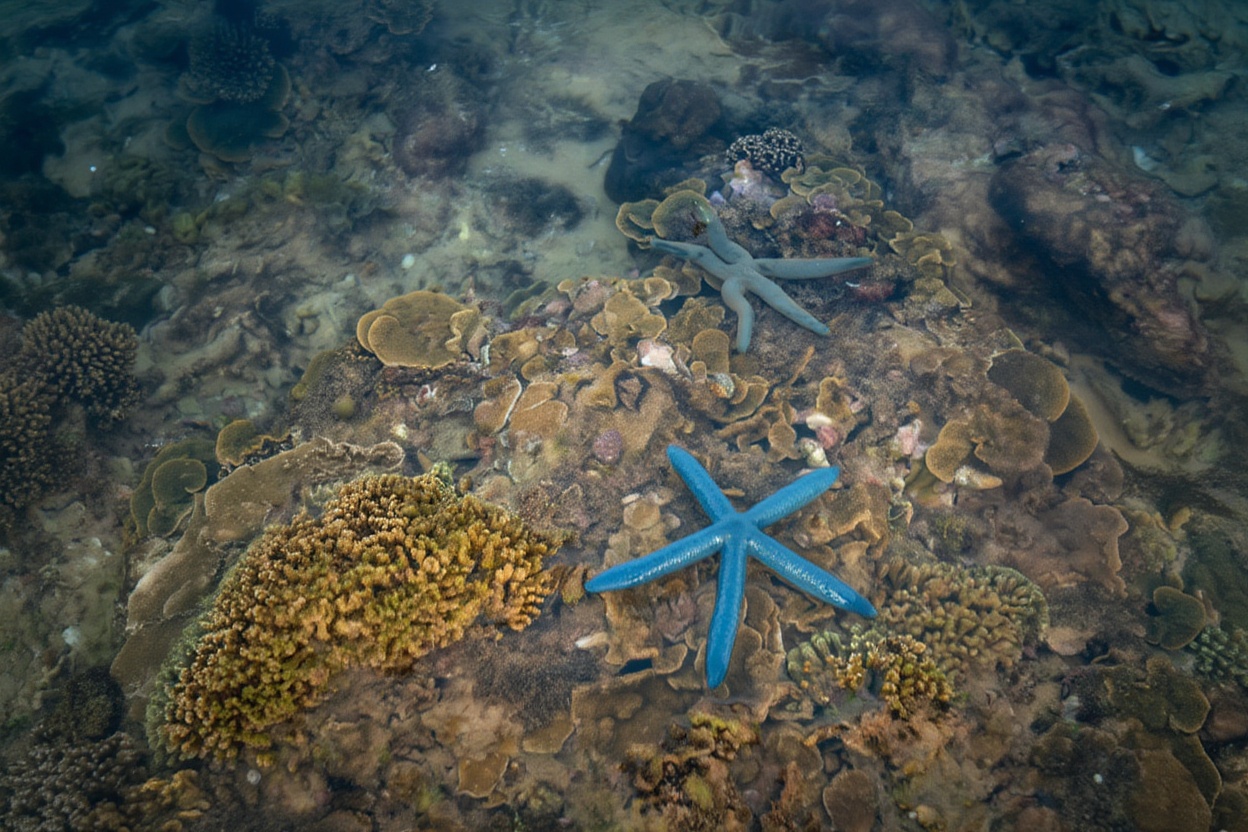
Hon Mun is the standout. It’s a marine protected area with coral reef, clear water, and visibility of 15–20 metres on a good day. The snorkeling is genuinely good — not Ko Tao level, and overfishing has thinned the fish population across the wider bay — but the coral inside the protected zone is healthy and the water is the clearest you’ll see anywhere on this stretch of coast.
The protected status makes a visible difference. Outside Hon Mun’s boundaries, the reef is noticeably thinner. Inside, the coral comes in shapes and colours that take a few seconds to register after the dull open water of the crossing — bright purple sea fans, dense table coral, schools of small reef fish moving in formation through the structure.
Book a group boat tour at Cầu Đá pier (12.2161° N, 109.2073° E) — prices run 375,000–500,000 VND (~$15–$20) including snorkel gear, lunch on the boat, and stops at 3–4 islands. Tours leave around 8am and return mid-afternoon. Book the day before; operators on the pier will approach you, or your guesthouse can arrange it for the same price.
A note on the party boat option: some operators run “floating bar” tours — the same islands, same timing, but with a raft in the water between stops and a DJ playing on the boat. These are legitimately fun for a different reason. If you’re travelling in a group and the snorkeling isn’t the primary goal, they work. If you specifically want to see Hon Mun’s reef, pick a tour that emphasises snorkeling time over the bar.
→Who It’s For
Island hopping suits everyone except people who get badly seasick (the open-water crossing is 20–30 minutes each way and can get choppy February–May when the sea is calmest). The party boat version is popular and available for the same price range — different vibe, same islands. Choose based on what you actually want from the day.
Po Nagar Cham Towers — The Thing Everyone Walks Past
Four towers. Eighth century. Still active as a place of worship.
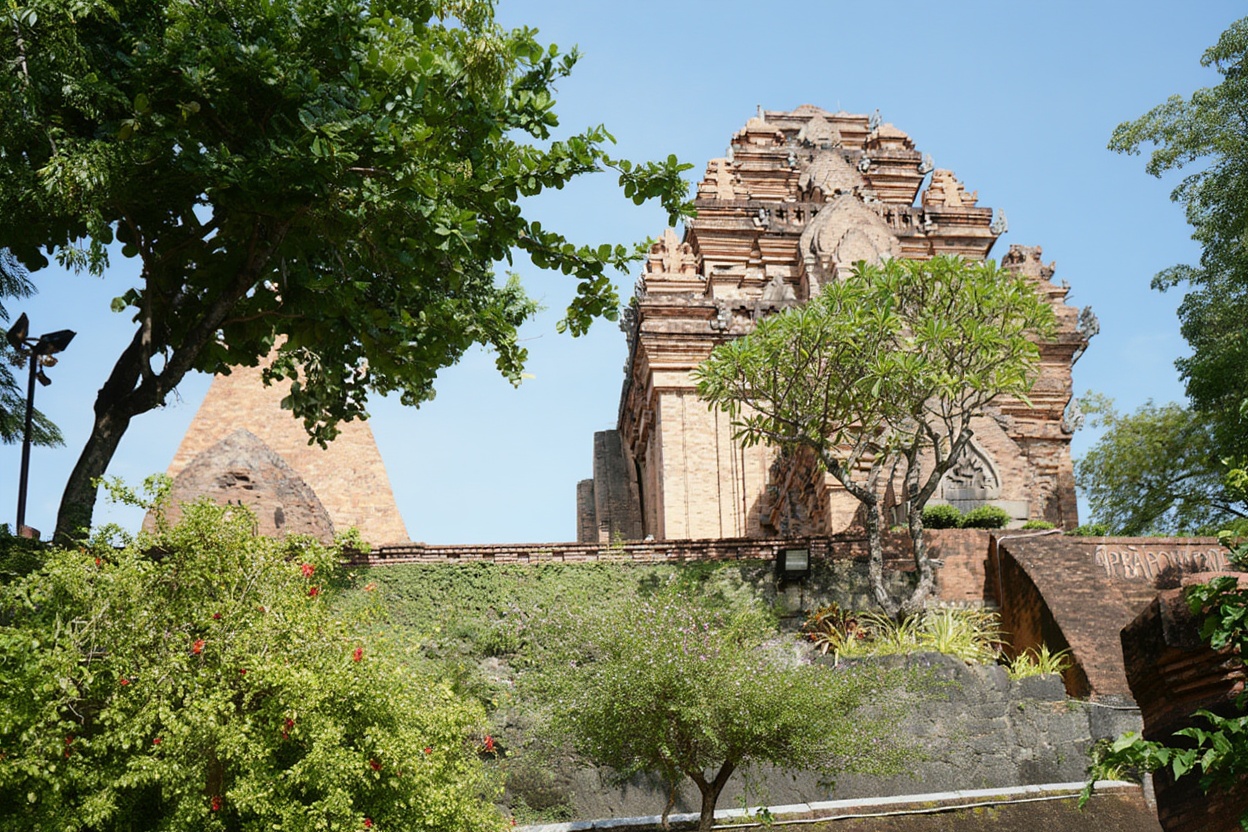
Po Nagar (12.2719° N, 109.1946° E) was built by the Cham people — a Hindu kingdom that controlled this coastline for a thousand years before being gradually absorbed by Vietnamese expansion moving south from the north. The towers are dedicated to the goddess Po Nagar (Yang Ino Po Nagar in the Cham language), the “Mother of the Realm,” protector of Cham agriculture and fertility. The main tower still has an active shrine inside where Vietnamese Buddhists and Cham descendants leave offerings side by side — a syncretism that happens naturally in Vietnam in a way that never stops being interesting.
The incense smell hits you on the bridge before you even reach the entrance — thick, sweet, specific. Inside the main tower it’s dark and cool, the walls thick enough to cut the coastal heat. Sanskrit inscriptions run up the door jambs. Nobody working here can translate them anymore, which somehow makes them feel older and stranger than they already are. The statuary inside is a mix of Cham Hindu iconography and later Vietnamese Buddhist additions — layered history in the same room.
The view from the hilltop is worth the walk up on its own: the Cái River below, fishing boats at anchor, the city spread behind you, and the coast curving south toward the airport. Early morning light on the tower stonework — which is brick, not stone, fired to a deep terracotta that turns gold at 8am — is the best version of this sight.
Entrance: 25,000–50,000 VND (~$1–$2). Go between 7am–9am: light comes in at a low angle, the worship is active, and most tourists are still at breakfast. Takes 45 minutes. Worth every minute of it, and worth arriving before the bus tour groups.
Dress code: covered shoulders and knees required to enter the main tower. There are sarongs available to borrow if you arrive in shorts.
→Who It’s For
Anyone with any interest in Vietnam’s non-Vietnamese history — the Cham kingdom ran this coast for longer than the current country has existed. If history isn’t your thing, the towers are still worth 20 minutes for the view over the river and the incense atmosphere of the active worship. The only people who should skip it are those who truly can’t spare 45 minutes from the beach.
Mud Baths — Tháp Bà Hot Spring
I went into this expecting a tourist trap. I left pleasantly surprised.
Tháp Bà Hot Spring Center (12.2775° N, 109.1625° E) is about 5km northwest of the city center. The facility is well-run, genuinely clean, and has enough pool variety to fill a morning. The mud bath itself is a large tub filled with warm mineral mud — you float in it for 20–30 minutes, which is about as long as it stays interesting. The mineral content makes the mud buoyant in a way that’s different from water — you feel it supporting your weight from all sides rather than just underneath.
After the mud, you rinse off at the showers and move to the hot mineral pool (around 38–40°C), then optionally to a cold waterfall pool. The thermal cycle — hot, cold, rest — follows the logic of the volcanic springs the whole facility is built around. The minerals in the water leave your skin feeling clean and slightly tightened for the rest of the day. It sounds like spa marketing. It’s actually noticeable.
Cost: 120,000–250,000 VND (~$5–$10) for the shared mud pool package. Private mud tub for two people: 400,000–600,000 VND (~$16–$24). The hot stone body therapy add-on is legitimate — warm basalt stones, essential oils, 30 minutes — and worth it at 250,000–350,000 VND (~$10–$14) if you’re not on a tight schedule.
Grab from the beach to Tháp Bà runs about 60,000–80,000 VND. Go on a weekday morning — weekend and holiday crowds fill the shared pools to a density that makes the experience significantly less pleasant. On a quiet Tuesday morning, you can have a shared pool nearly to yourself.
The second option, I-Resort (12.2718° N, 109.1642° E), is slightly newer and has a more resort-style setup — cleaner changing facilities, an on-site restaurant, more organised layout. Similar pricing. If cleanliness and aesthetics matter more than price, I-Resort is the better call. If you’re travelling on a budget, Tháp Bà is fine.
→Who It’s For
Couples, anyone who needs a genuine recovery day mid-trip, and anyone who’s never done a thermal mud bath and is curious about it. If you only have two days in Nha Trang, do the islands instead — the islands are more specific to this location. With three days, add the mud baths on the morning of day three.
Vinpearl Cable Car — Worth It for the Ride
The cable car from the mainland to Hon Tre Island is 3,320 metres over open ocean — one of the longest over-water cable car rides in the world. The views of the bay from inside the gondola are genuinely spectacular: the whole curve of Nha Trang’s coastline behind you, the water 50 metres below, the island growing ahead as you cross.
The cable car station is at the south end of the beach (12.2163° N, 109.2043° E). The crossing takes about 12 minutes each way. On a clear day between February and August, the bay view from the gondola is the best single perspective you’ll get of Nha Trang.
What’s on Hon Tre Island: VinWonders Nha Trang, an amusement park with rides and attractions, and the Vinpearl resort complex behind it. The park is competent — clean, well-operated, similar to mid-tier theme parks in most countries. If you have children who want rides, or if you particularly enjoy that kind of entertainment, it’s worth the full day. For most independent travelers, the cable car crossing and a 30-minute walk around are the point — then come back.
Entry fee: approximately 850,000–1,000,000 VND (~$34–$40) per person including cable car and park access. There’s no option to buy only a cable car ticket — you pay the full package either way. Factor that into the decision.
⚠Real Talk
You can see the cable cars crossing the bay from anywhere along the beach and appreciate the visual for free. The entry fee is for the ride from inside the gondola — the view is genuinely different from what you see from the shore, and it is worth experiencing once. It is not worth experiencing twice.
Nha Trang Beach — The Free Option
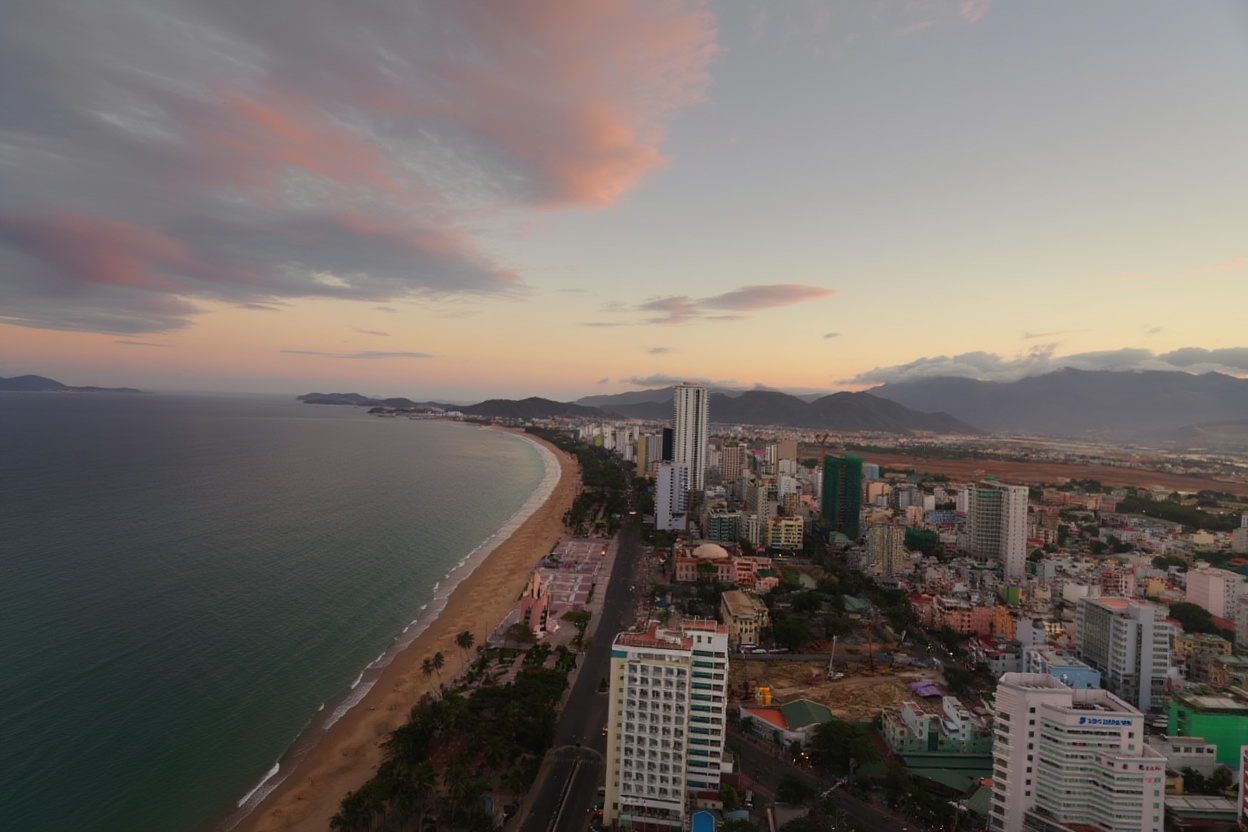
Six kilometres of white sand, free public access the entire length, and warm water for most of the year.
The catch: between 9am and 4pm in high season, the beach is lined with rental sun lounger operators (50,000–80,000 VND for a pair of chairs and an umbrella), a rotating cast of vendors selling coconuts/fruit/massage/sunglasses/henna, and the density of people that comes with Vietnam’s most developed beach resort city. The beach isn’t bad. That midday version of the beach is just not the best version of it.
Arrive before 8am or after 5pm. Before 8am: the water is pale green and flat, old women do tai chi in the wet sand, and the promenade has a quiet energy that completely disappears by 9. After 5pm: the vendors pack up, the light goes golden, and locals come out to swim. The evening beach walk — from the park at the south end to Hon Chong in the north — is one of the better free things you can do in Nha Trang.
The section near Lê Hồng Phong street, away from the main hotel cluster, stays quieter during the day. Worth the five-minute walk south from the main tourist beach.
Hon Chong promontory (12.2738° N, 109.2055° E) at the north end has rockier ground and fewer facilities but significantly fewer vendors and a local swimming crowd in the late afternoons. The granite boulders themselves are worth seeing — a geological oddity on an otherwise sandy coast, scattered like they were dropped from a height.
Long Son Pagoda — Quick Cultural Stop
A 10-minute walk from the train station, Long Son Pagoda (12.2473° N, 109.1875° E) is a working Buddhist temple with a giant white Buddha visible from across much of the city. The Buddha sits on a hilltop behind the pagoda, accessible via 152 steps — the climb takes 15 minutes and provides a clear view over the rooftops and the bay.
The pagoda grounds below the Buddha are active — monks going about their day, incense burning at the main hall, a calmness that the beach area doesn’t have. The painted tiles on the dragons flanking the main stairway are worth looking at closely before you start the climb.
Free entry. Takes 30–45 minutes total including the climb. Dress respectfully — covered shoulders and knees. The resident monks will sometimes approach visitors for brief conversation, which is usually genuine and interesting. Sustained pressure to donate is politely declined by simply continuing to walk.
Diving in Nha Trang
Nha Trang is Vietnam’s most accessible dive destination — multiple PADI-certified operators, warm water year-round, and dive sites within 30 minutes by boat from the city. For anyone doing an Open Water certification in Southeast Asia, the cost and logistics are hard to beat.
The honest dive report: the reef has been affected by overfishing. The fish population is thinner than what you’d see in Koh Tao, the Philippines, or the Similan Islands. The coral, particularly inside Hon Mun’s protected zone, is in better shape. If you’ve dived elsewhere in Southeast Asia and are expecting to be blown away by marine life density, you’ll be underwhelmed.
If this is your first time diving in warm tropical water, or if you want to get your Open Water certification done before moving on to better dive destinations — Nha Trang is perfectly good.
Costs: 1,700,000 VND (~$68) for two fun dives including gear rental and boat. Open Water certification: around 6,000,000–8,000,000 VND (~$240–$320) over 3–4 days. Nha Trang Fun Divers and Sailing Club Divers are the most consistently recommended operators.
Avoid diving October through December — rough seas cancel dives routinely and visibility drops significantly. The best diving months are March through July.
ℹKnow Before You Go
Nha Trang’s dive sites sit at 8–18m depth. Good for beginners and for Open Water certification. If you’re an Advanced diver looking for specific dive experiences — drift dives, night dives, macro photography — ask your operator explicitly about what’s available. The honest operators will tell you what to expect rather than overpromise.
Alexandre Yersin Museum — Small but Interesting
Yersin was a Swiss-French bacteriologist who co-discovered the plague bacillus, founded the highland city of Đà Lạt, and spent most of his adult life based in Nha Trang conducting research on tropical diseases and astronomy. The Vietnamese genuinely revere him — streets in most Vietnamese cities are named after him.
His museum (12.2432° N, 109.1935° E) sits inside the Pasteur Institute he helped establish in 1895. The collection is small: original microscopes and laboratory equipment, astronomical instruments from his private observatory, personal correspondence, and photographs spanning 50 years in Vietnam. The exhibit captures a specific type of colonial-era scientist — genuinely curious, embedded in the country, committed to something beyond the career — that’s different from most colonial history you encounter in Vietnam.
Entry: 30,000–50,000 VND (~$1.50–$2). Takes 30–45 minutes. Often nearly empty. Best for history and science nerds rather than travelers on a tight itinerary.
Nha Trang Night Market and Evening
The official Nha Trang Night Market near the beach runs every evening from around 5pm — mostly souvenir stalls, some street food, and a lot of tourist-grade merchandise at tourist-grade prices. It’s fine for a 30-minute walk-through and genuinely lively in a visual sense. It’s not where you should eat dinner.
The better evening activity is the promenade itself after sundown. The Trần Phú promenade comes alive after 7pm — local families walking, live traditional music at various points (the Vietnamese instruments playing over the sound of the surf), street food vendors setting up, the whole coast illuminated. This is free, genuinely atmospheric, and better than anything the night market offers. For a full month-by-month breakdown of conditions, see our guide to the best time to visit Nha Trang.
For evening food, Nguyễn Thiện Thuật street and the surrounding backpacker area have seafood restaurants that do their best business at dinner. Order grilled squid, a plate of morning glory, cold beer. The restaurants stay open until 10–11pm.
What to Skip in Nha Trang
The big resort water parks — there are a couple on the city periphery. They’re expensive, crowded on weekends, and the water slides are not a legitimate reason to travel to Vietnam. Mentioned here only because they appear on tourist maps.
Glass-bottom boat tours — these exist and they’re a worse version of the regular island tour. The glass panels show you the same water you’d see with a snorkel mask, but slower and wetter from condensation. The group snorkeling tours give you actual time in the water rather than looking at it through a scratched panel.
Any beachfront tour operator that approaches you on the street — the legitimate boat tour operators at Cầu Đá pier have fixed prices and honest itineraries. The people selling tours on Trần Phú boulevard are often selling you a worse product at a higher price. Book at the pier directly.
Nha Trang 2-Day Itinerary
Things to Do in Nha Trang FAQ
Is Nha Trang beach worth it?
Yes — but timing matters. The beach itself is free, 6km long, and genuinely clean and swimmable. Before 8am and after 5pm it’s excellent. During peak hours between 9am and 4pm it’s crowded with sun lounger vendors and boat traffic. Go early or late and it’s one of the better urban beaches in Vietnam.
Klook has the widest selection for Vietnam and is usually the cheapest. KKday is strong on day trips and local experiences.
Two full days covers everything essential: one day for city sights (Cham towers, pagoda, mud baths, beach), one day for islands. Add a third day if you want to dive or do the Vinpearl cable car. Anything beyond three days and you’re repeating yourself unless you have a specific reason to stay longer — diving course, resort holiday, or working from here.
Is the Vinpearl cable car worth it?
For the cable car ride itself — yes, once. The 3.3km crossing over the open bay with Nha Trang’s full coastline behind you is genuinely one of the best views in the city. The amusement park on Hon Tre Island is standard and only worth it if you have kids or specifically want a theme park day. The entry fee (~850,000–1,000,000 VND) includes both the cable car and park; there’s no cable-car-only option.
Is diving in Nha Trang worth it?
For first-time divers and Open Water certification, Nha Trang is excellent — convenient, well-priced, warm water year-round. For experienced divers expecting great marine life density, manage expectations — overfishing has reduced fish populations noticeably. The coral inside Hon Mun’s protected zone is the best diving in the bay. Go February–July for the best conditions. For a deeper dive into where to eat, the Nha Trang food guide covers the best spots beyond the backpacker strip.
Two things worth sorting before you land: a Vietnam eSIM so you have data the moment you clear customs, and travel insurance — medical costs for uninsured foreigners in Vietnam are significant.
Airalo eSIMs activate instantly. Buy before departure — airport SIM queues in Vietnam can take 30+ minutes.
The Bottom Line
Two days in Nha Trang. One for the city, one for the islands.
Don’t spend both days on the beach strip. The Cham towers will give you more of the real Vietnam in 45 minutes than a full afternoon of sunbathing. The islands will remind you why people keep coming back here. The mud baths are more fun than you’d expect. The cable car crossing over the bay at noon, when the water below is a specific shade of green that doesn’t exist in photographs — that’s the thing travelers talk about years later.
Wake up early enough for bún cá at Chợ Đầm at least once. That morning, with the fish broth and the market crowd and the smoke from the bánh căn stalls — that’s the Nha Trang worth telling people about.
For accommodation, timing, and logistics, the Nha Trang Travel Guide has the full breakdown of where to stay, how to get here, and what the city actually costs to travel in.
Nha Trang sits at the heart of southern Vietnam — use it as a base to plan the rest of your southern route.