Last updated: May 2026 — Weather patterns and crowd data verified for 2026 season
If you’re working out the day-by-day logistics, our 3-day Ha Giang Loop itinerary maps out exactly which sections to tackle each day and where to sleep.
I’ve done the loop in March, November, and June. Three completely different experiences on the same road. Here’s the honest breakdown of what each season actually delivers.
The Quick Answer: Best Months by Priority
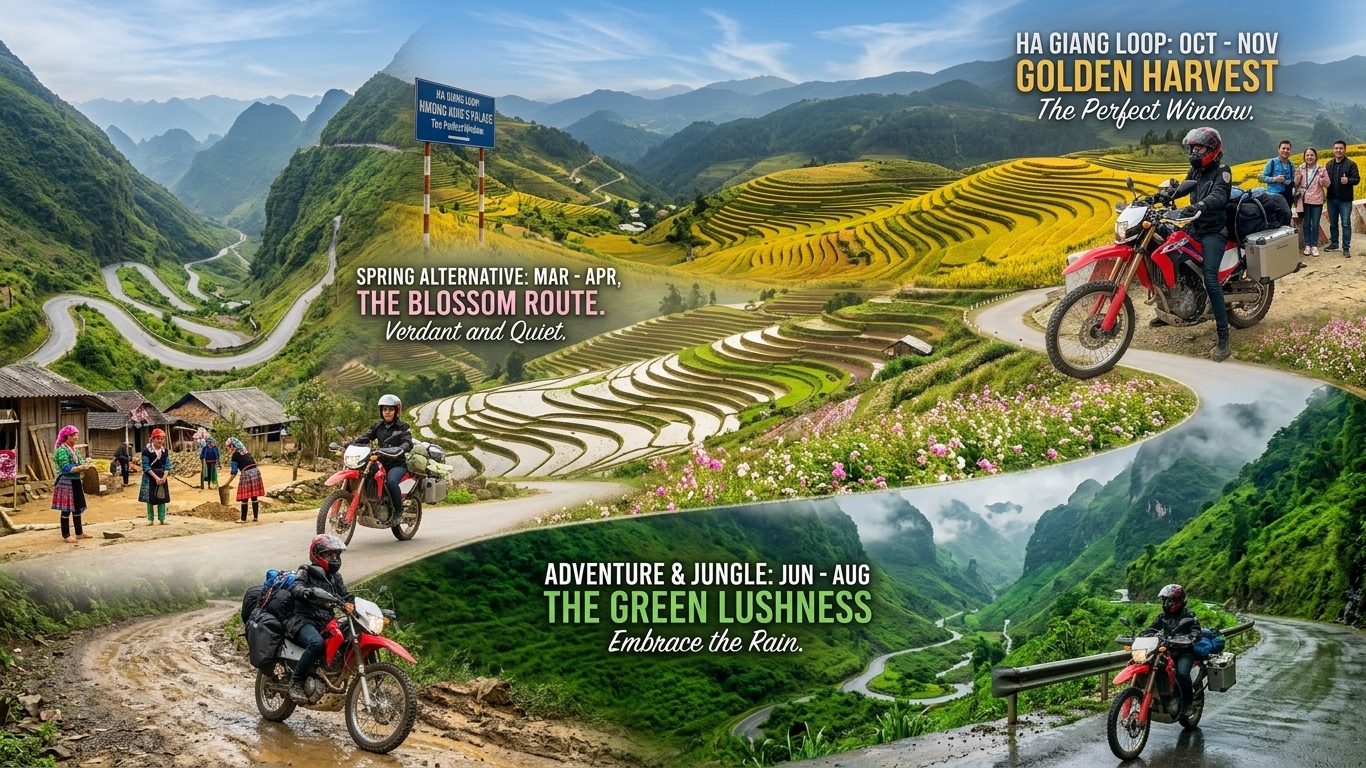
March–May: The Best-Kept Secret
If I had to pick one window for someone’s first Ha Giang Loop, it’s March through April. Here’s why the travel community underrates it: most of the “go to Ha Giang in November” content was written by people who went in November. March doesn’t generate the same volume of “holy shit look at those flowers” Instagram posts. But the conditions are often better.
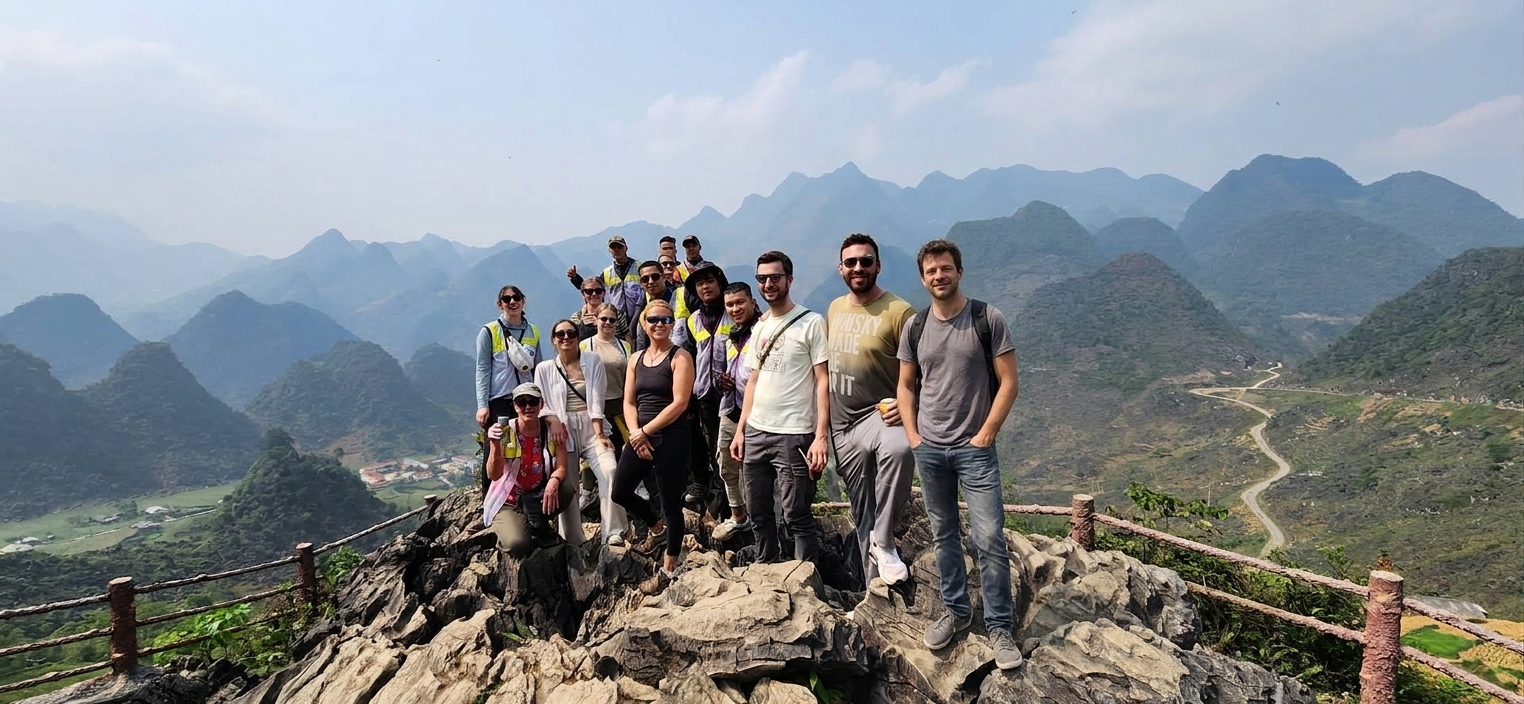
What you get in March–April:
- Rapeseed (canola) flowers in full bloom — yellow fields across the valleys between Ha Giang city and Quan Ba
- Clear skies with high visibility at Ma Pi Leng — no fog gambling
- Temperature of 15–22°C at pass elevation: warm enough for comfortable riding, cool enough for layers in the morning
- Near-zero tourist density — you can have the unmarked Ma Pi Leng ledge viewpoint entirely to yourself
- Accommodation available without advance booking (in peak October–November you’d be scrambling)
The one thing March–April doesn’t have: the drama of golden rice terraces or buckwheat flowers. The landscape is lush and green, which is its own kind of beautiful, but if you’re specifically chasing those signature looks, you need September–October or November.
May is still good but temperatures start climbing and humidity increases. Late May has occasional afternoon thunderstorms on the passes — not dangerous if you’re flexible with your daily schedule, but worth knowing.
JAKE’S PICK
March is my vote for the first-time loop. Clear skies at Ma Pi Leng, rapeseed flowers in the valleys, and the roads are yours. I went in March my first time and had the Lung Cu viewpoint completely to myself for 40 minutes.
September–October: Golden Terraces Without the November Crowds
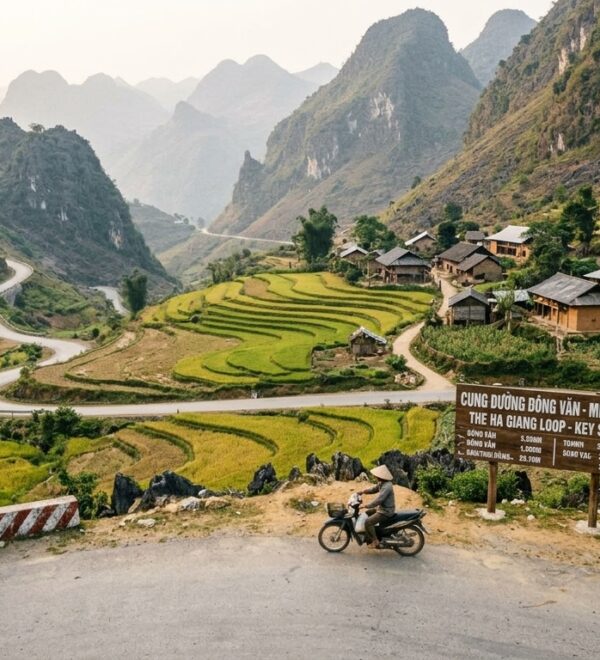
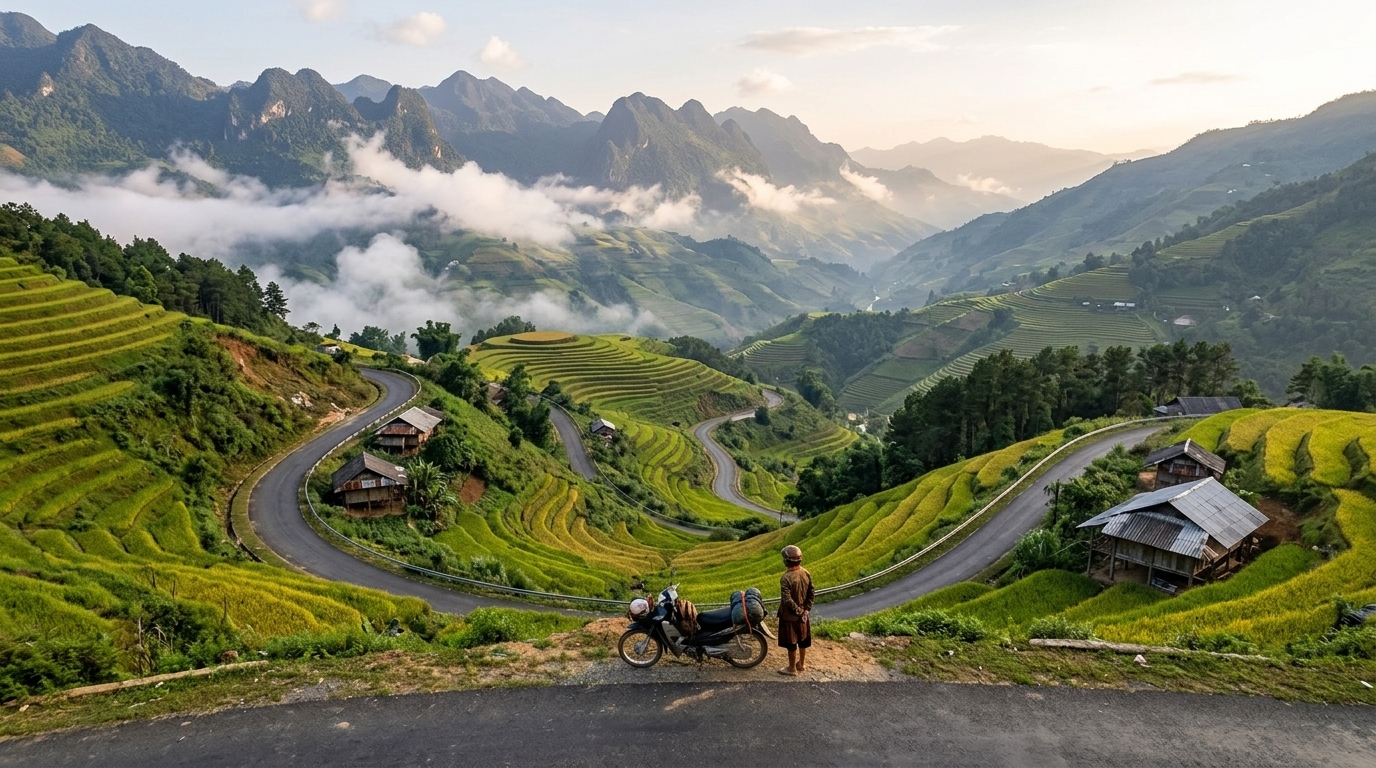
September is when the rice terraces start turning gold before harvest. By early October, the hillsides above Dong Van and Meo Vac are the color of old brass in afternoon light. This is the loop at its most photogenic.
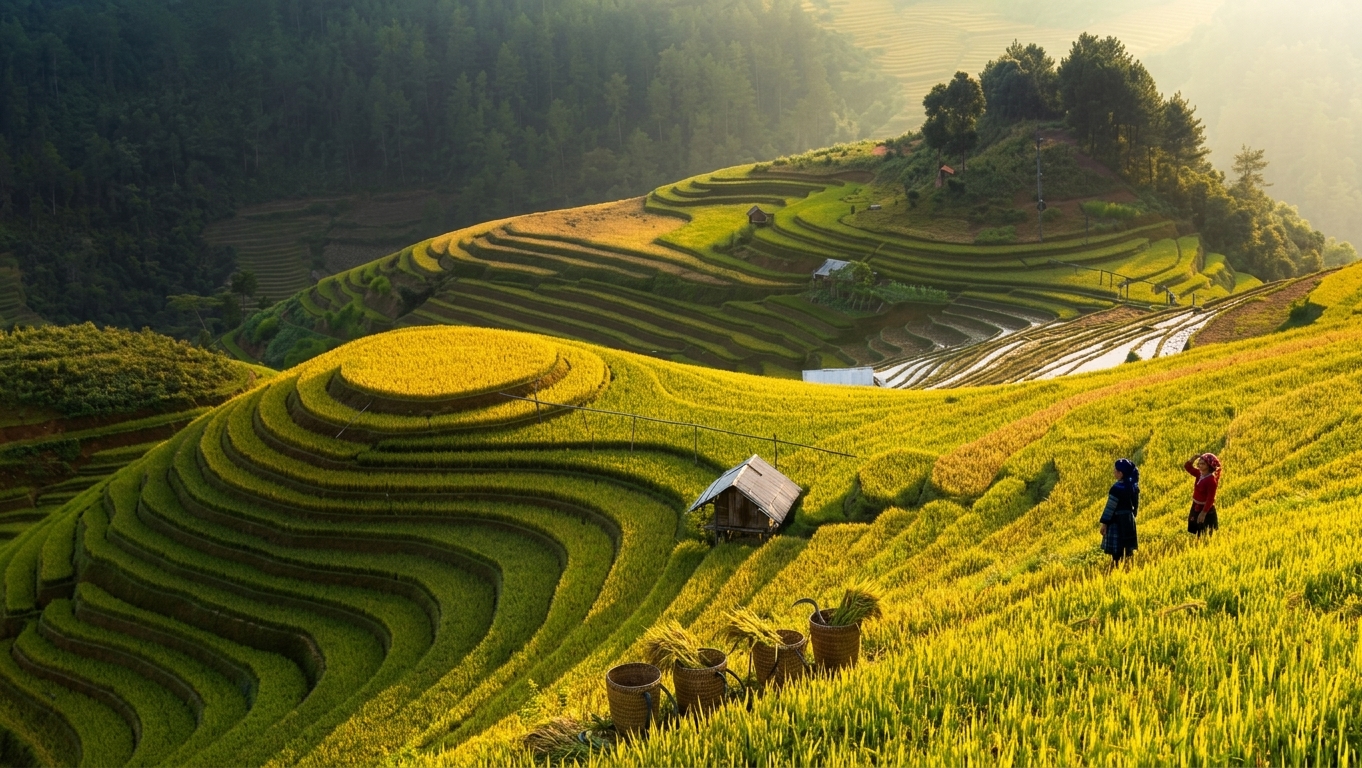
September is also the best-kept timing secret for the loop: the weather is clearing from the wet summer (skies improve dramatically after mid-September), the terraces are transitioning from green to gold, and tourist numbers are still relatively low because most people read “best time: October–November” and think they need to wait.
By October, crowds start building. The viewpoints at Quan Ba Twin Mountains and Ma Pi Leng get busy on weekends. Meo Vac Sunday market has significantly more tourists. Accommodation in Dong Van and Meo Vac fills on Friday and Saturday nights — book a week ahead.
October is still excellent; just go in with realistic expectations about sharing viewpoints with others.
November: Buckwheat Flowers — Spectacular but Crowded
The tam giác mạch (say: tam zak mak — buckwheat) flowers bloom across the Dong Van plateau in October–November, peaking typically in the second or third week of November. The flowers are small, pink-white, and cover entire hillsides — combined with the karst limestone, it’s one of the most distinctive landscapes in Vietnam.
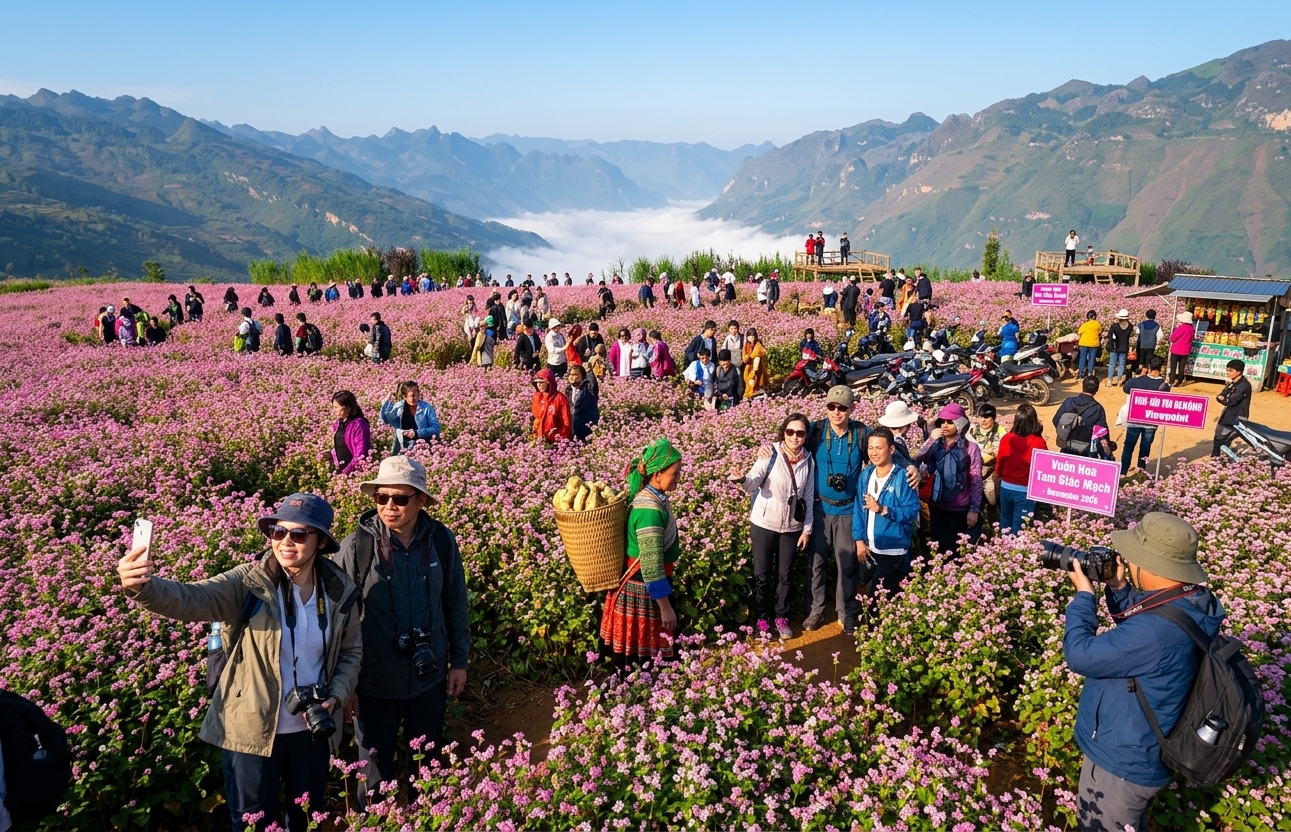
2026 forecast from local agricultural sources: peak bloom expected second week of November. The exact timing shifts by 1–2 weeks year to year based on rainfall patterns.
The reality of November: it’s the loop’s peak tourist month. Hostels and guesthouses in Meo Vac and Dong Van book out 2–3 weeks ahead on weekends. Ma Pi Leng’s main viewpoint has queues for photos. The Meo Vac Sunday market is overwhelmed with tourists by 9am. Tour groups from Hanoi run every day. If you go in November, go early (leave Hanoi on Monday or Tuesday to be at the pass mid-week), book accommodation before you leave Hanoi, and arrive at every viewpoint by 8am before the convoy of tour buses. Getting the Hanoi–Ha Giang leg right sets up the rest of the trip — our Hanoi to Ha Giang transport guide covers every bus option, overnight timing, and what to avoid.
The flowers are worth it. But manage your expectations about solitude.
Real Talk
November Ha Giang is genuinely beautiful — and genuinely crowded. If you go on a weekend in peak bloom week, you’ll share Ma Pi Leng with 200 other people. Weekdays in the same week are significantly more manageable. If you have any flexibility, go Tuesday–Thursday.
Winter (December–February): Cold, Foggy, Genuinely Interesting
Ha Giang in January is cold. The pass at Ma Pi Leng sits in frost some mornings; the valley bottoms trap cold air. Minimum temperatures at pass elevation can reach 3–5°C; in exceptional years, light snow on the highest peaks. Fog is common — on some days the canyon at Ma Pi Leng is invisible until 11am, or doesn’t clear at all.
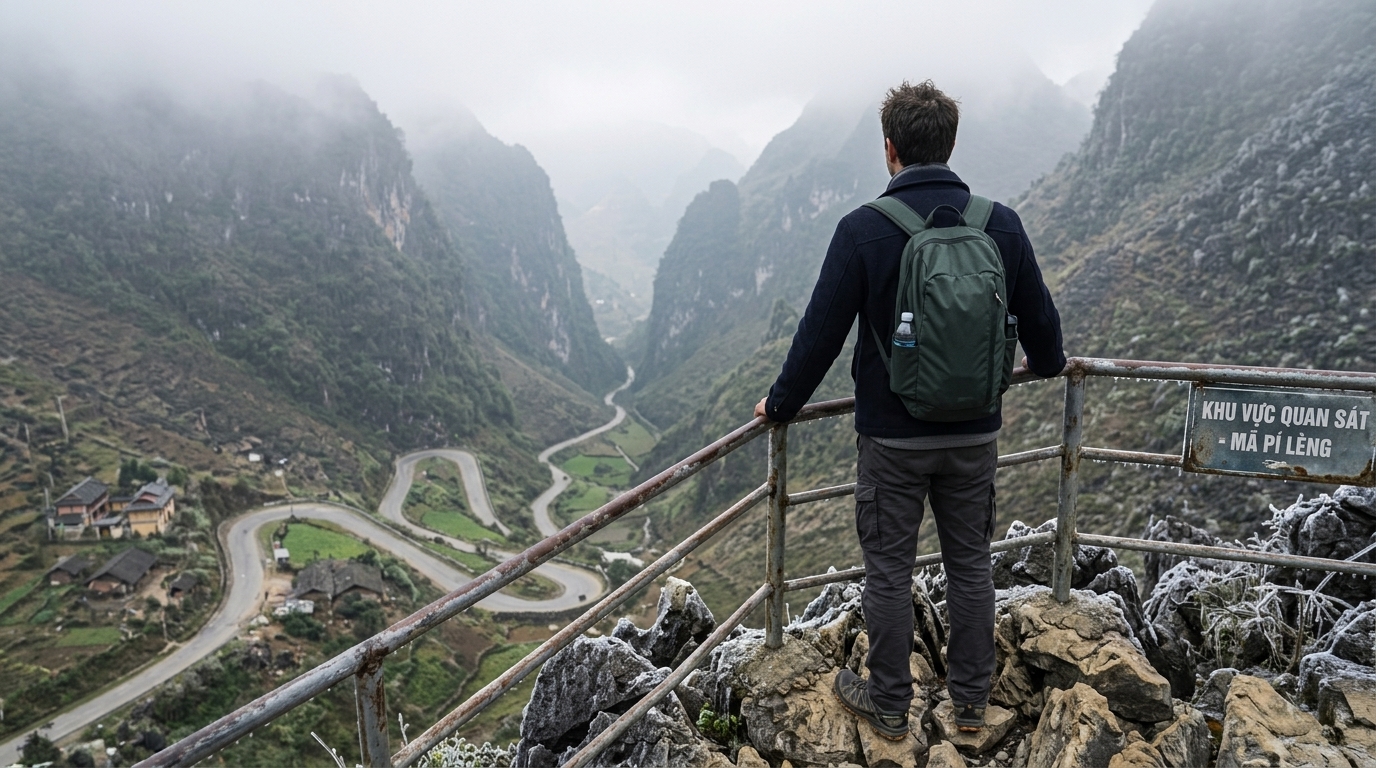
This is not necessarily a reason to avoid it. The fog creates a different kind of landscape: road disappearing into white, mountains emerging as silhouettes, the sound of the valley before you can see it. Some photographers specifically target January for this atmospheric quality. Some experienced riders love having the road essentially to themselves.
What winter costs you:
- Possible zero view at Ma Pi Leng (it’s a real gamble)
- Cold riding conditions — full winter gear required
- Some guesthouses close in January, particularly the smaller homestays
Tết (Vietnamese Lunar New Year) falls in January–February. The week before and after Tết sees increased Vietnamese domestic tourism in Ha Giang — the loop briefly gets busier, accommodation prices rise, and some services close. If your travel coincides with Tết, plan accordingly.
February sees the first plum and peach blossoms at lower elevations — genuinely beautiful and rarely photographed by Western travelers. By late February, conditions start improving toward the March clarity.
Wet Season (June–August): Lower Risk Than You Think
The rainy season in northern Vietnam peaks June–August. Ha Giang gets meaningful rainfall during this period. The loop roads can have waterfall runoff crossing the asphalt, which is more dramatic than dangerous at low riding speeds. The canyon at Ma Pi Leng is often shrouded in cloud. Humidity is high at lower elevations.
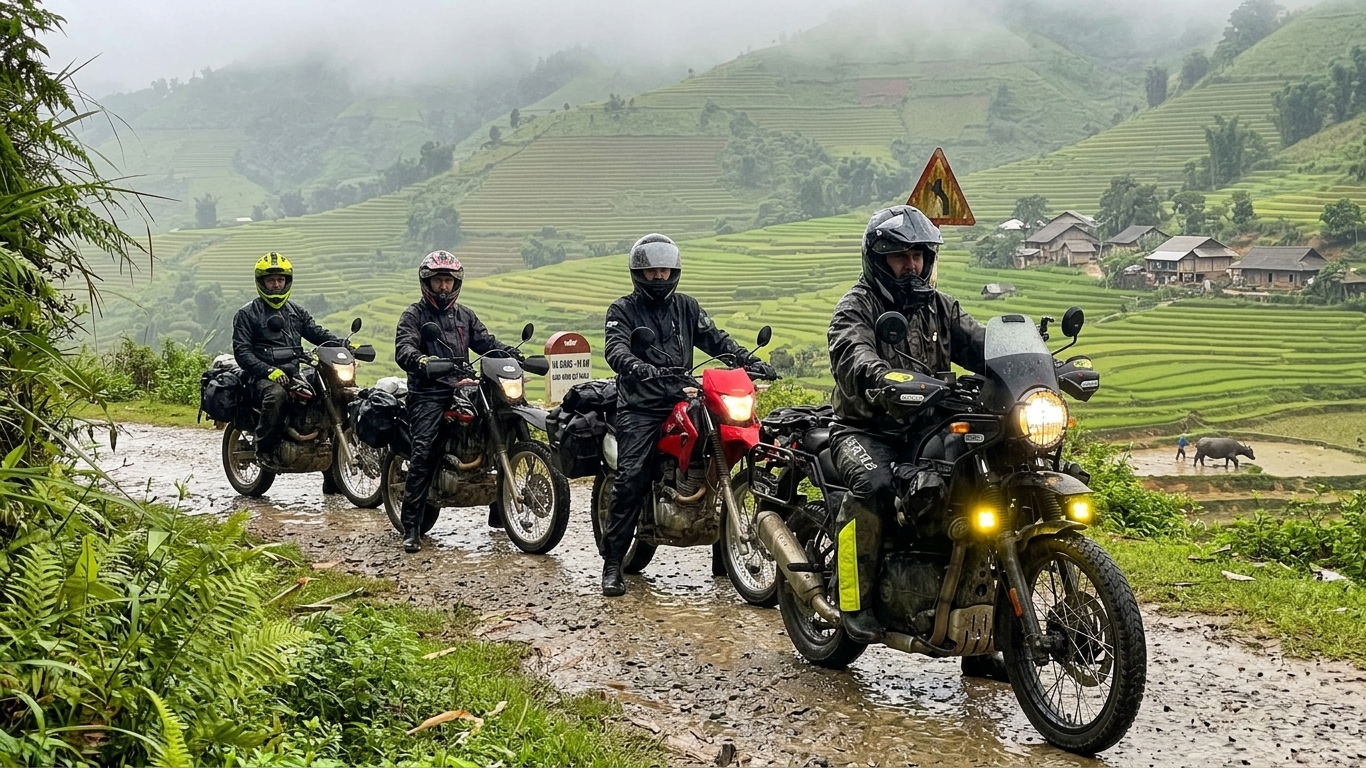
But: the loop doesn’t shut down in wet season. Local traffic continues. The valleys turn the most intense shade of green they ever reach. Waterfalls appear on cliff faces that are dry in other months. Crowds are minimal — some of the quietest stretches of road on the loop happen in late June.
The actual risk in wet season: landslides. The road sections most vulnerable are between Bac Me and Du Gia (the southern route back to Ha Giang) and some sections on QL34. These are localized and usually cleared within a day, but worth checking local Facebook groups (Ha Giang Loop Travelers) before departure if rain has been heavy.
Know Before You Go
If you ride the Ha Giang Loop in June–August, check the Ha Giang Loop Facebook group before departure. Locals post road condition updates in real time — including which sections have landslide debris. Takes 2 minutes and could save you a 3-hour detour.
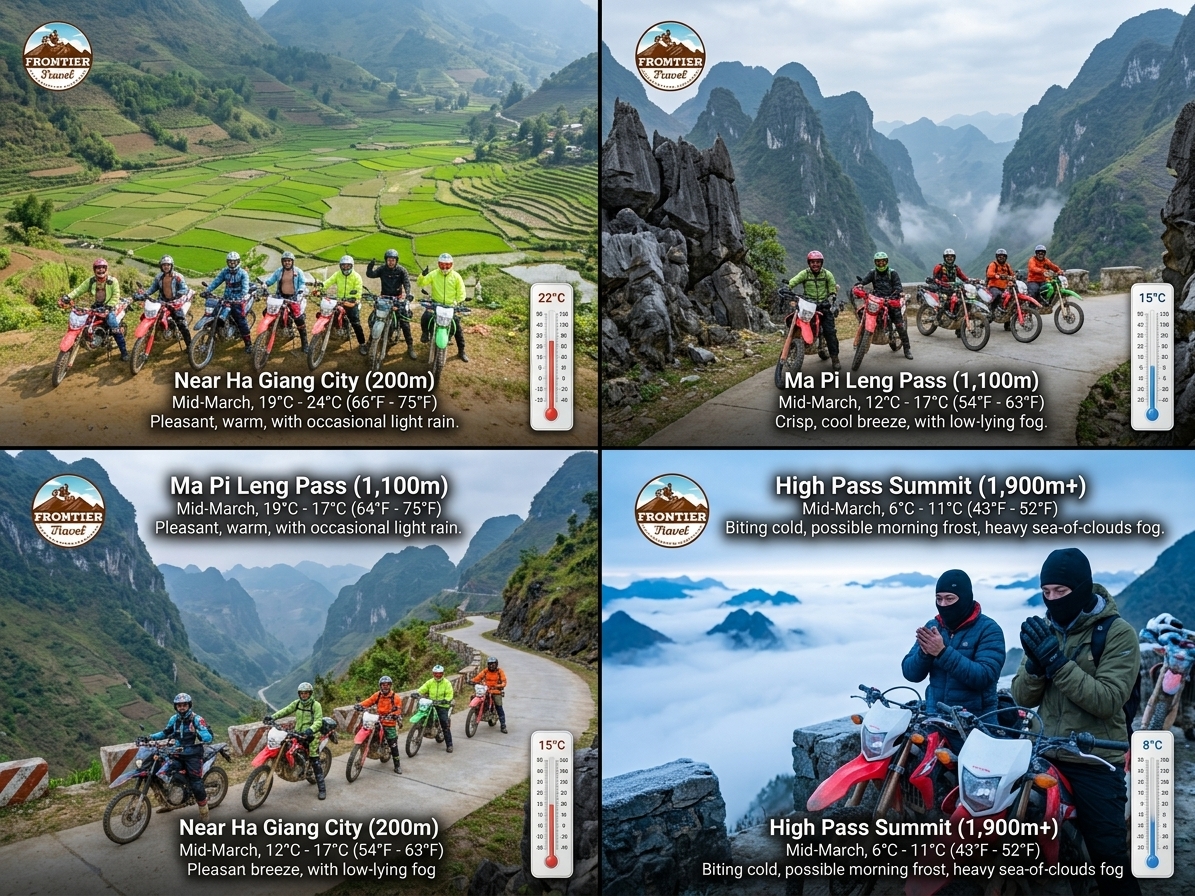
Temperature Reality at Different Points on the Loop
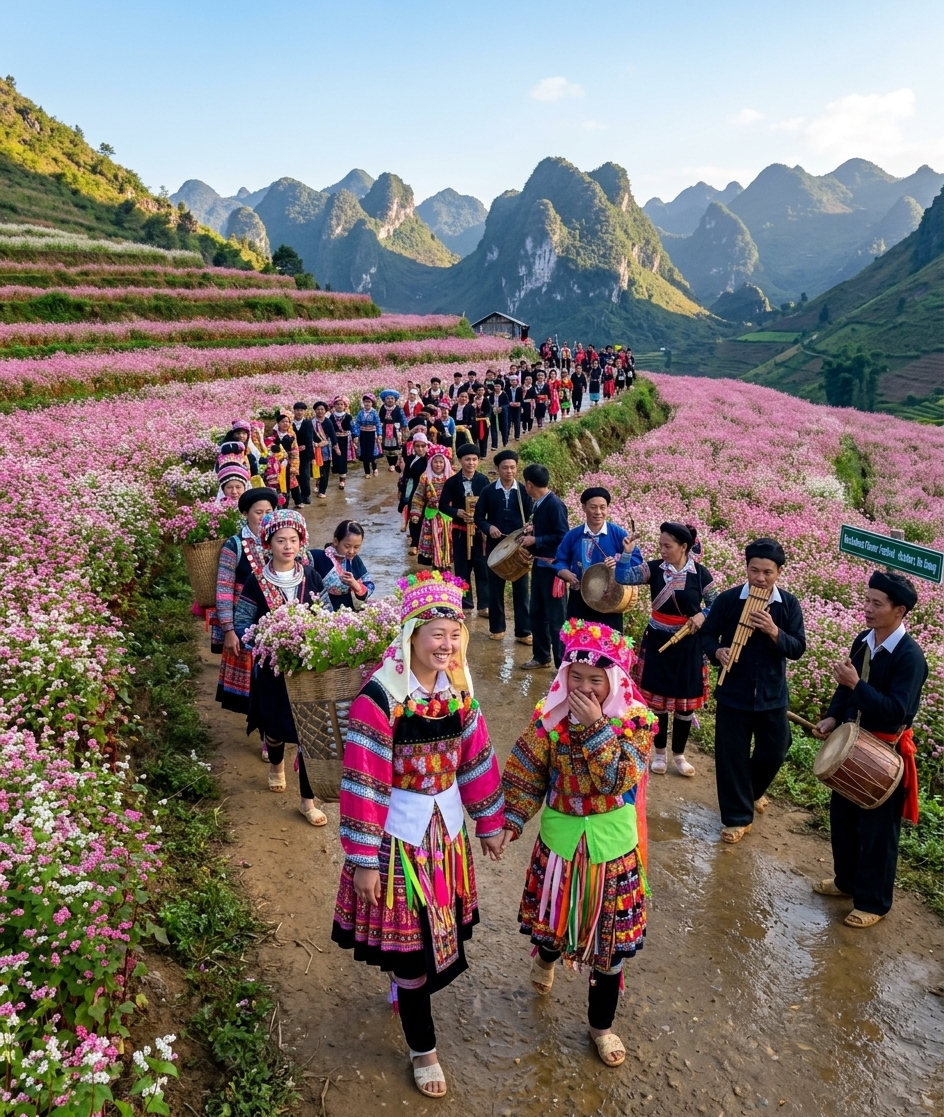
What Month Are the Best Festival and Cultural Events?
- Dong Van Sunday market — runs year-round, every Sunday. Busiest in October–November tourist season.
- Meo Vac Sunday market — year-round. Best ethnic variety in all seasons; most atmospheric in autumn light (September–October).
- Lung Cu Flag Tower ceremony — major national holidays (September 2, April 30). Small ceremony, worth seeing if timing aligns.
- Buckwheat Flower Festival — Dong Van, November. Official cultural festival coinciding with peak bloom. Adds organized events but significantly increases crowds.
- Khau Vai Love Market — Meo Vac district, third day of third lunar month (typically April). Annual H’mong cultural event; genuinely unusual and rarely attended by foreign travelers.
Month-by-Month Quick Reference
Ha Giang vs Other North Vietnam Destinations by Season
The timing that works for Ha Giang does not always work for Sapa or Ha Long Bay. If you are building a longer northern Vietnam trip around your loop dates, this comparison matters.
What Travelers Actually Say: The Consensus
After reading years of Ha Giang reports from Reddit, travel forums, and in-person conversations with riders who’ve done the loop multiple times, the picture is consistent.
The March/April vs November debate is the main argument. March travelers come back saying they had the passes to themselves and loved it. November travelers come back with the buckwheat flower photos but complain about crowds at Ma Pi Leng. Most experienced riders lean March if they could do it again — the views are just as good and they didn’t have to book three weeks ahead.
The biggest mistake: treating September and October as the same month. Early October still has golden terraces and manageable crowds. Late October is increasingly packed as November approaches. If you want gold without the November scene, the first two weeks of October are the sweet spot.
Wet season gets more cautiously positive takes than you’d expect. Experienced riders who went in June report the roads were fine, the views were often blocked but occasionally spectacular when clouds lifted, and the solitude was genuine. The riders who had bad experiences in wet season were usually doing it on an underpowered scooter with no rain gear. For broader context on Vietnam’s regional weather patterns, our Vietnam best time to visit guide covers the full country comparison.
Insider Tip
Whatever month you go: leave Ha Giang city by 7am on the first day. Most tour group minibuses depart 8–9am. Starting early means you’re at the first viewpoints before the convoy arrives — a genuine difference in experience regardless of season.
Planning the loop itself? The Ha Giang Loop guide covers the full route, what to skip, and where to sleep each night. If you’re riding self-drive, the Ha Giang motorbike guide covers rental, license, and what level of rider can handle it. For the full 3-day breakdown, our Ha Giang Loop itinerary maps each day in detail.
Two things worth sorting before you land: a Vietnam eSIM so you have data the moment you clear customs, and travel insurance — medical costs for uninsured foreigners in Vietnam are significant.
Airalo eSIMs activate instantly. Buy before departure — airport SIM queues in Vietnam can take 30+ minutes.
FAQ
What month has the least rain on the Ha Giang Loop?
Quick Answer
December through March has the lowest rainfall. January and February are driest but coldest and foggiest. March is the sweet spot: dry, clear, and warming — easily the best month for weather if you’re prioritizing rain avoidance.
Can I do the Ha Giang Loop in December?
Quick Answer
Yes. December is cold (5–15°C at the pass), potentially foggy, and very quiet. Main guesthouses in Dong Van and Meo Vac stay open year-round. Pack serious layers and accept that Ma Pi Leng may be in cloud — or be pleasantly surprised when it isn’t.
Is November really that crowded?
Quick Answer
In 2024–2026, November weekend accommodation in Meo Vac and Dong Van books out 2–3 weeks ahead. Weekdays in November are significantly more manageable. Go Tuesday–Thursday in November instead of Friday–Sunday if you have any flexibility.
When exactly do the buckwheat flowers bloom?
Quick Answer
Typically the second and third weeks of November, but it shifts by 1–2 weeks annually. No guarantee — some years peak late October, others not until late November. Follow the Ha Giang Loop Facebook group in October for real-time bloom reports from people on the ground. For the full 3-day breakdown, our Ha Giang Loop itinerary maps exactly which sections to tackle each day and where to sleep.
Is Ha Giang good in summer?
It’s the least popular window, but not without appeal. Rain is real, views are often obscured by cloud, but the road is quiet, the valleys are extremely green, and accommodation is easy to find without booking. If you don’t mind gambling on views and can handle riding in occasional rain, June is underrated.
How does the 2026 provincial merger affect visiting Ha Giang?
Ha Giang Province merged with Tuyen Quang Province in 2026. For travelers, nothing changes: the roads, attractions, market days, accommodation, and weather patterns are identical. The administrative change affects tour operators (they need licenses from Tuyen Quang now) but not the visitor experience. “Ha Giang Loop” remains the common name for the route.