I did them in the wrong order.
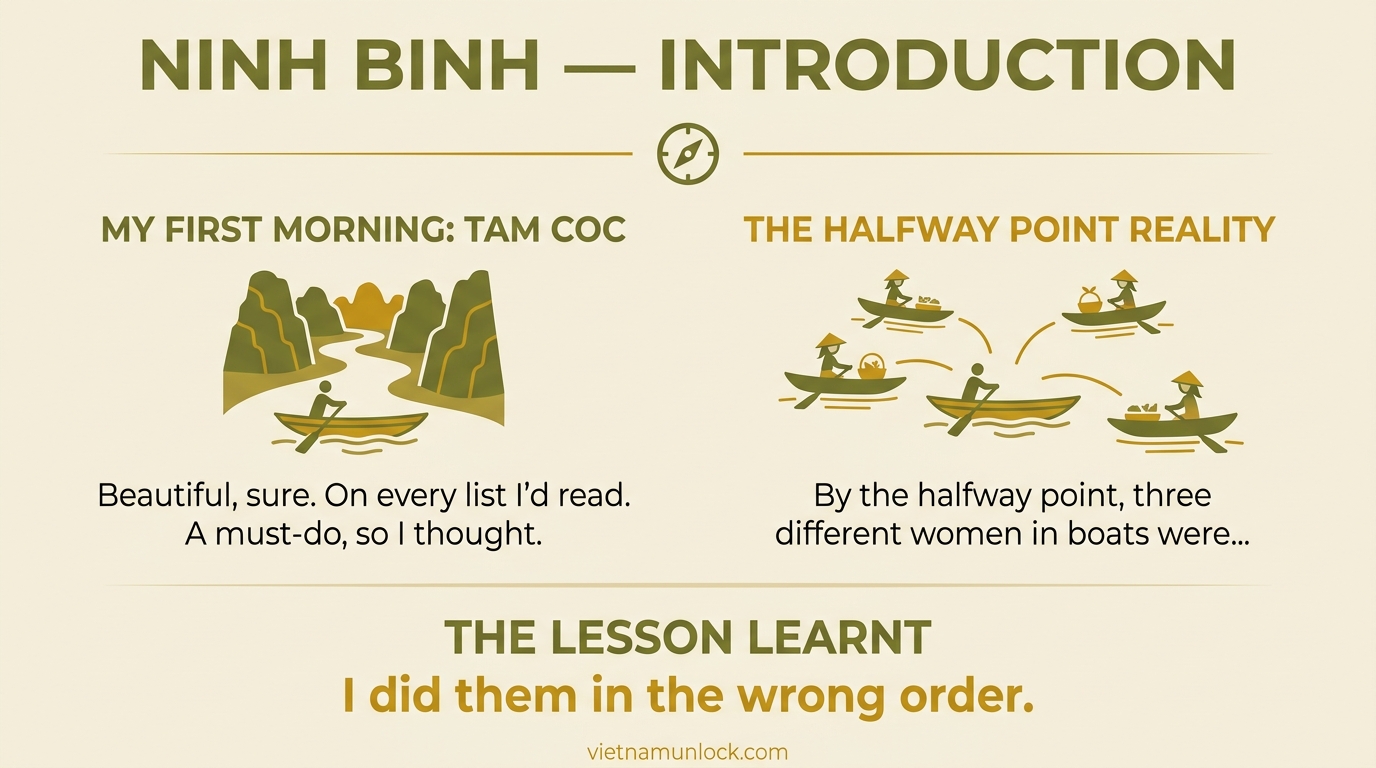
Next morning I did Trang An on a whim. The karst formations came close enough to touch. A woman rowed us through eight caves in silence — no vendors, no megaphone, just the drip of water off limestone and the smell of cool cave air that never quite left my clothes.
I’d done the Tam Coc vs Trang An debate in exactly the wrong sequence. This is what I wish I’d known before booking.
Tam Coc vs Trang An: What You’re Actually Choosing Between
These are two separate boat experiences in the same province. Not variations of the same tour — genuinely different trips.
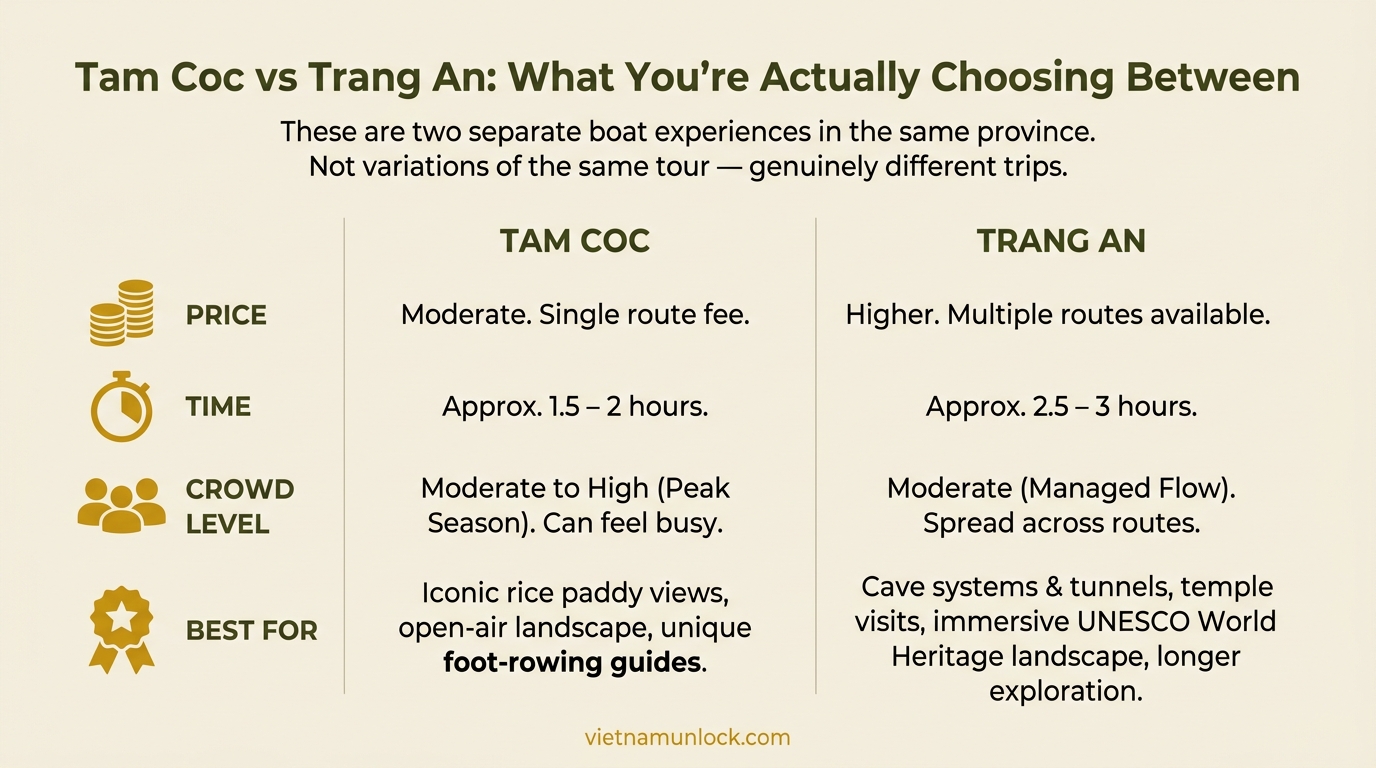
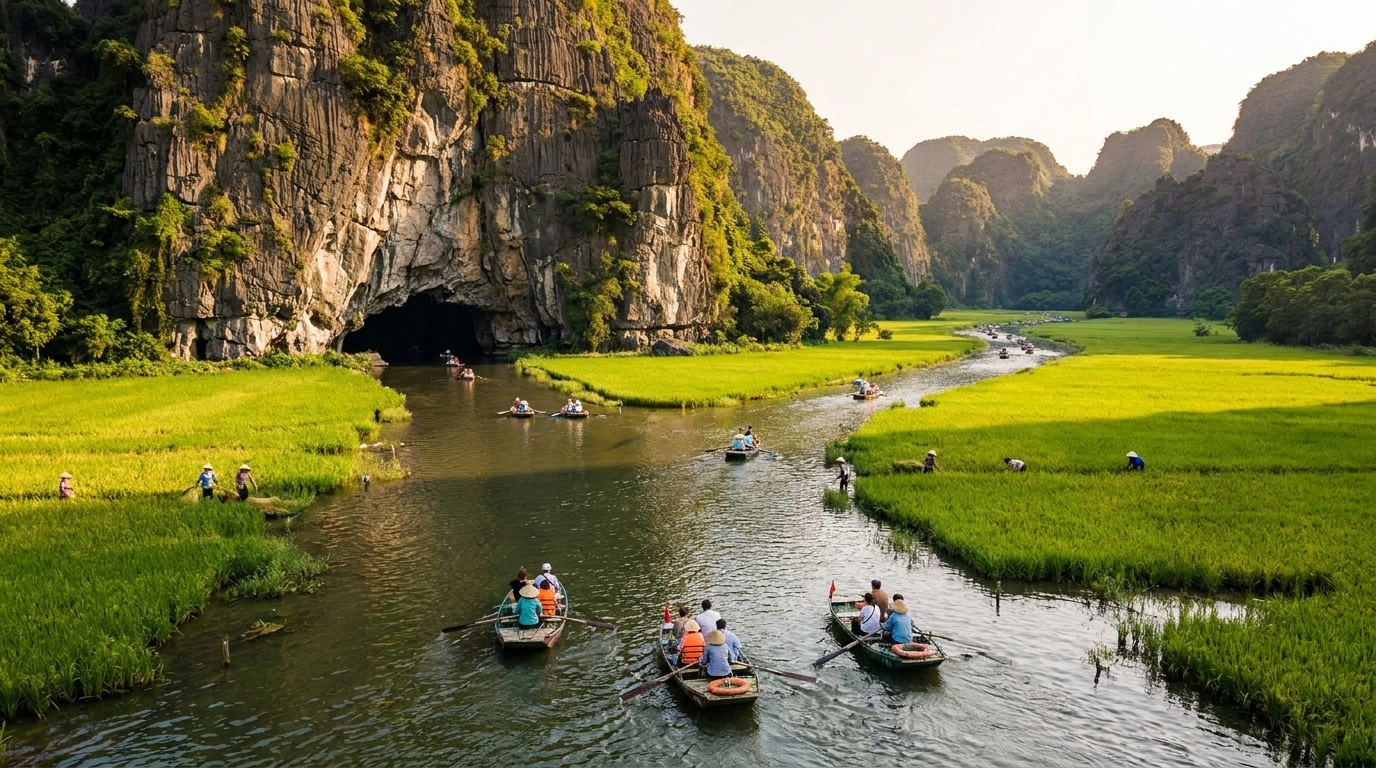
Tam Coc is open-air and agricultural. You row through rice fields with karsts in the background. The formations are distant — you’re looking at them, not inside them. Three caves. About 1.5–2 hours. Village life visible on the banks.
Trang An is immersive and enclosed. The boat goes through 8–12 caves depending on the route, and the karst walls come within arm’s reach. Three different route options. Temples tucked into the hillsides that you can get out and walk. 2.5–3.5 hours. UNESCO World Heritage Site.
The choice isn’t which is “better scenery.” It’s which experience matches what you came here for.
✓Quick Answer
Tam Coc: open rice fields, shorter (2hr), cheaper (~200,000 VND/~$8 per person), more vendors. Trang An: enclosed caves and temples, longer (3.5hr), slightly pricier (~250,000 VND/~$10 per person), less commercial pressure. Most travelers who do both prefer Trang An.
Tam Coc: The Iconic Rice Field Boat Ride
The rice paddies at Tam Coc (say: tam coke) are genuinely photogenic. In May through July, they’re fluorescent green. By September they’ve turned gold. The karsts frame the background like a painting someone messed up by adding too many mountains.

The boat ride goes through three caves — Hang Ca, Hang Hai, Hang Ba. You row through each, the ceiling drops low, and the light shifts. Coming out the other side, the landscape opens back up. If you time it early morning, the mist sits in the valley and the whole thing looks impossible.
What guides don’t prepare you for: the vendors.
Mid-river, other boats pull alongside selling drinks, snacks, flowers. If you don’t want to buy, you’ll be repeating “no thank you” for twenty minutes. Some rowers do the sales pitch themselves while rowing with their feet — a skill that deserves more respect than the context around it gets.
Ticket price: 200,000 VND (~$8) per person. There’s a combo ticket at 340,000 VND that most travelers find unnecessary — the basic ride is what you came for.
Tip for the rower: 50,000–100,000 VND. They row with their feet for 2 hours. Pay it.
→Who It’s For
Tam Coc is the right call if you’re staying in the Tam Coc area (it’s a 10-minute bike ride from most guesthouses), you mainly want the rice field photo, or you’re on a tight schedule and need the shorter version. Solo travelers and couples who just want the classic open-landscape boat ride will be happy here. Not for people who hate being sold to mid-experience.
⚠Real Talk
Peak season Tam Coc (April–July) now requires booking in advance. That’s how busy it’s gotten. If you arrive without a reservation in high season, you might wait 1–2 hours for a boat slot. Book through your guesthouse the night before, or show up at 7am and take your chances on the early slots.
Trang An: The One Most Travelers Prefer After Doing Both
The cave air at Trang An (say: trang an) hits before you see anything. Cool and mineral. Damp limestone. It drops the temperature by several degrees the moment the boat slides into the first tunnel.
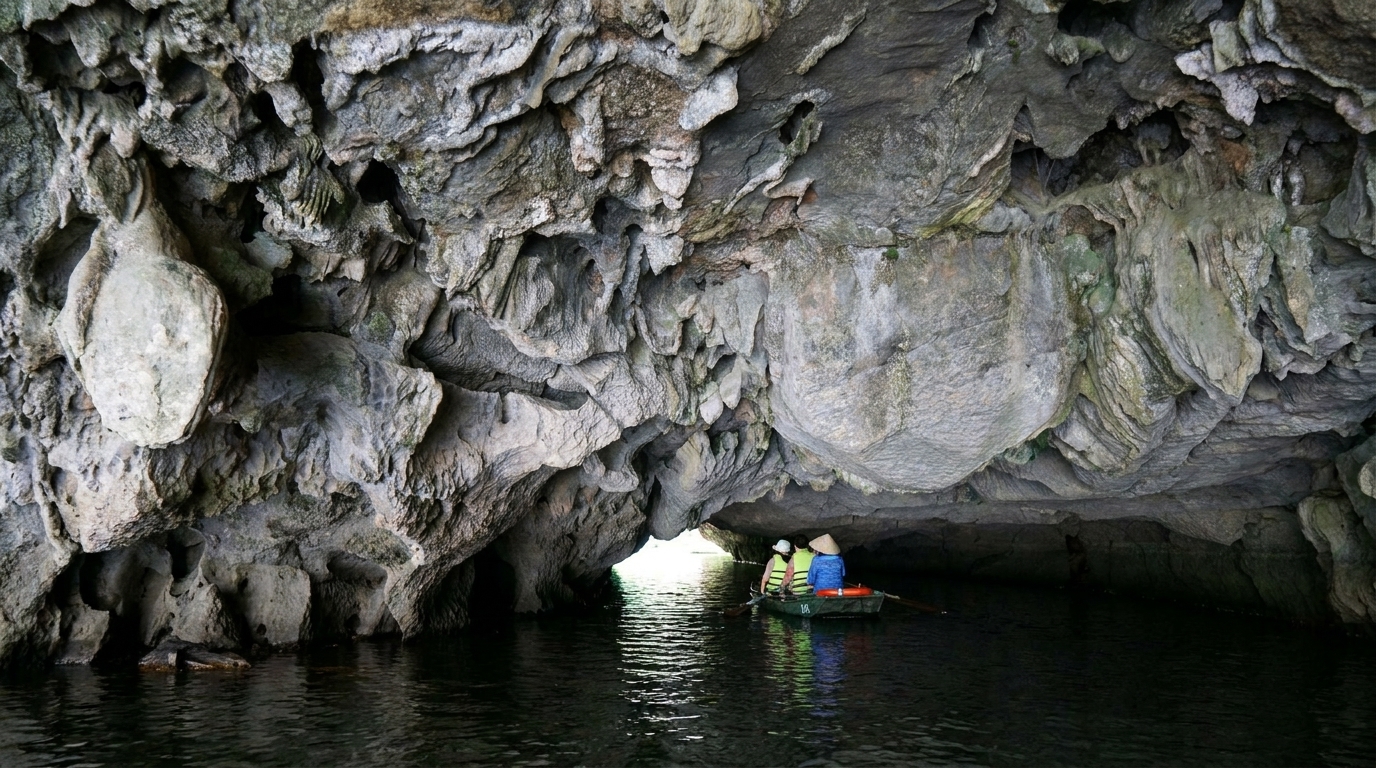
Then the ceiling closes in. The karst walls come within arm’s reach. The water is clear enough to see the bottom — the stillness down there is unsettling in the best way, like the whole place is holding its breath.
The route has eight caves minimum, up to twelve depending on the option you choose. Between the caves, you dock at temple complexes tucked into cliff faces — some hundreds of years old, accessible only by boat. This is where Trang An earns its UNESCO status. Tam Coc has rice fields. Trang An has limestone architecture, temples, and caves compounding on each other for 3.5 hours.
No vendors. Not a single sales pitch. One traveler who’d done both put it simply: “The view of the natural surroundings and the immersive experience made a huge impact — I liked it more than Ha Long Bay, and I did the overnight cruise.” That’s a strong statement and it’s not an outlier opinion.
Ticket: 250,000 VND (~$10) per person. Boats need a minimum of four people — if you arrive solo or as a pair, you’ll be matched with others at the dock. Not a problem on weekends; potentially a 20-minute wait on quiet weekday mornings.
↗Insider Tip
Trang An has three route options at the ticket counter. Route 3 (Đền Trần — Đình Các — Phủ Khống) is the longest and has the most temple stops — ask for it specifically. Not all ticket sellers will push you toward the best option, and Route 1 (the shortest) is sometimes defaulted without explanation.
→Who It’s For
Trang An rewards travelers who want an actual experience, not just a photo. If you care about cave diversity, temple history, and being present rather than managing transactions — this is the one. Also best for people who hate being sold to mid-ride, and anyone who wants to understand why Ninh Binh has UNESCO status.
Mua Cave: Worth Adding to Either Trip
Mua Cave (say: moo-ah) — also called Hang Mua — isn’t a cave tour. It’s a 500-step climb up a limestone ridge to a panoramic view of everything you just boated through.
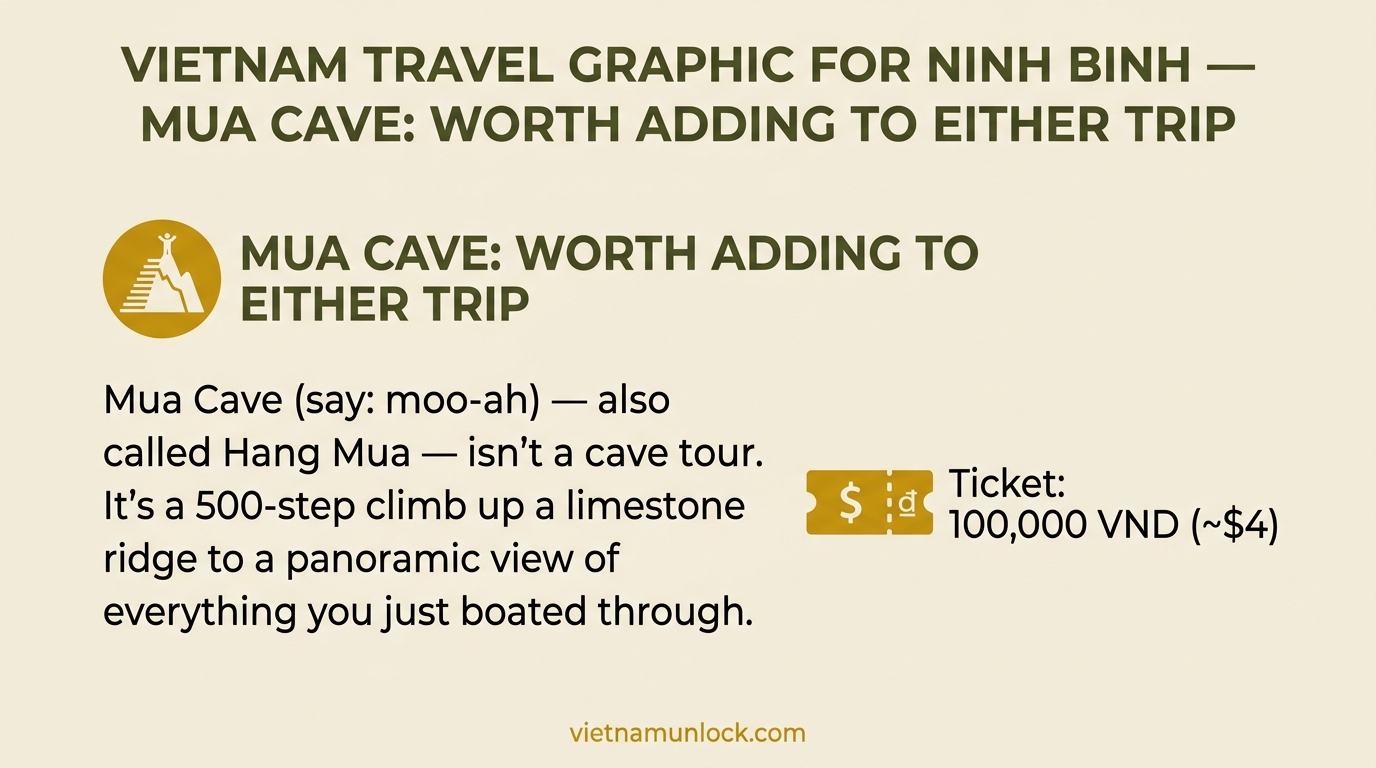
Ticket: 100,000 VND (~$4). Parking for a motorbike costs an extra 5,000 VND (~$0.20).
The climb is brutal in Vietnamese heat. “Like walking up in a sauna” is how one traveler described it, and that’s accurate from personal experience — the steps are direct, steep, and have no shade above the first tier. Start before 8am or go after 4pm. Midday is genuinely miserable and the viewpoint will be packed anyway.
At the top: a dragon statue, a pagoda, and a 360-degree view that makes you understand why people kept building things in this valley for a thousand years. The karsts and rice fields from this height look different than from the water — less intimate, more geological. You can see both Tam Coc and Trang An’s landscape from here, which is useful context if you’re trying to decide between them.
It’s walkable from most Tam Coc guesthouses. Pairs logically with Tam Coc on the same day. If you’re doing Trang An, you’ll need a bike or motorbike taxi to get here — it’s about 3km between the two sites. See the Ninh Binh things to do guide for cycling routes that connect both areas.
ℹKnow Before You Go
The steps at Mua Cave have no shade. Bring water. Wear shoes that grip — the steps are smooth stone and get slippery when wet. If it rained the night before, go later in the morning to let them dry out. There’s a small café at the base with cold drinks and decent prices for a tourist site.
Which One Should You Do?
Here’s the honest matrix:
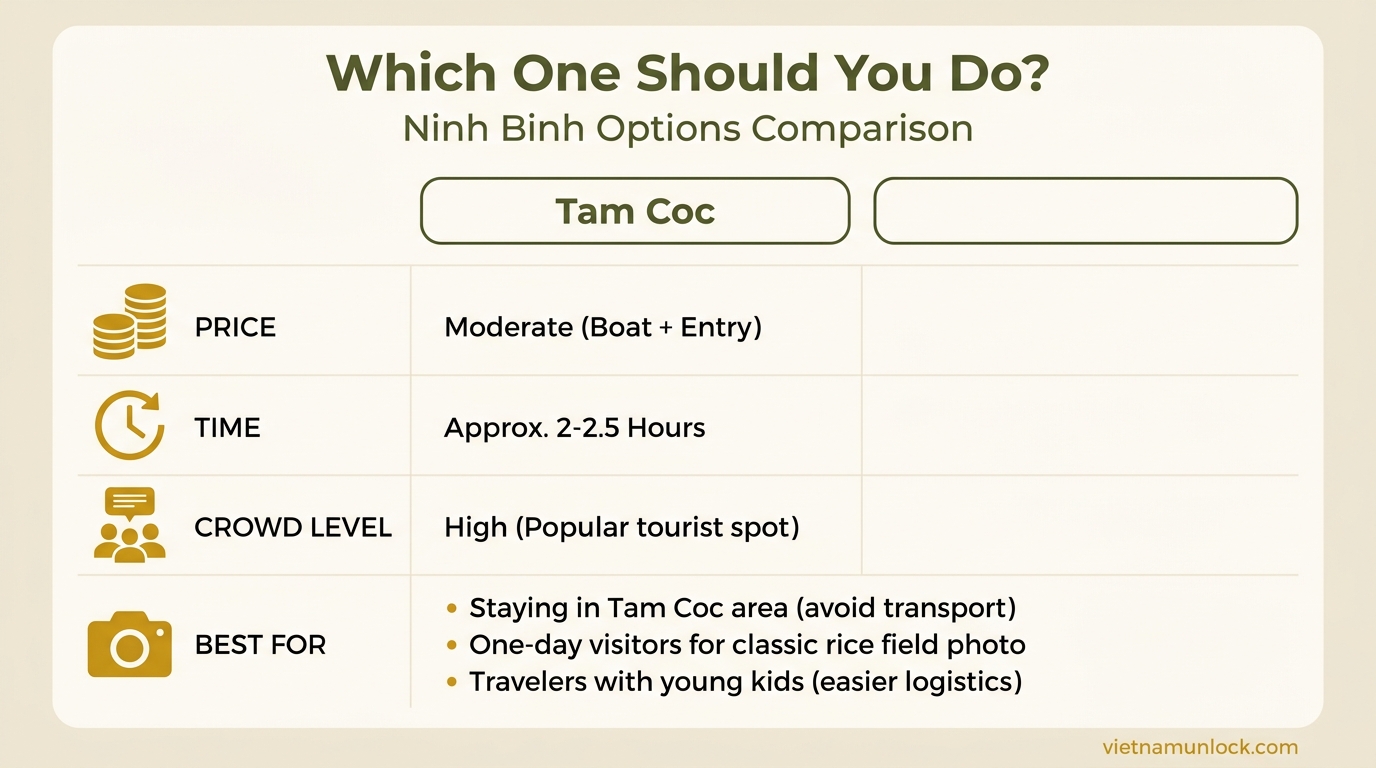
Do Tam Coc if: You’re staying in the Tam Coc area and want to avoid hiring transport. You’re here for one day and want the classic rice field photo. You’re visiting May–July specifically for the fluorescent green paddies. You’re with young kids who might not handle 3.5 hours on a boat.
Do Trang An if: You want the better overall experience. You care about caves and temples more than open scenery. You hate being sold to mid-experience. You have any interest in why this area earned UNESCO recognition.
Do both if: You have two days. Seriously — the experiences are genuinely different enough that they don’t overlap. Tam Coc day one, Mua Cave at 4pm, Trang An day two with an early start. The Ninh Binh from Hanoi guide has logistics on structuring an overnight if you’re coming from the capital.
The recurring verdict across every traveler source that compared them directly: most people who did both preferred Trang An. Not by a little. Definitively. But Tam Coc isn’t a waste — it’s a different experience that the right traveler will love.
★Jake’s Pick
Trang An. Not close. The cave-to-temple sequence, the no-vendor policy, the UNESCO landscape that forces you to actually be present instead of managing a transaction — it’s the better boat experience in Ninh Binh. But I go back to Tam Coc when visiting in rice season (May–June) specifically for the green. The two aren’t competing — they’re complementary.
What Travelers Actually Say: The Consensus
This is the part most guides skip. Here’s what people who’ve done both say online, stripped of marketing language.
On Trang An: “Absolutely striking. The caves, the temples, the fact that there’s no one trying to sell you things mid-river — it felt like we had the place to ourselves at 8am on a Tuesday.” That’s from r/VietNam, and it’s representative. The no-vendor experience comes up in almost every Trang An review.
On Tam Coc’s vendors: multiple Reddit threads describe the same pattern — boats pulling alongside, rowers participating in the pitch, the difficulty of saying no when you’re trapped on a boat. One traveler called it “a beautiful place with an unfortunately commercial feel.” That’s fair and accurate.
On timing: the consistent advice across TripAdvisor and Reddit is 7–8am arrival for both sites. “Got there at 7:30am on a Wednesday — boat immediately, no queue, empty caves. Came back at 11am the next day for a friend and waited 45 minutes.” The gap between early and late is significant in peak season (March–May, July–August).
On doing both: travelers who did both in sequence consistently say the experiences don’t cancel each other out. Tam Coc is the rice field landscape. Trang An is the cave-and-temple immersion. Different enough to justify two mornings. See the Ninh Binh best time guide for which months make the rice fields worth prioritizing.
Frequently Asked Questions
Which is better, Tam Coc or Trang An?
✓Quick Answer
Trang An is better for most travelers — more caves, no mid-river vendors, UNESCO temples included, and the majority of people who do both prefer it. Tam Coc is better if you’re staying nearby or specifically want the open rice field landscape in green season (May–July).
Can I do both Tam Coc and Trang An in one day?
✓Quick Answer
Technically yes, but it’s a long day and you won’t enjoy either fully. Tam Coc is 2 hours on the water, Trang An is 3.5 hours — plus transport between sites and peak-season queuing. Better to spread across two days with Mua Cave in the late afternoon of day one.
How much does Trang An cost?
✓Quick Answer
250,000 VND (~$10) per person, paid at the dock in cash. No booking required — boats depart when they have four passengers minimum. Mua Cave is separate at 100,000 VND (~$4) per person. Tip your rower 50,000–100,000 VND (~$2–4) — they row for 3 hours with their feet.
Is it worth staying overnight in Ninh Binh to do both?
✓Quick Answer
Yes — overnight unlocks early morning access before day-tripper crowds arrive, time for Mua Cave at sunset, and cycling the valley at dusk. Guesthouses in Tam Coc village run 300,000–500,000 VND (~$12–20) for a private room. The Ninh Binh where to stay guide has specific guesthouse recommendations.
The Bottom Line on Tam Coc vs Trang An
If you’re choosing between Tam Coc vs Trang An, the answer is Trang An — unless you’re constrained by location, budget, or time, in which case Tam Coc is still worth doing.
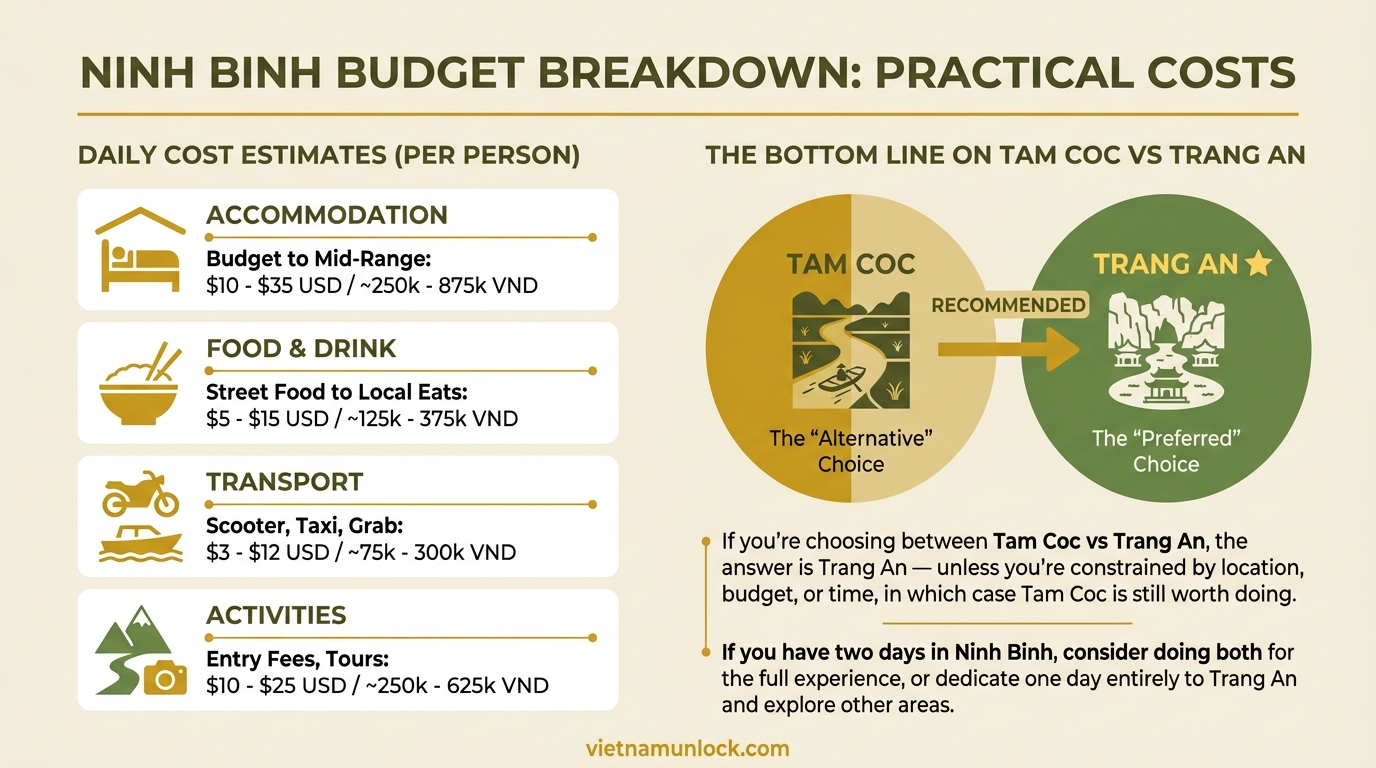
If you have two days in Ninh Binh, do both. The province earns overnight stays precisely because the experiences layer differently. Tam Coc at sunrise with empty rice fields and Trang An’s caves in the morning cool are two different versions of the same landscape — and most travelers only realize that after they’ve seen both.
For the full Ninh Binh picture — what to do, where to eat, and which day to go — read the Ninh Binh Travel Guide. And if you haven’t settled where to base yourself yet, the Ninh Binh Where To Stay Guide covers exactly that.
Two things worth sorting before you land: a Vietnam eSIM so you have data the moment you clear customs, and travel insurance — medical costs for uninsured foreigners in Vietnam are significant.
Airalo eSIMs activate instantly. Buy before departure — airport SIM queues in Vietnam can take 30+ minutes.
Frequently Asked Questions
Which is better, Tam Coc or Trang An?
Trang An for most visitors. It’s UNESCO-listed, has 9 caves (vs Tam Coc’s 3), includes temple visits, takes 2.5–3 hours on the water, and costs 200,000 VND (~$7.60). Tam Coc has the famous harvest-season paddy field photos but is more crowded and has aggressive souvenir selling mid-boat.
Can I do both Tam Coc and Trang An in one day?
Physically yes, but not recommended. Each tour takes 2.5–3 hours and you’ll feel rushed squeezing both in. If you only have one day, pick Trang An. If you have two days, do Trang An first (morning, beat the crowds) and Tam Coc + Mua Cave on day two.
How much do Tam Coc and Trang An boat tours cost?
Trang An: 200,000 VND (~$7.60) per person, booked at the official ticket counter. Tam Coc: 150,000 VND (~$5.70) boat tour plus 20,000 VND (~$0.76) entrance fee. Both prices are fixed. Tipping rowers is optional: 20,000–50,000 VND (~$0.76–1.90) is appreciated.
Is Trang An suitable for children and elderly travelers?
Yes, more so than Tam Coc. Trang An boats are larger and more stable, the cave passages are higher (no crouching needed), and the route is smoother. Tam Coc has low cave passages where tall visitors need to duck. Both tours are water-based with minimal walking — suitable for all fitness levels.
How to Choose: Practical Decision Guide
The Tam Coc vs Trang An question is genuinely worth thinking through before you arrive, because they’re not interchangeable. Here’s a direct framework:
Choose Trang An if: you have one boat tour slot and want the best overall experience. Trang An’s route passes through more caves, has more varied karst scenery, and the UNESCO status has driven investment in maintaining the site properly. The longer route option (3 hours) goes deeper into the system and feels more like genuine exploration than a tourist tick.
Choose Tam Coc if: the rice paddy photographs are specifically what you came for. The flat, open fields flanking the Ngo Dong River give you the classic “boat in a rice field” image that most Ninh Binh photography is built around. Trang An’s route is more cave-focused; Tam Coc is more open paddy-focused. Time your Tam Coc visit for October–November (golden rice) or June (fluorescent green) for the best visual payoff.
Do both if you have 2+ nights: they’re 4km apart and easily covered on a rented bicycle or motorbike. Morning Trang An, afternoon at the Bich Dong pagoda caves near Tam Coc, evening cycling the paddy road between them. This is the correct Ninh Binh day for a 2-night stay.
For help planning the full itinerary once you’ve decided, our Ninh Binh things to do guide has the day-by-day breakdown.
Tam Coc vs Trang An FAQ
Is Tam Coc or Trang An better?
Trang An is the better overall experience for most visitors — more varied scenery, longer route options, and UNESCO World Heritage status. Tam Coc is better if the rice field photography is specifically your priority, particularly in October–November (golden rice harvest) or June (vivid green new crop). If you have time for one boat tour, choose Trang An. If you have two full days in Ninh Binh, do both.
How long is the Trang An boat tour?
The standard Trang An tour takes 2–2.5 hours covering around 9km of river and cave passages. A longer circuit option takes 3 hours. Tickets are bought at the Trang An Landscape Complex entrance (200,000 VND per person, includes boat and rower). You don’t need to book in advance — boats depart continuously during opening hours (7 AM–5 PM). Weekends can have 20–30 minute waits; weekdays are generally immediate.
Can you swim at Tam Coc or Trang An?
No swimming at either site — the river boat experience is the designated activity and the water is shared with dozens of other tour boats. Ninh Binh is not a swimming destination. The appeal is the karst scenery from the boat, not water activities.