
Last updated: May 2026 — prices and logistics verified May 2026.
Cat Ba (say: cat ba) is Vietnam’s largest island in the Ha Long Bay complex — 285 km² of forested limestone mountains, fishing communities, and a crescent bay on the south coast that holds the main town. It’s 45km from Hai Phong and 160km from Hanoi by the fastest route. The national park covers over half the island’s area. The Cat Ba langur (hay còn gọi là voc dau vang, say: vok do vang) — a golden-headed monkey found nowhere else on earth — still lives in the limestone forest above the cliffs, and the fact that it still exists at all is due to conservation work started in the 1990s when the population was under 40 animals.
This is not Ha Long Bay with extra steps. It’s a different kind of trip that happens to share the same water.

What Cat Ba Island Is Actually Like
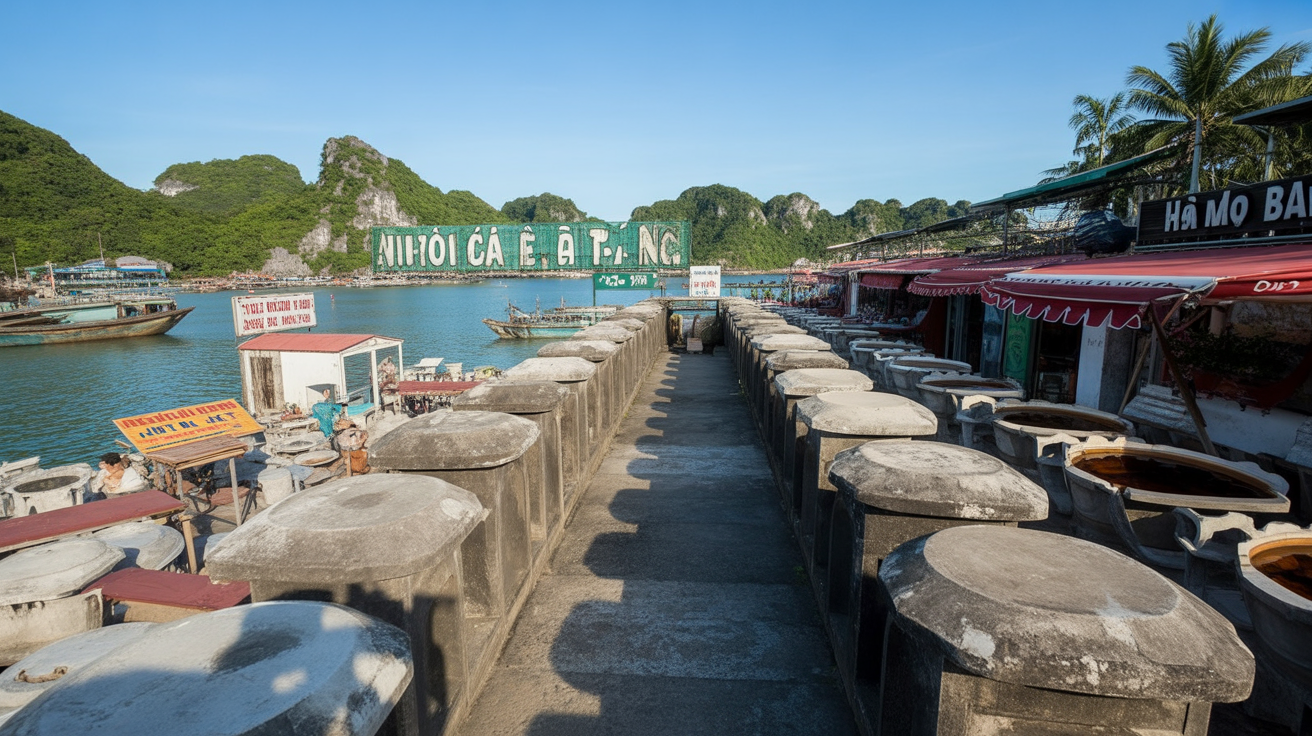
Cat Ba Town sits on a curved bay on the island’s south coast. The waterfront road — Núi Ngọc Street (say: noo-ee ngok) — runs along a harbor of fishing boats and small tour vessels with a strip of hotels, restaurants, and booking offices facing the water. The town is functional and honest: it caters to travelers but hasn’t fully rebuilt itself around tourism the way Ha Long city has. Local fishermen still work the harbor. The morning market sells the same shrimp and squid that end up on the restaurant menus by evening.
Behind the waterfront, the town climbs steeply into the limestone hills — the national park begins less than 2km from the center. The island’s road system is limited to the south and east coasts; the forested interior and north coast are accessible only on foot or by boat. Cat Ba has genuine wild country within walking distance of your guesthouse.
⚠Real Talk
Cat Ba Town on a rainy July afternoon is not glamorous — concrete guesthouses, tour boats idling in the harbor, the smell of fish and diesel. It’s not pretending to be a resort island. What it has is good seafood at local prices, real hiking within reach, and a Lan Ha Bay right outside the harbor that most Ha Long tourists never find.
Getting to Cat Ba Island from Hanoi
Two main routes from Hanoi, with meaningfully different experiences:
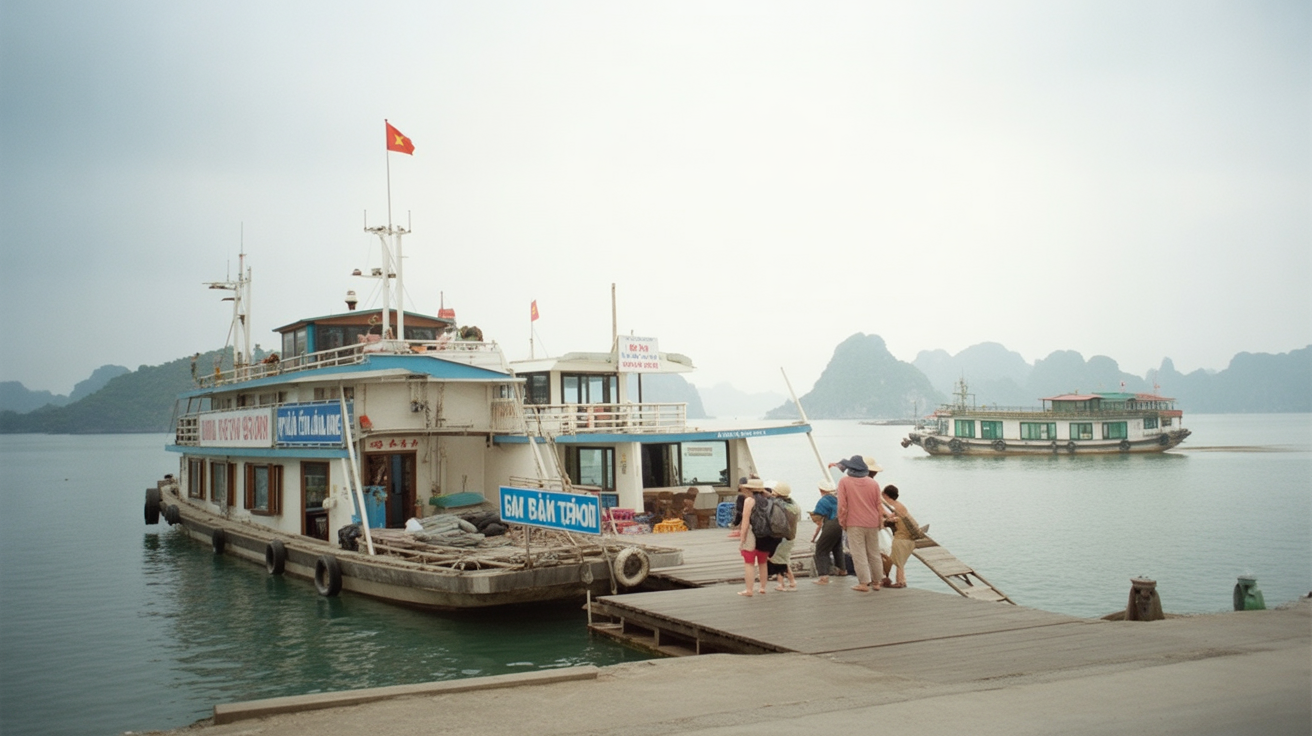
Option 1 — Bus + ferry combo (most popular): Multiple operators run direct “bus + speedboat” packages from Hanoi’s Old Quarter to Cat Ba Town: depart Hanoi around 8–8:30am, bus to Hai Phong port (2 hours), speedboat to Cat Ba (45 minutes), arrive Cat Ba Town around midday. Cost: 300,000–500,000 VND (~$11–19) per person, transport only. Companies: Hoang Long, Hung Thanh, and several Hanoi travel agencies. Book through your Hanoi guesthouse or directly.
Option 2 — Ha Long Bay cruise ending at Cat Ba: Some cruise itineraries depart Hanoi for Ha Long Bay, spend 1–2 nights on the water, and drop passengers at Cat Ba instead of returning to Hanoi. You arrive on the island with Ha Long Bay already done. This is the best combined format if you’re doing both — reverse it (Cat Ba base → Lan Ha Bay → Hanoi) if you prefer.
Option 3 — Ha Phong → Cat Ba local ferry: Hai Phong’s Ben Binh ferry terminal runs slow car ferries to Cat Ba (90 minutes, 40,000 VND / ~$1.50 foot passenger). Useful if you’re already in Hai Phong. Not convenient from Hanoi specifically.
Total Hanoi → Cat Ba journey time: 3.5–4.5 hours depending on route and connections. The island doesn’t get easier to reach once you’re there — if you’re coming from the north (Sapa, Ha Giang), budget the full day.
Things to Do on Cat Ba Island
Cat Ba is not a beach holiday island. The beaches are small, the water is often murky near the town, and jellyfish are present July–August. What Cat Ba has is excellent hiking, the best kayaking base for Lan Ha Bay, and one of the most interesting historical sites in northern Vietnam — Hospital Cave.

Cat Ba National Park Hiking
The national park entrance is 17km from Cat Ba Town by road. The main trail climbs through tropical forest to Ngu Lam Peak (say: ngoo lam) — a ridge viewpoint at 331m with clear-day views across the island and bay. The round trip from the park entrance runs 8–10km and takes 3–4 hours at a comfortable pace. Entry fee: 55,000 VND (~$2.10). Bring water (2L minimum), proper shoes, and start before 9am — the trail is exposed midday in summer and the canopy sections trap humidity.
Klook has the widest selection for Vietnam and is usually the cheapest. KKday is strong on day trips and local experiences.
;t been over-documented: birdsong, the occasional rustle of things you can’t identify, air that smells of wet limestone and decomposing leaf litter.
The Cat Ba langur sighting is not guaranteed — the wild population is still small and lives primarily on the uninhabited cliffs of the north coast. Guided boat trips to langur viewing areas exist (ask at the national park office, 200,000–400,000 VND / ~$8–15), and sightings are more likely in the early morning. The conservation story — a population that was hunted to near-extinction and has partially recovered — is worth understanding before you visit the park.
Hospital Cave (Hang Quân Y)
Hospital Cave (say: hang kwan ee) is a wartime military hospital carved into the limestone mountain 8km from Cat Ba Town, used by the Vietnamese military between 1963 and 1975. Three levels of chambers cut into the rock hold operating rooms, recovery wards, a cinema, and a conference room — all functioning as an underground facility during the American bombing campaign. It was never hit.
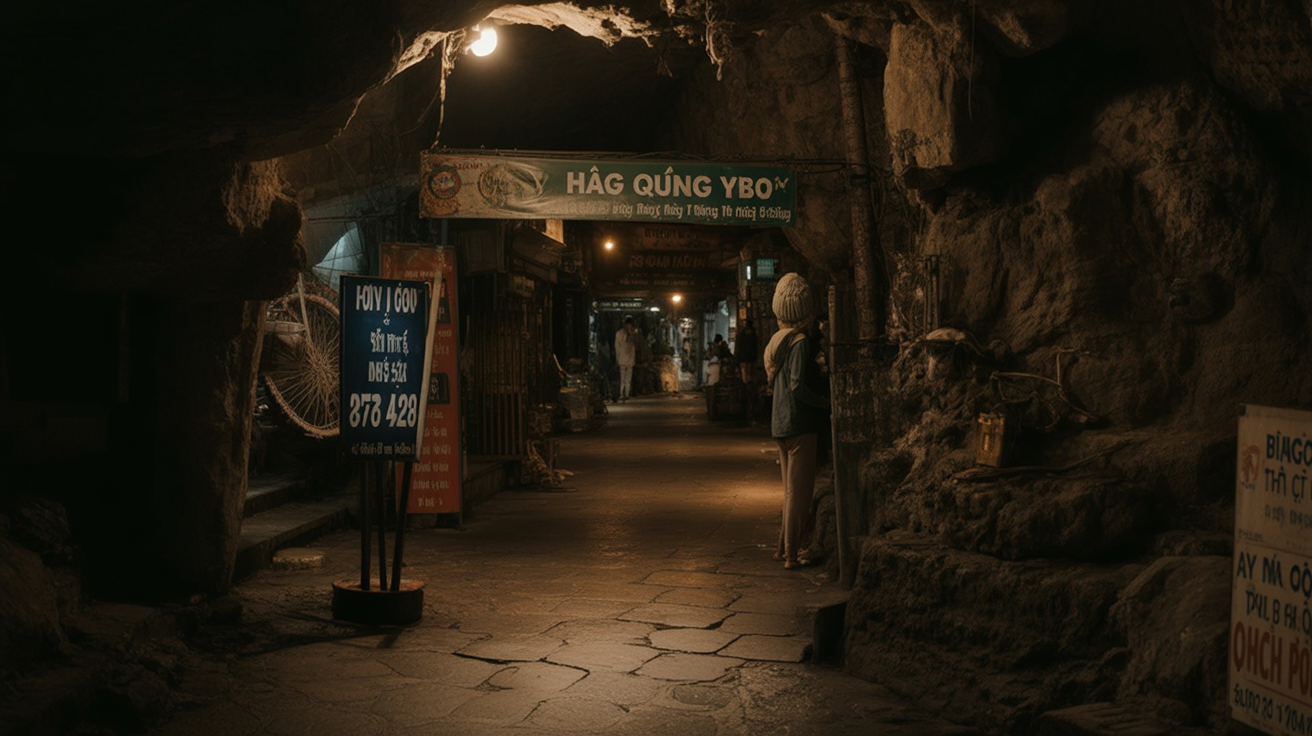
The cave is consistently described by travelers as one of the best-value historical sites in northern Vietnam and one of the most undervisited. Entry: 45,000 VND (~$1.70). The guided tour runs 30–40 minutes and includes the full three-level system. Go before 11am when the day-trippers from Ha Long Bay cruises aren’t routing through it.
Cat Ba Beaches
Cat Ba has three Cat Co (say: cat co) beaches accessible from town by a clifftop path (20 minutes on foot) or xe ôm:
Cat Co 1: Largest of the three, with a beach bar, sunbeds, and vendors. The most social; the most crowded in summer. Sand is mixed with pebbles. Entrance fee: 25,000 VND (~$0.95) per person. Good enough for an afternoon.
Cat Co 2: Smallest and most sheltered. Connected to Cat Co 1 by a tunnel through the cliff. Quieter. Sometimes has jellyfish — ask locals before swimming in July–August.
Cat Co 3: Most removed from the town, reached by a longer clifftop walk or boat. The quietest of the three. No facilities except a small snack vendor. If you’re prioritizing solitude over amenities, this is the beach.
Honest assessment: Cat Ba’s beaches are fine but not the reason to come. The water near town is murky from boat traffic; the clear-water swimming is out on Lan Ha Bay, not from shore. Come to Cat Ba for the hiking, the history, and the kayaking access — not for beach time.
Lan Ha Bay from Cat Ba
Lan Ha Bay is Cat Ba Island’s most important attraction and the main reason serious travelers prefer the island as a base over Ha Long city. The bay sits on the island’s eastern side — 30 minutes by boat from Cat Ba Town — and covers 7,000 hectares of the same karst archipelago without the cruise vessel density of Ha Long Bay proper.
Day kayaking tours from Cat Ba into Lan Ha Bay run 400,000–800,000 VND (~$15–30) per person. Overnight Lan Ha Bay cruises from Cat Ba cost 2,600,000–5,200,000 VND (~$100–200) per person for 1-night. The full Lan Ha Bay guide covers this in detail — see Lan Ha Bay guide.
Where to Stay on Cat Ba Island
Cat Ba Town has the island’s only real accommodation concentration. Budget guesthouses cluster behind the waterfront — look on the streets behind Núi Ngọc (the main strip) for cheaper options not on the water. Mid-range hotels sit along the seafront. There are no luxury properties in the international sense.
Budget (300,000–600,000 VND / ~$11–23/night): Family guesthouses on the back streets — Duc Tuan Hotel and similar family-run places. Basic rooms with air conditioning, hot water, and functional WiFi. No frills, clean, and run by people who’ve lived on the island their whole lives. Ask at check-in which restaurants locals actually eat at — this is the real advantage of staying family-run.
5 minutes by boat from Cat Ba Town, accessible by resort transfer. Bungalows on a private beach. The beach itself is the attraction — cleaner water than Cat Co beaches, no day-trippers. If you can afford it and specifically want a beach-resort experience, this is the only option on Cat Ba that delivers it.
Food in Cat Ba Town
The waterfront seafood restaurants serve the same catch the harbor boats bring in — crab, clam, mantis shrimp, squid — at prices significantly below Hanoi or Ha Long city. The markup for waterfront seating on Núi Ngọc runs 20–30% above the back-street equivalents. Walk one block inland and find the same food for less with different ambiance.
Specific dishes worth ordering on Cat Ba: steamed crab (cua hấp, say: koo-ah hap) served with a lime and salt dip; fried squid with lemongrass and chili; morning rice porridge (cháo, say: chao) with clam at the market end of the waterfront for 30,000–50,000 VND (~$1.15–1.90). The market itself, at the east end of the harbor road, runs from 5–9am — the closest you’ll get to a genuine working fishing-community morning on the north Vietnam coast.
How Much Time to Spend on Cat Ba Island
Minimum 2 nights (3 full days): Day 1 for Hospital Cave and the waterfront; Day 2 for national park hiking; Day 3 for Lan Ha Bay kayaking. If you’re combining with a Ha Long Bay cruise, arrive on Cat Ba from the cruise, spend 2 nights, then depart back to Hanoi or continue south.
One night is enough to use Cat Ba as a transit point for a Lan Ha Bay day tour — you get the bay, you see the island briefly. It’s a legitimate format if you’re on a tight schedule. It wastes the national park and Hospital Cave, which are worth more than an afternoon.
Cat Ba Island vs Ha Long City as a Base
Ha Long city is infrastructure. Concrete hotels, a tourist strip, restaurants that exist primarily to serve tour groups. Nobody recommends spending time in Ha Long city for its own sake — it’s where you get on the boat, and that’s the limit of its appeal.
Cat Ba is a place that rewards time. The national park, the history, the fishing community, the access to Lan Ha Bay. If you’re choosing between basing in Ha Long city for a standard Ha Long Bay cruise and basing on Cat Ba Island for a Lan Ha Bay tour, the Cat Ba version is the more complete trip. It’s also slightly longer (Cat Ba is farther from Hanoi than Ha Long city’s pier) and more logistically involved. The trade-off is clear once you’ve done both.
→Who It’s For
Cat Ba is right for: independent travelers who want more than a cruise package, hikers, anyone combining Ha Long Bay with Cat Ba in a single trip, and travelers who specifically want to avoid the Ha Long Bay crowd. Not ideal for: families who need resort amenities, anyone for whom the boat itself (not the island) is the primary interest, or travelers with fewer than 2 nights to spend.
What I Got Wrong About Cat Ba Island
I treated Cat Ba as a transit stop the first time — showed up on a Ha Long Bay cruise that dropped me at the pier, booked one night, planned to take the morning bus back to Hanoi. Spent the evening eating seafood on the waterfront and decided the island was pleasant but unremarkable. Left at 9am. Getting from Hanoi to Ha Long Bay pier is included in most cruise packages — our Hanoi to Ha Long Bay guide covers what’s included, which pier to confirm, and what to do if you arrive early.
Three months later I came back specifically for Cat Ba National Park and Hospital Cave, and stayed four nights. The hiking and the historical site were both significantly better than anything comparable at the price point in northern Vietnam. I had booked a Ha Long Bay cruise and basically missed Cat Ba entirely in the process — which is the most common mistake people make on this circuit.
The island rewards the people who give it time on purpose, not the people who end up there by default. Plan for it as a destination, not as a pier stop.
Cat Ba Island: A 3-Day Itinerary
If you’re giving Cat Ba three full days — the format that gets the most out of the island:

Day 1 — Hospital Cave, Cat Ba Town, and Cat Co Beach: Arrive by morning speedboat from Hanoi (land before noon). Check into your guesthouse. Afternoon: xe ôm or taxi to Hospital Cave (8km from town, 45,000 VND entry). The 30–40 minute guided tour covers three underground levels. Back to town by 3pm. Late afternoon walk along the waterfront, into the market. Cat Co beach (Cat Co 1 or 3, 20 minutes walk from town) for an hour before dusk. Dinner at a waterfront seafood restaurant — steamed crab, squid, cold Bia Hoi (say: bee-ah hoy).
Day 2 — National Park Hiking: Leave town by 7:30am by xe ôm (50,000–80,000 VND / ~$1.90–3 to park entrance, 17km). Ngu Lam Peak trail: 3–4 hours round trip. Back at the park entrance by noon. Lunch at the small restaurant near the entrance (basic noodles, local veg, cold drink — 50,000–80,000 VND / ~$1.90–3). Return to town by 2pm. Afternoon rest or walk to Cat Co 3 beach. Evening: cook your own dinner at a market-ingredient restaurant on the back streets (staff set out ingredients, you choose, they cook — a specifically Cat Ba Town format).
Day 3 — Lan Ha Bay Kayaking: Book a Lan Ha Bay day tour at your guesthouse the night before (400,000–800,000 VND / ~$15–30, departs 8am). Full day on the water: kayaking through karst arches, possibly Dark Cave, floating village lunch. Back at Cat Ba pier by 4–5pm. Evening departure by speedboat to Hai Phong or next destination. Alternatively, stay a 4th night and do the Lan Ha Bay overnight cruise.
Getting Around Cat Ba Island
Cat Ba’s main road loops around the southern and eastern coast — about 40km of paved road total. The island’s interior is national park and effectively inaccessible by vehicle.
Within Cat Ba Town: Everything is walkable. The waterfront strip, Cat Co beaches (20 minutes on foot), the market, and all restaurants and guesthouses are within 1km of each other.
12Go covers most Vietnam routes — sleeper buses, trains, and island ferries. Compare schedules and book in advance during peak season (Dec–Feb, Jun–Aug).
To the National Park: Xe ôm (say: say ohm) from town to the park entrance — 50,000–80,000 VND (~$1.90–3). Negotiate before you leave; confirm they’ll wait or return for pickup. Motorbike rental from Cat Ba Town: 120,000–200,000 VND (~$4.60–7.60)/day for a 110cc semi-automatic. The road to the park is paved and straightforward.
To Hospital Cave: 8km from town, xe ôm 30,000–50,000 VND (~$1.15–1.90) one-way. Most visitors combine it with a motorbike rental day to cover both the cave and the park entrance on the same outing.
Two things worth sorting before you land: a Vietnam eSIM so you have data the moment you clear customs, and travel insurance — medical costs for uninsured foreigners in Vietnam are significant.
Airalo eSIMs activate instantly. Buy before departure — airport SIM queues in Vietnam can take 30+ minutes.
Frequently Asked Questions
How do I get to Cat Ba Island from Ha Long Bay?
If you’re on an overnight Ha Long Bay cruise, some itineraries end at Cat Ba’s pier rather than returning to the mainland — ask when booking if this “drop-off” option is available. If you’re traveling independently, bus + speedboat combos from Hanoi’s Old Quarter reach Cat Ba Town in 3.5–4 hours (300,000–500,000 VND / ~$11–19). There’s no direct road connection — the island is only accessible by boat.
Is Cat Ba Island worth visiting without a Ha Long Bay cruise?
Yes. Cat Ba as a standalone destination — island, national park, Hospital Cave, Lan Ha Bay kayaking — is a 2–3 night trip that doesn’t require a Ha Long Bay cruise as a prerequisite. Many travelers skip the main Ha Long Bay cruise entirely and do Lan Ha Bay from Cat Ba instead, particularly those prioritizing kayaking over onboard service.
When is the best time to visit Cat Ba Island?
October–November: best overall. Clear skies, warm water, post-typhoon calm. March–April: second best, green hills post-winter, mild temperatures. Avoid July–August: jellyfish in the water, peak domestic tourist crowds, humidity and rain. December–February: cold, often overcast, most boat tours operate but swimming is not appealing. The full Ha Long Bay weather guide covers the seasonal breakdown with specific monthly data.
Can I see the Cat Ba langur?
Sightings are not guaranteed but possible with early morning guided boat trips to the north coast cliffs (book at the national park office, 200,000–400,000 VND / ~$8–15). The wild population has recovered from under 40 animals to around 60–70 in recent years. The guides who run these trips are working with conservation organizations — your fee goes to monitoring and protection, not just tourism.
What’s the best beach on Cat Ba Island?
Cat Co 3 for solitude; Cat Co 1 if you want a beach bar and social atmosphere. Neither compares to beaches in central or southern Vietnam — the water is murkier and the beaches smaller than you might expect. For clear-water swimming, a Lan Ha Bay day tour from Cat Ba is more satisfying than any of the shore beaches.