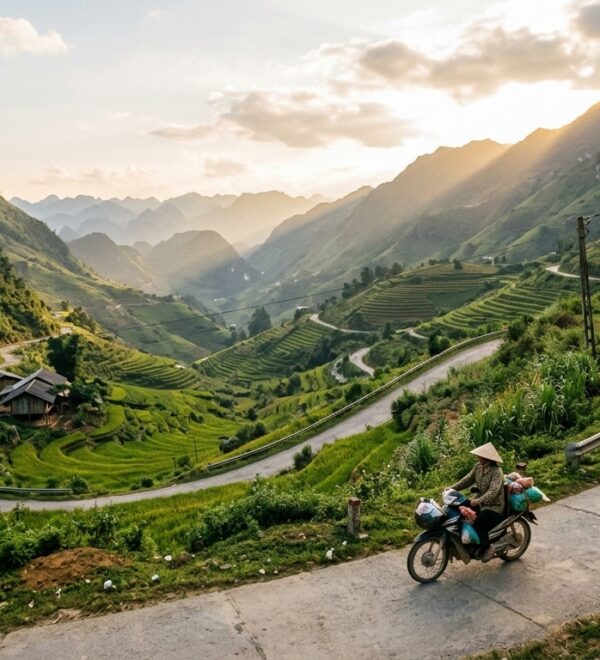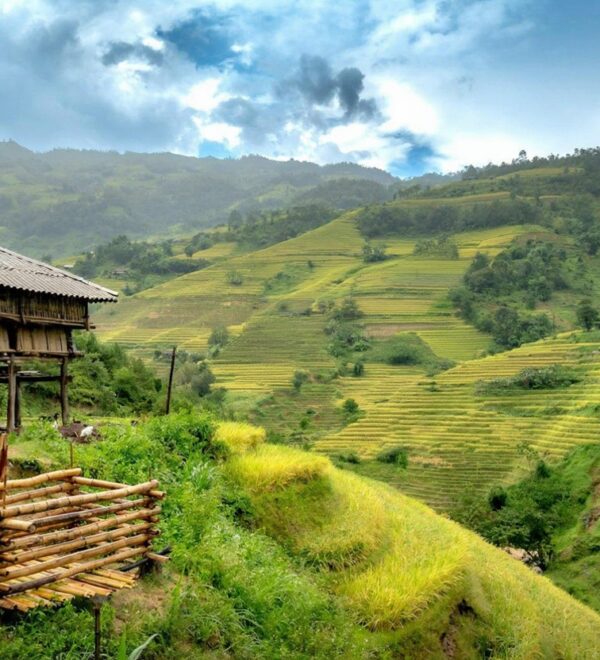

I went in August. This was not smart.

Here’s the thing though — the misty karsts in the rain looked nothing like the photos, and I mean that as a compliment. Fog sitting in the valley at dawn, the limestone formations appearing and disappearing, no tour groups in sight. I’d do August again. I’d just do it differently.
That’s the honest version of the best time to visit Ninh Binh. Not “avoid summer entirely” — but know what each season actually delivers.
✓Quick Answer
Late March and October are the sweet spots. Mild weather, manageable crowds, prices 20–30% below peak. If your dates are fixed, any month except July–August midday heat and Tet week is workable — Ninh Binh is seasonal, not binary.
Best Time to Visit Ninh Binh: The Two Windows That Actually Deliver
Every guide you’ll read says the same thing: March–May or September–November. For how Ninh Binh’s seasons stack up against the rest of the country, our Vietnam best time to visit guide has the full picture.

They’re right. The temperature stays between 20–28°C. The rice is either growing green or turning gold. The rain is mostly gone. The boat rides feel like they’re supposed to feel — cool air off the water, the paddle drip, the silence.
But the nuance matters. March and October are not the same as May and November. The experience shifts significantly within those windows, and booking a week off because “spring is good” without knowing which part of spring can mean the difference between an empty dawn boat and a 2-hour queue.
Spring (March–May): When Most People Go, and Why
The rice paddies are vivid green from late March onwards. The temperature is still sane — 22–28°C, dropping cooler at dawn. The mist sits low in the valley in the early morning, then burns off by 9am, and the karsts turn golden-lit by afternoon.
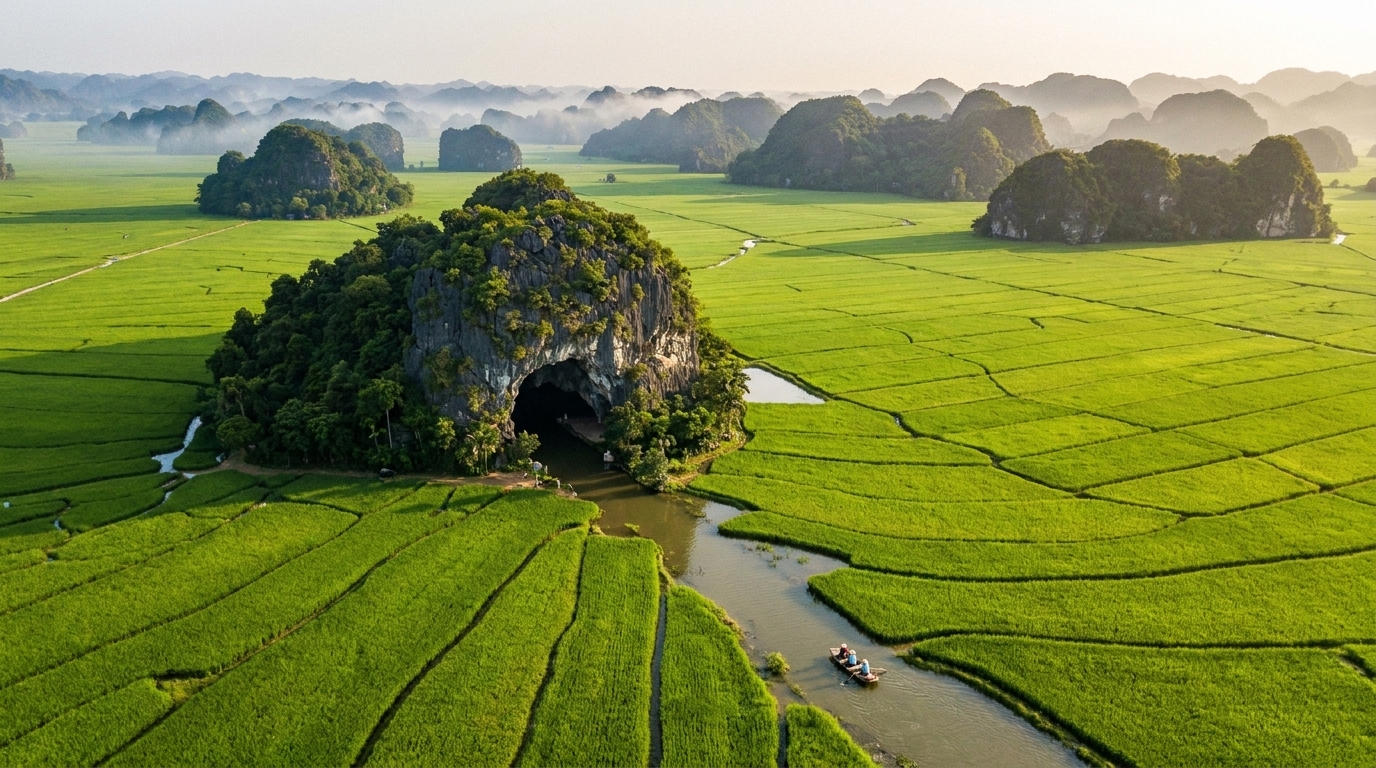
It’s genuinely beautiful. And [RECURRING] across every source: this window is the most popular.
Which means crowds. February–May is considered peak season. Weekends in April, the boat queues at Trang An start before the ticket office opens. If you’re going in April, book your guesthouse at least a week ahead. Prices for mid-range private rooms run 20–30% higher than in late November.
Late March is the underrated pick within this window. The rice is already green, the weather is slightly cooler, and accommodation prices are noticeably lower than April. It’s the same landscape for less money and fewer people on the boat with you.
→Who It’s For
Spring is the default for a reason — if you have flexibility but want guaranteed good conditions, March 20–April 10 is the safest window. Avoid late April and all of May on weekends; the tourist volume at Tam Coc has become genuinely unpleasant midday.
The Green Rice Window: Late May to Mid-June
Most guides file this under “summer” and move on. That’s a mistake.
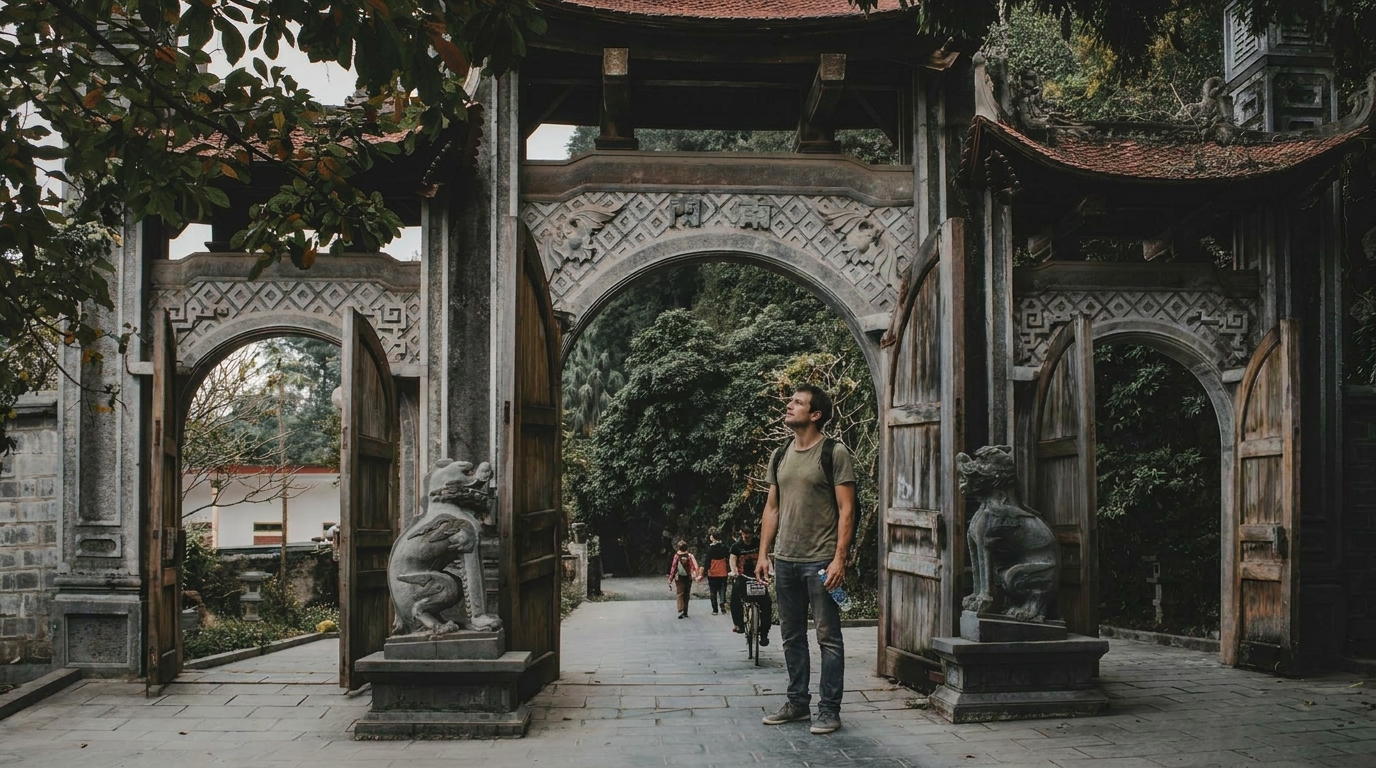
Late May and early June are when Tam Coc’s rice fields hit peak green — not just green, but the kind of fluorescent, almost unreal green that makes you think someone adjusted the saturation. The lotus fields near Hang Mua are also at their best May through July.
The trade-off: it’s hot. 30–34°C by mid-morning. Mua Cave’s 500 steps become a serious undertaking. The boat rides stay comfortable (you’re on water, there’s shade from the karst walls), but the cycling-and-hiking combination that makes Ninh Binh great becomes a heat management exercise.
Strategy: boat at 7am, back by 10am, rest through noon, out again at 4pm. This is how locals move in this weather. It’s also when the light is best for photography — low morning sun catching the rice, long-shadow evening walks along the river.
↗Insider Tip
If you’re coming specifically to photograph the green rice paddies, target the third week of May. By mid-June the fields are still green but slightly less vivid as harvest prep begins. The fluorescent window is narrow — about 4 weeks at peak.
Rain Season (July–September): The Honest Case for Going Anyway
July and August are hot. Around 34–36°C. Afternoon storms are frequent — not gentle rain, but the kind that shuts down boat operations for an hour and turns the rice field paths to mud.
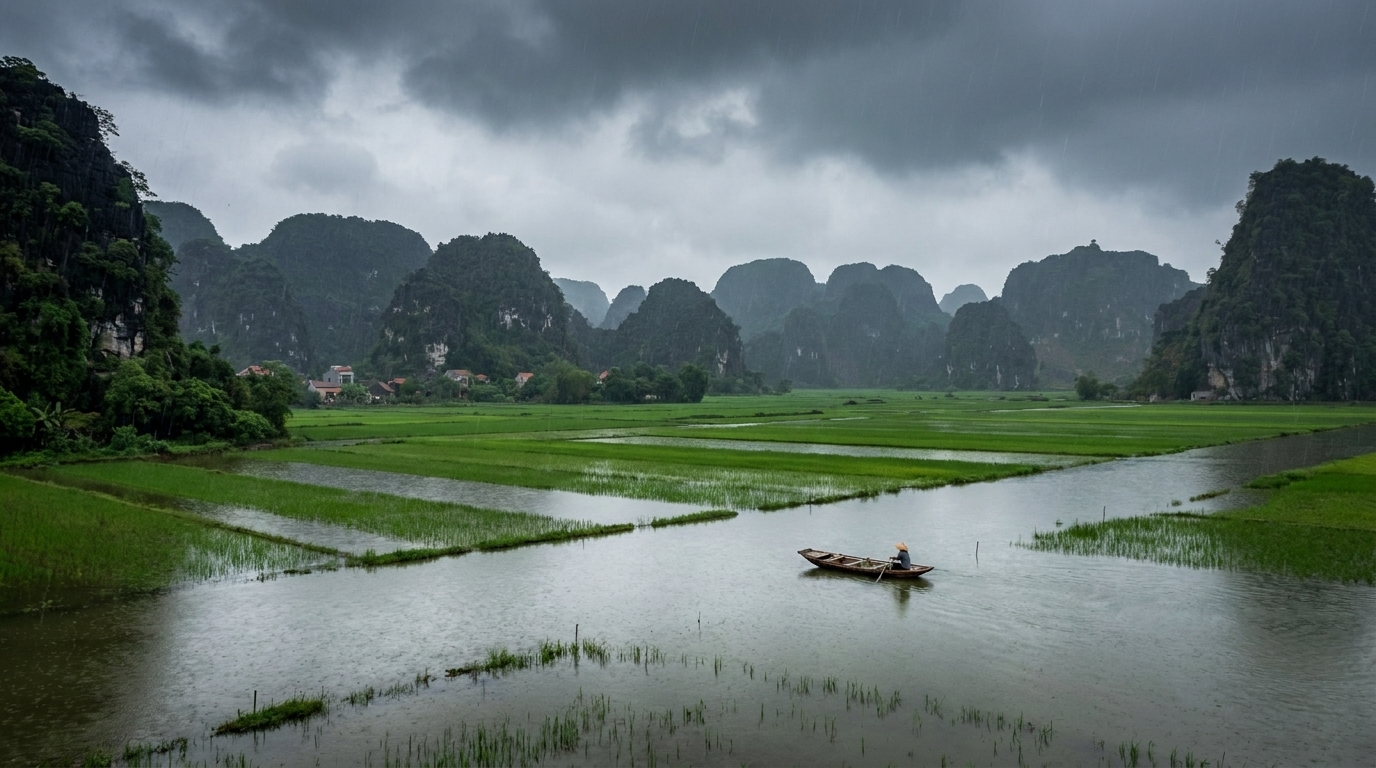
In 2025, flooding in the region cancelled tours for several days in late July. One traveler on Reddit noted: “2025 floods trashed trails, tours canceled last-minute.” That happens. If you go in summer, build flexibility into your itinerary — don’t book tours the morning of, don’t assume your afternoon plans will hold.
The other side of this: the karsts in low cloud and mist look extraordinary. No Instagram filter recreates what the landscape looks like when fog sits in the valley and the limestone formations appear through it in layers — dark rock, pale mist, green paddy below. You get that atmosphere in summer and almost never in spring.
Prices drop 20–30% versus peak season. Guesthouses have rooms available. The boat queues are short. The Mua Cave climb at 6am before the heat builds is still worth every step.
⚠Real Talk
The “avoid July–September entirely” advice in most guides is written by people who didn’t go. The heat is real and the rain is unpredictable — but the landscape during a misty rain season morning is genuinely unlike anything you’ll see in the peak season photos. Sometimes the off-peak version of a place is the more honest one.
Autumn (October–November): The Best Season Most Travelers Skip
This is the one. If I had to pick a single window for a first visit to Ninh Binh, it would be October.
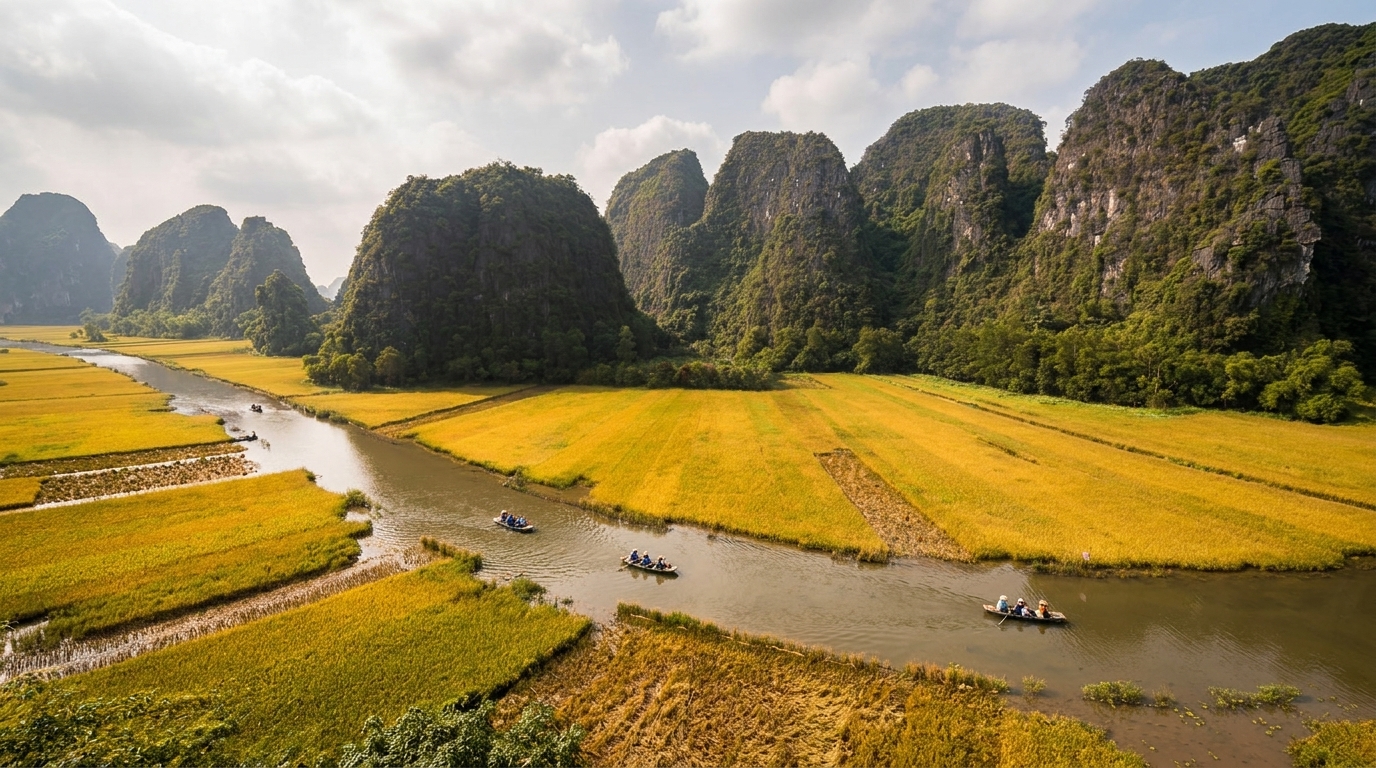
The temperature drops to 18–24°C. The rice turns gold — the harvest window creates a different color palette than the green rice of spring, warmer and more dramatic in late afternoon light. The humidity falls off noticeably. The rains from summer are mostly gone.
The crowds are lighter than spring. Accommodation prices haven’t caught up with demand yet. The mornings are cool enough that Mua Cave before 8am feels like exercise rather than survival.
[RECURRING] across multiple sources: September–November is consistently rated alongside spring as the peak experience window. But autumn gets less marketing attention, which means it’s actually quieter on the ground than March–May.
October 1–20 specifically hits the rice harvest across Tam Coc and Van Long Nature Reserve. The fields are golden-brown, the water buffaloes are working, and the whole landscape looks like a harvest painting.
★Jake’s Pick
October 5–20. The rice harvest, the cool mornings, the post-rain clarity in the air. I’ve done Ninh Binh in five different seasons and this window is the one I’d choose if I could only go once more.
Winter and Tet: The Cold Truth
December is underrated. Cool and dry (15–20°C), fewer tourists, lower prices. The mist returns in the mornings. If you don’t mind a jacket at dawn, it’s a genuinely good time. Book closer to the date — guesthouses have space.
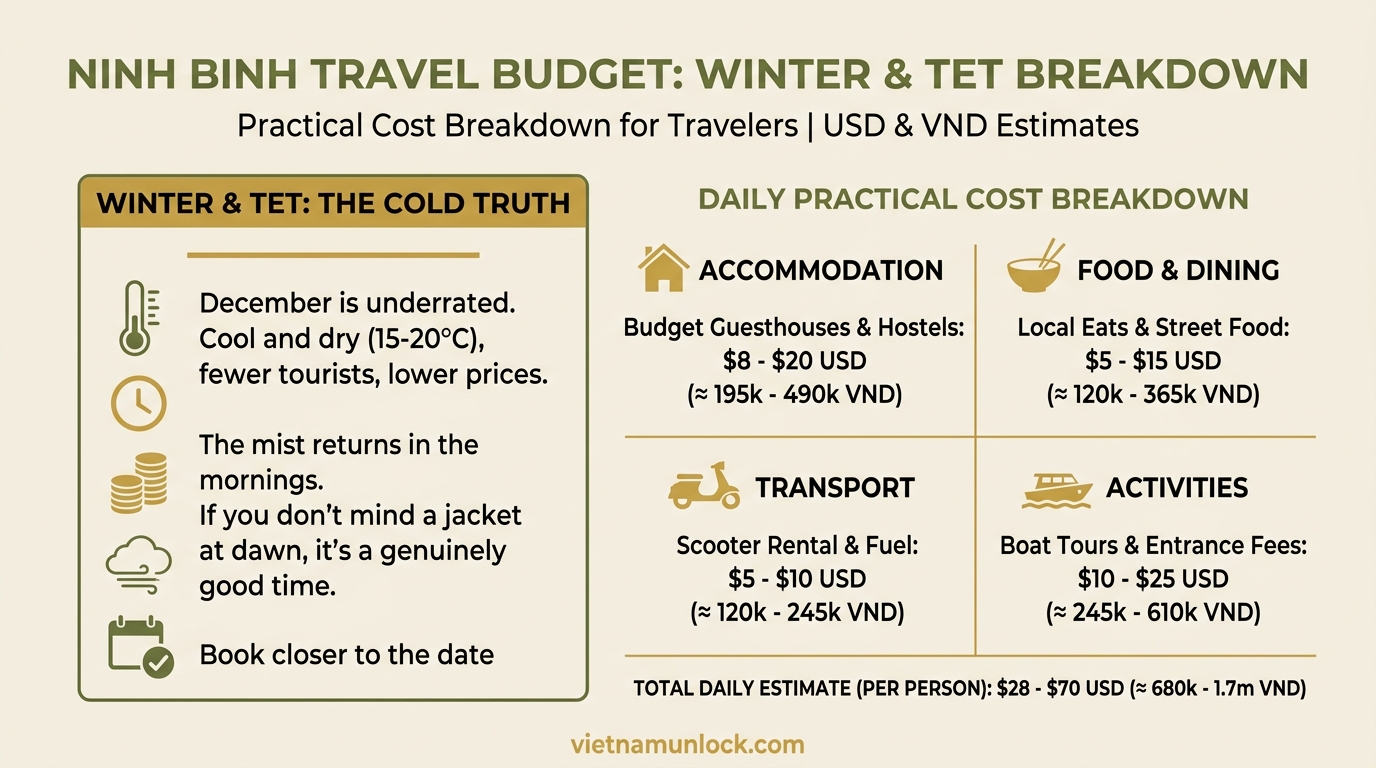
January–February depends entirely on one question: is Tet during your visit?
Tet (Vietnamese Lunar New Year, dates shift annually — usually late January to mid-February) is the worst possible time to visit Ninh Binh if you want a calm experience. Accommodation prices jump 30–50%. Popular guesthouses book out weeks in advance. The entire country is on the move. Trang An boat queues stretch past 2 hours at peak.
Outside of Tet week itself, January and February can be quiet and atmospheric — cold by Vietnamese standards (10–14°C at night), misty karsts, light tourist traffic. If Tet isn’t in your window, it’s worth considering.
ℹKnow Before You Go
Tet date for 2027: January 29. The chaotic period runs 5–7 days either side. Accommodation prices surge from about January 22 through February 5. Book well in advance or shift your dates by two weeks in either direction.
What Travelers Actually Say (Consensus 2025–2026)
Across Reddit r/VietnamTravel and TripAdvisor in 2025–2026, the timing advice is remarkably consistent:
“Went to Ninh Binh in October — rice harvest, golden fields, 22°C, almost no queues at Trang An. Best Vietnam day I had. The spring hype is real but October is where it’s at.” — r/VietnamTravel, October 2025
“Went in August, misty karsts at dawn were incredible, but the afternoon boat cancelations and 36°C midday were brutal. Go early morning, rest noon-3pm, go out again late afternoon — that’s the only way to do summer.” — TripAdvisor, Aug 2025
The negative Ninh Binh reviews cluster around one thing: arriving midday in April or May during peak season and finding the Tam Coc boat dock chaos and waiting 90 minutes. The fix is either to arrive at opening (7am) or shift the timing to October.
The Bottom Line on When to Visit Ninh Binh
The best time to visit Ninh Binh is October if you want it all. Late March if you need the spring window. Late May if you came specifically for the green rice paddies and can handle morning heat. August if your dates are fixed and you understand what you’re signing up for.
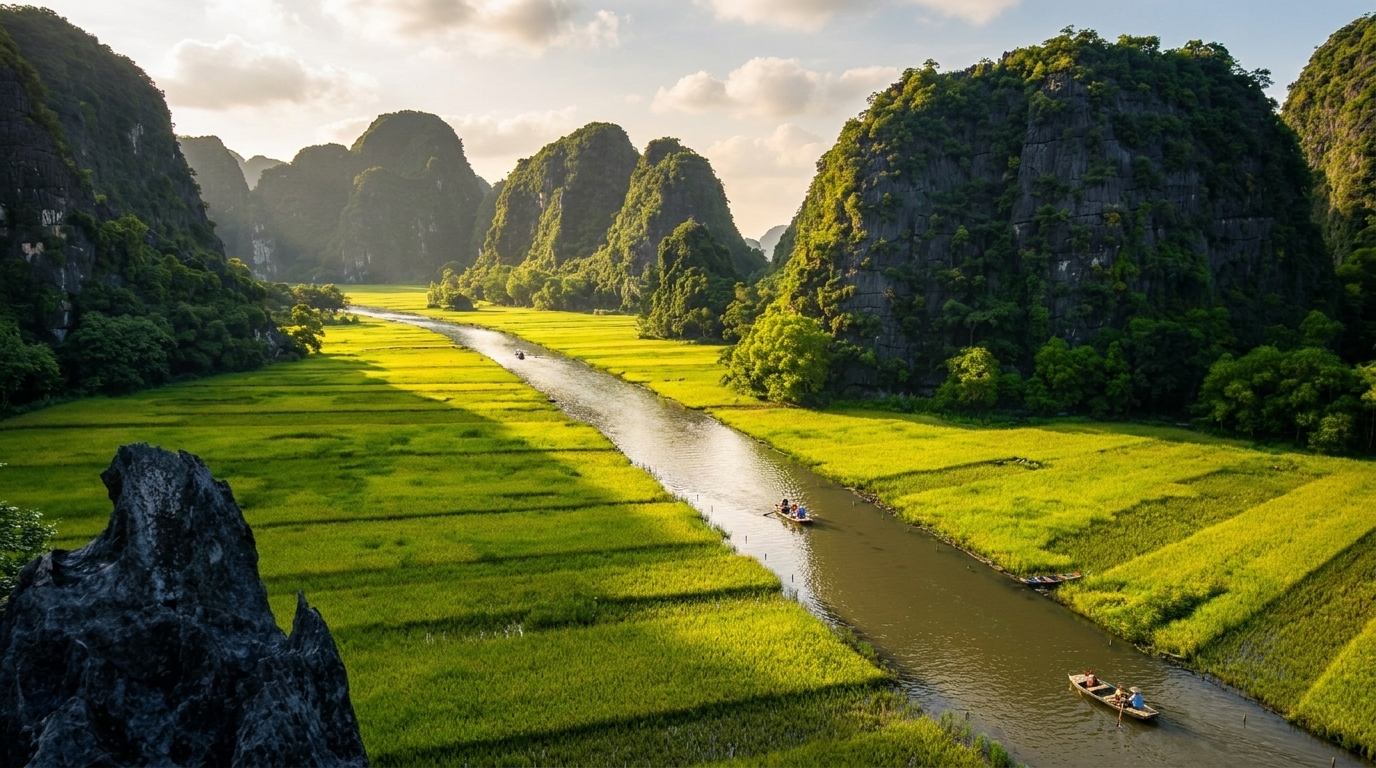
What it isn’t: a destination with a single perfect window and dead zones either side. Every season delivers something worth seeing — the question is what you’re optimizing for.
Plan your dates, then figure out your base. The Ninh Binh where to stay guide covers the Tam Coc vs Trang An area decision in detail, which matters as much as your timing. And if you’re coming from Hanoi, the Ninh Binh from Hanoi guide covers every transport option. Once you’re there, the Ninh Binh things to do guide has the activity breakdown with current prices and logistics.
Frequently Asked Questions
Can you visit Ninh Binh in summer?
→ Also read: Ninh Binh Travel Guide
Two things worth sorting before you land: a Vietnam eSIM so you have data the moment you clear customs, and travel insurance — medical costs for uninsured foreigners in Vietnam are significant.
Airalo eSIMs activate instantly. Buy before departure — airport SIM queues in Vietnam can take 30+ minutes.
Frequently Asked Questions
When is the best time to visit Ninh Binh?
October–November for the golden rice harvest photos at Tam Coc — the landscape turns gold and frames the karst towers perfectly. March–May for comfortable temperatures (22–28°C / 72–82°F) and green paddies. Avoid July–August: peak rain and Vietnamese school holidays make boat queues brutal.
Does it rain a lot in Ninh Binh?
May–September brings heavy rain, but rarely all day. After heavy rain, Mua Cave steps get slippery — bring grip-soled shoes. The Trang An area is less affected by flooding than Tam Coc’s flat paddy fields.
Is Ninh Binh crowded? How can I avoid the crowds?
Yes, on weekends and Vietnamese public holidays — Tam Coc boat queues can stretch 90+ minutes. Fixes: visit on weekdays, arrive at Trang An before 8:30am, or go to Bich Dong Pagoda first while others queue for boats. Quietest months: January–February (cold, empty rice fields, short queues).
Which Activities Work Best in Each Season
Ninh Binh’s three main activities — boat tours, cave temples, and cycling the valley — behave differently by season. Picking the right activity for your timing matters.
Trang An boat tours: Best in October–April when water levels are stable and the caves are navigable without the risk of flooding. In July–August, heavy rain can raise water levels enough to make the low cave passages uncomfortably tight or temporarily close them. The boats run year-round, but cave conditions are most reliable in the dry months. Spring (March–April) has the most beautiful green rice backdrop; autumn (October–November) has the golden harvest version.
Tam Coc rowing boats: The paddy-flanked river is at its most photogenic May–June (fluorescent green) and October–November (golden). Winter (December–February) has the quietest boat queues but bare fields. If you’re specifically coming for the rice-framed boat photos, time the visit to one of those two windows — the bare winter version is a completely different experience.
Mua Cave (Hang Mua) climb: 500 steps to the summit overlook. In October–April, this is a solid morning activity — cool enough to climb without stopping every 50 steps. In July–August, arrive before 7 AM or skip the climb for a sunset attempt. Midday in summer on those exposed stone steps is the kind of heat that makes travelers significantly angrier than they expected. Sunset from the top in October is worth the extra effort of staying until 5 PM.
Van Long Nature Reserve: The quieter, less-touristed wetland reserve 20km from Ninh Binh town is best visited October–March when bird activity is highest and the water is clear. Spring (March–April) is when migratory birds pass through. The rare Delacour’s langur monkeys are most visible in the morning year-round — this site is worth visiting even if the rest of Ninh Binh is crowded.
Cycling the valley: March–April and October–November for the temperature and the visual payoff. The flat roads between Tam Coc and Bich Dong, past the rice fields and alongside the karst walls, are exactly what the cycling route photos show. In summer, cycling midday is inadvisable — but a 5:30 AM sunrise ride before the heat builds is genuinely one of the better cycling experiences in northern Vietnam.
Packing for Each Season in Ninh Binh
October–November (ideal season): Light layers for daytime (22–25°C), a fleece or light jacket for mornings and evenings. Comfortable walking shoes with some grip for the Mua Cave steps and the Bich Dong pagoda walkways. Sunscreen — autumn sun in northern Vietnam is deceptively strong. A rain jacket as backup; brief showers still occur in early October.
March–April (spring peak): Similar to autumn layering but slightly warmer. Sandals work for the flat cycling routes but bring closed shoes for climbing. Book your guesthouse before you pack — accommodation choice shapes which activities are walkable versus requiring a motorbike.
July–August (summer/rain season): Lightweight fast-dry clothes exclusively. A compact rain poncho (30,000 VND at any local shop, or 80,000 VND at tourist shops — buy the local version). Grip-soled shoes for the Mua Cave steps when wet — this is important, not optional. Water bottle and electrolytes for the heat. An early-morning mindset: the best activities happen before 9 AM in summer.
December–February (winter): A real jacket for evenings and early mornings — Ninh Binh in January at 6 AM can hit 10–12°C, which feels significantly colder than it reads. Layers that you can shed as the day warms up. Waterproof shoes or boots for the occasional misty drizzle.
How Long to Stay and What to Prioritize
Two nights is the minimum to see Ninh Binh properly without rushing. Three nights allows you to cover all the main sites at a pace that doesn’t feel like a checklist.
2-night itinerary: Day 1 morning — Trang An boat tour (book the 3-hour route, not the shorter version). Afternoon — cycle to Bich Dong pagoda, walk the limestone temple. Day 2 morning — Mua Cave climb at sunrise, then Tam Coc boat. Afternoon — Van Long if you have a motorbike, or rest day. This is achievable year-round with timing adjustments for the season.
3-night itinerary: Add a day trip to Hoa Lu Ancient Capital (former royal citadel, 12km from Tam Coc) and a longer Van Long session. October visitors can time the third morning specifically for the golden rice hour at Tam Coc — the light between 6:30 and 8:00 AM on a clear October morning is the version of Ninh Binh that photographs remember.
Most travelers use Ninh Binh as a 1-2 day add-on to a Hanoi stay rather than as a standalone destination. If you’re coming from Hanoi, the logistics are in our Ninh Binh from Hanoi guide. If timing your visit around the golden rice harvest, combine with a Ha Giang Loop in October for the most photogenic 10-day North Vietnam trip possible.
Ninh Binh Best Time FAQ
Can you visit Ninh Binh in summer?
Yes — with the right approach. July–August is hot (32–36°C) with frequent afternoon storms, but the misty karst landscape in rain season is genuinely dramatic and the crowds are significantly smaller than spring peak. Go early morning (boats before 7 AM, Mua Cave before 7:30 AM), rest from noon to 3 PM, and go out again in the late afternoon. Accommodation is 20–30% cheaper than spring. It’s a good option if your dates are fixed or budget is a priority.
Is Ninh Binh better than Ha Long Bay?
They’re different experiences that are often compared because both involve limestone karsts and water. Ninh Binh is land-based — rice fields, caves, cycling, pagodas — and is significantly cheaper and less crowded than Ha Long. Ha Long Bay is an overnight cruise experience on open water. If you have time for both, they complement each other. If choosing one: Ha Long for a sea-cruise experience, Ninh Binh for a more active and culturally richer day. Many travelers prefer Ninh Binh precisely because it’s not Ha Long.
What is the golden rice season in Ninh Binh?
The rice harvest at Tam Coc and across Ninh Binh province typically peaks October 1–20, when the paddies turn from green to gold as the rice matures before harvest. The exact timing shifts slightly year to year depending on planting dates. Late September can have early gold in some fields; by late October most fields are harvested and bare. October 5–15 is historically the most reliable golden rice window.