Come back at noon and everything changes.
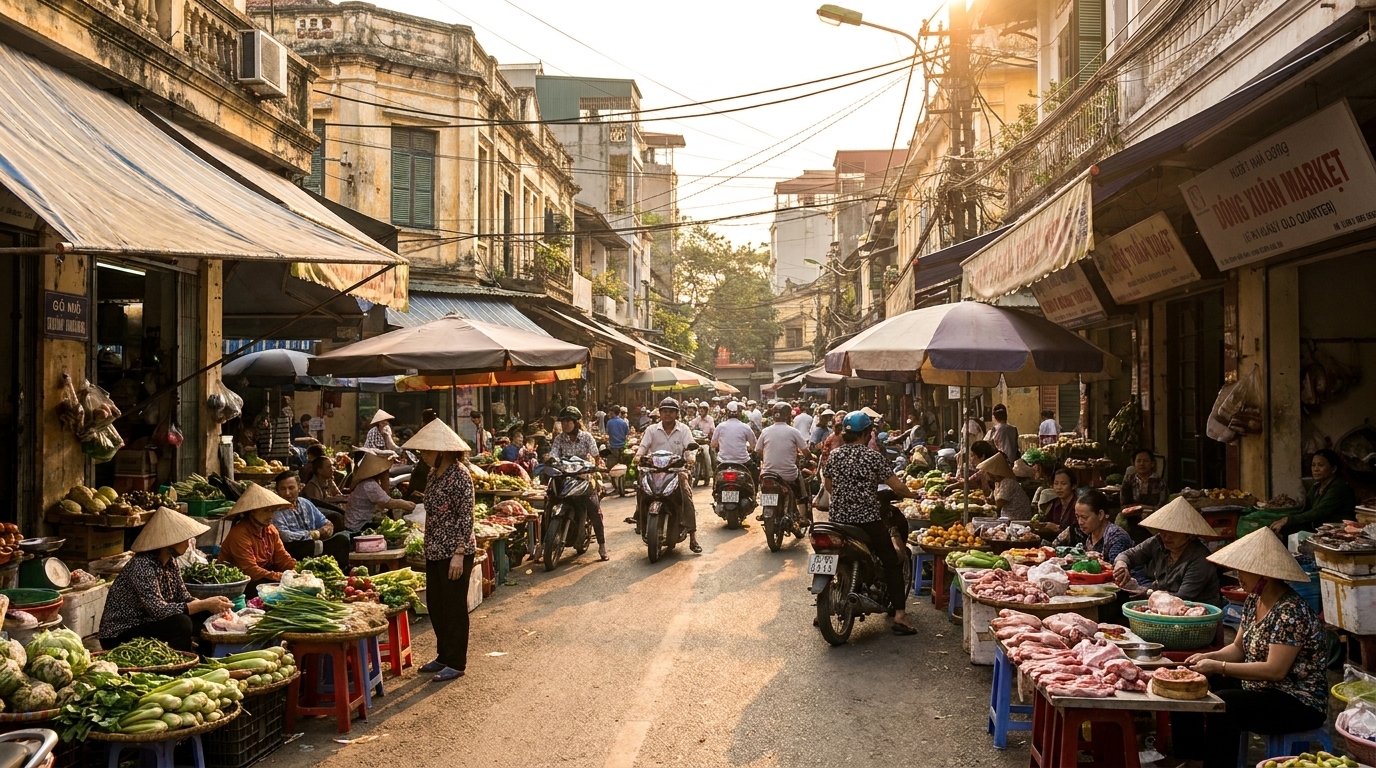
Hanoi has markets for every purpose — wholesale food markets that supply the city’s restaurants, indoor fabric halls, a Friday-to-Sunday night market that shuts down three streets, and a handful of places so local they don’t have signage. This is how they actually work.
✓Quick Answer
The best Hanoi markets: Dong Xuan (indoor, all-day, go at 6–9am), Weekend Night Market (Fri–Sun 7–11pm on Hang Dao St), and Long Bien wholesale (5am, for watching). Prices are lowest early morning. Know the local price before buying anything.
Đồng Xuân Market: The Main Event
The largest indoor market in Hanoi, operating continuously since 1889, three floors of everything — clothing, fabric, accessories, household goods, food on the ground floor spilling out to the surrounding streets. If you buy a silk scarf or a knockoff item anywhere in the Old Quarter, there’s a good chance it came from a wholesale order placed here first. For everything else about the city, our Hanoi travel guide has the full picture.
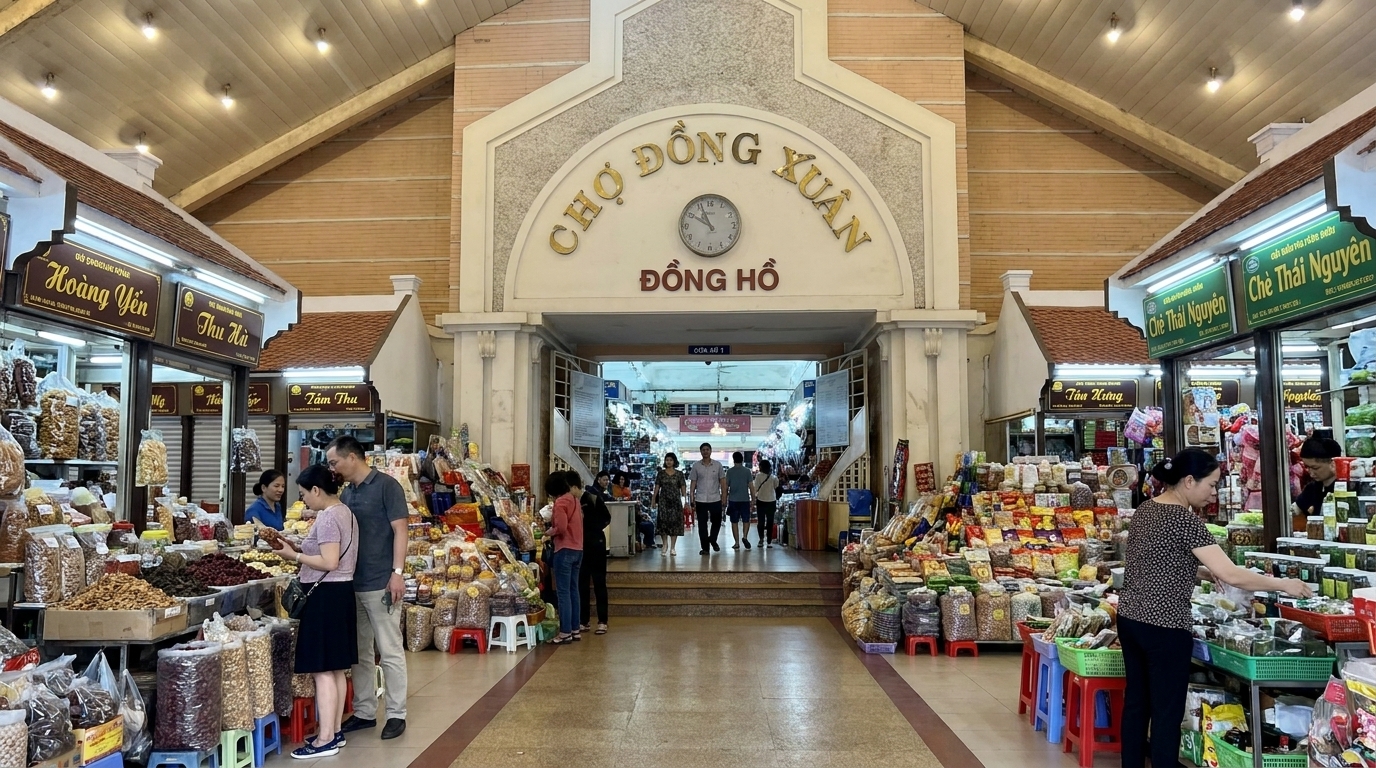
The ground floor street food section is worth the visit alone: bánh cuốn (say: bahn kwon — steamed rice rolls, 25,000 VND/~$1), phở for 40,000–50,000 VND (~$1.60–2), and a cluster of stalls where women fry things in small pans over gas burners that hiss at a volume suggesting something is about to go wrong but never quite does.
For fabric and clothing: a tailor-made áo dài (say: ow zai — the traditional Vietnamese dress) at stall #45 runs around 1,200,000 VND (~$48) with a 2-hour turnaround. Silk scarves are 150,000–200,000 VND (~$6–8) for a decent quality. The fair price for a silk blouse is roughly 400,000 VND (~$16) — if the first quote is double that, it is.
ℹKnow Before You Go
Go between 6am and 9am. Dong Xuan at 6am is wholesale pace — vendors focused on bulk buyers, prices reasonable, cooler air before the building heats up. At noon, it’s tourist-tempo prices and the ground floor smells like it hasn’t been cleaned since Tuesday. The floors get slippery from water and spilled things — wear shoes with actual grip.
The Dong Xuan Scam to Know
I’ll be direct: fake currency exchange happens here. Multiple travelers in 2025–2026 reported exchanging cash near Dong Xuan and receiving counterfeit notes or getting significantly less than the market rate with no receipt. One Reddit thread from July 2025: “Scam at Dong Xuan: fake money changer gave me 20% less VND, swapped 2M VND ($80) note for counterfeits. Realized at hotel.” Don’t exchange money at markets — use a bank ATM (Vietcombank has zero foreign fees) or an official exchange bureau on Hàng Bạc Street.
Textile overcharging is also [RECURRING] — the tourist price for items with no price tag runs roughly 2x the fair price. Fix: ask the price, say “đắt quá” (say: dak kwa — “too expensive”), and see what happens. If nothing happens, walk to another stall. The market has 200 vendors selling similar items.
Weekend Night Market: The One Everyone Does
Friday to Sunday, 7pm–11pm, Hàng Đào and Hàng Ngang Streets in the Old Quarter close to traffic and fill with stalls, food vendors, live music, and half of Hanoi’s tourist population moving at crowd-speed.
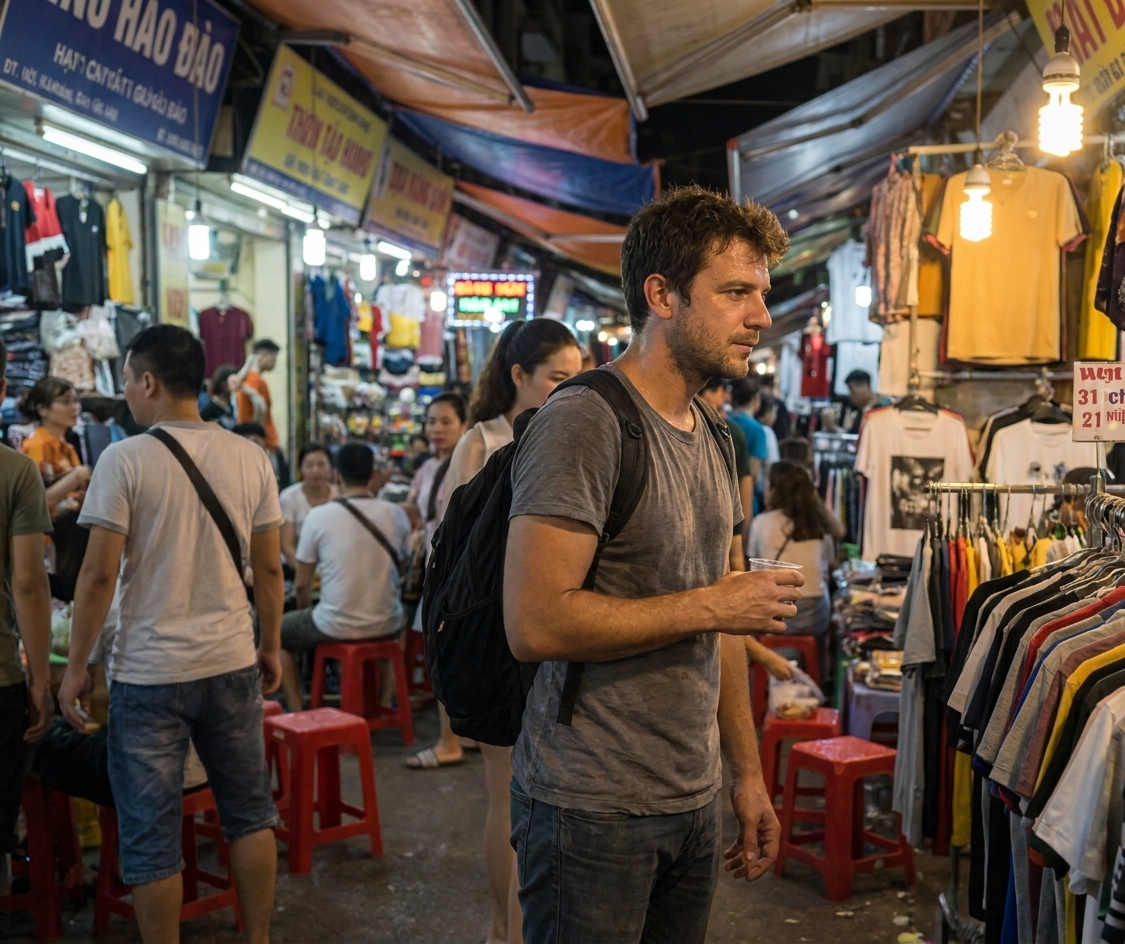
Grilled squid on sticks: 100,000 VND (~$4) for a portion. Cold grilled corn: 20,000 VND (~$0.80). Coconut coffee from a cart: 30,000 VND (~$1.20). The food here is genuinely good, the atmosphere is legitimately fun, and the people-watching is excellent.
The bia hơi (say: bee-ah huh — draft beer) situation: the local price at street stalls is 8,000–10,000 VND (~$0.35) per glass. Some vendors in the Night Market area quote foreigners 50,000 VND (~$2) for the same glass. Still cheap by any Western standard, but knowing the real price before you order prevents a certain type of annoyance. Say “bao nhiêu tiền?” (say: bow nyew tyen — “how much?”) before you pick up the glass.
⚠Real Talk
The Weekend Night Market is legitimately worth doing once — the energy is real, the food is good, and it’s genuinely what Hanoians use for weekend evening entertainment. It’s also where multiple travelers have had phones lifted. Night markets anywhere are pickpocket territory, and this one has documented incidents near the beer corner on Hàng Bạc. Front pocket, phone in hand or hotel room. The market itself is not a scam — just pay attention to your pockets the way you would anywhere crowded.
For the full breakdown of the night market experience — best hours, what to buy, and what to skip — see the Hanoi Night Market guide.
Long Bien Market: Not for Shopping, for Watching
Underneath the French-colonial Long Bien Bridge, every morning before dawn, Hanoi’s wholesale produce market processes what the city will eat that day. Trucks arrive from farms across northern Vietnam. Porters load and unload at a pace that makes you feel like you’re watching time-lapse footage of a normal city.
The smell is earthy and river-damp — wet vegetables and mud and the distant suggestion of the Red River. The sounds are rapid-fire auction calls echoing off the concrete supports of the bridge above, truck horns, the clatter of crates being stacked.
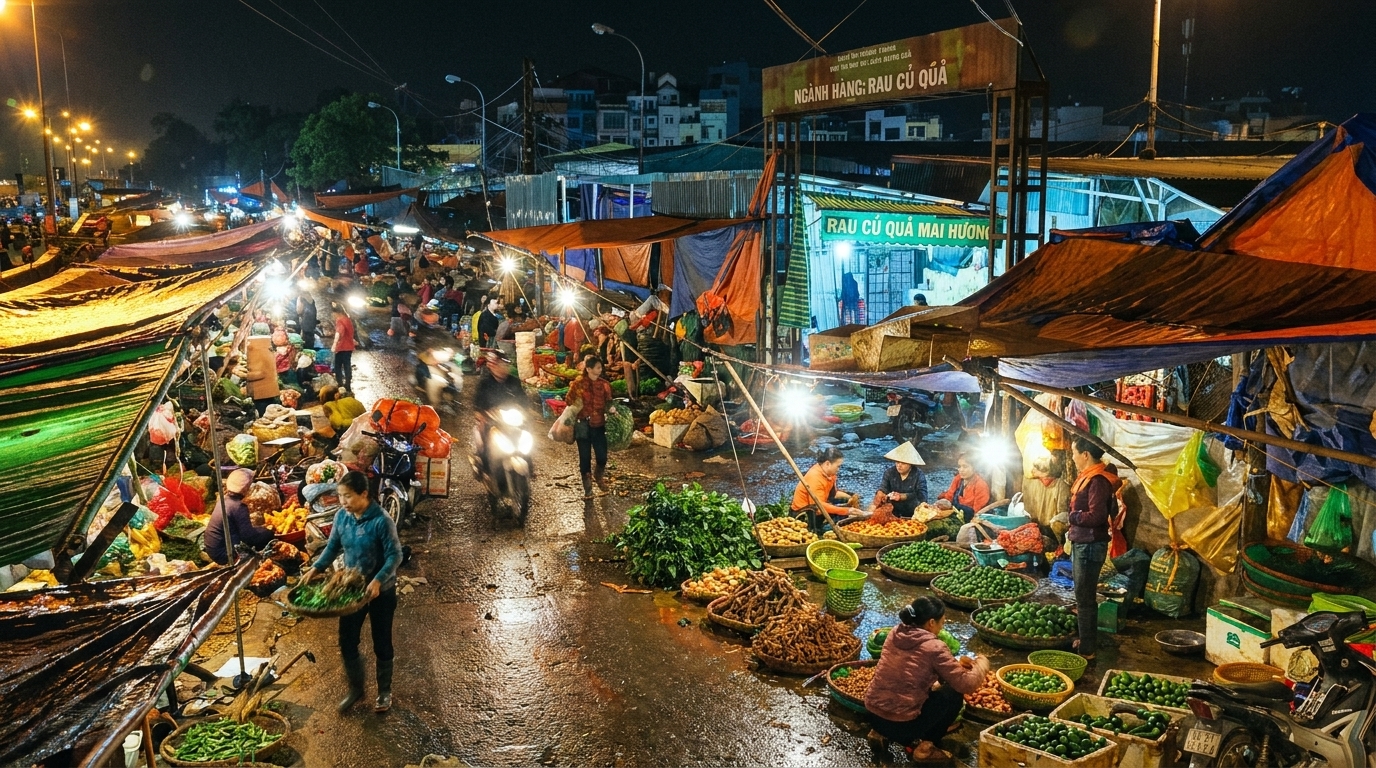
The best window: 5am on the east side, before full daylight. The sunrise over the river is real, the vendors are in better moods before the heat arrives, and the light on the produce stalls is the kind photographers plan trips around.
You can buy here — fresh fruit and vegetables at wholesale prices — but the scale is bulk-oriented and the vendors aren’t expecting retail tourists at 5am. Come to watch, buy a bag of mangosteens (haggle gently but don’t make market vendors’ mornings harder), and leave by 7am before the heat and delivery trucks take over. Fruit sellers here have been documented pressing a thumb on the scale — pay attention to what the display shows before money changes hands.
→Who It’s For
Long Bien is for the traveler who wants to see Hanoi’s food chain in motion — photographers, early risers, people who’ve already done the standard Old Quarter circuit. Not for: shoppers looking for souvenirs, anyone who doesn’t want to wake up before 5am, people bothered by wet floors and industrial smells.
Chợ Hôm (Hom Market): The Local Alternative
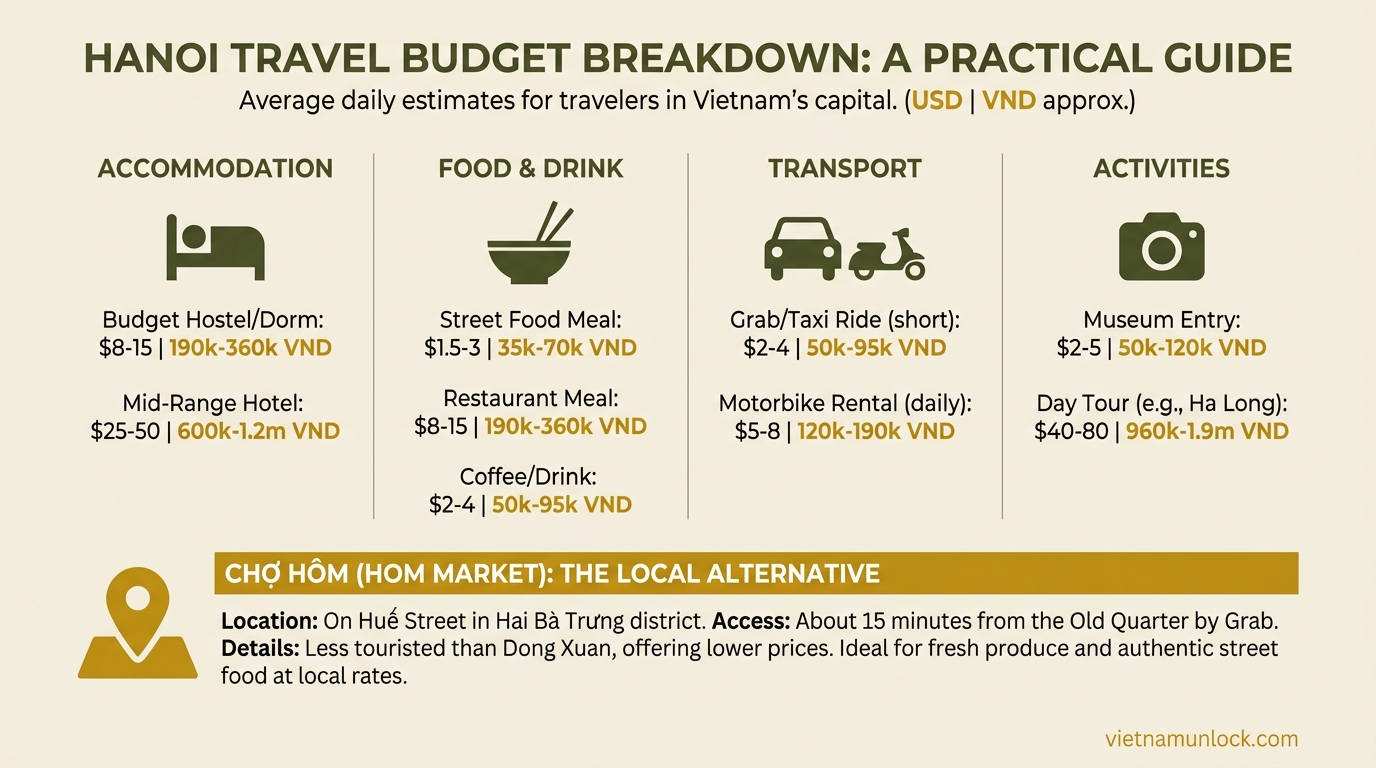
On Huế Street in Hai Bà Trưng district, about 15 minutes from the Old Quarter by Grab. Less touristed than Dong Xuan, lower prices, better for fresh produce and the kind of street food that costs less because no tourist has taken a photograph of it yet.
Street BBQ skewers near the market entrance: 80,000 VND (~$3.20) for five pieces. Pho at the stalls inside: 40,000–50,000 VND (~$1.60–2). The golden hour at the west entrance between 4–6pm hits the food stalls in a way that makes everything look better than it already tastes.
One documented pattern from 2025–2026: stomach issues from pre-prepped condiments sitting at room temperature in a handful of food stalls here. Hot food, cooked in front of you: fine. Items that have been sitting in the heat: use judgment and eat where there’s clearly high turnover.
The Unnamed Markets Worth Finding
Behind 12 Nguyễn Hữu Huân in the Old Quarter (21.0312° N, 105.8521° E) — there’s a small wet market in an alley that local expats use for eggs at 10,000 VND (~$0.40) each. No signage, no tourists, two or three vendors with baskets. Go early, be low-key, don’t photograph the vendors without asking.
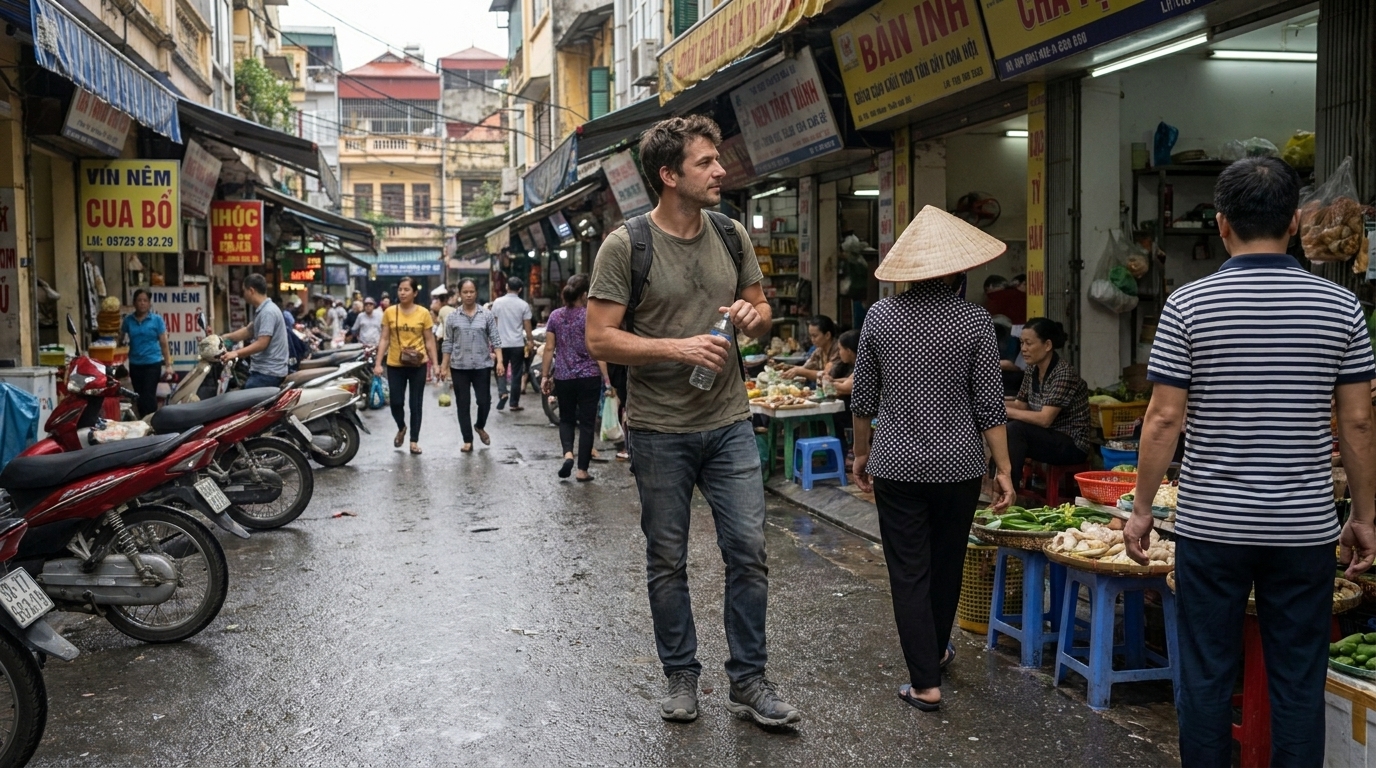
There’s also an alley off Hàng Bông Street where a no-name grill operates under a blue tarp — squid at 60,000 VND (~$2.40) per dozen, repeat locals only, plastic stools on uneven concrete, the grill smoke hanging in the air in a way that gets into your jacket and stays there for two days. This is the one I’d take a friend to first. The Hanoi street food guide has more spots like this that most tourists walk past without knowing.
↗Insider Tip
The expat trick for Dong Xuan pricing: pay in 50,000 VND notes. Vendors have to make change, which forces them to acknowledge the fair price and makes inflated bills harder to justify. It sounds petty but it genuinely works at fabric and clothing stalls.
How to Negotiate Without Being Annoying About It
Haggling in Hanoi markets is expected and normal, but there’s a tone difference between negotiating and being aggressive. What works:
Ask the price first, always. “Bao nhiêu tiền?” (bow nyew tyen). Get the number before you pick anything up. Once you’re holding it, the dynamic changes.
Counter at 60–70% of the ask. Not 30%. Items with no price tag in tourist markets are quoted at 2x fair — so 70% of the quote is usually close to the real price. Walking away at 70% of the ask usually results in a counter-offer from the vendor before you reach the next stall.
Say đắt quá (dak kwa — “too expensive”) with a smile. The smile matters. Aggressive haggling makes both parties feel bad and produces worse results. Vietnamese vendors deal with hundreds of tourists per day and can read tone immediately.
Don’t haggle over street food. The 40,000 VND bowl of pho is already priced fairly. Haggling over food is considered rude. The line is: goods and souvenirs, yes. Food, no.
Market Logistics: Getting There and When
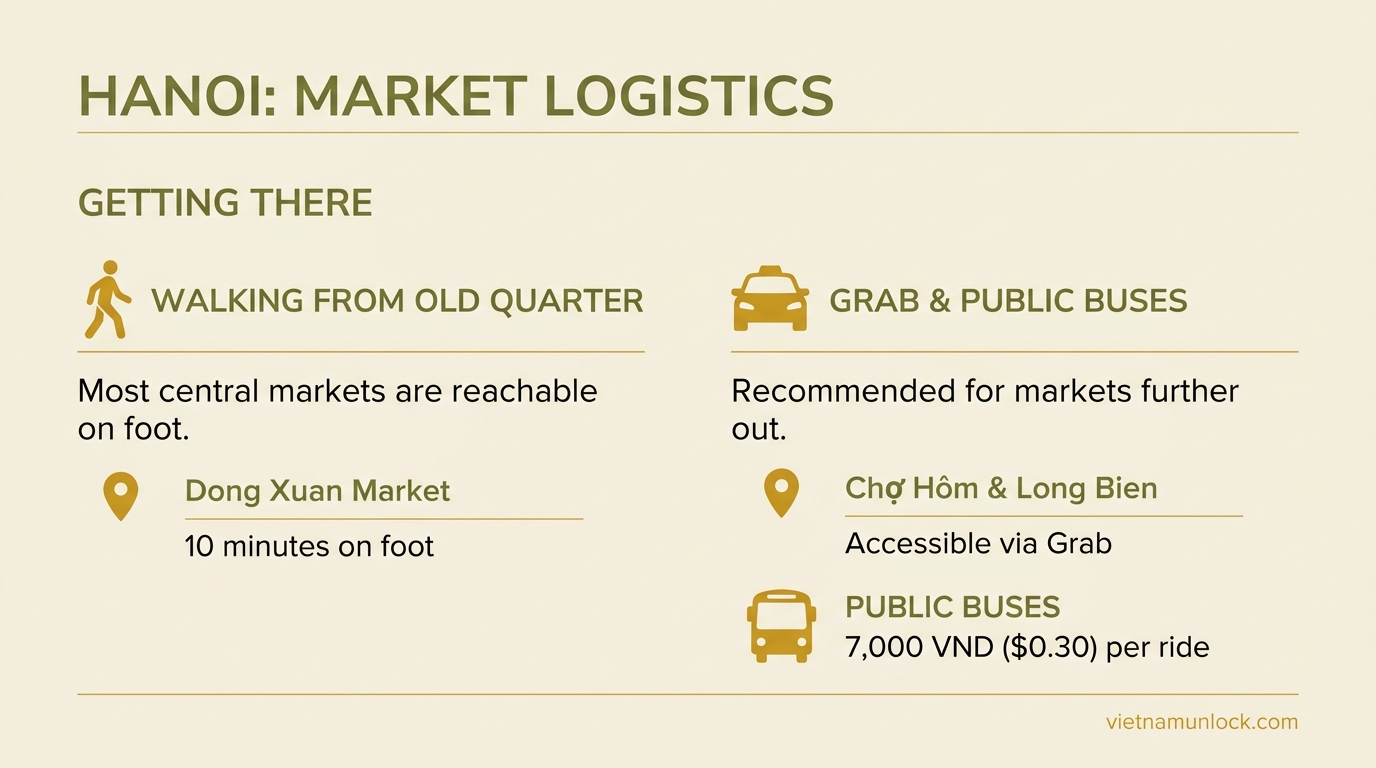
Most Hanoi markets are walkable from the Old Quarter (Dong Xuan is 10 minutes on foot) or reachable by Grab for Chợ Hôm and Long Bien. Public buses run at 7,000 VND (~$0.30) per ride but routes aren’t intuitive. The full things to do in Hanoi guide maps transit routes and clusters activities around the Old Quarter for efficient mornings.
Best overall timing: 6–9am for Dong Xuan and Chợ Hôm, 5am for Long Bien, Friday–Sunday evenings for the Night Market. Avoid Dong Xuan between 11am–2pm — the heat and crowds are at maximum and the prices are at their least honest.
12Go covers most Vietnam routes — sleeper buses, trains, and island ferries. Compare schedules and book in advance during peak season (Dec–Feb, Jun–Aug).
If the Night Market falls on your itinerary, pair it with an early-morning coffee walk through the Hanoi coffee scene — the contrast between the empty, mist-quiet streets at 7am and the three-street chaos at 9pm is one of the city’s more interesting double-features.
What Travelers Actually Say (Consensus 2025–2026)
The Reddit and TripAdvisor split on Hanoi markets is consistent: people who went early loved it, people who went midday or expected a curated shopping experience were disappointed.
“Hit Dong Xuan yesterday, scored a tailor-made ao dai for 1.2M VND ($48) at stall #45, perfect fit in 2 hours. Crowded but no issues.” — u/FreshFromHanoi, r/VietnamTravel, Jan 2026
“Everyone says Hanoi markets are a must, but honestly… Dong Xuan was a disappointing tourist trap, overpriced junk, same as any Asian market.” — u/SkepticalTraveler, r/VietnamTravel, Nov 2025
Both reviews are accurate — they just described different hours of the same market. The 6am Dong Xuan and the noon Dong Xuan are functionally different experiences. This is the only thing the guides consistently get wrong by not specifying it.
Frequently Asked Questions
What should I buy at Dong Xuan Market?
Hanoi’s market scene is one of the genuinely good things about spending time in this city — not because the deals are exceptional (they’re fine) but because the markets are where the city’s actual logistics happen. The wholesale activity at dawn, the neighborhood wet markets before breakfast, the Night Market as a Friday evening ritual for half the Old Quarter.