Last updated: May 2026 — Entry fees, accommodation prices, and Sunday market timing verified
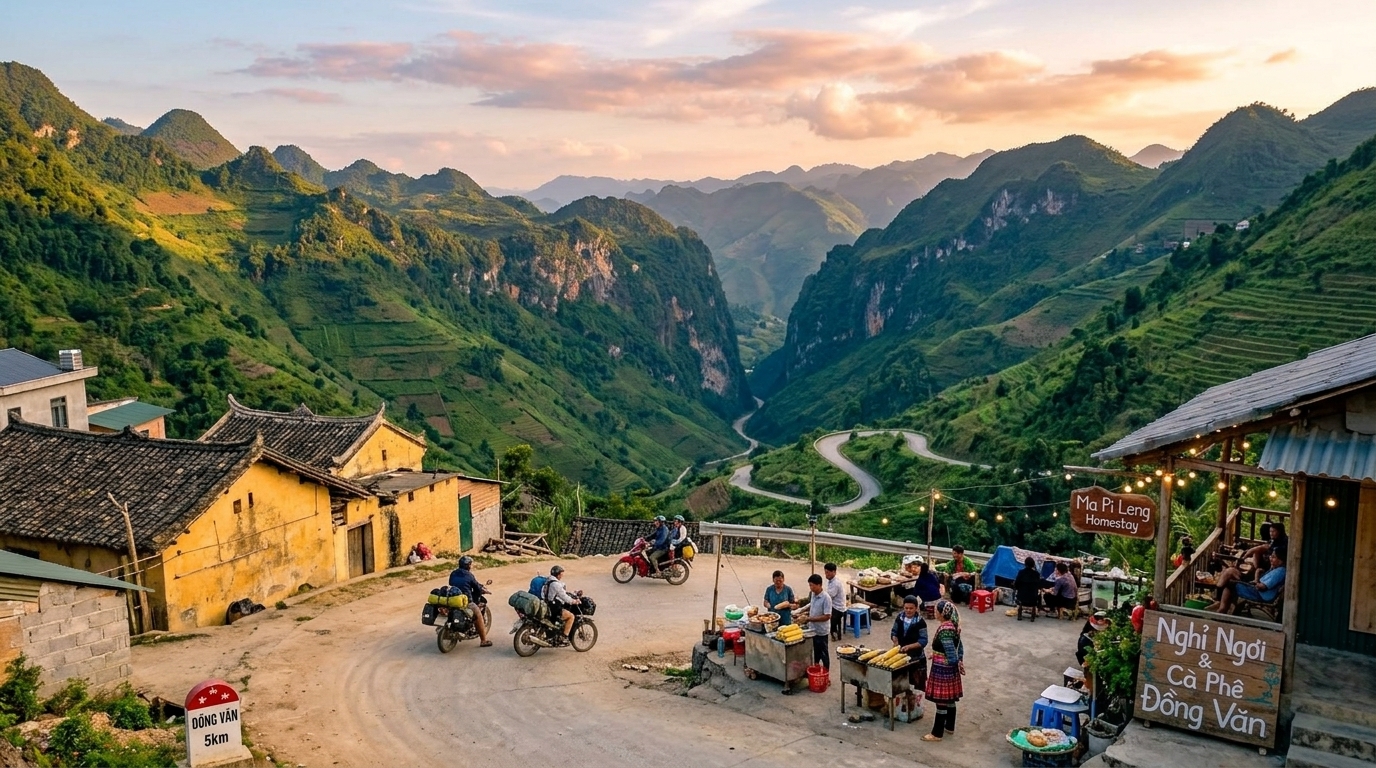
That’s roughly the atmosphere you get when you arrive in Dong Van today. Not manufactured heritage — the real thing, a little rough at the edges, completely worth staying overnight instead of pushing straight through to Meo Vac.
Where Dong Van Sits on the Loop
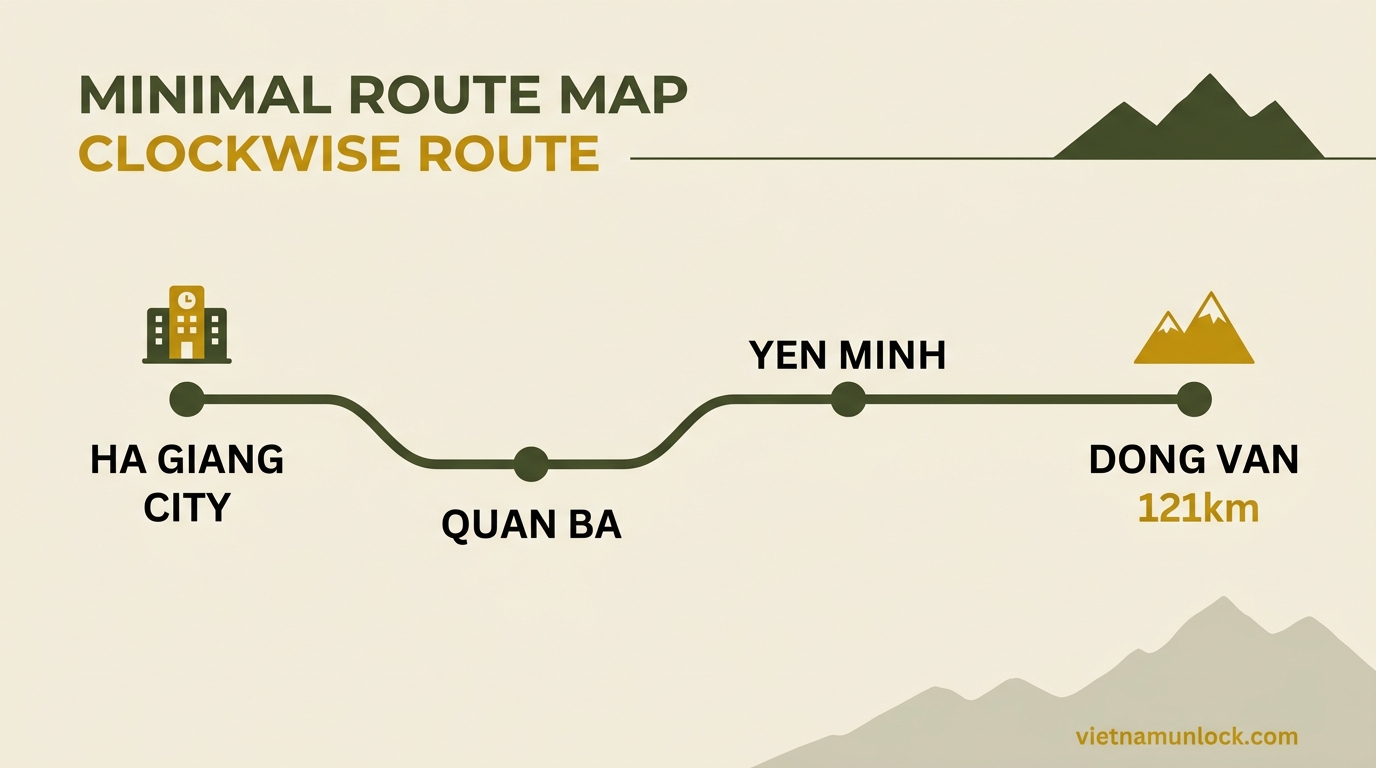
Dong Van is the end of Day 1 on the classic clockwise route — 121km from Ha Giang City via Quan Ba and Yen Minh. It sits at 1,600 meters elevation on the Dong Van Karst Plateau UNESCO Global Geopark, which covers roughly 2,300 square kilometers of limestone karst in the far north.
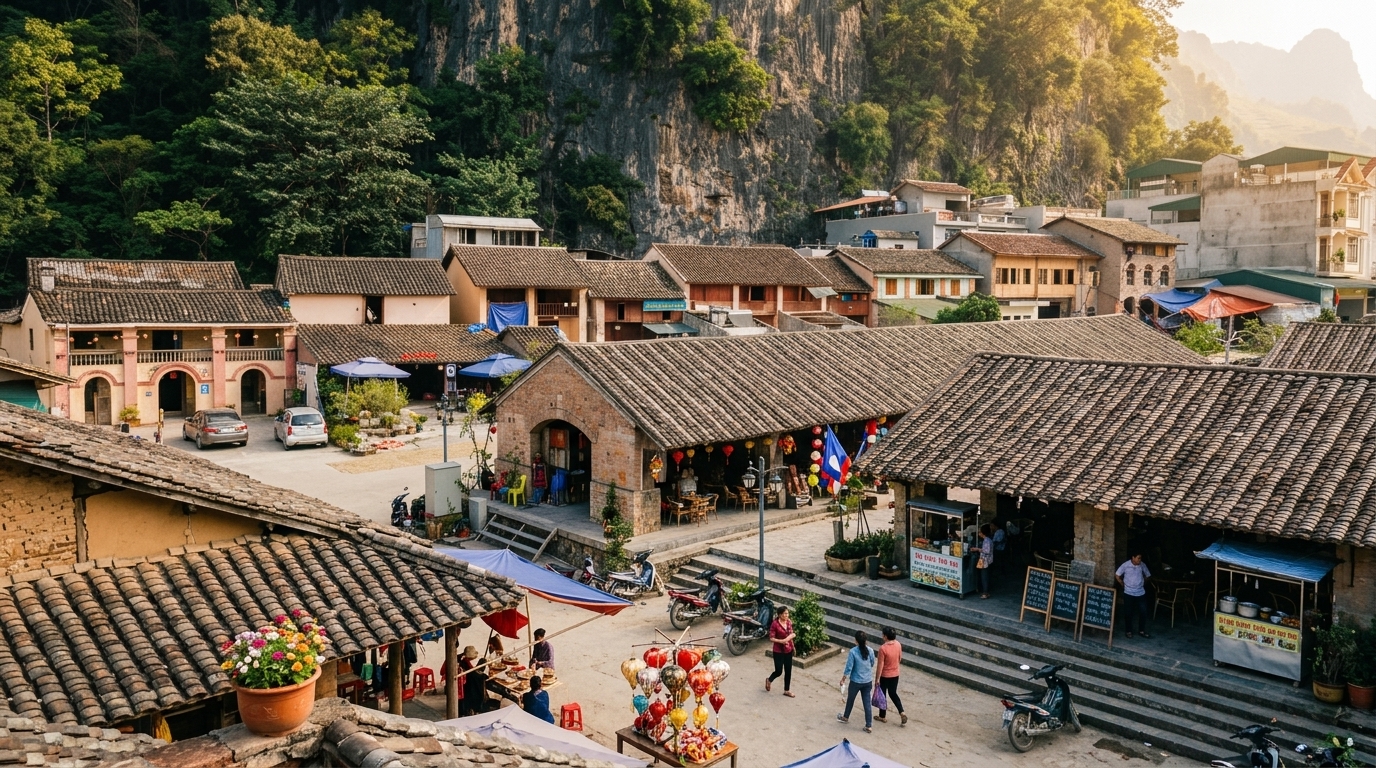
The town itself is small — maybe 3,000 people in the urban center, though the district population is larger when you count the surrounding H’mong and Lo Lo villages. The old town sits in a narrow valley hemmed by karst peaks, with the Sunday market spilling out from the central square each week.
The Old Town and Why There’s an Entry Fee
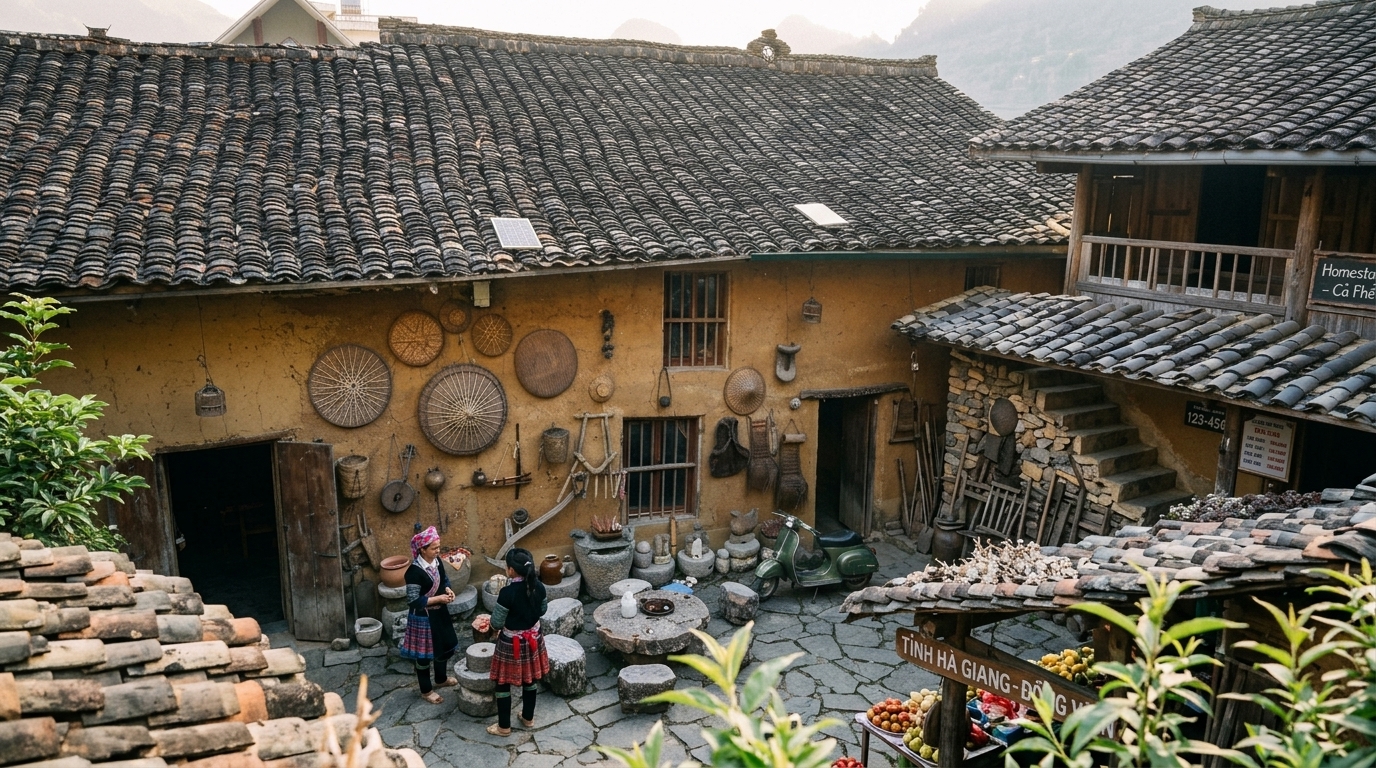
Dong Van’s old town (Phố Cổ) is a cluster of French colonial shophouses from the early 20th century — stone and wood construction, curved tile roofs, a few facades with colonial detailing still intact. The Vietnamese government designated it a national heritage site, which means: 50,000 VND (~$1.90) entry fee, collected at a small booth at the main entrance.
I didn’t know about this fee the first time. I rolled in on my motorbike, parked, walked toward the old quarter, and got stopped by a person sitting at a card table with a receipt book. Pay here or don’t enter. It wasn’t a scam — there’s a government sign, you get an official receipt — but it’s not prominently advertised in most loop guides.
The fee covers the whole old town, no time limit. The main commercial street has shops selling H’mong fabric, silver jewelry, and rượu ngô (say: roo-oh ngoh — corn wine). Some shophouses have been renovated into cafes and small restaurants. A few are still working as family homes, unchanged in the way that makes you feel like a tourist, which you are.
Best time to be in the old town: early morning (6–8am) before the day-tripper crowds, or late afternoon when the light hits the karst cliffs behind the town.
The Sunday Market
The Dong Van Sunday market is one of the main reasons people time their loops to arrive on Saturday night. It’s genuinely unlike the markets in the lowlands — this is a functioning trading market, not a performance for visitors, though visitors are definitely there now.
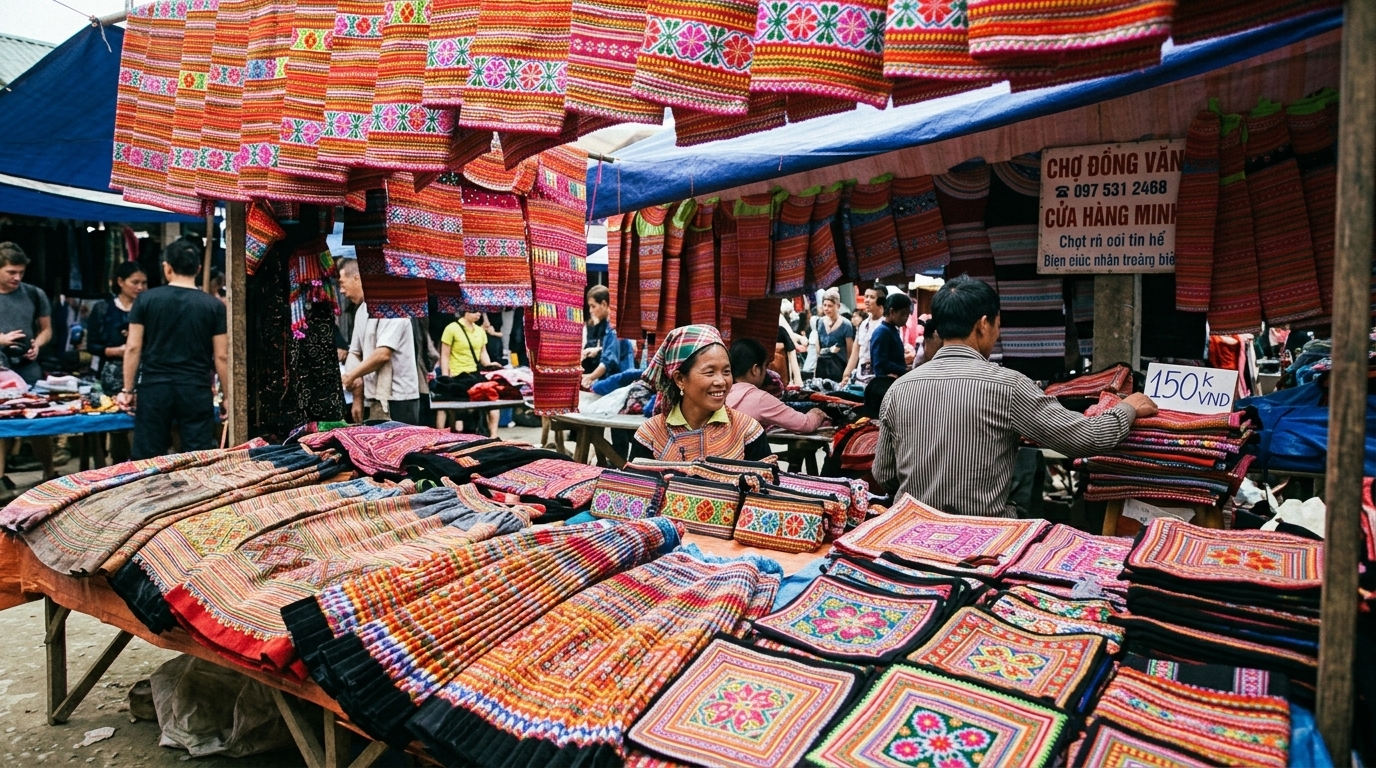
H’mong, Lo Lo, Pu Peo, and Giay people come down from the surrounding hills starting at 6am. They bring agricultural goods, livestock, hand-woven fabric, and silver. The food section has thắng cố (say: tang co — horse meat stew, a H’mong specialty), corn wine in hand-blown glass jugs, and xôi ngũ sắc (five-color sticky rice). By 10am the market is at full capacity. By noon it starts winding down.
The market has gotten more touristic over the past few years — there are more souvenir stalls near the entrance, and the traditional crafts section has moved to make room for vendors who’ve figured out what foreigners want to buy. The core of it is still real, especially if you get there before 8am.
If you’re not arriving on a Saturday or Sunday: the daily market in the town center is much smaller but still worth a quick look. Thắng cố is available at Nhà hàng Thanh Phương on Đường Hạnh Phúc near the market.
Day Trips from Dong Van
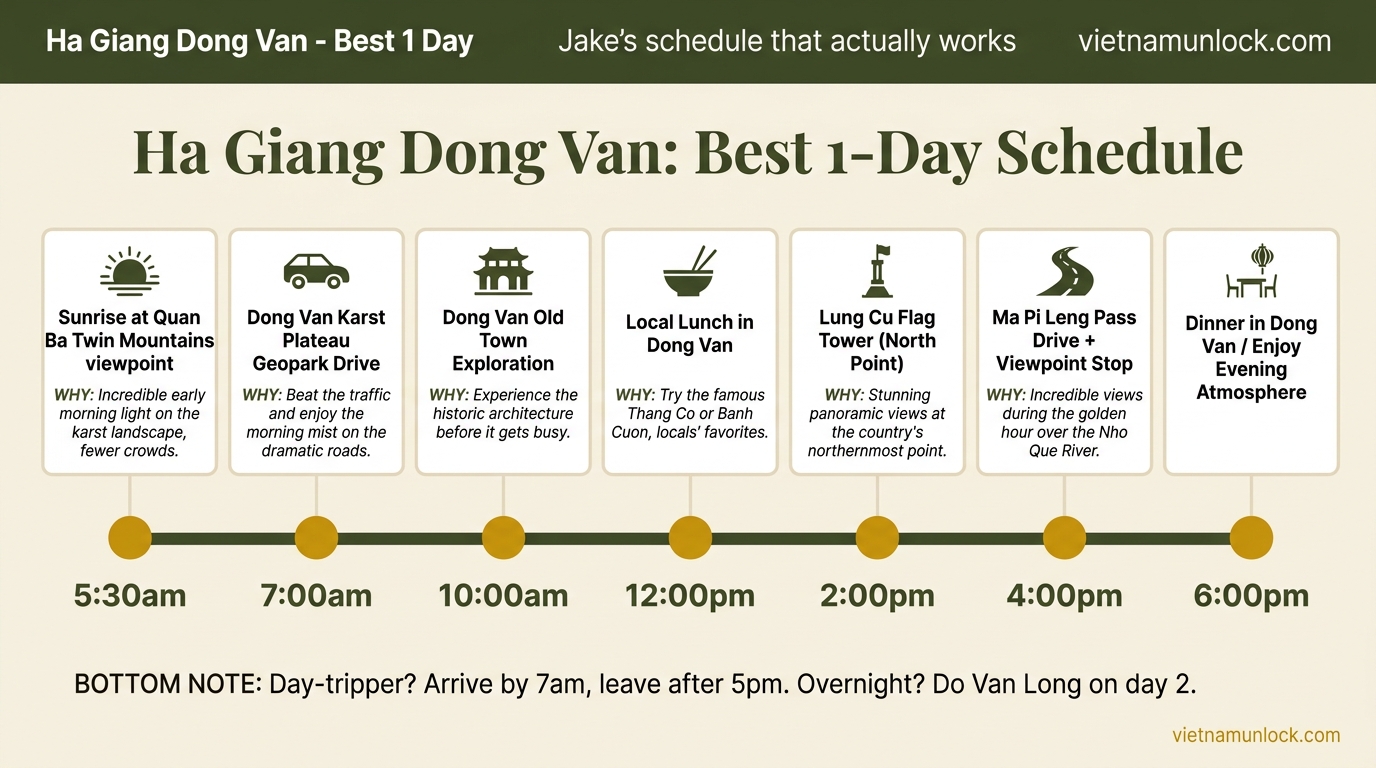
Lung Cu Flag Tower (24km north, 1.5–2 hours return)
Vietnam’s northernmost point, marked by a large national flag on a hill tower. The road from Dong Van runs through H’mong villages and past more karst landscape — it’s a good road, paved, and the detour is worth doing if you have time before leaving for Meo Vac.
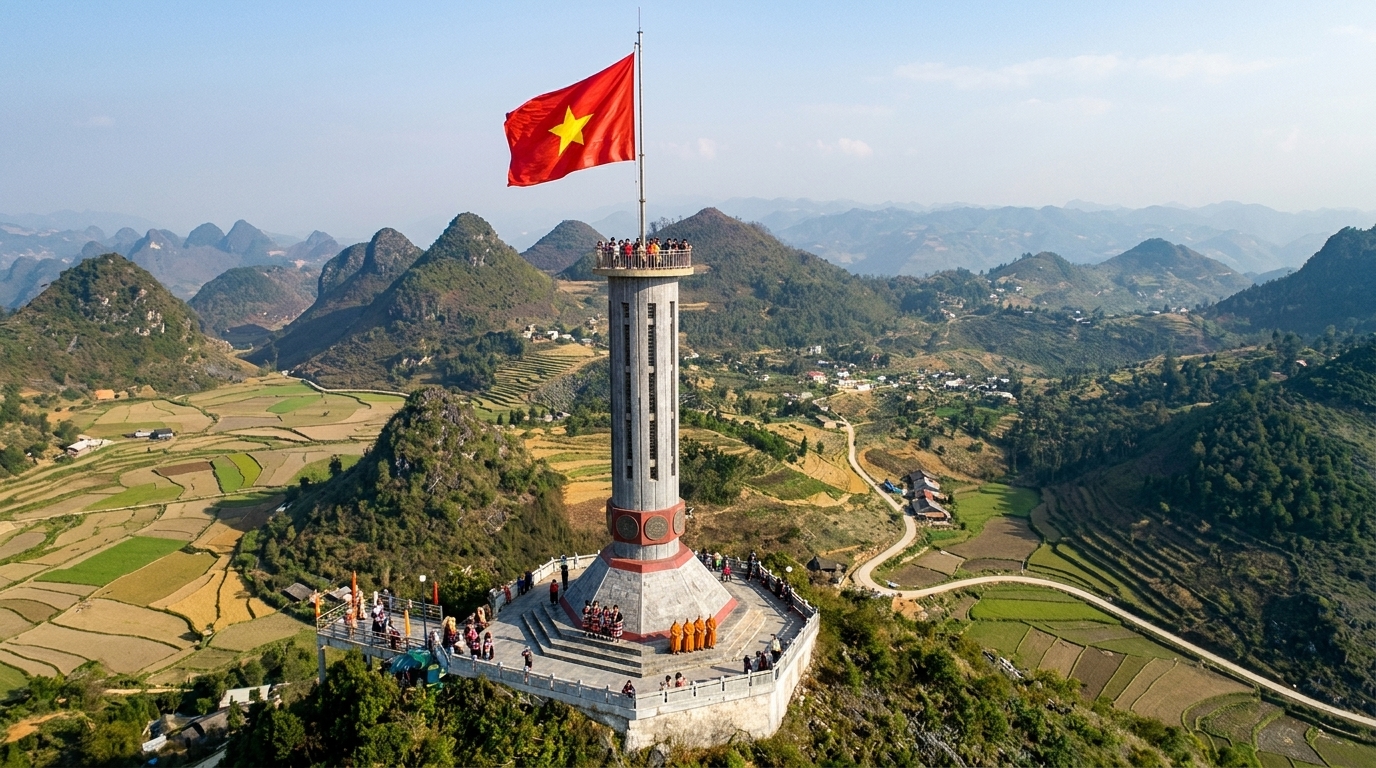
Entry fee: 25,000 VND (~$0.95). The tower itself is modest; what you’re really going for is the view from the hill and the bragging rights. Go in the morning before the organized tour groups from Ha Giang City arrive. There’s a small market near the base with women selling embroidered goods — if you’re buying H’mong crafts anywhere, this is a better price point than the tourist stalls in the old town.
Klook has the widest selection for Vietnam and is usually the cheapest. KKday is strong on day trips and local experiences.
he palace of Vuong Chinh Duc, the H’mong “King” who controlled opium trade and relations with both the French and Chinese for decades in the early 20th century. The compound is a mix of H’mong and Chinese architectural styles — a large walled estate with multiple buildings around a central courtyard. Entry is 20,000 VND (~$0.75).
The palace is often combined with the Lung Cu detour — people do both in an extended morning before the Ma Pi Leng crossing. Budget 45 minutes for the palace itself. The audio guide is available in English but adds little to what you can see for yourself.
Sung La Valley (35km south, on the way back toward Yen Minh)
If you’re doing the anti-clockwise route, you’ll pass Sung La on Day 1. On the clockwise route, Sung La is between Yen Minh and Dong Van — you pass it on the way in. The valley has H’mong stone-wall terraces, bucolic homestay villages, and is the filming location for the 2006 film “Chuyện của Pao” (Pao’s Story). Entry to Pao’s House: 10,000 VND (~$0.40).
Dong Van At a Glance
What Dong Van Actually Looks Like Off-Season
Most photos of Dong Van are from November — buckwheat flowers against limestone peaks, perfect golden hour light, and enough photographers that you are never not in someone else’s frame. The town looks completely different in March: maybe ten other riders, the old quarter almost to yourself, the same stone streets but a different kind of quiet. Neither is wrong. November is genuinely spectacular. March is when the place feels like what it actually is.
The old town entry fee is 50,000 VND (~$1.90) and you pay it at a small booth before the main archway. It is not widely advertised; you just get stopped and asked for it. Some jeep tours include it in their package — check before paying again. The walls and buildings inside are the real thing: French administrative buildings from the early 1900s, Chinese merchant houses, H’Mong shopfronts. The architecture is quiet and genuine in a way that most UNESCO old towns in Vietnam are not anymore.
Where to Eat in Dong Van
The old town has a handful of restaurants that run the range from local H’mong food to tourist-friendly Vietnamese standards.
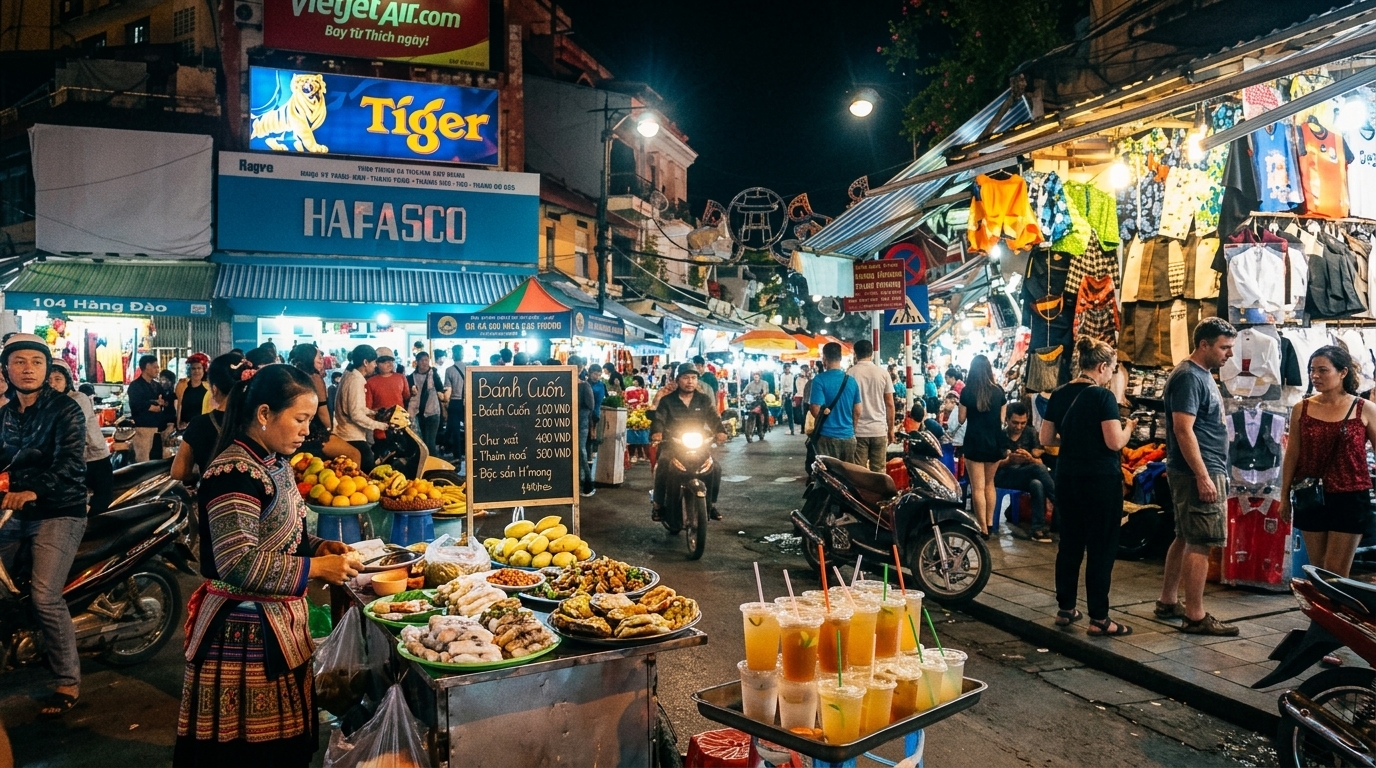
Nhà hàng Thanh Phương — 17 Đường Hạnh Phúc, near the market: The reliable choice for thắng cố and rượu ngô. Not fancy, plastic stools and fluorescent light, but the horse meat stew is the real version and the corn wine is local. 50,000–100,000 VND (~$2–4) a bowl.
Old Quarter restaurants on the main drag: Several small places serve cơm (rice dishes) and phở. Prices are higher than Yen Minh — 60,000–120,000 VND (~$2.30–4.60) for a main — because you’re in tourist town now. The food is fine, not exceptional.
Morning: the best option is the market food stalls if you’re there on Sunday. Otherwise, the coffee shops near the old town gate open early and serve bánh mì and phở.
Where to Stay in Dong Van
Stay in the old town or within a few minutes’ walk of it. The accommodation further from the center is mostly aimed at domestic tour groups and lacks atmosphere.
Ancient Town 29 Phố Cổ — in the old town: 400,000–600,000 VND/night (~$15–23). Modern rooms in a building adjacent to the heritage shophouses, small garden, close to everything. Books out fast on Saturday nights before the Sunday market.
oors are worth the slight distance from the old town.
Book ahead for Saturday nights. The loop has gotten more popular and Dong Van accommodation fills up. Book through Booking.com or contact the hostels directly via the phone numbers on Google Maps — some places aren’t on the main booking platforms.
Practical Information
ATM: There is an ATM in Dong Van — confirm the location when you arrive in town as it moves occasionally. Yen Minh (54km back toward Ha Giang City) has more reliable ATM access. Bring enough cash to cover Dong Van and Meo Vac before leaving Yen Minh.
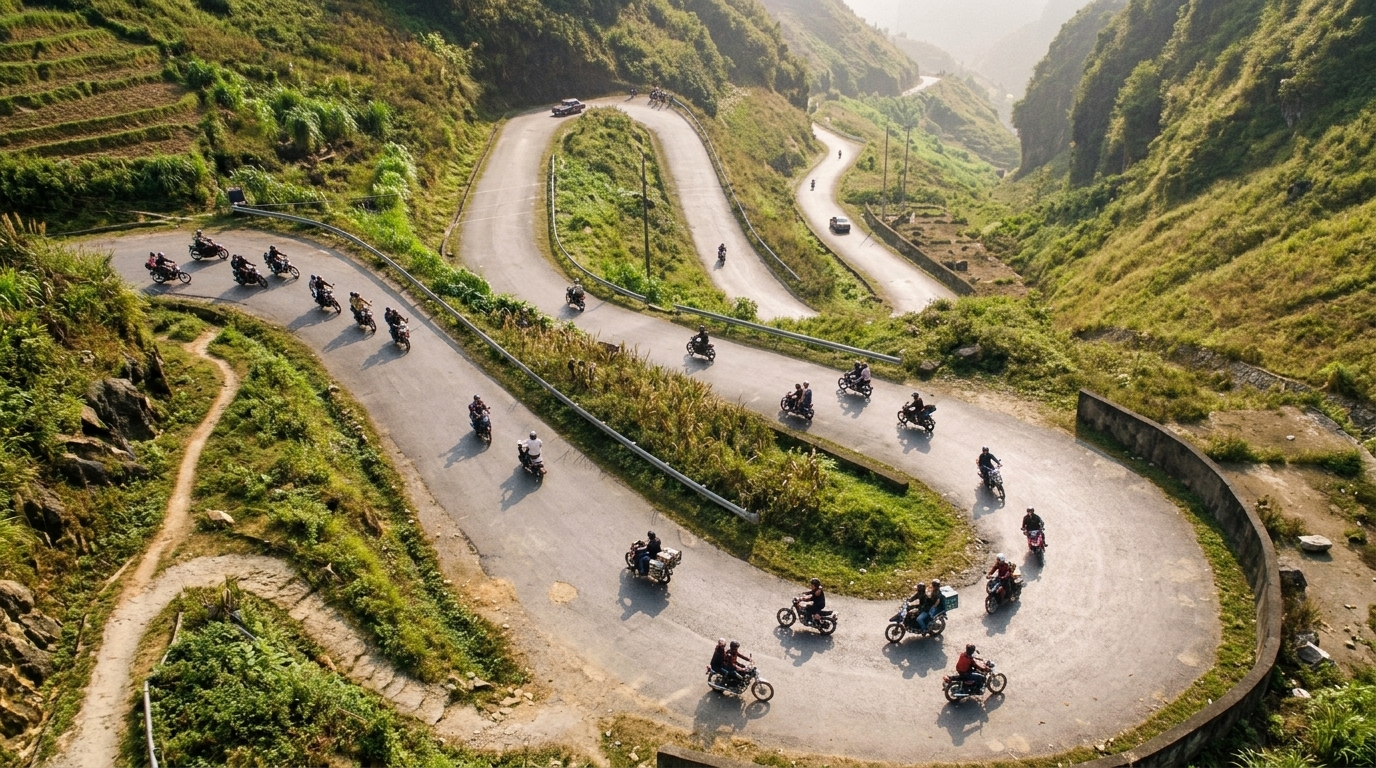
Fuel: Available in Dong Van. Don’t arrive on empty — the karst plateau between Yen Minh and Dong Van has no fuel stops.
Phone signal: Patchy in Dong Van itself, depending on your network. Viettel has the most consistent coverage. Download offline maps before leaving Yen Minh.
Temperature: At 1,600 meters, Dong Van is noticeably colder than Ha Giang City. Winter months (November–February) can drop to single digits at night. Bring a layer even if you’re visiting in spring or autumn.
Getting to Dong Van
Most riders arrive by motorbike as part of the loop. The standard clockwise route is 121km from Ha Giang City (Day 1). There is a public bus service from Ha Giang City to Dong Van that runs most days — useful if you’re not riding but want to reach the town without a tour.
If you’re planning to do just the Dong Van section without the full loop, you can take the overnight bus from Hanoi to Ha Giang City and then hire a local easy rider or take the public bus to Dong Van. This is not the typical way people do it but it’s possible. The Hanoi to Ha Giang transport guide covers every bus option in detail.
12Go covers most Vietnam routes — sleeper buses, trains, and island ferries. Compare schedules and book in advance during peak season (Dec–Feb, Jun–Aug).
What Travelers Actually Say: The Consensus
The consistent feedback from return visitors: Dong Van is the night that makes the loop feel real. Ha Giang City is a logistics hub. Dong Van is where you arrive, park the bike on a stone street, walk into a French shophouse that’s been turned into a local restaurant, and realize you’re somewhere genuinely remote.
The entry fee surprise is one of the most consistent complaints — not because 50,000 VND is expensive, but because no one mentioned it. Now you know. Have the cash ready and don’t be the person who argues about it with the person at the card table.
The November crowd situation at the Sunday market mirrors the Meo Vac problem: the weekday market in a non-market month is actually quieter and more authentic than the peak Sunday experience. Multiple experienced loop riders report enjoying Dong Van more on their second visit (in March or April) than their first (November) — fewer people, same architecture, same food.
Insider Tip
The best meal in Dong Van isn’t in the old town restaurants — it’s thắng cố from Nhà hàng Thanh Phương at 17 Đường Hạnh Phúc with a glass of rượu ngô, before 8am, when the Sunday market stalls around you are still waking up. If you’ve never had corn wine before 8am, this is the right occasion.
Two things worth sorting before you land: a Vietnam eSIM so you have data the moment you clear customs, and travel insurance — medical costs for uninsured foreigners in Vietnam are significant.
Airalo eSIMs activate instantly. Buy before departure — airport SIM queues in Vietnam can take 30+ minutes.
FAQ
Is there an entry fee for Dong Van old town?
Quick Answer
Yes — 50,000 VND (~$1.90), collected at a booth at the main entrance to the old quarter. You get an official receipt. The fee covers the whole old town with no time limit. It’s not advertised prominently — carry cash.
When is the Dong Van Sunday market?
Quick Answer
Every Sunday, starting from around 6am. Peak time is 8–11am when all the ethnic minority traders have arrived from surrounding villages. Winds down by noon. Arrive before 8am to see the real market before tour groups show up.
How far is Lung Cu Flag Tower from Dong Van?
24km north — about 45 minutes each way on the paved road. Entry is 25,000 VND (~$0.95). Most riders do it as a morning detour before heading to Meo Vac. Budget 2 hours total including travel.
Where is the best place to stay in Dong Van?
Ancient Town 29 Phố Cổ and Epic Dong Van Hotel are the most consistent mid-range options, both 400,000–700,000 VND/night (~$15–27). Book ahead for Saturday nights — Dong Van fills up before the Sunday market.
What is thắng cố and where do I try it?
Thắng cố is a H’mong horse meat stew, simmered with organs and spices in a large communal pot. Nhà hàng Thanh Phương at 17 Đường Hạnh Phúc near the market serves it for 50,000–100,000 VND (~$2–4). Sunday market stalls also have it. It’s an acquired taste — the smell of the communal pot is distinctive.
Can I visit Dong Van without doing the full Ha Giang Loop?
Quick Answer
Yes. Take the overnight bus from Hanoi to Ha Giang City (300,000–550,000 VND/~$11–21), then hire a local easy rider or take the public bus to Dong Van. Most travelers combine it with at least the Dong Van → Ma Pi Leng → Meo Vac section rather than backtracking.