Last updated: May 2026 — Imperial City prices and xe ôm rates verified.
Most travelers give it a day and a half. That’s enough to check the boxes. It’s not enough to understand what you’re actually looking at.
This guide covers everything you need for Hue Vietnam: what to see, when to go, where to eat, how to get around, and what to skip.
Hue Vietnam — Quick Facts
Province: Thừa Thiên Huế (say: too-a tee-en hway)
Population: ~360,000 in the city
Position: Central Vietnam, midpoint of the country
Distance from Da Nang: 100 km north (1.5 hr by train)
Distance from Hanoi: 690 km south (12–14 hr overnight train or 1.5 hr flight)
Time zone: GMT+7 (same as all Vietnam)
Currency: VND — 26,355 VND ≈ $1 USD (2026)
Why Hue Is Different From the Rest of Vietnam
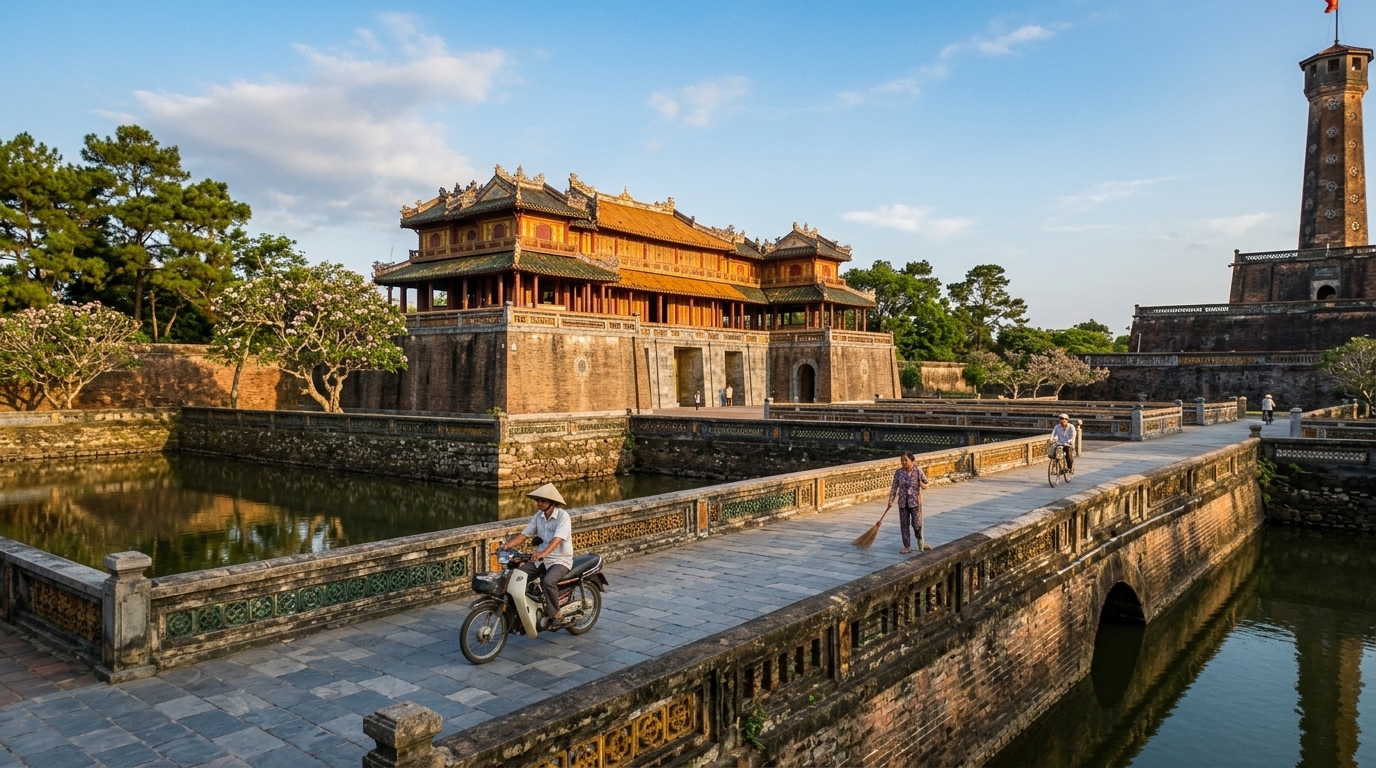
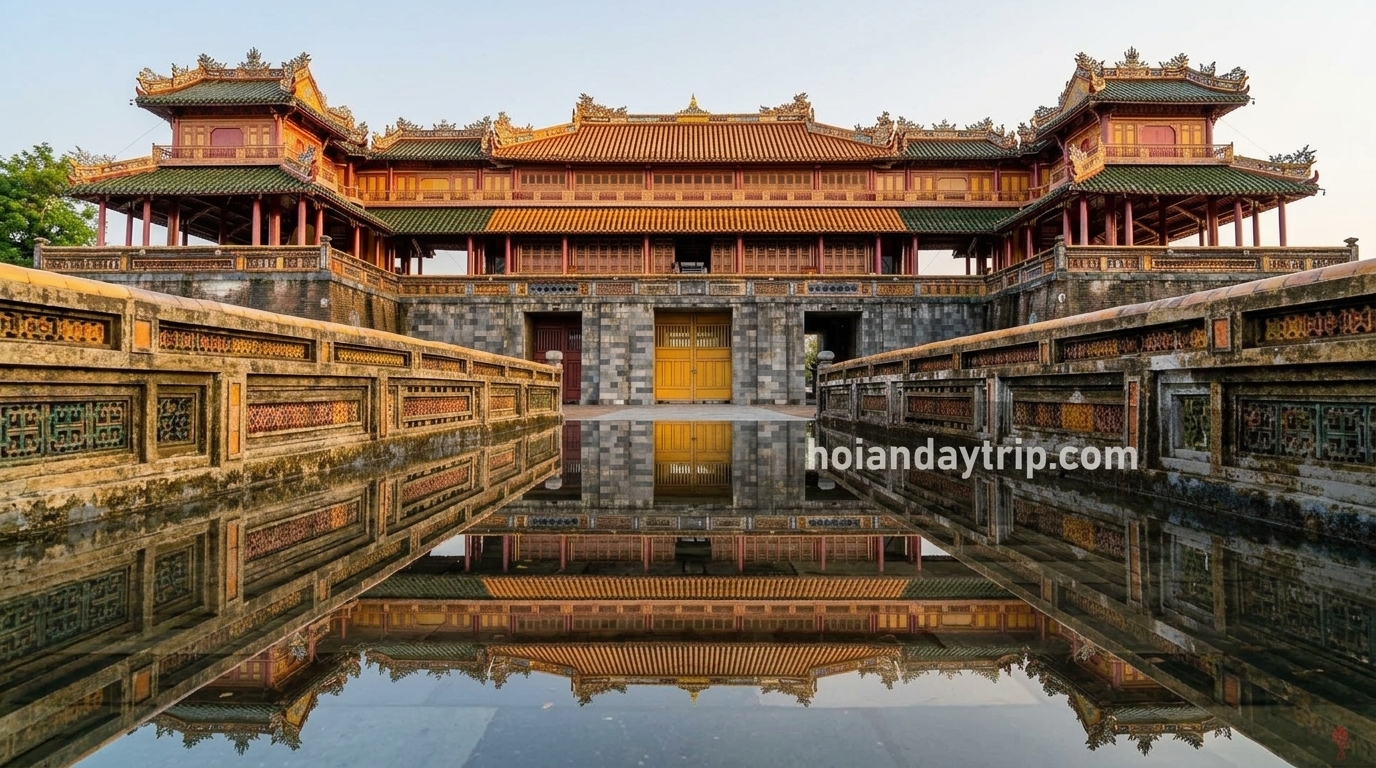
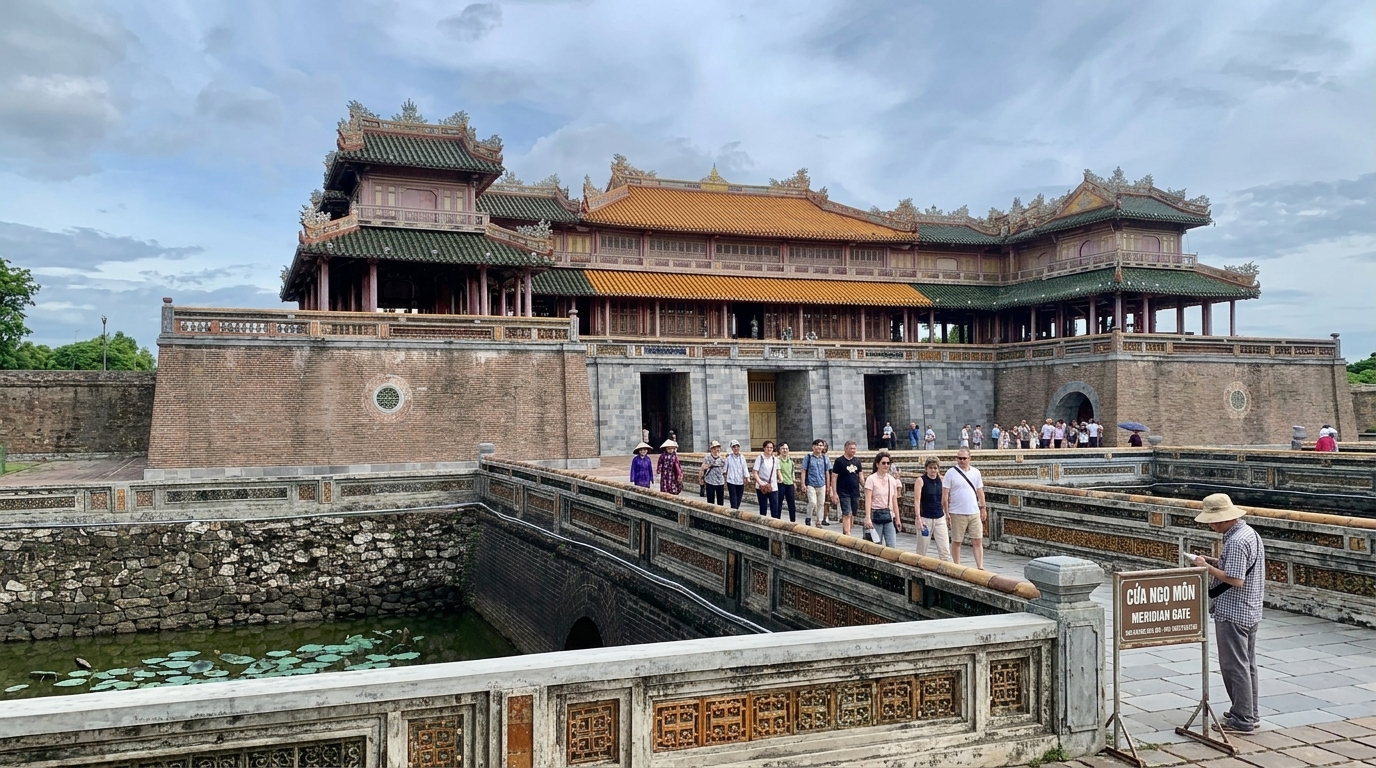
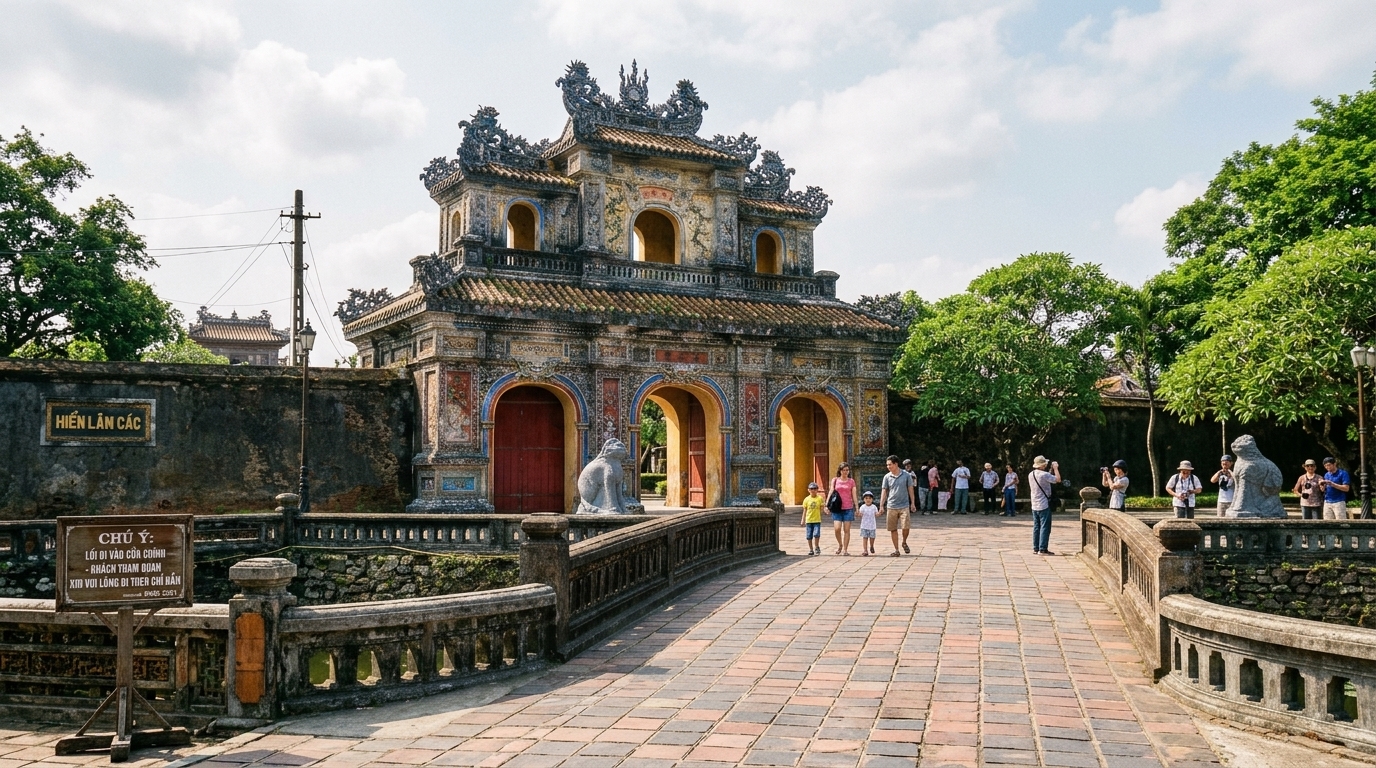
From 1802 to 1945, Hue was the imperial capital of unified Vietnam under the Nguyễn dynasty — the last ruling dynasty before the French and then the Republic took over. For 143 years, the Forbidden Purple City sat inside the Imperial Citadel, housing thirteen emperors and the elaborate court culture that surrounded them.
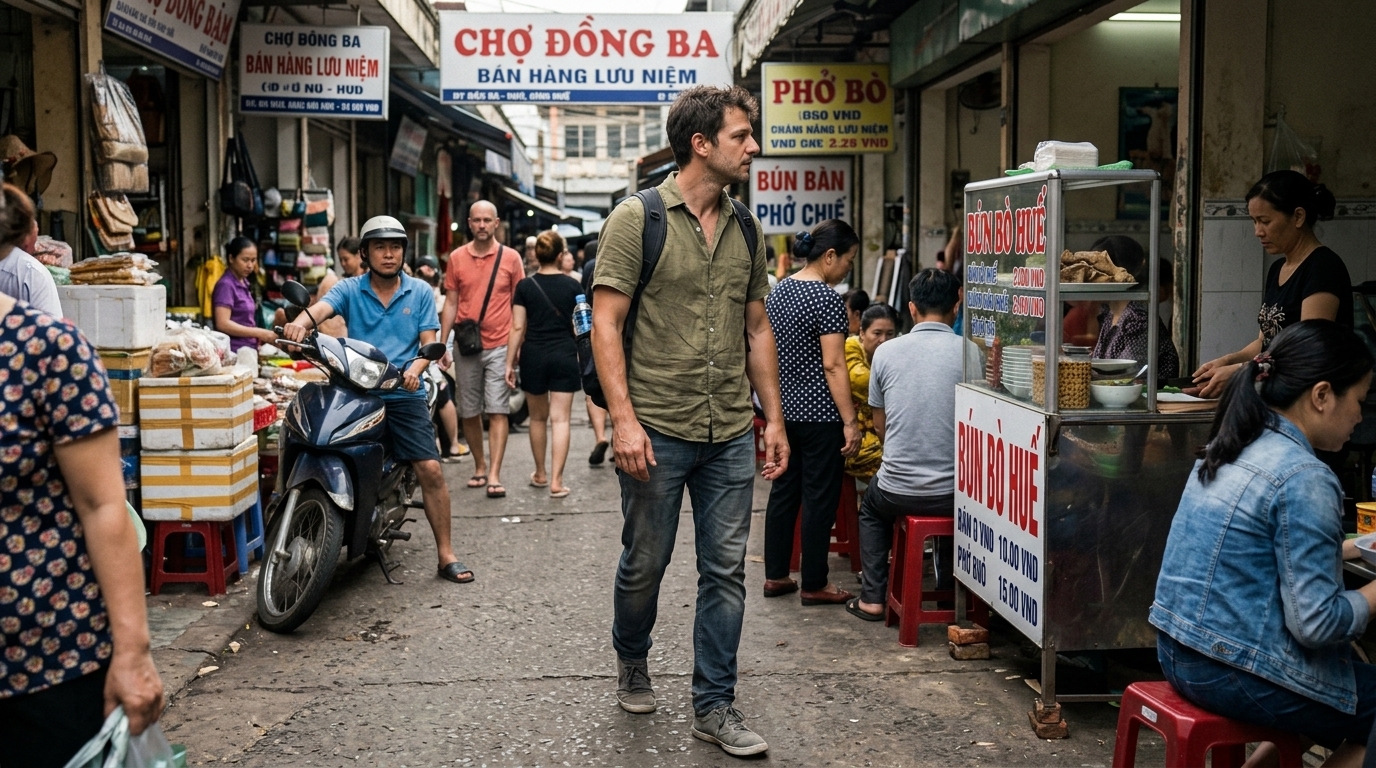
That history didn’t vanish when the capital moved. It seeped into everything: the food (hundreds of intricate small dishes developed for royal meals), the architecture (the royal tombs spread across forested hills south of the city), the Buddhism (more active temples per square kilometer than anywhere in Vietnam), and the people (Hue locals have a reputation for formality and reserve that’s partly court-era conditioning, partly real).
The 1968 Tet Offensive hit Hue harder than anywhere in Vietnam. The city was occupied for 26 days, the fighting was brutal, and significant parts of the Citadel were destroyed. The reconstruction is ongoing. Walking through the Imperial City, you’re walking through both a restoration project and an active wound.
Hue’s Main Attractions — Overview
Everything worth seeing in Hue falls into three clusters:
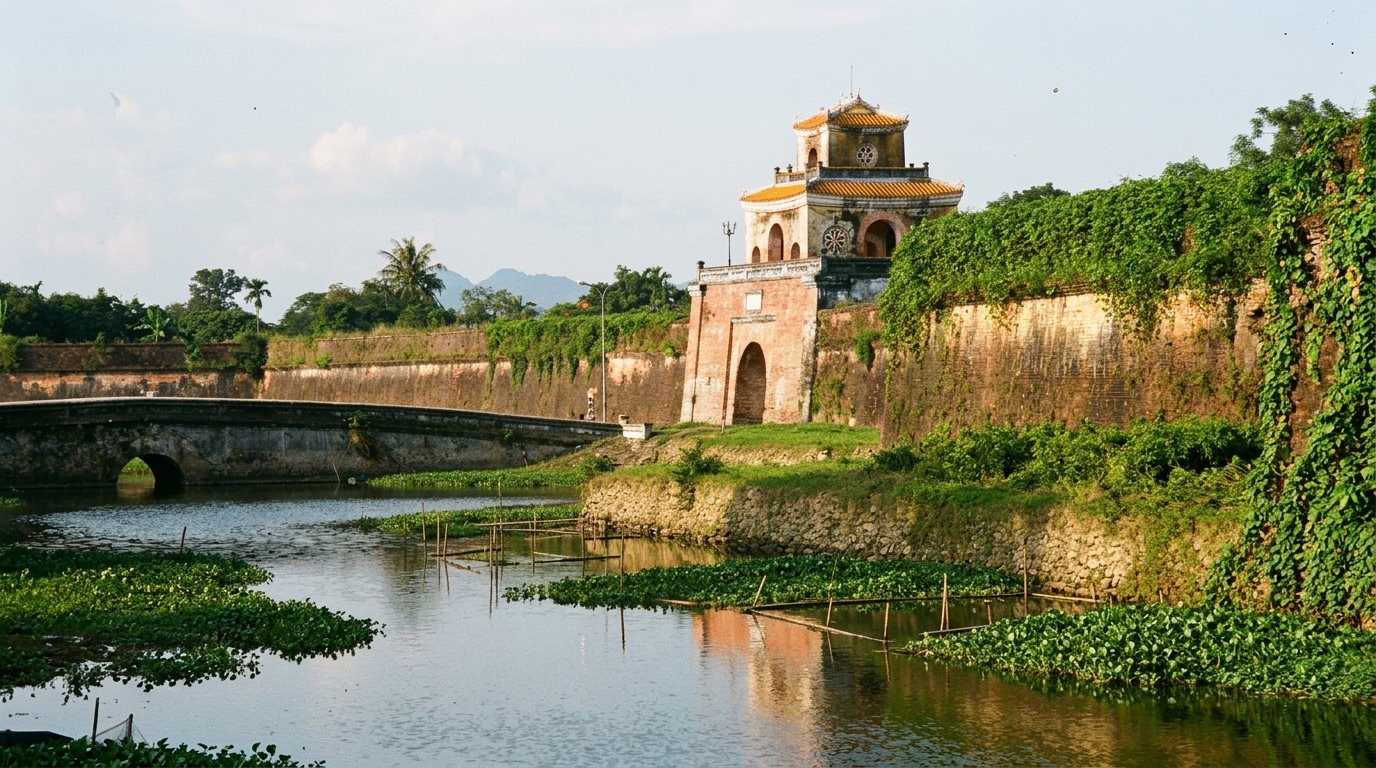
1. The Citadel area (north bank of the Perfume River)
The Imperial City, the Forbidden Purple City ruins, Đông Ba Market, Thien Mu Pagoda (5 km upriver).
2. The royal tombs (south of the city)
Tự Đức, Minh Mạng, Khải Định — the three best, each 5–15 km from the city center by motorbike. Đồng Khánh and Thiệu Trị are smaller and less visited.
3. The Perfume River
Dragon boat rides, the view from Phú Xuân Bridge at dusk, the Vỹ Dạ neighborhood on the east bank.
The full deep dive on what to do is in the Things To Do In Hue Guide. This guide focuses on orientation, practical logistics, and the context that makes the sights make sense.
✓Quick Answer
Hue Vietnam was Vietnam’s imperial capital from 1802 to 1945. Key attractions: the Imperial City (200,000 VND/~$8 entry), three royal tombs (150,000 VND/~$6 each), Thien Mu Pagoda (free), and the Perfume River. Allow 2–3 days minimum. Best time: February–April (dry, mild).
When to Visit Hue Vietnam
Hue has the most volatile weather of any major Vietnam city. It sits in the “rain shadow gap” of central Vietnam, where the Truong Son mountain range and the monsoon system combine to give the city two distinct brutal periods and a narrow window of genuinely good weather. For a full breakdown of every attraction, see the things to do in Hue guide.
February–April: Best months. Dry season at its most reliable. Temperatures 20–28°C. The rice paddies south of the city are green. Tourist crowds start to build in March, but mornings at the Imperial City are still manageable. The Hue Festival (a major cultural event) runs in even-numbered years, typically late April.
May–August: Hot and occasionally rainy. Heat climbs to 35–38°C by July. Humidity is punishing. Not unvisitable, but the Imperial City at noon in August is an endurance test. Go early, go late, avoid 11am–3pm outdoors.
September–November: Typhoon and flood season. Hue floods. Not metaphorically — the Perfume River rises and the lower parts of the city go underwater in bad years. October and November are the worst months. Typhoons regularly hit central Vietnam from September onwards. If you’re in Hue in October and a typhoon warning comes: take it seriously, leave early, don’t wait.
December–January: Cool and damp. Temperatures drop to 15–20°C, persistent drizzle, grey skies. Not ideal for outdoor sightseeing, but it’s quiet, cheap, and the city has a different atmospheric quality — misty and slightly melancholy — that some travelers actually prefer.
Getting to Hue Vietnam
From Da Nang (100 km south)
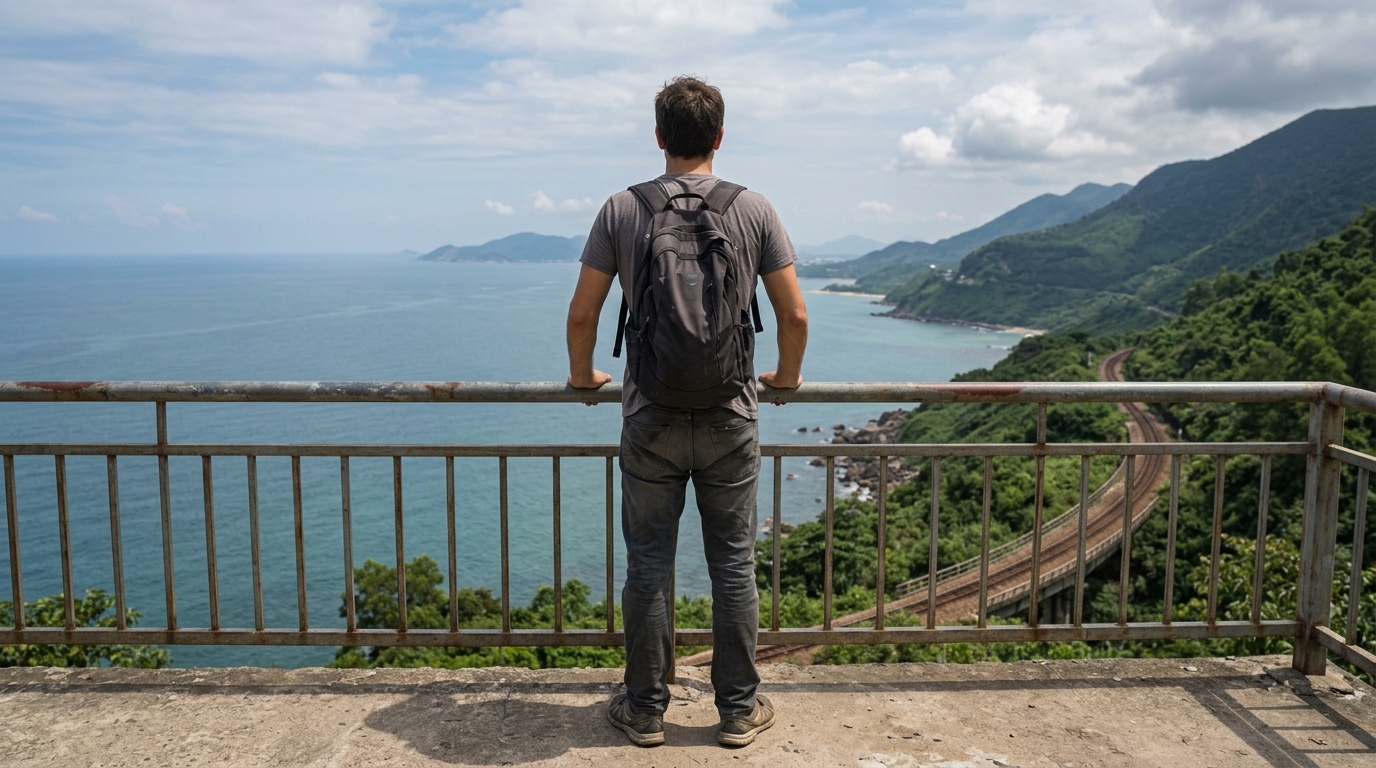
Train is the best option — 70–100 minutes, crosses the Hai Van Pass on a coastal cliff track, 90,000–160,000 VND (~$3.40–$6). Full breakdown in the Da Nang To Hue Guide.
From Hanoi (690 km north)
Overnight train: SE3/SE1 — 12–14 hours, departs Hanoi around 7–9pm, arrives Hue early morning. Soft sleeper: 600,000–900,000 VND (~$23–$34). The journey itself is part of the experience — Reunification Express through central Vietnam is one of the better train journeys in Southeast Asia.
Flight: Vietnam Airlines and VietJet both fly Hanoi–Hue direct, 75 minutes. Prices start from 700,000–1,200,000 VND (~$27–$46) one-way on budget carriers. Phu Bai Airport is 15 km from the city center.
From Saigon/HCMC (1,060 km south)
Flight: 1.5 hours. Most practical option — bus or train from Saigon is 18–20 hours. Check VietJet, Bamboo Airways, Vietnam Airlines. The full route breakdown, train options, and ticket booking tips are in our Da Nang to Hue guide.
Getting Around Hue
Hue is manageable without planning your transport obsessively, but it’s not walkable to the royal tombs. The Citadel and central area you can walk — 20–30 minutes covers most of it. The tombs require a vehicle.
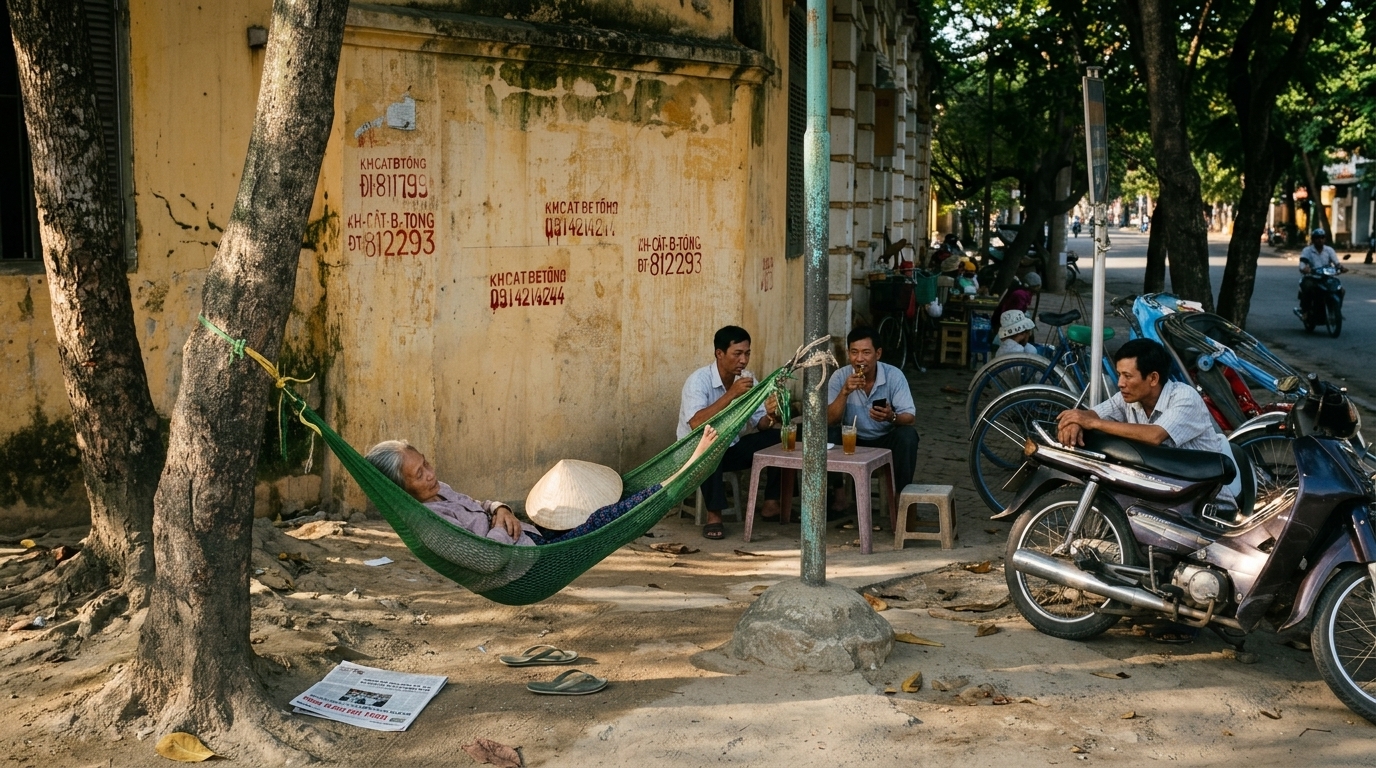
Xe ôm (say: say-ohm, motorbike taxi): The correct way to do the royal tombs. Negotiate a half-day loop (3–4 tombs + Thien Mu Pagoda) for 150,000–250,000 VND (~$6–$9.50) total. Fixed prices only — agree before you go. For this kind of guided loop, xe ôm drivers who do this regularly know the sites better than most official guides.
Grab: Available in Hue since 2020. Reliable for city trips, but Grab drivers won’t always know the tomb roads as well as specialist xe ôm drivers.
Bicycle: The city center and Citadel area are flat and cyclable. The royal tombs are 8–15 km out and involve some hill climbing — doable for fit cyclists, not for casual riders in 35°C heat.
Motorbike rental: 120,000–200,000 VND/day (~$4.50–$8). Good option if you’re a confident rider and want freedom to stop along the Perfume River at your own pace.
12Go covers most Vietnam routes — sleeper buses, trains, and island ferries. Compare schedules and book in advance during peak season (Dec–Feb, Jun–Aug).
Where to Stay in Hue
Hue’s accommodation clusters on both sides of the Perfume River. The north bank (Citadel side) puts you closest to the Imperial City. The south bank (city center) is closer to restaurants, transport, and the tourist infrastructure.
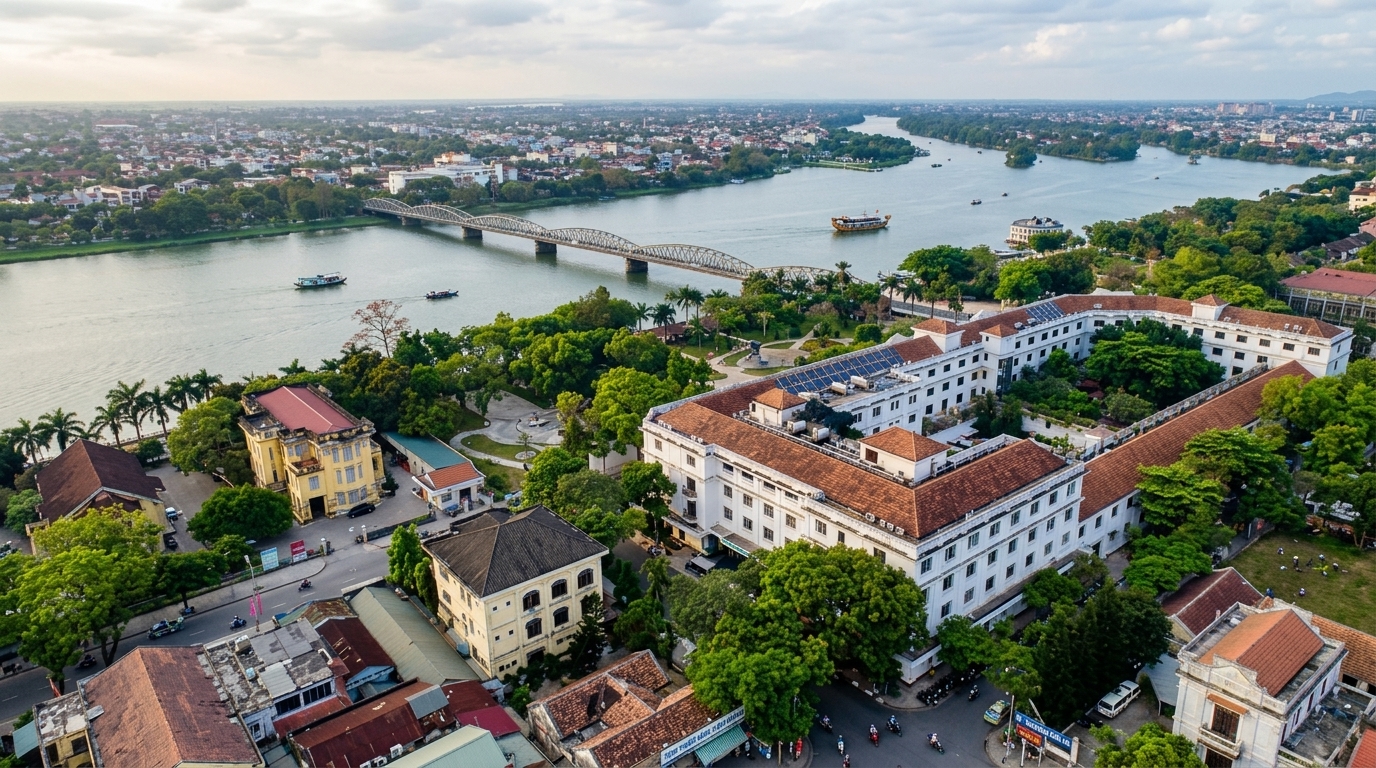
Budget (dormitory / basic private): 150,000–300,000 VND/night (~$6–$11). Several guesthouses along Chu Văn An and Phạm Ngũ Lão streets on the south bank. Basic but clean.
Mid-range: 400,000–800,000 VND/night (~$15–$30). The best value tier in Hue — you get air conditioning, a proper bathroom, sometimes a pool, and still-central location. Check Booking.com for current options; Hue has good mid-range value year-round.
Upscale: La Résidence Hue Hotel & Spa occupies a restored French-colonial villa on the Perfume River and is genuinely one of the best heritage hotels in central Vietnam — if you’re going to splurge once in Vietnam, this is a reasonable choice. Expect 3,000,000–5,000,000 VND/night (~$114–$190).
to walk across; it doesn’t actually matter much.