Updated: May 2026
The honest caveats: Solo means you handle your own problems. Flat tire at kilometer 40 of a rural section — you deal with it. Getting the permit wrong — your problem. Navigation errors — yours. None of these are catastrophic (roadside mechanics exist, the permit office is straightforward, the roads are well-enough marked), but they require more engagement than a handled group experience. If that’s not what you want, hire an Easy Rider guide-driver. If it is, this guide is for you.
The Two Solo Options
Option A: Self-drive — Rent a motorbike in Ha Giang town and navigate yourself. The standard setup: XR150 or similar dual-sport bike, GPS on your phone (Maps.me or Google Maps offline), and the GPX route loaded before you leave. All-in cost: $15–25/day for the bike plus $5–10/day fuel and $10–20/day accommodation. Requires a minimum of comfortable riding experience on manual motorbikes before Ha Giang.
Option B: Easy Rider (xe ôm guide-driver) — You ride pillion on your guide’s motorbike. They drive, navigate, translate, and handle logistics. You focus entirely on the scenery, the culture, and the experience. Cost: $25–40/day depending on the guide’s experience and what’s included. Many Easy Rider guides for Ha Giang are from local ethnic minority communities (Hmong, Tày, Dao) and provide cultural context unavailable in any guidebook.
Option B is not the “easy out” — it’s often the richer experience, particularly for travelers interested in culture over driving. Option A is better if the riding itself is part of what you’re here for.
The Permit: Non-Negotiable
Ha Giang province is a border zone with China. Foreigners require a permit to enter the restricted areas of the loop — specifically Đồng Văn, Mèo Vạc, and the areas near the border. The permit is free, takes about 30 minutes, and is obtained at Ha Giang City Hall (UBND Tỉnh Hà Giang) in Ha Giang town.
What you need: your passport. What you get: a stamp in your passport permitting travel in the restricted zone for a specified period (usually 3–5 days, extendable). Process: go to the foreign affairs desk at City Hall, show your passport, fill out a form, wait 15–30 minutes, collect your stamped permit.
This is done in Ha Giang town before you start the loop, not in Hanoi. It cannot be obtained online or by a third party. Guesthouses in Ha Giang town will direct you to the correct building — it’s a routine process for them.
Police checkpoints operate on the loop road. Your permit will be checked. Riding without it means being turned back (best case) or fined and escorted out (more likely). There’s no benefit to skipping this step — it’s genuinely free and simple.
The Route: Four Days Standard
The classic clockwise loop from Ha Giang town:
Day 1 (Ha Giang → Đồng Văn, ~120km): The longest day, but the road is relatively straightforward until the final stretch. Pass through Quản Bạ (say: Kwan Ba) — the “Heaven’s Gate” viewpoint — and Twin Mountains valley at ~1,500m elevation. Continue through Yên Minh (say: Yen Ming) to Đồng Văn (say: Dong Van). The Đồng Văn Karst Plateau Geopark begins on this day — the rock formations become progressively more dramatic. Accommodation in Đồng Văn town: 150,000–300,000 VND ($6–12).
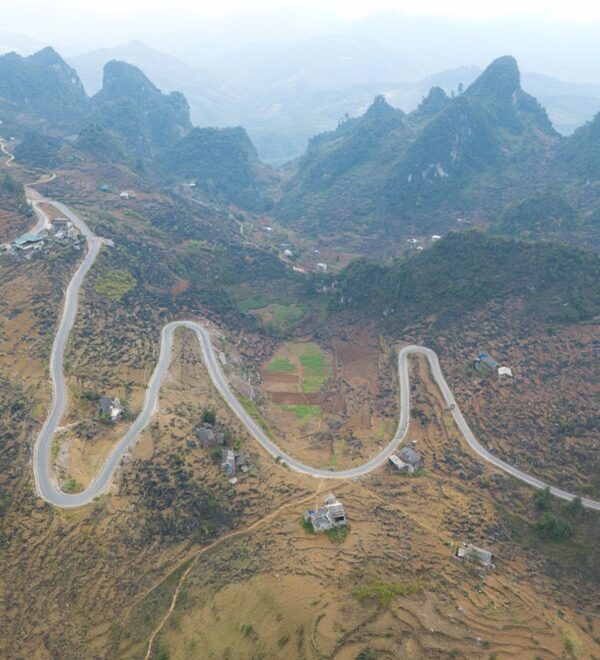
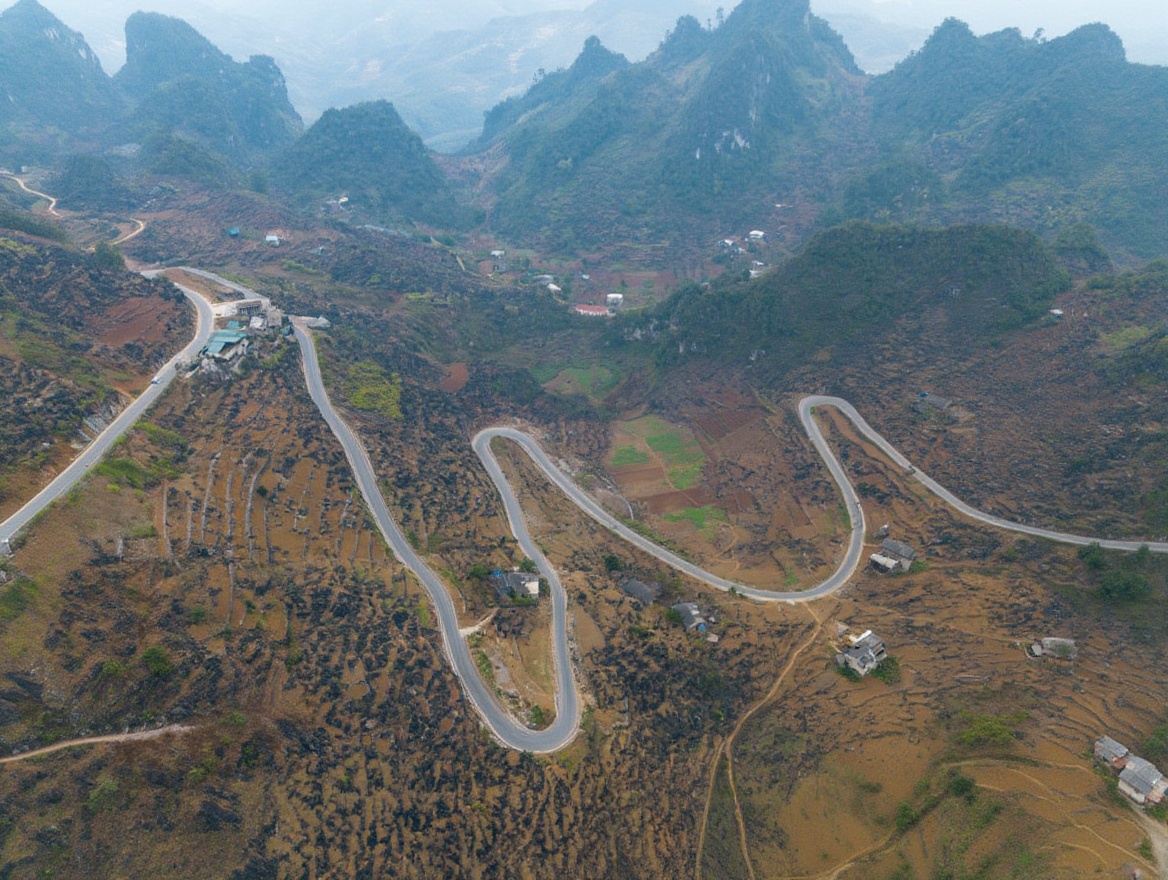
Day 2 (Đồng Văn → Mèo Vạc, ~24km): The shortest distance day, but contains Ma Pi Leng Pass — the reason most people come. The pass road drops 1,000 meters to the Nho Que River and the teal-colored reservoir below in a series of tight switchbacks. Stop time: as long as you want. Mèo Vạc (say: Meh-o Vak) Sunday market is one of the largest ethnic minority markets in Vietnam — timing your arrival for Saturday evening means you can walk the market Sunday morning before continuing.
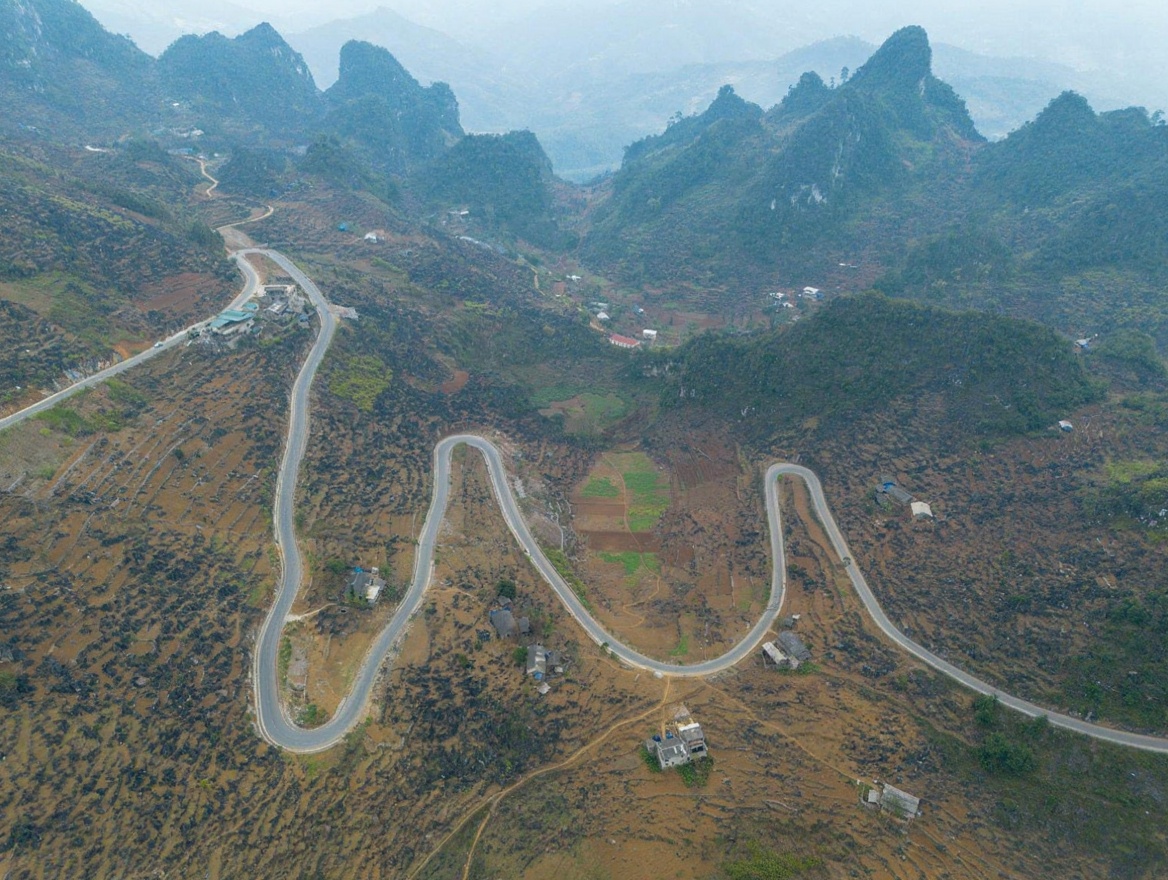
Day 3 (Mèo Vạc → Đồng Văn → Du Già, ~80km): Either return through Đồng Văn or take the more challenging direct road south toward Du Già (say: Zoo Ya). The Du Già route is less traveled, more off-road, and passes through smaller Dao and Tày minority villages. Du Già itself has basic homestay accommodation (100,000–200,000 VND) and access to the Tu San Canyon section of the Nho Que River.
Day 4 (Du Già → Ha Giang town, ~70km): The return leg drops back toward lower elevation. Road quality improves as you approach the main highway. Most riders complete this day by early afternoon.
Extensions: The Lung Cu flagpole (Vietnam’s northernmost point, 17km northeast of Đồng Văn) is worth the detour — 2 hours round trip, the view of the Chinese border valley is unique. The Lũng Cú commune has a concentration of Hmong villages if cultural immersion is a priority.
Bike and Gear: What You Actually Need
Bike: XR150 or Yamaha WR155 for the full loop. Honda Win for experienced riders who accept slower pace and higher breakdown likelihood. Automatic scooters complete the loop but the Ma Pi Leng section and any side roads toward Du Già are significantly more difficult without proper ground clearance and power reserves.
Where to rent in Ha Giang town: multiple rental shops on the main street near the market. Price: 200,000–350,000 VND/day ($8–14) for an XR150. The Phuot community on Facebook (Vietnam Phuot Travel) has current operator recommendations. Check the bike’s chain, brakes, and tire tread before leaving — mountain riding amplifies mechanical issues.
Navigation: Download Maps.me offline for Ha Giang province before leaving mobile data range. Google Maps works for the main road but loses the smaller tracks. The route is well-signed in Vietnamese — Đồng Văn, Mèo Vạc, Quản Bạ are posted at most junctions. A secondary GPS track from the phuot community loaded as a route on your phone is the safest navigation setup.
Gear essentials: Helmet (bring a quality one from Hanoi — Ha Giang rental helmets are low-quality half-helmets), gloves, warm layer (temperatures at elevation drop to 10–15°C at night even in summer, colder in winter), rain jacket (mountain weather changes in 20 minutes), water, and snacks. Gas stations exist at Ha Giang town, Quản Bạ, Yên Minh, Đồng Văn, and Mèo Vạc. Don’t run below half tank between these points.
Easy Rider Guides: How to Find a Good One
The Easy Rider (xe ôm tour guide-driver) system in Ha Giang has two quality tiers: licensed local guides with years of experience on the specific roads, and opportunistic operators who will tell you they know the route well and demonstrably don’t know it as well as they claim.
The good guides are found through specific channels:
- Facebook group “Ha Giang Easy Rider” — direct contact with established guides, photos of their bikes and routes, reviews from previous travelers
- Recommendations from guesthouses in Hanoi’s Old Quarter that specialize in Ha Giang trips — they’ve sent enough travelers to know who delivers
- The Ha Giang Loop Facebook group has a pinned post with recommended guides and their contact information, updated by community members
What to confirm before hiring: the guide’s first language (many good guides speak English well enough; basic communication is essential for comfort and safety), what’s included in the daily rate (accommodation and meals are often extra), and whether the guide knows the specific variant of the route you want (Du Già side road, Lung Cu detour, etc.).
Pricing: $25–30/day for a standard guide-driver. $35–40/day for an experienced guide with strong English and good bike. Guides who know the ethnic minority communities and can facilitate genuine cultural exchanges — visiting a Hmong family for tea, explaining the significance of specific market days — are worth the premium. This experience is the main argument for the Easy Rider option over self-drive.
One logistical note: if you hire a guide through a Hanoi hostel or travel desk, the guide typically rides north to Ha Giang to meet you there, or you take a bus to Ha Giang together. This is normal. The guide’s bike stays in Ha Giang — they don’t ride from Hanoi on it.
Solo Female Riders: Specific Notes
Women do the Ha Giang Loop solo regularly and consistently report positive experiences. The area is off the beaten-enough path that the aggressive tourist hawking of Hoi An or Hanoi’s Old Quarter doesn’t exist here. The ethnic minority communities in the mountains are welcoming and the cultural interactions tend toward genuine curiosity rather than commercial transaction.
Specific considerations: accommodation quality in Đồng Văn and Mèo Vạc has improved significantly since 2020 — private rooms with locks are standard at any guesthouse charging 150,000 VND or more. Self-drive solo women report that the biggest safety factor is having someone know your rough plan — telling your guesthouse owner in Đồng Văn that you’re heading to Mèo Vạc tomorrow provides a basic check-in structure without needing a tracking app or formal tour structure.
The Easy Rider option with a reputable, recommended guide eliminates most solo safety questions for riders who want the experience without the self-drive logistics. Several female Easy Rider guides also operate on the Ha Giang Loop — specifically worth seeking out for travelers who’d prefer it.
Accommodation on the Loop
Budget homestay and guesthouse accommodation is available in every town on the standard route. Prices are lower than Vietnam’s tourist cities — a private room with hot water in Đồng Văn or Mèo Vạc runs 150,000–250,000 VND ($6–10). Basic homestays in smaller villages along the Du Già route cost 100,000–150,000 VND and often include dinner and breakfast for a small additional charge.
No advance booking is necessary for most of the year. During peak season (October and November for harvest season, Tet holiday in late January/February), Mèo Vạc fills up around the Sunday market weekend — book the Friday and Saturday nights ahead if your timing aligns with the market.
Note for budget traveler context: Ha Giang is genuinely cheap. A day’s total spending — accommodation, meals, fuel — runs 400,000–700,000 VND ($16–28) at the budget end. This is the most cost-effective dramatic landscape in Vietnam by a significant margin.
When to Go Solo: Timing and Weather
The loop is rideable year-round but the experience varies dramatically by season.
October–November: The consensus peak. Buckwheat flower season (pink and white flowers blanket the karst valley floor), harvest season for rice terraces (golden terraces at Hoàng Su Phì west of Ha Giang), clear skies, comfortable temperatures. Most popular period — Mèo Vạc Sunday market is packed.
March–April: Second peak season. Cherry blossom (anh đào) and pear blossoms in full flower around Đồng Văn. Cold at night (5–12°C) but clear daytime riding. Less crowded than October/November.
May–August: Green season — lush, dramatic, fewer tourists. Heavy rainfall June–August creates mudslide risk on some unpaved sections. Fog at elevation limits visibility on switchbacks. Manage your riding windows (early morning before rain typically arrives).
December–February: Cold — temperatures at elevation drop below 5°C at night, frost possible. Fewer travelers. The landscape is stark and dramatic in a different way. Tet holiday period (late January/February) sees Vietnamese domestic tourism surge and accommodation books out early.
Meeting Other Travelers: The Social Reality of Solo Ha Giang
Solo doesn’t mean lonely on the Ha Giang Loop. The route funnels most riders through the same towns at roughly the same times (Quản Bạ for the first lunch stop, Đồng Văn for the first night, Mèo Vạc for the Sunday market), and the guesthouses in these towns are small enough that travelers naturally converge for dinner and evening conversation.
The pattern: you set out alone in the morning, ride at your own pace, stop where you want. By dinner you’re at the one main guesthouse in Đồng Văn with six other solo travelers doing the same loop, swapping route notes over beer and whatever the guesthouse is cooking that night. It’s the best of both social structures — independent during the day, communal in the evenings when the social dynamics of a hostel dorm are actually welcome.
The Mèo Vạc Sunday market is particularly good for this. The market runs from early morning — ethnic minority traders from surrounding villages arriving by motorbike, on foot, some walking hours from remote villages. The cross-cultural viewing audience typically includes a mix of Vietnamese and international travelers who’ve all timed their arrival for this specific event. The morning market conversation between strangers about what they’ve seen so far is a reliable social experience.
One logistics note: if you want to ride with another traveler you meet on the loop (leaving together, pacing together), this is completely normal and adds a safety margin for mechanical problems on remote sections. Ask at guesthouses whether anyone else is going the same direction on the same day. The overlap is common and the arrangement is informal — no booking required.
What to Pack for Four Days on the Loop
Ha Giang packing runs leaner than travelers expect. You’re riding a motorbike, so everything you bring must fit on your back or strapped to the bike rack. Most guesthouses do laundry for 30,000–50,000 VND/kg on request.
Non-negotiables:
- Full-face helmet (bring from Hanoi — rental helmets here are inadequate for these roads)
- Warm layer — temperatures at Ma Pi Leng summit drop significantly; at night in November 8–12°C
- Waterproof rain jacket (a poncho works for short showers; a proper jacket is better for extended rain)
- Gloves — wind chill at 60km/h at altitude is significant even in mild temperatures
- Offline maps downloaded (Maps.me for Ha Giang province)
- Portable charger and phone mount for navigation
Nice to have:
- Dry bag or waterproof backpack cover for camera and electronics
- Sunscreen — high elevation means stronger UV despite cooler temperatures
- Basic first aid (blister plasters, ibuprofen, rehydration salts)
- Bungee net for securing anything to the bike rack
Leave behind:
- Laptop (theft risk aside, the guesthouses have WiFi for phones; you won’t use it)
- More than 3–4 days of clothes (laundry is cheap and available)
- Travel dress clothes (there are no dress code venues on the loop)
What I Got Wrong
First time riding the loop. I was on a rented Honda Win — not the XR150 recommendation, because I was trying to save 100,000 VND/day and I thought the Win would be fine.
It was mostly fine. Then I took a side road on day 3 that I’d read about in a travel blog — a 15km shortcut through Phố Cáo commune toward Du Già. Unpaved, rocky, steep descent. The Win’s brakes overheated in the first kilometer. I had to stop every 200 meters to let them cool. The shortcut took four hours.
A rider on an XR150 passed me on that road and completed the section in about 45 minutes. The 100,000 VND/day I was saving on the bike rental cost me half a day and a significantly less enjoyable afternoon than necessary.
The XR150 is not a luxury — it’s the right tool for this specific road. Get the right bike.
Frequently Asked Questions
Is Ha Giang Loop safe for solo riders?
Manageable with the right approach. The main risks are wet mountain roads (pull over and wait in rain), riding beyond your experience level, and mechanical failure on remote sections. Use an XR150 or equivalent trail bike, not a scooter. Ride the main loop rather than unmapped offroad tracks. Tell your guesthouse where you’re heading each morning. Solo riders complete the loop every week without incident — it requires sensible judgment, not extraordinary skill.
Do I need a permit for Ha Giang Loop?
Yes — a border zone permit is required for the Đồng Văn and Mèo Vạc sections. It’s free, takes 30 minutes at Ha Giang City Hall, and requires only your passport. Police checkpoints on the loop road will check it. Get it before you leave Ha Giang town on day one.
How much does Ha Giang Loop solo cost?
Self-drive budget: $16–28/day total (accommodation 150,000–250,000 VND, meals 100,000–200,000 VND, fuel 100,000–200,000 VND, bike rental 200,000–350,000 VND). Easy Rider guide: $25–40/day for the guide-driver, plus your accommodation and meals. A 4-day loop self-drive costs roughly $65–110 USD total excluding transport to Ha Giang from Hanoi (~$8–15 by bus).
Can beginners ride the Ha Giang Loop?
On an Easy Rider (riding pillion with a guide-driver), yes — no riding experience required at all. Self-drive requires genuine motorbike competence: ability to handle a manual gearbox confidently, experience with mountain road switchbacks, and comfort managing the bike on unpaved surfaces. If you’ve never ridden a manual motorcycle before this trip, hire an Easy Rider for the Ha Giang Loop and learn to ride somewhere flat first. The mountains are not where you want to learn.
Ha Giang is the reason people rearrange their Vietnam itinerary at the last minute once they arrive in Hanoi and hear about it from someone who just returned. The loop delivers exactly what it promises — one of the most dramatic riding routes in Asia, achievable solo, at a cost that’s almost embarrassingly low relative to the experience. Go in October if you can. Take the XR150. Get the permit. And stop on Ma Pi Leng for long enough to actually feel how absurd the geography is — the teal river 1,000 meters below, the Chinese border two kilometers to your left, and the road just continuing around the next corner like it belongs there.
For the full route breakdown with day-by-day details, the Ha Giang Loop guide covers operators, accommodation, and the Ma Pi Leng Pass section specifically. Getting there from Hanoi is covered in the Hanoi to Ha Giang guide.