Last updated: May 2026 — Dish prices, bún bò spot hours, and Vỹ Dạ area recommendations verified.
That’s a mistake. Hue vietnam food isn’t just one dish — it’s a culinary identity shaped by centuries of imperial court kitchens, Catholic missionaries, Buddhist monks, and a Perfume River full of freshwater clams. No other city eats like this.
Here’s what to actually order, where to find it, and what you’ll regret missing.
Why Hue Food Is Different From the Rest of Vietnam
Hue was Vietnam’s imperial capital for 143 years. That matters on the plate.
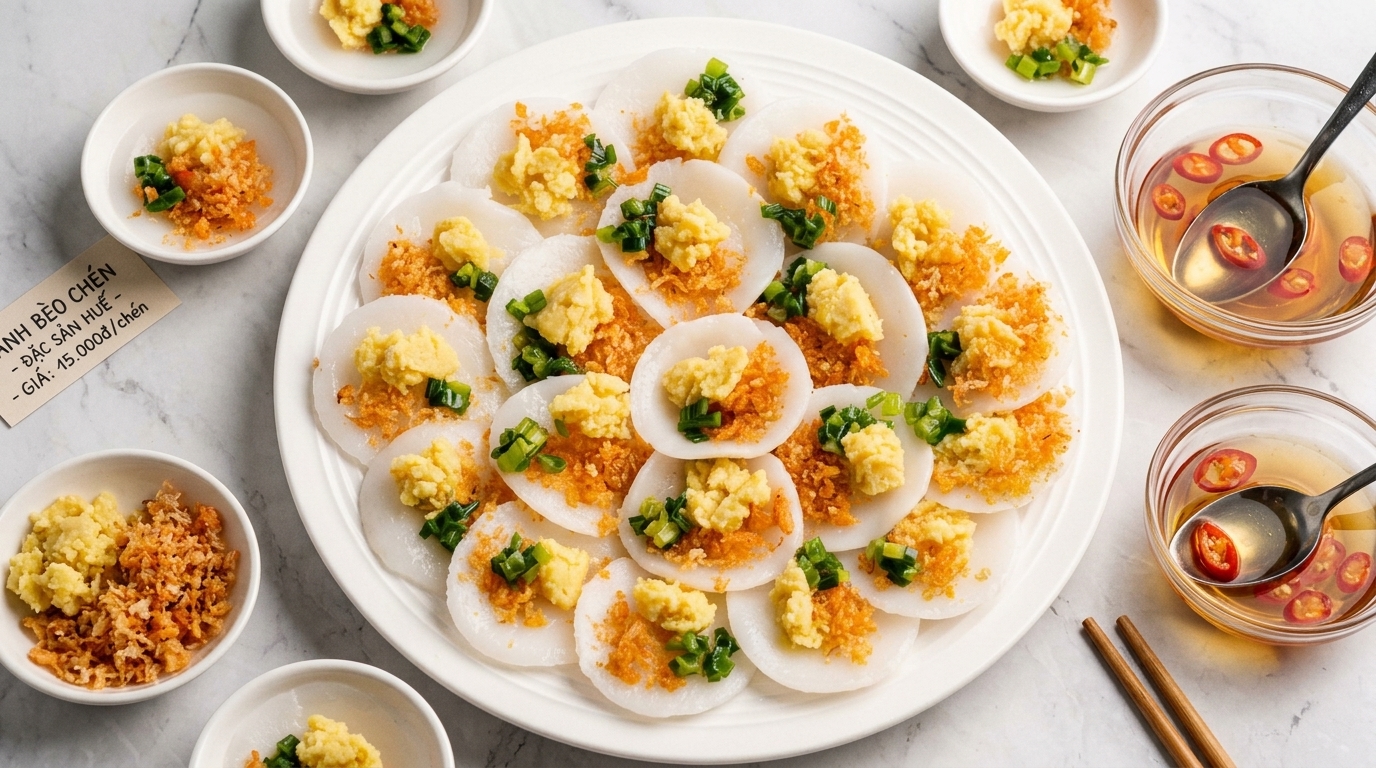
The imperial court demanded hundreds of small, intricate dishes at each royal meal — visual presentation as important as flavor. That obsession with precision trickled down into the street food. Even a 25,000 VND (~$1) bowl of bánh bèo (say: banh bay-oh) in Hue is arranged with more care than a $15 entrée in a Hanoi tourist restaurant.
Add Buddhist monastery cooking — Hue has more active temples per square kilometer than anywhere else in Vietnam — and you get a city that genuinely does both meat-heavy and vegetarian food at a high level.
And then there’s the chili. Hue food is the spiciest in Vietnam. Not Sichuan-pepper-numb spicy. A slow-building, fish-sauce-forward heat that builds from the back of your throat and stays there. Order “ít cay” (say: eet kai) if you want them to go easy on you. They probably won’t.
✓Quick Answer
Hue’s most famous dish is bún bò Huế — a spicy beef and pork noodle soup with lemongrass. The city is also known for its royal court cuisine and small-plate rice dishes: bánh bèo, bánh lọc, and bánh nậm. Hue food is generally spicier than elsewhere in Vietnam.
Bún Bò Huế — The Dish You Came For
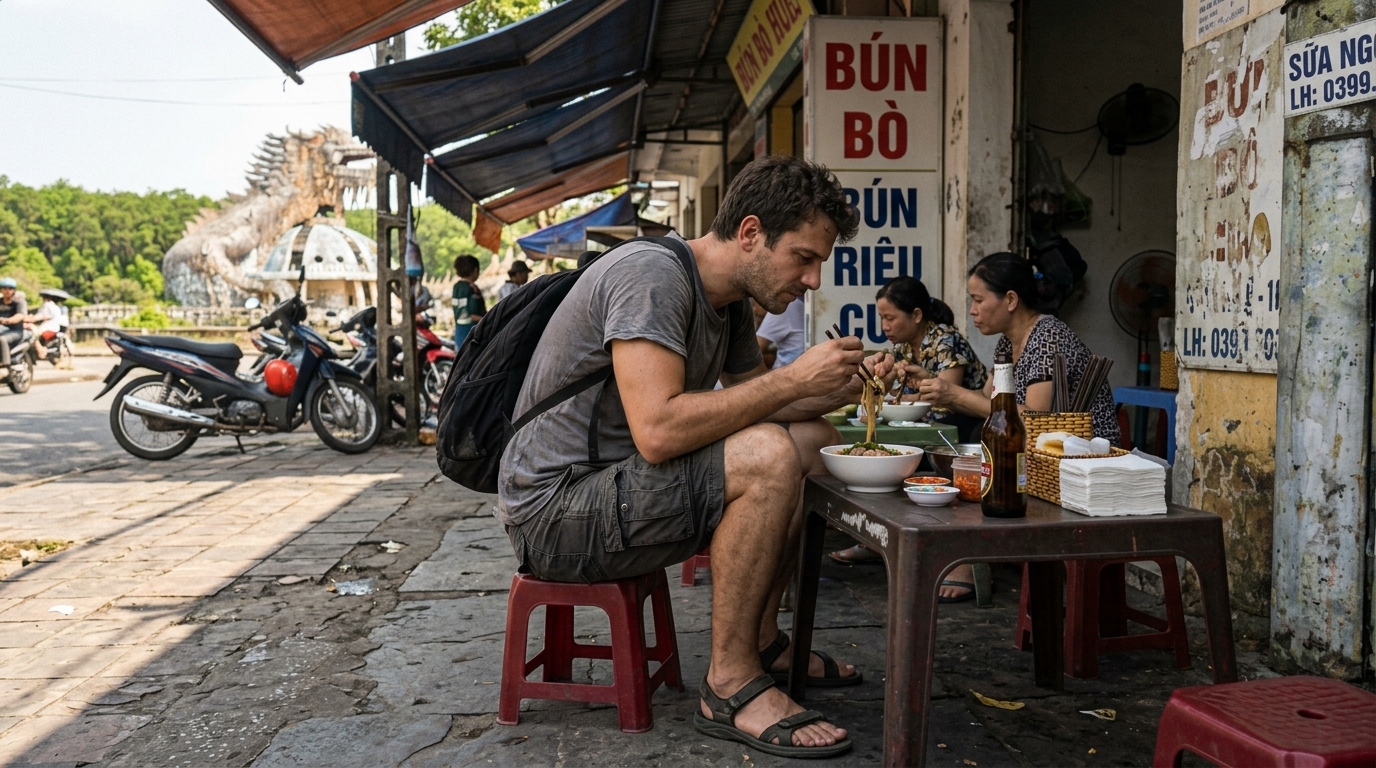
The smell hits you first. Lemongrass. Shrimp paste. A deep red broth that’s been simmering since before dawn. That’s bún bò Huế (say: boon baw hway) — and in Hue, it is not optional.
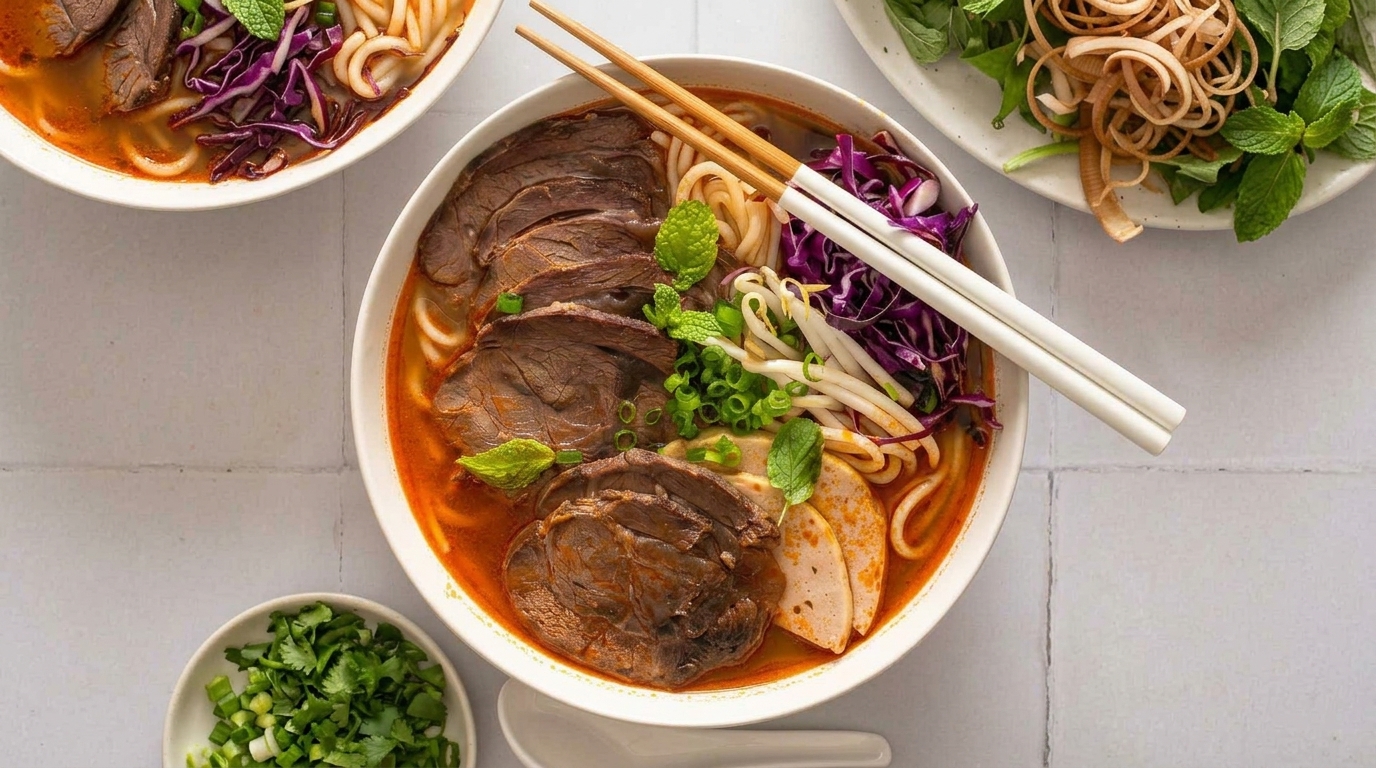
This is not the same as bún bò you’ll find in Hanoi or Saigon. The broth is darker, oilier, more aromatic. There’s pork hock alongside the beef. The noodles are thick, round, and chewy — different texture entirely from phở noodles. A bowl of cubed pig’s blood (tiết — say: tee-et) usually comes on the side. You don’t have to eat it. But try it once.
Where to go: Skip the tourist cafes on Lê Lợi street. Find the places with six plastic stools, a line at 7am, and a grandmother stirring a pot that hasn’t been fully cleaned since the 1990s (in the good way). One reliable spot locals recommend is Bún Bò Huế Bà Tuyết at 47 Nguyễn Du — open from 6am until it sells out, usually by 10am.
Price: 40,000–70,000 VND (~$1.60–$2.80). If you pay more than 80,000 VND for bún bò in Hue, you’re at a tourist restaurant. No shame in that — but know what you’re getting.
↗Insider Tip
In Hue, bún bò is breakfast food. Locals eat it between 6–9am. Come after 10am and the broth is diluted, the meat picked over. Set your alarm.
Bánh Bèo, Bánh Lọc, Bánh Nậm — The Royal Trio
This is where Hue’s court cuisine legacy shows up in the cheapest possible form. Three rice-based dishes, each under 10,000 VND per piece, each with a different texture and a different dipping sauce. Order all three. Don’t choose.
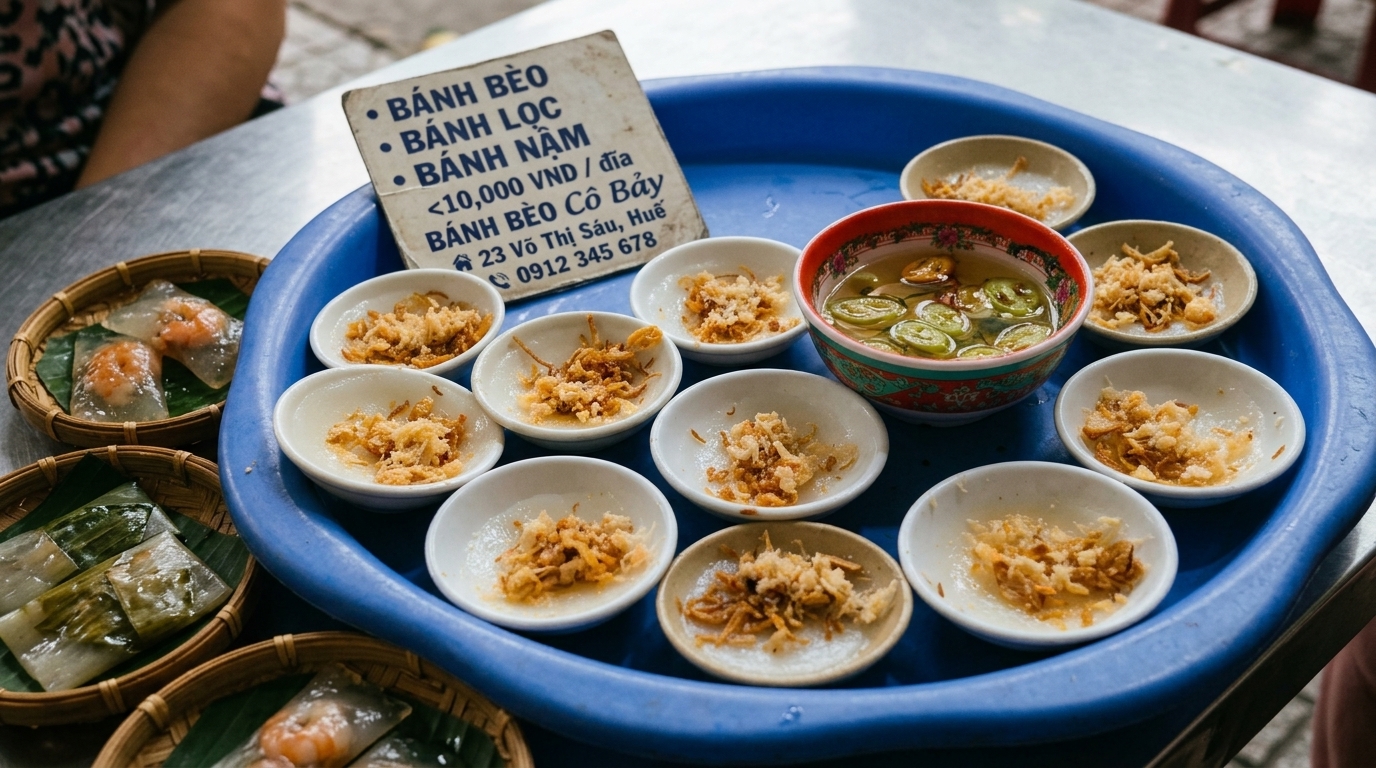
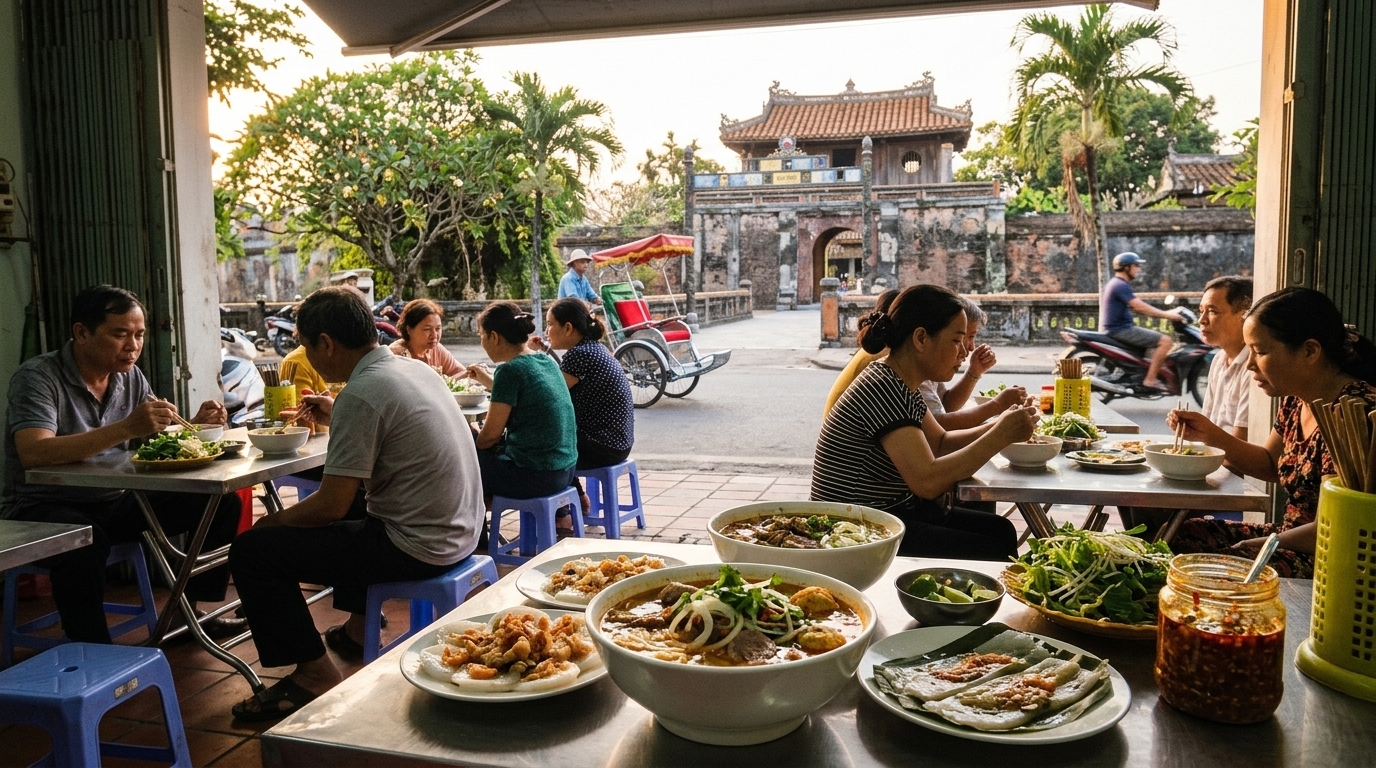
Bánh bèo (say: banh bay-oh) — steamed rice flour cakes in small ceramic cups, topped with dried shrimp, crispy shallots, and a splash of nước chấm. The texture is silky. They wobble when you tilt the plate. Each cup holds about two bites.
Bánh lọc (say: banh lock) — translucent dumplings made from tapioca flour, filled with shrimp and pork, then steamed or boiled. The wrapper is chewy and slightly sticky. The filling has an earthy, savory depth that doesn’t exist in dim sum.
Bánh nậm (say: banh num) — flat rice flour dumplings wrapped in banana leaf and steamed, with a thin layer of seasoned pork inside. More subtle than bánh lọc. The banana leaf adds a faint floral note.
Where to eat these: The Vỹ Dạ (say: vee da) neighborhood across the Perfume River from the Imperial City. Walk across the Phú Xuân Bridge, turn right, and follow the river for ten minutes. You’ll find small family spots that have been doing this since the 1960s. A full spread of all three dishes — six or eight pieces each — costs 80,000–120,000 VND (~$3.20–$4.80) per person.
Cơm Hến — The Breakfast That Will Test You
Cơm hến (say: cum hen) is cold rice topped with baby river clams, crispy pork rinds, shredded banana flower, peanuts, sesame rice crackers, and enough chili oil to make your eyes water before the first bite. It’s eaten at room temperature, sometimes cold from the fridge. It smells like low tide and chili. It is, objectively, an aggressive meal.
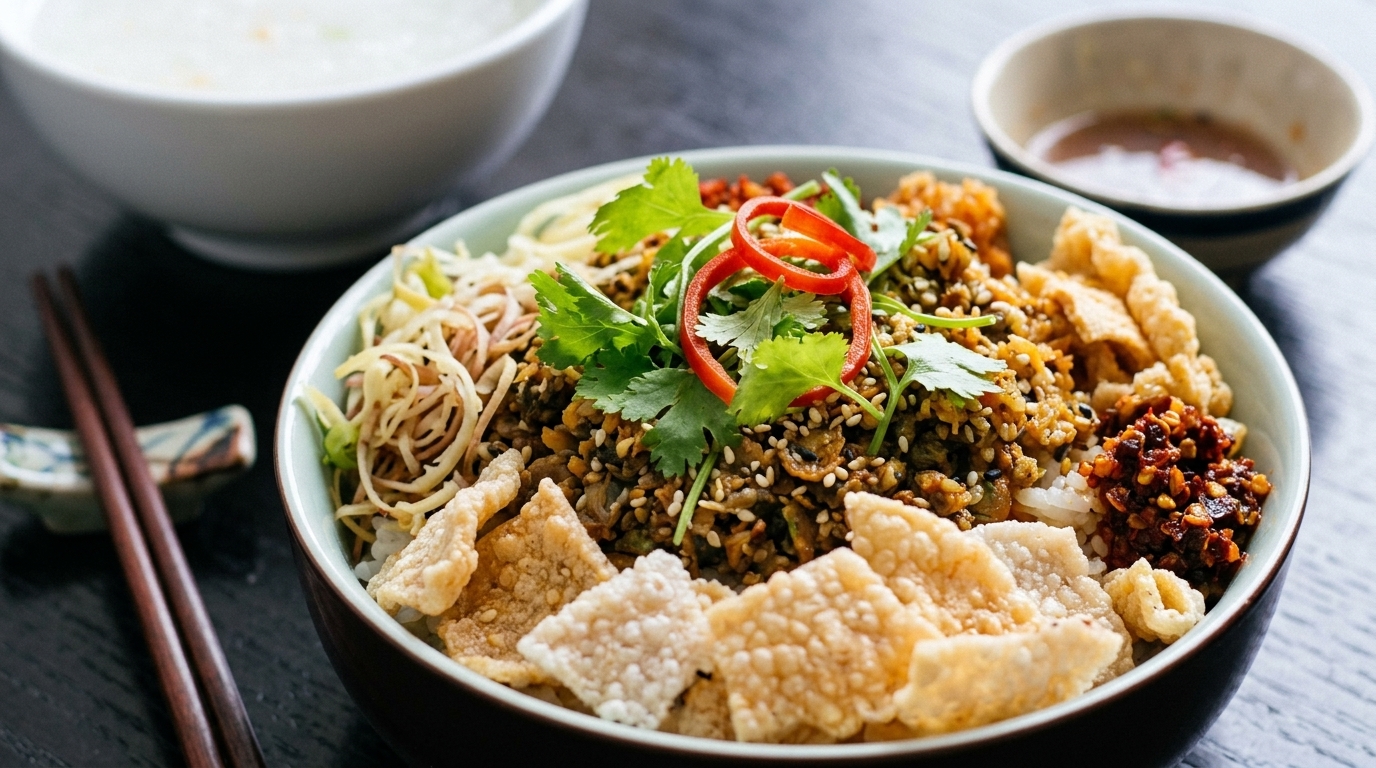
I ordered it expecting something gentle. I got a bowl of contradiction — savory, funky, crunchy, spicy, cold — that somehow worked completely. The clams are tiny (river clams from the Perfume River, specifically) and slightly briny. The pork rinds add crunch. The banana flower adds texture. The chili ties everything together with a slow heat that builds over ten minutes.
Locals eat it for breakfast. On Hến Island (Cồn Hến — say: cone hen) in the Perfume River, small shops have been serving this since before most travelers’ parents were born. Take a xe ôm (say: say-ohm) to the bridge, cross on foot or by motorbike, and walk the island until you find a spot with a crowd. Look for handwritten signs that say “cơm hến” and “bún hến.”
Price: 25,000–40,000 VND (~$1–$1.60). If you don’t like cold food with aggressive flavors, skip it. This is not a crowd-pleaser — it’s a locals’ breakfast that survived five centuries because it tastes exactly right to the people who grew up eating it.
⚠Real Talk
Cơm hến is genuinely polarizing. I’ve watched travelers take one bite and push the bowl away. If you hate strong seafood smells or cold rice, don’t order it just to say you did. But if you’re curious — eat it at 8am with a Vietnamese coffee and nothing else planned until noon. That’s the only way to give it a fair chance.
Bánh Khoái — The Hue Pancake Worth the Detour
Think of bánh khoái (say: banh kwai) as bún bò’s crunchier, smaller cousin. A crispy rice flour pancake — smaller and thicker than bánh xèo (the southern crepe) — filled with shrimp, pork, and bean sprouts, then folded in half and dipped in a thick fermented soybean and peanut sauce called nước lèo.
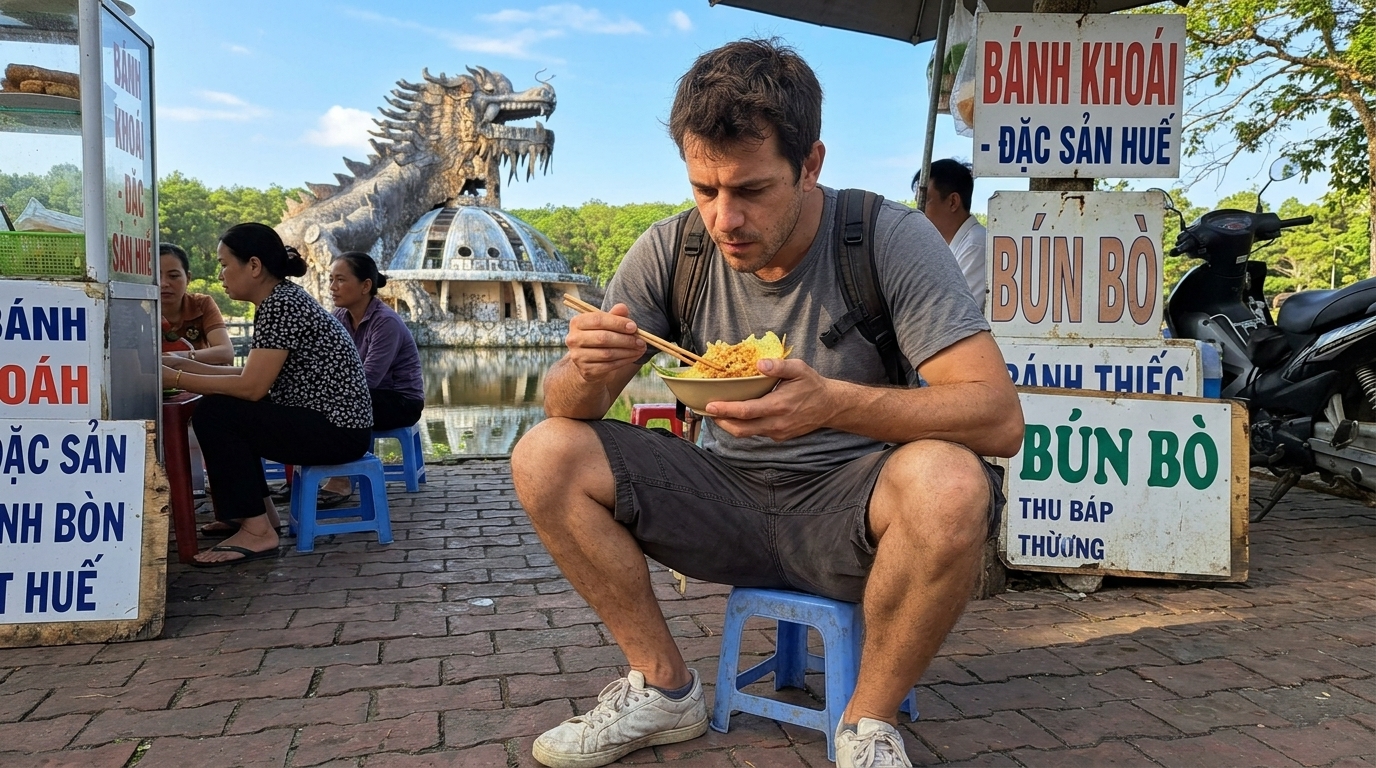
The crunch is the point. The edges of a properly made bánh khoái shatter when you bite through them. The inside stays soft. The dipping sauce is rich and funky in a way that fish-sauce-based sauces are not. It hits different.
Klook has the widest selection for Vietnam and is usually the cheapest. KKday is strong on day trips and local experiences.
the Imperial City has a cluster of bánh khoái vendors — look for the smoke and the sound of batter hitting hot oil. One long-running spot is Bánh Khoái Hàng Me near Đông Ba market. Price: 30,000–50,000 VND (~$1.20–$2) per pancake.
Nem Lụi — The Lemongrass Skewer
Nem lụi (say: nem loo-ee) is minced pork seasoned with lemongrass and chili, pressed around a lemongrass stalk, then grilled over charcoal. You eat it by rolling pieces of the cooked pork in rice paper with herbs, cucumber, and star fruit, then dipping in another thick peanut-based sauce.
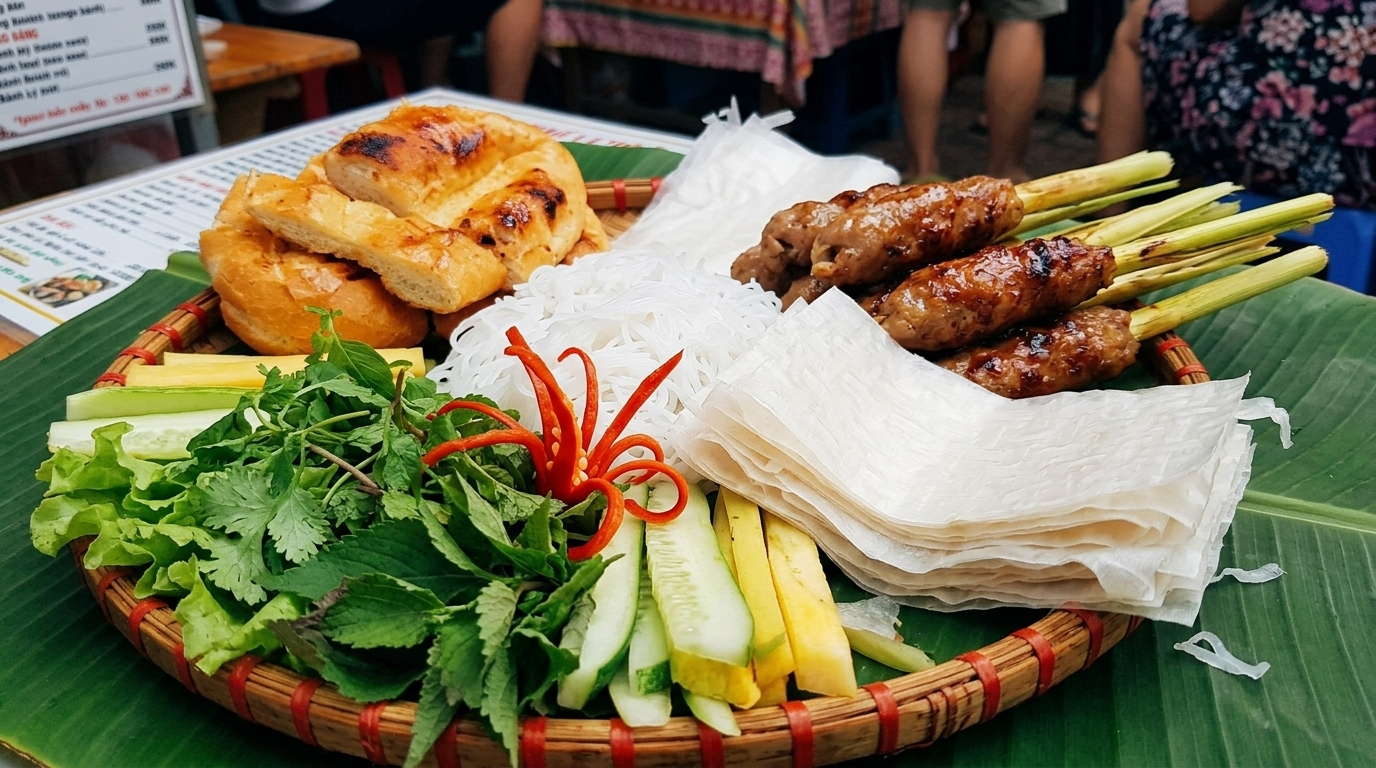
The lemongrass stalk does two things: flavors the meat from the inside out, and lets you eat without utensils. The char from the grill adds bitterness that balances the rich pork. The assembly is half the experience — there’s a rhythm to rolling nem lụi that takes about three tries to get right.
You’ll find nem lụi at most mid-range Hue restaurants. It’s also scattered through the street food area near Chu Văn An street in the evenings, where vendors set up at dusk and run until 10pm. Price: 50,000–80,000 VND (~$2–$3.20) for a plate of six to eight skewers.
Chè Huế — The Desserts You Didn’t Know You Needed
Chè (say: chay) is the Vietnamese word for sweet soups and desserts — and Hue has the most varieties in the country. A legacy of the imperial court, where chè was served in dozens of small portions across a royal meal.
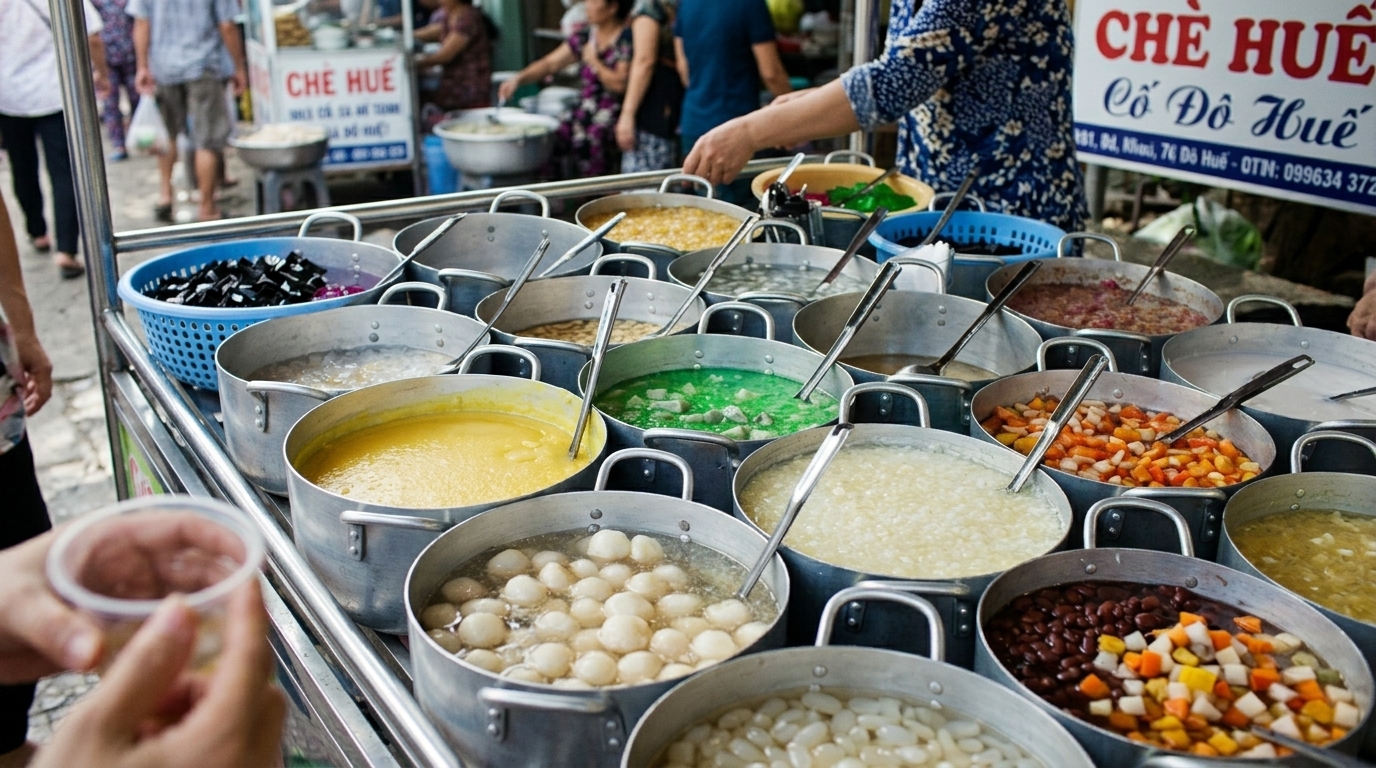
On the street, you order by pointing. Chè bắp (corn and coconut milk) is the gateway. Chè đậu xanh (mung bean, slightly sweet, served warm or cold) is the one most people like immediately. Chè hạt sen (lotus seed in a light syrup) is the one that makes you understand why the emperors bothered.
The best place to find multiple varieties: the cluster of chè vendors near Tịnh Tâm Lake (Hồ Tịnh Tâm — say: ho tinh tam), about ten minutes’ walk from the Imperial City’s north gate. A small bowl runs 10,000–20,000 VND (~$0.40–$0.80). Order three. It’s not a lot of food. That’s the point — you taste, you compare, you order more of the one you liked.
ℹKnow Before You Go
Hue has a strong Buddhist vegetarian food culture. On the 1st and 15th days of the lunar calendar, many local restaurants go fully vegetarian. If you’re visiting on those dates, don’t panic — the vegetarian options are genuinely excellent, not afterthoughts. Look for “cơm chay” (say: cum chai) signs.
Dong Ba Market — Worth It for the Atmosphere, Not for the Best Food
Every Hue food guide sends you to Đông Ba Market (say: dong bah). It’s the biggest market in the city — a two-story labyrinth of fabric stalls, dried goods, and a ground-floor food court that smells like shrimp paste and sesame.
The food here is fine. It’s not the best version of anything Hue makes. The bánh bèo at Đông Ba is designed for volume, not for the hand-pressed care of a Vỹ Dạ family spot. The bún bò is decent but not revelatory.
Go anyway. Go for the dried goods stalls selling sesame seed brittle (mè xửng — say: may soong) wrapped in rice paper — the quintessential Hue souvenir that costs 60,000–120,000 VND (~$2.40–$4.80) per pack and actually tastes good. Go to buy canned mắm ruốc (shrimp paste) to bring home. Go to walk through and feel the energy. Just don’t make it your primary food stop.
The market is at 16.4698° N, 107.5834° E, right on the north bank of the Perfume River. Open from around 5am to 7pm daily.
Budget Breakdown: Eating in Hue
Where to Eat in Hue: Practical Notes
Hue’s best food is not on the tourist restaurant strip. It’s on the residential streets northwest of the Imperial City, in Vỹ Dạ across the river, and on Cồn Hến island in the early morning.
The tourist strip to avoid: Phạm Ngũ Lão and Lê Lợi near the backpacker hotels. Not terrible — but standardized for foreign palates, with prices 40–60% higher than local equivalents.
For street food at night: Chu Văn An street, north side of the city, comes alive after 6pm. Nem lụi vendors, bún bò stalls that reopen for dinner service, bánh mì carts. The energy is low-key and local.
For a sit-down meal: Cơm Hến Bà Đầm on Trần Thúc Nhẫn is one of the well-regarded local names for cơm hến — a small family restaurant with no English menu and staff who will patiently watch you figure out what you ordered. That’s a feature, not a bug.
For travelers who want a structured introduction to Hue cuisine: the things-to-do guide covers context and timings alongside the food stops.
→Who It’s For
Hue’s food scene rewards people who eat early, walk far, and aren’t scared of unfamiliar textures. If you need English menus, air conditioning, and servers who speak your language — there are decent options, but you’ll pay a premium and miss the best versions of everything.
Hue Food FAQ
Is Hue food spicy?
Yes — noticeably spicier than Hanoi or Saigon. Bún bò Huế and cơm hến in particular are made with significant amounts of fresh chili and chili oil. Always ask for “ít cay” (less spicy) if you’re sensitive. Staff will reduce the heat, though “less spicy” in Hue is still hotter than standard in most other Vietnamese cities.
Can vegetarians eat well in Hue?
Better than almost anywhere in Vietnam. Hue has a strong Buddhist vegetarian cooking tradition — look for “cơm chay” (vegetarian rice) restaurants near the temples. On the 1st and 15th of the lunar month, many restaurants go fully vegetarian. Some of the best chè Huế desserts are naturally meat-free.
Where is the best bún bò Huế in Hue?
The honest answer: the best bowl is wherever the line is longest at 7am. Bà Tuyết at 47 Nguyễn Du is one consistently mentioned local spot. Avoid bún bò at hotel restaurants or tourist cafes on Lê Lợi — the broth is almost always diluted and the toppings sparse.
How much does food cost in Hue?
Street food is among the cheapest in Vietnam: bún bò at 40,000–70,000 VND (~$1.60–$2.80), a full bánh set for 80,000–120,000 VND (~$3.20–$4.80), cơm hến at 25,000–40,000 VND (~$1–$1.60). Eating like a local, budget 200,000–350,000 VND (~$8–$14) per day on food. Mid-range restaurants roughly double those numbers.