Last updated: May 2026 — Entry prices, hours, and dress code verified
The first thing to know about the Imperial City Hue is this: most of it is gone.
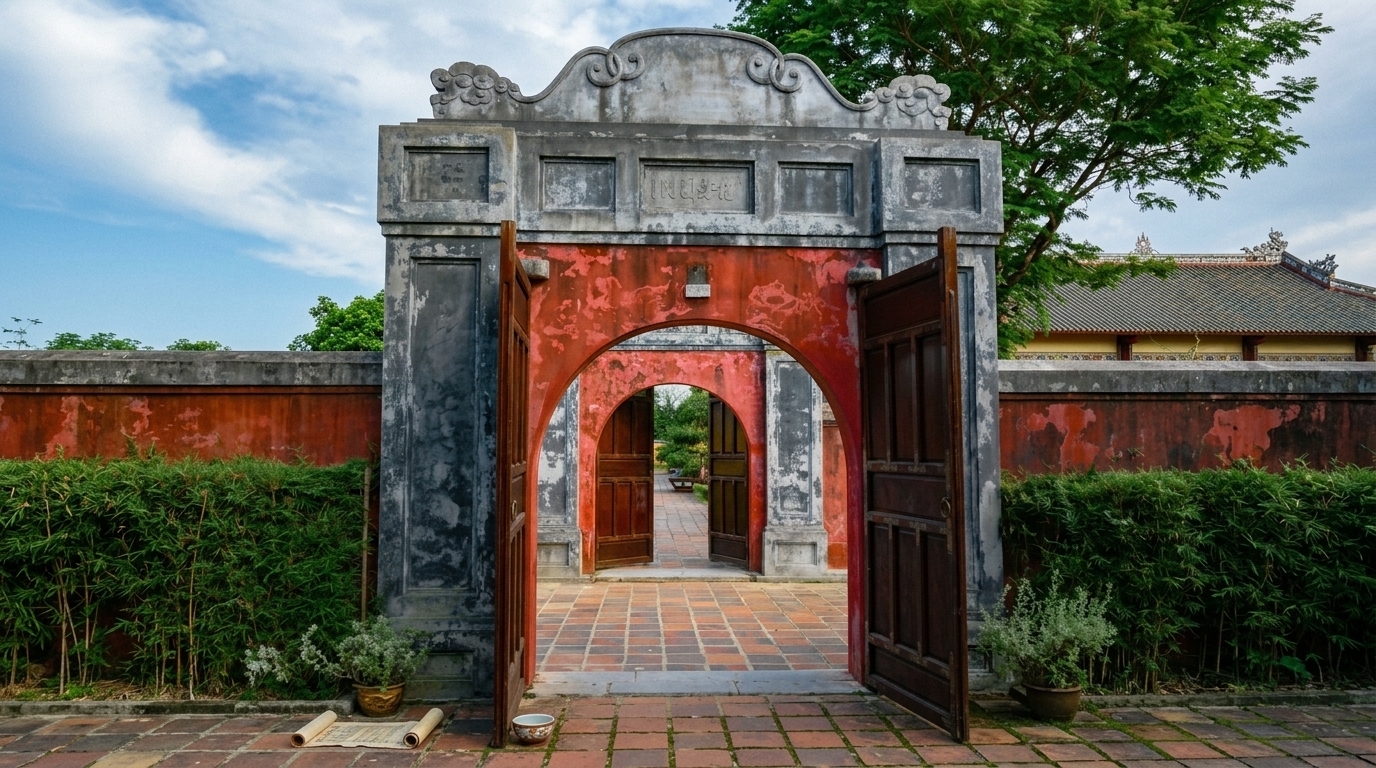
The second thing to know: this context makes everything you see more interesting, not less. The scale of what was built — and the scale of what was lost — is visible in the ruins. Standing in a roofless courtyard with carved stone foundations running in all directions, you’re looking at the outline of an imperial palace that took decades to build and days to destroy.
This is the most historically significant site in Vietnam. Give it the time it deserves.
What Is the Imperial City Hue?
The terms get confusing. Here’s how it layers:
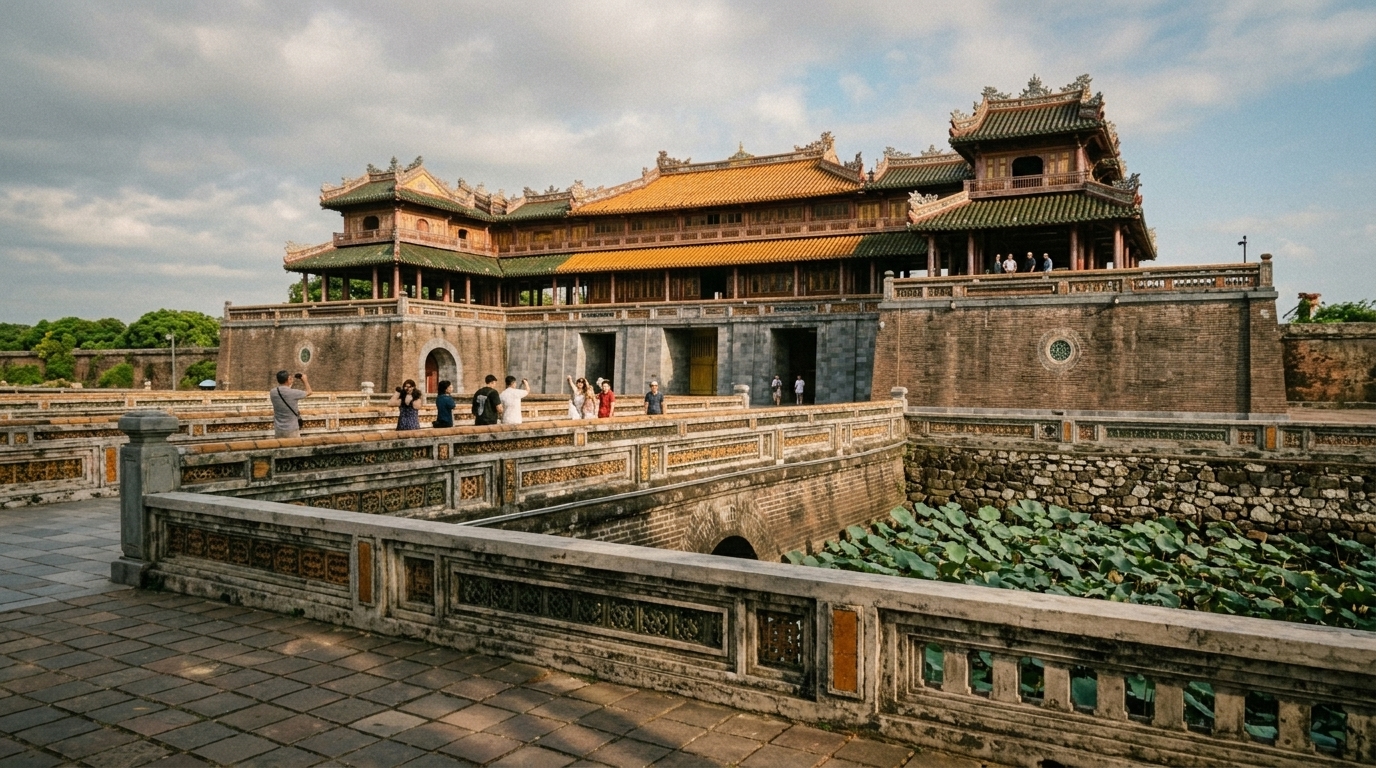
The Citadel (Kinh Thành — say: kinh tang) is the outermost wall — a massive 10-km perimeter of stone fortifications, moats, and gates built from 1805 onwards. The Citadel encloses the entire historical center, including streets, temples, markets, and residences.
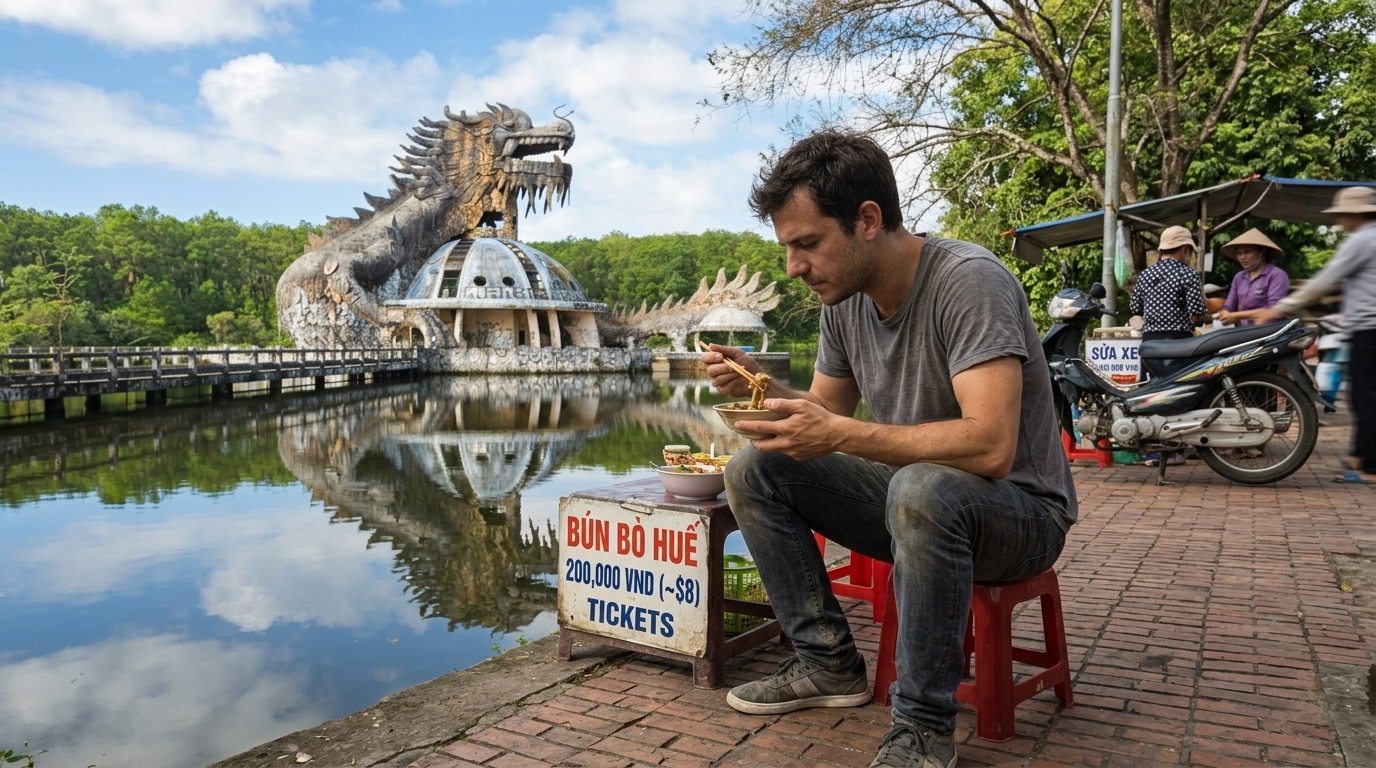
The Imperial City (Hoàng Thành — say: hwang tang) sits inside the Citadel — a second walled compound containing the formal administrative and ceremonial buildings used by the Nguyễn dynasty emperors. This is what most travelers call “the Imperial City” and what the 200,000 VND (~$8) ticket covers.
The Forbidden Purple City (Tử Cấm Thành — say: too kam tang) is the innermost compound — the emperor’s private residence and the quarters of the royal family and concubines. Ordinary citizens and most court officials were forbidden from entering. Most of it is now open-roofed ruins, with restoration work ongoing.
The full complex covers 520 hectares. The ticketed area (Imperial City + Forbidden Purple City) is manageable in 2–4 hours depending on how deeply you engage with each section.
✓Quick Answer
The Imperial City Hue (Hoàng Thành) is the walled palatial complex that served as the seat of the Nguyễn dynasty from 1802 to 1945. Entry: 200,000 VND (~$8). Open 7am–5:30pm. Allow 2–4 hours. The Forbidden Purple City inside was largely destroyed in 1968 and is being restored. Best visited at 7:30am before tour groups arrive.
Tickets and Opening Hours
Entry fee: 200,000 VND (~$8) — covers the full Imperial City and Forbidden Purple City complex. Combination tickets also available:
Imperial City + 3 royal tombs combo: 530,000 VND (~$21.20) — significant saving if you’re hitting multiple sites in one day.
Hours: 7:00am–5:30pm daily (last entry 5pm). Summer months sometimes extend to 6pm — check at the gate.
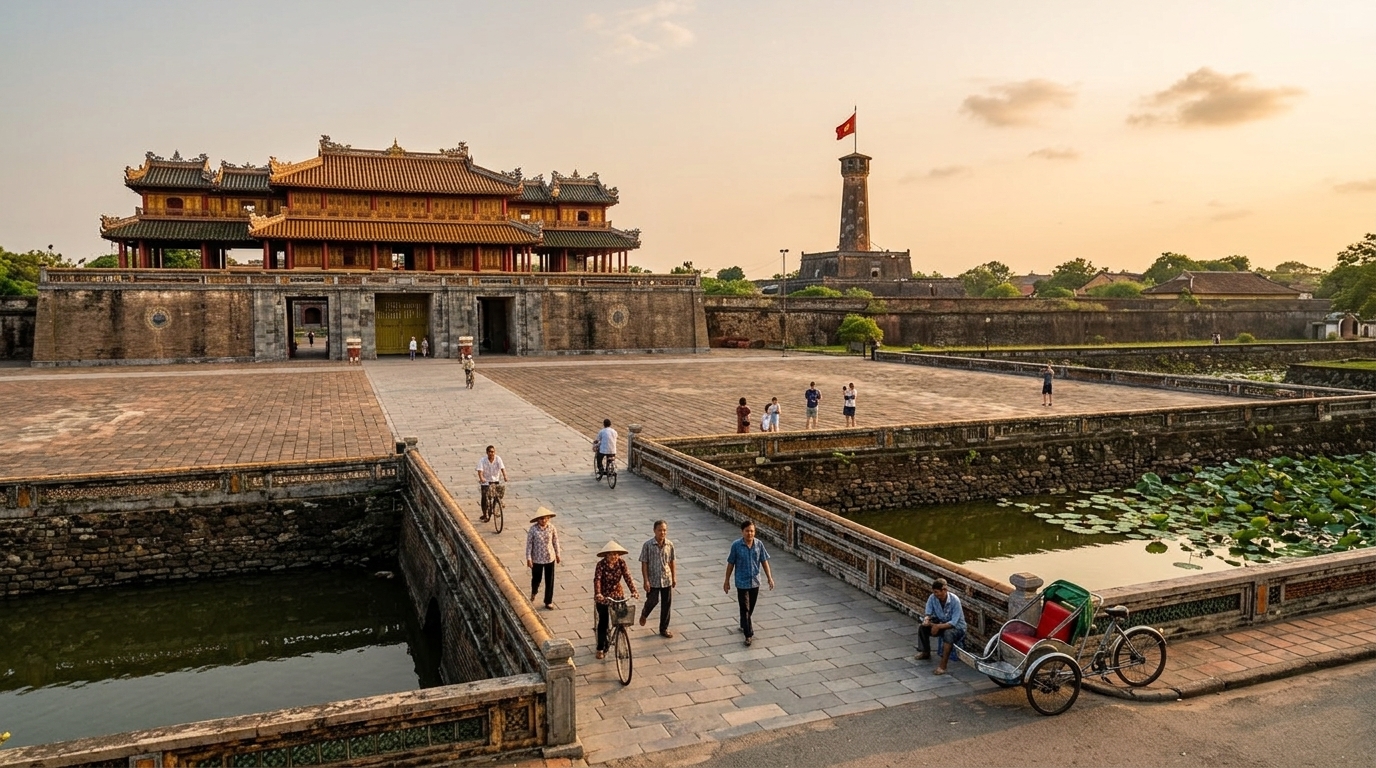
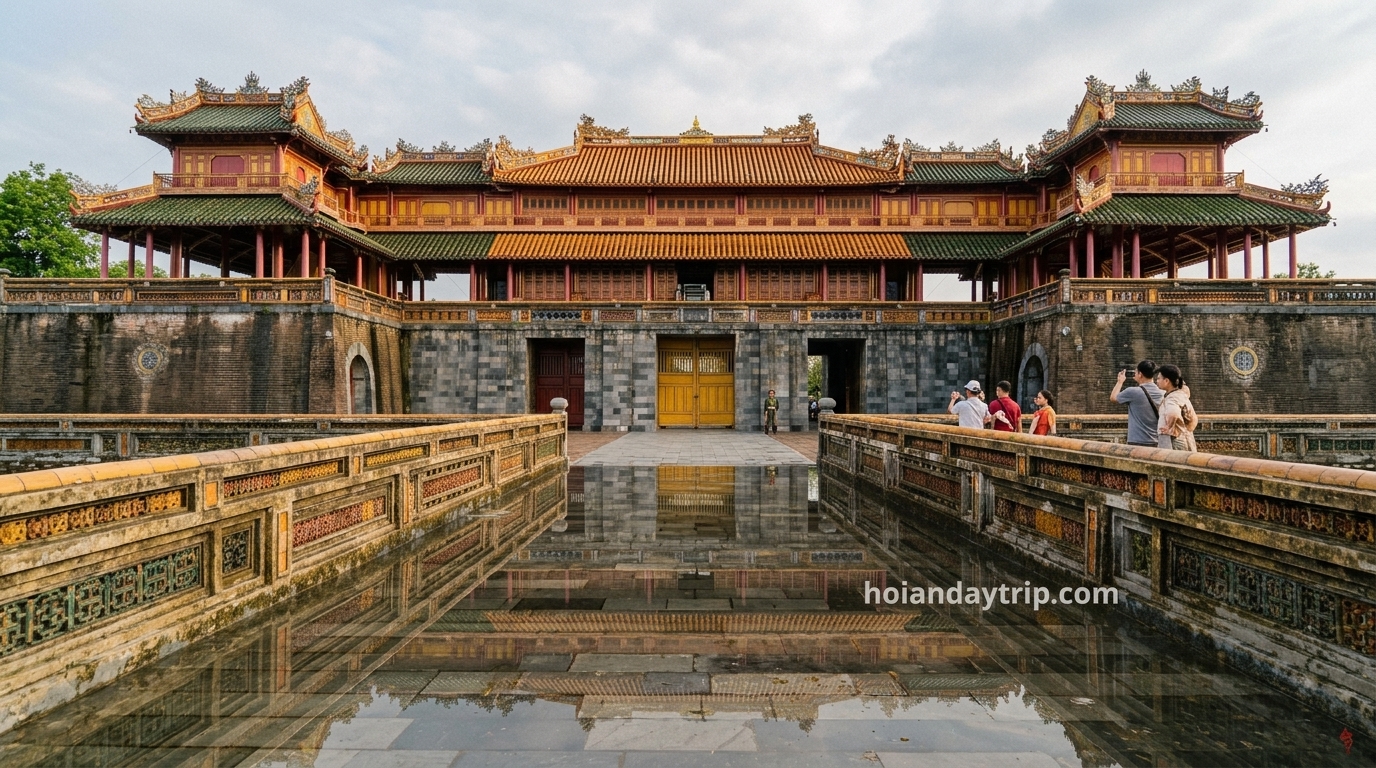
Where to enter: Noon Gate (Ngọ Môn — say: ngoh mohn) is the main entrance on the south side, facing the Perfume River. GPS: 16.4698° N, 107.5796° E. There are also east and west gates — functionally identical for ticketing purposes, but the Noon Gate approach gives you the best first impression of the complex.
Getting there: Hue city center to Noon Gate is 15 minutes on foot from the south bank or 5 minutes by Grab (25,000–40,000 VND ~$1–1.60). Most guesthouses north of the Perfume River are within walking distance.
ℹKnow Before You Go
Dress code is enforced. Shoulders and knees must be covered. Staff at the gate will send you back or offer sarong wraps for hire. In summer, linen trousers and a light long-sleeve shirt are the move — you’ll be walking stone courtyard surfaces that absorb heat, and the dress code means you can’t just wear shorts.
The Best Way to See It: Timing and Sequence
I arrived at 11am in May. By the time I reached the Thai Hoa Palace courtyard, the limestone was radiating heat in waves and three tour groups were processing through simultaneously. The palace felt crowded and stifling. I retreated to shade, drank half a liter of water, and sat down in a doorway to collect myself.
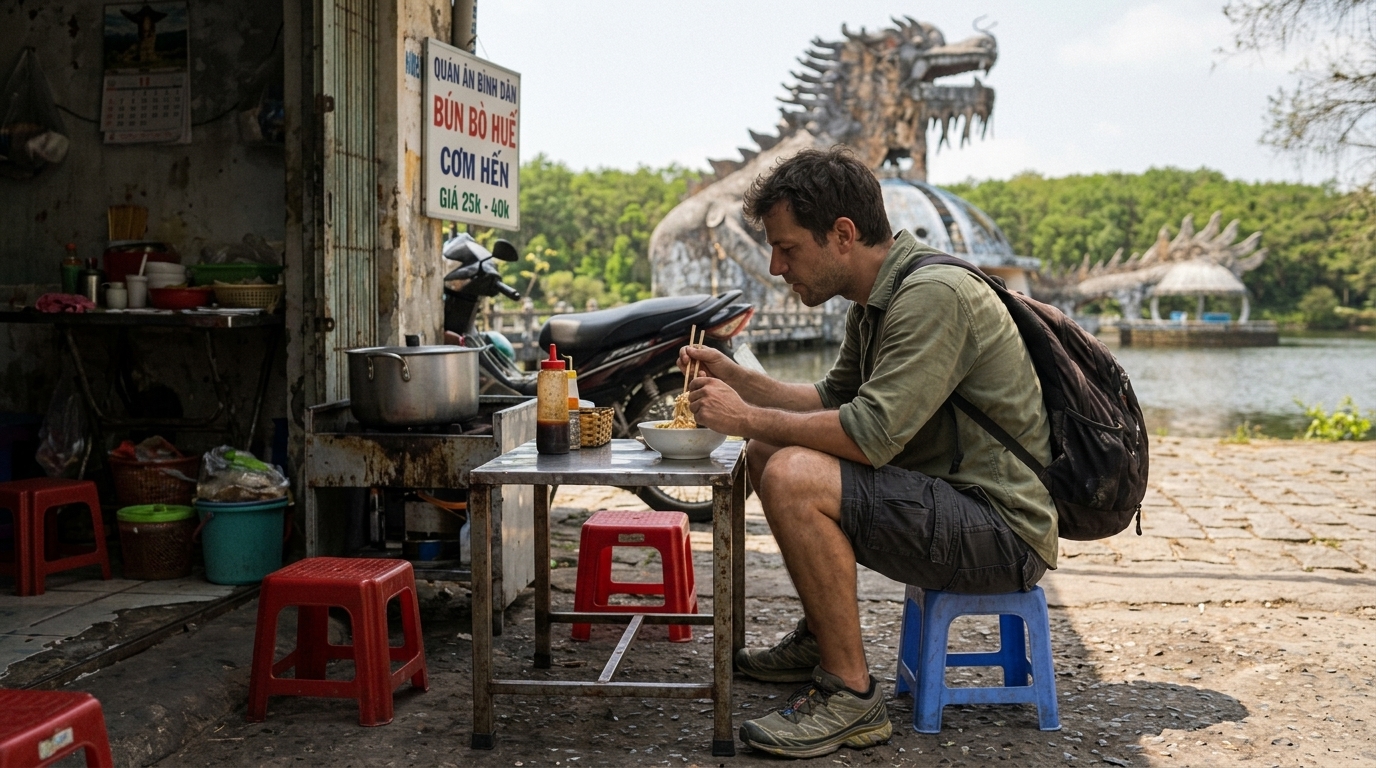
At 4:30pm I went back in. Same site, completely different. Light coming in at low angles through the gates, far fewer people, and the guides had gone home — just quiet courtyards and restoration workers finishing the day. That two-hour window at the end of the day was what I’d been looking for all morning.
Recommended approach:
Enter at 7:30am via Noon Gate. Walk the main axis south-to-north: Noon Gate → Thai Hoa Palace → Forbidden Purple City ruins → north end of the complex. This takes about 90 minutes at a moderate pace. If it’s summer, get the full walk done before 10:30am and leave before the heat and crowds combine. Return at 4:30pm for the light and the quiet.
Key Structures to See
Noon Gate (Ngọ Môn)
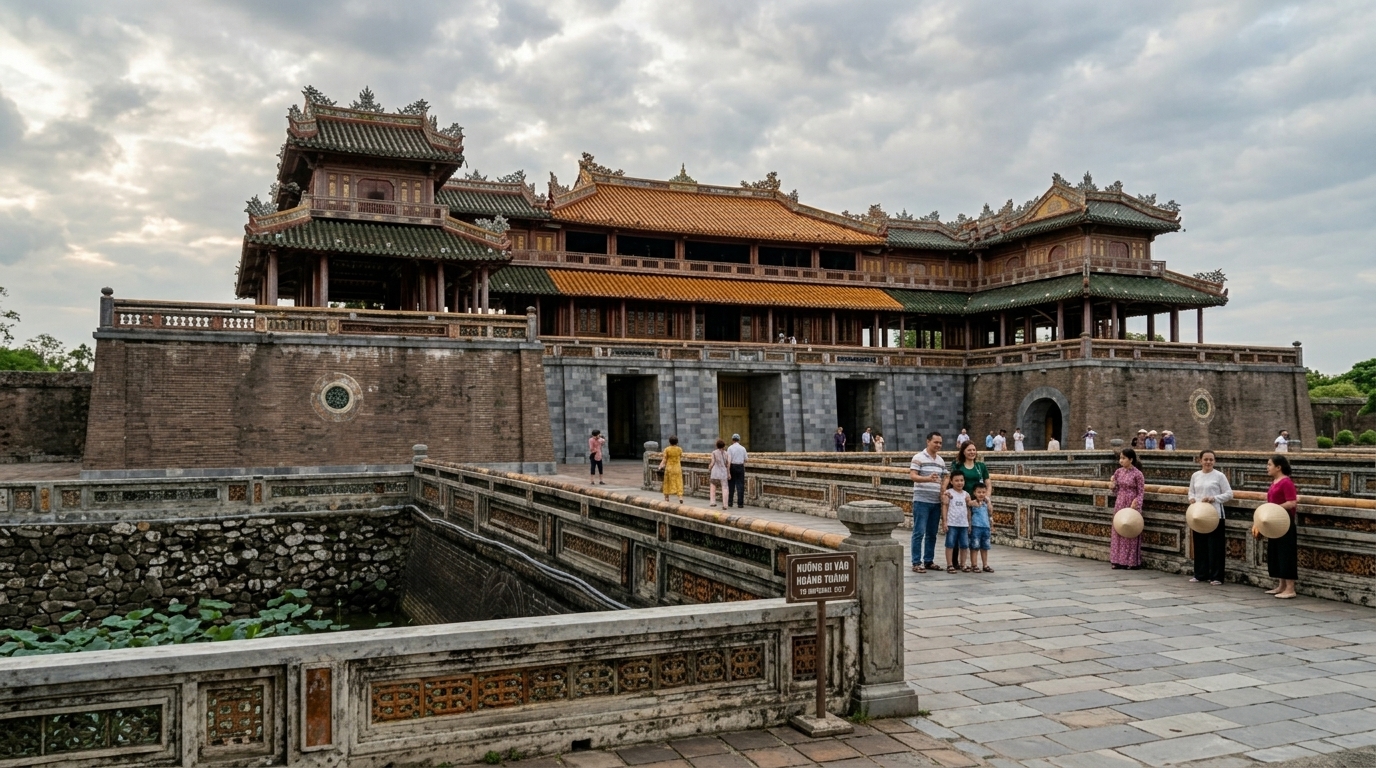
The ceremonial southern entrance — five archways, a raised pavilion on top where the emperor observed ceremonies. The top pavilion (Ngũ Phụng Pavilion) is now open to visitors. Climb it for the view over the main axis of the Imperial City and down toward the Perfume River. Emperor Bảo Đại read his abdication edict from this pavilion in August 1945, formally ending the Nguyễn dynasty and 143 years of imperial rule. Stand there and let that land for a moment.
Thai Hoa Palace (Điện Thái Hòa)
The Hall of Supreme Harmony — the main audience hall where the emperor held court, received foreign dignitaries, and conducted the most formal ceremonies. The lacquered red-and-gold columns inside are original. The throne is a reproduction, but the space itself — the column arrangement, the ceiling patterns, the proportions — is authentic. This is the most intact major structure in the complex. Spend 20 minutes here minimum.
The Forbidden Purple City Ruins
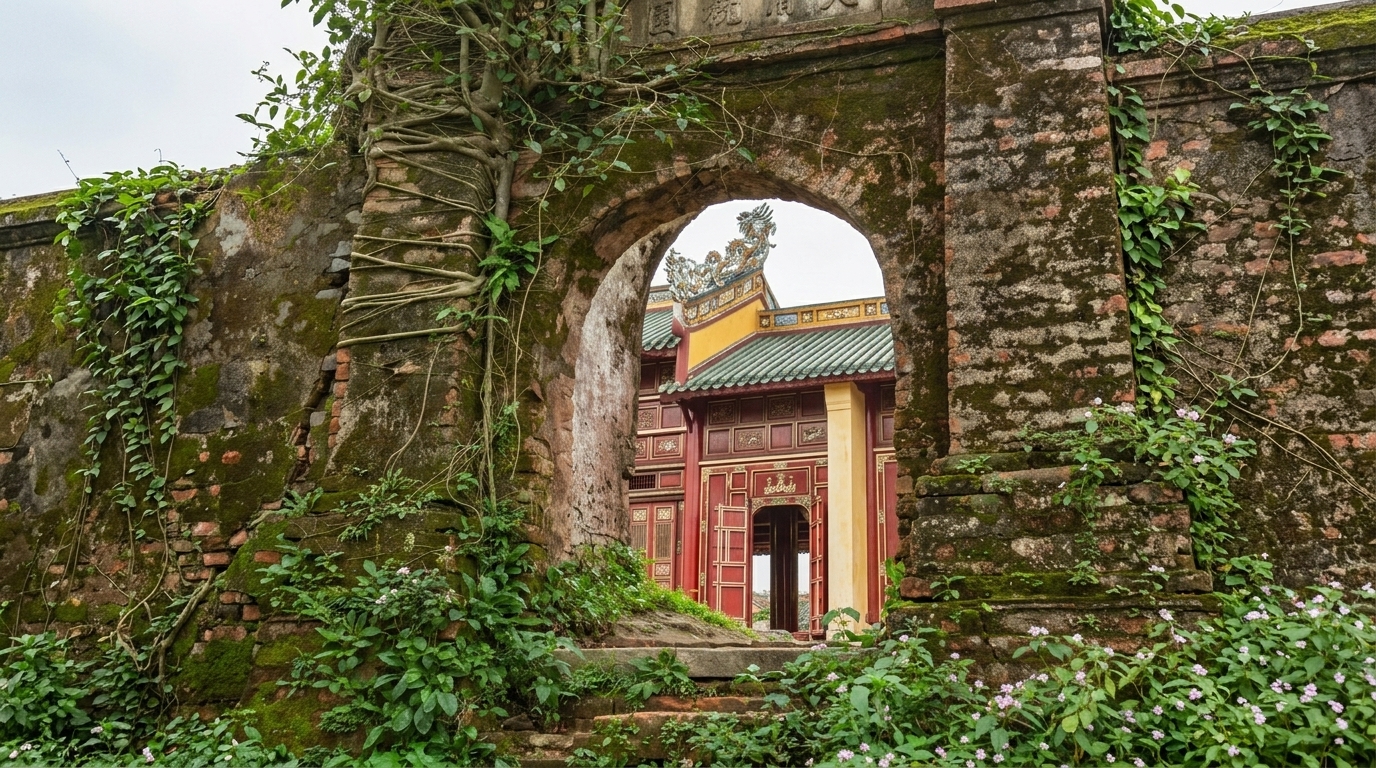
Behind the Thai Hoa Palace: roofless courtyards, carved stone foundations, columns rising to nothing, ornamental gardens threading between the outlines of buildings that no longer exist. The Duyệt Thị Đường theater is one of the few structures still standing — it’s now used for traditional performance shows. The rest is restoration work in progress, with signs explaining what each area originally contained.
Don’t rush through this. The ruins are the honest part of the visit. The intact buildings show you what was built; the ruins show you what happened to it.
Imperial Theater (Duyệt Thị Đường)
The oldest surviving theater in Vietnam — built 1826, used for royal court entertainment and traditional nhã nhạc music. Today it hosts daily performances of royal court music (nhã nhạc — say: nya nyak, UNESCO Intangible Heritage) at 10am and 3pm. Each show runs about 40 minutes. Tickets: 80,000 VND (~$3.20) separate from the main entrance fee.
Worth it? Yes, briefly. The music is unusual enough to warrant 15 minutes of attention. The full 40 minutes requires genuine interest in court music — which most travelers discover they don’t have after about 20 minutes. Sit for the opening, appreciate the costumes and instrumentation, leave gracefully at the half.
★Jake’s Pick
The Forbidden Purple City ruins after 4:30pm, when the light comes in from the west and the restoration workers are heading home. The contrast between the intact ceremonial buildings and the open-sky ruins is clearest then — and the quiet lets you actually think about what you’re looking at.
The Historical Context You Need
The Nguyễn dynasty unified Vietnam in 1802 under Emperor Gia Long and made Hue the capital. Over the next 143 years, 13 emperors ruled from this complex — building, expanding, and modifying the Citadel and Imperial City according to Vietnamese-Chinese architectural tradition.
The French arrived and complicated everything. By the late 19th century, the emperors were increasingly puppets of the French colonial administration. The last emperor, Bảo Đại, abdicated in 1945 and handed power to Hồ Chí Minh’s government — ending the dynasty peaceably but finally.
Then 1968. The Tet Offensive brought North Vietnamese Army forces into Hue for 26 days of brutal urban combat. The fighting destroyed most of the Forbidden Purple City. The reconstruction has been ongoing since the 1980s under UNESCO involvement, but the task is enormous — many buildings existed only in historical records or photographs, and the original craftwork knowledge has to be rebuilt from scratch.
When you see a newly restored gate next to a roofless ruin — that gap is the 1968 battle, still visible in the cityscape 50+ years later.
Common Mistakes Visitors Make
Going at midday: Already covered — don’t.
Skipping the context: The Imperial City without knowing the dynasty history and what happened in 1968 is just old walls. The context makes it extraordinary. Read 10 minutes about the Nguyễn dynasty before you arrive.
Expecting intact grandeur: If your reference point is the Forbidden City in Beijing or Angkor Wat at sunrise, recalibrate. Hue’s Imperial City is a partially destroyed, actively-being-restored site. That authenticity is the point — it’s not a polished tourist attraction, it’s a historical wound being stitched back together.
Buying bottled water inside: 15,000–20,000 VND (~$0.60–0.80) at the vendors inside. Buy a large bottle outside before entering (10,000 VND at a street stall) and bring it in. No restriction on outside food or drink.
Visiting With a Guide vs. Independently
Independent visitors with a guidebook: fine. The signage has improved significantly in recent years and most key structures have English explanations.
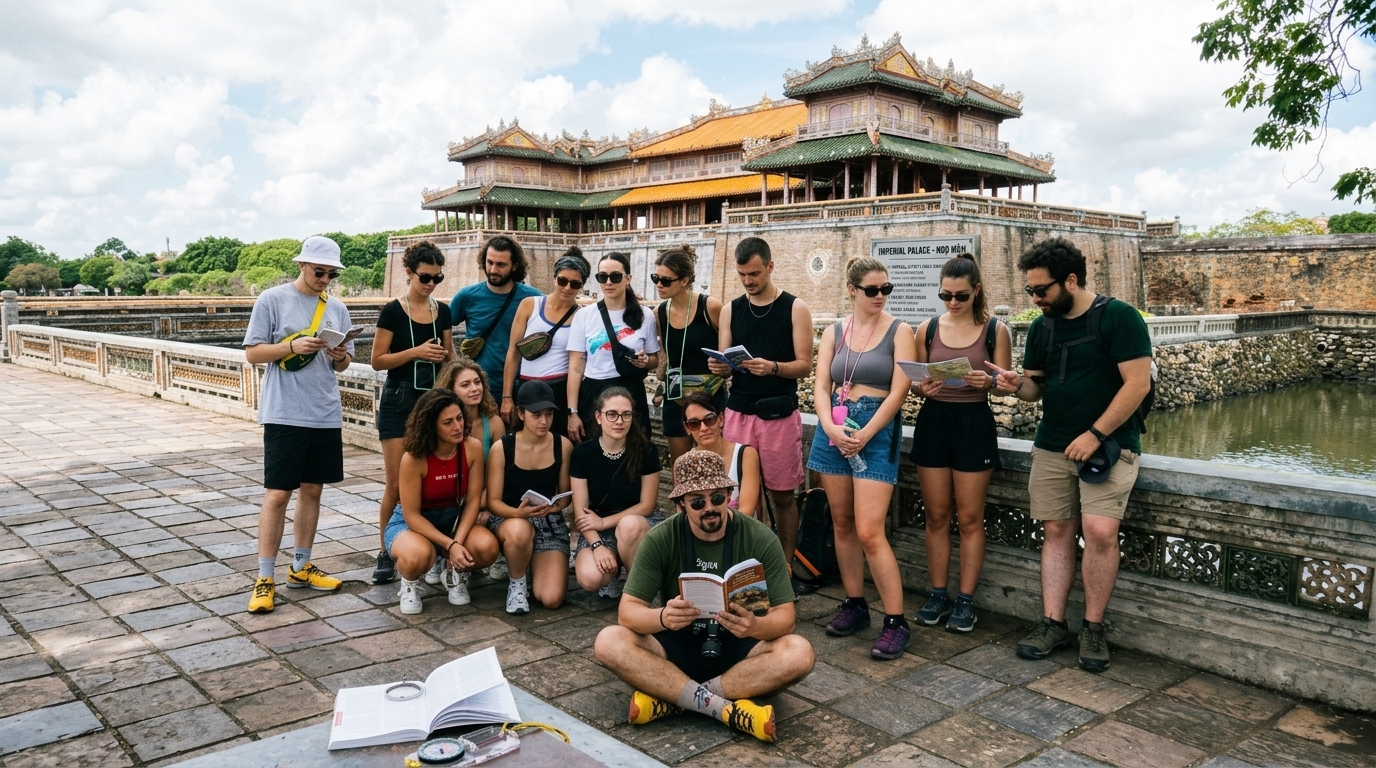
With a guide: the experience is substantially better. A good Hue guide doesn’t just tell you the names of buildings — they explain the ceremonial functions, the political relationships, why certain buildings are positioned as they are, what the inscriptions say. The Chinese-influenced symbolism throughout the complex (Five Sacred Mountains, dragon and phoenix motifs, color codes for rank) becomes readable with a guide and stays opaque without one.
Half-day guided tour from Hue city: 300,000–500,000 VND per person (~$12–20) including transport and guide. Most guesthouses can arrange this. Alternatively, hire a xe ôm driver who does historical commentary — these exist, ask your guesthouse specifically for a “xe ôm guide” who knows the Citadel history.
What Travelers Actually Say: The Consensus
The recurring theme in traveler feedback: people who came expecting Angkor Wat were disappointed. People who came knowing the 1968 context were moved. That gap in expectation is entirely avoidable — read 10 minutes about the Tet Offensive and the Nguyen dynasty before you arrive and the same ruins mean something completely different.
The midday heat in summer (May–August) is consistently cited as the main practical problem. Travelers who went at 7:30am rate the experience significantly higher than those who arrived after 9am. The site doesn’t change; the experience does.
The guided vs. independent debate lands consistently on: if you’re in Hue for 2+ days, hire a guide for the Imperial City. If you’re passing through on one day, go independent with a good audioguide or downloaded context. The symbolism in the throne room alone warrants expert explanation.
⚠Real Talk
The Imperial City combo ticket (530,000 VND ~$21.20 for Imperial City + 3 royal tombs) is genuinely good value — but only if you’re going to all 3 tombs. If you’re visiting just 1 or 2, buy individual tickets. The tombs are 150,000–200,000 VND (~$6–8) each and not all are equal in quality.
Imperial City Hue FAQ
How long do I need at the Imperial City?
Plan for 3 hours minimum. Two hours is not enough to see the full complex thoughtfully. Four hours is the right amount if you’re genuinely interested in the history, want to see the Imperial Theater performance, and plan to walk the outer walls. If you’re visiting in summer, split it: 90 minutes at 7:30am and 90 minutes at 4:30pm.
What’s the difference between the Imperial City and the Citadel?
The Citadel is the outer walled city — a 10-km perimeter enclosing the historical center of Hue including residential streets, temples, and markets. The Imperial City is the inner palace compound inside the Citadel — the formal court buildings and the Forbidden Purple City. The ticketed area covers the Imperial City only; the Citadel walls themselves are accessible without a ticket.
Can I visit the Imperial City without a guide?
Yes. The English signage has improved and most structures are labeled. A guide significantly deepens the experience — the symbolism, political history, and 1968 destruction context — but the site is navigable independently. Bring or download a map; the complex is large enough that people regularly get turned around in the inner sections.