Last updated: May 2026
The Dry Season (November – April) — When to Come
Mui Ne’s dry season runs from November through April and is driven by the northeast monsoon — which, counterintuitively, is what creates the dry, sunny weather on this particular stretch of south-central coast. The wind comes from the northeast off the South China Sea, and Mui Ne’s coastal orientation means it receives the prevailing wind but not the heavy rain that the northeast monsoon brings to central Vietnam (Hue, Da Nang) during October–December.
In practical terms: dry season means sunny mornings, occasional afternoon cloud, temperatures of 27–32°C (80–90°F), minimal rain (under 100mm/month versus 300–500mm in wet season), and a sea that’s swimmable along the main beach.
The sand dunes are at their best in the dry season — the lack of rain means the sand is loose and dry, the red color is more saturated, and the early morning light is consistent rather than obscured by cloud cover.
Month-by-Month Breakdown
November: The dry season’s opening month — often the best value. Weather has stabilized from the rainy season, temperatures are pleasant (27–30°C), and the tourist crowd hasn’t built yet. Accommodation prices are at their yearly low for dry-season conditions. The kitesurfing wind has started building but isn’t at full peak intensity — good for learners. First choice for budget-conscious travelers who care about weather.
December – January: Peak season. Weather is consistent and reliable: sunny, warm days, cooler evenings (24–26°C at night), strong winds from the northeast that make the beach strip lively. Christmas week and New Year are the most crowded and expensive days of the year — accommodation prices double or triple on December 24–January 1. The kitesurfing conditions are excellent in December–January; Long Beach fills with kiters and instructors from across Southeast Asia.
February: Still dry season and still good weather. Tet (Vietnamese Lunar New Year, usually late January or early February) brings a surge of domestic Vietnamese tourists to Mui Ne — the resort town is packed with Saigon families and the atmosphere is festive but crowded. Post-Tet (typically from late February onwards), the town empties out and prices drop sharply. If you’re traveling outside Tet week, February is excellent.
March – April: The most underrated window. Dry season continues, temperatures rise to 30–33°C, the wind moderates from the December–January intensity. Fewer tourists than December–February, lower prices, and beach conditions nearly as good. The White Dunes at Bau Trang are at their most photogenic in March — the reflection lake still has water and the light is warmer than mid-winter. April is the last reliable dry month; by late April the first signs of the wet season appear.
The Wet Season (May – September) — What It’s Actually Like
The wet season in Mui Ne is real: heavy afternoon rain, rough seas, and reduced beach access. May to September sees 300–500mm of rain per month compared to under 100mm in dry season. The southwest monsoon drives this pattern — wind direction reverses, humidity increases, and the water on the main beach (facing east-southwest) becomes choppy and murky.
That said, wet season in Mui Ne isn’t constant rain — it’s afternoon thunderstorms that typically clear by evening, with mornings often sunny and hot. If you’re visiting for the sand dunes (which look genuinely dramatic after rain, with the colors deepened and wet-sand textures visible) or for a cheap resort stay, the wet season isn’t a disaster. It’s just not a beach trip.
The fishing village is particularly atmospheric in wet season — the basket boat fleet operates in higher sea states than you’d expect, the fish catches are often better, and the pre-dawn return of the boats has an added drama when the waves are building at the harbor mouth.
Kitesurfing — The Reason Some People Come Specifically in This Window
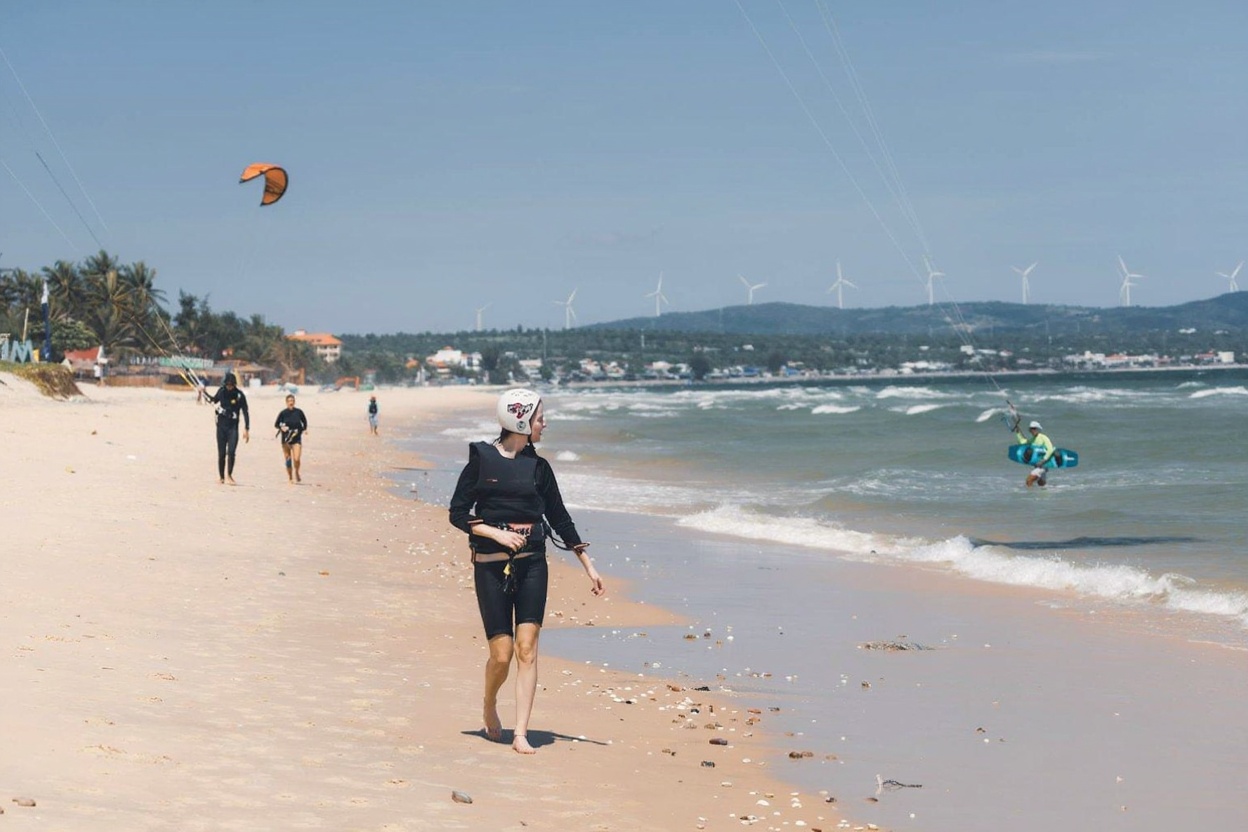
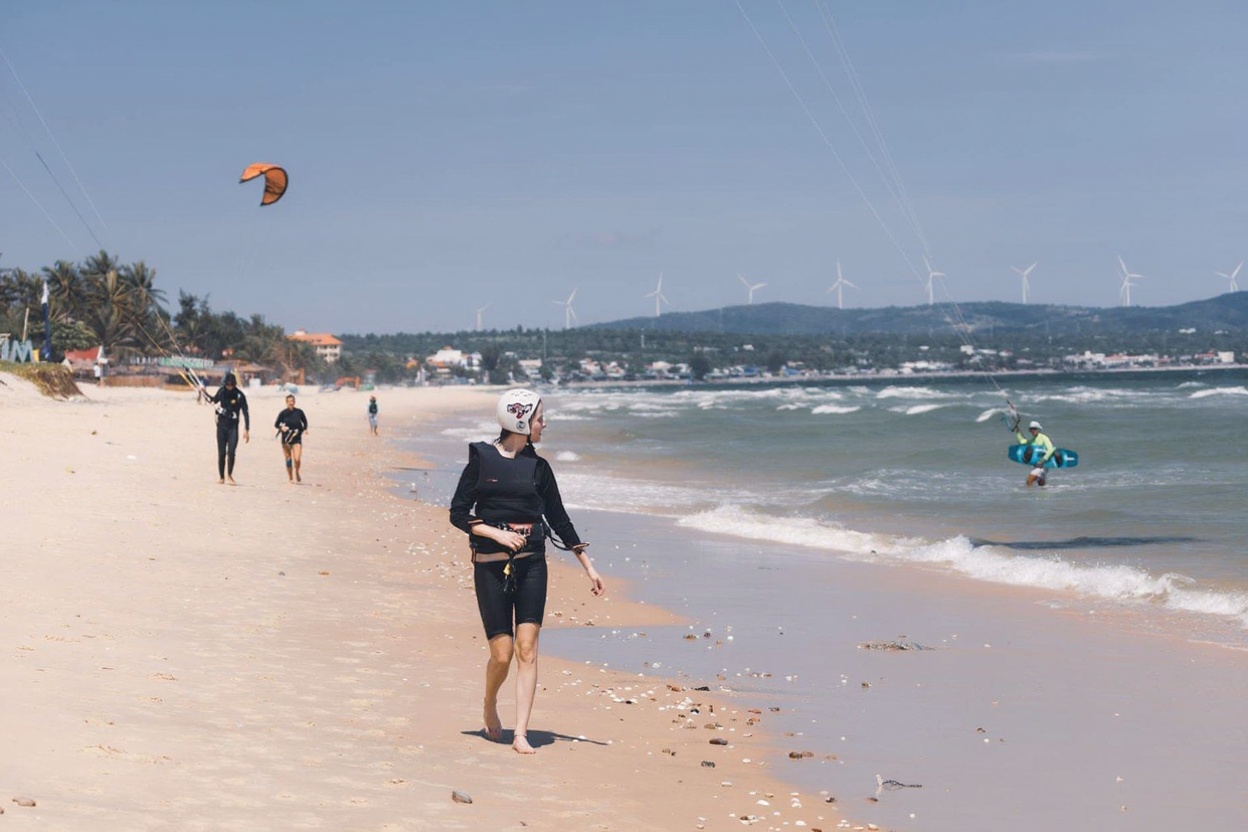
Mui Ne is one of Southeast Asia’s best kitesurfing destinations. The northeast monsoon from October to February delivers consistent 15–25 knot winds along the main beach — not gusty, not fluky, but steady. The Km11 area of Long Beach (near the center of the resort strip) is where the kite schools concentrate. Learning kite schools: 150,000–300,000 VND/hour (~$5.70–11) for group lessons; private lessons considerably more. Gear rental for experienced riders: 500,000–800,000 VND/half-day (~$19–30).
The flipside: the same wind that makes the kite schools exceptional makes the beach experience for non-kiters less pleasant in January peak wind season. Sand blows at face level, sitting on the beach becomes uncomfortable after 11am, and any food or drink left unattended acquires a coating of fine sand within minutes. This is a real tradeoff, not a minor inconvenience.
If you’re not here to kitesurf and the wind bothers you, the sweet spot is the slightly lower-wind months — November or March–April. The wind is still present (and pleasant as a sea breeze rather than a full-force blow) but not at the levels that make the beach strip uncomfortable.
What to Do in Mui Ne By Season
The activities available in Mui Ne vary significantly by season. Here’s the honest breakdown:
Dry season (November–April) — full options:
Klook has the widest selection for Vietnam and is usually the cheapest. KKday is strong on day trips and local experiences.
day in December–February. Sand dunes at dawn — both Red and White Dunes accessible and at their best. Fairy Stream walk: pleasant year-round but best in dry season when the water level is lower and the walk is easier. Kitesurfing: excellent from October–February, good from November–January for both learning and experienced riders. Snorkelling and boat trips to the southern islands: possible but limited compared to the north of Vietnam. Motorbike touring inland: dry roads, easy navigation. Fishing village visit at dawn: excellent year-round but the dry-season light is cleaner.
Wet season (May–September) — reduced but not zero:
Sand dunes: still accessible, more dramatic in moody light, emptier. Fairy Stream: runs deeper and faster in wet season — the experience is different but still worth doing. Fishing village: working hard in wet season, fish catches are often better. Beach swimming: not recommended on main beach in wet season due to rough surf and occasional jellyfish. Kitesurfing: not the recommended season, wind direction changes, conditions inconsistent. Motorbike touring: wet roads, reduced visibility — possible but less enjoyable.
Packing for Mui Ne — What You Actually Need By Season
Dry season (November–April):
Swimwear (obviously). SPF 50 sunscreen in quantity — the reflection off white sand at Bau Trang is brutal, and Long Beach offers minimal shade from 9am onwards. A hat that won’t blow off in the wind (a trucker cap that can be tightened, not a floppy beach hat). Light long-sleeves for the dune visits at dawn — the pre-dawn temperature drops to 22–24°C and the wind chill on the ridge is noticeable. Sandals that stay on in sand and won’t flip off at inconvenient moments. A waterproof bag for the motorbike if you’re riding to the White Dunes in January when the odd shower appears even in dry season.
Wet season (May–September):
A rain jacket or poncho — every motorbike ride is a gamble with a 4pm downpour. Flip flops you don’t mind getting completely wet. Reef shoes for the Fairy Stream if you want the walk comfortable (the wet-season water level means your feet will get wet regardless). Insect repellent — the wet season humidity increases mosquito activity at dawn and dusk. Lighter clothing overall — the humidity sits at 80–90% from May to September and anything heavier than a t-shirt becomes uncomfortable by 10am.
Comparing Mui Ne to Other Vietnam Beach Destinations by Season
Vietnam’s coastline is long and the monsoon system is asymmetric — different coasts have peak seasons at different times. This creates an opportunity to find a good beach regardless of when you travel:
When Mui Ne is in wet season (May–September): The central coast (Da Nang, Hoi An) and the north are often dry and excellent. Nha Trang has a complex season and can be good in this window. Phu Quoc, further southwest, is also in wet season simultaneously with Mui Ne — avoid both.
When Mui Ne is in dry season (November–April): Central Vietnam (Hoi An, Da Nang) is sometimes rainy from October to December. The north (Ha Long, Halong Bay) is in its cooler, drier winter. Nha Trang is in its own dry season. It’s a good time for southern Vietnam broadly.
The practical takeaway: if you’re combining Mui Ne with Nha Trang on the same trip, both work on the same dry-season schedule (November–April). If you’re combining with Da Nang or Hoi An, November–February at Mui Ne coincides with the rainy season in central Vietnam. Plan accordingly.
What I Got Wrong About Mui Ne Timing
I went in early May once — technically just past the supposed dry season cutoff. Two days out of three had significant afternoon rain, the sea was murky, and the beach had a persistent swell that made it uninviting by 10am. The Red Dunes were fine (more dramatic in moody light, actually), but the thing that makes Mui Ne worth the 5-hour bus from Saigon — the beach and the ocean — wasn’t delivering.
That was the trip that taught me the monthly cliff in conditions. April: excellent. Early May: transitional. Late May: genuinely difficult. The calendar matters more in Mui Ne than almost anywhere else in Vietnam because the destination is so weather-dependent. In Hanoi or Hoi An you can adapt your itinerary around rain — museums, covered markets, indoor food stalls. In Mui Ne when the beach is closed by weather, the destination is diminished significantly.
Prices by Season — How Much More Does Peak Cost?
Mui Ne’s accommodation prices track closely with the tourist season:
The price difference between peak and shoulder season at Mui Ne is large enough to change what tier of accommodation you can afford — 200,000 VND separates a fan room from an air-conditioned resort room in shoulder season. For a full breakdown of how Vietnam’s monsoon system works coast by coast, see our guide to the best time to visit Vietnam.
Budget guesthouses (fan room, private bathroom): 200,000–300,000 VND/night (~$7.60–11) in shoulder season (November, March–April). 350,000–500,000 VND/night (~$13–19) in peak season (December–February). Double or more on Christmas week and New Year’s Eve.
Mid-range resort (pool, AC, beach access): 600,000–1,000,000 VND/night (~$23–38) in shoulder. 1,200,000–2,000,000 VND/night (~$45–76) in peak. Peak weekend rates at Christmas can reach 3,000,000–5,000,000 VND ($114–190) per night at the nicer properties on Long Beach.
Wet season: Accommodation prices drop 30–50% from dry-season rates. Budget rooms are available for 150,000–200,000 VND/night (~$5.70–7.60). Resorts actively discount to fill rooms — good value if the beach isn’t the purpose.
Food prices remain consistent year-round — Mui Ne’s restaurant strip prices don’t fluctuate seasonally the way accommodation does. The same bowl of bún bò at the market stall costs 35,000–50,000 VND in January and in July.
Two things worth sorting before you land: a Vietnam eSIM so you have data the moment you clear customs, and travel insurance — medical costs for uninsured foreigners in Vietnam are significant.
Airalo eSIMs activate instantly. Buy before departure — airport SIM queues in Vietnam can take 30+ minutes.
Frequently Asked Questions
Is December the best month to visit Mui Ne?
December is the most reliable month weather-wise — consistent sunshine, low rain, excellent beach conditions. It’s also the peak tourist month, with Christmas week being the year’s busiest and most expensive period. If you’re flexible, November gives you nearly identical conditions for significantly less money and fewer crowds. December is excellent; November is smarter.
Can you visit Mui Ne in the rainy season?
Yes — but don’t come primarily for the beach. May to September brings heavy monsoon rain and rough seas that make the main beach unsuitable for most of each day. The dunes, fishing village, and Fairy Stream still work (and can be more atmospheric in moody weather). Accommodation is at its cheapest and the town is quiet. If you’re on a very tight budget and can live without the beach, wet season Mui Ne can work. If you’re coming for the coast, wait for November.
Is Mui Ne good for families in school holidays?
British and Australian school summer holidays (July–August) fall in Mui Ne’s worst beach season — not recommended for a beach family trip. European Christmas school holidays (December 20 – January 10) coincide exactly with Mui Ne’s best weather and peak season. Excellent beach conditions; plan and book 6–8 weeks ahead for the Christmas window. The April school holidays in the UK/Australia align with Mui Ne’s dry season shoulder period — this is actually an excellent family window: good weather, lower prices than December–February, and manageable crowds.
What’s the water temperature in Mui Ne?
The South China Sea at Mui Ne stays warm year-round: 26–29°C (79–84°F) in dry season, 28–30°C in wet season. No wetsuit required at any time of year. The warmest water temperature occurs in April–May as the ocean heats before the monsoon begins. There’s no “cold water” problem at Mui Ne — the Gulf of Thailand and South China Sea stay tropical throughout the year.
How many days do you need in Mui Ne?
Two nights is the minimum for the beach to feel worth the 5-hour bus from Saigon. On two nights you can fit: Red Dunes at dawn on day one, Fairy Stream afternoon, evening at a seafood restaurant on the beach road; White Dunes and fishing village on day two before the afternoon bus back. Three nights is comfortable and removes the rushing. A week is fine if you’re combining beach time with kitesurfing lessons or simply want to be stationary at the coast for a few days. There is genuinely enough to fill a week without repetition.
What is the weather like in Mui Ne in January?
January is peak season and peak wind. Temperature: 27–30°C daytime, 22–24°C at night. Rain: minimal — occasional showers but nothing consistent. Wind: strong northeast monsoon, 15–25 knots regularly. The beach is great for swimming in the morning before wind picks up; by afternoon the sand is blowing and the chop makes sitting on Long Beach uncomfortable. The sunset is excellent. Accommodation prices are at a year-high (except Christmas week). January is one of the best months weather-wise, just bring something to shield from the wind.
Is Mui Ne good in March?
Yes — March is one of the best months. The dry season continues, the wind moderates from December–January peak intensity, temperatures are 28–33°C (warmer than December but still comfortable in the morning and evening), and tourist numbers drop significantly from peak season. Accommodation prices are meaningfully lower than December–February. The White Dunes’ reflection lake still has water in early March. The sea temperature is warm. If you have flexibility in when to travel and are choosing between February and March, March is better value and nearly identical conditions.
What are the public holidays that affect Mui Ne?
Three Vietnamese public holidays that significantly affect Mui Ne:
Tet (Lunar New Year, January–February): The biggest holiday of the year — domestic Vietnamese tourism peaks, Mui Ne fills with Saigon families. Dates change annually (lunar calendar). Book accommodation 3–4 weeks ahead minimum. Prices spike.
Reunification Day + International Workers Day (April 30 – May 1): A 2–4 day long weekend that sends massive numbers of domestic tourists south from Saigon. Mui Ne specifically fills up — book 2–3 weeks ahead. This falls in the transition between dry season end and wet season beginning — weather can go either way.
National Day (September 2): Falls in the wet season — not relevant for most tourism planning, but if you’re already in the area, accommodation prices blip upward briefly.
Is there jellyfish at Mui Ne beach?
Jellyfish are occasionally reported at Mui Ne beaches, primarily from May to October during the transition and wet season months. Long Beach sees them less frequently than southern Vietnam’s more exposed coasts. If jellyfish are present, local fishing families and your guesthouse will know — ask before you swim. The dry season (November–April) is essentially jellyfish-free on the main beach. If you’re stung: vinegar on the affected area, not freshwater, not rubbing. Every beach restaurant has vinegar. Ask for giấm (say: yam) if the staff don’t speak English — they’ll know what to bring. A 50,000 VND bottle of supermarket vinegar in your bag is adequate field-kit for a week at any Vietnamese beach. The pharmacies on the main beach road in Mui Ne also carry antihistamine cream which helps with the residual itch after the initial vinegar treatment.
Can I visit Mui Ne in October?
October is a transition month — the wet season is winding down but not finished. Weather is unpredictable: some days are fully sunny and the beach is pleasant, other days bring significant rain and choppy seas. October is also the beginning of the kitesurfing wind season, so if kite is your reason for visiting, October works. If swimming and beach weather are your priority, wait for November when conditions stabilize. Accommodation prices in October are at or near their yearly low — there’s value here if you’re flexible with weather expectations.
FAQ
What is the best time to visit Mui Ne?
November to April is the high season — dry, sunny, and the northeast wind makes it Vietnam’s premier kitesurfing destination. October and November are particularly good because the wind is strongest. May to September is the rainy season — accommodation prices drop 30–50%, but heavy rain can make beach days uncomfortable and kitesurfing conditions are poor.
Does Mui Ne have a rainy season?
Yes — from May to September (the southern Vietnam monsoon). Unlike most beach destinations in Vietnam, Mui Ne’s unique geography (the southeast coast position) actually reverses the normal pattern: when central Vietnam (Hoi An, Da Nang) is wet in October–November, Mui Ne is dry. Mui Ne’s worst weather is June–August.
Is Mui Ne worth visiting outside kitesurfing season?
Yes, but with lower expectations. The sand dunes are worth seeing year-round. The fishing village, fairy stream, and food scene don’t depend on weather. Swimming is better in dry season but possible year-round except during heavy rain. The low season gives you Mui Ne resort beaches at 40–50% discounts and far fewer tourists.
What months are best for kitesurfing in Mui Ne?
October to January is peak for wind — consistent northeast winds of 15–25 knots. November is typically the most reliable month. February to March is still good. April signals the wind dropping off. The Mui Ne Kitesurf Beach has dedicated kite schools (Kite Village, C2Sky) with beginner courses from around $80 USD per session.
Is Mui Ne good for families?
Mediocre — the beach is not ideal for young children (sand flies in evening, some beach areas have shore break). The main draws (kitesurfing, sand dunes) are more adult-oriented. The restaurants and resort infrastructure are family-friendly. Better beach choices in Vietnam for families: Phu Quoc, An Bang Beach (Hoi An), or Da Nang’s non-tourist beach areas.