Updated: May 2026
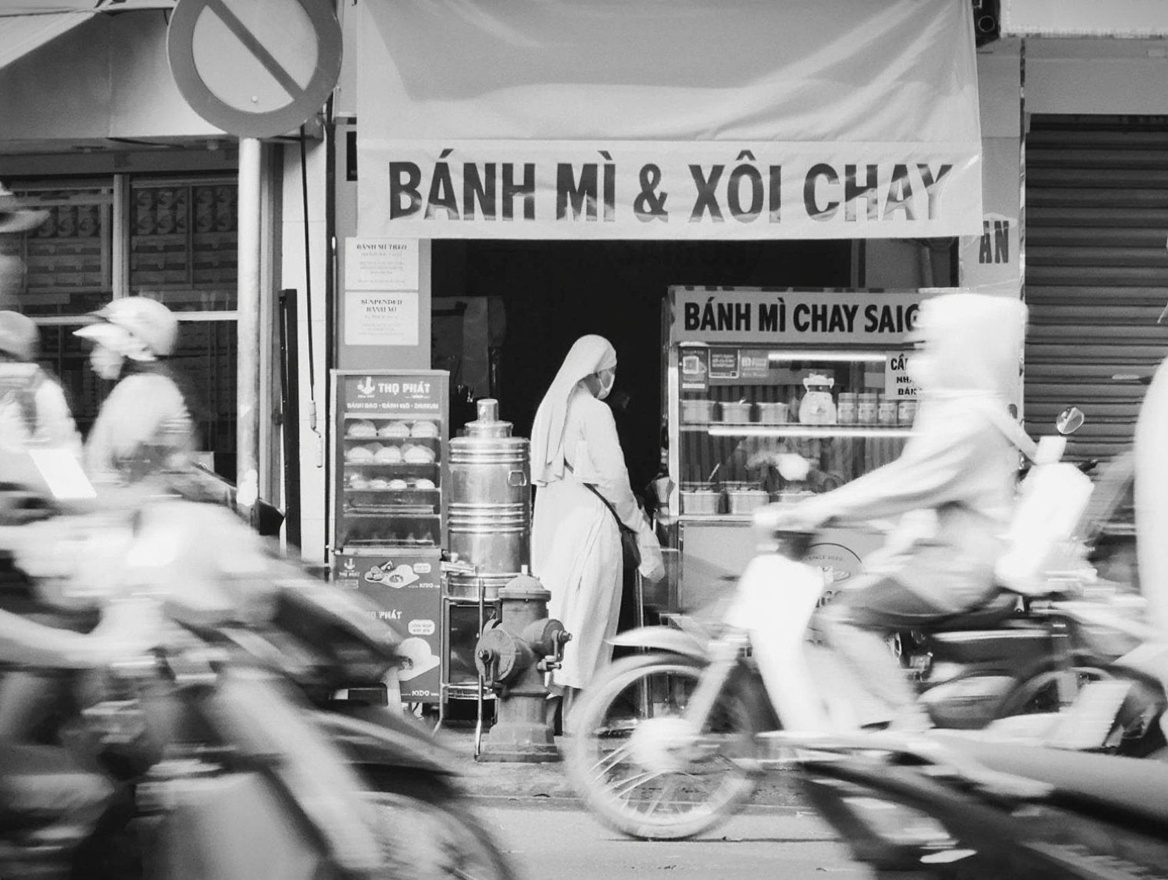
The challenge in HCMC is filtering. The tourist belt of Bùi Viện (say: Boo-ee Yen) Walking Street and the Phạm Ngũ Lão area has food that looks like Vietnamese street food but is priced and sometimes tasted for people who’ve never had the real thing. It’s not fake — it’s just optimized for a different market. Getting to the actual street food requires walking three or four blocks in any direction from those strips and eating where the locals eat.
The Signature Saigon Dishes
Cơm tấm (say: come tahm — “broken rice”): The defining dish of Saigon. A plate of broken jasmine rice grains — a byproduct of rice milling that became a culinary tradition — served with grilled pork chop (sườn nướng, say: suon noo-ong), a fried egg, shredded pork skin (bì, say: bee), steamed pork and egg mold (chả, say: cha), cucumber, and a cup of nước chấm (fish sauce dipping sauce). Full plate: 35,000–60,000 VND ($1.40–2.40) at local stalls. This is breakfast, lunch, and dinner food simultaneously — cơm tấm stalls serve all day.
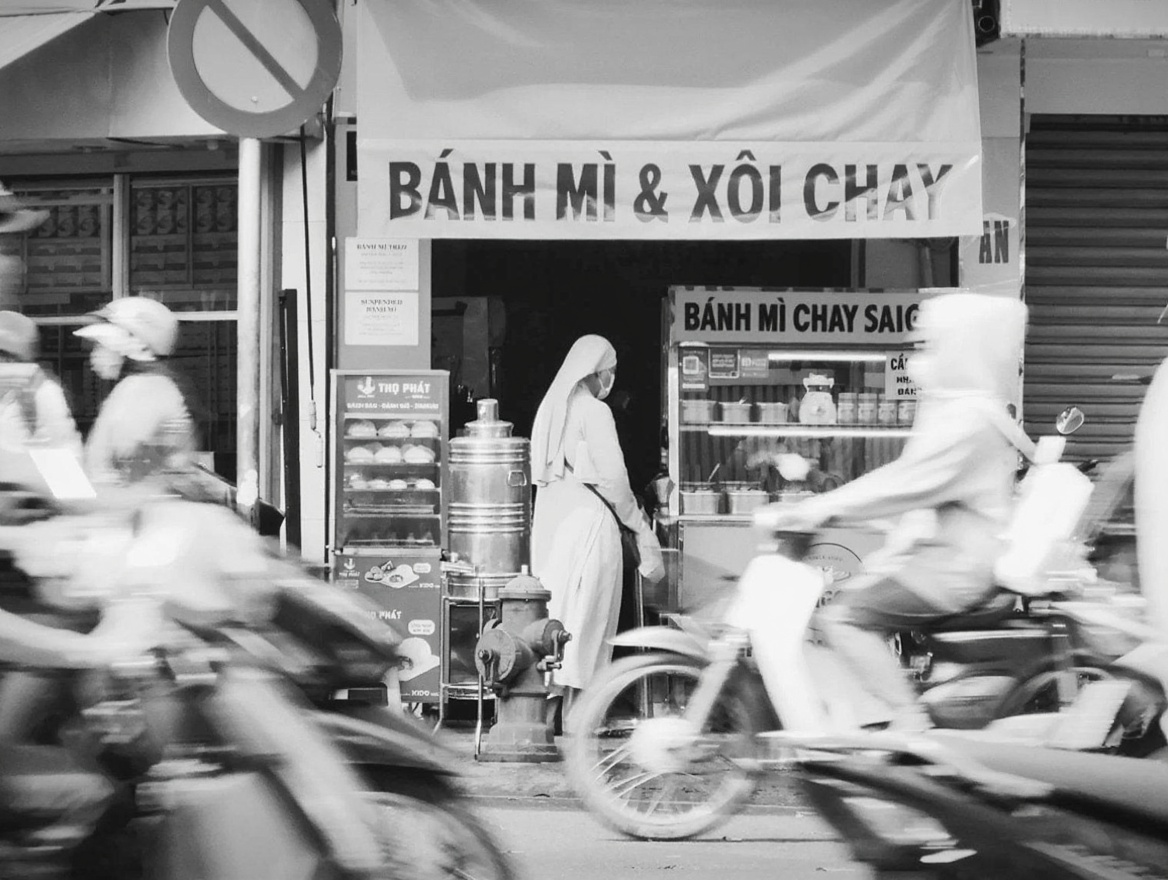
Bánh mì (say: ban mee): The Vietnamese baguette sandwich, and HCMC’s street version is the platonic standard. The best bánh mì in the city involve a specific interplay: the baguette must be light with a crackling crust (Saigon baguettes are crunchier than the Hoi An version), pâté spread inside the shell, sliced chả lụa (Vietnamese pork sausage), shredded chicken or pork, fresh coriander, daikon and carrot pickles (đồ chua, say: doh chua), sliced chili, and cucumber. 25,000–40,000 VND ($1–1.60) at street carts. Bánh Mì Huỳnh Hoa on Lê Thị Riêng Street (District 1) is the most famous specialist in the city — routinely 20-person queues, worth it.
Bún bò Huế (say: boon baw Hway): Central Vietnamese spicy beef noodle soup — more complex and less internationally known than phở. Thick round rice noodles, slices of beef shank, pork, and fermented shrimp paste in a lemongrass and chili broth. The Saigon version is slightly less spicy than the Hue original but retains the characteristic red oil sheen. 45,000–70,000 VND ($1.80–2.80).
Bánh xèo (say: ban say-oh — “sizzling cake”): A large yellow crepe made from rice flour and coconut milk, folded over shrimp, pork, and bean sprouts, served with lettuce and herb leaves for wrapping and nước chấm for dipping. The sizzling sound when batter hits the hot pan is what gives it the name. Best eaten at proper bánh xèo restaurants rather than carts — the proper crepe needs a specific wok setup. 60,000–120,000 VND ($2.40–4.80) for one large crepe that serves two as a shared dish.
Gỏi cuốn (say: goy koo-on — “fresh spring rolls”): Rice paper rolls filled with shrimp, pork, rice vermicelli, mint, and lettuce — served fresh, not fried. Dipped in hoisin-peanut sauce. 25,000–40,000 VND for three rolls. Lighter than phở, better as a snack than a meal. Found everywhere; quality is consistent across the city because the ingredients are standardized.
Hủ tiếu (say: hoo tyew): The southern Vietnamese noodle soup that Saigon specifically claims. Pork broth base, clear rice noodles, pork slices, shrimp, quail eggs, and crispy garlic on top. Lighter and cleaner in flavor than phở, with the option to order “dry” (khô, say: khoh) where the noodles come in a bowl without soup and a small side bowl of broth for dipping. 40,000–65,000 VND ($1.60–2.60).
Where to Eat: Getting Off the Tourist Strip
Vĩnh Khánh Street (District 4): The best seafood street in Saigon. A 500m stretch of plastic-chair restaurants with fresh seafood priced per 100g — clams, oysters, snails, crabs, scallops — cooked your way. This is where young Vietnamese come on weekend evenings. The area is 2km from the Phạm Ngũ Lão backpacker zone — close enough to reach easily, far enough that most tourists don’t find it. Price range: 50,000–200,000 VND per dish depending on the seafood.
Chợ Lớn (District 5 and 6): Ho Chi Minh City’s Chinatown — the largest Chinese community in Southeast Asia. The food here is a distinct regional Chinese-Vietnamese fusion: dim sum at morning tea houses (điểm tâm, say: dyem tahm), Cantonese roast duck (vịt quay, say: vit kwai), congee (cháo, say: chow), and a dozen rice and noodle specialties not found elsewhere in Vietnam. Bình Tây Market (say: Binh Tay) is the center. Take a Grab there for breakfast on a Saturday morning.
Klook has the widest selection for Vietnam and is usually the cheapest. KKday is strong on day trips and local experiences.
cuisine: snails cooked with butter and garlic, with lemongrass and chili, with beer sauce, served with baguette slices for scooping. 60,000–150,000 VND per dish. The area is liveliest from 5pm to 11pm.
The area around Ben Thanh Market (District 1): The market itself is tourist-priced. The streets surrounding it — Lê Thánh Tôn, Thủ Khoa Huân — have proper local lunch spots. Walk around the block from the main market entrance and the prices drop by 40%.
District 3 food streets: Võ Văn Tần and the surrounding streets have some of the best mid-range Vietnamese dining in the city — not street carts, but proper open-fronted restaurants where a full meal with beer runs 80,000–150,000 VND ($3.20–6).
Timing: When to Eat What
Vietnamese street food is heavily time-coded. Showing up at 2pm wanting cơm tấm might work; showing up at 2pm wanting phở at a local spot will often mean a closed stall. Understanding the schedule helps.
Early morning (5–8am): Peak time for phở, bún bò Huế, bánh canh (thick noodle soup), xôi (sticky rice with toppings), cháo (congee). The classic Vietnamese breakfast runs early and most serious breakfast stalls are finished by 9am.
Mid-morning (8am–12pm): Cơm tấm stalls at their busiest. Bánh mì carts running full speed. Café culture (cà phê sữa đá, bạc xỉu for all-milk coffee) at its peak. The window for dim sum in Chợ Lớn.
Lunchtime (11am–2pm): Cơm bình dân (set plate lunch) spots — the Vietnamese equivalent of a daily lunch special. A plate of rice with 2–3 hot dishes selected from the display: 35,000–55,000 VND ($1.40–2.20). Also the peak time for noodle dishes ordered for lunch, bún thịt nướng (cold noodles with grilled pork).
Afternoon (2–5pm): Street food quiet period. Many stalls closed. Good time for cafés, fresh fruit (sinh tố fruit smoothies), and snacks. Bánh mì carts may reopen around 4pm for the afternoon rush.
Evening and night (5pm–midnight): The snail streets, seafood streets, and late-night food come alive. This is the time for bánh xèo, bò nướng lá lốt (grilled beef in betel leaf), and the drinking food culture — nhậu (say: nyow), the Vietnamese tradition of outdoor eating and drinking that fills every sidewalk in HCMC after dark.
Specific Spots Worth Knowing
General area advice only gets you so far. These specific addresses are starting points — not exhaustive lists, but places where the food is genuinely good by Vietnamese standards:
Bánh Mì Huỳnh Hoa — 26 Lê Thị Riêng, District 1. The most-discussed bánh mì in Saigon. Queue at the window, maximum four fillings on each baguette. Open from roughly 6am until they sell out, often before 8pm. 40,000–60,000 VND. Cash only, eat standing on the sidewalk.
Cơm Tấm Mộc (and similar spots on Bùi Thị Xuân, District 1) — The street running parallel to the backpacker area has several cơm tấm specialists that serve locals. Look for packed plastic chairs at 7am. Price: 40,000–55,000 VND. The grilled pork chop should be charred at the edges and juicy inside.
Bình Tây Market, Chợ Lớn (District 6) — The central market of Chinatown. The surrounding streets have Cantonese breakfast spots that open at 6am for dim sum (điểm tâm) — small bamboo steamers of har gow and siu mai, turnip cake, rice rolls. 20,000–40,000 VND per steamer. Go early; much of it is gone by 10am.
Vĩnh Khánh Street seafood (District 4) — The street runs parallel to the canal. Any of the plastic-chair spots are competitive in quality. Order by weight and method: point at what you want alive in the tank, specify steamed (hấp), grilled (nướng), stir-fried (xào). Clams in ginger sauce (nghêu hấp sả), oysters with peanuts and spring onions (hàu nướng mỡ hành), and salted shrimp (tôm rang muối) are the defaults everyone orders.
Phở Lệ, District 5 — On Nguyễn Trãi Street, one of several old-school phở shops that have been operating for decades. The broth is more complex than tourist-area phở — slower-cooked, cleaner flavor. 50,000–70,000 VND. Opens at 6am, closes when the pot runs out.
What I Got Wrong
First week in Saigon. I was staying near Bùi Viện and eating from the restaurants with English menus on the street. The food was fine. The prices seemed reasonable — around $5–7 for a bowl of phở.
On day four, a Vietnamese colleague took me to her neighborhood lunch spot in District 3. Same bowl of phở, same size, same quality — 35,000 VND ($1.40). I looked at the menu. Everything was a third the price of what I’d been paying.
I wasn’t being scammed in the tourist area — those places charge tourist prices openly and they’re not dishonest about it. I was just buying from the wrong market. Since then, my rule for any new city in Vietnam: find one local restaurant on Google Maps (search in Vietnamese, not English, filter by 4+ stars with recent local reviews), eat there on day one, and use the prices you pay as the calibration point for everything else.
Frequently Asked Questions
What is the best street food in Ho Chi Minh City?
Cơm tấm (broken rice with grilled pork) is the signature Saigon dish. Bánh mì at Bánh Mì Huỳnh Hoa on Lê Thị Riêng Street is the benchmark. Seafood on Vĩnh Khánh Street in District 4. Dim sum and Cantonese food in Chợ Lớn. Cooked snails on Hoàng Sa Street in District 3. The city’s strength is diversity — more regional Vietnamese food and Chinese-Vietnamese food in one place than anywhere else in the country.
Where is the best street food in Saigon?
Not on Bùi Viện (tourist prices). The best food is in Districts 3, 4, 5, and 6 — away from the backpacker zone. Specifically: Vĩnh Khánh Street (seafood, District 4), Hoàng Sa Street (snails, District 3), Bình Tây Market area (Chợ Lớn breakfast), and the side streets around Bến Thành Market. Google Maps in Vietnamese — search the dish name rather than “street food” — is the most reliable navigation tool.
How much does street food cost in Ho Chi Minh City?
At local stalls: 30,000–65,000 VND ($1.20–2.60) for a full meal. Bánh mì: 25,000–40,000 VND ($1–1.60). Seafood by weight: 50,000–200,000 VND per dish. Tourist area restaurants: 80,000–200,000 VND ($3.20–8) for the same dishes. The price gap between local eating and tourist-area eating in HCMC is larger than in Hanoi — about 3–4x versus 1.5–2x.
Is street food safe in Ho Chi Minh City?
Safer than its reputation suggests. High turnover at popular stalls means ingredients are fresh. Vietnamese street food is cooked at high heat (charcoal grills, boiling broths) that kills most pathogens. The risk is lower at busy, local-facing stalls than at stalls in tourist areas that have lower turnover. Avoid: precut fruit left in the sun, ice at stalls that don’t clearly use bagged commercial ice, and anything that’s been sitting unrefrigerated for hours.
How do I order street food in Saigon without speaking Vietnamese?
Point-and-gesture works at most stalls. Learn the dish name and say it with a number: “cơm tấm, một” (one broken rice plate), or just point at what someone else is eating and hold up one finger. Photos on your phone are a reliable fallback for complex orders. Most street stall owners in tourist-adjacent areas have enough English to confirm the price and understand basic modifications (“không ớt” — no chili — is worth learning). Payment is always at the end; don’t try to pre-pay.
What’s the difference between Saigon phở and Hanoi phở?
Significantly different in practice. Saigon phở is sweeter and served with a wider range of accompaniments: bean sprouts, fresh herbs (basil, sawtooth herb), lime, chili sauce, and hoisin sauce on the side. The broth is richer and slightly sweeter than the northern version. Hanoi phở is served plainer — just the broth, noodles, meat, and a few green onions — and purists consider the Hanoi version the original form. Both are excellent; they’re genuinely different dishes from the same root.
Can I eat street food cheaply in HCMC on a budget?
Very cheaply. A full breakfast (phở, cơm tấm, or bánh mì) costs 30,000–50,000 VND ($1.20–2). Lunch at a cơm bình dân spot (set plate lunch) is 35,000–55,000 VND ($1.40–2.20). Dinner at a local restaurant: 60,000–100,000 VND ($2.40–4). Three meals a day in HCMC eating local costs 150,000–250,000 VND ($6–10) total. The tourist zone inflates this by 2–4x — every block away from Bùi Viện reduces your food spend.
Tools for Finding Good Street Food in HCMC
The navigation problem in Saigon isn’t finding food — it’s finding good food in the right price range. A few tools that work better than the standard tourist guides:
Google Maps in Vietnamese: Search the dish name in Vietnamese (cơm tấm, phở, bún bò Huế) rather than “street food” or “Vietnamese restaurant.” The results skew local and the rating distribution is honest — Vietnamese reviewers aren’t rating for tourist palatability, they’re rating for authenticity and value. Filter for 4+ stars with recent reviews. Look at photo uploads from Vietnamese users rather than tourist photos.
Grab Food: The delivery app section shows you which restaurants are popular in which neighborhoods, which operating hours overlap with what you want to eat, and real prices. Even if you’re not ordering delivery, it’s useful for discovering food concentrations you wouldn’t find by walking.
Ask at your guesthouse — carefully: Don’t ask “where’s good street food?” — the answer will be the nearest tourist strip. Ask “where do you eat lunch?” or “what’s the closest cơm tấm place?” Specificity gets better answers than general questions.
The 7am rule: If you’re willing to walk at 7am, the best of Saigon’s breakfast food is fully visible — steaming pots of phở on street corners, cơm tấm stalls already packed with people in work clothes, bánh mì carts being restocked. The city at 7am shows you exactly where to eat for the rest of the day.
Eating Solo vs. Eating with Groups
Saigon street food culture is more sharing-oriented than most visitors expect. Many of the better dishes — bánh xèo, seafood on Vĩnh Khánh, nhậu snack culture — are designed for groups. This creates an access problem for solo travelers.
Solutions that work: bánh xèo restaurants typically make single-serve smaller versions on request. Seafood stalls will often prepare a half-serve of a dish for one person — ask “nửa phần” (say: noo-a fun — half portion). For nhậu culture specifically, solo eating at a table is perfectly normal — the social aspect of the tradition doesn’t require a group, it just scales better with one.
The cơm tấm format is inherently solo-friendly — a single plate built for one person, eaten quickly, no table-sharing expectation. This is why cơm tấm has become the default recommendation for solo travelers: it’s cheap, fast, filling, available all day, and ordered and consumed exactly as a single person would want to order and consume it.
Two things worth sorting before you land: a Vietnam eSIM so you have data the moment you clear customs, and travel insurance — medical costs for uninsured foreigners in Vietnam are significant.
Airalo eSIMs activate instantly. Buy before departure — airport SIM queues in Vietnam can take 30+ minutes.
Drinks to Know
Street food in HCMC comes with a drink culture worth knowing about separately.
Cà phê sữa đá (say: ca feh soo-a da): Iced milk coffee — the default Vietnamese coffee drink, made with robusta grounds dripped through a small metal phin filter into a glass of sweetened condensed milk, poured over ice. Strong and sweet. 20,000–35,000 VND ($0.80–1.40) at local cafés. This is breakfast coffee. Order this.
Nước mía (say: nook mee-a): Fresh sugarcane juice pressed to order, usually with a wedge of kumquat for acidity. 10,000–20,000 VND ($0.40–0.80) at street carts. The machines look like something from a 1970s factory — a metal press squeezing sugarcane stalks directly into your cup. Refreshing in ways a bottled drink can’t match in 35-degree humidity.
Bia hơi (say: bee-a huh — “fresh beer”): Draft beer brewed fresh daily, served in small glasses at plastic-chair street spots. Typically 5–7% alcohol, light and slightly yeasty, and extremely cheap — 7,000–15,000 VND ($0.28–0.60) per glass. HCMC doesn’t have the same bia hơi culture as Hanoi (where it’s a tourist attraction itself), but local spots exist throughout the city for the evening nhậu tradition.
HCMC rewards the curious eater. The sheer variety of what this city accumulated — from northern refugees, from the Chinese community, from central Vietnamese migration, from the southern delta — makes it genuinely difficult to eat the same thing twice for an entire week of exploring. Use Grab to get to the actual food streets. Eat before noon for the best versions of morning dishes. Accept that the three blocks between you and the tourist strip represent a significant percentage of your food costs for the day. If you find yourself paying $7 for a bowl of phở on Bùi Viện, you’re in the wrong room — walk until you find the plastic stools and the steam.
For the broader Vietnam food picture, the Vietnam food guide covers dishes from north to south with regional context. If you’re also visiting Hanoi, the Hanoi street food guide covers the capital’s distinct food culture and where the best stalls concentrate. For everything beyond eating — temples, museums, and neighborhoods — the Saigon things to do guide covers the city’s full range.
FAQ
What is the best street food dish in Saigon?
Bún bò Huế (spicy lemongrass beef noodle soup) is underrated but exceptional in Saigon. Bánh mì from Huynh Hoa on Le Thi Rieng Street is widely considered the city’s best. Com tam (broken rice with grilled pork) at any sidewalk stall before 10 AM. Hu tieu (pork and noodle soup, a distinctly southern dish not found in the north) at stalls near the central market.
Where is the best street food in Ho Chi Minh City?
District 4 is the most concentrated street food area — Ben Van Don Street and surrounding alleys have dense clusters of seafood stalls, bún bò, and com tam. Nguyen Trai Street in District 5 (Cholon) for Chinese-Vietnamese food. Pham Ngu Lao area in District 1 for backpacker-friendly options. Avoid ‘tourist street food tours’ that take you to the same sanitized stalls — explore independently.
Is Saigon street food safe to eat?
Generally yes if you apply basic judgment: eat where the local crowd is eating, look for high turnover (fresh food), avoid places where pre-cooked food sits out for hours in heat. Raw herbs and vegetables are washed but may carry more risk for travelers with sensitive stomachs. The Vietnamese street food death toll among tourists is essentially zero — the food safety narrative is overblown.
What is the cheapest meal you can get in Saigon?
Bánh mì from a street cart: 25,000–40,000 VND ($1–1.60). Com binh dan (workers’ rice) at any market stall: 30,000–50,000 VND for rice + 2 sides. Phở or bún from a street vendor: 40,000–70,000 VND. A full filling meal is achievable for under 50,000 VND ($2) if you eat where Vietnamese workers eat.
What areas should I avoid for street food in Saigon?
The ‘tourist menu’ restaurants around Bui Vien Walking Street charge 3–5x market rates for mediocre food. Avoid the fixed tourist menus near Notre Dame Cathedral and Ben Thanh Market without checking prices first. For genuine cheap food, walk one or two streets away from the main tourist corridors into the surrounding alleys.