Home
›
Mui Ne
›
Getting to Mui Ne from Saigon: Bus, Flight, or Car?
The sleeper bus — Vietnam's most efficient long-distance transport for distances under 600km
Getting to Mui Ne from Saigon: Bus, Flight, or Car?
Getting to Mui Ne from Saigon takes 4.5–5 hours by sleeper bus and costs 120,000–200,000 VND (~$4.55–7.60). That’s the default. The overnight bus leaves D1 in the evening, drops you in Mui Ne around midnight or early morning, and you wake up on the coast. Phan Thiet airport opened in 2023 for short-haul domestic flights — 30 minutes from Saigon, from ~300,000 VND (~$11) one-way. The bus is better value; the plane is for people with more money than time.
Sleeper bus from Saigon to Mui Ne: 5h, ~120,000–200,000 VND (~$4.55–7.60) — book night before
Depart D1 area limousine buses direct to Mui Ne; no terminal needed
Avoid day trip — 5h each way is pointless without at least one night
Best combo: sleeper overnight → arrive dawn, check in, see Red Dunes at 6am before the ATVs
One-way by plane: Saigon to Phan Thiet airport opened 2023, ~30 min, 300,000–600,000 VND
Bottom line: 4–5 hour sleeper bus is the default; night bus avoids the day entirely
✈ Search Flights to Vietnam
Getting to Mui Ne from Saigon: Bus, Flight, or Car? | Vietnam Unlock
Last updated: May 2026
The Sleeper Bus — Default and Correct
Mui Ne is 200km southeast of Saigon, roughly 4.5–5 hours by road depending on traffic and the number of stops. The sleeper bus is the most common way tourists and Vietnamese travelers make the journey — cheap, comfortable enough, and the overnight option means you don’t waste a day sitting on a highway.
The sleeper bus — Vietnam’s most efficient long-distance transport for distances under 600km
The main operators for the Saigon–Mui Ne route:
i Vien streets in D1. More expensive than FUTA at 180,000–250,000 VND (~$6.85–9.50), but the door-to-door pickup avoids the terminal entirely. Drop-off is usually directly on Nguyen Dinh Chieu street in Mui Ne — the main beach road where most accommodation is located.
Limousine vans (9-seat) — premium option, significantly faster (3.5–4h with fewer stops), depart from D1 or the operator’s office, drop off at your accommodation. Cost: 250,000–350,000 VND (~$9.50–13). Worth it if you’re travelling in a group or just hate large buses.
ℹKnow Before You Go
The “open bus” tourist circuit (sold at travel agencies across D1) often drops you at commission guesthouses in Mui Ne rather than your actual accommodation. Ask before you book whether the drop-off is on Nguyen Dinh Chieu street specifically, or at a “partner property” you’ll then need to negotiate your way out of.
The Night Bus Option
Night buses depart Saigon at 9–11pm and arrive in Mui Ne between 2–4am. The most common schedule: depart 10pm, arrive 3am.
Arriving at 3am sounds miserable. It’s actually fine — most Mui Ne guesthouses run 24-hour check-in or will hold your luggage and let you sleep in a common area until your room is ready at 8am. And if you’re planning to see the Red Dunes at dawn (which you should — the ATV engines start at 7am and ruin the silence), arriving at 3am means you’ve got time to check in, sleep two hours, and be on the dunes at 5:30am while the sand is still cool underfoot and orange.
The morning bus option: depart 6–8am from Saigon, arrive noon. Good if you’re combining Mui Ne with a stop in Phan Thiet city or just want to arrive in daylight. Less efficient for a 2-night trip.
Flying to Phan Thiet Airport
Phan Thiet Airport (PXU) opened in late 2023 — Mui Ne’s long-promised domestic airport finally operational after years of delays. The runway serves short-haul routes from Saigon (Tan Son Nhat, SGN) on VietJet, Bamboo Airways, and Vietnam Airlines.
Flight time: 30–35 minutes. Cost: 300,000–600,000 VND (~$11–23) one-way on budget carriers when booked a week ahead. During peak season (December–February) or last-minute booking, expect 800,000–1,200,000 VND (~$30–45).
The airport is 5km from central Phan Thiet and 15km from Nguyen Dinh Chieu street in Mui Ne. Grab or taxi from the airport to your accommodation: 120,000–200,000 VND (~$4.55–7.60).
When flying makes sense: If you’re tight on time (coming for only 2 nights) and the fare is under $25 round-trip, the 30-minute flight is genuinely faster than a 10-hour round-trip by bus. Check VietJet and Bamboo Airways for flash sales.
When flying doesn’t make sense: If you’re travelling light and the bus costs $5 each way, you’re saving $35 for a 4.5-hour inconvenience. On a 5-day trip to Mui Ne, that math is clear.
Where Exactly Is Mui Ne — And Where to Get Dropped Off
Mui Ne proper is a 10km beach strip running northeast from Phan Thiet city along Nguyen Dinh Chieu street. The fishing village is at the eastern end; the resorts and tourist restaurants cluster in the middle; the sand dunes (Red Dunes / White Dunes) are on the edges of town.
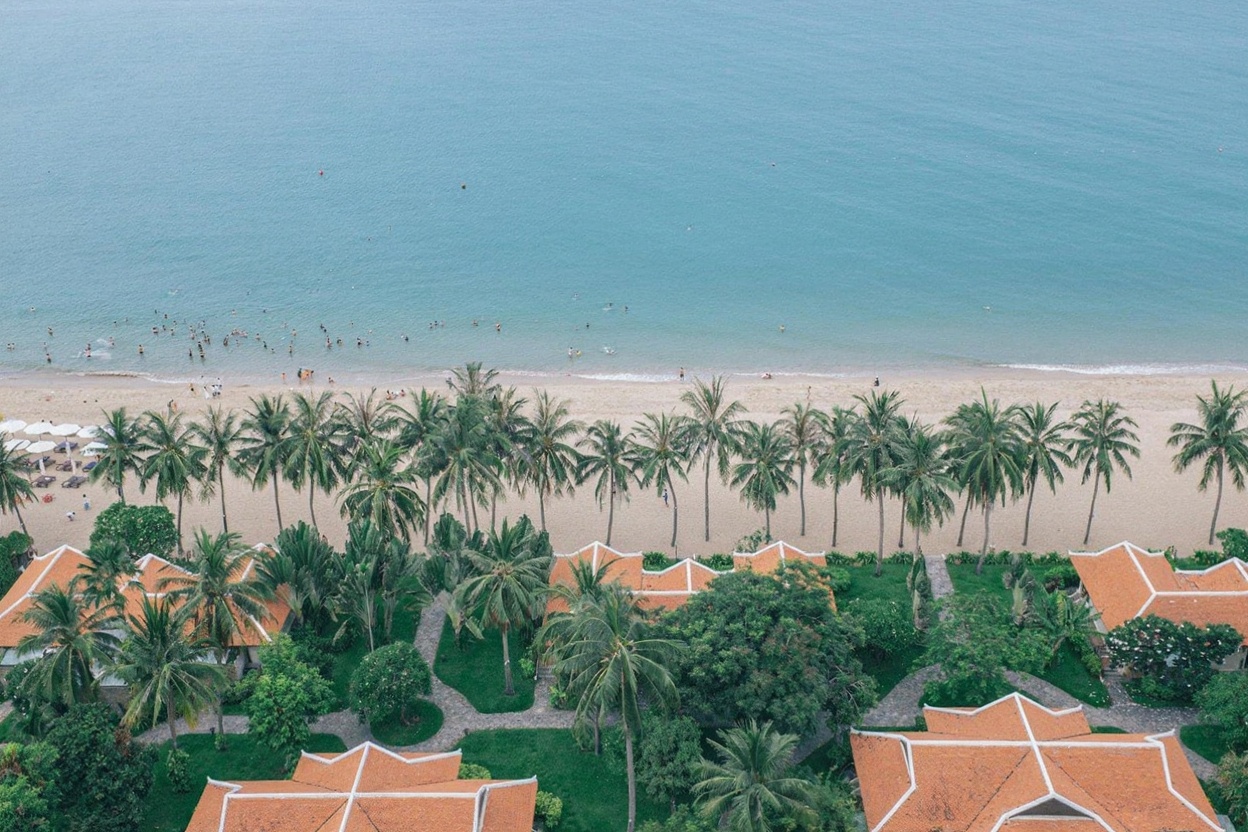
Mui Ne’s beach strip — 10km of resort road along the South China Sea coast
Most buses drop off either at:
Phan Thiet bus station — the official terminal, 10km from Mui Ne beach. From here, Grab to Nguyen Dinh Chieu street: 80,000–120,000 VND (~$3–4.55). Don’t take motorbike taxis at the station — they’ll quote 200,000 VND and drop you at their uncle’s guesthouse.
Nguyen Dinh Chieu street drop-off — the tourist bus operators (Sinh Tourist, Hanh Cafe) usually drop directly on the beach road. Ask your operator specifically when booking. If they confirm a Mui Ne beach-road drop, you’re walking distance from most mid-range accommodation.
Timing Your Arrival
The best arrival time for a 2-night trip is early morning — arrive 5–7am, drop your bags, be on the Red Dunes by 6am before the ATV rental crowd arrives. Alternatively, arrive by 2pm for the afternoon swim, explore the fishing village at dusk, and plan the dunes for the following dawn.
The worst arrival time is 11am–1pm — you’ll check in, eat, and it’ll be too hot to do anything outdoors until 4pm. Not a disaster, but inefficient.
Minimum stay for Mui Ne to feel worth the journey: 2 nights. One night is technically doable (sleeper in, sleeper out) but you’ll spend half your time in transit. Three nights is comfortable and lets you see both the Red and White Dunes without rushing.
The Motorbike Option
Some travelers ride their own rented motorbike from Saigon to Mui Ne — 200km, mostly highway (QL1A) with sections of coastal road near the end. It’s a long but genuinely good ride: the stretch approaching Phan Thiet along the coast is flat, fast, and flanked by salt flats and dragon fruit plantations.
Realistic time: 4.5–5 hours including one stop. Not suitable for riders who’ve just rented a motorbike in Saigon for the first time — the highway sections are fast and unforgiving. Suitable for experienced riders on a longer southern Vietnam circuit who want to continue to Da Lat or Nha Trang after Mui Ne.
Book Tours & Activities — Mui Ne
Klook has the widest selection for Vietnam and is usually the cheapest. KKday is strong on day trips and local experiences.
a confident motorbike rider with Vietnam highway experience, it’s a reasonable day ride. If you’ve been on a motorbike for less than three days total in Vietnam, this is not the route to start with. Take the bus. Do the motorbike around Mui Ne itself — rentals are 120,000–180,000 VND/day (~$4.55–6.85) in town.
What I Got Wrong on My First Mui Ne Trip
I took the open bus tourist circuit the first time — the one sold at the travel agency on Pham Ngu Lao for 200,000 VND. It picked me up at 7am, drove to Mui Ne via a lunch stop at a mediocre restaurant with a menu designed for large tour groups, dropped me at a guesthouse I hadn’t chosen, and left me arguing with a receptionist who insisted I needed to book through them to “confirm the return bus.”
The FUTA bus the second time: 130,000 VND from Mien Dong, departed 8am, arrived Phan Thiet 1pm, Grab to Nguyen Dinh Chieu 100,000 VND. Checked into the guesthouse I’d actually booked. Arrived with a better attitude and 170,000 VND still in my pocket.
Combining Mui Ne With Other Destinations
Mui Ne sits on the southern coast between Saigon (200km west) and Nha Trang (230km north). It fits naturally into a coastal circuit without backtracking:
Saigon → Mui Ne → Da Lat: Classic inland detour. Mui Ne to Da Lat is 150km through the mountains — 3 hours by bus or a genuinely dramatic motorbike ride up the mountain switchbacks. Da Lat is cool (literally — 1,500m elevation, often 18°C) and completely different from the coast. Bus: 100,000–150,000 VND (~$3.80–5.70).
Saigon → Mui Ne → Nha Trang: Coastal continuation. Mui Ne to Nha Trang is 230km, 4.5 hours by bus. FUTA runs this route. Cost: 130,000–180,000 VND (~$4.95–6.85).
For the full logistics on what to do once you arrive, see our Mui Ne travel guide.
The Road Between Saigon and Mui Ne — What You Actually Pass Through
The Saigon–Mui Ne road is not scenic for most of its length. The first two hours are suburban sprawl transitioning to industrial zones and flat agricultural land. The QL1A highway is functional and fast but visually uninspiring — this is the most productive agricultural corridor in southern Vietnam, not a coastal scenic route.
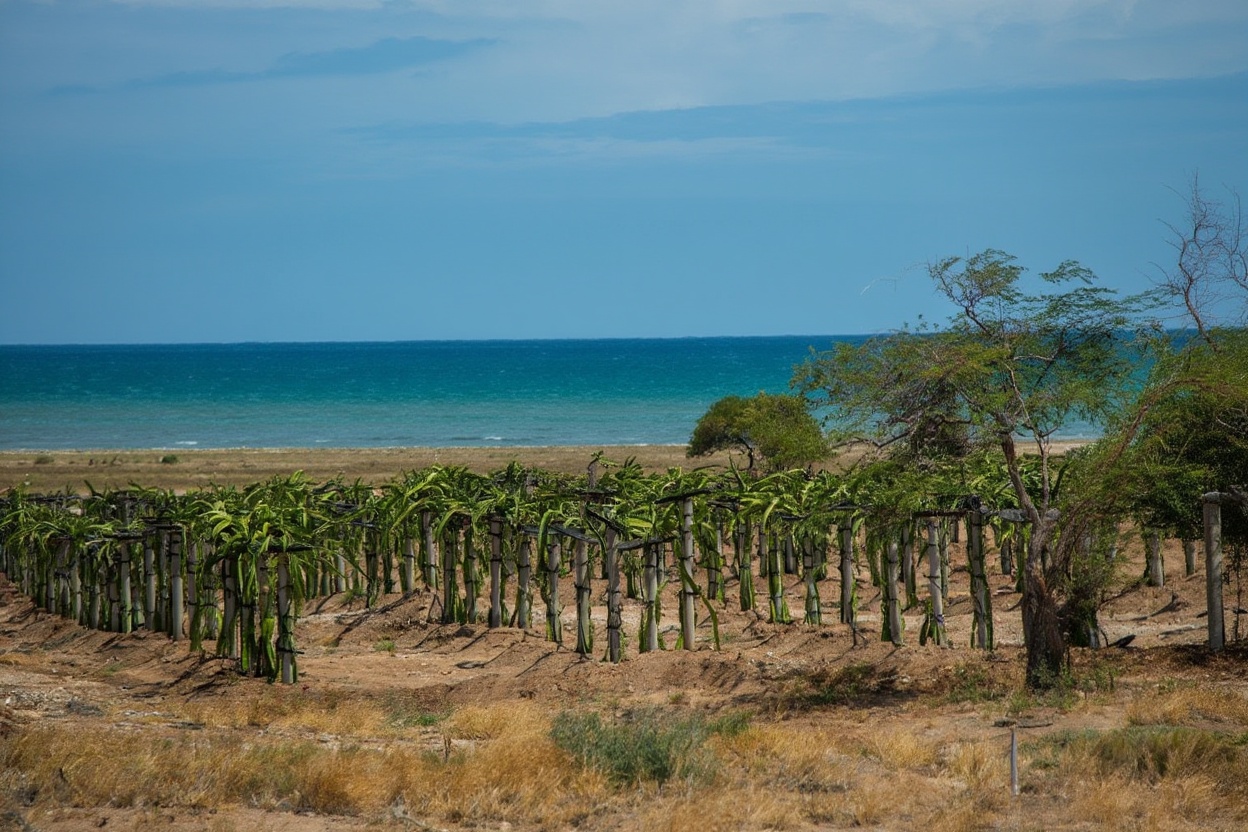
It changes about 40km before Phan Thiet. The road cuts through increasingly flat land and then, abruptly, dragon fruit plantations appear on both sides — row after row of cactus-like plants on wooden frames, their fruit a vivid red against the dusty soil. Binh Thuan Province produces 70% of Vietnam’s dragon fruit; this is the heart of it.
Binh Thuan’s dragon fruit fields — the view for the final hour before Mui Ne
The salt flats appear next: shallow evaporation pans where salt workers rake white pyramids under direct sun. The light here is harsh and flat — there’s no shade, no hills to break the horizon. Then the coast appears and the road runs along the sea for the last stretch into Phan Thiet, past fishing boats pulled up on gravel beaches and small towns that have existed here for centuries before the resort strip got built.
It’s worth being awake for the last 40 minutes even on a night bus — the dawn light over that stretch, with the South China Sea silver to the east and the dunes visible inland, is a decent preview of why you’re going.
What Mui Ne Is Like Now — The Honest Version Before You Arrive
Mui Ne has been a resort destination since the 1990s when the coastal strip started attracting Saigon weekenders. It’s now a fully developed tourist town — one long road (Nguyen Dinh Chieu) lined with a mix of budget guesthouses, Vietnamese-owned resorts, Russian-owned hotels, kitesurfing schools, seafood restaurants, and the occasional rooftop bar.
The Russian tourist presence is significant and worth knowing about before you arrive. During the peak of Russian tourism in Vietnam (2012–2019), Mui Ne became a major hub — Cyrillic menus, Russian-owned properties, and a specific beach-resort vibe that’s different from the backpacker culture of other Vietnamese coastal towns. That crowd thinned post-2022 but the infrastructure remains. You’ll see menus in Russian, Russian-language signs, and pricing in USD alongside VND at some places.
This doesn’t make Mui Ne worse or better — it makes it different. Mui Ne is not a “hidden” destination and hasn’t been for 20 years. What it still has: the fishing village (genuinely working, not staged), the red and white sand dunes (genuinely dramatic at dawn), the Fairy Stream (low-key and good), and a beach that’s adequate for swimming from November to May.
How Far in Advance to Book
For most of the year — November to March outside of Christmas/New Year week — no advance booking needed for buses. Just turn up at the FUTA office or book online the night before. The route runs multiple times daily and rarely sells out mid-week.
Exceptions: Christmas week (December 23–January 2) and Reunification Day / April 30 weekend are both peak periods when buses fill up. Book 3–5 days ahead during these windows.
Tet (Vietnamese Lunar New Year, January/February) is the exception that breaks everything — Saigon empties, highways are chaotic, and Mui Ne fills with domestic Vietnamese tourists who know the place better than most foreigners. Beautiful if you’re into it; crowded and expensive if you were expecting a quiet beach trip. Either way, book accommodation 2–3 weeks ahead for Tet dates.
Getting Back to Saigon from Mui Ne
Return buses run on the same operators and routes. From your accommodation in Mui Ne, either walk to the main road and flag a tourist bus (most operators have stops at regular intervals along Nguyen Dinh Chieu) or arrange a pickup through your guesthouse.
The FUTA return service departs from Phan Thiet bus station — Grab or motorbike taxi from Mui Ne beach (80,000–120,000 VND, ~$3–4.55). Book online at futabus.vn for the specific departure time you want.
For continuing north to Nha Trang or Da Lat: through-tickets are available on FUTA and most tourist bus operators. Confirm at the time of booking that the connection is a direct service rather than a transfer in Phan Thiet. Most operators run the Mui Ne–Nha Trang route twice daily at 6am and 1pm, journey 4.5 hours, 130,000–180,000 VND.
Before You Go
Two things worth sorting before you land: a Vietnam eSIM so you have data the moment you clear customs, and travel insurance — medical costs for uninsured foreigners in Vietnam are significant.
Airalo eSIMs activate instantly. Buy before departure — airport SIM queues in Vietnam can take 30+ minutes.
Frequently Asked Questions
How long is the bus from Saigon to Mui Ne?
The bus from Saigon to Mui Ne takes 4.5–5 hours on a direct service. FUTA/Phuong Trang runs the most reliable schedule — depart from Mien Dong station or their D1 office, arrive Phan Thiet bus station. Tourist buses (Sinh Tourist, Hanh Cafe) with D1 pickup typically run 5–5.5 hours including hotel stops. Limousine vans are 3.5–4 hours direct.
Is there a train from Saigon to Mui Ne?
No direct train. The nearest train station is Phan Thiet (served by the Saigon–Hanoi main line), but the Phan Thiet branch was suspended for years and as of 2026 the situation is inconsistent — check the Vietnam Railways website for current service. Bus is more practical and runs more frequently.
Can I do Mui Ne as a day trip from Saigon?
Technically yes; practically no. The round trip is 9–10 hours of road time for a destination that’s best experienced at dawn (Red Dunes) and dusk (fishing village). A day trip gets you there mid-morning and pulls you back by 3pm. You’ll spend more time on the road than on the sand. Stay at least one night — ideally two.
Is the Phan Thiet airport worth using?
Yes if the fare is under $25 one-way. Check VietJet and Bamboo Airways for the SGN–PXU route — flash sales happen regularly, and 300,000–450,000 VND (~$11–17) for a 30-minute flight is genuinely good value if your time matters. Not worth it at full-price rates of $40+ one-way, when the bus costs $5 and is only 4.5 hours.
What is the best bus company for Saigon to Mui Ne?
FUTA/Phuong Trang for reliability and price — buy online at futabus.vn or at their D1 office (272 De Tham). Sinh Tourist if you’re on Pham Ngu Lao and want door-to-door pickup without getting to Mien Dong station. Avoid unmarked “open bus” packages from street travel agencies — they exist to fill commission guesthouses, not to transport you conveniently.
Do I need to book accommodation in advance for Mui Ne?
For shoulder season travel (November, March–April), booking 2–3 days ahead is fine — there’s no shortage of accommodation on Nguyen Dinh Chieu. For peak season (December 20 – January 10, and the April 30 long weekend), book 1–2 weeks ahead. Budget guesthouses start at 200,000–350,000 VND (~$7.60–13) per night for a private room with fan; midrange resorts with pool run 600,000–1,200,000 VND (~$23–45). Most accommodation is within a 5-minute walk of the beach and clustered in the middle section of Nguyen Dinh Chieu near the restaurants and kitesurfing schools.
Is Mui Ne worth visiting in 2026?
Yes — with managed expectations. Mui Ne is a developed beach resort town, not a hidden fishing village. The fishing village at the eastern end is still genuinely working (arrive at dawn to see the basket boats returning). The Red Dunes are genuinely dramatic at 5:30am. The Fairy Stream is an easy, unusual walk. The beach itself is fine for swimming in dry season — murky but warm, not crystal-clear.
What Mui Ne is not: a quiet, undiscovered coastal escape. It’s busy in peak season, has a significant resort-strip character, and requires knowing which parts are worth your time. For a 2-night coastal break from Saigon with real things to see at dawn, it still earns its place on a southern Vietnam itinerary — just don’t expect Phu Quoc beaches or Hoi An charm.
What is the cheapest way to get from Saigon to Mui Ne?
The FUTA/Phuong Trang bus — 130,000–180,000 VND (~$5–7) one-way, booked at futabus.vn or their D1 office (272 De Tham). This is both the cheapest and the most reliable option. The bus from Mien Dong station is marginally cheaper than the D1 pickup service but requires getting to the terminal first (~50,000 VND Grab from D1).
What time should I leave Saigon for Mui Ne?
For a 2-night trip: the overnight bus departing 9–11pm from D1 is optimal — arrive 2–4am, sleep, be on the Red Dunes at 5:30am before the crowds. For a daytime arrival: depart 6–7am, arrive noon, use the afternoon for orientation and the fishing village at dusk. Avoid a 10am–noon departure — you’ll hit Saigon outbound traffic and arrive in the hottest part of the afternoon with nothing to do until sunset. If you want a day out of the city that actually works, check our Saigon day trips guide for destinations within a 2-hour radius.
FAQ
How far is Mui Ne from Saigon?
About 200km — 4.5–5.5 hours by bus depending on traffic out of Saigon. The road takes you northeast from the city through Binh Thuan province to the coast. It’s one of the more comfortable highway drives in southern Vietnam — mostly straight, good road surface.
What is the best way to get from Saigon to Mui Ne?
Sleeper bus is the standard: Futa Bus and Hanh Cafe both run comfortable coaches, departing from around Pham Ngu Lao area in District 1. Cost: 150,000–250,000 VND. Departure times: 7–8 AM or 7–8 PM (overnight). Private car is faster and more comfortable at around $60–80 one-way. Trains don’t serve Mui Ne directly.
Is there a train from Saigon to Mui Ne?
No direct train — the nearest train station is Phan Thiet, about 25km from the main Mui Ne resort strip. A few trains run Saigon–Phan Thiet, but they’re slower than the bus and you still need a xe om or Grab from the station. Bus is more convenient for this route.
How much does the bus from Saigon to Mui Ne cost?
Budget sleeper bus: 150,000–200,000 VND ($6–8). Comfortable sleeper bus: 200,000–280,000 VND. Open tour bus: sometimes included in backpacker packages. Grab or private car: 1,400,000–1,800,000 VND ($55–70). Buses pick up along Pham Ngu Lao street; ask your hostel to book the day before.
Can you go from Saigon to Mui Ne by motorbike?
Yes — it’s a popular route on a day’s ride. Highway 1A most of the way, then branch to coast. About 5–6 hours riding time not counting stops. Fuel cost: 100,000–150,000 VND. Good intermediate option if you’ve already rented a bike in Saigon and are heading to Mui Ne, Da Lat, or further up the coast.
“I moved here on a 3-month trial run. That was 5 years ago. I’ve since been to all 63 provinces, ridden every loop worth riding, and eaten things I still can’t name. This blog is what I wish existed when I landed.”