Home
›
Saigon
›
Hanoi to Ho Chi Minh City: Flight, Train, or Bus — the Honest Comparison
The Reunification Express — 1,730 kilometers of coastline, mountains, and delta along Vietnam's spine
Hanoi to Ho Chi Minh City: Flight, Train, or Bus — the Honest Comparison
The fastest way from Hanoi to Ho Chi Minh City is the plane — 2 hours 15 minutes, often under $60 if booked 2–3 weeks ahead. The train (Reunification Express, SE1 or SE3) takes 32–37 hours and costs $50–92 for a sleeper berth — worth taking for the experience, not for efficiency. The sleeper bus is 34–37 hours for roughly the same price as a budget flight and is not recommended. 1,730 kilometers separates the two cities; pick your transport accordingly.
Flight is the right answer for most travelers — 2h 15min, often $40-60 if booked 2-3 weeks ahead
The Reunification Express train is worth taking once for the scenery — 32-37h, budget for a sleeper berth
Sleeper bus is 34-37h of questionable sleep for roughly the same price as a budget flight — skip it
Avoid Vietjet if comfort matters — Vietnam Airlines and Bamboo are meaningfully better on this route
Luggage: domestic airlines are strict on 10kg carry-on — check your bag or pay overweight fees at the gate
Bottom line: fly unless you specifically want the train experience; the sleeper bus saves nothing worth saving
✈ Search Flights to Vietnam
Updated May 2026
Hanoi and Ho Chi Minh City are at opposite ends of a country that is 1,650 kilometers long. The cities are culturally, climatically, and temperamentally distinct — colder and slower in the north, humid and relentless in the south. Getting between them is the central logistics question of any Vietnam trip that covers both.
The answer has changed over the years. When I first did this route in 2022, budget flights were already cheaper than the bus if you booked more than a week out. In 2026, that’s even more true. But the train remains worth discussing — not because it’s competitive on time or always on price, but because the Reunification Line is one of the genuine great train journeys in Southeast Asia and that is a reason in itself.
The Reunification Express — 1,730 kilometers of coastline, mountains, and delta along Vietnam’s spine
Flying Hanoi to Ho Chi Minh City: The Standard Answer
The flight takes 2 hours 15 minutes in the air, door to door roughly 4–5 hours when you factor in Nội Bài International Airport (HAN) in Hanoi’s north and the Tân Sơn Nhất International Airport (SGN) in Ho Chi Minh City’s northwest. Nội Bài is 30–45 minutes from Hanoi’s Old Quarter by Grab (roughly 200,000–350,000 VND / ~$7.60–$13.30). Tân Sơn Nhất is 20–40 minutes from D1 (150,000–250,000 VND / ~$5.70–$9.50).
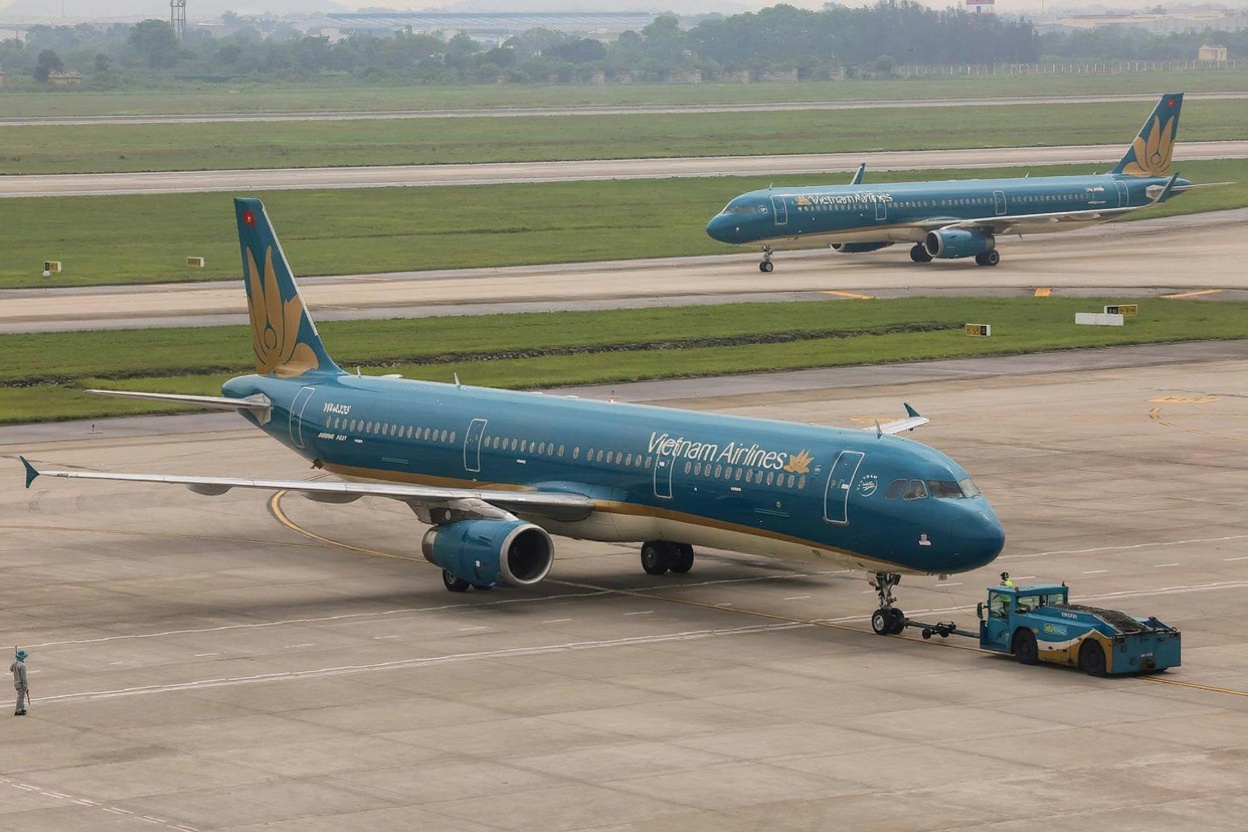
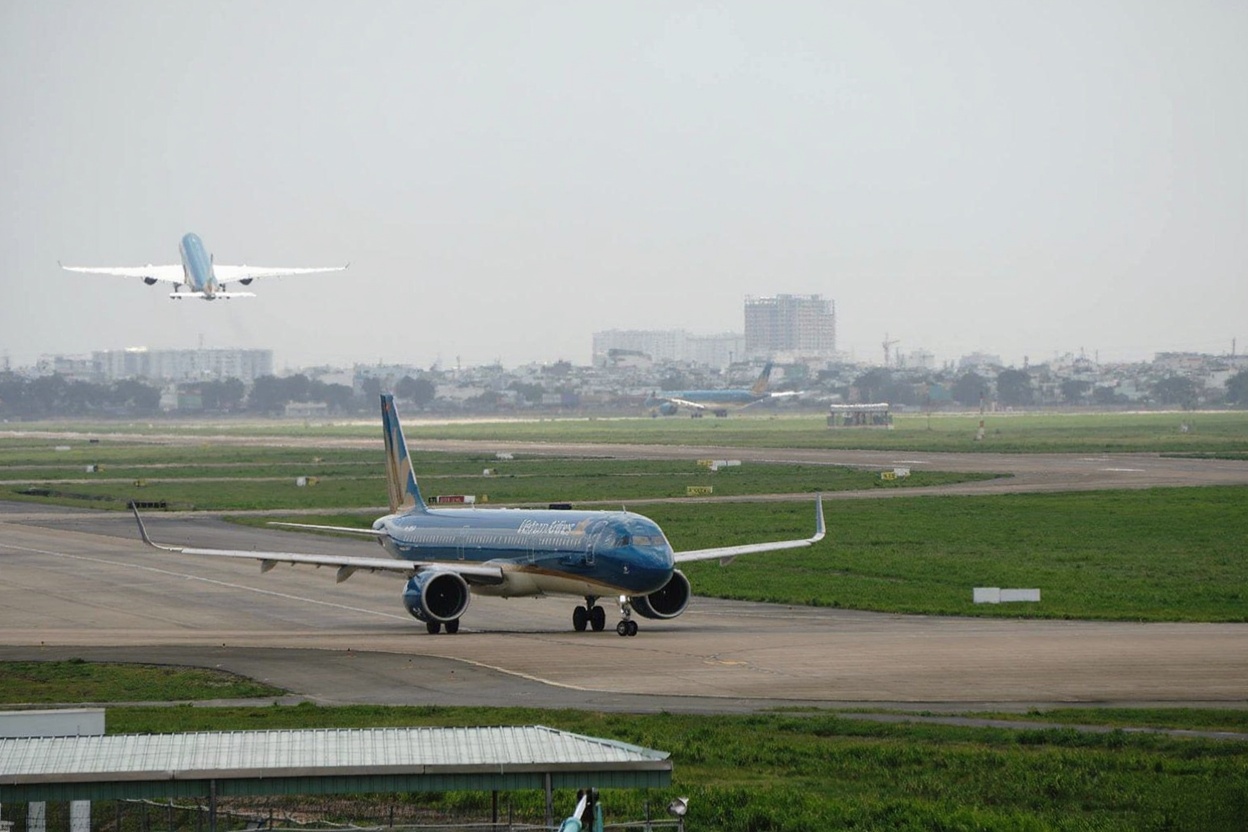
Nội Bài International Airport — the departure point for most Hanoi to Saigon flights
Airlines on this route: Vietnam Airlines, Bamboo Airways, Vietjet Air, Vietravel Airlines. The pricing range is wide — 1,050,000–3,825,000 VND (~$40–$145) depending on how early you book and which carrier. For a full breakdown of every way to move around the country, our Vietnam transport guide covers all options in detail.
The carrier choice matters. Reddit user ConnectDog645 (score 21), a repeat Vietnam traveler: “In country flights are very inexpensive. Avoid Vietjet, pay the premium for Vietnam Airlines — not that it’s perfect either. It saves you an enormous amount of time and risk.” Vietjet’s reputation on domestic routes is for aggressive baggage fees, delays, and cramped cabin standards. The price looks lower but the effective cost — with checked luggage fees — often isn’t.
Bamboo Airways sits between Vietjet and Vietnam Airlines on both price and service. For a 2h15 flight, the difference between carriers matters less than it would on a longer haul, but on-time performance varies enough to be worth checking before you book.
Price to book: 1,050,000–1,575,000 VND (~$40–$60) is achievable with 2–3 weeks notice on Bamboo or Vietjet. Vietnam Airlines runs 1,575,000–2,625,000 VND (~$60–$100) for a comparable booking window. Last-minute (under a week): 2,100,000–3,825,000 VND (~$80–$145) on most carriers.
ℹKnow Before You Go
Vietnamese domestic carriers strictly enforce carry-on limits — typically 10 kg per passenger. Reddit user Cool_Acanthisitta628 flagged this directly: traveling with 35 kg total between two people, worried about overweight fees. If you’re carrying more than 7–8 kg, check a bag when you book rather than at the gate — gate fees run 200,000–400,000 VND (~$7.60–$15.20) per extra kilogram and they will weigh your bag.
COST BREAKDOWN 2026
Hanoi → Ho Chi Minh City — Transport Comparison
Mode
Duration
Cost (2026)
Verdict
Flight (budget)
2h 15min air
1,050k–1,575k VND (~$40–60)
✓ Best overall
Flight (Vietnam Airlines)
2h 15min air
1,575k–2,625k VND (~$60–100)
Better comfort
Train SE1/SE3
31.5–33h
1,680k–2,415k VND (~$64–92)
✓ For the experience
Train SE5/SE7
34–35h
1,310k–2,365k VND (~$50–90)
Slower, cheaper
Sleeper bus
34–37h
900k–1,300k VND (~$34–49)
✗ Skip it
vietnamunlock.com — All prices May 2026. Exchange rate: 26,355 VND = $1 USD.
The Reunification Express Train: Worth It for the Journey
The Reunification Line (đường sắt Bắc Nam — say: duhng shak bak nam) runs the full 1,730 kilometers between Hanoi and Ho Chi Minh City and has been doing so, with occasional interruptions, since 1936. The French colonial government built the original line; it was bombed to pieces during the American War and reunified — hence the name — in 1976, one year after the country. Traveling it is a history lesson in the shape of a landscape.
The Reunification Express between Đà Nẵng and Huế — the most scenic stretch of the route
The fastest services are SE1 (31h 30m) and SE3 (33h 15m). SE5 and SE7 are slower at 34–35 hours. Prices vary by class: hard seat (the cheapest, not recommended for the full route), soft seat, hard sleeper, and soft sleeper. For a Hanoi–HCMC journey, soft sleeper is what you want — a four-berth cabin, air conditioning, thin mattress. Prices for SE1/SE3 soft sleeper: 1,680,000–2,415,000 VND (~$64–$92). Book on 12go.asia or directly at the station; book at least 5–7 days ahead for SE1 on weekends.
The scenic peak of the route is between Đà Nẵng and Huế — the Hải Vân Pass section, where the train hugs the cliff face above the South China Sea. If you’re doing the full Hanoi–HCMC journey, this stretch comes roughly 18–20 hours in on SE1. The Đà Nẵng to Nha Trang section (hours 23–28) offers more coastline with rice paddies and fishing villages. The delta approach into Saigon is flat and industrial — not the finish you’d hope for, but the middle is worth it.
→Who It’s For
The full Hanoi–HCMC train is for travelers who have time to spend and want to see the country rather than skip over it. Two nights on the train covers the distance; you wake up 32 hours later in a completely different climate, culture, and pace. If you’re treating Vietnam as a destination rather than a transit, this is the most honest version of that journey.
⚠Real Talk
The train cabins are functional, not luxurious. The bedding is thin, the shared toilets are what you’d expect, and the air conditioning is set by Vietnamese standards (cold, by most Western travelers’ thermostats). Bring earplugs for fellow passengers and a small padlock for your bag. The food cart comes around — it’s edible, not remarkable.
What to Pack for the Train
The difference between a tolerable 32-hour train ride and a miserable one comes down to about five things: earplugs (essential — Vietnamese passengers play phones on speaker without a second thought), a padlock for your berth bag hook, a layer that isn’t shorts (the AC is aggressive), offline entertainment pre-downloaded, and cash in small denominations for the food cart. The cart sells instant noodles, banh mi, canned drinks, and occasionally rice boxes — prices are 40,000–80,000 VND (~$1.50–$3). Bring backup snacks from Hanoi. The station vendors at stops sell fresh fruit and food but the stops are 3–10 minutes and not always reliable.
The train makes stops at major cities along the route — Ninh Bình, Thanh Hóa, Vinh, Đồng Hới (for Phong Nha), Huế, Đà Nẵng, Tam Kỳ, Quảng Ngãi, Diêu Trì (for Quy Nhơn), Tuy Hòa, Nha Trang, Phan Thiết, Biên Hòa. If you’re breaking the journey, Đà Nẵng (hours 17–18 on SE1) and Nha Trang (hours 24–25) are the most useful exit points for independent travelers.
The Sleeper Bus: Save Your Money, Save Your Back
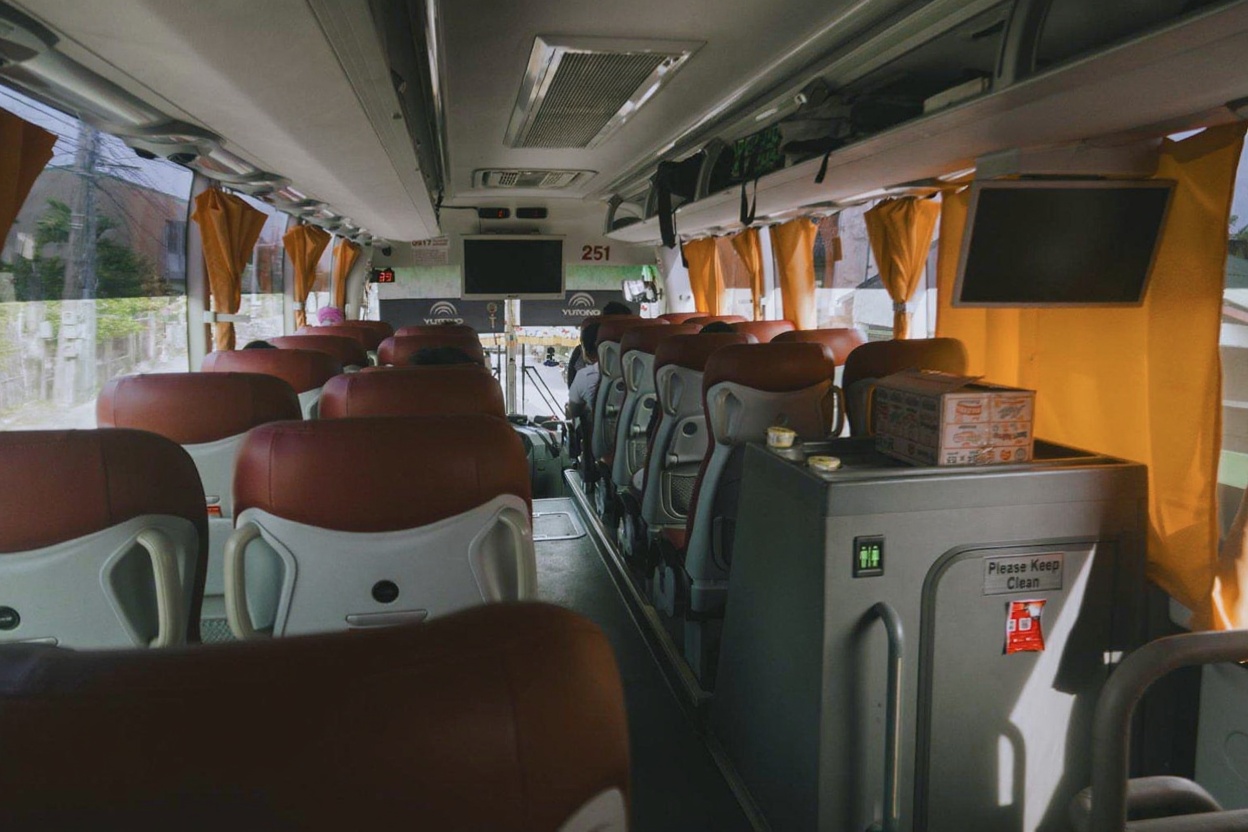
The Hanoi–HCMC sleeper bus takes 34–37 hours. Operators include Hoang Long (900,000–1,200,000 VND / ~$34–$46, departing at 2pm, 8pm, and 9:30pm) and Mai Linh Express (950,000–1,300,000 VND / ~$36–$49, departing at 11am and 5pm). The buses are three-aisle, semi-reclined sleeper pods — not fully flat, not truly comfortable for more than about six hours.
Vietnam’s sleeper buses — fine for short overnight hops, inadvisable for 36 hours
Here is the core problem: the cheapest budget flight on this route costs around 1,050,000 VND (~$40). The sleeper bus costs 900,000 VND (~$34). The difference is 150,000 VND (~$5.70), and in exchange for that $5.70 you spend 35 hours on a bus instead of 2 hours on a plane. The math does not work.
s, break the journey: fly Hanoi → Da Nang, spend 3 days in Da Nang and Hoi An, take the train Hoi An → Nha Trang (11 hours on SE1, coastal scenery), then fly or bus to Saigon. You see more, sleep in beds, and the travel costs roughly the same.
What About Stopping in the Middle?
The question of how to get from Hanoi to Saigon is inseparable from the question of what to do between them. The country’s best destinations sit on the route: Hội An and Đà Nẵng in the center, Huế for the imperial history, Ninh Bình in the near-north, Đà Lạt for the highlands, Nha Trang for the coast.
Reddit users who’ve done the full trip are consistent on this: Rechabees (score 7): “Saigon, Danang/Hoi An, and Hanoi is all you need for 10 days, any more stops will feel rushed.” ConnectDog645: “Do two or three days in Saigon, Danang/Hoi An, and then up to Hanoi.” The pattern that keeps coming up — experienced Vietnam travelers converge on three-node itineraries with flights between them rather than bus-heavy plans with six stops in ten days.
nofaceishere, planning their first trip: “I want to enjoy my time without feeling like I’m constantly packing/unpacking and hopping on bus after bus.” That instinct is right. Two or three nights in a place is the minimum to feel like you’ve been there rather than transited through it.
Both Hanoi and Ho Chi Minh City have airports that sit outside the city center, and the transfer adds meaningful time to your journey in both directions. Factor this in when you’re deciding whether the 2h15 flight is actually a 2h15 commitment.
Airport transfers in Vietnam — Grab is faster than negotiating with a taxi queue
Nội Bài International Airport (HAN) — Hanoi
Nội Bài is 30 kilometers north of the Old Quarter. Travel time in light traffic: 30–35 minutes. In rush hour (7–9am, 4:30–7pm): 50–70 minutes. Options:
Grab car — 200,000–350,000 VND (~$7.60–$13.30), booked in the app before you leave the arrivals hall. Reliable, metered, no negotiation. This is what most independent travelers use.
Airport bus — Bus 86 runs to the Old Quarter and Hoàn Kiếm Lake for 45,000 VND (~$1.70). Takes 45–75 minutes depending on traffic. Departures every 20–30 minutes from the arrivals terminal (international and domestic). Luggage is fine in the hold underneath. Once you’re in Saigon, our Saigon day trips guide covers the best escapes from the city. Once you arrive, our Saigon travel guide covers everything you need to hit the ground running in Ho Chi Minh City.
Taxi (metered) — Nội Bài taxi is officially fixed-rate: 250,000 VND (~$9.50) to the Old Quarter. Only take taxis from the official taxi rank; ignore any driver who approaches you inside the terminal. Once you’re there, our Saigon things to do guide covers how to spend those two or three days well.
Tân Sơn Nhất International Airport (SGN) — Ho Chi Minh City
Tân Sơn Nhất is 7 kilometers from District 1 — close in kilometers, variable in time. The airport is notorious for traffic. Travel time: 20–25 minutes off-peak, 45–75 minutes during morning and evening rush.
Grab car — 120,000–200,000 VND (~$4.55–$7.60) to D1. Same drill: book in the app, walk to the designated pick-up zone (Level 1, marked “Xe Công Nghệ” — say: say cong nghe). The Xanh SM app (Vietnamese electric ride-hail) is worth installing as a Grab backup — often has lower surge pricing.
Bus — Bus 109 to Bến Thành Market (D1) for 20,000 VND (~$0.75). Slower than Grab but if you’re not in a rush and traveling light, it works.
Taxi — Mai Linh and Vinasun are the legitimate metered taxi operators at SGN. The metered fare to D1 should be 130,000–180,000 VND (~$4.95–$6.85). Anything significantly higher means you’re in an unlicensed cab.
How to Book
For flights: Skyscanner or Google Flights to compare all carriers, then book directly on the airline’s website. Book at least 14 days ahead for prices under 1,575,000 VND (~$60). Checking in online avoids airport queues — Vietnamese domestic check-in closes 45 minutes before departure, not 30.
For the train: 12go.asia has English-language booking for all SE services with real-time seat availability. The official Vietnam Railways site (dsvn.vn) works but is in Vietnamese and card payments sometimes fail. Book at least 5 days out for weekday departures; 10 days for weekends and national holidays (Tết, April 30 reunification day).
For the sleeper bus (if you insist): book direct with Hoang Long or Mai Linh Express, or through a hostel or travel agent in Hanoi. The buses leave from Giáp Bát Bus Station (south of Hanoi’s center, 30 minutes by Grab from the Old Quarter — 80,000–120,000 VND / ~$3–$4.55).
What I Got Wrong
I took the overnight bus from Hanoi to Hue once — a 12-hour ride — thinking I’d save money and not lose a day. The bus was fine. I arrived at 6am, had no energy for the first two hours of the day I’d theoretically saved, and spent 200,000 VND on coffee just to feel functional. The math on overnight buses always sounds better before you’re on one at 3am with someone’s phone playing a TikTok two pods over.
For the full Hanoi–HCMC route, I’d now always take the plane or the train. The plane if I’m being efficient. The train if I want to actually see the country in between.
Before You Go
Two things worth sorting before you land: a Vietnam eSIM so you have data the moment you clear customs, and travel insurance — medical costs for uninsured foreigners in Vietnam are significant.
Airalo eSIMs activate instantly. Buy before departure — airport SIM queues in Vietnam can take 30+ minutes.
Frequently Asked Questions
What is the cheapest way to get from Hanoi to Ho Chi Minh City?
✓Quick Answer
The cheapest option is a budget flight booked 2–3 weeks ahead — typically 1,050,000–1,310,000 VND (~$40–$50) on Vietjet or Bamboo. The sleeper bus is slightly cheaper at 900,000–1,200,000 VND (~$34–$46) but takes 35+ hours. The 150,000 VND ($5.70) difference is not worth the additional 33 hours of travel time.
How long does the train from Hanoi to Ho Chi Minh City take?
The fastest service, SE1, takes 31 hours 30 minutes. SE3 takes 33 hours 15 minutes. SE5 and SE7 take 34–35 hours. All trains depart from Hà Nội Railway Station and arrive at Sài Gòn Station (near D3). Soft sleeper berths on SE1/SE3 cost 1,680,000–2,415,000 VND (~$64–$92). Book at least 5 days ahead on 12go.asia.
Which airline is best for Hanoi to Ho Chi Minh City?
Vietnam Airlines is the most reliable — better on-time record and service than budget carriers. Bamboo Airways is a reasonable middle option. Vietjet is cheapest on the headline price but has a worse reputation for delays and aggressive baggage fees. For a 2-hour flight, the carrier difference matters less than for long-haul, but if you’re carrying more than 7 kg of carry-on, check which carrier’s baggage allowance works for you before booking on price alone.
Is the sleeper bus worth it from Hanoi to Saigon?
No. At 34–37 hours and roughly 900,000–1,300,000 VND (~$34–$49), the sleeper bus saves almost nothing over a budget flight that takes 2 hours 15 minutes. The sleeper bus makes sense on overnight legs of 8–12 hours where the journey serves as accommodation. For a 35-hour trip, it’s just 35 hours.
Should I take the train or the plane from Hanoi to Ho Chi Minh City?
Take the plane if you’re being efficient. Take the train if you want to see the country — the Hải Vân Pass between Đà Nẵng and Huế and the coastal section from Đà Nẵng toward Nha Trang are genuinely beautiful. Both options are valid. The train costs roughly the same as a Vietnam Airlines flight and gives you 32 hours of landscape in exchange for 30 additional hours of travel time. Whether that’s worth it depends entirely on what you’re there for.
Can I break the journey between Hanoi and Saigon?
Yes, and most experienced Vietnam travelers recommend it. The standard approach: fly Hanoi → Đà Nẵng (1 hour, from 800,000 VND / ~$30), spend 3 nights in Hội An and Đà Nẵng, then either fly directly to Saigon or add a stop in Nha Trang or Đà Lạt. This is more interesting than a direct long-haul flight and costs a similar total amount when you factor in accommodation you’d otherwise spend on a sleeper night. See our Vietnam itinerary guide for suggested structures.
How early should I arrive at the airport for a domestic flight in Vietnam?
90 minutes before departure is comfortable. Vietnamese domestic check-in closes 45 minutes before departure — stricter than most Western airports. If you’re checking a bag and need to pay for it at the counter (Vietjet in particular charges for checked luggage that wasn’t pre-booked), allow extra time for queues. For the Hanoi–HCMC route, which runs dozens of times daily, missing a flight is recoverable but means paying for a same-day rebooking — usually 800,000–1,200,000 VND (~$30–$45) on top of the difference.
Is Tân Sơn Nhất Airport (Ho Chi Minh City) busy and confusing?
Tân Sơn Nhất handles roughly 40 million passengers a year through a terminal designed for far fewer. The international and domestic terminals are separate buildings — domestic flights arrive and depart from the domestic terminal (T1), a 5-minute walk or free shuttle from T2 (international). Inside, signage is bilingual but the departures hall is crowded at peak hours (6–9am, 5–8pm). Budget 15 minutes of buffer for the transfer between terminals if your itinerary requires it. The airport is functional; it is not enjoyable. Grab works from both terminals — set your pickup to Terminal 1 (domestic) or Terminal 2 (international) specifically, since the app sometimes defaults to whichever is closer and drivers can get confused if you’re at the wrong building.
“I moved here on a 3-month trial run. That was 5 years ago. I’ve since been to all 63 provinces, ridden every loop worth riding, and eaten things I still can’t name. This blog is what I wish existed when I landed.”