Updated May 2026
Saigon is loud and fast and relentless. Sometimes you need to get out.
The city is ringed by day trips that range from genuinely essential to mildly overrated to deeply underrated. I’ve done all of them — some multiple times, a few on a whim, one on a motorbike in the rain which I do not recommend.
What follows is what actually matters: which ones are worth your morning, which ones need more than a day to be worth it, and which one almost nobody in the day trips from Saigon listicles talks about but absolutely should.
Cu Chi Tunnels: The One You Have to Do
The tunnel network at Cu Chi is 75 kilometers long. During the American War, Viet Cong fighters lived, fought, cooked, held meetings, and treated the wounded entirely underground. The tunnels were hand-dug — no machinery — through hard laterite clay, sometimes only 50 centimeters wide. The air in there today is cool and smells like damp soil and something metallic that you can’t quite name.
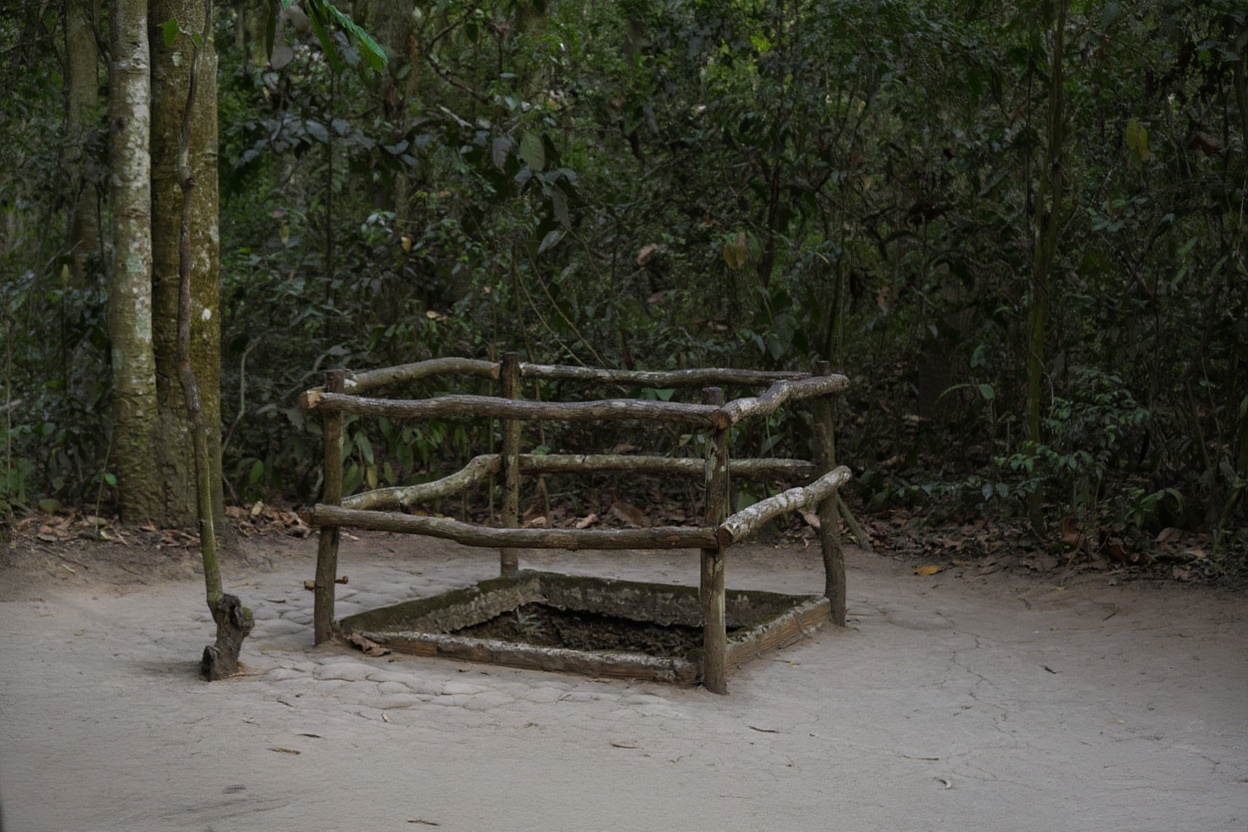
There are two sites. Most tours go to Ben Dinh (~30km from central Saigon, entrance: 150,000 VND / ~$6). It’s well-maintained, expanded for tourists, and on any given morning it’s packed with tour buses. The tunnels you crawl through have been widened to fit Westerners.
Ben Duoc is the one I’d choose. It’s 10 kilometers farther (~40km from the city), the tunnels are more original, the crowds are lighter, and there’s a full-scale replica of the underground hospital ward that Ben Dinh doesn’t have. Admission is the same — 150,000 VND (~$6).
⚠Real Talk
The shooting range at Cu Chi — where you can fire AK-47s and M16s — is technically optional but aggressively sold. Prices run 35,000–50,000 VND per bullet (~$1.35–2). It’s your call. I’d rather spend that money on lunch.
If you’re booking a tour, Klook has a reliable Cu Chi half-day option from around 660,000 VND (~$26.70) that includes transport from District 1. Viator runs a combined Cu Chi + Mekong combo from about 764,000 VND (~$29) which, for the record, means you’ll spend roughly two hours at each — rushed at both.
DIY is straightforward: Bus 13 from Ben Thanh runs to the tunnels for around 7,000 VND (~$0.27). Total DIY cost including admission: under 200,000 VND (~$8). Takes longer but you control your time.
→Who It’s For
Cu Chi Tunnels is for everyone — history obsessive or not, it’s a physical, visceral place that lands differently from a museum. Go to Ben Duoc if you have any flexibility. Ben Dinh if you’re on a preset tour and don’t mind the crowds.
Can Gio Mangrove Reserve: The One Nobody Tells You About
Forty minutes south of the city, the world changes completely. Can Gio — technically still part of Ho Chi Minh City, which surprises everyone — is a UNESCO Biosphere Reserve of mangrove forest covering 75,000 hectares. The road in runs along a narrow causeway with water on both sides. By the time you’re 20 kilometers in, you’re hearing birds instead of horns.
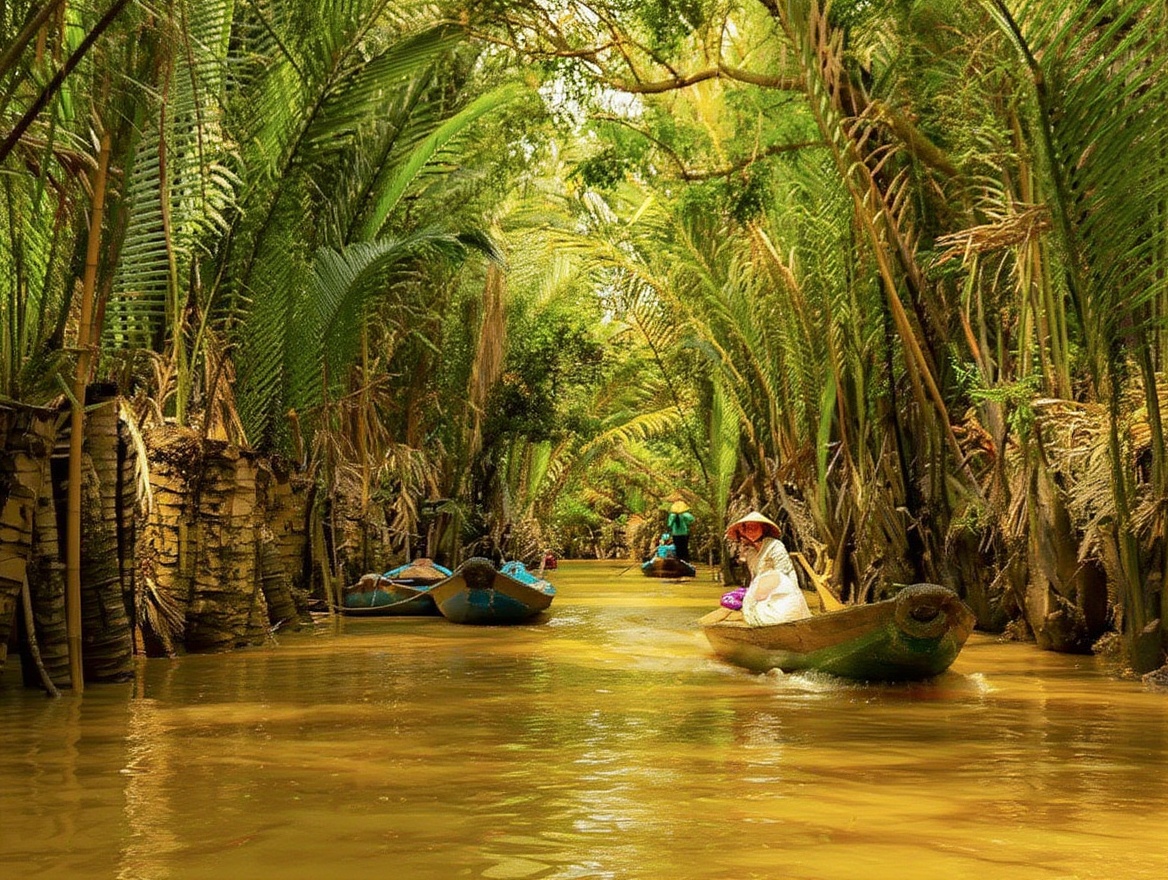
Reddit user wuanlai65 called it the “Rung Sac mangrove eco reserve” — that’s the formal name for the same place. The boat tour through the canal system takes around two hours. The mangrove roots tangle above the waterline in arches. You’ll hear the hollow knock of the boat against submerged roots and smell the salt-mud tide-flat smell that’s specific to tidal forest.
The monkey sanctuary (Đảo Khỉ / Monkey Island) is worth the detour — macaques everywhere, none of them particularly shy. Don’t bring food you’re attached to.
Admission to Can Gio Biosphere Reserve: 75,000 VND (~$2.85). Boat tours run approximately 150,000–200,000 VND (~$5.70–7.60) per person depending on group size. Most people combine it with a seafood lunch at one of the floating restaurants — fresh crab and clams, priced by weight.
↗Insider Tip
Can Gio is 70km from District 1 but the road is good. Renting a motorbike and going independently is the best way to do this — you can stop on the causeway, take photos, and get there ahead of any tour group. Budget three hours each way for the ride.
→Who It’s For
Anyone who wants to understand why Ho Chi Minh City is surrounded by wetlands, not suburbs. Also good for families — the monkey sanctuary is genuinely entertaining for kids. Not great for people who want a beach day.
Mekong Delta: Day Trip or Overnight? Be Honest With Yourself
The Mekong Delta (đồng bằng sông Cửu Long — say: dong bung song koo-long) starts about 90 kilometers southwest of the city. The standard day tour hits My Tho, takes you on a boat through canals shaded by coconut palms, stops at a bee farm, maybe a coconut candy factory, and gets you back to Saigon by dinner.
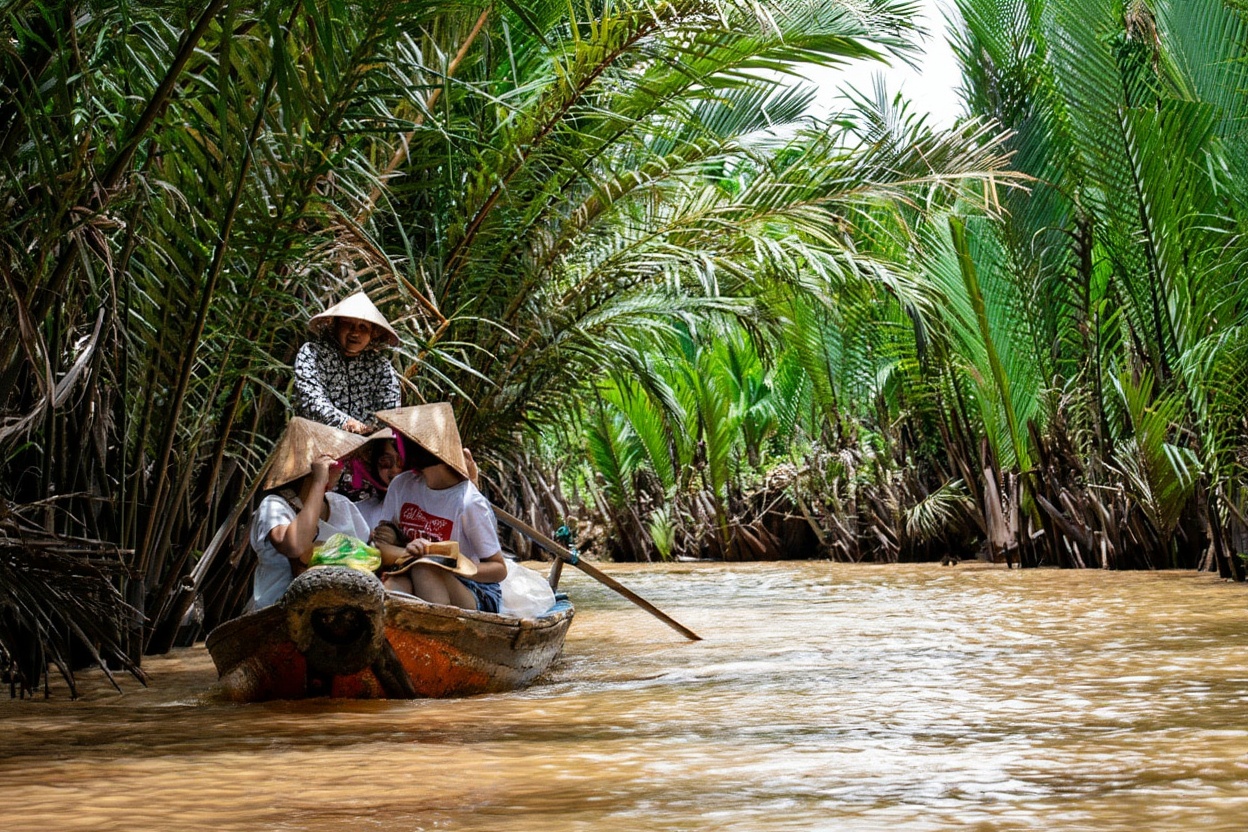
It’s pleasant. The sampan ride through the palm-shaded canals is genuinely beautiful — water the color of strong tea, the low chug of a wooden outboard motor, cooking smoke from houses built at the water’s edge. But a one-day tour of the Mekong Delta is also, in my experience, a series of tourist stops stitched together with bus rides. Reddit user SpanBPT put it plainly: “Mekong Delta doesn’t work well as a single day trip especially when you want to be back in time for a dinner cruise. Allocate 2 days 1 night.”
I agree with that. The Mekong rewards the people who stay overnight in Can Tho, wake up at 5am, and take a local rowboat out to Cai Rang floating market before the tour groups arrive. That is a different experience entirely from the day trip version.
That said: if you only have one day and you’re choosing between a Mekong day trip and another afternoon in the city, go to the Mekong. The boat is real, the food is real, and the delta light at midday is genuinely beautiful. Just go in knowing it’s a sampler, not the full meal.
Guided full-day Mekong tours from Saigon: 750,000–1,554,000 VND (~$29–59) depending on the operator. The cheaper ones use larger group boats. The expensive ones are typically private or smaller groups with a better lunch stop. Viator’s “Authentic Mekong Delta Countryside Experience” runs about 1,550,000 VND (~$59).
⚠Real Talk
The floating markets — Cai Rang near Can Tho, and Cai Be near My Tho — are real but shrinking. Fewer local traders use them now; many sections are tourism-facing. This doesn’t mean skip them. It means go early (before 7am), go on a weekday, and don’t expect a scene untouched by cameras.
Vung Tau: The Beach Day (With Honest Caveats)
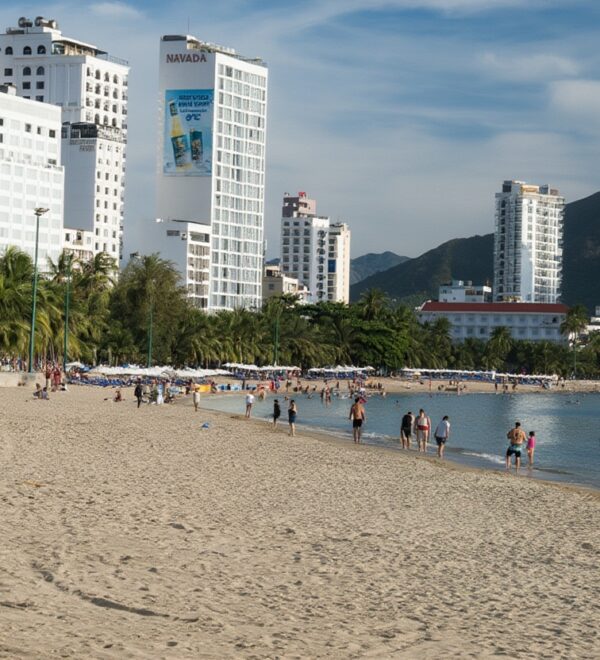
Vung Tau is Ho Chi Minh City’s beach escape — 120 kilometers southeast, two hours by road or 80 minutes by Greenlines speedboat from Bạch Đằng pier. On weekends, Saigonese families flood the place. Plastic chairs, fresh seafood, cold beer, and the specific feeling of a beach town that knows exactly what it is.
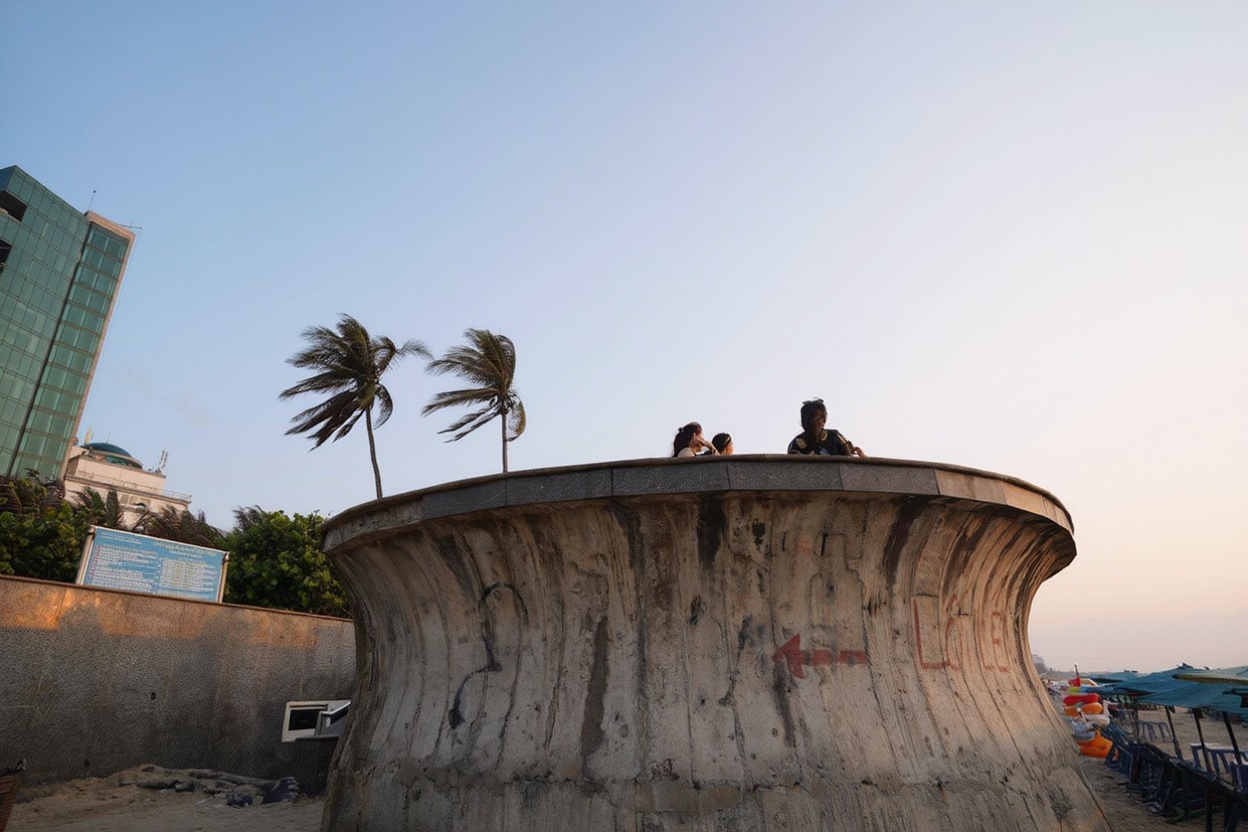
The beaches — Front Beach (Bãi Trước) and Back Beach (Bãi Sau) — are fine. The water is murky from river silt, especially after rain. Reddit user dadsmissedcall had already heard the verdict: “I was considering Vung Tau, but I’ve heard the beaches aren’t that great.” That’s accurate. If you’re expecting Phu Quoc-level clear water, recalibrate.
What Vung Tau does well: the Giant Jesus statue (Tượng Chúa Kitô Vua — 36 meters, accessible by 847 steps up the mountain), the colonial-era White Villa (Biệt Thự Trắng) once used by French administrators, and the seafood at the waterfront restaurants on Ha Long Street. Banh khot — tiny crispy rice cakes topped with shrimp — originate in Vung Tau and the versions here are better than anything you’ll find in Saigon.
Greenlines speedboat: 230,000 VND (~$8.75) one way from Bạch Đằng pier. Book in advance on weekends — it sells out. Road by bus: roughly 120,000 VND (~$4.55) each way from Mien Dong bus station.
→Who It’s For
Good for: a slow beach day without caring about the water quality, the best banh khot of your life, anyone who wants to see how Saigonese families actually vacation. Not for: anyone expecting clear water, deep-sea snorkeling, or a quiet beach.
Tay Ninh and Ba Den Mountain: The Weird, Good One
This is the day trip that surprises people most. Tay Ninh is 100 kilometers northwest of Saigon, close to the Cambodian border. The draw is twofold: the Cao Dai Holy See (Tòa Thánh Tây Ninh — say: twa tang tay nin), the global headquarters of Cao Dai religion, and Ba Den Mountain rising impossibly from the flat surrounding plain.
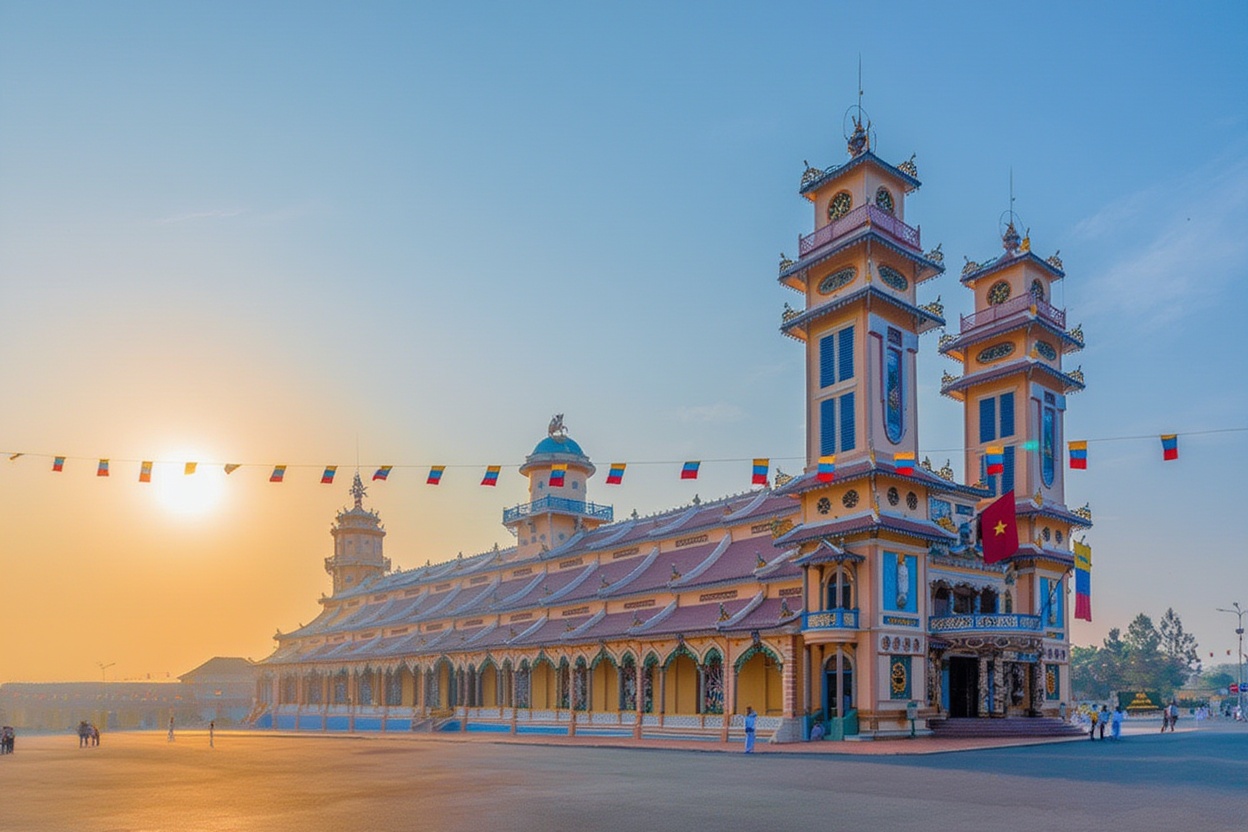
The Cao Dai temple is architecturally unlike anything else in Vietnam — ornate, pastel-colored, dominated by a giant divine eye symbol. The noon mass (11:45am) is open to visitors and worth timing your visit around. Worshippers in white, yellow, and blue robes process in. Incense smoke hangs heavy. The chanting is low and resonant. You will feel like you’ve stumbled into something genuinely alive, not a tourist performance.
Ba Den Mountain (Núi Bà Đen — the Black Virgin Mountain, 986 meters) has a cable car that runs from the base to a temple complex near the summit. It’s the tallest peak in the southern lowlands, which means the views stretch flat in every direction — you can see Cambodia on a clear day. The mountain has temples at multiple levels, all active pilgrimage sites. Reddit user noir1_ recommended it specifically for families: “visit Black Virgin Mountain, there’s a temple there also.”
Getting there: direct bus from Mien Tay bus station runs about 80,000–120,000 VND (~$3–4.55) each way, roughly two hours. Cable car ticket: approximately 250,000–350,000 VND (~$9.50–13.30) return.
↗Insider Tip
Combine both in one day: arrive Tay Ninh by 11am for the Cao Dai noon mass, then drive 25 minutes to Ba Den Mountain for the afternoon. Back in Saigon by dinner. A rented car with driver (around 1,300,000–1,600,000 VND / ~$49–60 for the day) handles both stops cleanly.
Tri An Lake and Ba Dat Homestay: The One for Families
This one doesn’t appear on most day-trip lists, which is exactly why it belongs here. Tri An Lake is a reservoir about 65 kilometers northeast of Saigon — not particularly famous, not particularly over-touristed. The Ba Dat Homestay near the lake is run by a local named Hieu; his mother cooks traditional southern Vietnamese food for guests and you can swim in the lake, walk the village, or join one of the hikes Hieu organizes.
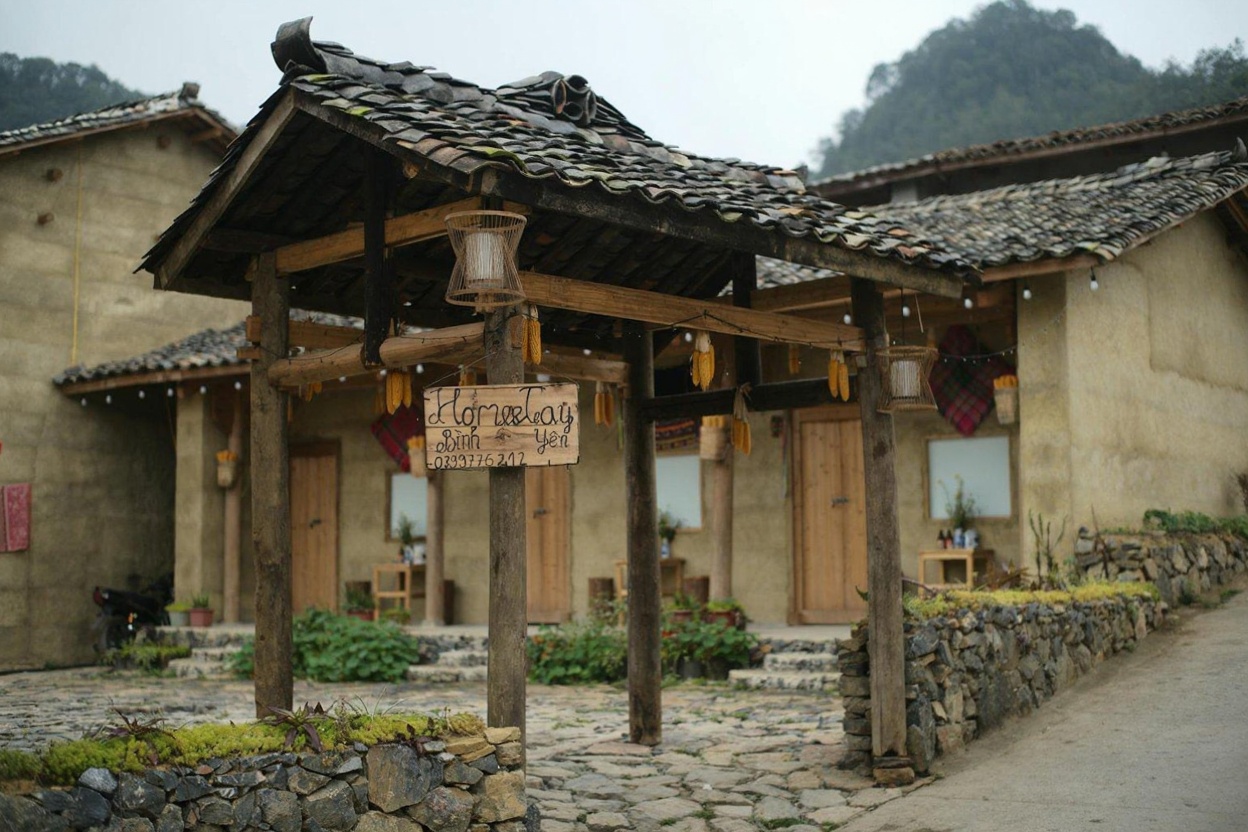
Reddit user Shorq1 described it clearly: “a beautiful place run by Hieu. His mom is an amazing cook, who cooks delicious Vietnamese meals. You can go swimming in Tri An lake just nearby, walk around the village or go for a hike.” The comment was specifically in response to a parent looking for kid-friendly alternatives to the same-old tourist circuit. It fits.
This isn’t a polished resort. There’s no pool. The food is whatever Hieu’s mom is making that day. That’s the point.
→Who It’s For
Families with young children, travelers who want a slow day away from concrete, anyone who wants a real meal in someone’s actual home rather than a restaurant calibrated for tourists.
Chau Thoi Temple and Thuy Chau Ecotourism: The Local Circuit in Di An
Di An is a city district that borders Saigon to the northeast — technically Binh Duong Province, 25 kilometers from District 1. Rouge user noir1_ mentioned this combination specifically as a family day trip alternative: Thuy Chau Ecotourism area plus Chau Thoi Mountain and its ancient Cham-era temple.
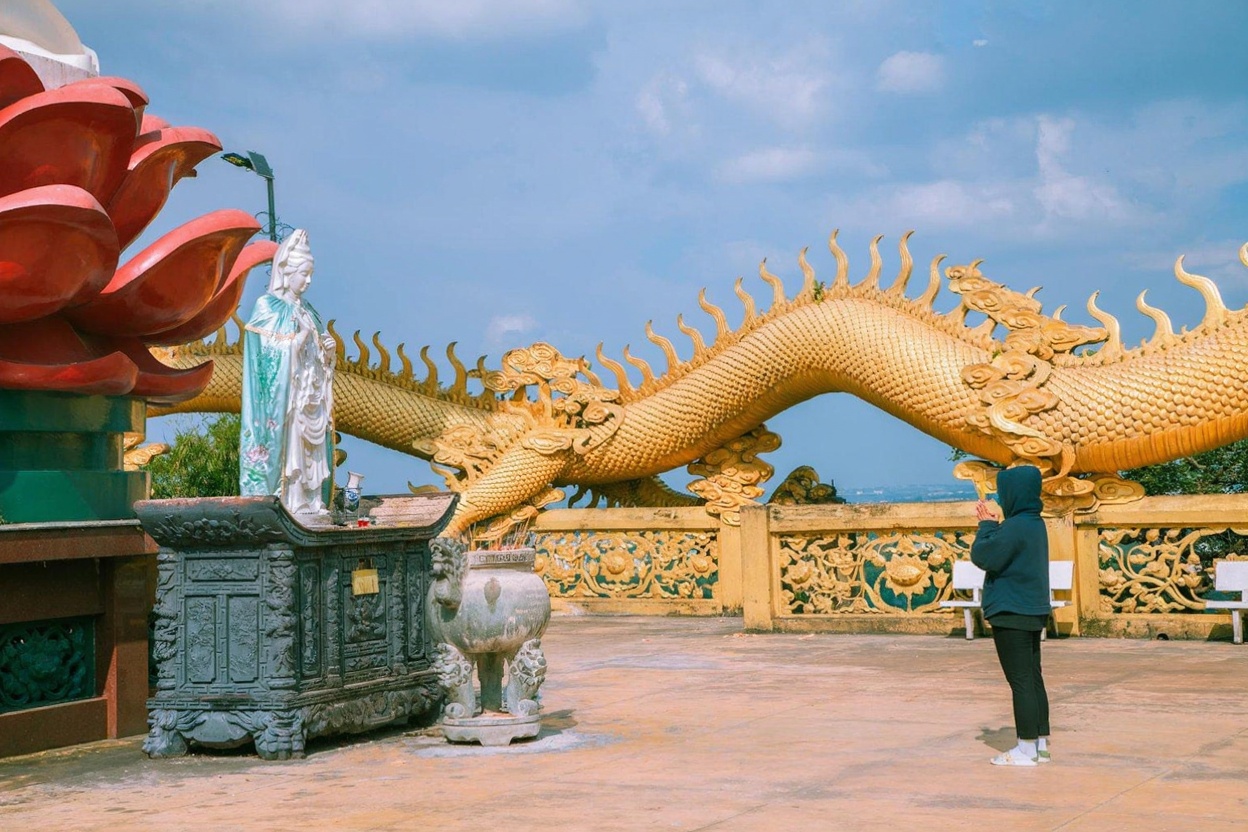
Chau Thoi Temple (Chùa Núi Châu Thới) dates back to the 17th century, making it one of the oldest pagodas in the south. The mountain it sits on is small — a few hundred steps — but the views over the surrounding plains and the Dong Nai River are clear. It’s busy on weekends with local pilgrims; quiet on weekdays.
Thuy Chau Ecotourism is a nature park with gardens, a small lake, and family-oriented activities. Not remotely wild — this is the Vietnamese version of a day out, with families on paddleboats and kids eating banh mi on picnic tables — but it’s genuinely local and far from the tourist circuit.
The appeal of this combination is proximity: you’re back in Saigon by mid-afternoon, and you’ve spent a day entirely outside the tourist bubble.
Getting Out of Saigon: Practical Notes
For Cu Chi, Can Gio, and Vung Tau, you don’t need a private car. Public buses handle all three. For Tay Ninh and Ba Den Mountain in one day, a rented car with driver is worth the extra cost — the timing works better and you’re not coordinating two separate bus schedules.
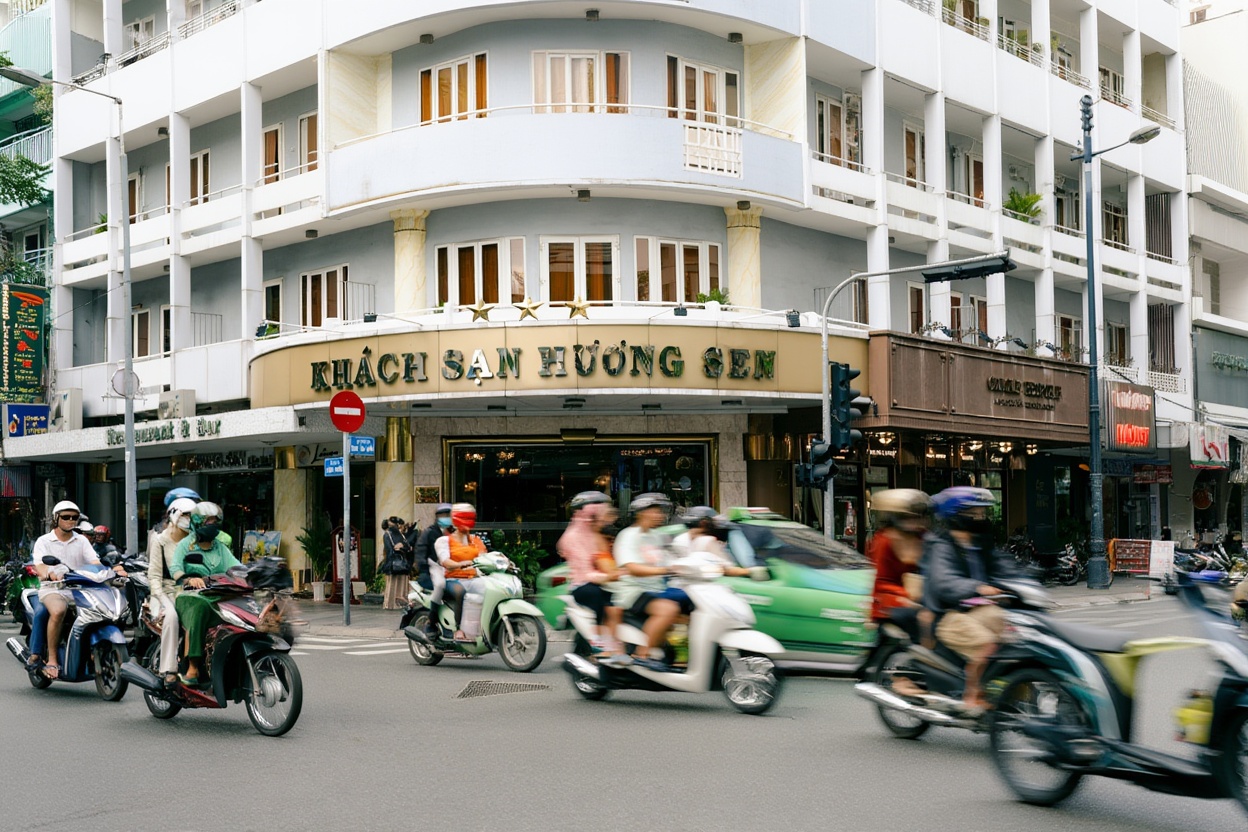
Motorbike rental in Saigon: 130,000–250,000 VND per day (~$5–9.50) from any of the rental shops on Pham Ngu Lao or Bui Vien. Fuel is cheap. Having your own wheels is the difference between hitting Can Gio at 7am before any tour bus arrives and getting there at 10am with thirty other people.
Grab cars are reliable for shorter distances — Cu Chi and Can Gio are both doable by Grab if you’re not renting a motorbike. Budget 200,000–350,000 VND (~$7.60–13.30) each way depending on the destination.
ℹKnow Before You Go
Every single one of these destinations is substantially busier on weekends. Saigon’s 9 million residents all have the same idea. If you’re flexible, go Tuesday through Thursday — you’ll have Cu Chi’s Ben Duoc essentially to yourself.
How to Choose: The Honest Version
If you only have one day: Cu Chi Tunnels. Pick Ben Duoc. Go on a weekday. Come back by noon and use the afternoon for the War Remnants Museum or Bến Thành Market — you’ll have processed something substantial by then.
If you have two days to play with outside the city: Cu Chi on day one, Can Gio on day two. These two together give you the historical and the ecological, both within 40 kilometers of downtown.
If someone in your group insists on a beach day: Vung Tau. Manage the water-quality expectations upfront. Eat banh khot. Take the boat.
If you want to stay longer and go deeper: one night in Can Tho for the Cai Rang floating market at dawn. Don’t do the Mekong as a day trip if you have the option to stay over.
For everything else — Tay Ninh, Ba Den, Can Gio, Di An — these are the destinations that reward travelers who have already done the standard circuit and want something less photographed. They exist just outside the radius most tour packages reach, which is exactly what makes them worth the extra hour.
For more on what to do while you’re in the city itself, see our complete guide to things to do in Ho Chi Minh City.
Two things worth sorting before you land: a Vietnam eSIM so you have data the moment you clear customs, and travel insurance — medical costs for uninsured foreigners in Vietnam are significant.
Airalo eSIMs activate instantly. Buy before departure — airport SIM queues in Vietnam can take 30+ minutes.
FAQ: Day Trips from Saigon
What is the best day trip from Saigon?
✓Quick Answer
Cu Chi Tunnels is the best single day trip from Saigon — historically significant, physically engaging, and only 30–40km from the city. For something less visited, Can Gio Mangrove Reserve (40 minutes south) is the locals’ choice. Both can be done independently without a tour.
Klook has the widest selection for Vietnam and is usually the cheapest. KKday is strong on day trips and local experiences.
ai Rang floating market at 5am, that’s the real thing.
How far are the Cu Chi Tunnels from Saigon?
Ben Dinh site is about 30 kilometers from central Saigon — roughly 45 minutes to one hour by car or motorbike. Ben Duoc is about 40 kilometers, slightly farther northwest. Most half-day tours allow 2–3 hours at the tunnels before returning.
Can I visit Vung Tau on a day trip from Ho Chi Minh City?
Yes — the Greenlines speedboat from Bạch Đằng pier takes about 80 minutes and costs around 230,000 VND (~$8.75) one way. The beaches at Vung Tau are average compared to other Vietnamese beach destinations, but the seafood (especially banh khot), the Giant Jesus statue, and the colonial White Villa make it a solid day out.
What day trips are good for families with children?
Can Gio Mangrove Reserve (monkey sanctuary, boat rides), the Ba Dat Homestay near Tri An Lake (swimming, home-cooked meals, village walks), and Ba Den Mountain’s cable car in Tay Ninh all work well for families. Cu Chi Tunnels is suitable for older children (8+) but the war history context is heavy — worth a conversation before you go.
Is it worth hiring a car and driver for day trips?
For Tay Ninh and Ba Den Mountain combined in one day, yes — the timing works much better with a private car and you cover both the Cao Dai temple and the mountain without juggling bus schedules. Expect around 1,300,000–1,600,000 VND (~$49–61) for a full-day rental from Saigon. For Cu Chi or Can Gio individually, public bus or Grab is fine. If you’re still working out how to get to the city first, see our guide to getting from Hanoi to Saigon. For the full picture on the city itself, our Saigon travel guide covers everything from neighborhoods to transport.

Planning Cheat Sheet
| Getting There | direct bus from Mien Tay bus station runs about 80,000–120,000 VND (~$3–4.55) each way, roughly two hours. Cable car ticket: approximately 250,000–350 |
|---|