Last updated: May 2026
What Mui Ne Actually Is
Mui Ne is a cape (the name means “sheltered bay”) and the surrounding coast is officially called Phan Thiet, the provincial capital 20km north. In tourism usage, “Mui Ne” refers to the resort strip along Ham Tien beach — a stretch of hotels, restaurants, and bars that runs roughly 10km from the main beach access points to the fishing village at the cape itself. The cape was a backpacker destination in the 1990s, grew rapidly, and now has an unusual demographic mix: Vietnamese domestic tourists on package tours, international backpackers, kite surfing enthusiasts from Europe and Australia, and a substantial Russian expat and tourist community that arrived in large numbers after 2014 and again after 2022.
The result is a beach town with a slightly fractured identity. The main strip has Russian-language menus alongside Vietnamese seafood restaurants, kite surfing schools next to budget guesthouses, and a stretch of mid-range resorts that are neither cheap enough for backpackers nor luxurious enough to justify a beach holiday on quality alone. What Mui Ne does well — sand dunes, wind sports, Fairy Stream, fresh seafood — is worth coming for. What it doesn’t do well — clean beach, nightlife, social atmosphere — is well documented in recent Reddit threads and should be factored into expectations.
The Sand Dunes — The Main Reason to Come
Mui Ne has two dune systems: the Red Dunes (Đồi Cát Bay) 3km from the main strip, and the White Dunes (Bàu Trắng) 35km east near Bình Thạnh village.

Red Dunes: Smaller (about 1.5km walk to the highest ridge), but 10 minutes from the strip by motorbike. The sand is a deep terracotta-orange from iron oxide content. Best at 5:30am before the crowds and before the sun gets overhead and bleaches the color. The slopes facing east catch the gold of early morning light; they face directly into the Saigon day-tripper crowds by 9am. Free entry to the dunes themselves. ATV rental available at the entrance: 200,000–350,000 VND for 30 minutes. The ATV operators are aggressive — a firm shake of the head is sufficient to decline. Sand sledding boards: 30,000–50,000 VND to rent from the vendors who will find you before you find them.
White Dunes (Bàu Trắng): 35km from Mui Ne strip — 40 minutes by motorbike. The dunes here are white-cream quartz sand and are substantially larger than the Red Dunes. More importantly, they surround a freshwater lake (Bàu Trắng means “white lake”) that reflects the dune faces in the early morning when the water is still. The reflection window: 5:30–8:30am before the wind breaks the surface. Arrive before 6am for the best conditions. Entrance fee: 20,000 VND (~$0.75). ATV rental also available; the same hard-sell applies. Combination: ride to White Dunes before dawn, photograph the lake reflection, ride back past the Red Dunes by 9am before the day-trippers take over. This is the best single day in Mui Ne.
For a complete breakdown of both dune systems including photography tips, what to bring, and month-by-month conditions, see our Mui Ne sand dunes guide.
The Fairy Stream — Better Than Its Reputation
The Fairy Stream (Suối Tiên) is a shallow stream running through a narrow canyon of red and white clay formations, 4–5km from the main beach. You wade ankle-to-knee depth through the stream while the canyon walls — terracotta red, cream white, carved into smooth curves by water erosion — rise 2–5 meters on either side. The walk takes 20–30 minutes to the waterfall at the end.
The litter issue is real — the 2024 Reddit post describing significant trash at the stream is accurate, particularly at the entrance where vendors set up and day-trippers turn around. The further you walk from the entrance, the less the problem. The canyon itself, once you’re 10 minutes in, is still photogenic. Best time: 4pm, when the low sun angle catches the cliff faces from the west and turns the red clay to deep copper. Early morning also works but the light comes from behind you. Entrance: free. Leave shoes at the designated area at the start.
Kite Surfing — The Sport That Defines Mui Ne
Mui Ne’s wind corridor is one of the best in Southeast Asia — consistent offshore wind from October to February (peaking November–January), flat water lagoon sections, and warm water year-round. The kite surfing community here predates most of the resort development and gives Mui Ne a distinct identity that separates it from purely beach-tourist destinations.
Several schools along the main strip offer lessons:
Windchimes Kite School and Airwaves Kite Center are the most established, both running for over a decade. A beginner course: 3 days, 9 hours of instruction, 3.5–5 million VND (~$133–190). Equipment included. Most beginners progress from body dragging (day 1) to riding upwind (day 3) if conditions are good. The flat water behind the fishing harbor is used for beginners — the shallow lagoon section is forgiving for falls.
Independent travelers who kite surf and come specifically for the wind: bring your own gear if possible (rental quality varies and busy season means competition for good boards). The wind season October–February overlaps with peak tourist season — book accommodation 2–3 weeks ahead.
Note from the Reddit kite surfing community: a 2023 report described arriving in January and getting only 30 minutes of actual kiting due to unusually low wind. El Niño years affect Mui Ne’s wind corridor significantly. Check wind forecasts (Windguru, iKitesurf) 2–3 days before arrival if wind sports are the primary reason you’re coming.
The Fishing Village — Genuine Local Activity
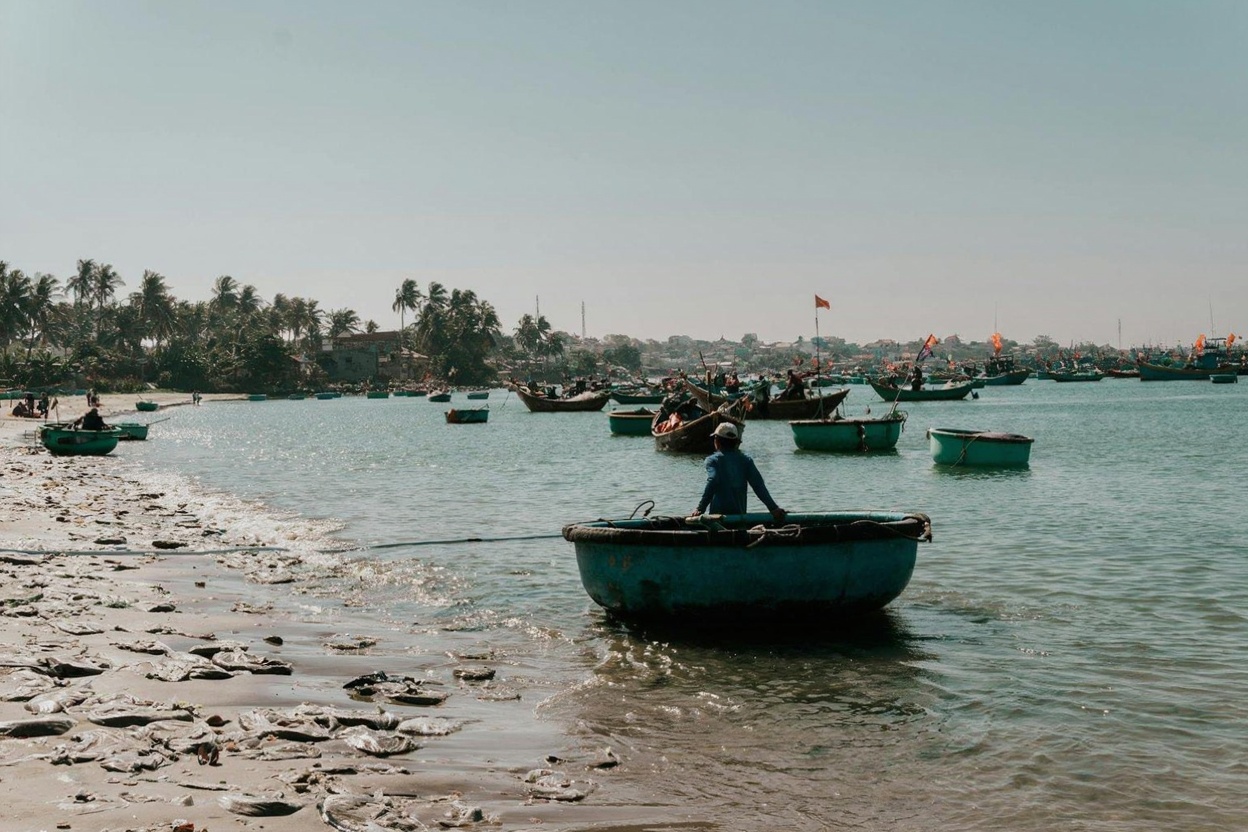
The fishing village at the Mui Ne cape itself (the actual Mũi Né cape, not the tourist strip) remains a working fishing community — early mornings (4–6am) see the catch boats returning and the wholesale fish trading happening directly on the beach. Round basket boats (thuyền thúng, shaped like giant wok lids) are used for the short-range navigation between the fishing boats and the shore — one of the most distinct images in Mui Ne’s visual vocabulary.
The morning market at the fishing harbor: fresh fish, crab, shrimp, and squid sold at wholesale prices directly from the boats. Prices are a fraction of what the tourist restaurants charge — a kilogram of fresh squid: 80,000–120,000 VND versus 250,000–400,000 VND at a beachfront restaurant. The market starts packing up by 8am. Walk or Grab there at 5am; the activity and smell (salt water, fresh catch, diesel from the outboards) is worth the early alarm.
Accommodation in Mui Ne
The Mui Ne resort strip runs roughly 10km. Location matters more than price category:
Ham Tien area (central strip): The highest density of budget and mid-range options. Guesthouses: 200,000–400,000 VND/night (~$7.60–15) for private room with AC. Mid-range resort: 600,000–1,500,000 VND/night with pool. Most convenient for restaurants, bars, and transport. The beach directly in front varies in cleanliness; check recent reviews for specific properties.
tions of the main strip. Accommodation starts at 1,500,000–2,500,000 VND/night and goes significantly higher. Worth it if beach swimming quality is a priority — Reddit users specifically mention Sealinks as having the cleanest beach access on the strip.
Avoid: any property that markets “direct beach access” without specifying which beach section. The east-facing fishing village beach is functional but not a swimming beach. The main Ham Tien strip section is swimmable but water clarity varies by season and recent rain.
Getting to Mui Ne from Saigon
Saigon to Mui Ne is 200km — 3.5–4.5 hours depending on transport. The most common options:
FUTA (Phương Trang) bus: 160,000–200,000 VND (~$6–7.60), 4 hours. Departs from Saigon’s Mien Dong bus station. The most reliable and comfortable bus option on the route — air-conditioned, on schedule, Wi-Fi that occasionally works. Arrives at Phan Thiet bus station (10km from the Mui Ne strip) — take a Grab or taxi for the last section (50,000–80,000 VND). Book a day ahead through the FUTA app or at the station; seats on early morning departures (6–9am) fill quickly on weekends.
Tourist/limousine vans: 250,000–350,000 VND (~$9.50–13), door-to-door from central Saigon hotels to the resort strip. 3.5 hours in a 7-seater minivan. More expensive but eliminates the bus station + Grab combination. Book through your Saigon guesthouse the day before. For the complete transport breakdown, see our Mui Ne from Saigon guide.
When to Visit Mui Ne
Mui Ne has two distinct seasons that determine what kind of trip you’ll have:
Dry season (November–April): The main tourist season. Hot, sunny, minimal rain, and excellent sand dune conditions. Wind peaks October–February — best for kite surfing. The White Dunes reflection lake is most photogenic in dry season when water levels are stable. Prices peak in December–February (Vietnamese and international tourists both arrive). November and March–April are the sweet spots: dry weather, fewer crowds, lower accommodation prices (20–30% below peak).
Wet season (May–October): The main rainy season brings afternoon thunderstorms, higher humidity, and lower wind speeds. The sand dunes are still there and still driveable, but the colors are less saturated when overcast and the reflection lake at White Dunes may be higher and murkier. The upside: prices drop significantly (50–60% lower at budget and mid-range properties), the beach crowds thin, and the Russian charter flight season reduces the density of package tourists. Traveling in wet season requires more flexibility on day plans — the dunes at 5am are usually clear regardless of afternoon weather.
For a complete month-by-month breakdown of Mui Ne’s weather and what to expect by season, see our Mui Ne best time to visit guide.
Getting Around Mui Ne
The resort strip is 10km long and not walkable end-to-end. Two options:
Motorbike rental: 150,000–200,000 VND/day from guesthouses or rental shops along the strip. Essential for the White Dunes (35km from the strip) and for getting to the fishing village harbor, Fairy Stream, and Red Dunes independently. The main road is flat and simple — a single coastal road with good pavement. Motorbike is the right choice for anyone spending 2+ nights.
12Go covers most Vietnam routes — sleeper buses, trains, and island ferries. Compare schedules and book in advance during peak season (Dec–Feb, Jun–Aug).
Grab: Available throughout the strip and reliable during daylight hours. Less reliable at 5am for the White Dunes pre-dawn run — the Grab app may show no available cars at that hour. Use a motorbike if your plans require early-morning departures.
Note: Mui Ne has a reputation in Reddit threads for police enforcement of motorbike licenses for foreigners — one thread specifically discussed license checks. If you have a valid motorbike license in your home country (which covers you legally in Vietnam with an IDP), carry the documents. If you don’t have a license, your guesthouse can arrange a driver for the dune run at 250,000–400,000 VND for a half-day.
Combining Mui Ne with Da Lat
The most efficient southern Vietnam circuit from Saigon: Saigon → Mui Ne (2 nights) → Da Lat (2–3 nights) → back to Saigon. The road from Mui Ne to Da Lat is 160km and one of the most scenic in southern Vietnam — a steady climb through coffee plantations and pine forest from sea level to 1,500m. Takes 3–4 hours by bus or limousine (180,000–280,000 VND) or 2.5 hours by private car (400,000–600,000 VND/person shared).
The combination works well because Mui Ne and Da Lat have opposite climates during the same season — when Mui Ne is hot and dry in December–February, Da Lat is cool and misty at altitude. The contrast is striking. Eat fresh seafood at the Mui Ne fishing village for dinner, eat strawberries and avocado toast in a Da Lat cafe two days later. The pairing encapsulates southern Vietnam’s climate range within a 160km circuit.
Several operators run the Mui Ne–Da Lat route on sleeper buses (leaving around 11pm, arriving Da Lat 3–4am) for 180,000–250,000 VND — the logistics of the night bus avoid a lost day of travel. The more scenic option is a daytime van, which gives you the views as you climb into the highlands. Either way, the Mui Ne–Da Lat circuit needs a minimum of 4 nights total: 2 in Mui Ne, 2 in Da Lat. Adding a night to each makes for a comfortable 6-night southern loop from Saigon with no rushing.
Where to Eat in Mui Ne
Fresh seafood at the harbor: The restaurants immediately adjacent to the fishing harbor (north end of the strip, near the actual cape) have the freshest seafood and lowest prices. Point-and-choose from the display of live and fresh-catch seafood; the restaurant grills, steams, or deep-fries to order. Grilled squid: 80,000–150,000 VND. Steamed crab: 300,000–500,000 VND/kg. Fresh prawns grilled with salt and pepper: 200,000–350,000 VND/plate.
Bún bò Nam Bộ and bánh canh cá (fish noodle soup): The local Vietnamese breakfast. Bánh canh cá — thick rice-flour noodles in a fish broth with fresh-catch additions — is the most distinctly Phan Thiet / Binh Thuan province dish and available at market stalls and roadside restaurants from 5–9am. Cost: 35,000–60,000 VND.
The strip restaurants: The international restaurants (pizza, pasta, burgers) on the main road are fine if that’s what you want after a day of sun. Prices are tourist rates — 150,000–250,000 VND for a main course. The Russian-menu restaurants are a curiosity; the food is competent if you want borscht in Vietnam.
What I Got Wrong About Mui Ne
I arrived expecting something like Hoi An’s beach — charming town, clear water, manageable tourist presence. What I got was a 10km resort strip with the charm concentrated in two specific places (the fishing harbor at dawn and the White Dunes in the early morning) and a beach that ranged from “acceptable” to “avoid” depending on section and recent rain.
The better mental model: think of Mui Ne the way you’d think of a specific activity destination. You’re here for the dunes, the kite surfing, or both. The beach is a bonus if conditions are good. The resort strip is functional infrastructure, not an attraction. With that expectation recalibrated, 2 nights is a good trip. With inflated expectations about a “pristine beach retreat,” any amount of time is disappointing.
The Fairy Stream, specifically: go at 4pm, wade in from the entrance, walk past the tourist photography clusters at the first bend, and keep going. By the third or fourth bend the canyon is quiet and genuinely beautiful. The people who had a bad time at the Fairy Stream mostly turned around at the first bend. The creek itself is fresh and cool — on a 35-degree afternoon, wading through ankle-deep water in a shaded canyon is its own reward before the photography even begins.
Two things worth sorting before you land: a Vietnam eSIM so you have data the moment you clear customs, and travel insurance — medical costs for uninsured foreigners in Vietnam are significant.
Airalo eSIMs activate instantly. Buy before departure — airport SIM queues in Vietnam can take 30+ minutes.
Frequently Asked Questions
Is Mui Ne worth visiting in 2026?
For sand dunes and kite surfing: yes. For beach quality and cleanliness: set expectations accordingly. The Reddit threads from 2024 are accurate about the Fairy Stream and main beach having litter problems. But the White Dunes at dawn are still one of the most visually striking landscapes in southern Vietnam, and the kite surfing infrastructure is world-class. Come for the specific things Mui Ne does well, not for a general beach holiday.
How many days do you need in Mui Ne?
Two nights is ideal for most travelers: Day 1 afternoon arrival, evening at the fishing harbor; Day 2 pre-dawn White Dunes run + Red Dunes + Fairy Stream at 4pm; Day 3 morning departure. Three nights works if you want a kite surfing introduction (first 1.5 days is instruction) or want a rest day. More than 3 nights gets tedious unless you’re there specifically for kite surfing lessons over a full week.
Is the beach at Mui Ne clean?
Some sections are, some aren’t. The Sealinks resort area (south end) has the cleanest private beach access. The main Ham Tien public beach sections have variable water clarity and visible litter, particularly after rain or high wind that pushes debris ashore. The fishing village beach is a working harbor — genuinely dirty, but in the functional way of a working port. Travelers who came specifically for swimming beach quality are often disappointed. Travelers who knew this in advance and came for the dunes are fine.
What is Mui Ne famous for?
Sand dunes (the only large coastal dune system in Vietnam), kite surfing (one of Southeast Asia’s top wind sport destinations), fish sauce (the coast from Phan Thiet north produces significant fish sauce), and bánh canh cá (the local noodle soup). Also: the round basket boats (thuyền thúng) used in the fishing community, and as the entry point to the Da Lat highlands on the most scenic road in southern Vietnam.
FAQ
Is Mui Ne worth visiting?
Depends on what you want. Mui Ne excels at: kitesurfing (one of Southeast Asia’s best spots), sand dunes, and seafood. It’s weak on: beaches (decent but not Vietnam’s best), nightlife (limited), and sightseeing beyond the dunes. It’s a destination for specific activities, not a general travel destination. If you don’t surf or kite, Phu Quoc or Hoi An offer better beach experiences.
How many days should you spend in Mui Ne?
Two to three nights for most travelers: one day for the red and white sand dunes, one morning for the fishing village, one afternoon relaxing. Kitesurfers should plan 5–7 days minimum to take lessons and practice in good wind. One night is not enough — you’ll feel like you came all this way for very little.
What is the best beach in Mui Ne?
The main beach (Bai Bong) along Tran Hung Dao Street is the longest but sand flies are a problem in the evenings. Suoi Nuoc Beach (Fairy Stream area) is prettier for photography. For swimming, the beaches are adequate — calm water, warm temperatures year-round. Not Vietnam’s finest sand, but serviceable.
Is Mui Ne good for backpackers?
Increasingly less so — the budget accommodation that made Mui Ne popular with backpackers has been replaced by mid-range resorts as prices have risen. There are still budget guesthouses (300,000–500,000 VND/night) but fewer than five years ago. The backpacker social scene is thinner than Hoi An or Hanoi.
What food is Mui Ne known for?
Seafood — the fishing village brings in fresh catch daily. Look for: bánh căn (small rice cakes cooked in clay molds, topped with seafood — a Mui Ne specialty), bún cá (fish noodle soup), and grilled seafood at the night market stalls. The seafood restaurants along the main strip are tourist-priced but decent; better value from the local restaurants further from the beach.