Updated: May 2026 | By Jake Morrison
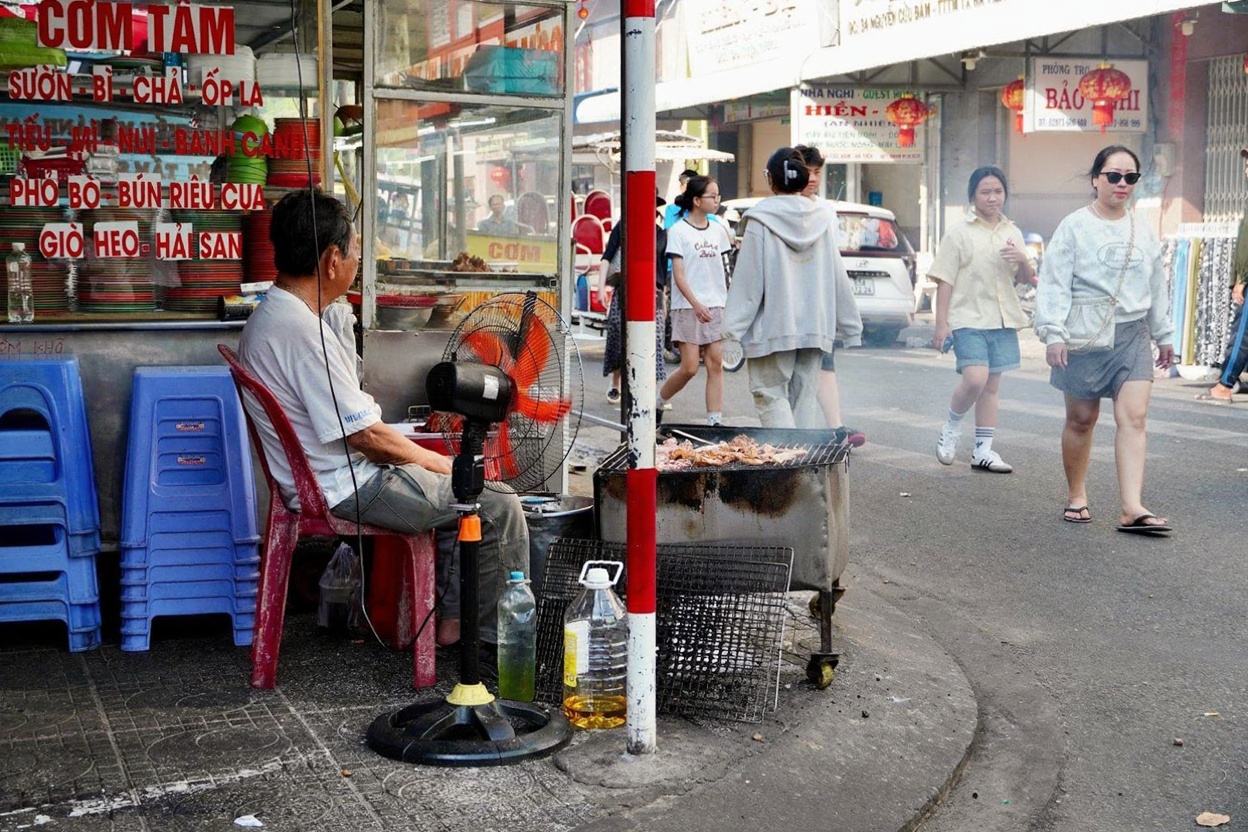
Saigon doesn’t do food quietly. The city smells like caramelized pork fat, fish sauce, and charcoal smoke from 5am until midnight — sometimes later — and the plastic stools are rarely empty.
This isn’t Hanoi, where the food culture is slower and more ritualized. Saigon eats fast, eats loud, and eats everywhere. A bowl of cơm tấm at 6am from a sidewalk vendor outside your guesthouse is as legitimate as a 500,000 VND meal in a tiled restaurant in D3. Sometimes it’s better.
I’ve lived in Vietnam five years, four of them making regular trips to Saigon. I’ve eaten my way from District 1 to District 11 and paid tourist prices more times than I’d like to admit. Here’s what I know now.
Start Here: Cơm Tấm — The Dish Saigon Is Built On
Cơm tấm (say: come tam) is broken rice — the cracked, imperfect grains that didn’t make it through the husking process, historically sold cheap to workers. Saigon took those grains and built a whole food culture around them.
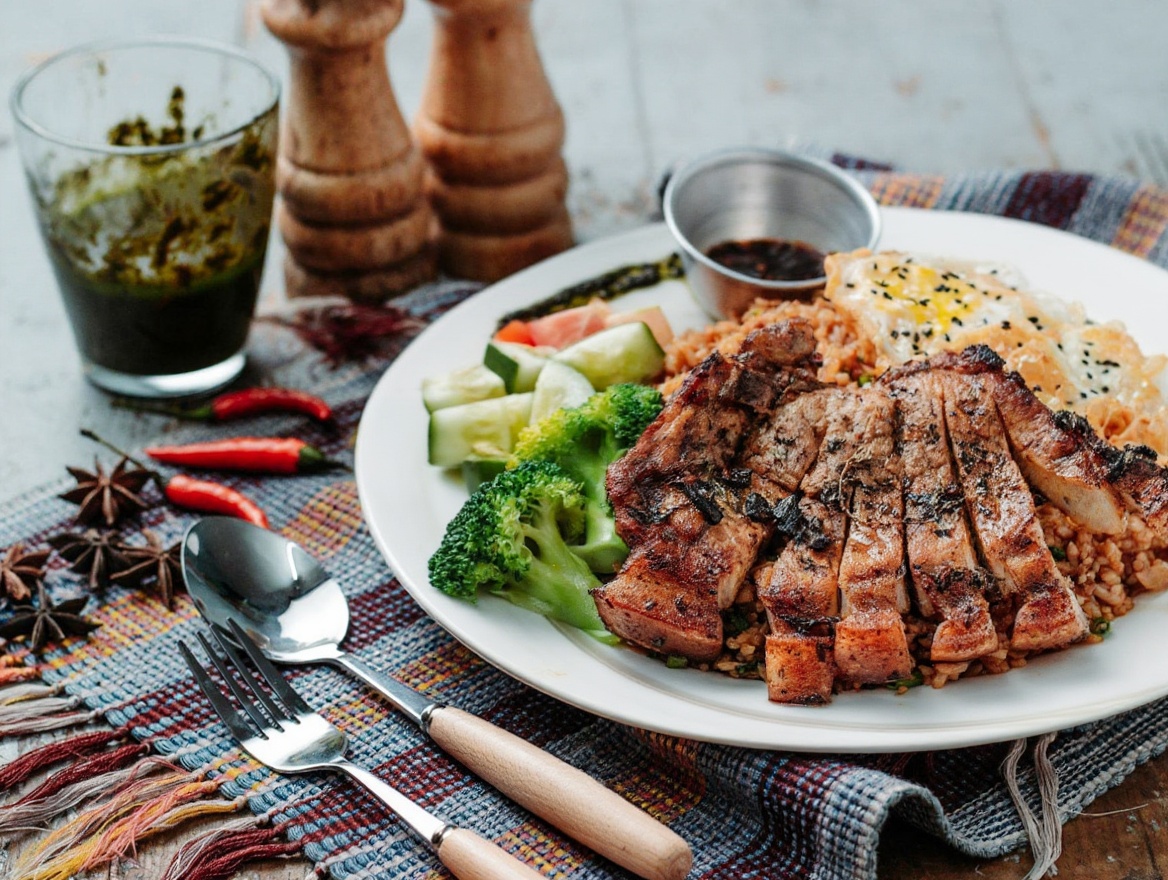
A proper cơm tấm plate arrives loaded: grilled pork chop (sườn nướng, say: shurn nuhng) or shredded pork skin (bì, say: bee), a fried egg, pickled daikon and carrot, a bowl of broth, and fish sauce dipping sauce. The pork is marinated in lemongrass and honey, then grilled over charcoal — the smell carries half a block.
Price: 40,000–65,000 VND (~$1.55–$2.45) at a sidewalk stall. Anything north of 80,000 VND (~$3.05) for a basic plate means you’re in tourist territory.
Where to eat it: Cơm Tấm Bụi is a chain but a reliable one — multiple locations across D1 and D3, clean, fast, honest price. For a proper hole-in-the-wall: walk down any residential lane (hẻm, say: hem) in D4 before 8am and follow the charcoal smoke.
★Jake’s Pick
Cơm tấm is my breakfast in Saigon, every time. 45,000 VND, plastic stool on the pavement, charcoal smoke in the air. I’ve tried the restaurant version with air conditioning and a menu in English. The plastic stool version wins every time — not for the nostalgia, because the rice is genuinely better when it’s cooked in a wok over charcoal rather than a commercial steamer.
Hủ Tiếu — Saigon’s Own Noodle Soup
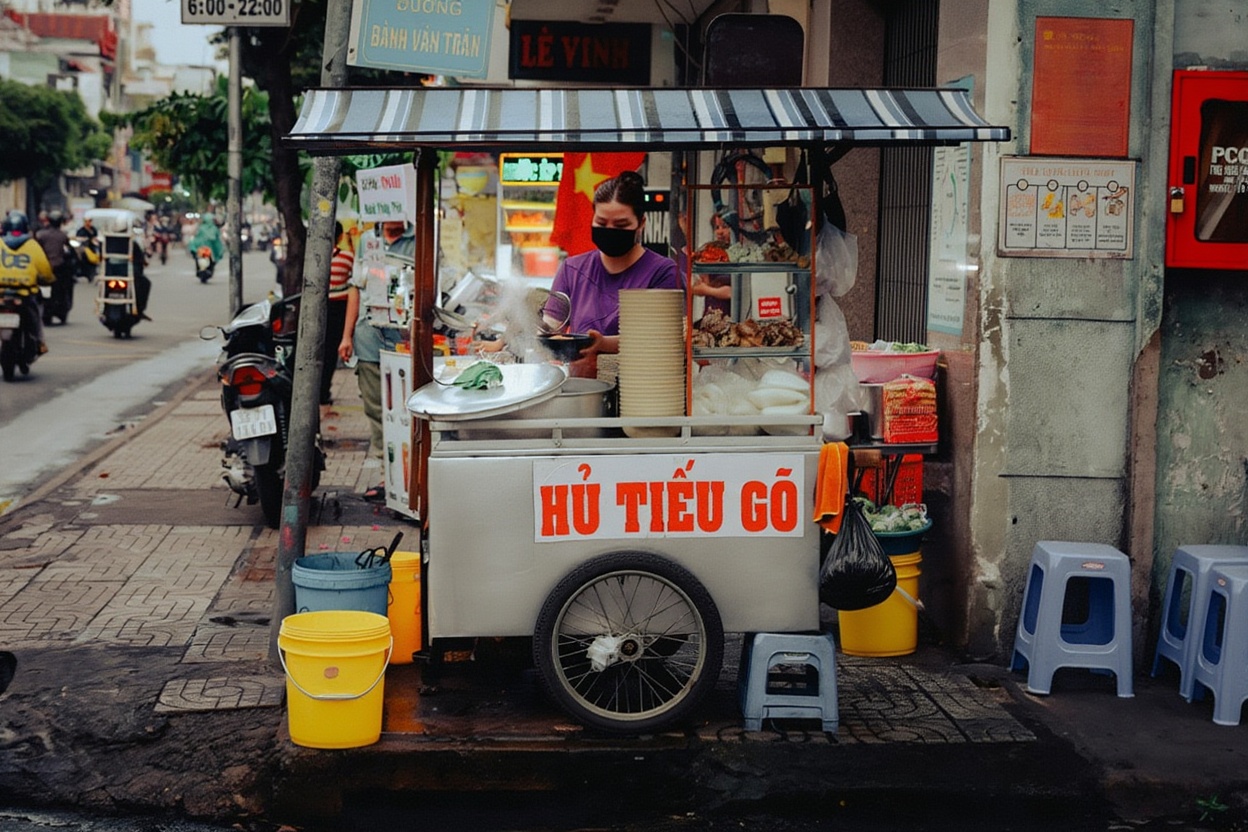
Everyone arrives looking for pho. Pho is fine — but hủ tiếu (say: hoo tyew) is Saigon’s dish. It arrived with the Teochew Chinese community and became something distinctly southern: cleaner broth than pho, thinner rice noodles, pork and shrimp and sometimes crab, a heap of fresh herbs dumped in at the table.
 phở, more layered toppings” loading=”lazy” width=”1200″ height=”675″ style=”width:100%;height:auto;”>
The standard version is hủ tiếu Nam Vang (Phnom Penh style) — pork ribs, minced pork, shrimp, quail egg, liver. Order it “khô” (say: koh) and you get the noodles dry with toppings, broth served separately in a bowl on the side. More control, better eating.
Price: 40,000–70,000 VND (~$1.55–$2.65). Try Hủ Tiếu Nam Vang Tám Hiền on Vĩnh Khánh street in D4 — the same block as the shellfish stalls, open from 6am.
One r/VietNam regular had the right approach to eating in Saigon: “I could just pick a mostly random street in a random district and walk and see what they got.” For hủ tiếu, that actually works — every neighbourhood has its own version, slightly different, equally worth eating.
Mì Quảng — The Underrated One
Mì Quảng (say: mee kwang) is from central Vietnam — wide turmeric-yellow noodles, a small amount of thick broth, a pile of herbs, roasted peanuts, rice crackers, protein. It’s not a soup. It’s not a dry noodle dish. It’s something in between that most tourists walk past without recognizing.
One r/VietNam regular called it “really tasty and not so well-known” — accurate. Pho gets all the attention; mì Quảng gets eaten daily by people who know better.
Price: 45,000–75,000 VND (~$1.70–$2.85). Search Google Maps for “Mì Quảng” in D3 or D4 — it’s common enough that you’ll find a good one within 500 meters of most guesthouses.
→Who It’s For
Anyone who wants to eat beyond the tourist circuit. Mì Quảng is genuinely distinctive — the turmeric noodles and peanut crunch make it unlike anything else on the Saigon table.
Bánh Xèo — The Sizzling Crepe That Requires Two Hands
Bánh xèo (say: ban say-oh — the “xèo” mimics the sizzling sound) is a rice flour crepe stuffed with shrimp, pork, bean sprouts, and green onion, cooked in a wok until the edges crisp up. It arrives hot, folded in half, the size of a small plate.
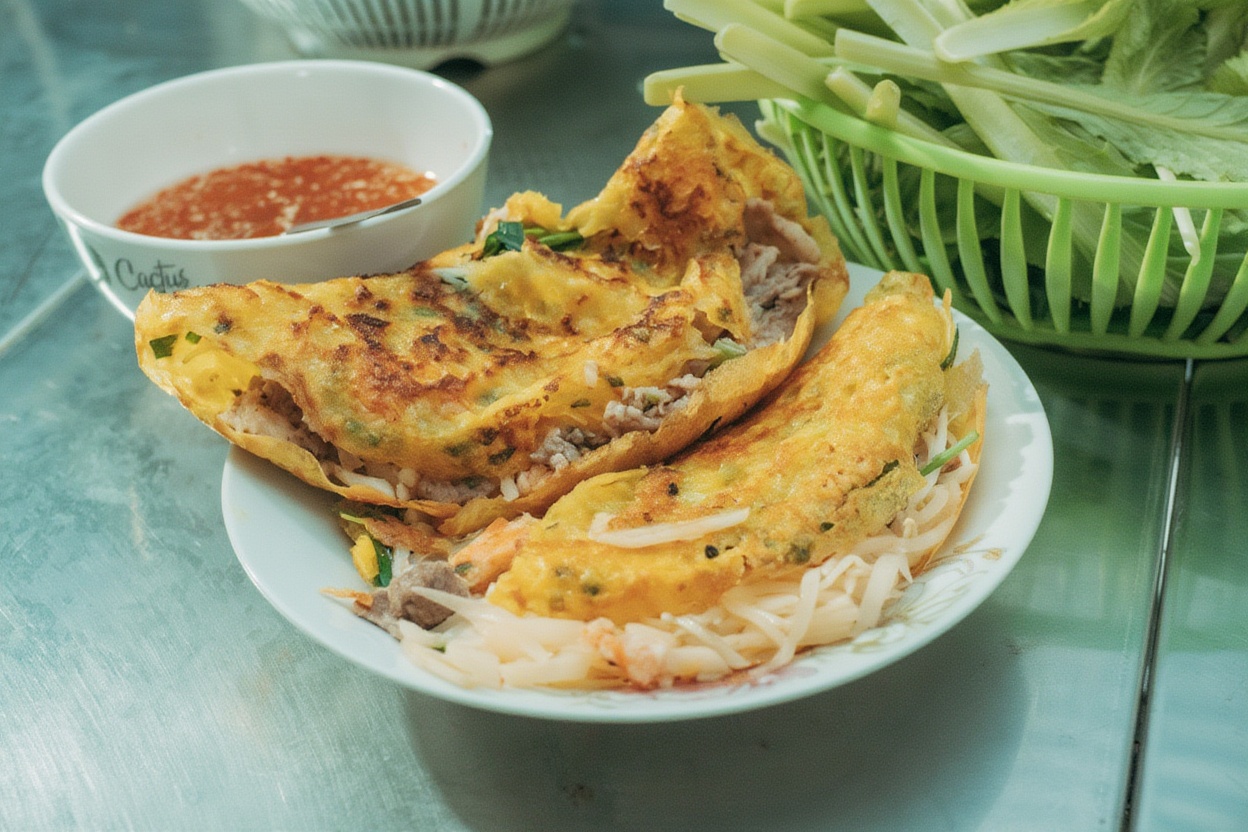
You don’t eat it with chopsticks. You tear off a piece, wrap it in a large mustard leaf or lettuce, add mint and perilla, dip in nước chấm (say: nuhk cham), and eat it in one bite. The first time someone watches you do this wrong — trying to use chopsticks on a crepe — the vendor will silently demonstrate. They’ve seen it before.
Price: 50,000–120,000 VND (~$1.90–$4.55) depending on size. Bánh Xèo 46A at 46A Đinh Công Tráng in D1 is the most-referenced spot in every food guide, and it earns it — been there for decades, still packed, still cheap. Get there by 11am or by 5pm before the dinner queue.
Ốc (Shellfish) on Vinh Khánh Street — After Dark Only
Vĩnh Khánh street in District 4 is the ốc (say: ock) street — a few hundred meters of sidewalk stalls cooking shellfish, snails, oysters, and clams every way imaginable. It comes alive around 7pm and runs until 1am.
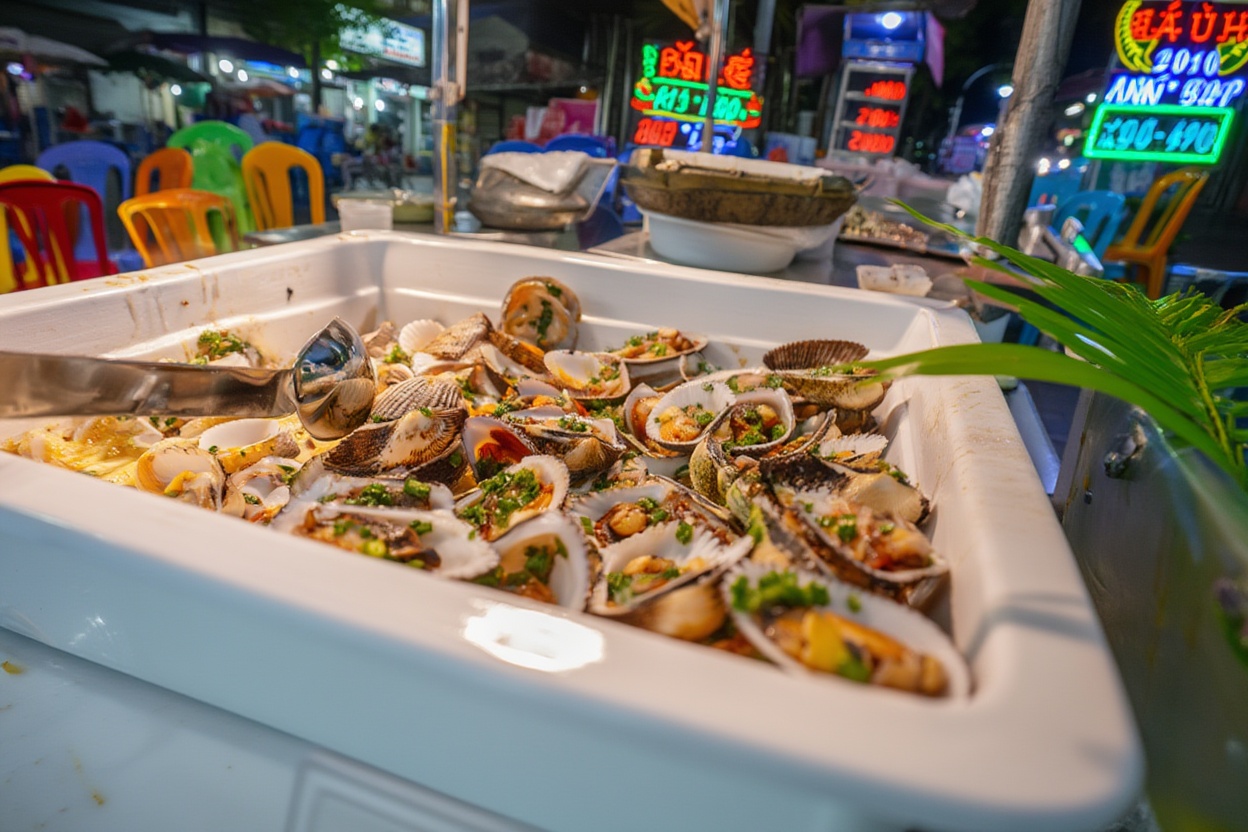
Order ốc len xào dừa (say: ock len sow duhwa) — small spiral snails stir-fried in coconut milk and lemongrass. Or ốc hút (say: ock hoot) — snails you suck directly out of the shell. Both arrive with a metal pick and the expectation that you’ll make a mess. They’re right.
From r/VietNam: “Ốc (seafood) — go eat anywhere on Vinh Khánh street.” Correct. The stalls are similar in quality — pick one that’s busy, sit down, point at what the next table is eating.
Price per dish: 50,000–150,000 VND (~$1.90–$5.70). A full table with beer runs 250,000–400,000 VND per person (~$9.50–$15.20). It’s a night-out, not a quick dinner.
ℹKnow Before You Go
Vĩnh Khánh is a 10-minute Grab Bike from Ben Thanh (~20,000 VND, ~$0.75). The stalls don’t have English menus but most have photos. Point, nod, eat. Wet wipes are provided — you’ll need them.
Pho Ha on Hàm Nghi — If You Want Pho
Pho in Saigon is southern pho: sweeter broth than Hanoi, more herbs, more condiments at the table. It’s good. It’s not as complex as northern pho, but that’s not a failing — it’s a regional identity.
Pho Ha on Hàm Nghi Street, D1 (10.7726° N, 106.7032° E) gets recommended consistently for two things: chicken glass noodle soup and fried sticky rice topped with pâté. The sticky rice is the sleeper hit — crispy, fatty, substantial, nothing like the tourist interpretation of Vietnamese food.
Open early morning to lunch. Price: 50,000–80,000 VND (~$1.90–$3.05) a bowl.
Bánh Tráng Nướng — Find the Aunty, Not the App
Bánh tráng nướng (say: ban trang nuhng) is grilled rice paper topped with egg, dried shrimp, green onion, and chili. It’s a street snack with origins in Đà Lạt, but Saigon has made it its own. There are versions everywhere — and there’s a significant quality gap between the mediocre ones and the good ones.
One r/VietNam regular was specific: “My favourite spot: Tầm Vũ street, along the river in Bình Thạnh district. The bánh tráng nướng from the aunty near the church — I think her stall’s name is Quyên or Tuyên, it’s usually very busy. She has by far the best ones of anywhere I’ve tried.”
Bình Thạnh is a 10-minute Grab from D1. If you find the stall — it’s worth the detour. If not, Pham Viet Chanh Street in the same district has a solid version from multiple stalls after 6pm.
Price: 20,000–35,000 VND (~$0.75–$1.35).
Late Night: Cháo Lòng in District 4
Cháo lòng (say: chow long) is pork congee with offal — intestine, liver, kidney, lung — served in a thin rice porridge with ginger, fried shallots, and a pile of herbs. It’s the midnight meal of cab drivers, nurses finishing night shift, and anyone who’s been at a Vĩnh Khánh shellfish table until 11pm.
Hẻm 76 Tôn Thất Đạm in D4 has cháo lòng stalls running from 10pm to 4am. The lights are fluorescent, the stools are plastic, and nobody speaks English. The bowl costs 50,000–70,000 VND (~$1.90–$2.65). If you’re not eating offal, the plain cháo trắng (say: chow trang) with dried shrimp is 30,000 VND and also excellent.
The Tourist Tax Zone — Where Not to Eat
The 200-meter radius around Ben Thanh Market is where Saigon food gets expensive and worse simultaneously. The restaurants facing the market are built for tour groups with laminated menus and a “local food” aesthetic that costs four times what the same dish costs two streets away.
I paid 195,000 VND (~$7.40) for cơm tấm once at a restaurant on Phan Bội Châu Street near Ben Thanh — air conditioning, a photo menu in four languages, a free wet wipe with the bill. Two streets away on Hùng Vương: 45,000 VND for a better plate, eaten standing at a cart. I’ve made this mistake so you don’t have to.
⚠Real Talk
Bui Vien Street food is also tourist-tier pricing: the “street food” stalls around the backpacker strip charge 80,000–120,000 VND for bánh mì and spring rolls. Those same items cost 25,000–40,000 VND one neighborhood over. The food isn’t worse on Bui Vien — it’s just not worth the markup when the real thing is a five-minute walk.
Coffee in Saigon
Saigon runs on cà phê sữa đá (say: ca fay sua da) — iced coffee with condensed milk, poured over a glass of ice. It’s thicker, sweeter, and more intensely caffeinated than anything branded as “Vietnamese coffee” in other countries. A glass at a sidewalk cart: 15,000–25,000 VND (~$0.55–$0.95). The same glass at a proper café with wifi: 35,000–55,000 VND (~$1.35–$2.10).
For something different: nước mía (say: nuhk mee-ah) is fresh sugarcane juice pressed at the cart, often with kumquat, over ice. 15,000–25,000 VND. Ubiquitous, refreshing, and the correct drink for 35°C afternoons.
Saigon’s café culture is District 3 — the streets around Nguyễn Thị Minh Khai and Võ Văn Tần have independent cafés with character, reasonable prices, and significantly less Instagram positioning than the café apartment or Phúc Long chain. Walk until you find one with plants and a good ceiling fan.
5 Food Streets Worth Knowing
Cholon (District 6) — The Food Scene Most Tourists Skip
Cholon (say: choh lon — means “big market”) is the original Chinatown, a 20-minute Grab from D1, and it has the most distinct food identity of any district in Saigon. The Teochew and Cantonese communities have been here for 200 years and the cooking reflects it: stronger sauces, more offal, better dim sum, flavors that lean toward Guangdong rather than the Mekong Delta.
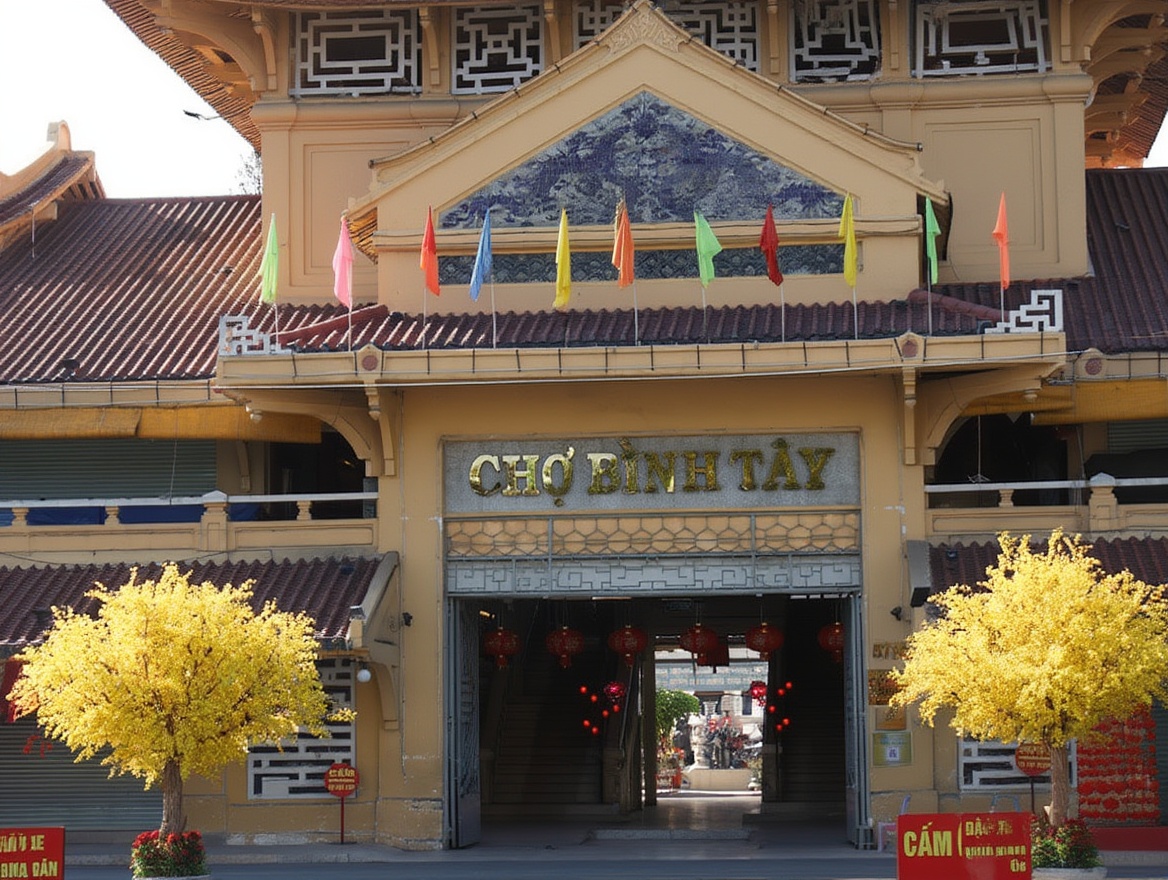
Bình Tây Market (10.7524° N, 106.6536° E) is the wholesale hub — dried goods, spices, noodles in industrial quantities. Not a tourist market. Walk the perimeter, not the interior, and you’ll find the best food: bánh bao (say: ban bow) vendors with fresh steamed buns 15,000–20,000 VND (~$0.55–$0.75), fried dough sticks with congee, and soup stalls that open before 6am for the market workers.
On Phùng Hưng Street near the market: roast duck and char siu pork hanging in windows, sold by weight. 80,000–130,000 VND per 100g (~$3.05–$4.95). The lacquered skin is glossy and salty and nothing like the Vietnamese preparations you’ll find in D1.
A one-dish recommendation: sup cua (say: soop kwah) — crab meat soup thickened with tapioca and egg, garnished with quail eggs, served with fried bread sticks for dipping. It’s Chinese-Vietnamese, exists mostly in Cholon, and costs 40,000–60,000 VND (~$1.55–$2.30) a bowl. I’ve almost never seen it recommended in a mainstream travel blog. Every single bowl I’ve had in Cholon has been worth the trip from D1.
↗Insider Tip
Get to Cholon by 8am on a weekday — the market is quieter, the food stalls haven’t packed up, and the wholesale traders are still moving. By 10am on weekends it fills with tourists from Bình Tây’s Instagram appeal. The food doesn’t change but the atmosphere does.
Doing a Food Walk vs a Food Tour
Food tours from D1 run 350,000–600,000 VND per person (~$13.30–$22.80). The quality varies enormously. The good ones take you to D4 and D6 on a motorbike with a guide who grew up in the city and knows which grandmother’s stall to hit before they sell out. The bad ones take you to the same tourist-facing stalls on Bui Vien that you could find yourself.
Questions to ask before booking: How many participants maximum? (6–8 is the right answer. 15+ means conveyor belt.) Does it go to D4 or D6? (If it stays in D1, skip it.) Do you eat standing at street stalls or seated at restaurants? (Standing wins.)
Klook has the widest selection for Vietnam and is usually the cheapest. KKday is strong on day trips and local experiences.
I ate exclusively in D1 for three days. The food was fine — there’s good food in D1 — but I was paying tourist-tier prices without realizing it and missing everything that makes Saigon’s food scene actually distinctive.
On day four, a woman who ran the guesthouse told me to take a Grab Bike to Vĩnh Khánh after dinner. I went at 8pm, sat down at the first busy stall, pointed at the next table’s order, and spent 280,000 VND (~$10.60) on three shellfish dishes and two Saigon Reds. The clams in tamarind broth were the best thing I’d eaten in Vietnam that week.
The food in D4 is ten minutes from Ben Thanh. There’s no reason to limit yourself to the tourist radius. The Grab Bike is 20,000 VND. Go.
Two things worth sorting before you land: a Vietnam eSIM so you have data the moment you clear customs, and travel insurance — medical costs for uninsured foreigners in Vietnam are significant.
Airalo eSIMs activate instantly. Buy before departure — airport SIM queues in Vietnam can take 30+ minutes.
Frequently Asked Questions
What is the most famous street food in Saigon?
Cơm tấm (broken rice) is the dish most associated with Saigon — eaten morning and evening, available everywhere, cheap and deeply satisfying. Bánh mì is the internationally known one, but locals eat cơm tấm daily in a way they don’t eat bánh mì.
Is street food safe to eat in Saigon?
Generally yes — high turnover at a busy stall means fresh food, and the cooking temperatures involved (wok frying, grilling over charcoal, boiling broth) kill most pathogens. The stalls that make travelers sick are usually the ones with slow traffic and food sitting out. Follow the crowds. If a stall has six people eating and another has none, the crowds are right.
Avoid raw salads at unfamiliar stalls, ice from unreliable sources (the big factory-made ice blocks are fine; handmade ice cubes less so), and shellfish sitting in still water rather than actively alive. The rest: eat it. Your gut will adapt faster than you expect, usually within 48 hours.
How much should I budget for food per day in Saigon?
Eating primarily from street stalls and local restaurants: 100,000–180,000 VND (~$3.80–$6.80) per day covers three full meals and coffee. Add alcohol or restaurant dining and you’re looking at 300,000–500,000 VND (~$11.40–$19) per day. See our Saigon things to do guide for the full daily budget breakdown.
What’s different about Saigon food vs Hanoi food?
Saigon food is sweeter, more herb-heavy, and more Chinese-influenced (from the Teochew and Cantonese communities). Hanoi is more restrained — less sugar, fewer herbs, more fermented flavors. Pho in Hanoi is considered more complex; cơm tấm and bánh xèo are distinctly southern. If you’re doing both cities, the food difference is one of the best reasons to do both. See our Vietnam itinerary guide for how to structure the trip.
Can vegetarians eat well on Saigon’s street food scene?
Better than you’d expect. Vietnam has a strong Buddhist vegetarian tradition — chay (say: chai) food — and Saigon’s vegetarian stalls are particularly good on the 1st and 15th of each lunar month, when many Buddhist practitioners eat vegetarian. Look for restaurants marked with the character 素 (chay) or the phrase “Cơm Chay.” Districts 3 and 10 have the highest concentration. Bánh mì chay (vegetarian bánh mì, 20,000–35,000 VND / ~$0.75–$1.35) is available at most bánh mì carts. Hủ tiếu can be ordered without meat at most stalls — just say “không thịt” (say: khong thit). For everything beyond the plate, our Saigon travel guide covers the full city from neighborhoods to nightlife. For the full breakdown of what to eat and where to find it, our Saigon street food guide covers every district worth eating in.
FAQ
What should I eat in Saigon?
Non-negotiables: bún bò Huế (spicy lemongrass beef noodle soup — better in Saigon than elsewhere), cơm tấm (broken rice with grilled pork, a quintessentially Saigon dish), bánh mì from Huynh Hoa on Le Thi Rieng Street, hủ tiếu (pork noodle soup, lighter than phở), and gỏi cuốn (fresh spring rolls dipped in peanut sauce).
Where is the best street food in Saigon?
District 4 (Ben Van Don and surrounding streets): densest concentration of seafood stalls and local restaurants. The alleys off Nguyen Trai Street in District 5 (Cholon) for Chinese-Vietnamese crossover dishes. Ba Chieu market area in Binh Thanh district for morning cơm tấm and bún bò Huế. Avoid the tourist-facing restaurants on Bui Vien Walking Street.
What is the best breakfast in Ho Chi Minh City?
Cơm tấm at a sidewalk stall before 9 AM — broken rice with a grilled pork chop (sườn nướng), pork skin (bì), and steamed egg cake (chả trứng). 40,000–70,000 VND. The best ones are packed with local workers at 7 AM and sold out by 10 AM. Second option: bánh mì (baguette sandwich) for 25,000–45,000 VND from a street cart.
How much does a meal cost in Saigon?
Street food: 30,000–70,000 VND ($1.20–$2.80) per dish. Local restaurant: 60,000–150,000 VND for a meal. Mid-range restaurant: 150,000–350,000 VND per person. Tourist-facing restaurant on Bui Vien: 200,000–500,000 VND for the same food you’d pay half for one street away. Saigon is slightly more expensive than Hanoi and Hoi An but still very cheap by international standards.
What Vietnamese dishes originated in Saigon?
Cơm tấm (broken rice — a Southern specialty). Bánh mì (the Saigon version is more loaded than the Hanoi version). Hủ tiếu (pork noodle soup with a sweeter, clearer broth than northern noodle soups). Bò kho (beef stew with baguette). Vietnamese iced coffee is drunk everywhere but Saigon has the densest café culture.