Last updated: June 2026 — hours, vendor info, and night market status verified June 2026.
My take: Ben Thanh is worth an hour, not half a day. It’s become so tourist-oriented that the best Saigon market experience is actually at Binh Tay Market in Cholon (the Chinese district) or the smaller neighborhood markets that nobody photographs. But Ben Thanh is historic, central, and genuinely useful if you know what to buy and what to avoid.
The short version: go for breakfast, buy your spices and coffee, skip the souvenir section unless you enjoy negotiating, then walk to the Reunification Palace or War Remnants Museum before the heat peaks. At 7 AM, the produce section smells of lemongrass, ginger, and the slightly fermented edge of shrimp paste from the far stalls. The vendors call to each other in Saigon Vietnamese — faster and flatter than the Hanoi dialect — and the whole thing has the energy of a place that exists for the people in it, not for the people visiting. For about two hours in the morning, Ben Thanh is that place.
A Brief History of Ben Thanh Market
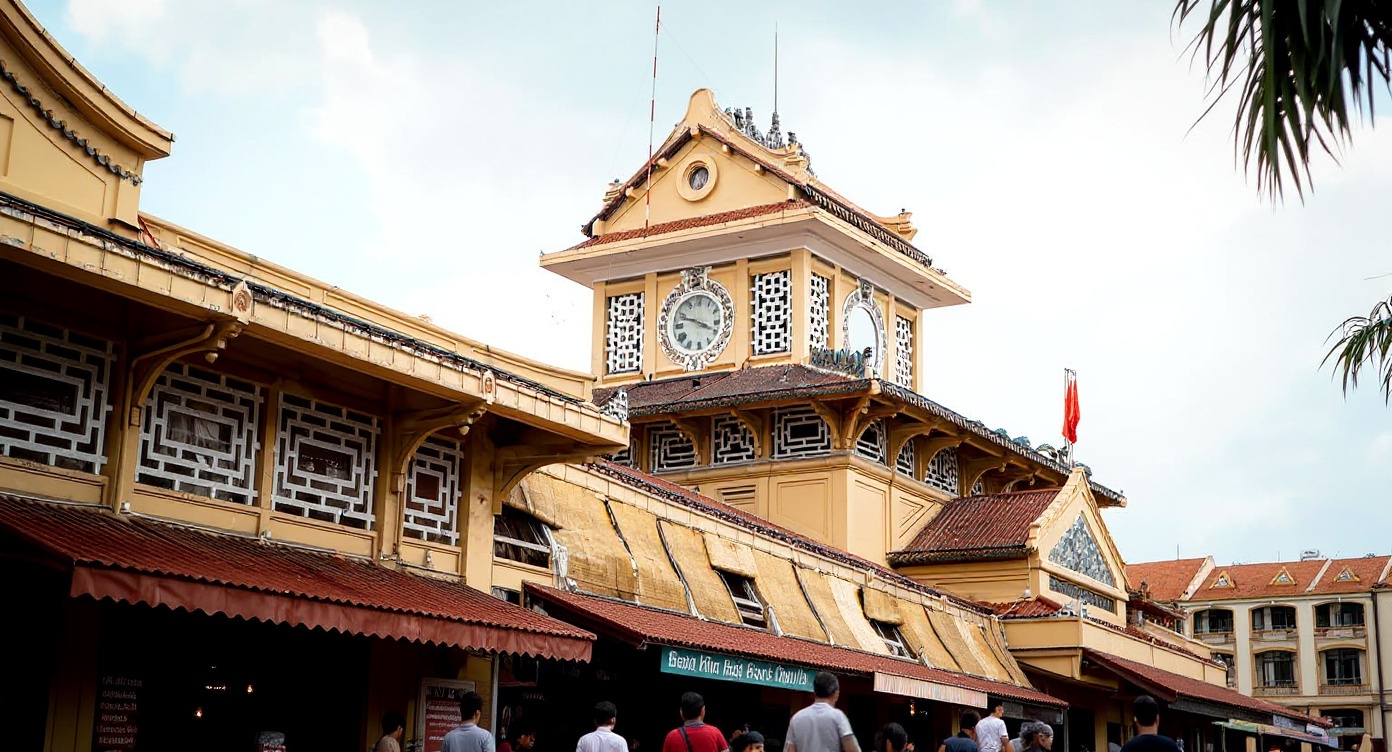
The market that occupies the current site opened in 1914, built by the French colonial administration to consolidate scattered vendors in the center of what was then Saigon. The building’s signature clock tower — which appears on more postcards and travel photos than perhaps any other structure in southern Vietnam — was added during the same construction period. The name “Ben Thanh” translates roughly as “dock by the citadel” — referencing the original location near the old Saigon citadel and the river landing that preceded the current market.
The market survived the fall of French Indochina, the American War, reunification in 1975 (when it was briefly renamed to a more politically appropriate name before reverting), and the post-reform economic opening of the late 1980s. It’s been continuously operating for over 110 years. The current vendors are a mix of long-established families who’ve held stalls for generations and newer operators who cycle more frequently as tourist demand shifts.
In the 2024 Metro Line 1 development, the Ben Thanh station was built directly beneath the roundabout in front of the market — a construction project that disrupted the surrounding area for several years but has made the market considerably more accessible from across the city. The roundabout itself, which for most of modern Saigon’s history has been one of the most chaotic traffic intersections in Southeast Asia, was redesigned in the same project.
Ben Thanh Market Hours and Basics
> **Quick Answer:** Ben Thanh is open 6 AM–6 PM daily (free entry). The night market on surrounding streets runs 6 PM–midnight. Best time to visit is early morning (6–8 AM) for fresh produce and fewer crowds. Expect tourist pricing on souvenirs — negotiate for everything.
What’s Inside Ben Thanh Market
Ben Thanh is divided into sections that take up roughly half a city block under a covered hall. The main entrance faces Ben Thanh roundabout and the clock tower (1914, French colonial period). Once inside, the layout is roughly:
Fresh food section (northwest): Meat, fish, vegetables, fruit, herbs, dried goods. This is where the market earns its keep — the produce quality is high and the prices, while tourist-marked-up compared to neighborhood wet markets, are still reasonable. A bag of dragon fruit here runs 50,000–80,000 VND; the same bag at a neighborhood chợ costs 30,000 VND. Worth it for the convenience and the atmosphere.
Cooked food section: A row of stalls along the east side serving bánh mì, phở, bún bò Huế, chè (Vietnamese dessert soups), and snacks. Sit-down stools, plastic chairs, fans. Breakfast here at 7 AM with a bowl of phở and a Vietnamese coffee costs 60,000–90,000 VND and feels nothing like the tourist market experience happening 30 meters away. This is the best thing Ben Thanh does.
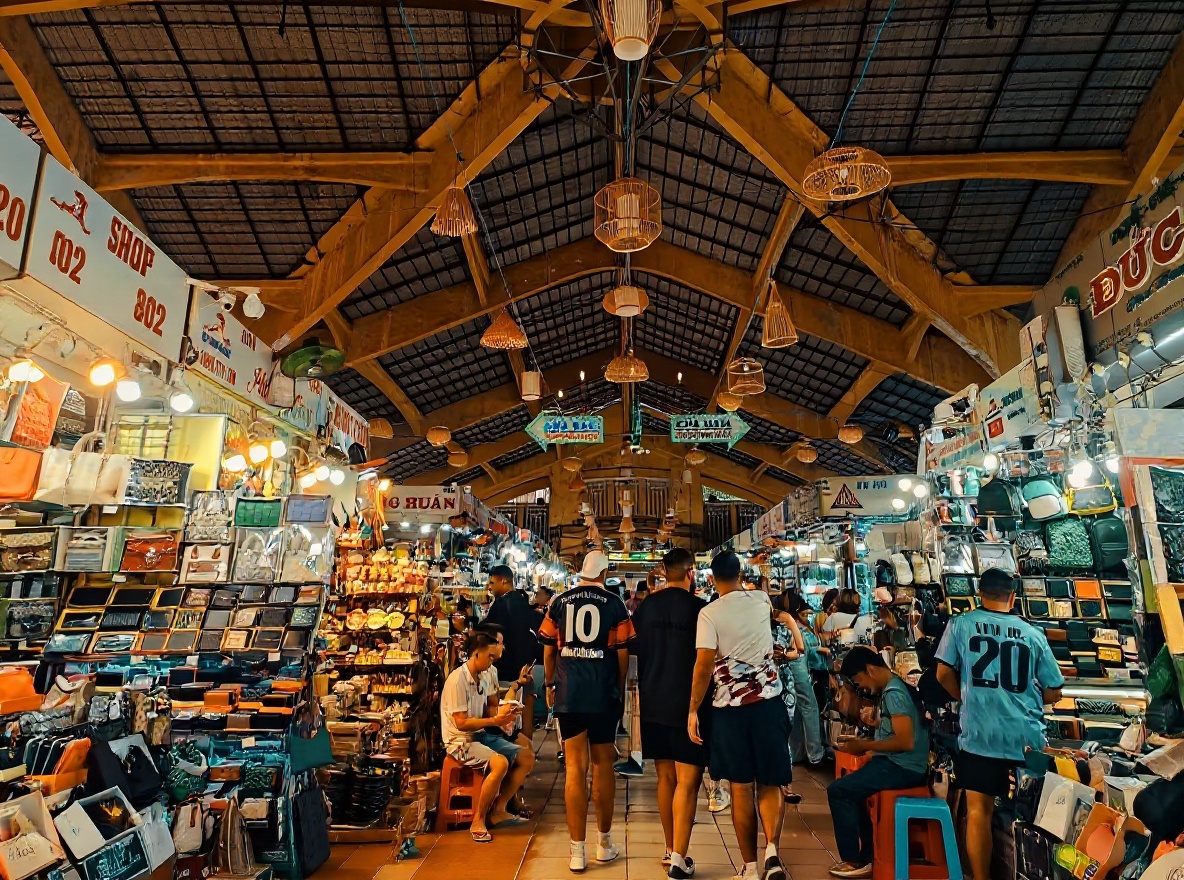
Souvenir and clothing section (south and center): Ao dai fabric, lacquerware, silk scarves, bamboo bags, magnets, keychains, T-shirts, “same same but different” goods. Everything here is negotiable — vendors start at 2–3x the price they’ll accept. This section has become so tourist-oriented that you’ll find better prices and more variety at the souvenirs shops on Dong Khoi Street or at the Bui Vien walking street night market.
Prices and Negotiating at Ben Thanh
Fixed prices exist for almost nothing in Ben Thanh’s souvenir and clothing sections. The first price quoted to a foreign tourist at a souvenir stall is typically 2–3x what the vendor will accept. The negotiation is expected and not aggressive — smile, counteroffer at 40–50% of the asking price, meet somewhere in the middle. Vendors will sometimes wave you off if you offer too low; this usually means you’re close to the real price and they’re seeing if you’ll move first.
Practical benchmarks for souvenir shopping (what you should pay, not the first quote):
- Conical hat (nón lá): 30,000–60,000 VND
- Coffee weasel/phin filter: 20,000–40,000 VND
- Silk scarf (real silk): 150,000–250,000 VND
- Lacquerware bowl, medium: 80,000–150,000 VND
- T-shirts: 60,000–100,000 VND
- Ao dai fabric (per meter): 80,000–200,000 VND depending on quality
For fresh produce, prices are more stable and negotiating is less standard — though for large purchases, vendors will often round down without being asked.
The Ben Thanh Night Market
When the indoor market closes at 6 PM, the streets immediately surrounding Ben Thanh transform into a night market running until midnight. Phan Boi Chau Street (the south side) and Thu Khoa Huan Street (west) fill with outdoor stalls selling clothes, food, and accessories. This outdoor version is generally better value than the indoor market for clothing and street food.
The night market food scene is the highlight: grilled seafood, bánh tráng nướng (Vietnamese pizza), fresh spring rolls, cà phê trứng (egg coffee from the Hanoi tradition, now also available in Saigon), bún đậu mắm tôm (rice vermicelli with fried tofu and shrimp paste — divisive smell, excellent taste). Budget 80,000–150,000 VND per person for a proper eat-around.
What to Eat at Ben Thanh Market
The food court inside Ben Thanh — the northeast and east sections of the indoor hall — is one of the best cheap breakfast spots in District 1. At 7 AM, when most tourist cafés haven’t opened yet, these stalls have been running for hours. The cost of breakfast for two people here, including drinks, runs 80,000–160,000 VND.
What to order:
Phở bò (beef noodle soup): 60,000–80,000 VND per bowl. Not the best phở in Saigon — that’s at dedicated phở shops in District 3 and Phu Nhuan — but solid, honest phở with fresh herbs on the side. Order tái (rare beef) to drop into the hot broth rather than the pre-cooked chín (well-done).
Bánh mì: 25,000–50,000 VND. The stalls around the market periphery assemble to order — pork belly, pâté, pickled daikon and carrot, cucumber, chili, cilantro in a crispy baguette. A proper Saigon bánh mì contains more ingredients than you’d think possible in one roll.
Cà phê sữa đá (iced coffee with condensed milk): 25,000–40,000 VND. If you haven’t had Vietnamese iced coffee yet, the market is a fine place to start. The base is robusta beans brewed through a phin filter — stronger and more bitter than most Western coffee — balanced with sweetened condensed milk over ice. It’s not subtle, and it’s excellent.
Chè: Vietnamese dessert soups, typically sweet, served cold or warm. Chè đậu xanh (mung bean) and chè bưởi (pomelo) are the classics. 20,000–40,000 VND for a cup. More a snack than a meal but worth trying if you’ve never had them.
The important rule for eating at Ben Thanh: look for stalls with other Vietnamese customers and clear turnover. The tourist-facing stalls with English menus and laminated photos outside the main entrances are not where the good food is.
Real Talk
Ben Thanh has a reputation problem it half-deserves. The souvenir section is overpriced and the vendor pressure is real. I’ve seen travelers get quoted 300,000 VND for a magnet that costs 20,000 VND at the shop around the corner. The fix is simple: walk past the first price, ignore the “hey you, look here” calls, and treat the market like a browsing exercise rather than a shopping mission until you find something you actually want. The food court and fresh produce section are entirely different — no pressure, fair prices, genuinely good product. Separate the two experiences in your head and Ben Thanh becomes much more enjoyable.
Ben Thanh vs. Other Saigon Markets
Ben Thanh gets the tourists because it’s central and famous. The other Saigon markets are better for different reasons:
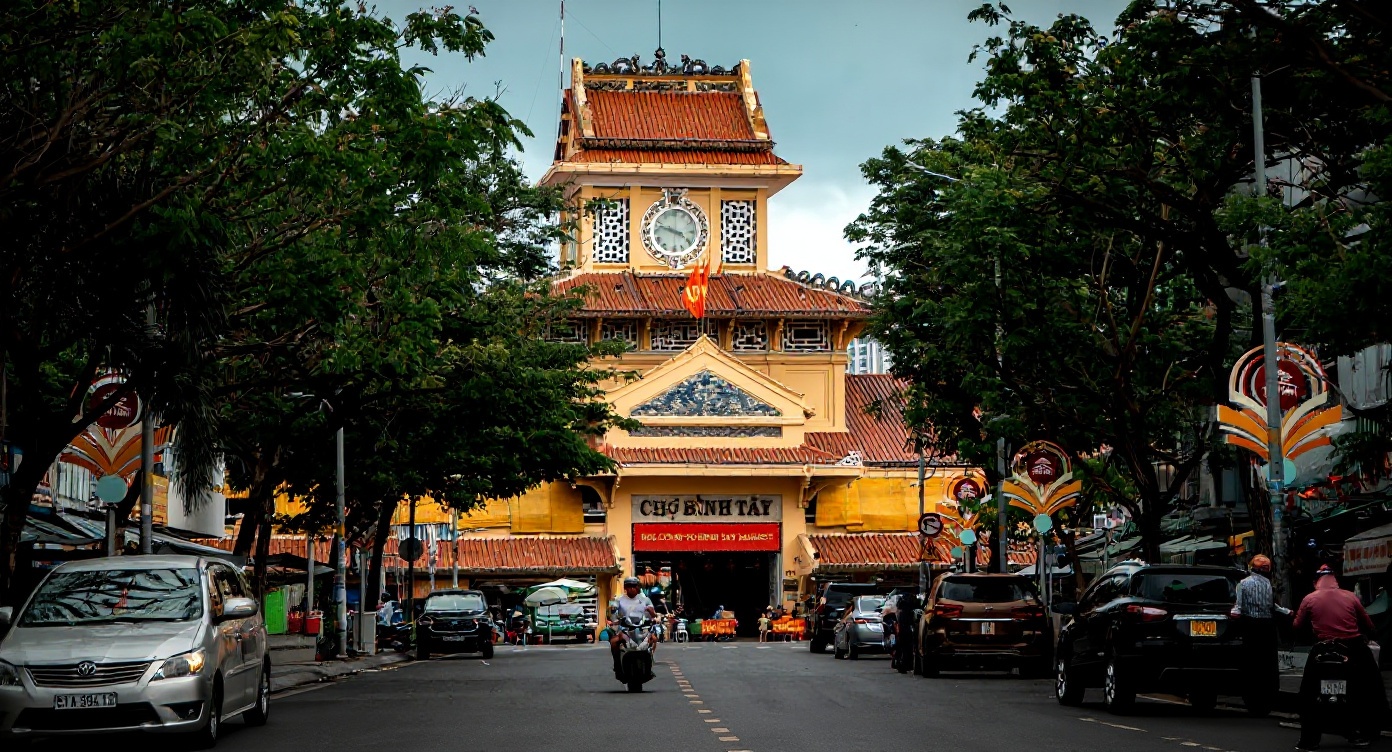
Binh Tay Market (Cholon): The wholesale market of Saigon’s Chinese district, District 6. Bigger than Ben Thanh, less tourist-oriented, genuine commercial activity. Better prices on dried goods, spices, and household products. The Cholon neighborhood itself (15 minutes by Grab from District 1) is interesting enough to justify the trip even if you don’t buy anything.
An Dong Market: Five-story market near Cholon, specializing in fabric, clothing, accessories, and ao dai. Less famous, much better prices than Ben Thanh, and more variety for clothing than anything near the tourist center.
Tan Dinh Market: District 3, primarily a wet market (food and fresh produce). Locals only. Not worth a specific trip from District 1 but excellent if you’re exploring the area around Tan Dinh Church.
The honest answer: if you want the quintessential “Saigon market” experience for photographs and atmosphere, Ben Thanh delivers. If you want to actually buy things at fair prices, go to Binh Tay or An Dong. Most travelers end up doing Ben Thanh for the visit and the food court, and doing their actual shopping elsewhere.
What to See Around Ben Thanh Market
Ben Thanh sits at the intersection of District 1’s main tourist thoroughfares. Within a 10-minute walk:
Reunification Palace (Independence Palace): The former seat of South Vietnamese government, frozen in 1975 when Communist forces drove a tank through its gates. Open daily, 130,000 VND entrance. The interior is preserved essentially as it was on April 30, 1975 — teak furniture, operational radio rooms, the rooftop helipad. One of the most significant historical buildings in Southeast Asia and deeply underappreciated by travelers who skip it in favor of another museum.
War Remnants Museum: 10 minutes from Ben Thanh on foot. The most visited museum in Ho Chi Minh City — photographs, equipment, and documentation of the American War from the Vietnamese perspective. Free on most Vietnamese holidays; 40,000 VND otherwise. Emotionally heavy but essential context for understanding what you’re seeing at Cu Chi Tunnels and at memorials around the south.
Notre Dame Cathedral and Central Post Office: French colonial architecture 15 minutes on foot from Ben Thanh. The cathedral (currently under renovation as of 2026) and the Graham Greene-era post office are two of the most photographed colonial buildings in Saigon. The post office is still operational — functional counter, high arched ceilings, vintage Ho Chi Minh portrait behind the main desk. You can send a postcard from it.
Dong Khoi Street: Saigon’s main upscale shopping and café strip, running south from Notre Dame Cathedral. Better souvenir shopping than Ben Thanh (fixed prices, higher quality) plus the best café real estate in District 1. The Caravelle Hotel rooftop bar at the end of Dong Khoi is where foreign journalists drank during the American War and watched combat in the distance — now serves cocktails to tourists at 200,000–400,000 VND each, which is genuinely good value for what it is.
The Ben Thanh area makes the most sense as a morning visit — market from 7–9 AM, breakfast at the food court, then walking to Reunification Palace and the War Remnants Museum before afternoon heat hits. Our things to do in Saigon guide has a full 3-day itinerary for the city.
Ben Thanh Market Location and Getting There
Ben Thanh Market is at the intersection of Le Loi, Ham Nghi, Tran Hung Dao, and Le Lai Streets in District 1 — roughly the geographic center of the tourist area of Saigon. From the backpacker strip (Bui Vien Street, De Tham), it’s a 10-minute walk. From the Dong Khoi area, 5–8 minutes on foot. Grab from most District 1 hotels costs 40,000–80,000 VND.
Metro Line 1 opened in late 2024 with Ben Thanh station as its main hub — connections from Thu Duc, Binh Thanh, and the eastern suburbs run to Ben Thanh station, which exits directly onto the market roundabout. This makes Ben Thanh the most metro-accessible major attraction in the city.
For the broader Saigon context — what else to see in District 1, where to eat dinner, and how to structure a multi-day visit — see the things to do in Ho Chi Minh City guide and the Saigon travel guide.
Ben Thanh Market for First-Time Visitors — The 90-Minute Plan
If this is your only visit and you want to maximize the experience without getting burned on overpriced souvenirs:
7:00–7:30 AM — Arrive and eat. Walk straight through the main entrance to the food court section. Order phở or bánh mì and a cà phê sữa đá. Sit on a plastic stool. The market at this hour is a working Vietnamese food market with minimal tourist activity. This is the part worth waking up for.
7:30–8:00 AM — Fresh produce section. Browse the stalls selling fruits, herbs, dried spices, and coffee. Buy a bag of Phu Quoc peppercorns (genuine article, about 80,000–120,000 VND for a bag that’ll last months) and a phin filter if you don’t have one. These are the best purchases in the building.
8:00–8:30 AM — Souvenir section browse. Walk through, look, don’t feel obligated to buy. If you see something you want, offer 50% of the first price and work from there. A firm “no, thank you” ends any vendor interaction — there’s no need to get trapped in a negotiation for something you don’t want.
After 9 AM — Leave. The tour groups arrive around 9–10 AM and the market becomes significantly more crowded and louder. Use that time to walk to the Reunification Palace or War Remnants Museum instead.
Ben Thanh Market FAQ
What are Ben Thanh Market’s opening hours?
The indoor market is open 6:00 AM to 6:00 PM daily. Most fresh food stalls open by 6–7 AM; the souvenir and clothing sections are busiest from 8 AM onwards. The outdoor night market on surrounding streets (Phan Boi Chau, Thu Khoa Huan) runs from 6:00 PM to midnight. The market is open every day of the week including weekends and most Vietnamese holidays, though Tet (Vietnamese New Year) results in partial closures for 3–5 days.
Is Ben Thanh Market worth visiting?
Yes — for the atmosphere and the food court, not for bargain shopping. The breakfast food section (phở, bánh mì, coffee) in the early morning is excellent value and a genuine Saigon experience. The souvenir section is tourist-priced and requires negotiation. If your goal is serious shopping, Binh Tay Market in Cholon or An Dong Market offer better variety and prices. But Ben Thanh is a central, photogenic, historically significant market and worth an hour of your time in Saigon.
How do I get to Ben Thanh Market?
From most District 1 hotels, it’s walkable (5–15 minutes). Grab or Be rides from the backpacker area around Bui Vien cost 40,000–70,000 VND. Metro Line 1 (opened 2024) has Ben Thanh station as its main terminal — the station exits onto the market roundabout. By scooter, it’s in the heart of District 1 on Le Loi Street.
Can you bargain at Ben Thanh Market?
Yes — for everything in the souvenir and clothing sections. Fixed prices don’t apply. Start at 40–50% of the asking price and expect to settle around 50–60%. Fresh produce prices are more consistent but vendors may round down for larger purchases. Be firm but friendly — aggressive bargaining ruins the interaction and usually doesn’t get you a better price.
What’s the best time to visit Ben Thanh Market?
Early morning (6–8 AM) for fresh produce, breakfast food, and minimal tourist crowds. This is the market at its most authentic. Mid-morning (10 AM – noon) is peak tourist season inside — hot, crowded, and the souvenir stalls are in full pressure-selling mode. The outdoor night market (6 PM–midnight) is the other sweet spot — cooler, better street food, and a more relaxed atmosphere than the indoor midday crowds.
What should I buy at Ben Thanh Market?
Best buys: Vietnamese drip coffee (phin filters + ground coffee bags), dried spices (peppercorns from Phu Quoc, star anise), lacquerware at negotiated prices, and fresh breakfast food at the indoor food stalls. Avoid: mass-produced souvenirs at tourist prices (cheaper at shops on Dong Khoi), anything claiming to be “authentic” without verification. The fresh food section is genuinely excellent for local produce and ingredients if you’re cooking.