Last updated: May 2026 — Rental prices, IDP enforcement rules, and shop recommendations verified.
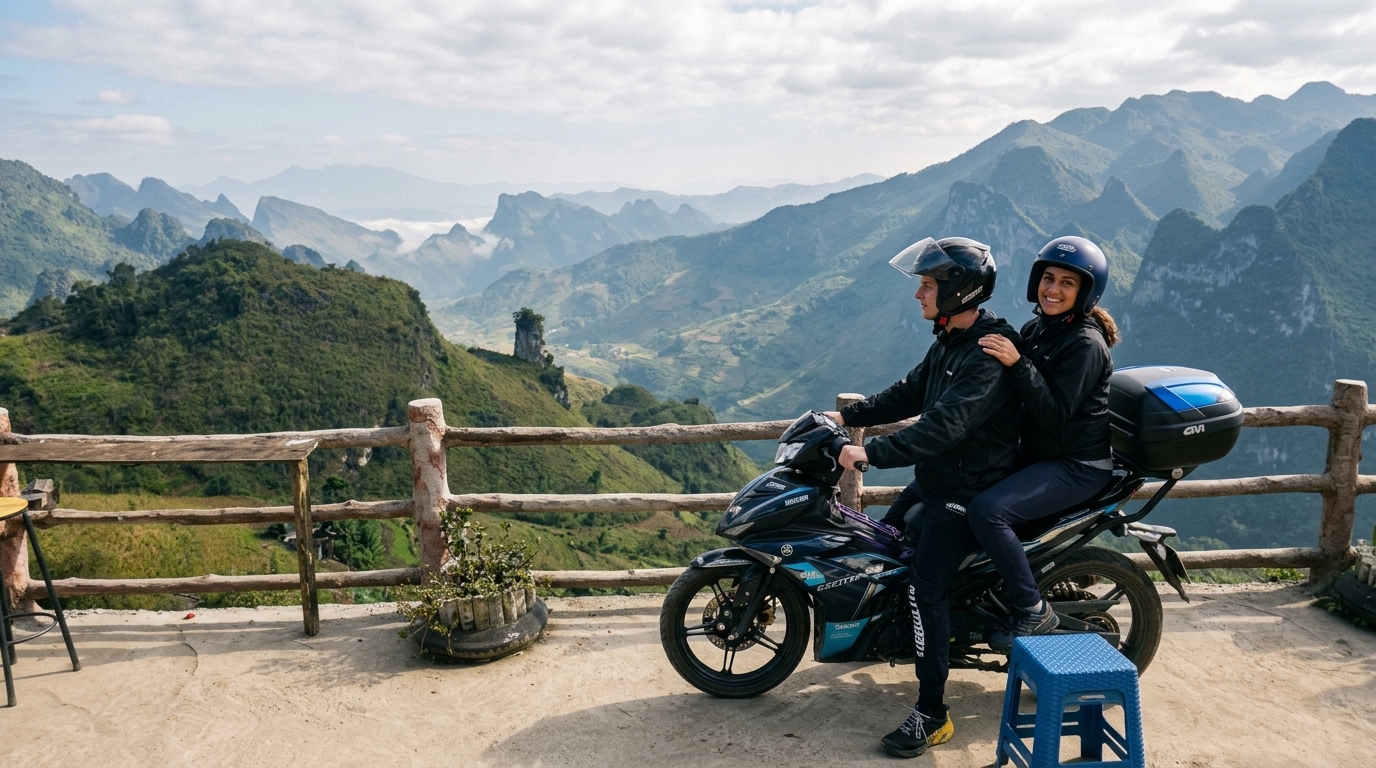
That calculation has changed in 2026.
Since a fatal accident on the Loop triggered a crackdown by the provincial authorities (Hà Giang merged into Tuyên Quang province — that matters for who runs enforcement), the checkpoints have become serious. Forty-plus violations documented in the first weeks of April alone. Bikes being confiscated outright, not just fined. The loop is still one of the best motorbike routes in Asia. But the rules have teeth now, and ignoring them has actual consequences. Riding solo changes the calculus on almost every decision — our Ha Giang solo guide gets into the specifics: safety, finding riding partners at hostels, and what the road actually feels like when it’s just you.
Here’s what actually matters for your trip in 2026: the bike choice, the license reality, the rental shops worth trusting, and what the road actually demands from your skill level.
Which Bike for the Ha Giang Loop?
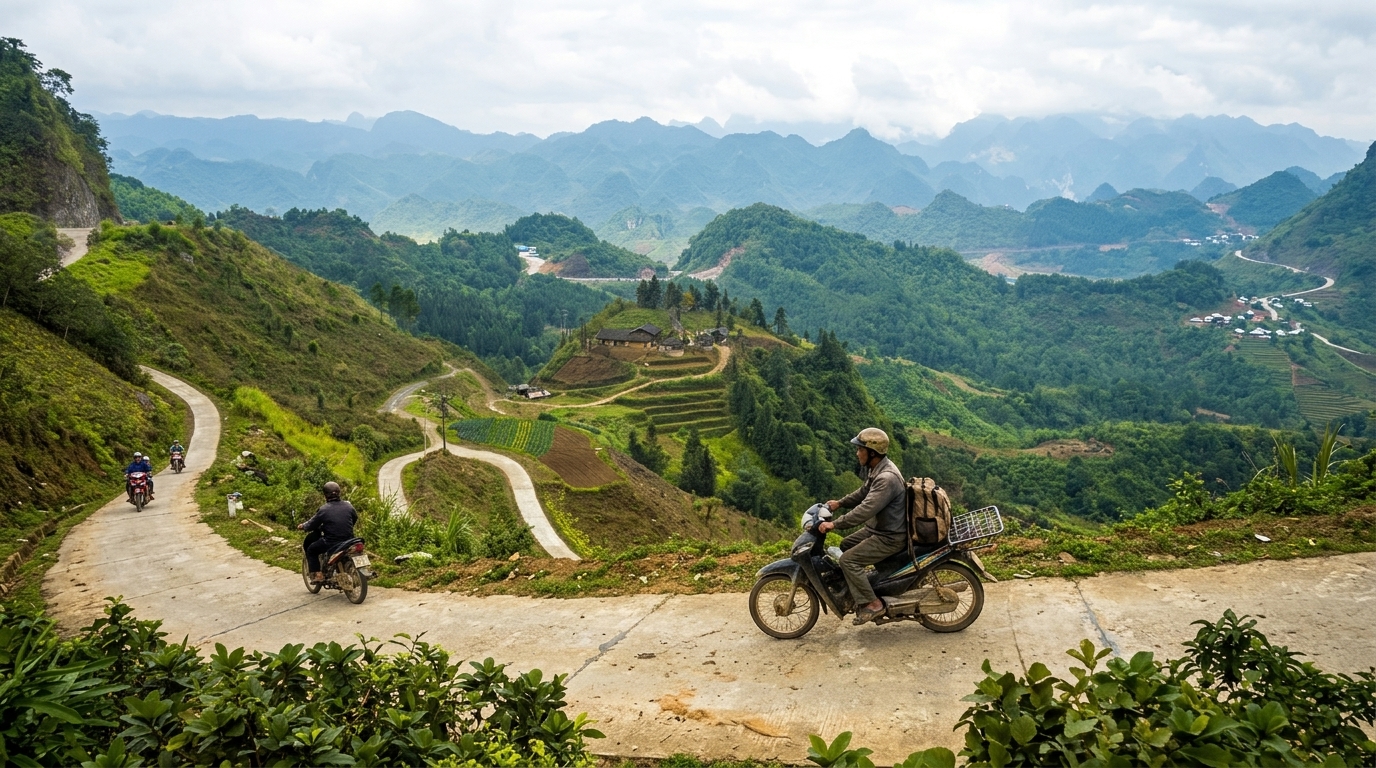
The loop covers roughly 350km of mountain road — some smooth tarmac, some deteriorating asphalt, a few stretches of gravel near the Chinese border. The elevation gain and loss is substantial. Ma Pi Leng Pass sits at around 1,500m. The road to Lung Cu reaches over 1,600m.
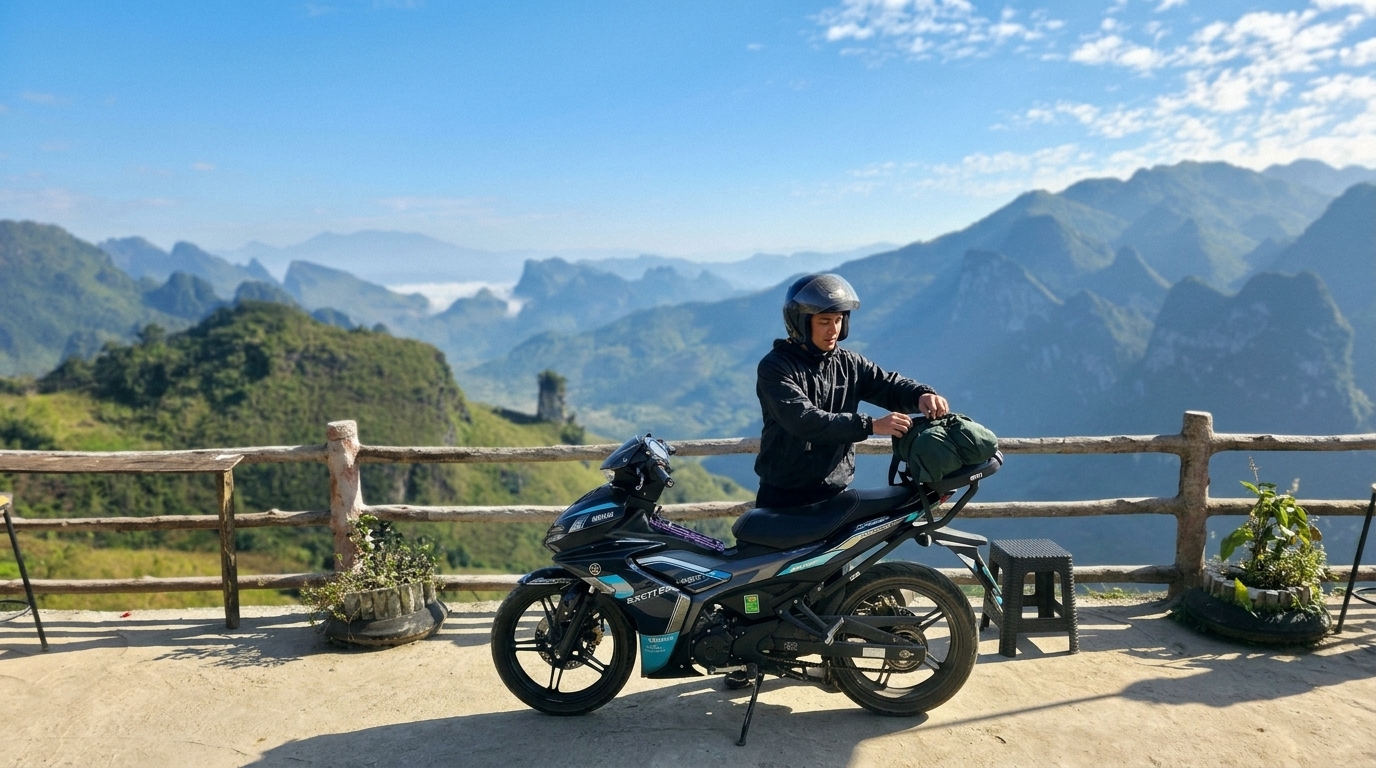
What this means in practical terms: a 110cc semi-auto can do it. But it will be working hard on the longer climbs, especially if you have luggage. A 150cc manual bike does it with capacity to spare and handles the descents with more confidence under braking. The loop demands specific gear that most travel packing lists don’t include — our Ha Giang packing list covers what actually matters and what you can buy there if needed.
Klook has the widest selection for Vietnam and is usually the cheapest. KKday is strong on day trips and local experiences.
L) has become the default recommendation for the Ha Giang Loop, and it deserves that reputation. It’s a lightweight trail bike with enough ground clearance for the occasional gravel detour, a 150cc engine that pulls without protest on climbs, and disc brakes front and rear that give you real confidence on the descents.
Rental price: 450,000–600,000 VND (~$17–23) per day from reputable shops. Add a deposit of up to 5,000,000 VND (~$190) — this jumped significantly in 2026 because shops got burned by damaged and stolen bikes. Some shops held passports as collateral; the reputable ones now take cash deposit instead. Confirm before signing.
If you haven’t ridden a manual bike before, the Ha Giang Loop is not the place to learn. The passes are not technically difficult, but they require constant gear changes, and the hairpin turns on loose-gravel sections punish hesitation.
Semi-Auto: Honda Blade / Yamaha PG-1
The semi-auto option — Honda Blade, Honda Wave, Yamaha PG-1 — costs 180,000–250,000 VND (~$7–9) per day. The PG-1 has become more popular in 2026 partly because its off-road styling is more appropriate for the terrain, and partly because it feels better under you than the Wave. If you’re new to manual bikes entirely, read our Vietnam motorbike guide before committing to the Ha Giang Loop.
It’s genuinely viable for the Loop. Hundreds of riders do it every week. But know what you’re accepting: slower on climbs, less confident on descents, more fatiguing over a 100km day because you’re working the engine harder. On a hot October day grinding up the road to Lung Cu, you’ll feel the difference between a Blade and an XR.
Honda Winner X / Yamaha Exciter
Sport/street bikes: 300,000–400,000 VND (~$11–15) per day. Fast on the paved sections, uncomfortable on anything else. I’ve seen riders on Exciters at Ma Pi Leng looking genuinely unsettled when the road degraded. Not the right tool for this specific job.
Where to Rent: Shops Worth Trusting
Three shops consistently get recommended across Reddit, TripAdvisor, and Ha Giang Facebook groups in 2026:

- QT Motorbikes — well-maintained fleet, clear contracts, takes cash deposit not passport. XR150 fleet well-maintained as of 2026.
- Loop Trails — doubles as a tour operator; if you want a guide and a bike through the same outfit, they’re licensed and above-board in the post-crackdown environment.
- Hồng Hào — Ha Giang City institution; longer track record, slightly older fleet but reliably maintained.
Wherever you rent: film the entire bike before you sign anything. Wheels, undercarriage, every panel, odometer. Not because all shops are dishonest — most aren’t — but because a small percentage will claim damage they didn’t cause, and your 60-second video is the only evidence you have. The scam is real and documented. The solution is easy.
The License Question: What’s Actually Required in 2026
This is the section most blogs either get wrong or leave deliberately vague. Let me be direct.
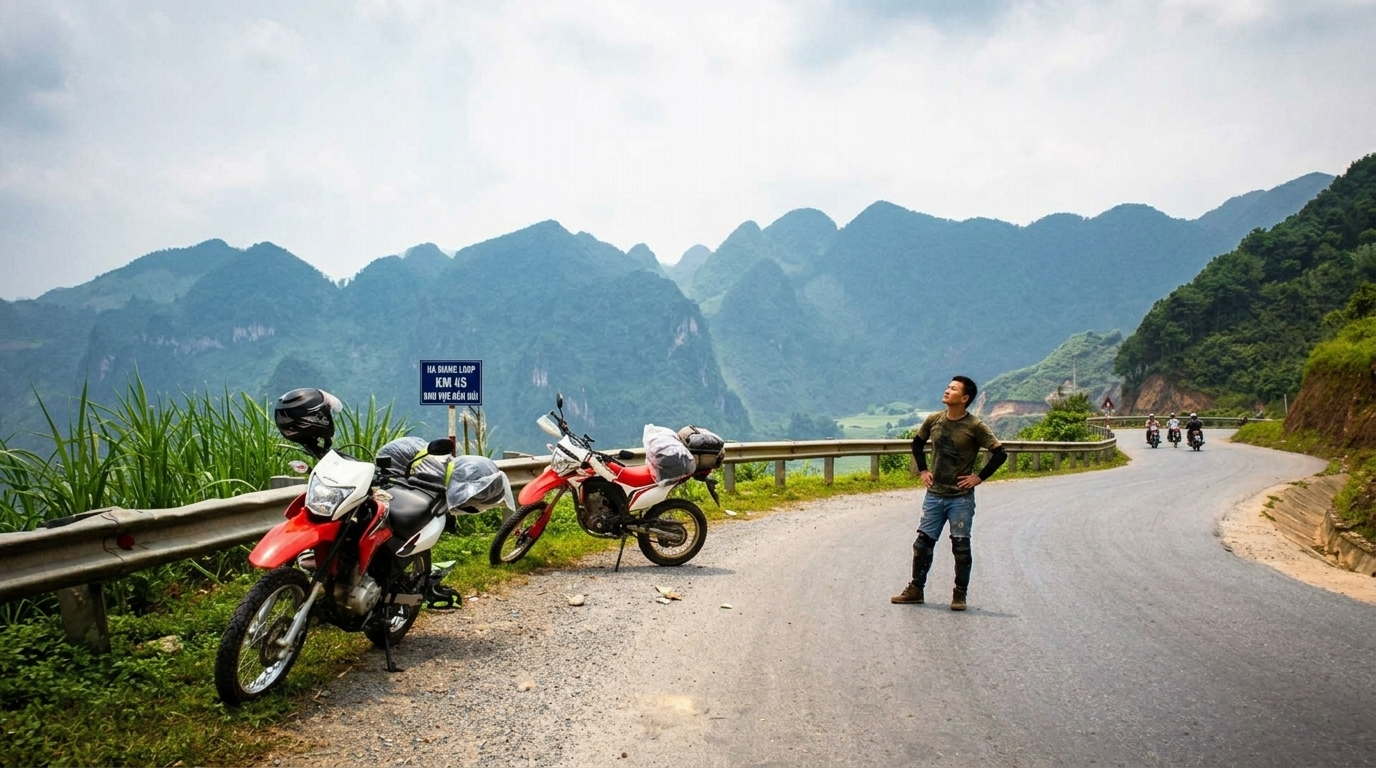
Vietnam requires a Vietnamese driving license for motorbikes. For foreigners, an International Driving Permit (IDP) issued under the Vienna Convention 1968 is accepted as equivalent for traffic stops and legal purposes. Your IDP must be accompanied by your original home country license.
The specific year matters. Vietnam recognizes the 1968 Vienna Convention IDP, not the 1949 Geneva Convention IDP. Some countries issue both — the 1949 version is not sufficient. Get the right one before you leave home. The IDP costs roughly $20–30 USD from AAA (US), the AA (UK), or your country’s equivalent auto club, and requires a valid driving license from your home country.
⚠Real Talk
I know what you’re thinking. “But I saw someone say it’s fine without one.” It was fine for years. The April 2026 crackdown documented 40+ violations in the first weeks of enforcement. Police are confiscating vehicles at checkpoints, not just issuing fines. The 2026 reality: 1,500,000–3,000,000 VND (~$57–$114) + your bike gets taken. You then have to arrange pickup or pay to get it back. Several Reddit threads from April 2026 document exactly this. It is no longer a theoretical risk.
The Checkpoints: What Actually Happens
There are 10–20 police checkpoints along the full loop route. Clockwise route has more checkpoints than the counter-clockwise; the interior road (Meo Vac → Du Gia → Ha Giang City) generally has fewer.
What happens at a checkpoint: you pull in, cop looks at your license, looks at you, sometimes asks for passport. With a valid IDP, this takes 30–60 seconds. Without one, you’re negotiating, and the outcome in 2026 is unpredictable in a way it wasn’t in 2023.
Some riders report being waved through with nothing. Some report confiscation. The inconsistency is what makes it risky — you can’t rely on the cop having a good day.
The Permit: Separate Issue
The permit to enter the restricted border zone costs ~250,000 VND (~$9) per person and is purchased at the Ha Giang City police station with your passport. This is straightforward, legal, and not something you need to buy through a third party. Anyone offering to get you a permit for 500,000 VND (~$19) or more is running a scam — the permits would be fake anyway.
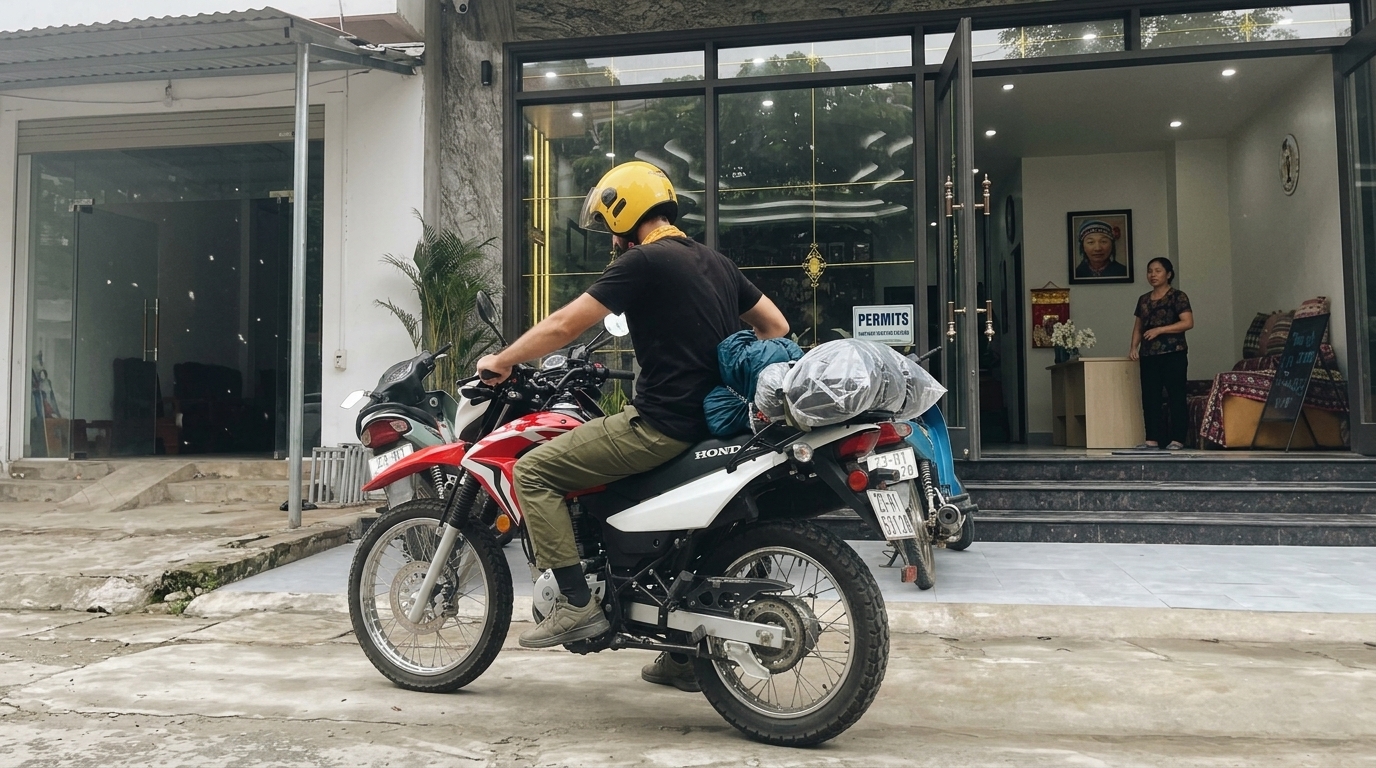
The permit covers the standard loop route. You don’t need to organize it in advance — most riders sort it in Ha Giang City the morning they leave.
What the Road Actually Feels Like
The Ha Giang Loop on a motorbike is not a difficult technical ride in the way some mountain roads are. The passes don’t require advanced skill. What they require is sustained attention over multiple days — the kind of focus that erodes when you’re tired or in a hurry.
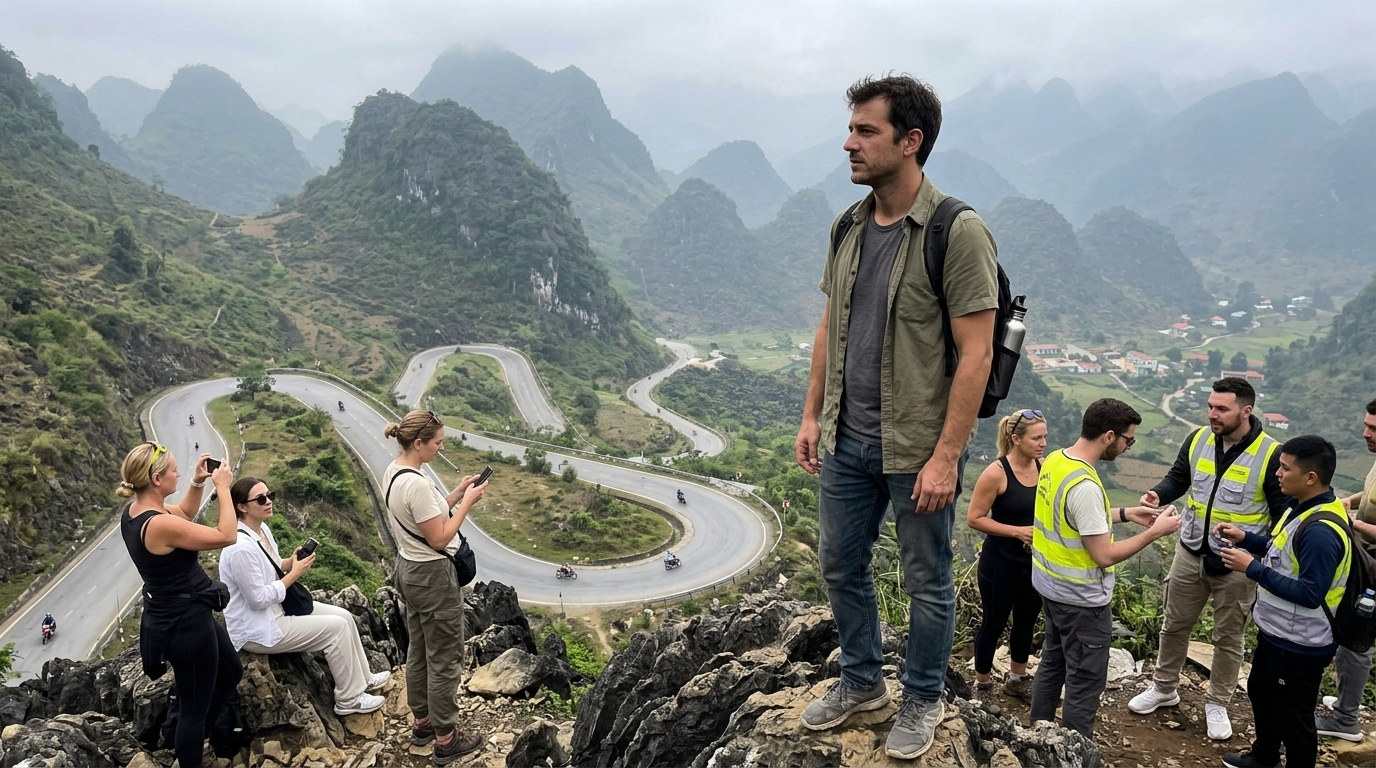
The vibration comes up through the pegs before the scenery registers. On the limestone hairpins approaching Ma Pi Leng, the road surface changes — smoother on the outside edge where the bikes have worn it, rougher near the cliff wall where the gravel drifts. You feel this in your wrists before you consciously process it.
The cold at altitude is the thing that catches riders off guard. At 1,500m in October, you leave Ha Giang City in a t-shirt and arrive at the summit in a situation where your hands aren’t working properly. Bring a layer. More than one. The descent back to Meo Vac drops you into warmer air fast enough that you’ll be peeling it off within 30 minutes, but those 30 minutes at the top matter.
Day 2 on the loop — the Dong Van to Meo Vac stretch over Ma Pi Leng — is where riders describe the experience shifting from “this is a good ride” to “I understand why people keep coming back.” The road narrows, the drop to the Nho Que River below you becomes real, and the limestone karsts rise on both sides in a way that makes you feel genuinely small. The guardrails exist. They’re not always where you’d hope.
What a Full Day Looks Like
The standard daily rhythm: 6:30–7am departure (before the sun gets serious), 80–100km target, one longer stop at a viewpoint or market, arrive at overnight stop by 3–4pm. This pace works. Riders who try to push 150km days on the loop end up exhausted and rushing through the sections that are the whole point of being there.
Fuel situation: petrol stations are in Ha Giang City, Quan Ba, Yen Minh, Dong Van, and Meo Vac. Between them, roadside sellers in clear plastic bottles cover you. It’s not optimal fuel and it’ll run fine in a pinch. Fill up at every official station you pass — some stretches have nowhere for 50km.
If You Can’t Ride a Manual: The Easy Rider Option
Easy rider tours — where a licensed local driver takes you pillion or leads while you follow — cost 3,800,000–6,000,000 VND (~$144–228) for 3–4 days depending on group size and operator. The 2026 crackdown changed something important here too: operators who sell tours through rental shops (the “we’re just a rental place that also arranges guides” model) are specifically the target of enforcement. Several were stopped and clients stranded mid-loop.
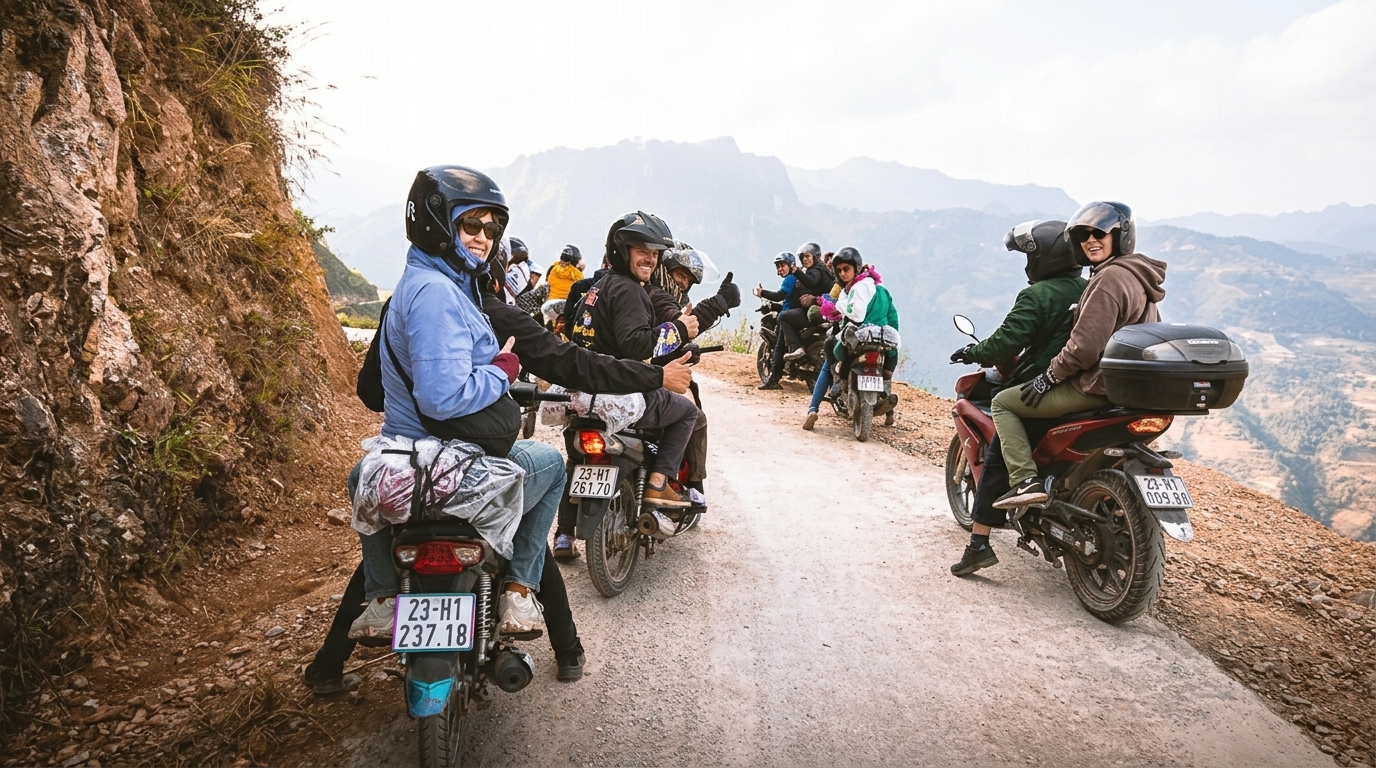
The legitimate operators — Bong Hostel, Loop Trails Tours, Jasmine Ha Giang — have proper business registration, guides with current credentials, and the paperwork that makes a police stop a non-event. If you’re booking an easy rider tour, book through one of these, not through a random rental shop that offers to “arrange everything.”
Know Before You Go: The semi-automatic bike riders who most frequently describe problems on the loop are the ones who rented last-minute without mechanical knowledge and had something go wrong in a remote section. Pack: patch kit and pump (for tubeless tires, a can of tire sealant), spare spark plug, basic tool kit. Your rental shop should have this — check before leaving. If they don’t have it and won’t provide it, find a different shop. If you’re considering doing the loop without a guide, read our Ha Giang Loop solo guide before committing to either option.
What Riders Actually Say: The Consensus
The consistent message from riders who’ve done the loop multiple times: the 2026 enforcement shift is real and has changed the planning math. People who rode without IDP in 2023–2024 and got through fine are now the ones warning others in Reddit threads — because the April 2026 crackdowns hit people who had been doing it the “old way” for years.
The XR150 debate resolves quickly in practice: almost every rider who upgraded from a semi-auto says they should have done it sooner. The difference matters most on the long descents, not the climbs — the engine braking on a 150cc manual gives you confidence the Blade or PG-1 can’t match on a 15km downhill.
↗Insider Tip
Film the bike before you ride it — not a quick scan, but every panel and both wheels slowly. Do it in front of the shop staff. The rental damage scam comes up regularly in traveler reports. Shops that refuse to let you film are shops to walk away from. Every reputable shop in Ha Giang City knows this is standard practice now and won’t object.
The one thing riders consistently wish they’d known: deposit amounts jumped significantly in 2026 (up to 5,000,000 VND/~$190 for XR150). Travelers who arrived expecting the old 2,000,000 VND deposit got surprised. Confirm the deposit amount in writing when booking, and confirm it’s refundable in cash — not a credit card hold that turns into a dispute later.
Two things worth sorting before you land: a Vietnam eSIM so you have data the moment you clear customs, and travel insurance — medical costs for uninsured foreigners in Vietnam are significant.
Airalo eSIMs activate instantly. Buy before departure — airport SIM queues in Vietnam can take 30+ minutes.
FAQ
Do I need an IDP for the Ha Giang Loop in 2026?
Yes. This is now a practical necessity, not just a technicality. The 2026 crackdown includes vehicle confiscation at checkpoints for riders without valid International Driving Permits (Vienna Convention 1968 + home license). The risk of riding without one has gone from “probably fine” to genuinely significant.
What’s the best motorbike for the Ha Giang Loop?
The Honda XR150. It handles all the pass gradients comfortably, has ground clearance for off-road detours, and costs 450,000–600,000 VND (~$17–23) per day from reputable shops. If you can’t ride a manual, a Yamaha PG-1 or Honda Blade is the reliable semi-auto choice at 180,000–250,000 VND (~$7–9) per day.
How much should I budget for motorbike rental on the Ha Giang Loop?
For 4 days: XR150 rental 1,800,000–2,400,000 VND (~$68–91), petrol 350,000–450,000 VND (~$13–17), permit 250,000 VND (~$9), deposit 3,000,000–5,000,000 VND (refundable). Budget total for bike-related costs: roughly 2,400,000–3,100,000 VND (~$91–118) plus the deposit you get back. For the full money picture, our Ha Giang Loop cost breakdown has real 2026 numbers for transport, accommodation, food, and extras that catch people off guard.
Can I rent a motorbike in Hanoi and drive to Ha Giang?
Technically yes, but almost nobody does this. The Hanoi–Ha Giang highway is 300km of national road with heavy truck traffic — not scenic, and you arrive tired for the actual loop. It’s much better to take the overnight bus to Ha Giang City and rent locally. Better bike selection, fresher legs, and the shops have maintained fleet specifically for loop conditions.
Is the Ha Giang Loop dangerous?
The passes are serious mountain roads that require attention and appropriate skill. The road itself is not technically difficult — it’s the sustained nature of it that catches riders off guard. The main risks are fatigue, unsuitable bikes, and riding in rain (wet limestone is slippery in a way that’s not obvious until you’re on it). The 2026 crackdown was triggered by a fatal accident. That’s context, not reassurance. Ride within your limits, don’t push night driving on mountain roads, and take the corners at the speed the road actually allows.
How do I avoid the rental scam where shops claim damage after return?
Film the entire bike before signing the rental contract. Every panel, every wheel, the undercarriage, the odometer. Do it obviously, in front of the shop staff. If the shop refuses to let you film, find a different shop. With video evidence of the bike’s pre-rental condition, false damage claims go away immediately. Without it, you’re in a word-against-word situation far from home.