Home
›
Mekong Delta
›
Can Tho Mekong Delta: What It’s Actually Like (And When to Go)
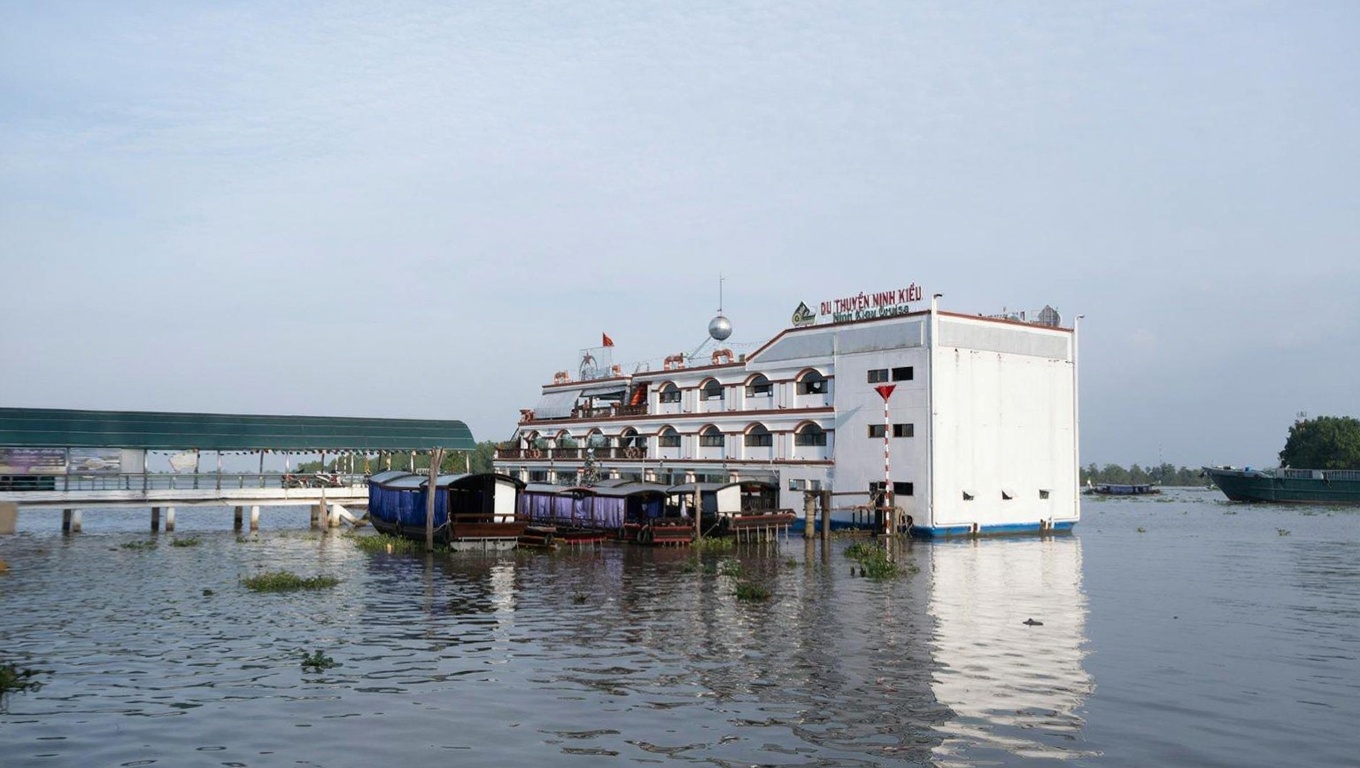
Ninh Kieu wharf at dusk — the gateway into the delta proper
Can Tho Mekong Delta: What It’s Actually Like (And When to Go)
Can Tho is the largest city in the Mekong Delta and the best base for seeing it properly. The Cai Rang floating market — the delta’s most authentic — is 6km away by boat. Plan 1–2 nights minimum. The 3.5-hour bus from Saigon costs around 130,000 VND (~$5). Don’t do the Mekong as a day trip from Saigon; you’ll spend half your time on the road and see the wrong market.
Bottom line: The Mekong Delta is slower, hotter, and better than the tour brochure
✈ Search Flights to Vietnam
Can Tho Mekong Delta: What It’s Actually Like (And When to Go) | Vietnam Unlock
Last updated: May 2026
Why Can Tho — Not My Tho
The Mekong Delta day trip from Saigon goes to My Tho. It’s 70km south, convenient, and the coaches are full by 8am. It’s also — I’ll be direct — a tourist production that happens near a river.
Ninh Kieu wharf at dusk — the gateway into the delta proper
A Reddit user planning their itinerary put it plainly: “Some people do the Mekong Delta day tour to My Tho which leaves from HCM just to check that box off their itinerary. Consider actually staying in Can Tho for a night or two.”
That’s the right call. My Tho’s floating market has been declining for years — most of the boats that used to trade there now use the road. What you get on the standard tour is a few boats selling fruit for photo opportunities and a coconut candy factory that’s been visited by roughly everyone who’s ever come through Saigon.
Can Tho is 170km from Saigon — further, but worth it. The city actually functions as a city. The Cai Rang floating market still runs with working boats. The canal network around it hasn’t been completely converted into a boat-tour staging area. And the food is better, cheaper, and eaten at plastic stools three metres from a working river rather than served from a tour-group buffet table.
⚠Real Talk
The floating market is better than nothing but still a shadow of what it was 20 years ago. One traveler wrote: “I had visions of floating through markets while buying fresh fruit and steaming noodle bowls from old ladies on boats. But that wasn’t exactly the experience we got.” The honest version: you’re watching commerce, not participating in it. Go at 5am for the working traders; go at 9am and you’re a tourist watching other tourists photograph empty boats.
Cai Rang Floating Market — How to Actually Do It
Cai Rang (Chợ Nổi Cái Răng — say: choy noy kai rang) is 6km from Ninh Kieu wharf by boat. The market peaks between 5am and 8am. By 9am the wholesale traders have gone.
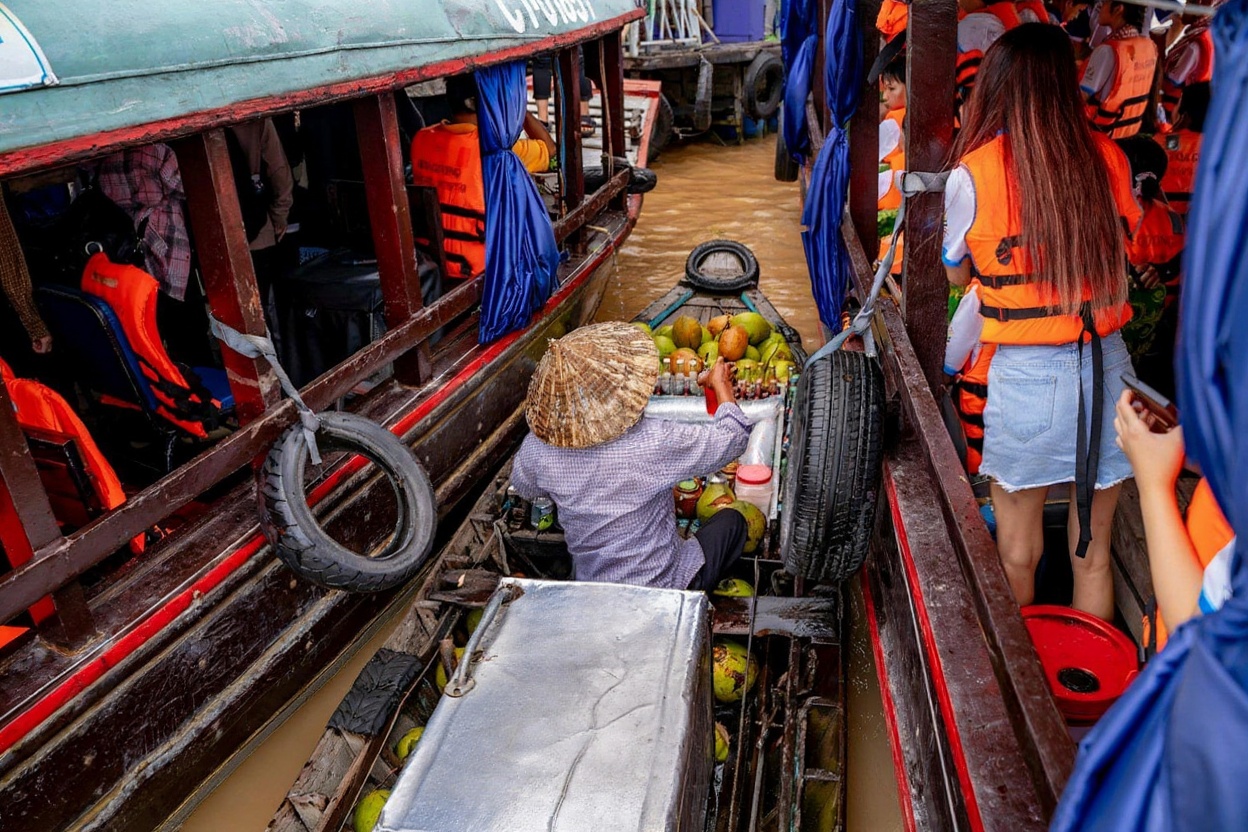
Cai Rang floating market at dawn — the wholesale traders leave by 8am
The logistics are simple but need booking the night before:
Walk to Ninh Kieu wharf (the main riverside promenade in central Can Tho) in the evening and ask your guesthouse or any of the boat operators lining the waterfront. A 2-hour private boat for two people runs 350,000–500,000 VND (~$13–19) depending on your negotiation. It includes pickup from the dock, the market circuit, and a canal detour through fruit orchards.
What you’ll actually see: wooden motorboats loaded with wholesale produce — dragon fruit, pineapple, squash — flying a pole with the product they’re selling (the treo bẹo / display pole tradition). Small boats selling bún rieu (crab noodle soup) and cà phê (coffee) weave between them. The smell is river water, diesel, and whatever’s piled highest on the nearest boat.
ℹKnow Before You Go
Wear a hat. The boat offers no shade and even at 5:30am in the dry season the sun is working. Bring cash — no card readers on boats. The morning floating market breakfast experience (“bún riêu on a boat”) is genuinely good and costs 40,000–60,000 VND (~$1.50–2.30) served directly to you on the water.
The Canal Network — Beyond the Floating Market
The delta’s real texture isn’t the floating market — it’s the canal network that connects everything. Narrow concrete paths along raised canal banks, wooden bridges barely wide enough for a bicycle, stilted houses over brown water, fruit orchards with trees hanging over the canal edge.
Most boat operators will add a canal detour after the floating market. This is actually the best part. The water coconut palms arching over the stream, the occasional woman in a conical hat doing laundry at the bank, the sound of the engine dropping to a low idle as you pass under a low bridge — this is the version travelers remember.
One TripAdvisor reviewer from July 2024 described it well: “riding in smaller paddle boats up a smaller scenic stream, where water coconut trees arch over the stream.”
→Who It’s For
The canal detour is worth it for anyone. The floating market specifically is for people who like markets-as-process, not markets-as-shopping. If you want to buy things, the market on shore is better value. If you want to watch wholesale produce change hands on water at dawn, Cai Rang is one of the last places in Southeast Asia where this still happens at scale.
What to Eat in Can Tho
Mekong food is southern Vietnamese food amplified — more coconut, more fresh herbs, more river fish. Three things worth eating specifically in Can Tho:
Bún Riêu (say: boon ryew) — tomato-based noodle soup with crab paste and tofu. The stalls near Ninh Kieu wharf serve it from 5am for 35,000–50,000 VND (~$1.30–1.90). Sharp, tangy, completely different from phở. The best version is at a street cart with a blue gas cylinder and plastic stools three steps from the water.
Lẩu mắm (say: lau mam) — fermented fish hotpot, the Delta’s most polarising dish. The smell when it arrives is aggressively funky — fermented shrimp paste, lemongrass, pineapple, eggplant all simmered together. Once you get past the first spoonful it’s extraordinary. Not for everyone. Definitely worth trying once.
Bánh xèo Mekong style (say: ban say-oh) — sizzling rice crepe filled with shrimp, pork, and bean sprouts, but larger and crispier than the Hoi An version. Wrap in lettuce with mint, dip in fish sauce. Available at any bánh xèo stall in the market district for 30,000–50,000 VND (~$1.10–1.90).
Where to Stay in Can Tho
Stay near Ninh Kieu wharf — everything you need is within walking distance and the boat pickup for the floating market is right there. Budget guesthouses run 200,000–350,000 VND (~$8–13) per night for a private room with fan or AC. Midrange hotels on or near the waterfront run 500,000–900,000 VND (~$19–34).
The wharf area is genuinely pleasant in the evenings — river breeze, food carts, locals eating at plastic tables. It’s not a tourist zone that’s been rebuilt for foreigners; it functions as an actual waterfront that people use.
Most visitors treat Can Tho as a floating-market delivery system and leave by noon. That’s a mistake. The city itself is worth half a day.
The Ninh Kieu Night Market runs along the riverfront from 5pm and is one of the better night markets in southern Vietnam — actual local food, not tourist-facing stalls. Grilled river fish (cá lóc nướng — say: ka loke nuong), fresh spring rolls, bún bò Huế at half the Hoi An price. Sit at a plastic table with a cold beer and watch the Hau River (one of the Mekong’s main distributaries) move past in the dark. The lights from boats on the water, the humidity, the competing sounds of radio pop from three different stalls — this is what a working delta city feels like at 7pm.
The Can Tho Market (Chợ Cần Thơ) on Hai Ba Trung Street runs from dawn and sells the produce that doesn’t make it to the floating market — dragon fruit, jackfruit, pomelo, mangosteen, the extraordinary snakefruit (trái thanh long) that tastes like a cross between a pear and a mango. Walk through with no agenda between 6–8am and you’ll understand why the delta feeds the country.
The Ong Pagoda (Chùa Ông — say: choo-ah ong) near the market is a Chinese temple that’s been here since 1894. Red lanterns, incense smoke, the faint sound of wooden fish percussion from a service in the back room. Not a tourist site — an active place of worship that happens to be beautiful. Entrance is free; remove shoes and move quietly.
Cycling the Canal Banks
The best way to see the countryside around Can Tho is by bicycle along the raised canal banks. Your guesthouse will rent bikes for 50,000–80,000 VND/day (~$1.90–3). The route south from Ninh Kieu toward the floating market, then continuing west through the fruit orchards and back on the opposite bank, takes 3–4 hours at a relaxed pace.
The canal paths are narrow — sometimes just wide enough for a bicycle and a motorbike to pass each other. Wooden footbridges arching over the water every few hundred metres. Children swimming in the canal despite the colour. Women collecting water hyacinth for pig feed. The occasional longan or rambutan orchard with fruit hanging in dense red clusters. This is the Mekong the brochure photographs but the day trip doesn’t actually reach.
↗Insider Tip
The canal cycling is best on a weekday morning. On weekends, more motorbikers use the same paths and it gets crowded. Start early — by 10am the heat is punishing and the shade on the canal banks is limited.
Getting to Can Tho from Saigon
Can Tho is 170km from Saigon. The road is flat, straight, and entirely on National Route 1A — no mountain passes, no ferry crossings, no navigational complexity. Three and a half hours by bus and you’re in a different world.
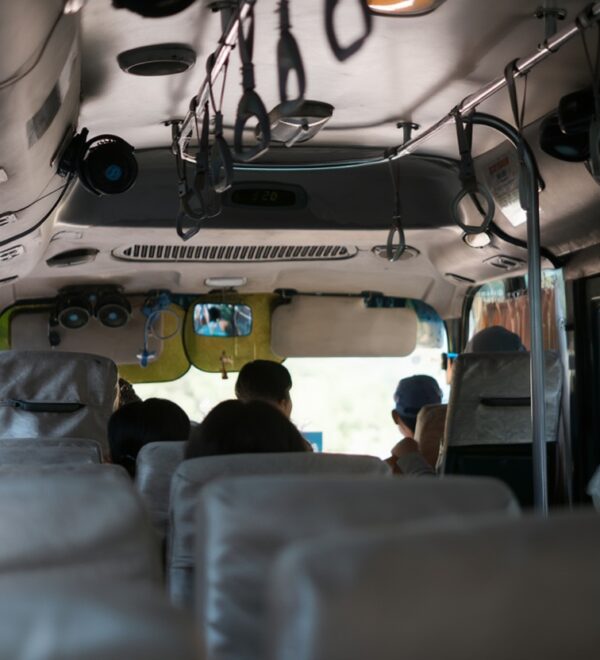
The Phuong Trang / FUTA bus is the standard option: departs from Mien Tay bus station in Saigon (An Lac, District Binh Tan), journey 3.5–4 hours, cost 130,000–160,000 VND (~$5–6). Air-conditioned, assigned seats, runs regularly from 5am to midnight. Book online at futabus.vn or buy at the terminal.
Book Transport — Buses, Trains & Ferries
12Go covers most Vietnam routes — sleeper buses, trains, and island ferries. Compare schedules and book in advance during peak season (Dec–Feb, Jun–Aug).
Grab or taxi from the bus terminal to Ninh Kieu wharf in Can Tho: 40,000–70,000 VND (~$1.50–2.70).
Avoid the tourist minivans that pick up from backpacker hostels in D1 — they’re more expensive and take longer due to multiple hotel pickups.
What I Got Wrong in Can Tho
I did the My Tho day trip from Saigon in 2022 and told myself I’d “done the Mekong Delta.” I hadn’t. I’d done a coach trip to a river with a boat attached.
The first time I actually stayed in Can Tho — two nights in a guesthouse near Ninh Kieu — I got up at 4:30am, walked to the dock while the city was still dark and quiet, got on a boat, and watched the floating market wake up in real time. The boats appearing out of the mist. The wholesale crates being swung between vessels. The bún riêu cart pulling alongside ours and a woman handing over two bowls without being asked.
That’s the Mekong Delta. My Tho is the preview.
Best Time to Visit Can Tho
The dry season — November to April — is the comfortable time. Lower humidity, no flooding, cleaner canal water, better conditions for walking the raised banks between fruit orchards.
The wet season (May–October) brings heavy rains, flooding, and a lush green landscape that genuinely looks more dramatic. Some travellers prefer it. The tradeoff: muddy paths, higher river levels that make some canal walks impassable, and the occasional leech on a canal bank walk. Experienced delta travellers often say this is the “real” delta — the one that functions as the rice bowl of Southeast Asia, not the tourist circuit version.
Day Trips from Can Tho
Can Tho makes a reasonable base for exploring the surrounding delta without returning to Saigon each night.
Phong Dien floating market — smaller than Cai Rang, runs earlier (3–7am), fewer tour boats. About 17km southwest of Can Tho by motorbike or hired boat. This is the one genuine floating market left that still operates primarily for local wholesale trade rather than tourist observation. Getting there requires hiring a motorbike or a private boat — no organised tours run here, which is exactly the point.
Book Tours & Activities — Mekong Delta
Klook has the widest selection for Vietnam and is usually the cheapest. KKday is strong on day trips and local experiences.
re near Can Tho; genuinely off the tour circuit. Rent a bicycle on the island for 50,000 VND (~$1.90) and spend an afternoon getting lost in the fruit farms.
Chau Doc — 120km west of Can Tho near the Cambodian border. Famous for the floating villages on the Hau River and Sam Mountain. Half-day from Can Tho is rushed; better as an overnight extension if you’re crossing into Cambodia or continuing to Ha Tien for the Phu Quoc ferry.
For the full picture on getting to the delta from Saigon and the best routes through it, see our Mekong Delta from Saigon guide.
Before You Go
Two things worth sorting before you land: a Vietnam eSIM so you have data the moment you clear customs, and travel insurance — medical costs for uninsured foreigners in Vietnam are significant.
Airalo eSIMs activate instantly. Buy before departure — airport SIM queues in Vietnam can take 30+ minutes.
Frequently Asked Questions
Is Can Tho worth visiting for one night?
One night works if you treat it as a focused trip: arrive by bus in the afternoon, walk the wharf, eat dinner at the riverside stalls, wake up at 4:30am for the floating market, spend the morning on the water, and catch the afternoon bus back. Two nights is better — gives you time for a canal bicycle ride the second day and a slower pace overall.
✓Quick Answer
One night in Can Tho is enough to do Cai Rang floating market properly. Get up at 4:30am, hire a boat from the wharf, and you’ll be back for breakfast by 8am. Two nights gives you time for cycling through the canal network too.
Is the floating market worth it?
Yes — with managed expectations. It’s not the chaotic outdoor market that TikTok videos suggest. It’s a wholesale produce exchange that happens on water. Go at 5am, not 9am. The atmosphere at dawn, with mist on the river and boats materialising out of the dark loaded with dragon fruit and coconuts, is genuinely worth getting up for. The 9am version is slower and more tour-group-heavy.
How do I get from My Tho to Can Tho?
Bus: My Tho to Can Tho runs roughly 2 hours and costs around 80,000–120,000 VND (~$3–4.55). Alternatively, return to Saigon and catch a direct bus to Can Tho — the direct Saigon–Can Tho service is more frequent and reliable. There’s no direct boat service for tourists between My Tho and Can Tho.
Can I do the Mekong Delta without a tour?
Yes. The bus from Saigon is easy. Ninh Kieu wharf has independent boat operators who hire directly. You don’t need a travel agency for any of this. The advantage of going independent: you control the timing (5am instead of 9am), you choose the boat length, and you don’t share the boat with a group of strangers who booked the same tour package. The floating market works better at half the speed of a group tour.
What’s the difference between Cai Rang and Cai Be floating markets?
Cai Rang is near Can Tho — larger, more active, wholesale-focused. Cai Be is near Vinh Long, smaller and more accessible from Saigon as a quick detour, but less impressive. If you’re going to stay overnight anywhere in the delta, Can Tho and Cai Rang is the better choice. If you’re doing a quick Saigon day trip and can’t stomach the My Tho tourist circuit, Cai Be is the better alternative.
Is the Mekong Delta worth it for solo travellers?
Yes, particularly for independent travellers who don’t want organised tours. The bus from Saigon drops you at a terminal a short Grab ride from Ninh Kieu wharf. Boat operators at the dock hire directly to solo travellers — you pay the full boat rate (350,000–500,000 VND, ~$13–19) which is affordable alone. The cycling route through the canal banks is completely independent. The only thing that benefits from a group is the tour-agency day trip format, which is the thing worth skipping anyway.
What language do I need in Can Tho?
Very little English is spoken beyond guesthouses catering to tourists. The boat operators at Ninh Kieu wharf deal with enough foreign visitors to handle basic pricing and timing in gestures and numbers. At street food stalls, pointing works. Having Google Translate on your phone with Vietnamese downloaded offline is genuinely useful in Can Tho in a way it isn’t as necessary in central Saigon. Basic Vietnamese numbers — một (1), hai (2), ba (3) — will make you immediately more likeable at any stall.
Is it safe to eat street food in the Mekong Delta?
Yes, with the usual common-sense rules. Eat at stalls with high turnover and visible cooking — especially important in the heat, where food that’s been sitting out has a shorter safe window than in a cooler northern city. The morning floating market food (bún riêu on a boat, bánh mì from passing carts) is fresh and high turnover by definition. The main risk is from ice: most stalls use tube ice which is commercially produced and generally safe, but ask for no ice (không đá — say: khong da) if you’re unsure.
For the broader picture on getting to the delta and what to do outside Can Tho, our Mekong Delta travel guide covers all nine provinces and how they connect. For the floating market specifically — timing, what to expect, and which market is worth the early wake-up — our Mekong Delta floating market guide goes deeper.
FAQ
What is Can Tho like?
Can Tho is the largest city in the Mekong Delta — a working river city rather than a tourist town. It’s the base for visiting the Cai Rang floating market and the canal villages surrounding it. The riverfront is pleasant in the early morning and evening. It’s a real Vietnamese city that happens to have tourist infrastructure, not a showcase.
How far is Can Tho from Ho Chi Minh City?
About 170km — 3.5–4.5 hours by bus (avoiding the worst of Saigon traffic). Futa/Phương Trang buses run the route every 30 minutes from Mien Tay bus terminal in Saigon. Cost around 130,000–180,000 VND. Some tours do Can Tho and the floating market as a day trip from Saigon, but you need to leave by 5 AM — an overnight stay is better.
What is the Cai Rang floating market?
Cai Rang is the biggest floating market in the Mekong Delta — a wholesale trading hub on the river where boats laden with fruit, vegetables, and goods have been trading since before dawn for generations. Tourist boats take you around from around 5–8 AM (the market peaks before 7 AM and winds down by 9 AM). 2026 prices: boat tours from 100,000–200,000 VND per person.
Is the Cai Rang floating market worth visiting in 2026?
Honestly — it’s more for photos than substance now. The floating market is a genuine commercial operation, but tourist boats have become intrusive and the ‘floating market experience’ is somewhat staged for visitors. Go if you’ve never seen a floating market; skip it if you’ve done Damnoen Saduak in Thailand and are expecting a new experience. The canal boat rides through the smaller canals are often more genuine.
Where should I stay in Can Tho?
Stay along Ninh Kieu Riverfront — guesthouses from 300,000–600,000 VND/night for private rooms with river views. The Can Tho Market Hotel area has budget options from 200,000 VND. Avoid the large resort hotels unless you want the insulated experience — the mid-range riverfront guesthouses give you better access to the market boat departure points at 5 AM.
“I moved here on a 3-month trial run. That was 5 years ago. I’ve since been to all 63 provinces, ridden every loop worth riding, and eaten things I still can’t name. This blog is what I wish existed when I landed.”