Updated: May 2026

The fee structure isn’t complicated once you understand it. Every ATM withdrawal in Vietnam carries two separate fees: the local bank fee (charged by the Vietnamese ATM) and the international fee (charged by your home bank). They stack, and together they can turn a $100 withdrawal into a $94 withdrawal before you’ve touched a dong.
How Vietnamese ATM Fees Work
Local ATM fee: The Vietnamese bank operating the ATM charges a fee per transaction, regardless of your home bank. This fee is disclosed on-screen before you confirm the withdrawal and varies by bank:
- Vietcombank: 20,000–40,000 VND ($0.80–1.60)
- Agribank: 20,000–30,000 VND ($0.80–1.20)
- BIDV: 30,000–50,000 VND ($1.20–2)
- Techcombank: 40,000–60,000 VND ($1.60–2.40)
- VPBank: 60,000–85,000 VND ($2.40–3.40)
- Citibank: 0–20,000 VND ($0–0.80) — lowest local fees
- HSBC: 0–20,000 VND ($0–0.80) — lowest local fees
Home bank international fee: Your own bank’s charge for using a foreign ATM and converting currency. This varies widely: some banks charge nothing (Schwab, Wise, Revolut), some charge a flat $3–5 per transaction plus 1–3% currency conversion. Check your specific bank’s fee schedule before traveling.
Dynamic Currency Conversion (DCC): The hidden third fee. Many Vietnamese ATMs offer to “helpfully” charge your card in USD instead of VND, with the exchange rate set by the ATM operator rather than your home bank’s rate. Always select “charge in local currency (VND)” when offered this choice. The ATM’s USD rate is typically 3–7% worse than your bank’s rate. This is the single most avoidable fee in Vietnamese ATM use.
Maximum Withdrawal Limits
Vietnamese ATMs have per-transaction withdrawal limits that vary by bank and can be frustratingly low:
- Most Vietnamese banks: 2,000,000–5,000,000 VND per transaction ($80–200)
- Some banks (Vietcombank, BIDV): up to 10,000,000 VND per transaction ($400)
- Citibank: up to 10,000,000 VND ($400)
A 2,000,000 VND limit means $80 per withdrawal. If you’re paying a flat fee of 40,000 VND ($1.60) per transaction plus your home bank’s fee, you’re potentially paying 3–4% in fees on every withdrawal. The strategy: find higher-limit ATMs (Citibank, BIDV, Vietcombank in major cities) and withdraw the maximum available per transaction to spread fees across more dong.
| ATM Bank | Local Fee (VND) | Max Withdrawal | Verdict |
|---|---|---|---|
| Citibank | 0–20,000 | 10,000,000 | Best — lowest fees + highest limit |
| HSBC | 0–20,000 | 5,000,000–10,000,000 | Excellent |
| Vietcombank | 20,000–40,000 | 5,000,000–10,000,000 | Good — most common |
| BIDV | 30,000–50,000 | 5,000,000–10,000,000 | Good — wide availability |
| Agribank | 20,000–30,000 | 2,000,000–5,000,000 | Acceptable — lower limits |
| VPBank | 60,000–85,000 | 3,000,000–5,000,000 | Avoid if possible |
| PVComBank | 60,000–85,000 | 3,000,000 | Avoid |
The Fee-Minimizing Strategy
Before you leave home: Get a debit card with zero foreign transaction fees. Charles Schwab (USA) reimburses all ATM fees worldwide. Wise debit card converts at the mid-market rate with minimal fees. Revolut and Starling (UK) have zero foreign transaction fees up to monthly limits. Any of these eliminate your home bank’s contribution to the fee stack.
In Vietnam: Withdraw larger amounts less frequently. If you’re taking out 2,000,000 VND every other day and paying 40,000 VND per transaction, you’re paying 2% per transaction (plus home bank fees). Withdraw 8,000,000 VND at once and the same 40,000 VND fee drops to 0.5%. The cash-carrying risk in Vietnam is very low — pickpocketing is rare and you’re not walking around with enough to matter financially.
Seek out Citibank and HSBC ATMs: In Hanoi and HCMC they have branches and ATMs in major commercial areas. Outside major cities they become rare — stock up when you’re in a big city before heading to rural areas.
Always decline DCC: When the ATM asks whether to charge in USD or VND, always choose VND. No exceptions. This one decision saves 3–7% on every transaction. While you’re sorting out your financial setup before the trip, grabbing the right Vietnam sim card is equally worth sorting before you land.
Currency Exchange: ATM vs. Money Changer
ATMs are generally the best way to get Vietnamese dong unless you have access to a reputable money changer at a gold shop.
Bank ATMs: Get the interbank exchange rate (or close to it) minus your card’s conversion fee. Convenient, available 24/7, and safe. The recommended default.
Gold shop money changers: Vietnam has a cultural institution of gold shops (tiệm vàng, say: tyem vang) that also change foreign currency. The rates at reputable gold shops — particularly in Hanoi’s Old Quarter and HCMC’s Bến Thành market area — are often 1–3% better than ATM rates and significantly better than airport exchanges. They deal in USD primarily, sometimes EUR. The “trick” to this is that Vietnamese gold shops quote gold and currency simultaneously and their currency rates track market rates closely.
The catch: you need to bring USD cash, which requires either having it before you leave home or exchanging at a bank, which defeats the purpose. Gold shop money changing is the best option if you’re carrying USD — not a replacement for ATMs for card users.
Airport exchanges and hotel exchanges: The worst rates in Vietnam. The airport Vietcombank exchange booth is better than most airport kiosks but still 2–4% below street rates. Use the airport ATM (Vietcombank at major airports) to withdraw just enough dong to get to your accommodation, then find a better source in the city.
Practical ATM Tips by City
ATM availability and fee structures vary meaningfully by location in Vietnam. Where you are affects what you can find and how much you’ll pay.
Hanoi: Well-served. Citibank has ATMs near Hoan Kiem Lake and in Tay Ho (West Lake district). Vietcombank branches throughout the Old Quarter and nearby. BIDV has machines near the train station. Stock up in Hanoi before heading north to Ha Giang — Ha Giang town has ATMs but fewer options and inconsistent cash availability.
Ho Chi Minh City (HCMC/Saigon): The best ATM infrastructure in Vietnam. Citibank’s Vietnam headquarters is here, with multiple branches in District 1. HSBC has a Nguyen Hue branch. You’ll never be far from a low-fee ATM in the central districts. The problem is the city’s scale — once you’re in District 7 or District 12, options thin out.
Hoi An: Smaller but functional. Vietcombank and BIDV both have ATMs near the Ancient Town. Fees are standard, limits are moderate. Hoi An is expensive enough as a tourist destination that you’ll need more cash here than you expect — withdrawal plan accordingly.
Da Nang: Good coverage. The Han Market area and My Khe Beach strip have multiple ATMs. Most international bank networks are represented. HSBC has a branch in the commercial center.
Hue: Adequate. Vietcombank and Agribank are most common. Lower limits (often 3,000,000–5,000,000 VND max) mean more transactions for longer stays.
Ha Giang: The weakest ATM infrastructure on any major tourist route in Vietnam. Ha Giang town has a handful of ATMs but they run out of cash, have low limits, and may be out of service. Withdraw the maximum amount you’ll need before leaving Hanoi — ideally 5–10 million VND if you’re doing the full loop. Card usage is essentially zero outside of town.
Rural areas generally: Assume no reliable ATM access. Bring enough cash from the nearest city. Phu Quoc island has better ATM coverage than you’d expect (tourist infrastructure). The Mekong Delta, central highland towns, and most rural provinces — plan on cash-only for days at a time.
Cash vs. Card: What Works Where
Vietnam is more cash-reliant than most travelers expect from a major tourism destination. Understanding where cards work saves you from embarrassing situations at the end of a meal or the checkout counter of a guesthouse.
Cards work reliably at: International chain hotels (Marriott, Hilton, etc.), upscale restaurants and bars in tourist areas, large shopping malls (Vincom, Aeon, Lotte), international pharmacies and supermarkets (Lotte Mart, Big C), many mid-range hotels in major cities, and most Western-style cafés.
Cards often don’t work at: Street food stalls and local pho shops, wet markets, motorbike rentals, local guesthouses and budget hotels, transportation (including taxis outside of apps), temples and attractions, most local restaurants without a tourist clientele, and anywhere outside major cities.
The cultural context: Vietnam’s business-to-business economy went digital faster than the consumer side. Large companies, government, and banking are highly digitized. The person selling you pho at 5am on a plastic stool is still in a cash economy that has operated this way for generations and doesn’t need to change for it to work. Don’t expect QR payment options at local spots even as they become common in higher-end venues — the two economies coexist, and the street food economy will remain cash for the foreseeable future.
Vietnamese Dong Denominations: Avoiding Confusion
The Vietnamese dong comes in denominations that confuse visitors consistently, and the confusion is expensive when it leads to payment errors or successful money-switching scams.
Current denominations in circulation:
- 500,000 VND (red/orange) — ~$20
- 200,000 VND (blue-green) — ~$8
- 100,000 VND (green) — ~$4
- 50,000 VND (purple/brown) — ~$2
- 20,000 VND (blue) — ~$0.80
- 10,000 VND (red) — ~$0.40
- 5,000 VND (purple/gray) — ~$0.20
- 2,000 VND (small, red/brown) — ~$0.08
- 1,000 VND (small, gray) — ~$0.04
The notes most likely to cause confusion: the 20,000 VND and 200,000 VND notes share similar colors in poor lighting. The 10,000 VND and 100,000 VND are both red-based. Always look at the number, not just the color.
The practical denominations for daily use: 500,000 for larger purchases and ATM-dispensed cash, 100,000 for restaurants and transport, 50,000 and 20,000 for street food and small items. Keep a dedicated pocket or small zip pouch for tip-sized 20,000 notes so you can access them without flashing your wallet.
When counting change: do it slowly and immediately, before moving away from the counter. The money-switching scam — common at markets — relies on you accepting change without counting. Count every note. If the change is short, point at the amount display and ask again. This is not rude; it’s correct behavior in a market environment where errors (intentional and unintentional) happen.
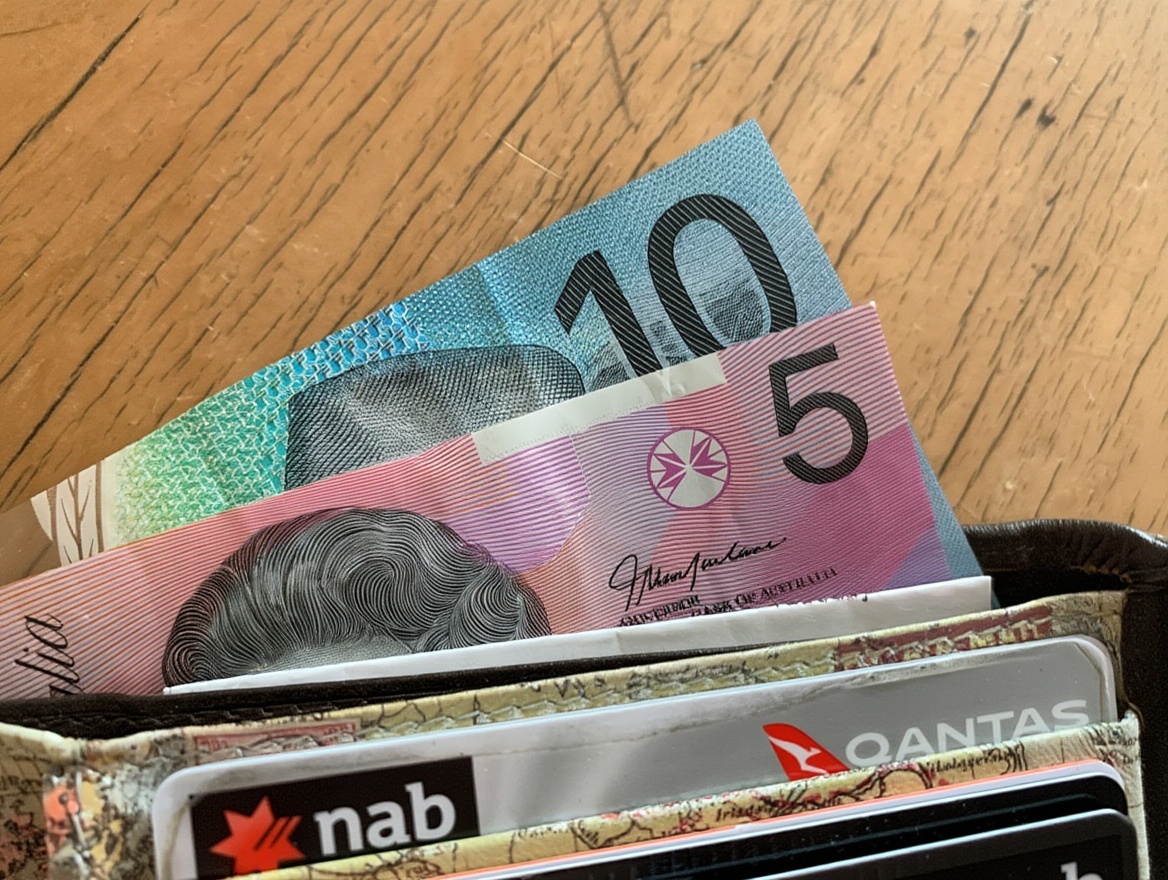
The practical rule: carry cash equivalent to at least one full day’s spending at all times when outside major tourist areas. In the Mekong Delta, Ha Giang, rural areas of any province — ATMs may be 30–60km away and the last few you passed may have been out of cash (a surprisingly common occurrence outside of cities). Stock up in cities before heading to rural areas.
How Much Cash to Carry: Planning by Travel Style
One question nobody answers directly: how much dong should you actually carry on a given day? The answer depends on what you’re doing.
City day (Hanoi, HCMC, Da Nang): Budget travelers spending on street food and local transport: 200,000–400,000 VND ($8–16) plus Grab balance covers a full day. Mid-range travelers with sit-down meals and a tourist activity: 500,000–1,000,000 VND ($20–40). Add more if visiting paid attractions (200,000–500,000 VND for major sites like Hue’s Imperial Citadel).
Rural day (small towns, markets, countryside): Cash is the only option. Budget 300,000–600,000 VND for food and motorbike fuel; add for accommodation if staying at a local guesthouse (private rooms outside tourist areas run 150,000–300,000 VND / $6–12).
Ha Giang loop (4 days): Accommodation 200,000–350,000 VND/night ($8–14), meals 60,000–150,000 VND/meal, fuel 100,000–200,000 VND/day. Budget roughly 2,500,000–4,000,000 VND total ($100–160) for a 4-day loop excluding bike rental. Withdraw this before leaving Ha Giang town — there are no reliable ATMs on the loop itself.
Ha Long Bay overnight cruise: The cruise itself is card-or-cash depending on operator. Extras (kayaking upgrades, drinks, tips) are cash. Bring 500,000–1,000,000 VND ($20–40) for on-boat expenses regardless of how the cruise is booked.
The general rule: never let yourself fall below 300,000 VND ($12) in hand when you’re away from a city center. That covers an emergency taxi to the nearest functional ATM, a meal, and a night’s accommodation at the most basic level if something goes wrong with your card or you end up somewhere without ATM access.
Sending Money Home and International Transfers
If you need to receive money in Vietnam (emergency transfer, extended stay), the options are limited but functional:
Wise (TransferWise): The most cost-effective way to receive international transfers in Vietnam. Wise has a Vietnamese dong account option. Transfer costs are 0.5–1% of the amount — far cheaper than bank wire transfers.
Western Union and MoneyGram: Available at many Vietnamese banks and post offices. Expensive (fees plus exchange rate markup), but function even in smaller cities. The emergency option.
PayPal: Has limited functionality for withdrawals in Vietnam. Not a reliable daily-use option.
What I Got Wrong
First time in Vietnam. I had a single debit card from my US checking account — a regular bank account with a $5 international transaction fee plus a 3% currency conversion fee. I was withdrawing 2,000,000 VND ($80) at a time because that was the default suggested amount.
Each withdrawal cost me $5 flat fee + $2.40 conversion fee + 40,000 VND ($1.60) ATM fee = roughly $9 per $80 withdrawal, or about 11%. I was doing this every 2–3 days for two weeks.
The math: I withdrew roughly $800 total over two weeks and paid approximately $90 in fees. That’s over 10% gone before I spent a single dong. I found this out when I sat down to reconcile expenses on day 14 and noticed my bank statements didn’t match my spending records.
The fix took 20 minutes after I got home: opened a Schwab checking account (takes a few days to arrive by mail, so do this 2 weeks before any trip). Schwab reimburses all foreign ATM fees worldwide and charges zero foreign transaction fees. The same $800 withdrawal scenario costs under $5 total on a Schwab card versus $90 on my old bank.
Two things worth sorting before you land: a Vietnam eSIM so you have data the moment you clear customs, and travel insurance — medical costs for uninsured foreigners in Vietnam are significant.
Airalo eSIMs activate instantly. Buy before departure — airport SIM queues in Vietnam can take 30+ minutes.
Frequently Asked Questions
What is the best ATM to use in Vietnam?
Citibank and HSBC have the lowest local fees and highest withdrawal limits. Vietcombank is widely available with reasonable fees. Avoid VPBank and PVComBank due to high local fees. In all cases, always decline Dynamic Currency Conversion (DCC) — choose “VND” when asked which currency to charge.
How much can I withdraw from a Vietnam ATM?
Most Vietnamese ATMs allow 2,000,000–5,000,000 VND per transaction ($80–200). Citibank and some Vietcombank machines go up to 10,000,000 VND ($400) per transaction. Your home bank may also have daily limits on top of this. To minimize fee impact, withdraw the maximum available per transaction.
Can I use credit cards in Vietnam?
Yes, at international hotels, tourist restaurants, and major shopping malls. Not at street food, local restaurants, markets, most local guesthouses, or transportation. Vietnam is more cash-reliant than its level of tourism development suggests. Always carry cash for daily expenses — cards are a supplement, not a replacement.
What currency should I bring to Vietnam?
USD cash is the most useful foreign currency to bring — gold shops exchange USD at good rates, and some tourist businesses quote prices in USD. EUR is less widely accepted but can be exchanged at banks and larger gold shops. UK pounds and Australian dollars are harder to exchange outside of banks in major cities. Vietnamese dong is not convertible internationally — don’t buy it before you arrive.
How do I avoid ATM fees in Vietnam?
The complete strategy: (1) Get a zero-foreign-fee debit card before you leave home — Schwab reimburses all ATM fees worldwide, Wise converts at near mid-market rate, Revolut has zero fees up to monthly limits. (2) Use Citibank or HSBC ATMs in Vietnam to minimize local transaction fees. (3) Always decline Dynamic Currency Conversion — choose to charge in VND, not USD. (4) Withdraw larger amounts less often — a flat 40,000 VND fee on a 10,000,000 VND withdrawal is 0.4%; on a 2,000,000 VND withdrawal it’s 2%.
Is it safe to carry cash in Vietnam?
Yes. Violent theft targeting tourists is rare. Pickpocketing exists in crowded markets and on motorbikes passing close on busy streets in HCMC — keep your wallet in a front pocket and don’t carry your phone in your back pocket. For daily amounts (under 500,000 VND / ~$20), carry loosely in your pocket. For larger amounts needed for a rental or multi-day expenses, use a money belt or inner pocket. The risk level doesn’t warrant dramatic security precautions, but basic awareness in crowded areas applies.
Can I use Apple Pay or Google Pay in Vietnam?
Limited functionality. Some international chain hotels and high-end restaurants accept tap-to-pay on foreign cards. The domestic Vietnamese QR payment systems (VNPay, MoMo, ZaloPay) dominate local contactless payments but require a Vietnamese bank account and phone number to set up. As a tourist, you can’t access these systems. Expect to use physical cards or cash for the vast majority of transactions.
Vietnam’s cash economy rewards preparation. Spend 20 minutes before your trip checking your debit card’s fee structure and the closest Citibank location to your accommodation. That 20 minutes will save you more money over a two-week trip than almost any other travel planning decision you make. The fee problem is entirely solvable — it just requires doing the work on the card side before you land, not trying to navigate it from an ATM screen in the dark outside a Vietcombank on your first night.
For a complete picture of daily costs, the Vietnam budget guide covers accommodation, food, transport, and activity costs by travel style. The Vietnam scams guide covers money-switching and ATM-related scams specifically.
FAQ
Which ATMs in Vietnam have the lowest fees?
Techcombank and BIDV typically charge lower fees (20,000–33,000 VND per transaction) compared to Vietcombank and VPBank. Citibank (now PVcomBank) branches sometimes waive fees for Citibank cardholders. The Shinhan Bank ATMs have been reported as fee-free for some international cards. Always check the fee screen before confirming.
What is the maximum ATM withdrawal limit in Vietnam?
Typically 2,000,000–5,000,000 VND per transaction ($80–200 USD) depending on the bank and ATM. Some ATMs limit to 3,000,000 VND. You can make multiple withdrawals, but your home bank may limit daily total withdrawals. Vietcombank and Agribank ATMs often have higher per-transaction limits.
Should I use ATMs or exchange currency in Vietnam?
ATMs give better rates than airport exchange counters. Jewelry shops and authorized money changers on Hang Bac Street in Hanoi offer good rates for cash USD or EUR exchange without fees. For large amounts, exchanging cash at authorized changers beats ATM fees plus your bank’s foreign transaction fees. Never exchange money on the street.
How much do Vietnamese ATMs charge in fees?
The Vietnamese bank ATM fee is typically 20,000–55,000 VND ($0.80–$2.20) per transaction, charged by the Vietnamese bank. Your home bank may also charge an additional foreign ATM fee ($0–$5) plus a currency conversion fee (1–3%). Total cost per withdrawal: $2–7 depending on your bank. Cards from Charles Schwab (US) and Starling/Wise (UK) have the lowest total fees.
Is Vietnam mostly cash or card?
Mostly cash for street food, markets, xe om rides, and small guesthouses. Cards accepted at most hotels, better restaurants, and booking apps. Grab payments can be done via app without cash. For typical daily traveler spending, carry 300,000–500,000 VND ($12–20) in cash and supplement with ATM withdrawals every few days.