Last updated: May 2026 · Jake Morrison · 5 years in Vietnam
I’ve been in Vietnam every February for five years. Two of those Februaries involved Tet timing I hadn’t properly accounted for. In 2023, I arrived in Hanoi the day before Tet started and watched the city hollow out — restaurants shutting their shutters, streets going quiet, the usually gridlocked Old Quarter suddenly navigable on foot. It was eerie and kind of beautiful. It was also not what I’d planned.
The third time I timed it right. Flew into Da Nang on February 10, post-Tet, rode the coast south to Quy Nhon, ate my body weight in bánh xèo tôm nhảy (say: bahn say tome nyay), and didn’t regret a single dollar I’d spent getting there. That’s the February I’m going to help you have.
The short version: February is genuinely excellent for the right itinerary. The long version involves understanding exactly why Tet timing is the single most important logistical decision of the entire trip — and why most travel blogs don’t explain it clearly enough to be useful.
The February Split — What the Country Actually Looks Like
Vietnam is 1,650km long. This matters more in February than almost any other month, because the gap between north and south is at its widest.
The pattern: the further south you go, the better February gets for classic beach and outdoor travel. The further north you go, the more you’re dealing with a cold, grey, often beautiful version of Vietnam that requires a different mindset.
Tet in February — What This Actually Means for Foreign Travelers
Tet (Tết Nguyên Đán — say: tet nwen dan) is Vietnam’s Lunar New Year, and it’s the biggest event in the country’s calendar. In 2026, it falls on February 17, with the public holiday window running February 14–22. Most years, Tet lands somewhere between late January and mid-February — check the specific date before booking anything.
ℹKnow Before You Go
Tet is not a travel problem — it’s a travel variable. Handled correctly, it’s the most culturally dense week you’ll spend in Vietnam. Handled incorrectly, it’s a week of closed restaurants, impossible transport, and hotel rooms that cost three times what they should.
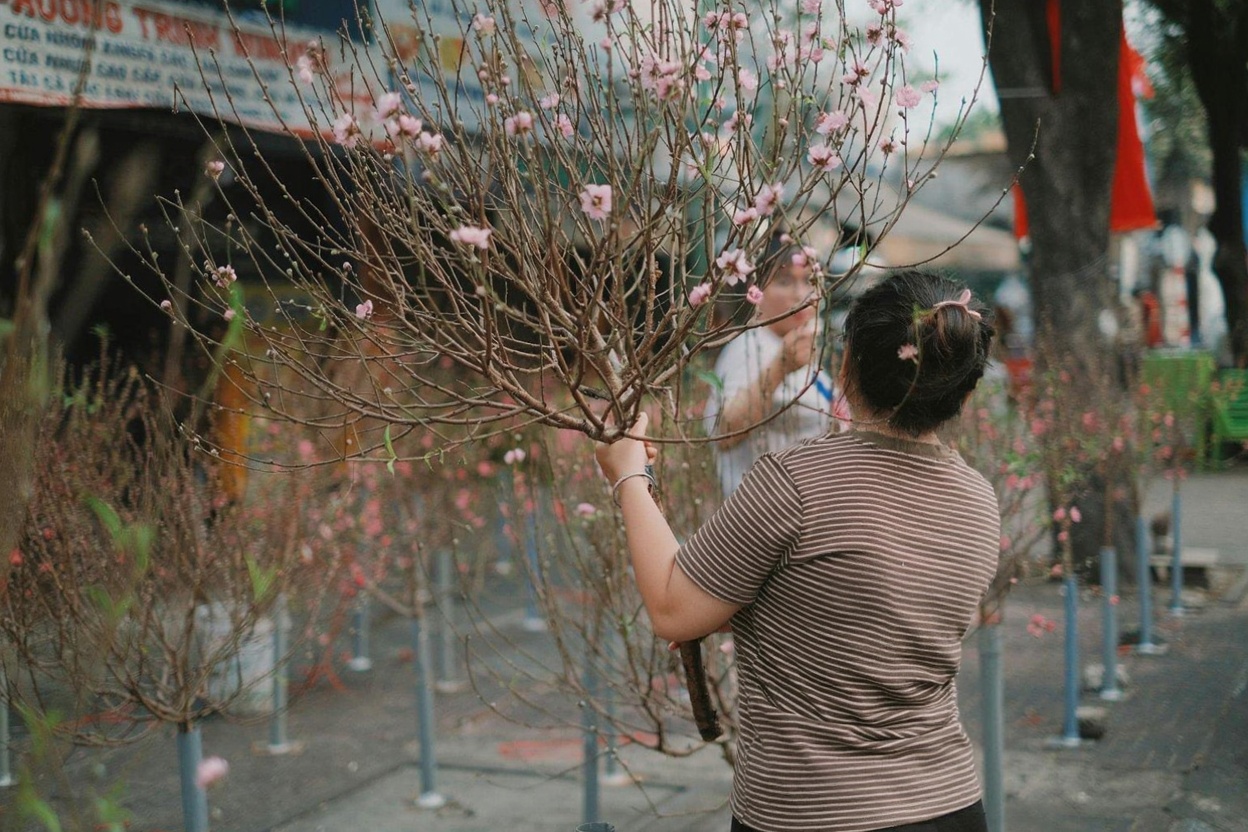
Pre-Tet (the week before): The best version of this period. Flower markets run day and night in Hanoi and HCMC — the smell of fresh đào (peach blossom) and mai (yellow apricot blossom) heavy in the streets. Markets overflow with preserved foods, red envelopes, and decorations. Domestic travel starts picking up but international tourist numbers are still manageable. Hotels are expensive but not yet insane.
Tet week itself: A split experience. Cities feel like a different place — quieter, stranger, the streets either empty or full of families in their best clothes. Many restaurants close for 3–7 days. Street food stalls shut. The tourist areas of Hoi An, Da Nang, and HCMC stay more functional than local neighbourhoods, but planning on walking out and finding dinner easily is optimistic. Book restaurants in advance or eat in your hotel.
Post-Tet (the week after): Vietnam wakes back up over 3–5 days. Businesses reopen in waves. By day three after Tet ends, most places are back to normal — the exception being some family-run restaurants that take the full public holiday week. This is the sweet spot: the Tet atmosphere is still in the air, the prices are normalising, and the south and central regions are in perfect condition.
⚠Real Talk
Foreign travelers often get caught by one thing: assuming “Tet is over” means “everything is open.” Vietnamese businesses run on family schedules, not official calendars. A restaurant might be closed until the owner’s extended family celebration ends — which could be 3 days or 10. The safest assumption in the first week post-Tet: half of what you want will be closed. Plan around it, not against it.
North Vietnam in February — Cold, Misty, and Worth It If You Know Why
The number one mistake people make with northern Vietnam in February is writing it off because it’s cold and grey in photos. The second mistake is going expecting the same experience they’d get in October.
Hanoi in February sits at 16–20°C during the day. Not cold by northern hemisphere standards, but cold enough that the city looks different — layers on, soup everywhere, the lake in Hoan Kiem wrapped in morning haze. The Old Quarter feels more local in February than in peak October. Fewer tour groups, more street food eaten standing up, the coffee shops full of actual Hanoians rather than tourists comparing filter coffee notes.
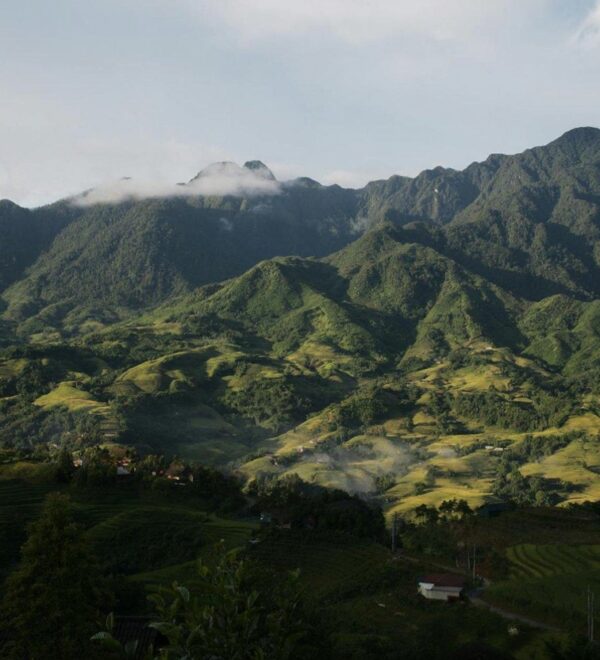
Sapa runs 5–12°C in February, sometimes lower. There is occasional frost at higher elevations. The rice terraces are not yet the fluorescent green of May-June, but they’re not bare either — a deep olive-brown, the villages quiet, the trekking paths less trampled. If you go, pack a proper jacket. Not a light fleece — an actual cold weather layer.
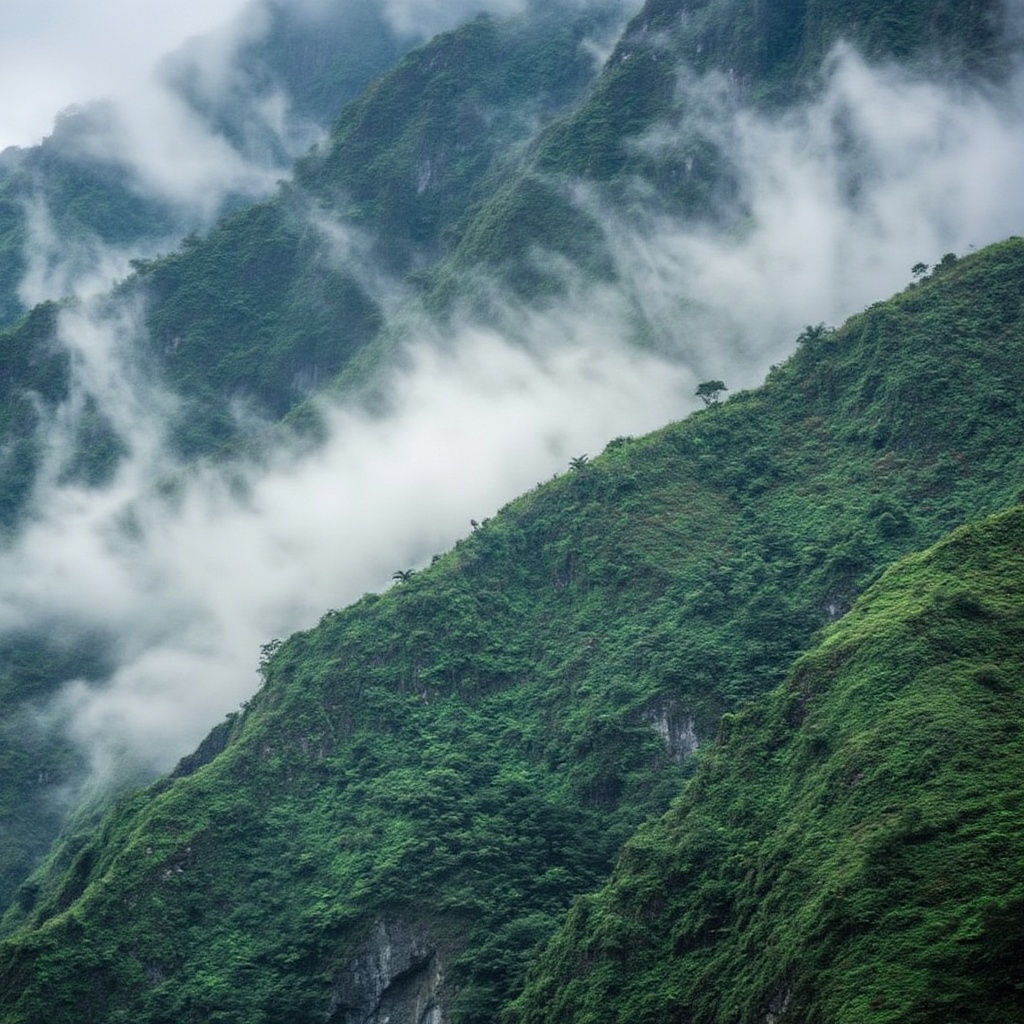
Ha Giang in February is striking. The valley mist sits between the karst peaks in the early morning and clears to reveal hard blue sky by 10am most days. The buckwheat flowers (hoa tam giác mạch — say: hwa tam zak mak) are gone — those bloom October-November — but the landscape is dramatic in a different way: sharper, starker, less photogenically obvious. The Loop is less crowded than in any other month.
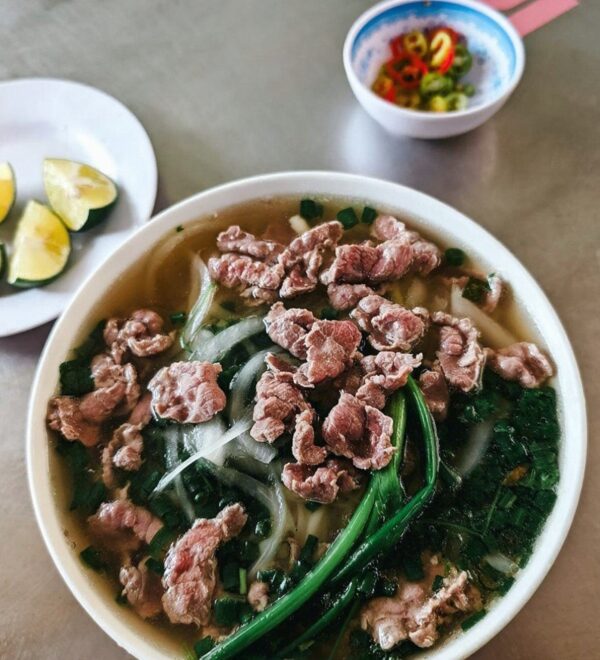
One thing that surprises people in Hanoi in February: the city has a different energy than the rest of the year. The Old Quarter is manageable — not empty, but walkable. The egg coffee shops on Dinh Tien Hoang are full of locals rather than tour groups. The street food is the same as always — bún chả (say: boon cha) at 40,000–60,000 VND (~$1.50–2.30) at a plastic stool table under a corrugated roof, soup steaming in the cold air. That experience, the real one, is more accessible in February than in October.
Ninh Binh in February deserves a mention. The limestone karsts of Trang An and the rice paddies around Tam Coc (say: tam cawk) are atmospheric in winter light — misty, quiet, the boat trips genuinely peaceful because the Chinese tour groups that dominate peak season haven’t arrived. February is objectively one of the better months to see Ninh Binh. The only caveat: the rice paddies aren’t the vivid green of May-June. They’re a quieter, more muted colour. Whether that’s better or worse depends entirely on what you’re looking for.
→Who It’s For
North Vietnam in February is for the traveler who wants fewer crowds and a more atmospheric, less curated version of the country. If your vision of Vietnam is warm beaches and clear skies, go south. If you want the Ha Giang Loop without tour groups and don’t mind a jacket, February is underrated.
Central Vietnam in February — Arguably the Best Stretch of the Year
Hoi An. Da Nang. Hue. Quy Nhon. This is where February consistently wins.
The central coast runs its dry season from roughly February through April. Rain days drop to 4–6 per month in Hoi An, 3–5 in Da Nang and Quy Nhon. Temperatures sit at 22–28°C — warm enough for swimming, cool enough to walk the old town at 2pm without wilting.
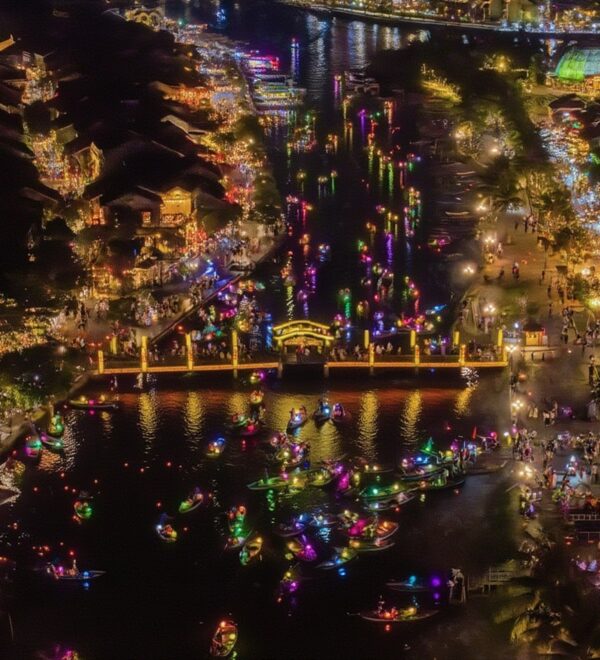
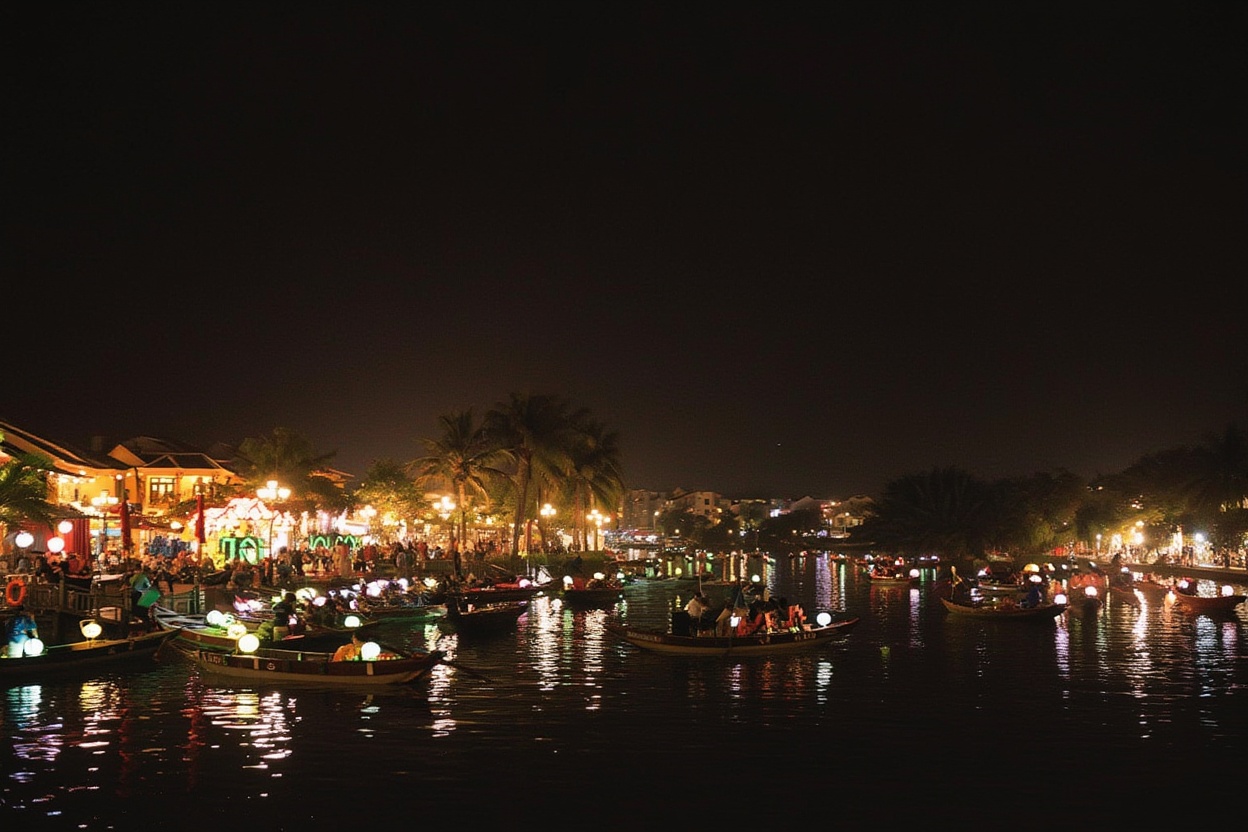
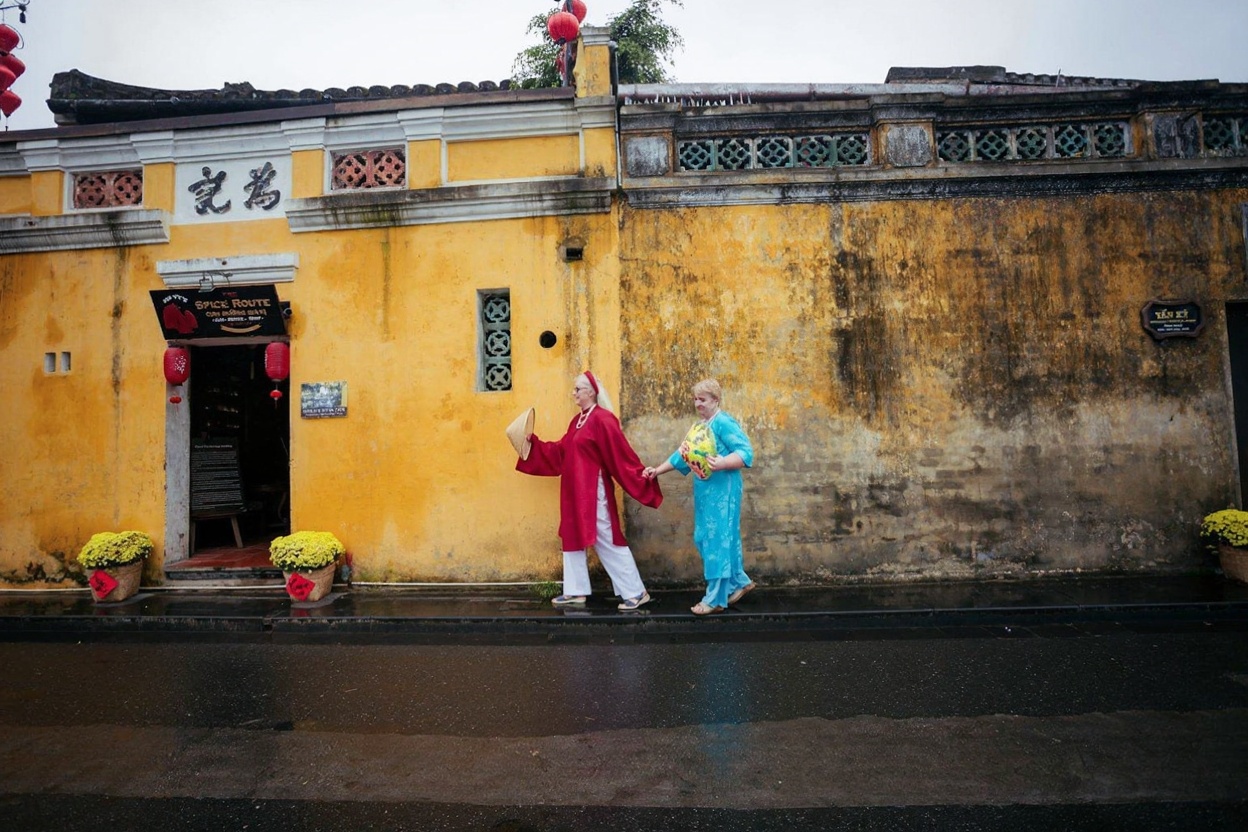
Hoi An in February is what the brochures show but don’t always deliver: narrow lanes without shoulder-to-shoulder crowds, the Thu Bon River reflecting lanterns in the clear evening air, the tailor shops doing actual work rather than rushing 200 orders. It fills up on weekends and during the full moon lantern festival (first day of each lunar month, usually a Tuesday or Wednesday in February), but the baseline is manageable.
Hue is excellent in February. The Imperial City at dawn, the Perfume River under clear sky, and the food — Hue’s bún bò Huế (say: boon baw hway) and bánh khoái (say: bahn kwai) at their best in the cool morning air. The crowds haven’t arrived yet. The city feels less like a UNESCO heritage site and more like a place where people actually live.
Quy Nhon in February is the quiet highlight. The beaches — Ky Co (say: kee kaw), Bai Xep, Eo Gio — are at their calmest: sea flat, water 26–27°C, domestic tourists mostly gone post-Tet. It’s the month you can have Bai Xep to yourself on a Tuesday morning. That doesn’t happen in July.
✓Quick Answer
Best central Vietnam destinations in February: Quy Nhon (least crowded), Hoi An (most atmospheric), Hue (best food weather). All three are dry, warm, and uncrowded compared to October-November peak. February is the unmarketed best window for this entire coastline.
South Vietnam and the Islands in February — Peak Dry Season
If you want to understand why travel operators love February, this is it. HCMC is hot and dry — 29–33°C, 1–3 rain days for the entire month. The Mekong Delta is navigable, the floating markets operating, the boat trips viable. Phu Quoc is at peak season: 28–32°C, seas calm, the beaches at their clearest blue.
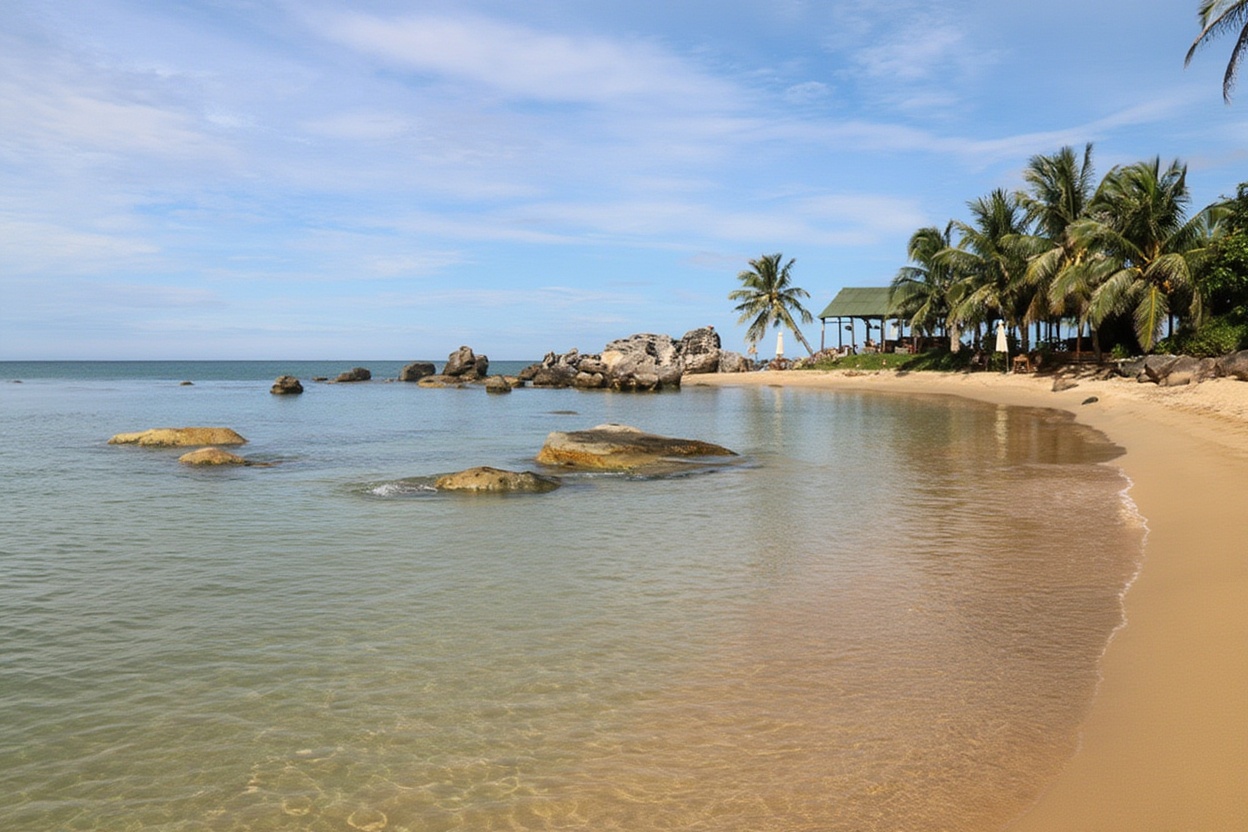
Phu Quoc specifically: February is one of the three best months on the island (November and December being the others). The northeast monsoon that hammers the island from May to October has been gone for three months. The sea is calm on both the east and west coasts. Snorkelling visibility is at its annual best. If you’re choosing between Phu Quoc now or Phu Quoc in any month from May to September — take now.
The catch with the south in February: it’s expensive. Peak season pricing means resorts in Phu Quoc run 1,200,000–2,500,000 VND per night (~$45–95) for mid-range options. HCMC hotels fill up around Tet week. If you’re budget-conscious, time your south Vietnam leg for the second half of February, post-Tet, when prices normalise.
Con Dao in February is worth knowing about: the small archipelago off the southern coast sits in its dry season window, the beaches are uncrowded (genuinely — you can walk the whole length of Con Son beach in February without sharing it with more than a dozen people), and the national park hiking is viable. It’s harder to reach than Phu Quoc, which is why it stays quiet.
The Mekong Delta is functional and interesting in February — boat trips are running, the floating markets at Cai Rang near Can Tho are active early morning, and the weather is genuinely pleasant. It’s not a common February add-on for foreign travelers, which means the guesthouses in Can Tho and the boat captains you hire are less tuned to tourist-mode than they are during peak season. That’s either a feature or a bug depending on what kind of traveler you are.
The Traveler Scenarios — Who Should Go Where in February
The most useful question isn’t “is February good for Vietnam?” — it’s “which Vietnam is good for my February?”
You want a beach week, no fuss: Phu Quoc. Fly direct from most major ASEAN hubs. Stay on Long Beach for budget, Ong Lang Beach for quieter. Peak season but fully functional.
You want culture + food without tourist overload: Hue first, then Quy Nhon. Both are excellent in February, both are undercrowded relative to Hoi An. The food in Hue is as good as Vietnam gets. Quy Nhon’s seafood is cheaper than anywhere on the coast.
You want to experience Tet: Hanoi, pre-Tet arrival (3–4 days before New Year’s Day). The flower markets on Hang Luoc and around Hoan Kiem Lake. The temple visits on New Year’s morning. The ghost-town quietness of day two, when the whole city seems to pause. Don’t expect functioning restaurants or easy transport — plan your accommodation and food logistics in advance.
You’re doing a 2-week south-to-north trip: Start in HCMC or Phu Quoc (dry, warm), move up through Quy Nhon and Hoi An (perfect central coast conditions), end in Hanoi (cold but characterful). This direction works better than north-to-south in February — you start warm and work your way into the cold, rather than arriving frozen and hoping it gets better.
→Who It’s For
February is for the traveler who missed the Christmas-January window, wants excellent southern and central Vietnam conditions, and has done enough research to know when Tet falls that year. It’s not for first-time visitors who haven’t thought about Tet timing and assume they can just show up anywhere and wing it.
What’s Actually Bad About February
The Tet disruption is real. Not catastrophic — just inconvenient if you haven’t planned for it. Three to seven days of partial business closures, elevated transport prices, and accommodation that costs 40–80% more than non-Tet February. In 2026, Tet runs February 14–22 — if you arrive February 12 assuming you’ll find your usual street food breakfast, you’ll be wrong.
The north is genuinely cold. Not dangerous cold, but cold enough that a traveler who packed for beach and temple weather will be miserable in Hanoi. The mist that looks atmospheric in photos is less pleasant when it means you can’t see the full Hang Mua viewpoint from the top because the fog ate it.
February is also peak domestic travel during Tet — trains and buses from major cities fill up weeks in advance. Getting a sleeper train from Hanoi to Da Nang during the Tet window requires booking 2–3 weeks early. Flights are worse. This isn’t unique to February, but it catches people who are used to booking 3–4 days out the rest of the year.
And one more: post-Tet price normalisation doesn’t happen overnight. The first 4–5 days after Tet ends, some guesthouses and tour operators are still holding elevated prices from the holiday window. By day six or seven, competition kicks back in and prices drop. If budget matters to you, the third week of February is often the best combination of good weather, open businesses, and normalised pricing.
Two things worth sorting before you land: a Vietnam eSIM so you have data the moment you clear customs, and travel insurance — medical costs for uninsured foreigners in Vietnam are significant.
Airalo eSIMs activate instantly. Buy before departure — airport SIM queues in Vietnam can take 30+ minutes.
FAQ — Vietnam in February
Is February a good time to visit Vietnam?
Yes — especially for central and southern Vietnam. Da Nang, Hoi An, Quy Nhon, HCMC, and Phu Quoc are all in dry season, with warm temperatures and minimal rain. North Vietnam (Hanoi, Sapa, Ha Giang) is cold and misty — worth visiting but requires a different mindset and a proper jacket. The key variable is Tet: check the exact date for your year before booking, and plan the Tet week logistics deliberately.
When is Tet in February 2026?
Tet New Year’s Day in 2026 falls on February 17. The official public holiday window runs February 14–22. In practice, many businesses close for 3–7 days around this window. Arrive before February 12 or after February 24 if you want Vietnam at full operational capacity. The exact date shifts every year — it follows the lunar calendar. Before you commit to a direction, our Vietnam itinerary guide breaks down the full south-to-north route with timing and transport options.
What should I pack for Vietnam in February?
Depends entirely on where you’re going. For HCMC, Phu Quoc, and the Mekong: light clothes, swimwear, sunscreen, and a light layer for air-conditioned restaurants. For Hoi An and Da Nang: same, plus a light jacket for evenings (22–25°C at night). For Hanoi and the north: a proper warm layer (fleece or down), long pants, closed shoes. For Sapa or Ha Giang: full cold weather gear — thermal base layer, warm jacket, hat and gloves for mountain mornings.
Is February crowded in Vietnam?
Variable. During Tet week, domestic tourism surges in popular destinations — Hoi An, Da Nang, Phu Quoc, Ha Long Bay. Outside of Tet, February is moderate for international tourists — less crowded than October–December, busier than May–June. The sweet spot is mid-to-late February post-Tet: the domestic travel wave has subsided, international visitors haven’t hit peak season yet, and prices are back to normal.
Can I visit Ha Long Bay in February?
Yes, but with adjusted expectations. February is cold in the north (10–15°C on the water) and occasionally misty — the kind of weather that makes Ha Long Bay look like a Chinese ink painting rather than the blue-water tropical paradise of the brochures. Bring a proper jacket. Some cruise operators run reduced schedules in January–February. Budget cruises are available; luxury options are still operating. If you want Ha Long Bay in tropical warmth, go in April–June instead.
February vs March — which is better for Vietnam?
March edges out February for most travelers. The north warms up significantly in March (Hanoi reaches 22–25°C, Sapa 12–18°C), central Vietnam stays excellent, and the south remains in dry season. You also avoid the Tet disruption entirely. February wins only if you specifically want to experience Tet, or if your travel dates are fixed in February and you plan around the Tet window. For flexible travelers, March is the cleaner choice. For a full breakdown of every month, our Vietnam best time to visit guide covers the complete seasonal picture.