
Vietnamese coffee is not what you expect. It’s darker, denser, and more caffeinated than almost anything the specialty coffee world produces — not because it’s trying to be extreme, but because that’s what Robusta tastes like when it’s been roasted this dark and brewed this slowly. The culture around it is equally specific: a tiny glass, a metal filter dripping over a layer of sweetened condensed milk, and absolutely no hurry whatsoever.
I’ve been drinking Vietnamese coffee daily for five years. What I can tell you is that it varies more than tourists expect — a cà phê trứng (egg coffee) in Hanoi’s Đinh Tiên Hoàng Street tastes nothing like a cà phê đá at a plastic stool on Saigon’s Nguyễn Du, and both are completely different from the third-wave Vietnamese-sourced single-origins in the new coffee shops of Đà Lạt. Here’s how to navigate all of it.
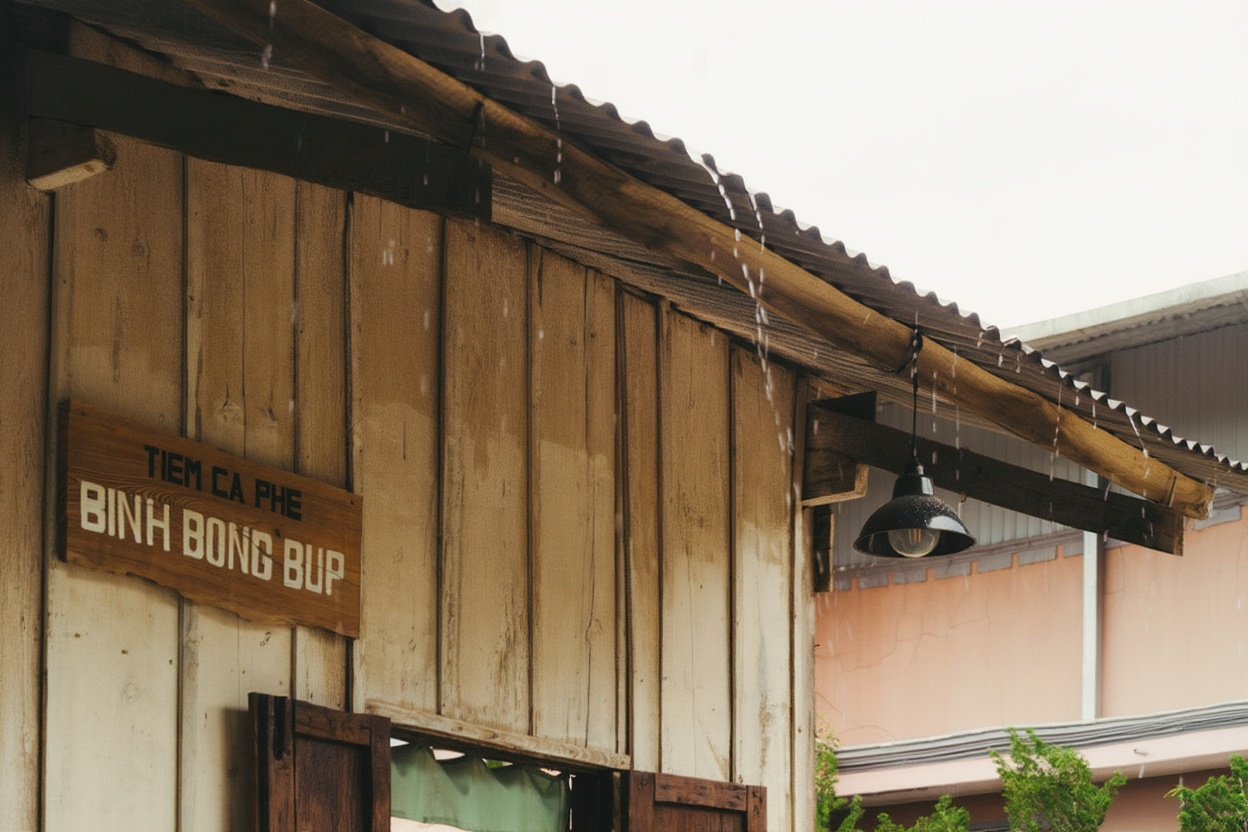
The Basics: How Vietnamese Coffee Works
Traditional Vietnamese coffee uses a phin filter — a small metal dripper that sits on top of a glass. Ground coffee (typically a dark Robusta blend, sometimes with a small percentage of Arabica) is loaded into the phin, hot water is poured over it, and the coffee drips slowly into the glass below over 4–5 minutes. The brewing is unattended — you sit, you wait, you watch it drip.
The resulting coffee is strong. A single phin makes about 60–80ml of concentrated coffee — not espresso strength, but noticeably more potent than American drip coffee. The Robusta beans used in most Vietnamese blends have 2–3x more caffeine than Arabica. The dark roast adds bitterness and chocolate notes that balance the sweetness of the condensed milk.
Condensed milk (sữa đặc): Traditional Vietnamese coffee uses sweetened condensed milk rather than regular milk or cream. This traces back to French colonial times when fresh milk was hard to keep without refrigeration — condensed milk was practical and it stuck. The condensed milk sits at the bottom of the glass; you stir it through after the phin finishes dripping.
Iced vs hot: Cà phê đá (iced coffee) is the dominant form in the south and during the hot months — condensed milk in a glass, phin drips over it, then poured over ice. Cà phê nóng (hot coffee) is more common in the north, particularly during cooler months.
The Main Types of Vietnamese Coffee
Cà phê đen (black coffee): The phin-brewed coffee with nothing added, drunk either hot (cà phê đen nóng) or iced (cà phê đen đá). This is the purist’s version — just the coffee, nothing masking it. If you want to evaluate the bean and roast, drink it black. The bitterness is pronounced; add a small amount of condensed milk to smooth it out if needed.
Cà phê sữa đá (iced coffee with condensed milk): The canonical Vietnamese iced coffee experience — the version you’ll see at every breakfast stall, roadside cart, and local café. Price: 15,000–30,000 VND ($0.60–1.20) at local spots. Iced, sweet, strong, completely addictive. This is what most travelers mean when they say they can’t stop drinking Vietnamese coffee.
Cà phê trứng (egg coffee): Hanoi’s most famous coffee innovation, created at Giảng Café in the 1940s when milk was scarce. Egg yolks are beaten with condensed milk and sugar into a creamy foam, then spooned over a base of strong black coffee. Served in a small glass inside a cup of warm water to keep it at temperature. The foam has the texture and sweetness of crème brûlée custard over an espresso. This is not a drink you order when you want caffeine — it’s a dessert that happens to have coffee in it. Worth having at least once. Giảng Café at 39 Nguyễn Hữu Huân, Hanoi, is the original.
Cà phê cốt dừa (coconut coffee): Popularized in Saigon over the last decade, now available everywhere. Coconut milk is blended or foamed over the coffee rather than condensed milk. Lighter, less sweet, with coconut flavor offsetting the Robusta bitterness. The Saigon version tends to be more intense and less creamy than the bottled versions sold elsewhere. Cộng Cà Phê (the chain with the retro Communist aesthetic) popularized the coconut coffee and serves a consistent version.
Bạc xỉu: More milk than coffee — a South Vietnamese tradition where the ratio flips and you get mostly hot milk with a small amount of coffee. The opposite of what you’d expect; effectively a Vietnamese café au lait with condensed milk sweetness. Popular with those who like coffee flavor without the caffeine intensity.
Cà phê muối (salt coffee): A Hue specialty. A thin layer of salted milk foam on top of black coffee, balancing sweet, salty, and bitter in a way that sounds wrong and works. Rare outside Hue but worth trying there.
Vietnamese Coffee Culture: How It’s Actually Done
Coffee in Vietnam is not a commute drink. The phin brewing is deliberately slow — it enforces a pause. The culture around it is equally unhurried: people sit for 30–90 minutes at a street-level café, phone or newspaper in hand, watching the street, refilling their glass with the extra ice the server always leaves at the table. The same unhurried approach extends to eating — see our Vietnam street food guide for how locals pair coffee breaks with morning banh mi or bun bo.
The plastic stool café (quán cà phê vỉa hè) is the baseline experience — tiny tables at knee height on the sidewalk, plastic stools, a single menu of coffee and maybe a few other drinks. Coffee costs 15,000–25,000 VND ($0.60–1) here. These places open at 6am and the morning rush is a legitimate rush — by 7:30am the good ones have every stool occupied.
The mid-range café — air-conditioned, higher ceilings, light food menu, maybe a playlist — costs 35,000–60,000 VND for coffee. These are the places where the city’s younger generation works on laptops for hours; free refills of ice water, WiFi that actually works, the social expectation that you can sit for two hours on one coffee without being asked to leave.
Third-wave specialty coffee has arrived in Vietnam’s major cities. In Hanoi’s Tây Hồ district, HCMC’s Quận 3, and extensively in Đà Lạt (which grows Arabica at altitude), you can get single-origin pourover, proper flat whites, and direct-trade beans from Vietnamese highlands farms. These shops price similarly to their international equivalents — 65,000–100,000 VND ($2.60–4) per cup.
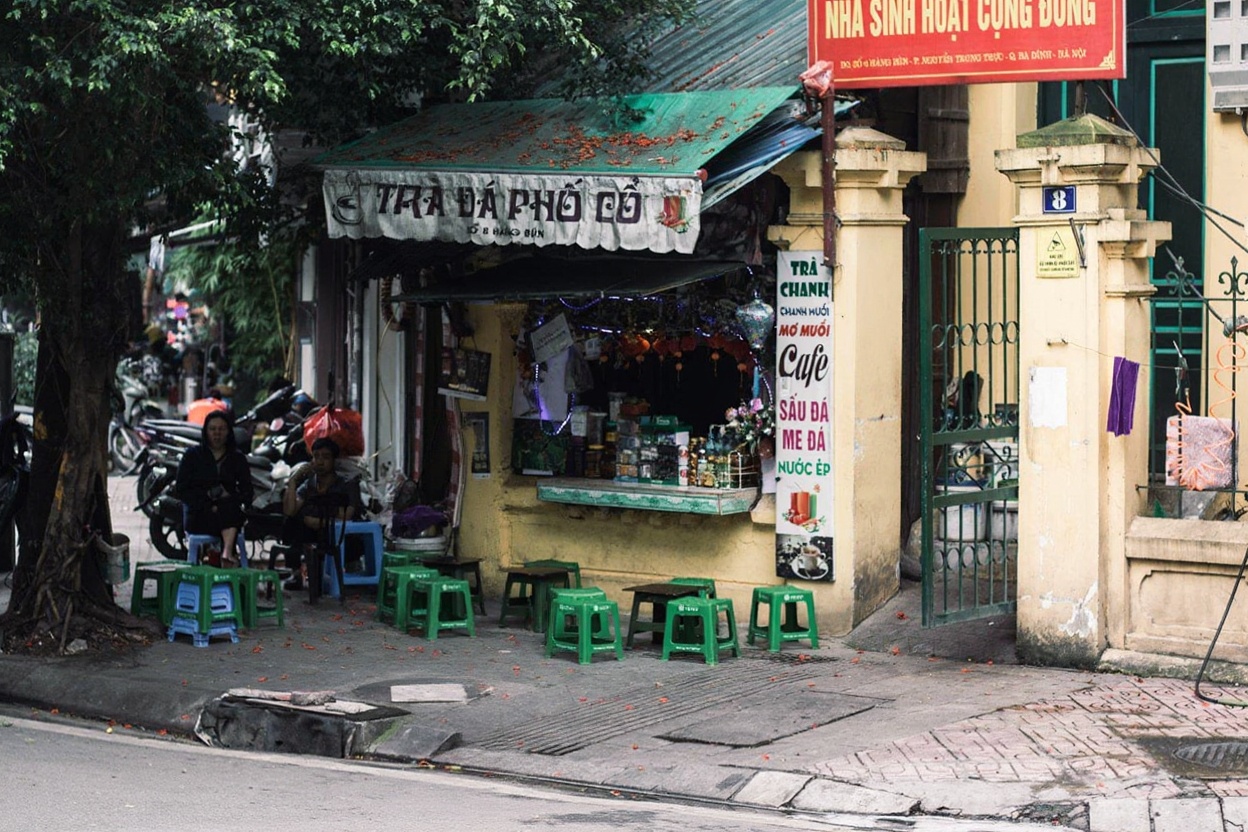
Where to Drink: City-by-City
Hanoi: The Old Quarter has dozens of traditional cafes tucked into the alley behind Hoàn Kiếm Lake’s north end. The egg coffee cafes cluster on Đinh Tiên Hoàng and the lanes off Hàng Gai. For the real local experience, walk into any residential neighborhood (Hoàn Kiếm district’s outer lanes, or anywhere in Cầu Giấy) at 7–8am and find the plastic stool place with the most customers. For specialty coffee: The Note Coffee (above the street on Đinh Liệt), Tranquil Books & Coffee (46 Nguyễn Hữu Huân), and the clusters of third-wave cafes around Tây Hồ West Lake. For a deeper dive into the city’s café scene, our Hanoi coffee culture guide covers the best neighborhoods and local spots in detail.
Hoi An: Coffee culture is strong in Hoi An despite the tourist prices. Detour Coffee on Nguyễn Phúc Tần does excellent Vietnamese and Western-style coffee. Reaching Out Tea House (Trần Phú) is quieter and good for sitting. For local-priced coffee: walk 10 minutes from the Ancient Town into the residential streets west of the market — the local café cluster on Trần Quý Cáp costs a third of the tourist-strip price.
Da Lat: The best coffee city in Vietnam for Arabica drinkers. Da Lat sits at 1,500m altitude and grows Vietnam’s best high-grown coffee on the surrounding plateau. Locally roasted single-origin Arabica is everywhere — Me Linh Coffee Garden (outside town, with views of the plantations), Vườn Bia Da Lat, and dozens of specialty roasters in the market area. Expect to pay specialty coffee prices ($2–4) but get the best cup in Vietnam.
Ho Chi Minh City: The birthplace of cà phê cốt dừa and the densest café culture in the country. Phúc Long (chain, dozens of locations) is consistently good and cheap. Cộng Cà Phê (the retro Communist aesthetic chain) is ubiquitous and good for coconut coffee. For serious specialty: the cluster of roasters and pourover bars in Quận 3’s Võ Văn Tần street area.
Vietnam’s Coffee Growing Regions
Vietnam is the world’s second-largest coffee producer, after Brazil, and the largest producer of Robusta specifically. The majority of Vietnamese coffee comes from the Central Highlands: Đắk Lắk province (the biggest producing region, centered on Buôn Ma Thuột), Lâm Đồng (the Da Lat plateau, primarily Arabica), Gia Lai, and Kon Tum. These highlands were agricultural land opened up under both French colonial policy and post-reunification government resettlement programs in the 1970s–90s.
The dominance of Robusta in Vietnamese production is a function of elevation and market demand. At 400–800m altitude in Đắk Lắk, the climate is too warm and too humid for quality Arabica production at scale. Robusta grows prolifically at these conditions. The resulting Robusta, roasted dark and often blended with butter, rice, or salt (the Trung Nguyên style), produces the dense, bitter-sweet flavor that defines traditional Vietnamese coffee.
Da Lat is the exception. At 1,500m on the Lâm Đồng plateau, temperatures drop enough for quality Arabica. Da Lat Arabica — primarily Catimor variety, which is disease-resistant and suitable for the region’s rainfall patterns — is lighter, more acidic, and significantly less caffeinated than the Central Highlands Robusta. The specialty coffee wave in Vietnam has focused heavily on Da Lat Arabica and on a younger generation of Vietnamese specialty roasters working with these beans.
Coffee tourism around Da Lat is worth a half-day if you’re passing through: Me Linh Coffee Garden (15km outside Da Lat town) has coffee plants you can walk through, live civet coffee demonstrations (controversial and not recommended on animal welfare grounds, but the setting is genuine), and excellent views of the plateau. K’Ho Coffee, run by a K’Ho minority family in Langbiang mountain area, does farm visits with a focus on the indigenous farming story and produces some of the best coffee I’ve had in Vietnam.
The Brief History: How Vietnamese Coffee Got This Way
Coffee arrived in Vietnam with French missionaries in 1857 — a single Arabica plant planted in Ninh Binh. The French colonial administration then encouraged coffee cultivation as an export crop through the late 19th century, initially in the northern highlands, later in the Central Highlands where the volcanic soil and altitude suited the plant.
The condensed milk tradition came from practical necessity: fresh milk was difficult to preserve in the heat and humidity, and condensed milk (imported from France and later produced domestically) was shelf-stable. It became so associated with Vietnamese coffee that today the condensed milk version is the traditional form and “black coffee” is considered the austere variant rather than the original.
The post-1975 period saw Vietnamese coffee production restructured under the unified government’s agricultural policies. The Đắk Lắk region was massively expanded with Kinh resettlement and state farm programs. The shift from Arabica to Robusta was partly economic (higher yield per hectare, more disease-resistant) and partly accidental — the Central Highlands elevation suited Robusta better than quality Arabica.
Trung Nguyên, founded in 1996 by Đặng Lê Nguyên Vũ, created the modern Vietnamese coffee brand identity — the dark-roasted blends, the phin brewer as cultural artifact, the idea of Vietnamese coffee as a national pride product. Their chain and retail products essentially created the consumer market for Vietnamese-style coffee domestically. Whether you find Trung Nguyên’s coffee excellent or overwrought (the dark roast can taste burnt to lighter-roast palates), their role in establishing Vietnamese coffee culture is significant.
How to Order Coffee in Vietnamese
Knowing the basic vocabulary means you can order at local spots where the menu isn’t in English:
Cà phê đen nóng — Black coffee, hot
Cà phê đen đá — Black coffee, iced
Cà phê sữa nóng — Coffee with condensed milk, hot
Cà phê sữa đá — Iced coffee with condensed milk (the classic)
Cà phê trứng — Egg coffee
Cà phê cốt dừa — Coconut coffee
Bạc xỉu — Light coffee (mostly milk)
Không đường — No sugar (useful when you want to specify no condensed milk)
Ít đường — Less sugar / less sweet
Một cà phê thêm [item] — One coffee plus [item], where [item] might be sữa (milk) or đường (sugar)
At any plastic stool café, pointing to what the person next to you has and saying “cho tôi một cái” (give me one of those) also works perfectly — arguably the best ordering method.
Pronunciation note: “cà phê” is approximately “ka feh” — the tones are low-falling on “cà” and flat on “phê”. Getting the tones exactly right matters less than tourists fear; café workers hear this from foreigners constantly and understand regardless.
Buying Coffee to Take Home
Vietnamese coffee travels well and makes an excellent souvenir. What to buy:
Trung Nguyên Legend: Vietnam’s most established coffee brand, available everywhere. Their Classic Blend or Culi (Peaberry Robusta) are the canonical examples of traditional Vietnamese roast style. Available in vacuum-sealed bags in every supermarket. Affordable ($4–8 for 250g at local prices).
Phúc Long: The chain also sells retail coffee. Good quality, consistent, and packaged well for travel.
Specialty roasters in Da Lat: If you’re passing through Da Lat, the local roasters sell freshly roasted bags of locally grown Arabica and Robusta. Me Linh Coffee, Arabica Da Lat, and the market vendors sell freshly roasted bags — this is what specialty coffee enthusiasts should bring home. Buy whole bean if you have a grinder at home.
Metal phin filter: The brewer itself is a practical and authentic souvenir. Costs 30,000–60,000 VND ($1.20–2.40) at any market or kitchen shop. The filter is simple to use and produces the same Vietnamese coffee experience at home as in the café — just add Trung Nguyên coffee and condensed milk.
Two things worth sorting before you land: a Vietnam eSIM so you have data the moment you clear customs, and travel insurance — medical costs for uninsured foreigners in Vietnam are significant.
Airalo eSIMs activate instantly. Buy before departure — airport SIM queues in Vietnam can take 30+ minutes.
Frequently Asked Questions
Is Vietnamese coffee stronger than regular coffee?
Yes, significantly. Robusta beans — which make up the majority of Vietnamese coffee blends — have 2–3x the caffeine content of Arabica. Combined with the concentrated phin brewing method, a small glass of cà phê sữa đá contains roughly the equivalent caffeine of 2–3 standard American drip coffees in about 80ml of liquid. Travelers who are caffeine-sensitive or who don’t regularly drink coffee should start with bạc xỉu (more milk than coffee) or drink it slowly rather than assuming one glass is one cup of coffee. The sweet taste from condensed milk masks the intensity until the caffeine hits.
What is egg coffee and does it taste weird?
Egg coffee (cà phê trứng) sounds alarming but tastes excellent — the egg yolks are beaten with condensed milk until they form a thick, warm custard foam. The result tastes like tiramisu or sabayon cream sitting on top of a shot of strong coffee. You eat the foam with a spoon, then drink the coffee through it. There’s no “eggy” taste because the yolks are emulsified with sugar and milk. It’s one of the most unique food experiences in Vietnam and worth trying even if you don’t usually drink coffee — you can have it decaf by asking for it with a lighter brew. Giảng Café at 39 Nguyễn Hữu Huân in Hanoi is the original; Đinh Café (13 Đinh Tiên Hoàng) is equally good with a better rooftop view.
Can I get good non-Vietnamese coffee in Vietnam?
Yes, particularly in major cities. Third-wave specialty cafes in Hanoi (Tây Hồ area), HCMC (Quận 3), and Da Lat serve proper espresso, flat whites, and pourover methods using good beans. The specialty coffee scene in Vietnam is relatively young but growing fast — you can get a technically excellent flat white in Hanoi for 60,000–80,000 VND ($2.40–3.20). Outside major cities, non-Vietnamese coffee (cappuccino, flat white) is available at tourist cafes but quality varies widely.
What is civet coffee and should I try it?
Cà phê chồn (civet coffee, or kopi luwak in the Indonesian terminology) is coffee processed through the digestive system of civets — the beans are eaten, partially digested, and collected from the animals’ excrement. The claim is that the digestive process reduces bitterness. It’s marketed heavily at tourist spots around Da Lat, Buôn Ma Thuột, and coffee plantation tours. The ethical problem: wild civet coffee is extremely rare; the vast majority of “civet coffee” sold to tourists involves civets kept in cages and force-fed coffee cherries, which is an animal welfare issue. The coffee itself is also not reliably better than well-roasted Da Lat Arabica at a fraction of the price. Skip it — the story is more interesting than the cup.
Why does Vietnamese coffee taste different at home even with the same beans?
A few factors. First, water temperature: traditional Vietnamese phin brewing works best with water at 88–92°C (190–198°F), not full boiling. Boiling water can over-extract and add astringency. Second, grind size: Vietnamese coffee for phin needs a medium-coarse grind — too fine clogs the filter and takes 15+ minutes; too coarse under-extracts and tastes thin. Third, the amount: a standard phin takes 20–25g of coffee for 80ml output, which is a much higher coffee-to-water ratio than most home drip methods. If your home version tastes thin, use more coffee. If it tastes harsh and takes too long to drip, grind coarser. The phin is forgiving but has an optimal range that takes a few attempts to find.
Is Vietnamese coffee available to buy online in the US?
Yes. Trung Nguyên’s Classic Blend and Premium Blend are available on Amazon. Nguyen Coffee Supply, a Vietnamese-American roaster in New York, sources directly from Vietnamese highlands farms and roasts for the US market — their Robusta, Arabica, and blend options are good and available by subscription. For the phin filter itself: the standard Vietnamese phin is available on Amazon for $5–12 in various sizes. The 4-serving size (about 240ml output) is the most practical for home use.