Updated: May 2026

A Redditor who watched a TV documentary about the Reunification Express as a child rode the full route 35 years later:
“So many hours, so many rice paddies, so many chickens in burlap bags, so many glimpses of the sea. Would highly recommend. Worth every minute.” — Street-Honeydew6824, r/travel
That’s the train in one paragraph.
It’s not fast. It’s not cheap compared to a budget flight. The toilets smell. The top berth requires some gymnastics to reach. But it will give you a Vietnam that the airport cannot.
Here’s everything you need to know to actually book it and use it well.
The Reunification Express: Background Worth Knowing
The line between Hanoi and Ho Chi Minh City stretches 1,726km along Vietnam’s coast and is part of the Unified Vietnamese Railway, one of the longest single national rail lines in Southeast Asia.
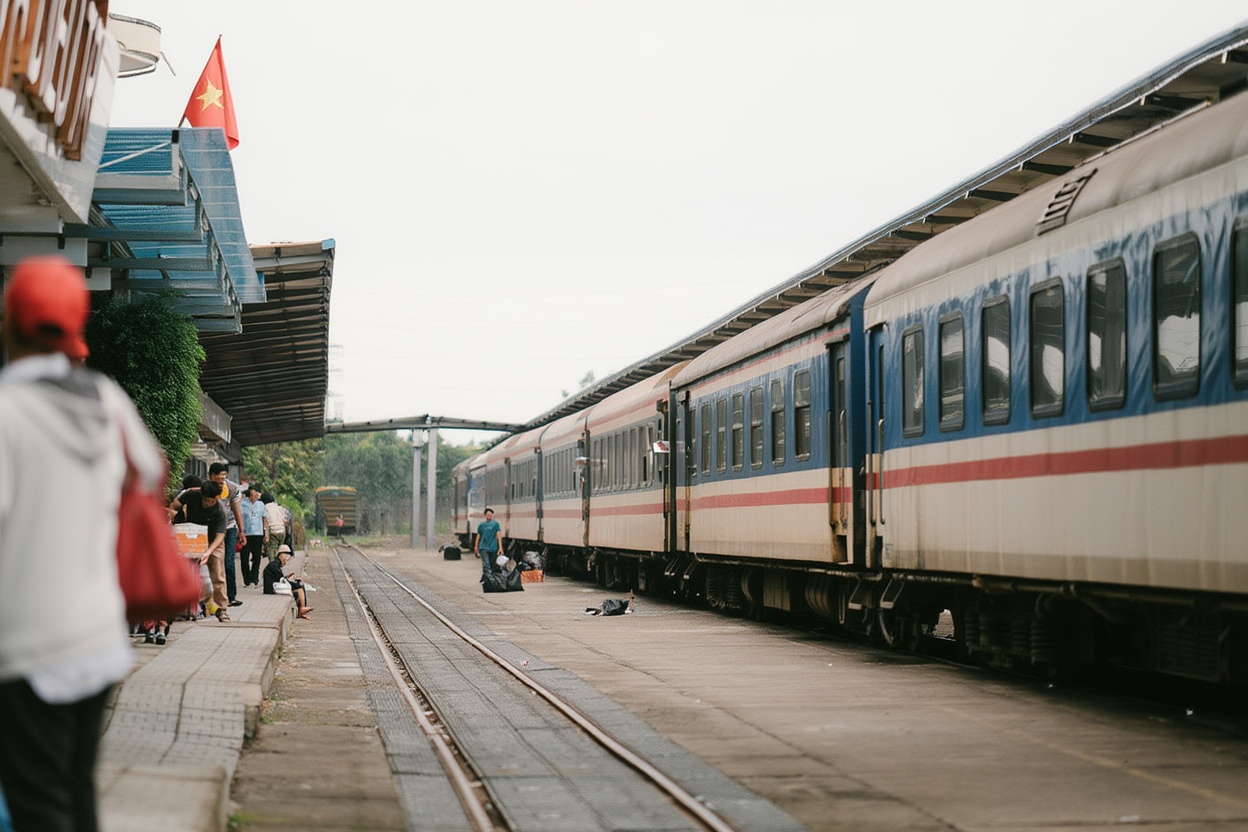
The French built the original line between 1899 and 1936. The war destroyed sections of it. Repair and reunification of the north-south link was completed in 1976, a year after reunification of the country itself. The train’s name isn’t just marketing — it’s the literal history of the line.
Today, trains run the full route multiple times daily in both directions. The fastest complete journey is about 31–32 hours (SE1/SE2 express services). Most trains take 35–36 hours. Nobody takes the full run in one go unless they’re specifically doing it as an experience. The country is best seen in segments.
Average speed: 50km/h. This is a train that believes the journey is the destination. If you want speed, fly.
The Best Segment: Hue to Da Nang Over Hai Van Pass
If you only take one train leg in Vietnam, take this one.

The stretch from Hue (say: Hway) south to Da Nang crosses the Hải Vân Pass (say: Hi Van), a mountain headland that juts into the South China Sea. The train hugs the cliffside, then descends toward the city with views of Lang Co lagoon below and the coast stretching north and south.
From Reddit:
“Hue to Da Nang by train is a MUST, imo. The stretch between Hue and Da Nang over the Hai Van Pass is arguably the best train view in Southeast Asia.” — Gamepham, r/VietNam
The journey takes 3–4 hours. A soft seat ticket on this leg costs around 80,000–150,000 VND (~$3–6) depending on the service. It is, objectively, one of the cheapest per-hour views of any train journey in the world.
Take it north-to-south (Hue → Da Nang) if you want the sea on your right. Take it south-to-north (Da Nang → Hue) if you want the cliffside on your left. Both work. Morning is better than evening for light conditions — the views through the pass are best with sun behind you.
Key Segments: Journey Times and Rough Prices
How to Book Vietnam Train Tickets
Booking the Reunification Express used to be painful. The official government site would time out. Third-party agents charged excessive commissions. The ticket office queues were long.

In 2026, you have three good options:
1. dsvn.vn — Vietnam Railways’ official booking site. Cheapest base price. The problem: notoriously difficult to process foreign cards.
“The official site (dsvn.vn) is technically the source, but it is notoriously bad at processing foreign cards, often leaving you stuck at the payment screen.” — Gamepham, r/VietNam
2. Baolau.com — Official railway partner and third-party booking site. Works reliably with foreign cards. Adds a small commission (usually 5–7%). The most commonly recommended platform for foreign travelers.
“Outside Vietnam, Baolau.com is fine — they’re a third party and take a small commission. There are other third-party sites, but I just use baolau.” — WeAllWantToBeHappy, r/VietNam
3. Vexere — Another official partner, useful if Baolau doesn’t work for your card. Same commission structure.
“I generally route my bookings through Vexere to avoid the payment drama. They are an official partner of Vietnam Railways, so the pricing is transparent and includes all the taxes.” — Gamepham, r/VietNam
Book 3–7 days in advance for soft berths on popular routes (Hanoi-Hue-Da Nang). The best seats fill fast on weekends and public holidays. The Hue-Da Nang day train can often be booked same-day or the day before.
ℹKnow Before You Go
Avoid unofficial ticket agents near train stations. They add excessive markups and occasionally sell tickets for the wrong class or date. Stick to dsvn.vn, Baolau, or Vexere. You can also book directly at any station ticket office with cash — useful if you’re already in the country and your card has card-processing issues online.
Seat Classes: What’s Actually Worth Paying For
Vietnam Railways has four main classes. Understanding them saves you from the wrong call:
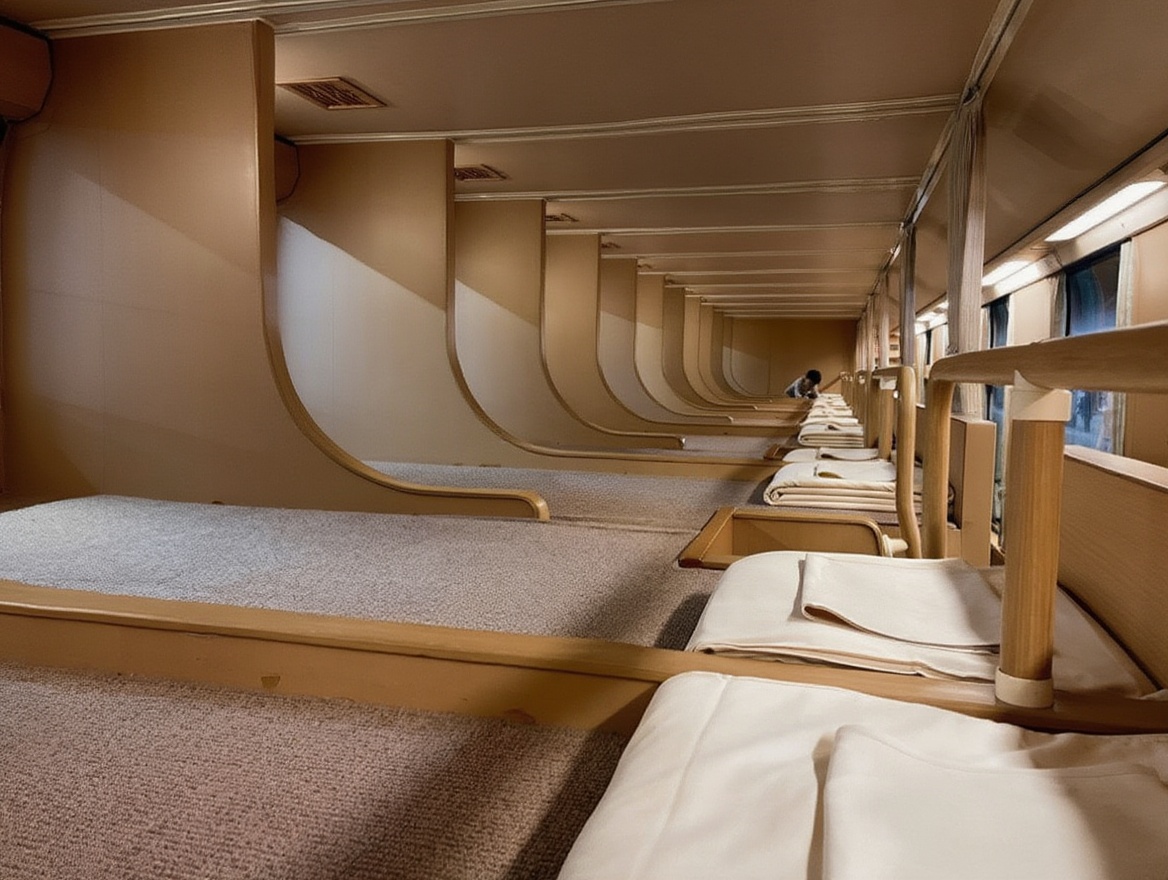
Hard seat (ghế cứng / say: geh cung) — Bench seating, no padding. Fine for a 3–4 hour day trip (Hue to Da Nang). Not good for overnight journeys.
Soft seat (ghế mềm / say: geh mem) — Padded recliners. Decent for segments up to 6 hours. Gets uncomfortable for longer legs.
Hard berth (giường nằm cứng / say: zoo-ung nam cung) — Bunk beds in 6-person open compartments. Affordable but lacking privacy. Middle bunk is worst — too close to the upper bunk to sit up. Lower bunk doubles as a seat for strangers during the day.
Soft berth (giường nằm mềm / say: zoo-ung nam mem) — 4-person closed cabin with a lockable door. Padded bunks. The sweet spot for overnight travel. Lower bunk is most comfortable and most expensive; upper bunk is cheaper but requires a fold-down foothold to access (no ladder).
“To climb to the top bunk, there’s a foldable foot-hold and handrail. There’s no ladder. So to sleep on the top bunk you need to be able to lift your leg to the foot-hold and then lift yourself up.” — A Winter’s Escape
For any overnight leg: book soft berth lower bunk if you want comfort, soft berth upper if you want to save 100,000–200,000 VND (~$4–8) and don’t mind the climb.
What the Journey Is Actually Like
The corridors are narrow. Two people walking past each other in opposite directions will graze shoulders. If you have hard-shell luggage, it may not fit — the overhead racks and under-seat storage are designed for soft bags.
“I highly, HIGHLY recommend that, if you’re not backpacking, you use a soft suitcase and NOT a hardshell. It likely won’t fit.” — A Winter’s Escape
The toilets are functional and genuinely smell. Bring flip-flops and manage expectations.
The food cart comes through regularly — noodles, banh mi (say: ban mee), coffee, hot rice dishes. Prices are reasonable: a bowl of noodles for 40,000–60,000 VND (~$1.50–2.30). Bring your own snacks too, especially for overnight legs.
The window is the point. Redditor Ok-Variation3583, who spent 90 days in Vietnam and used the trains extensively:
“They’ve rarely been late. The staff have been helpful. There’s plenty of food and drink onboard. They’ve been affordable and give you some amazing views. Our one overnight journey was 15 hours from Dieu Tri to Saigon and while it was pretty bumpy and not the most comfortable night of my life, I still slept.” — Ok-Variation3583, r/travel
The Mudskipper Press writer who took the Da Nang run in March 2026 described staring out the window for hours watching “rice fields, black water buffalo, flocks of white ducks, the occasional iconic conical-hatted worker.”
This is what you’re paying for. Not speed. Not comfort. The slow, actual Vietnam that exists between the airports.
Train vs Bus vs Plane: The Honest Comparison
One Redditor who used both trains and buses extensively summed up the comparison:
“In general it [train] pales in comparison to the bus system [for speed]. But the train is nice for turning a 5-hour overnight bus into an 8-hour ride so you can get a little more sleep.” — WafflePeak, r/travel
The honest call: take the plane for anything over 8 hours where you care about time. Take the sleeper bus for budget city-to-city moves. Take the train for the Hue-Da Nang segment no matter what, and for any overnight leg where you want the experience over pure efficiency.
One more consideration: the train is more reliable than buses in bad weather. Monsoon rain cancels sleeper buses more often than it cancels trains. During Vietnam’s shoulder months (May–June, September–October), a train booking has less weather-disruption risk than the same journey by bus on a mountain highway.
The Full Hanoi to Ho Chi Minh City Route: How to Break It Up
Most travelers who want to experience the Reunification Express don’t need to (and shouldn’t) do the full 35-hour run in one shot. Breaking it into segments lets you see the country at its best and actually enjoy the stops.
The classic breakdown for north-to-south travelers:
Hanoi → Hue: ~12 hours overnight. Book the SE1 or SE3 departure around 7–9pm from Hanoi. You wake up rolling into Hue just after sunrise. The views through the rolling hills northwest of Hue at dawn are worth the overnight timing.
Hue → Da Nang: 3–4 hours by day train. This is the star. Take a morning departure from Hue and arrive in Da Nang mid-morning with the whole day ahead. Alternatively, take an afternoon service for sunset light over the pass. Either way, sit on the right side of the train going southbound (Da Nang direction) for sea views.
Da Nang → Ho Chi Minh City: ~17 hours overnight. Or stop in Hoi An first (taxi from Da Nang) and pick up the train south from a later Da Nang departure. The Da Nang-HCMC overnight is comfortable in soft berth but doesn’t have the dramatic views of the northern segments.
This breakdown lets you use the train where it shines (Hue-Da Nang scenery, Hanoi-Hue overnight efficiency) and supplement with buses or flights for the less scenic legs.
For trips doing the south-to-north direction: same segments in reverse, starting HCMC → Da Nang → Hue → Hanoi.
→Who It’s For
The full 35-hour Hanoi-HCMC run is for people doing the Reunification Express specifically as a journey — train enthusiasts, people who have extra time, or those ticking a bucket list experience. For everyone else, the Hue-Da Nang day segment is the essential one. The rest is bonus.
Stations and What to Expect When You Arrive
Vietnam’s train stations range from comfortable to functional. Knowing what to expect at the main ones saves confusion.
Ga Hà Nội (Hanoi Station) at 21.0245° N, 105.8412° E — located in the Hoàn Kiếm district, walkable from the Old Quarter (15 minutes on foot). Left luggage available. Grab picks up outside the main entrance. Station has a café, basic food stalls, and a ticket office with English-speaking staff available at designated windows.
Ga Huế (Hue Station) — about 3km from the city center. Grab or local xe ôm (say: say-ohm) from outside. The ride into town takes 10–15 minutes and costs 50,000–80,000 VND (~$1.90–3) by Grab Bike.
Ga Đà Nẵng (Da Nang Station) — centrally located, within 15 minutes of the beachfront hotels. Most travelers heading to Hoi An take a Grab from here — about 30–40 minutes and 200,000–300,000 VND (~$7.60–11.40).
Ga Sài Gòn (Saigon Station) at 10.7719° N, 106.6880° E — in District 3, about 5km from the backpacker area near Phạm Ngũ Lão (say: Fahm Ngoo Lao). Grab is the easiest option; the ride costs 80,000–130,000 VND (~$3–5) depending on destination.
What I Got Wrong the First Time
I booked a top berth for an overnight from Hanoi to Da Nang.
I’m 6 feet tall. The berth is not designed for 6 feet. I spent 14 hours with my feet pressed against the wall at the end of the bunk, woke up with a crick in my neck that lasted three days, and arrived in Da Nang at 6am looking and feeling like I’d been stored in a box.
Lower berth. Always lower berth if you’re above average height. The extra 100,000–200,000 VND (~$4–8) is not optional — it’s structural.
Also, I forgot to bring a padlock for my bag. The soft berth compartment has a lockable door, but your bag is still accessible to the three other people in the cabin. Most people are fine. But locking your bag to the luggage rack with a small cable lock costs about 30,000 VND (~$1.15) at any hardware shop and removes any anxiety about valuables while you sleep.
Practical Tips Before You Board
Arrive 20–30 minutes early. Vietnam’s main train stations — Ga Hà Nội (say: Ga Ha Noy) and Ga Sài Gòn (say: Ga Sigh Gon) — are busy. Finding your platform and carriage takes time. The carriage number is on your ticket; count from the locomotive end. The train will not wait.
Bring a padlock. Small cable or combination lock for your bag.
Bring snacks and water. The food cart is fine, but it doesn’t always come through at convenient hours on overnight trains. A stash of crackers, fruit, and a 1-liter water bottle means you’re not relying on service timing or vendor availability at 2am. Buy water at the station shop before boarding — half the price of the onboard cart.
Soft bag only for overnight. Hardshell luggage typically doesn’t fit the overhead racks.
Earplugs. Fellow passengers, corridor noise, and the train’s own mechanical sounds are all present at 3am.
Download offline content. Vietnam’s train WiFi ranges from nonexistent to unreliable. Download movies, podcasts, or books before you board for the long stretches where the views disappear into darkness. A fully charged power bank is essential for overnight trips — outlets exist in soft berth compartments but are often occupied or malfunctioning.
↗Insider Tip
The observation car, where available, is usually at the front or rear of the train. It has large windows and is less crowded than seat cars. Ask at the station which carriage it is and migrate there for the Hai Van Pass stretch if you’re on a day service from Da Nang to Hue or vice versa.
Frequently Asked Questions
Is the Vietnam Reunification Express worth it?
Yes — for the experience and the views, particularly the Hue–Da Nang segment over Hai Van Pass. It’s not the fastest or cheapest option, but it gives you a Vietnam that flights and buses don’t. First-timers who take at least one train leg consistently say it was a highlight of their trip.
How do I book Vietnam train tickets?
Use Baolau.com or Vexere — both are official partners of Vietnam Railways and accept foreign cards reliably. The official site dsvn.vn is cheapest but often fails to process international cards. Book 3–7 days ahead for soft berths on popular overnight routes; the Hue-Da Nang day leg can often be booked same or next day.
What class should I book on Vietnam trains?
Soft berth (4-person cabin) for any overnight journey. Lower berth if you’re tall or value comfort. Soft seat for day journeys under 6 hours, including Hue–Da Nang. Hard berth works if you’re on a budget; avoid hard seat for anything over 4 hours.
How long does the train from Hanoi to Ho Chi Minh City take?
35–36 hours on standard services; about 31–32 hours on the fastest SE1/SE2 express. Most travelers break the full journey into 2–4 legs over several days, stopping at Hue, Da Nang, and other cities along the way.
Is Vietnam train safe?
Yes. Vietnam Railways has a solid safety record. The main practical concern is luggage security — bring a cable lock for your bag in shared berth compartments. Soft berth cabins have lockable doors. Scams near train stations (unofficial ticket sellers) are the main thing to avoid; book online in advance.
The Reunification Express is one of those rare cases where the “obvious” travel advice — fly, it’s cheaper and faster — actually misses the point.
You’re not taking this train to get somewhere. You’re taking it to see something. Rice fields at dawn, fishing villages at dusk, the slow crawl over mountain passes that planes skip in 90 seconds. Take at least the Hue–Da Nang leg. Your itinerary will thank you.
For planning which cities to stop in along the route, see the Vietnam itinerary guide. If Hoi An is on your list and you want to make the most of the Da Nang arrival, the Hoi An things to do guide picks up from there.