Last updated: May 2026 — gear prices and permit requirements verified.
The Ha Giang Loop is a mountain riding trip in northern Vietnam at 800–1,500m elevation, through terrain with no emergency services, with weather that can drop 10 degrees in an afternoon. It is not tropical beach Vietnam. Everything you’d bring to Hoi An is wrong for Ha Giang.
Here’s what actually belongs in your bag.
The Non-Negotiables — Don’t Show Up Without These
Helmet — This Is the Most Important Decision
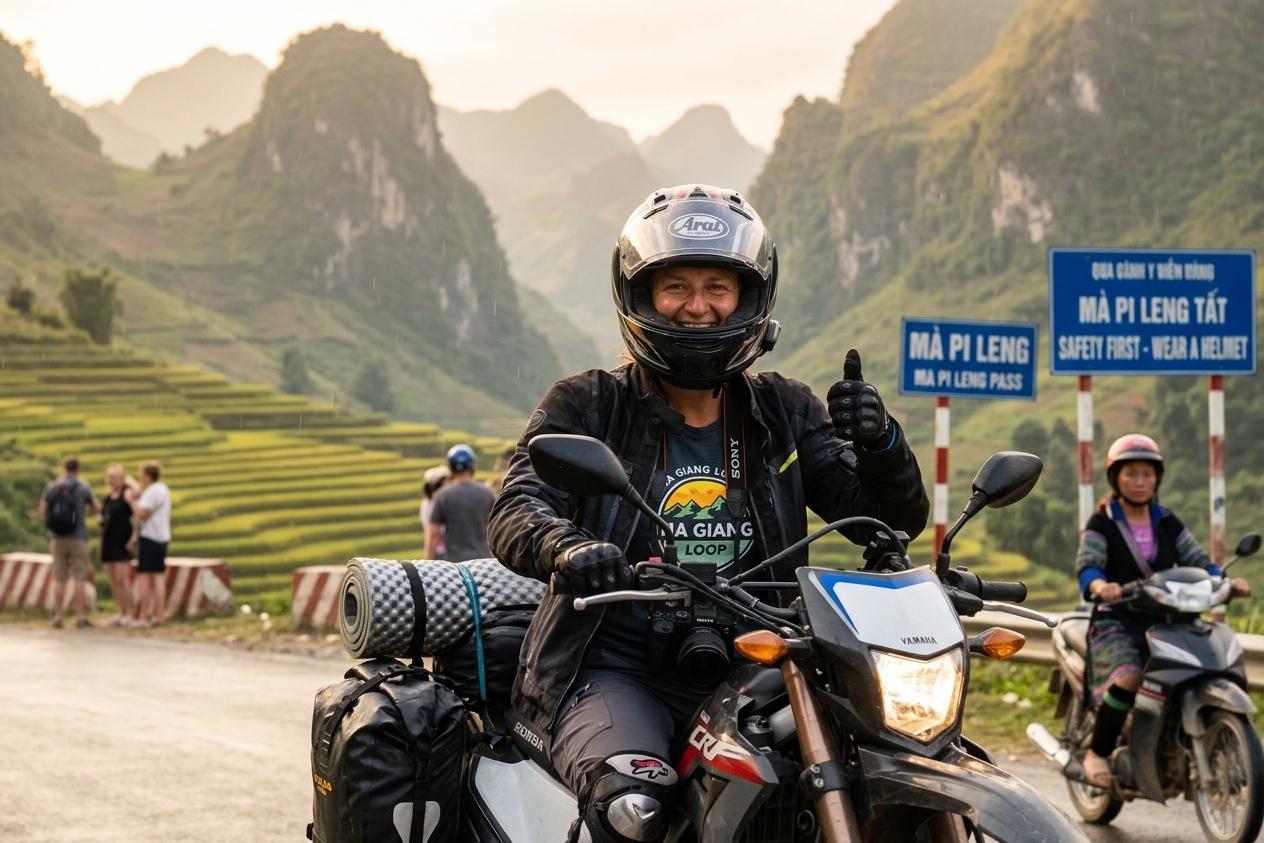
Every motorbike rental shop in Ha Giang city will offer you a half-shell helmet for free with the rental. Take it only if you have no better option, and understand what you’re accepting: half-shells provide no chin protection and minimal impact coverage. Ma Pi Leng has sections with no guardrail above a 700m drop. The roads have rocks, gravel patches, and occasional livestock. The bike choice matters more than most people realize — our Ha Giang motorbike guide breaks down which shops are reliable, semi-auto vs manual, and how insurance actually works up here. The bike choice matters more than most people realize — our Ha Giang motorbike guide breaks down which shops are reliable, semi-auto vs manual, and how insurance actually works up here.
What to bring from Hanoi or buy in Ha Giang:
- Full-face helmet — minimum standard. Can be rented from better shops like QT Motorbikes (~50,000–80,000 VND/day/~$2–$3) or bought at Hanoi’s Hang Bong Street helmet shops for 400,000–800,000 VND (~$15–$30).
- Motocross/enduro helmet — better ventilation, visibility, and impact protection. Expensive to buy new (2,000,000–4,000,000 VND/~$76–$152) but worth it if you’re a regular rider.
Rain Gear — Not Optional
Mountain weather changes fast. A poncho from a 7-Eleven doesn’t cut it on the loop — wind at speed turns it into a sail and it provides zero protection from cold. What works:
- Waterproof jacket + pants set — 250,000–500,000 VND (~$9.50–$19) at any outdoor market in Hanoi or Ha Giang city. Not Gore-Tex quality, but functional. Pack into a roll and strap to the rear rack.
- Or a purpose-built riding rain suit — if you already own one, bring it.
Gloves
Your hands are on the handlebars for 5–8 hours a day. Grips transmit cold, vibration, and rain. Thin riding gloves (100,000–200,000 VND/~$4–$8) make a material difference to how your hands feel by Day 3. Winter-weight if you’re going October–February.
Documents
- Passport — needed for the permit
- International Driving Permit (IDP) — Vienna Convention 1968 type. Required at checkpoints; without it, fines are 2,000,000–8,000,000 VND (~$76–$304) and possible bike seizure. Get this in your home country before flying to Vietnam — it cannot be obtained in Vietnam.
- Motorbike permit — 250,000 VND (~$9.50), purchased at Ha Giang city police station. Required for foreigners. Takes 30–60 minutes to process.
- Travel insurance documents — the loop is a medical evacuation scenario if something goes wrong. Make sure your policy covers motorbike riding and print the emergency number.
Clothing — What Works for Mountain Riding
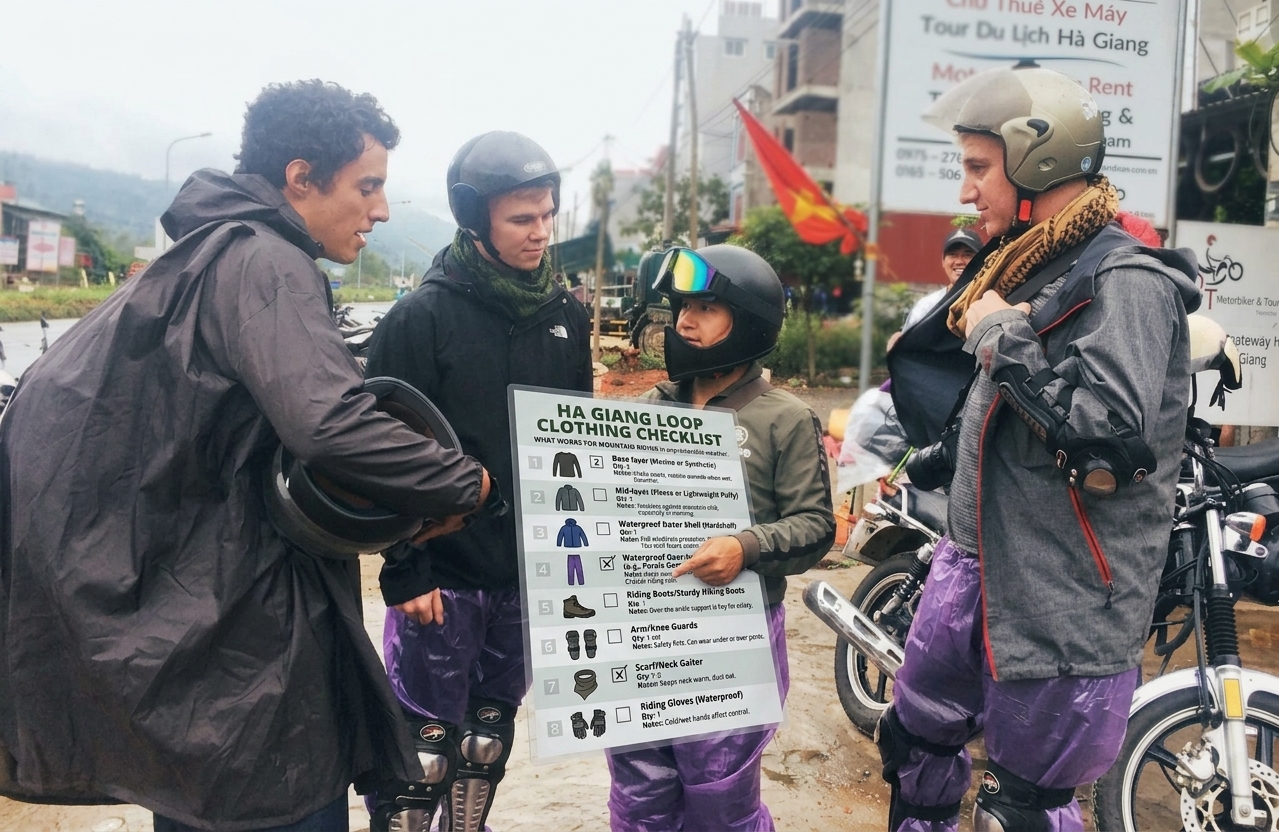
Temperature reality: Ha Giang city sits at ~100m elevation; the pass at Ma Pi Leng is ~1,500m. That’s a 7–10°C drop from base to pass, more with wind chill at riding speed. October feels like autumn. November–January can mean sub-10°C mornings at the pass with frost on the road in the coldest years. March–May is the most comfortable weather: 15–25°C at elevation, low rain, clear skies.
Riding Gear Beyond Helmet and Gloves
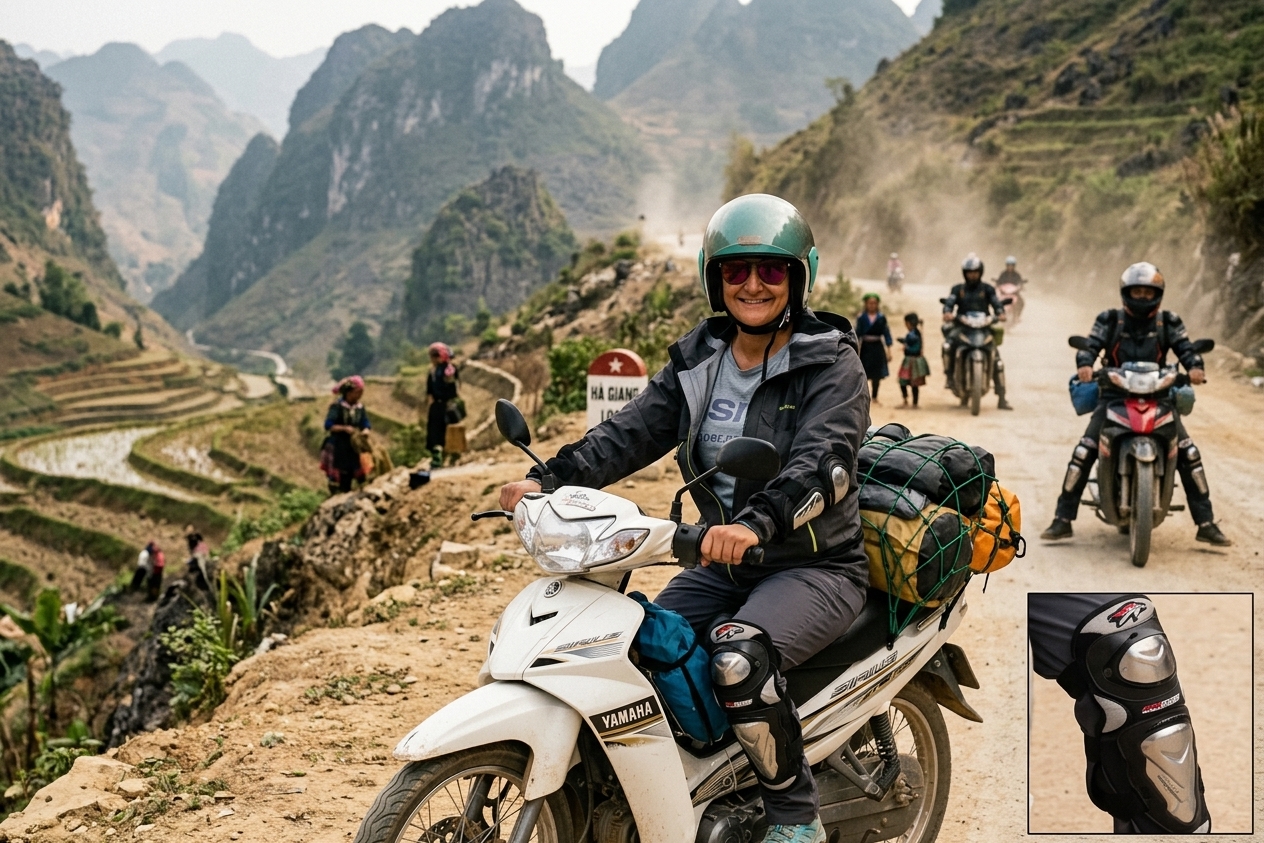
- Knee and elbow pads — optional for experienced riders, strongly recommended for first-timers on mountain roads. Skateboard-style pads work fine; 150,000–300,000 VND (~$6–$11) at any sports shop in Hanoi.
- Balaclava — for October–February; goes under the helmet; makes a 5°C difference.
- Hand guards on the bike — ask the rental shop if available; blocks wind from your knuckles without needing insulated gloves.
First Aid — Think About What You’re Far From
The nearest hospital with real trauma capacity is Ha Giang city. Most of the loop is 2–4 hours from there by road. Dong Van has a small clinic; Meo Vac has a health station. For anything serious, you’re looking at a long vehicle ride over mountain roads.
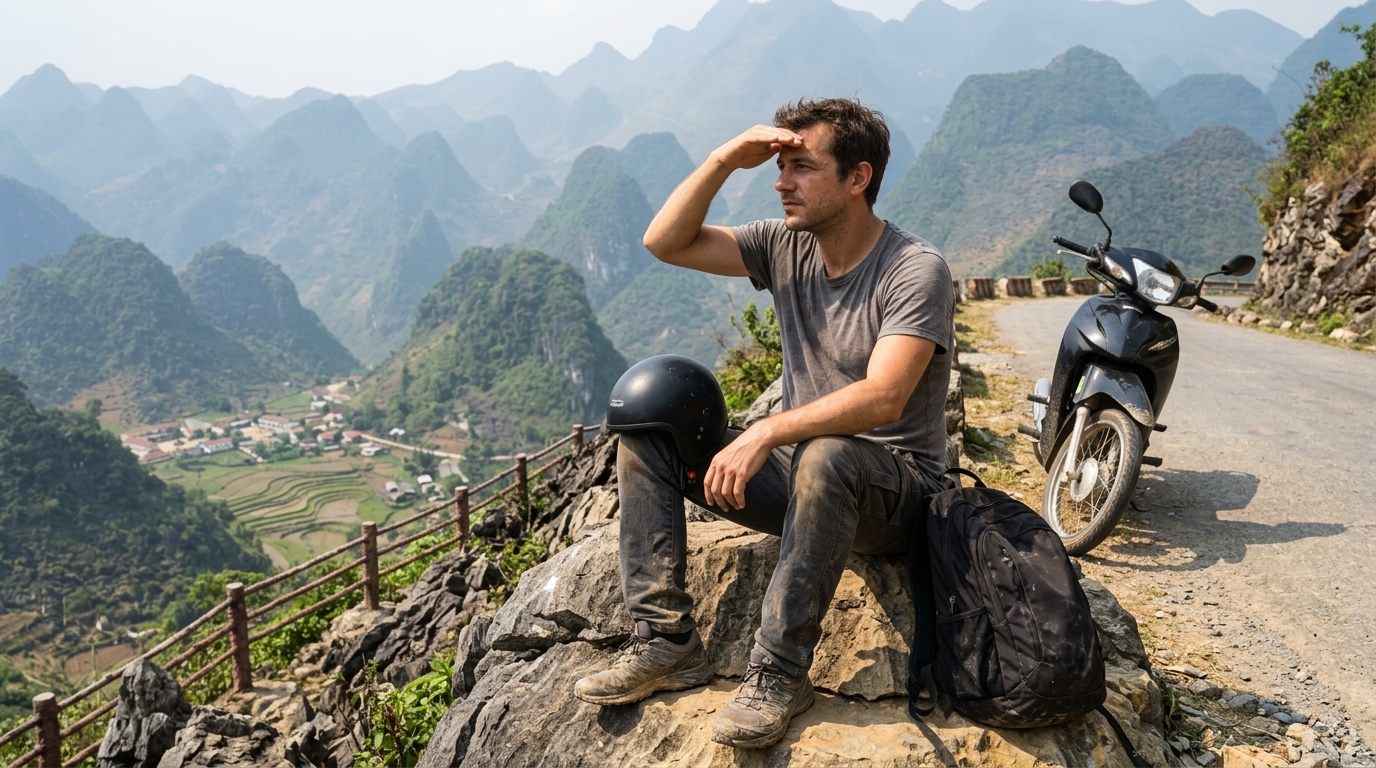
Build your kit around this reality:
Electronics and Power
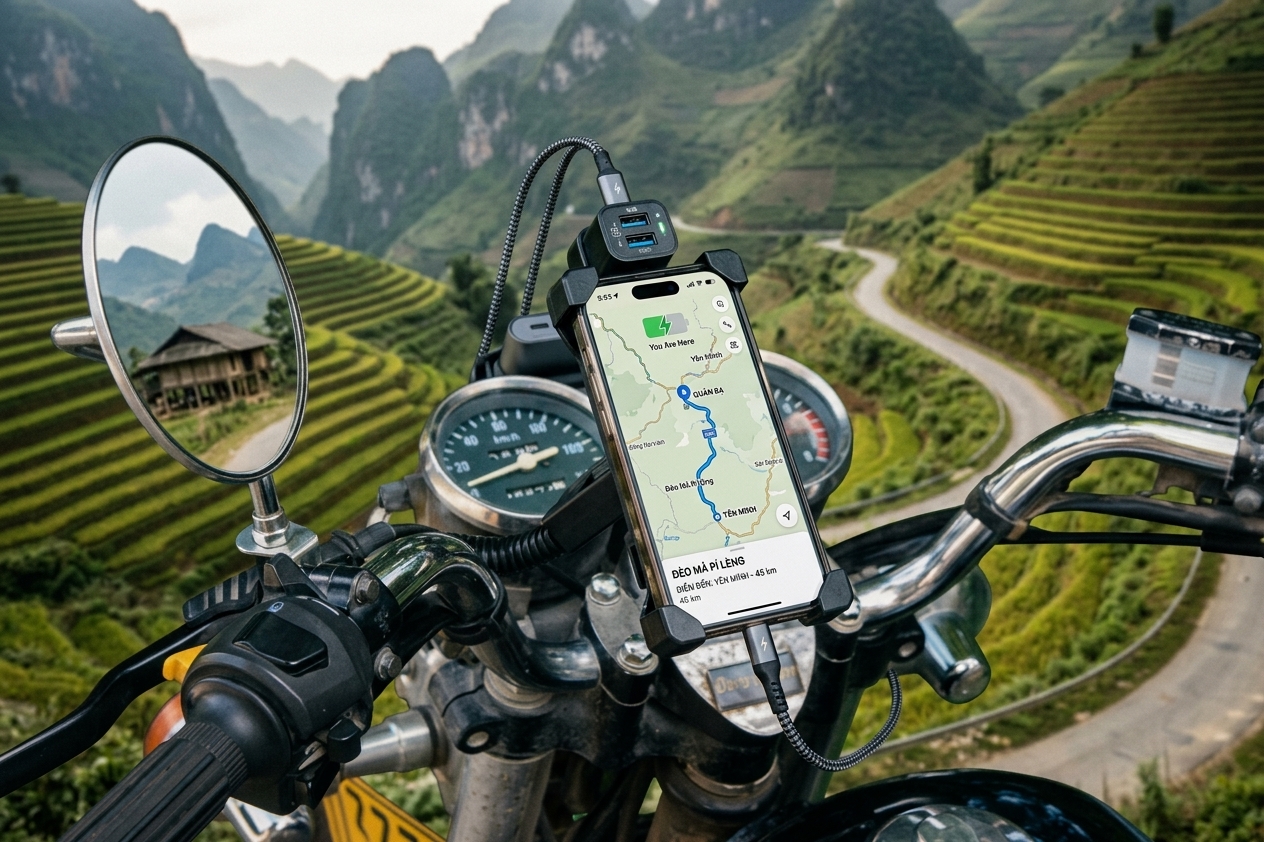
- Phone — your GPS (Google Maps or, better, Maps.me downloaded offline). Keep it charged. Most guesthouses have power but sockets can be limited; bring a short cable.
- Power bank (10,000–20,000 mAh) — charge your phone while riding. Some motorbikes have a USB socket; most don’t. A power bank strapped to the handlebar bag is the standard solution.
- Universal travel adapter — Vietnam uses type A/C/G. Most guesthouses have at least one accessible socket per room.
- Camera — optional if your phone camera is good. The loop generates serious content; bring what you’ll actually use. A waterproof case is worth it.
- Offline maps — download the Ha Giang region on Google Maps or Maps.me before leaving Ha Giang city. Signal is inconsistent on the loop.
What to Leave Behind
The loop’s guesthouses are basic — most have lockers or storage, and Ha Giang Riverside Hostel or Ha Giang Amazing Hostel will hold your big bag for free while you’re on the road. Leave in Ha Giang city:
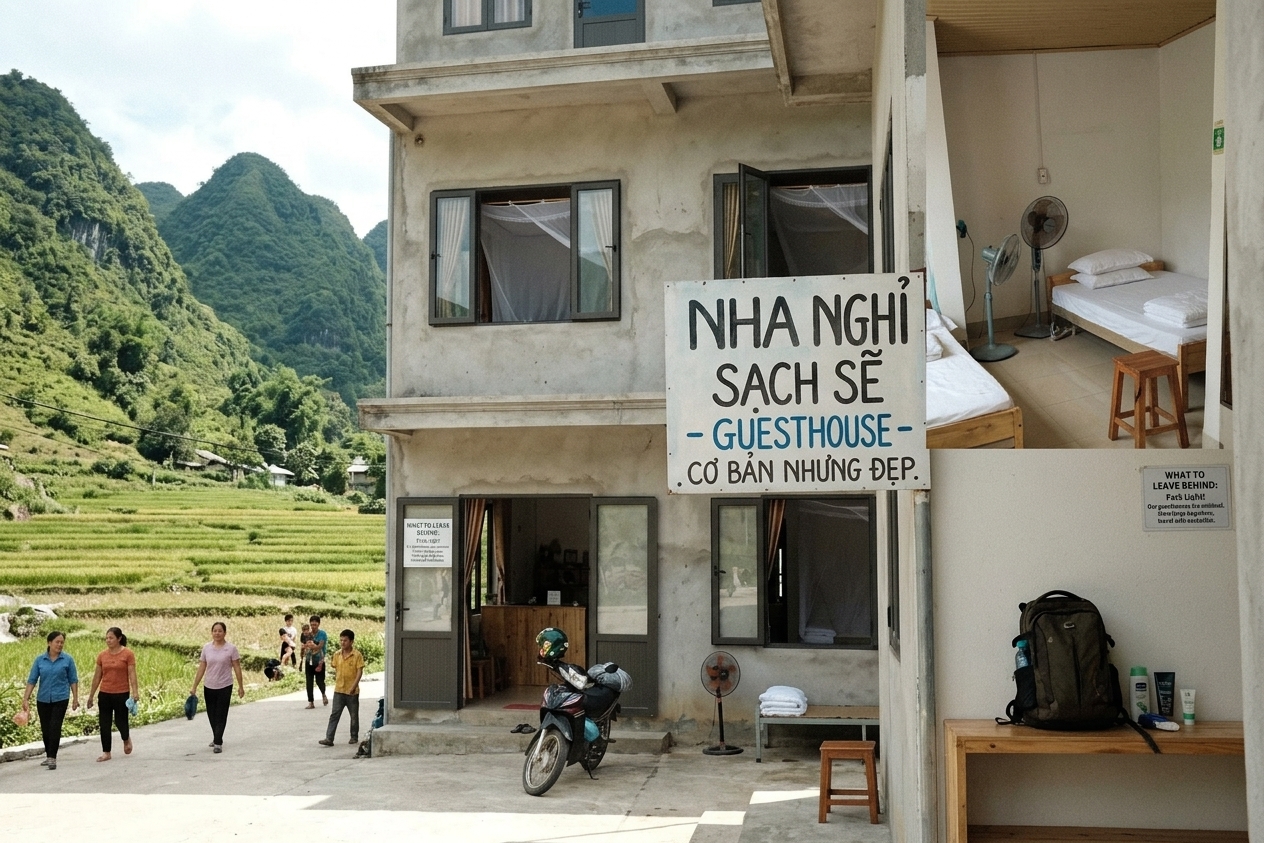
- Rolling suitcases — zero function on a motorbike rack
- More than 4 days of clothes — laundry is available
- Anything you’d be devastated to lose to road rash or rain
- Sandals and flip-flops (as your primary footwear)
- Laptop — use your phone for anything essential
What to Buy in Ha Giang City (Day 0)
If you arrive and realize you’re missing something, Ha Giang city has most of what you need on Trần Hưng Đạo and Nguyễn Trãi streets:
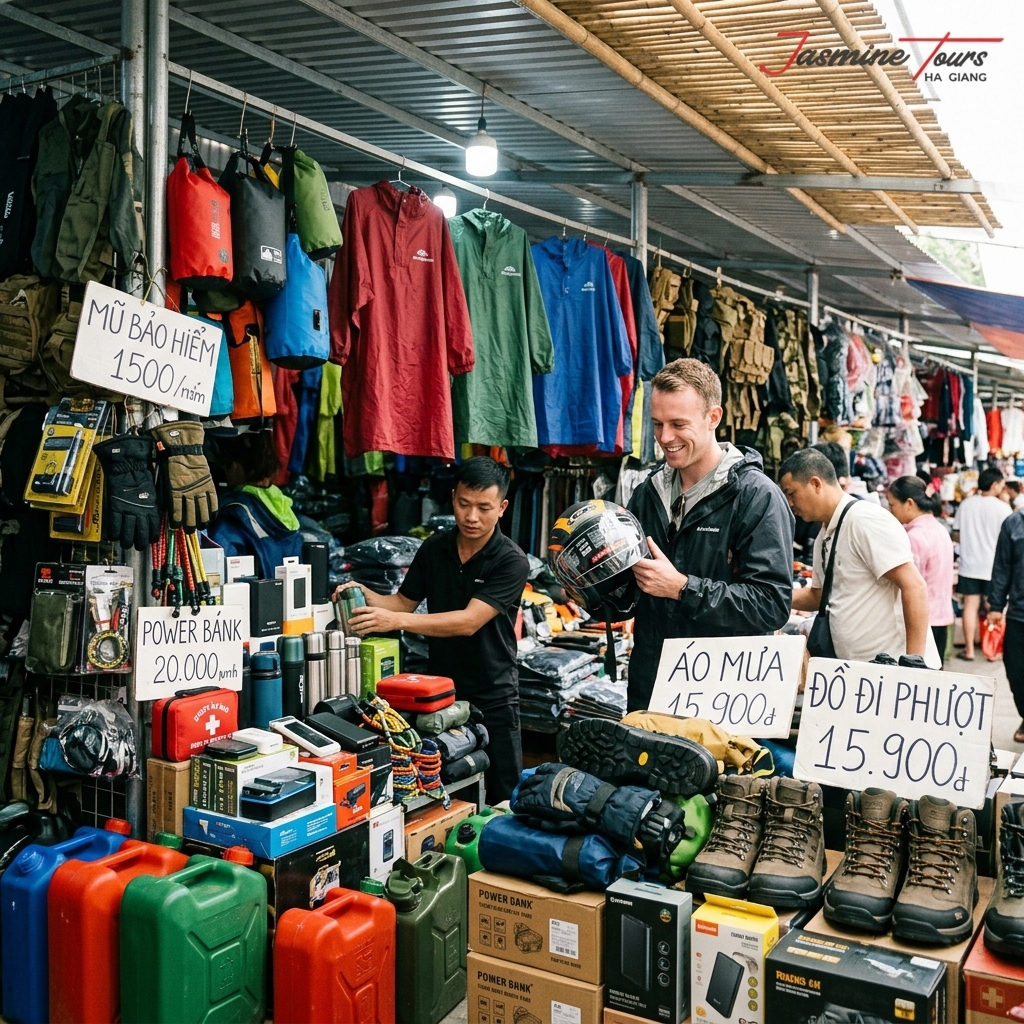
- Cheap rain gear sets: 200,000–400,000 VND (~$8–$15)
- Basic gloves: 80,000–150,000 VND (~$3–$6)
- Neck gaiter: 30,000–60,000 VND (~$1–$2.30)
- Second-hand fleece: 80,000–150,000 VND (~$3–$6) at market stalls
- Snacks for the road: 7-Eleven on Trần Hưng Đạo has everything reasonable
- Cash: ATM at Vietcombank branch near the market — withdraw enough for the full loop (3,000,000–5,000,000 VND/~$114–$190 depending on accommodation choices)
Bag Selection
The bike’s rear rack can fit:
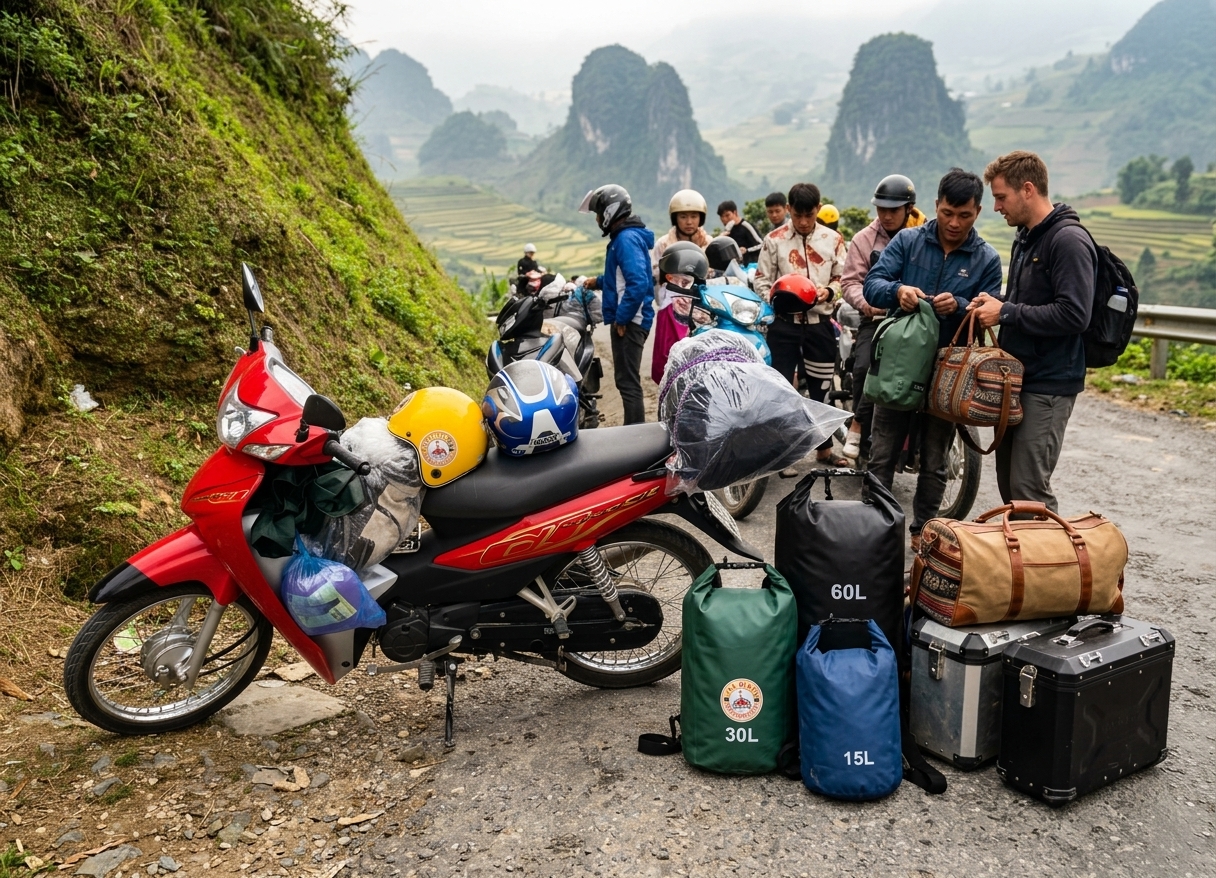
- A 20–30L daypack strapped down with bungee cords
- A soft-sided duffel in the same range
- A small tank bag for phone + documents + snacks (easiest access while riding)
Hard-sided luggage, oversize bags, and rolling cases don’t work on a motorbike rack. If you’re on a jeep tour, you can bring more — the vehicle has cargo space and a roof rack. On a motorbike, pack light or suffer the consequences. I’ve seen people strap things to themselves in desperation — don’t. A bag that shifts on your back over 8 hours on mountain roads is a stability and safety problem.
Complete Loop Packing Checklist
Everything for a 4-day self-drive loop, organized by what breaks you if you forget it.
Klook has the widest selection for Vietnam and is usually the cheapest. KKday is strong on day trips and local experiences.
ba(0,0,0,0.08);overflow:hidden;border:1px solid #E2DCCF;margin:32px 0;font-family:Inter,Arial,sans-serif;”>
| Item | Essential? | Buy in Ha Giang? | Notes |
|---|---|---|---|
| Full-face helmet | Non-negotiable | Yes (~350,000–600,000 VND) | Rental shops supply them; inspect before accepting — cracks and loose straps are common |
| Riding gloves with knuckle protection | Non-negotiable | Yes (~80,000–150,000 VND) | Gravel road spills are common; bare hands on tarmac is worse than it sounds |
| Rain jacket + rain trousers (set) | Non-negotiable | Yes (~150,000–300,000 VND) | Even in dry season — mountain weather above 1,400m gives zero warning |
| Riding jacket or sturdy long-sleeve | Recommended | Rarely | Bring from home; a basic textile jacket adds real protection that a t-shirt does not |
| Ankle boots or sturdy closed shoes | Recommended | No | Flip-flops are popular and genuinely dangerous on wet descents. Ankle support matters. |
| Thermal base layer | Yes (Oct–Mar) | Limited | December–February at Ma Pi Leng elevation feels like 5–10°C. One thin merino layer changes everything. |
| 2x fast-dry riding clothes | Yes | No | Synthetic over cotton — you will sweat in the climbs and get rained on in the passes. Cotton stays wet for hours. |
| Warm layer (fleece or light down) | Yes (Sep–Mar) | Limited | Evenings in Dong Van at elevation are cold even in October. A light down jacket packs small. |
| Sunscreen SPF 50+ | Yes | Yes (expensive) | Mountain UV at altitude is significantly stronger than coastal. Buy in Hanoi where it’s cheaper. |
| First aid kit | Non-negotiable | Partial | Nearest hospital on the loop section is 40–80km of mountain road away. Do not skip this. |
| Offline Google Maps download | Non-negotiable | — | Download Ha Giang province before leaving. Do not assume you’ll have signal to navigate in real time. |
| Power bank (10,000 mAh minimum) | Yes | Yes (limited) | No charging on the bike; charge overnight at guesthouses. Phone dies fast with GPS on. |
| Cash (4,000,000–5,000,000 VND minimum) | Non-negotiable | Withdraw in Ha Giang city | ATMs in Dong Van and Meo Vac are unreliable for foreign cards. Carry everything from Vietcombank Ha Giang city. |
| Passport + International Driving Permit | Non-negotiable | — | IDP fines without: 2,000,000–8,000,000 VND (~$76–$304). Get IDP before leaving your home country. |