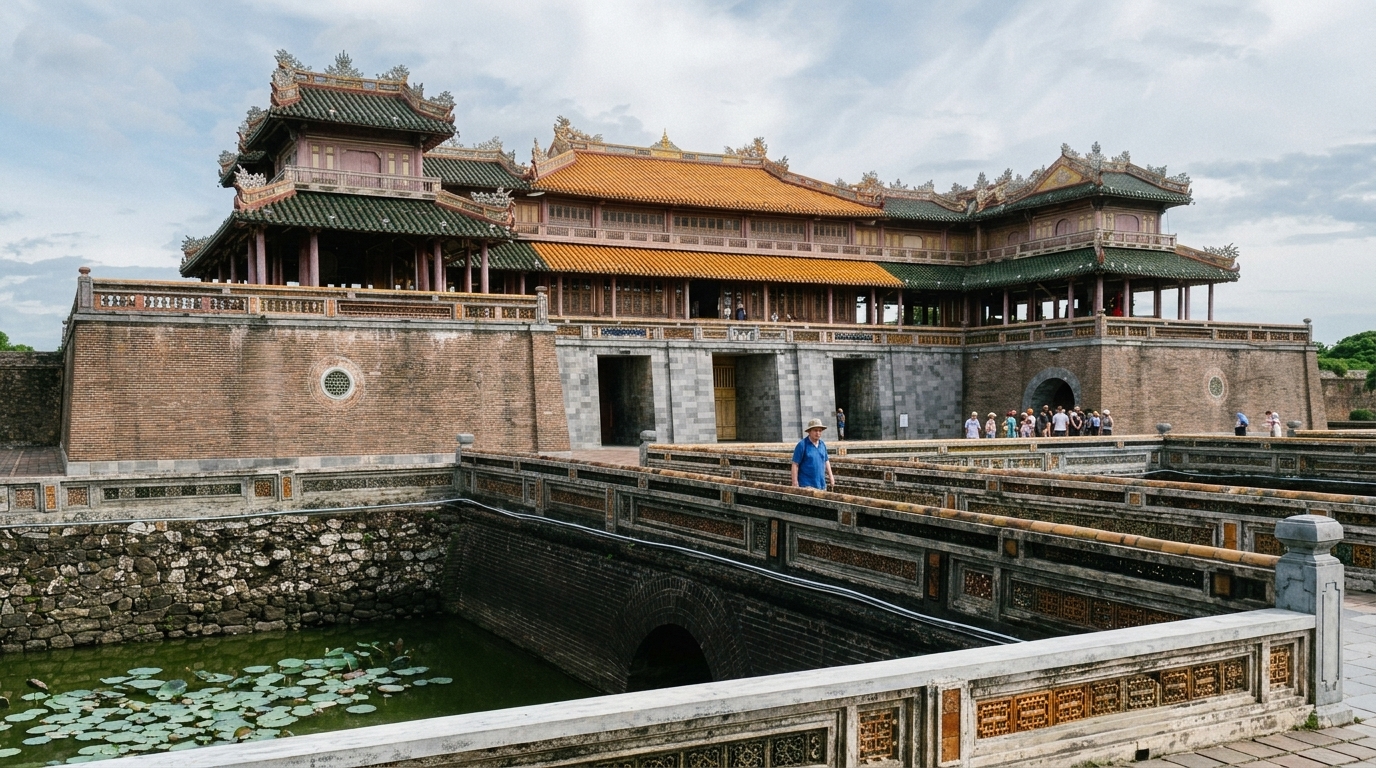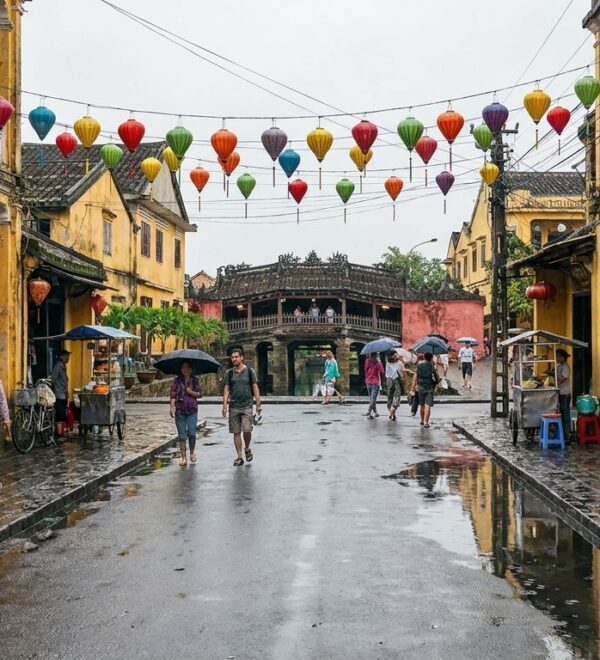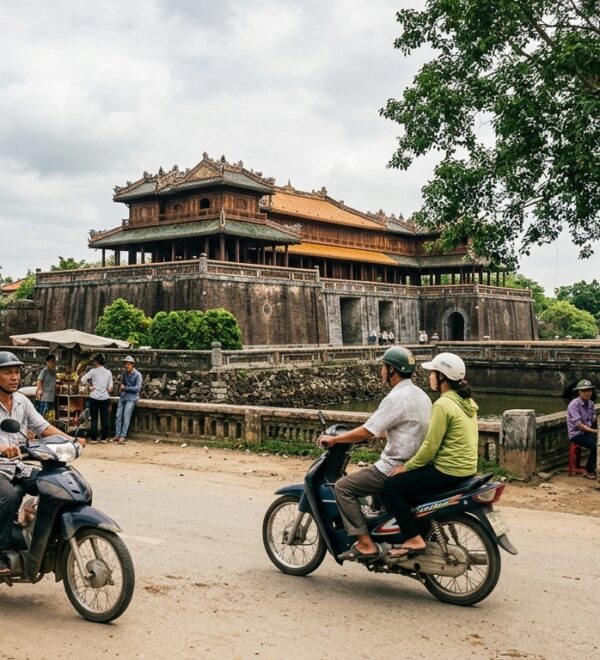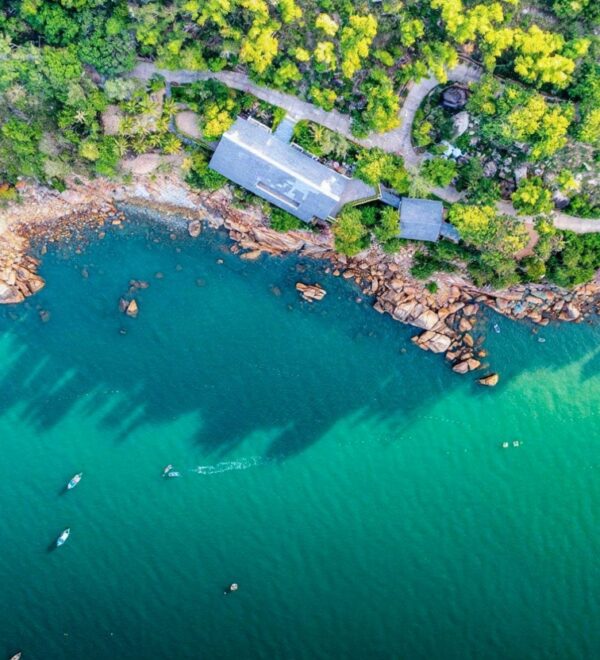
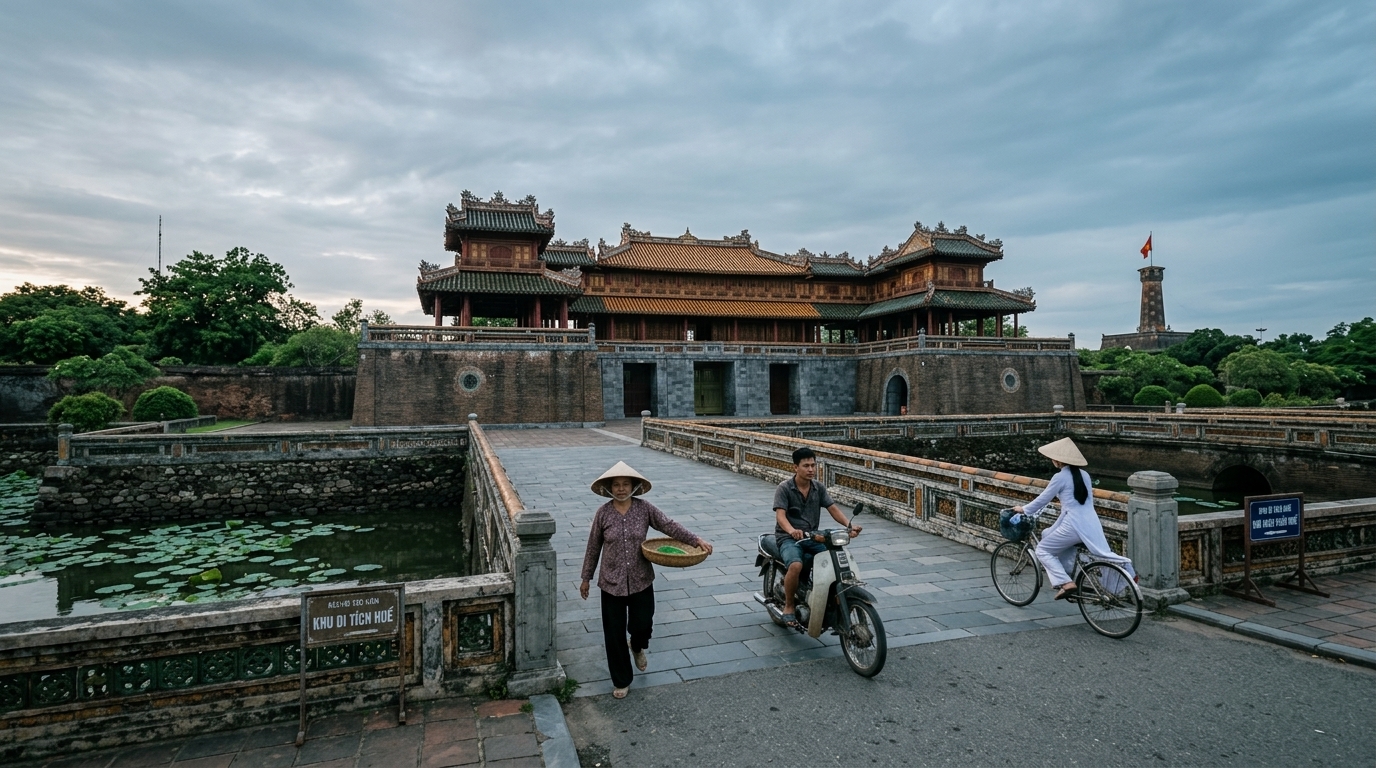
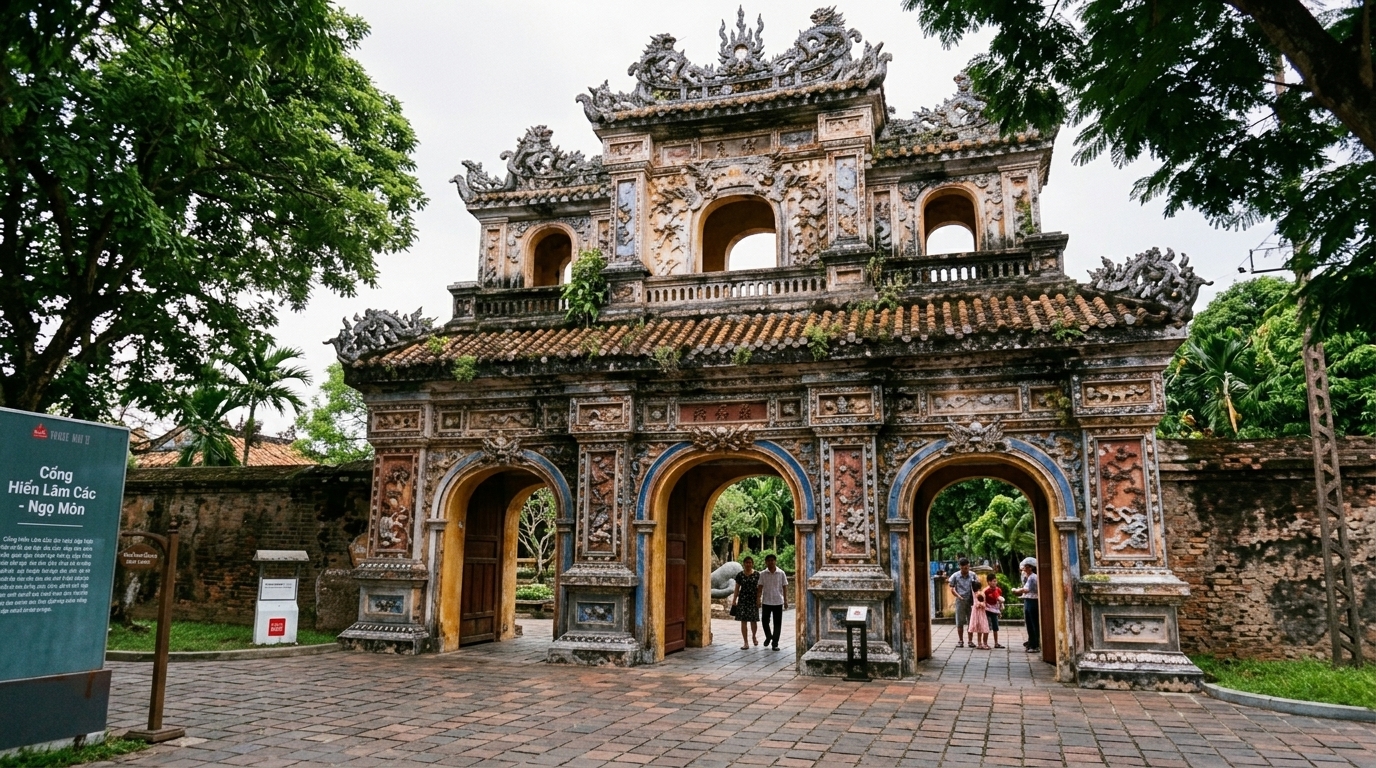
That reputation is mostly earned. But the window between February and April? That’s when Hue is genuinely good — mild temperatures, dry skies, green rice paddies, and the light that travel photographers talk about when they say “golden hour” without being embarrassing about it.
Here’s what the Hue Vietnam weather actually looks like, month by month.
Why Hue’s Weather Is Unpredictable
Hue sits in a geographic trap. The Trường Sơn mountain range (Annamite Mountains) runs down the spine of central Vietnam directly west of the city. The mountains block the southwest monsoon in summer, create a rain shadow effect, and then funnel the northeast monsoon directly into the city from October to January.

The result: Hue receives an average of 2,800–3,000mm of rain annually — roughly double what Hanoi gets and three times what Da Nang receives. Most of that falls in a concentrated period from September to December. October alone can get 700–800mm.
The Perfume River (Sông Hương — say: song hoong) drains a mountain watershed. When it rains hard enough for long enough — which happens reliably in October and November — the river rises and floods the lower parts of the city. This is not a hypothetical risk. It’s a regular annual event that locals plan around.
✓Quick Answer
Best time to visit Hue: February to April (dry, 20–28°C, manageable crowds). Worst months: October and November (typhoon season, flooding, sustained heavy rain). Hue receives more annual rainfall than any other major Vietnamese city — understanding this before you book is the most important travel decision for this destination.
Month-by-Month Hue Weather Guide
January
Cool and damp. Temperatures 17–22°C. The northeast monsoon is winding down but still delivering drizzle. Skies are typically grey. The Imperial City in January light is atmospheric in a way that summer photos aren’t — misty, empty, slightly melancholy. Few tourists. Hotels are cheap. If moody grey weather doesn’t bother you and you’re on a tight budget, January is underrated.
February
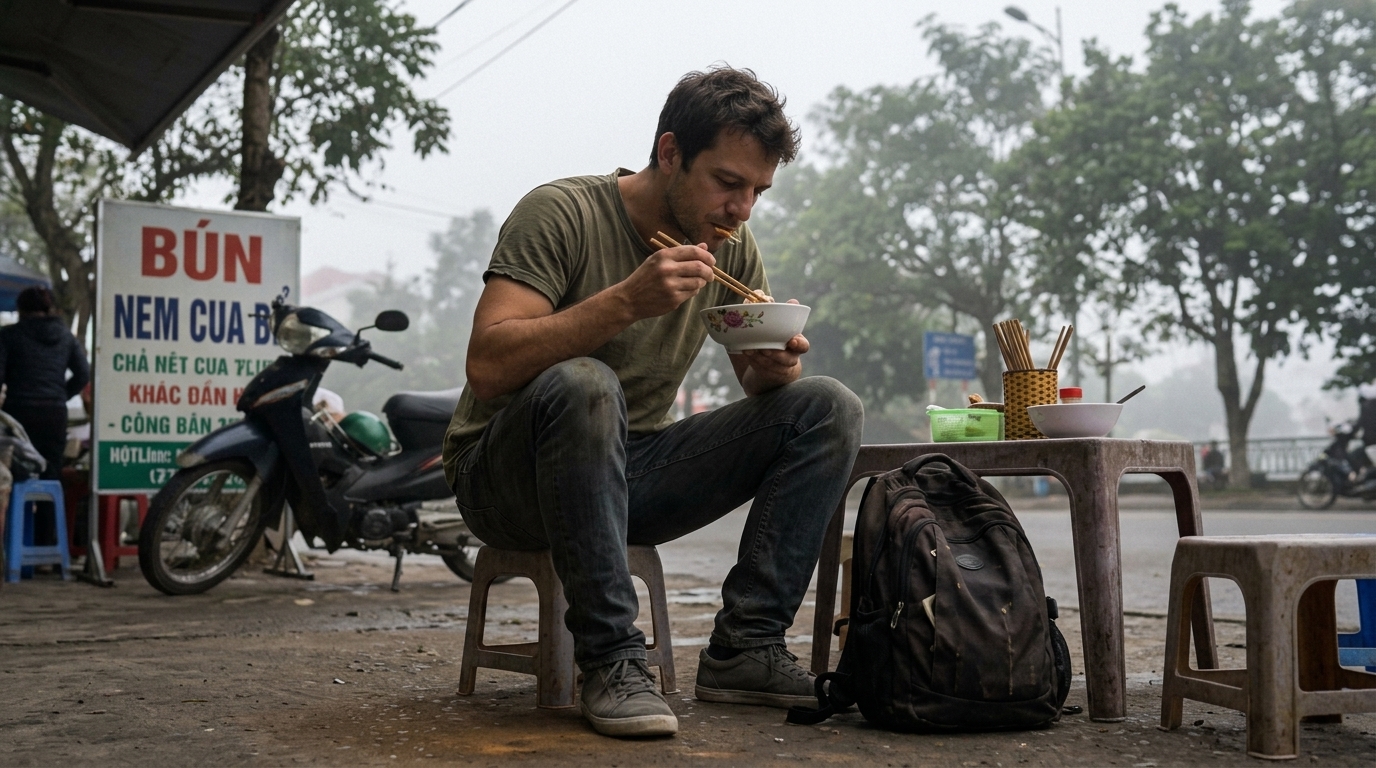
The transition month. Rain drops off noticeably. Some days you get clear blue sky, some days overcast — unpredictable day-to-day. Temperatures start climbing: 18–24°C by late February. If Tết (Vietnamese New Year) falls in February, expect the city to be quiet for 3–5 days as locals go home and businesses close. Post-Tết, Hue fills up quickly and has a particular energy — incense burning, red decorations still up, street food vendors back in force.
March ⭐
One of the two best months. Dry, 22–28°C, clear skies most days, manageable tourist numbers. The rice paddies south of the city toward the royal tombs are bright green. The Perfume River is at a photogenic normal level. You can do the Imperial City, a royal tomb circuit, and evening street food without the heat or the crowds making any of it miserable. Book accommodation in advance — March fills up.
April ⭐
Similar to March but warmer (24–30°C by late April) and busier. In even-numbered years (2026, 2028, etc.), the Hue Festival typically runs in late April or early June — a week of traditional music, royal court performance recreation, and cultural events that draws significant crowds. If you want the festival, this is the month. If you want quiet, go in March instead.
May
The heat arrives. 30–34°C most days. Humidity climbs. The tourist season peaks for foreign travelers (European summer holidays start). The Imperial City at midday becomes a serious endurance test — stone walls radiate heat. Manage it: arrive at 7:30am, leave by 11am, rest during 11am–3pm, come back at 4pm for golden light. Fully workable — just requires discipline.
June–August
Peak heat. 34–38°C. This is when Hue earns its difficult-weather reputation. June is tolerable with early starts. July and August are brutal — the stone of the Imperial City radiates heat by 9am. Royal tomb visits in full sun at 2pm require full water bottles, sunscreen, and a realistic assessment of what you’re signing up for.
That said: this is peak season for Vietnamese domestic tourism. Weekends see significant Vietnamese visitor numbers, particularly at the Imperial City. Weekdays are quieter. And the heat lifts quickly when the sun goes down — evenings in Hue in July are genuinely pleasant if you’re near the Perfume River.
September
The transition into typhoon season. Rain becomes more frequent and heavier. Temperatures moderate to 28–32°C. Typhoon risk from the South China Sea is real from September onwards — storms typically track northwest toward central Vietnam. Check typhoon forecasts before planning Hue travel in September. Most years the city doesn’t take a direct hit, but indirect effects (heavy rain, flooding, cancelled transport) are common.
October ❌
The worst month. Statistically the wettest month in Hue — 700–800mm average rainfall. The Perfume River floods regularly. In bad flood years, the streets around the Citadel go underwater. The 2020 floods in Hue were among the worst in decades; the 2023 floods disrupted the city for 10 days. If you’re in Hue in October and a heavy rain warning comes: check the forecast daily, have a flexible exit plan, and don’t leave valuable gear at ground-floor level.
November ❌
Only marginally better than October. Still heavy rain (400–500mm average). Flood risk remains. November is when the northeast monsoon is at full strength. Some years November is fine; many years it isn’t. Don’t plan a Hue trip in November without acknowledging the realistic probability of several days of heavy rain disrupting outdoor sightseeing entirely.
December
Rain decreases significantly from November. By mid-December, the northeast monsoon is past its peak. Temperatures drop to 19–24°C. It’s still overcast and occasionally rainy, but the flooding risk is largely gone. December is quiet, cheap, and the city has a particular calm. A reasonable choice for budget-focused travelers who don’t need blue skies.
The Hue Festival — Is It Worth Timing Your Trip Around?
The Hue Festival (Festival Huế) runs in even-numbered years — 2026, 2028, etc. It’s a major cultural event centered on traditional Vietnamese performing arts, royal court music (nhã nhạc — say: nya nyak), dragon boat racing on the Perfume River, and cultural performances in and around the Imperial City.
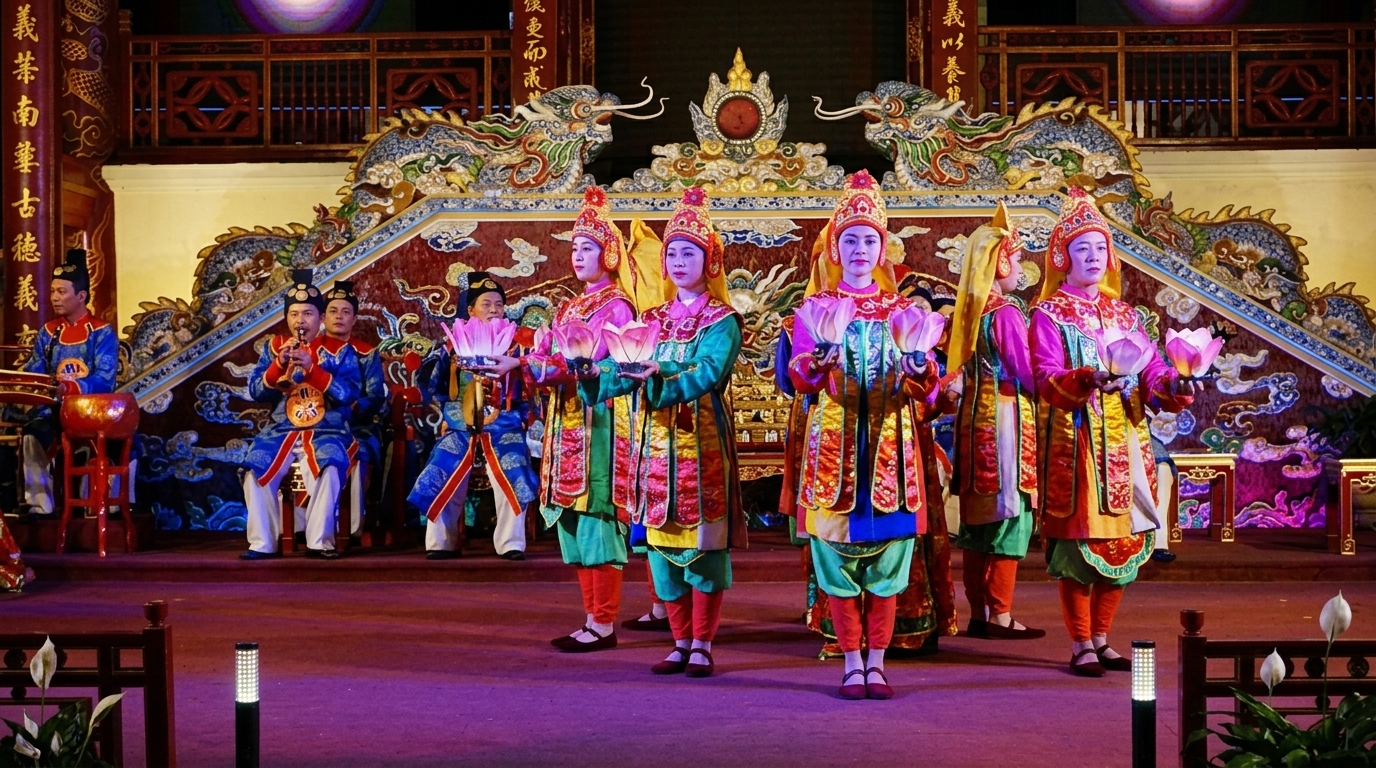
The short answer: yes, if you have any interest in traditional Vietnamese culture. The festival stages performances in settings — the Citadel courtyards, the Perfume River at night, the Thien Mu Pagoda grounds — that are otherwise closed to performance. Nhã nhạc (Hue court music, UNESCO Intangible Heritage since 2003) is genuinely unusual and hard to see in an authentic context outside the festival.
The longer answer: the city fills up. Accommodation prices rise 40–80% during peak festival days. Book 2–3 months ahead if you want anything near the Citadel during the festival week. And festival programming varies year to year — check the official Hue Festival website for the 2026 schedule closer to the date.
ℹKnow Before You Go
The Hue Festival in 2026 is expected to span the full year with 80+ activities — not just a single week. The major concentrated events (royal court performances, dragon boat racing) will likely cluster in April or June. Confirm the schedule as the date approaches; the 2026 edition may be more distributed than previous years.
What Hue’s Weather Means for Specific Activities
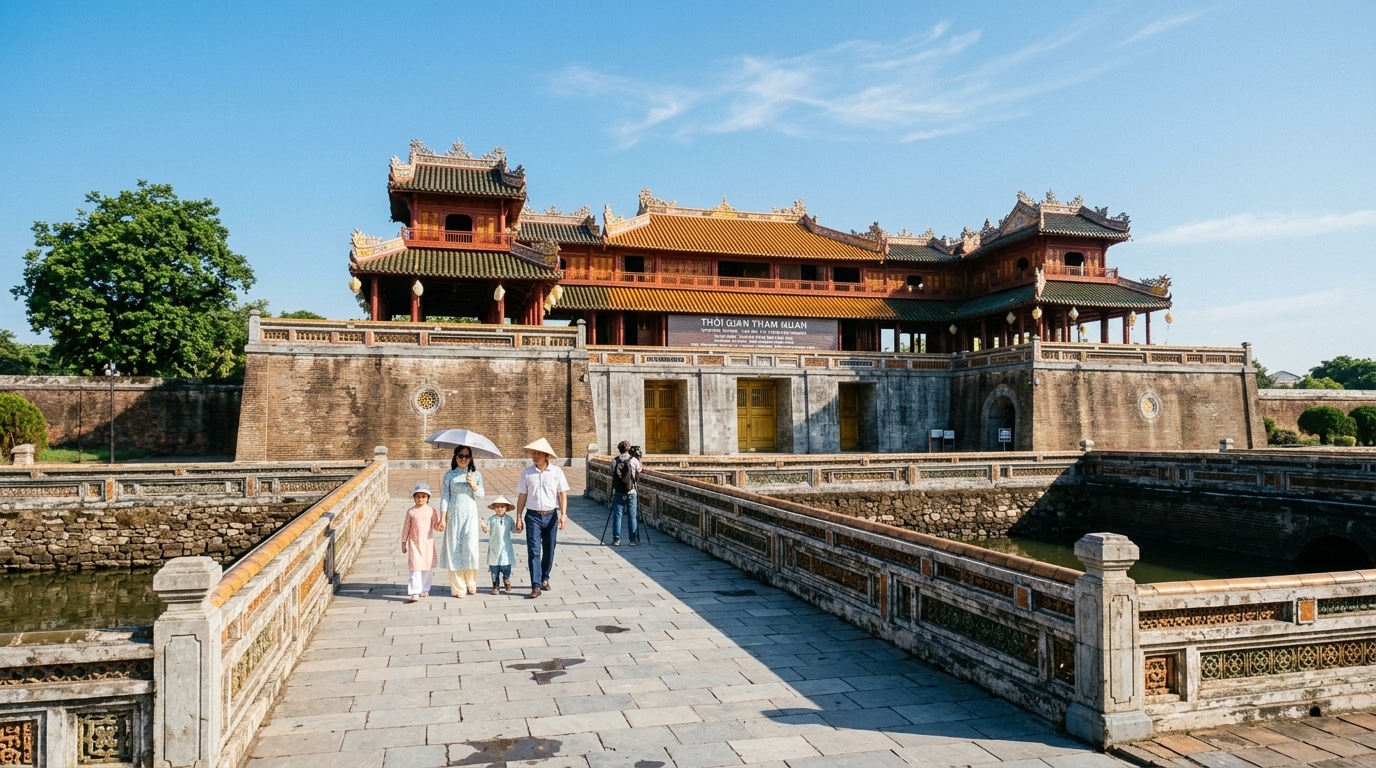
Imperial City: Go between 7:30–11am in any season. In summer (June–August), this is mandatory — not optional. The stone walls trap and radiate heat by midday. After 3:30pm is also good in summer.
Royal Tombs: Early morning year-round. Most tombs have limited shade. In October–November rain, some paths get muddy and slippery.
Perfume River boat: Best in March–April when the river is at normal level and the light is good. In October–November the river can be brown and flooded; boat trips may be suspended.
Vỹ Dạ food neighborhood: Year-round. It’s streets and covered spots — weather matters less here.
Bach Ma National Park (45km south): Go in March–April. The park sits at 1,450 meters elevation and gets cloud cover and rain independently of Hue city weather. Avoid monsoon season entirely.
The Hue things to do guide has the full activity breakdown including the best time windows for each site.
Klook has the widest selection for Vietnam and is usually the cheapest. KKday is strong on day trips and local experiences.
: I went in May and paid for it. Not in a dramatic way — I wasn’t hospitalized. But I stood in the middle of the Imperial City at 11am in 36°C heat with the sun bouncing off white limestone and thought, concretely: this is not where I should be right now. I retreated to a covered café, drank two bottles of water and a Vietnamese iced coffee, and came back at 4:30pm when the light was better anyway.
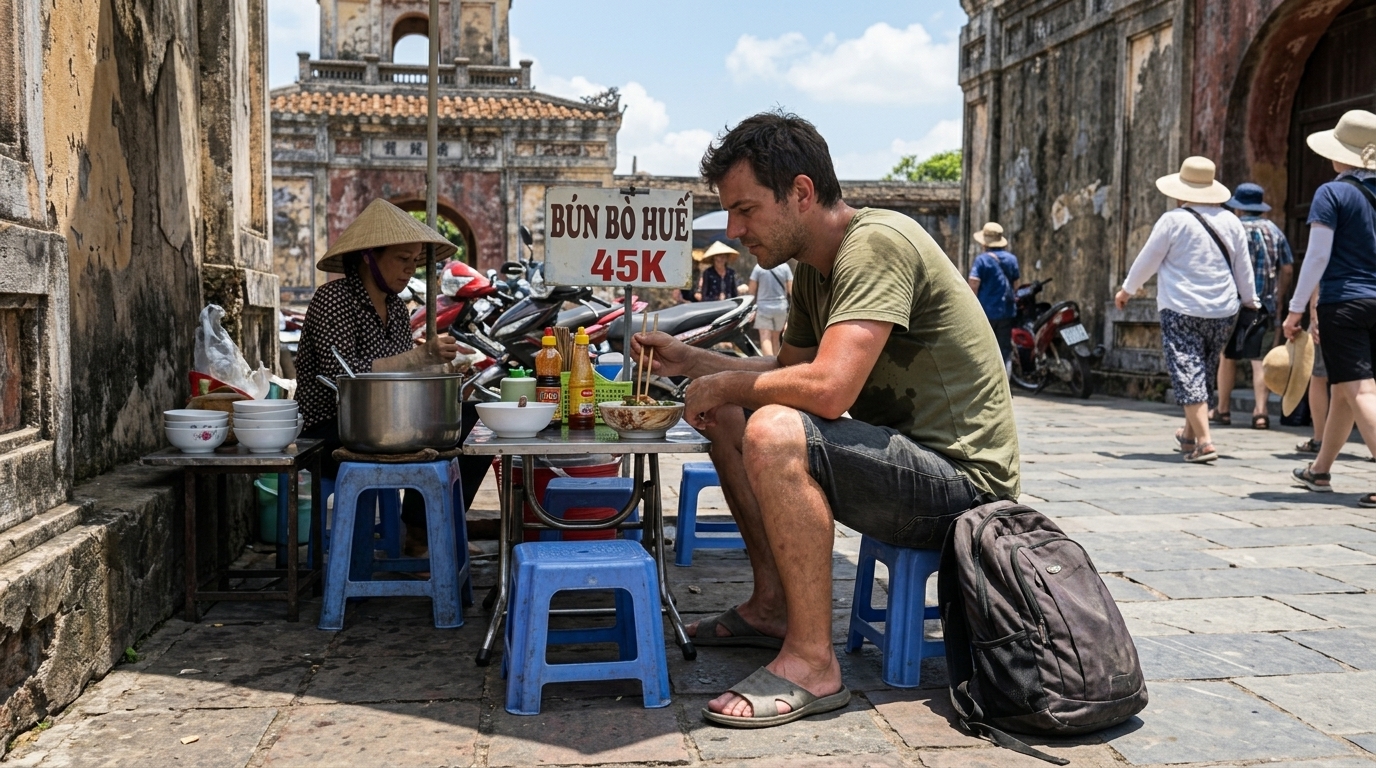
Summer in Hue is manageable if you adjust your schedule around the heat. It’s not manageable if you insist on treating it like a mild-weather destination. Go at 7am and 4pm. Disappear at noon. The city is there in the morning and the evening. The midday belongs to the heat.
⚠Real Talk
The worst thing about Hue’s summer isn’t the heat — it’s the combination of heat and stone. The Imperial City’s walls, courtyards, and gates absorb heat through the morning and release it in waves by noon. There’s minimal shade in the central areas. If you’re visiting in June–August, bring more water than you think you need and make the 7:30am start non-negotiable.
What Travelers Actually Say: The Consensus
The pattern from travel threads is clear: travelers who went in October or November come back frustrated. Flooded streets, cancelled tours, grey skies for a week. “We spent two days inside waiting for rain to stop — couldn’t visit the tombs or any outdoor site.” That’s not a rare complaint for October in Hue; it’s a common one.
On March vs. April: the experienced travelers consistently recommend late March for a balance of good weather and lower prices. April is better for the Festival in even-numbered years but noticeably more crowded and slightly more expensive. The consensus: if you don’t care about the Festival, go March 20–April 5.
On summer trips: the people who managed summer well all follow the same pattern — early starts, long midday break at a café or guesthouse, back out at 4pm. “I did Hue in July and loved it — the key was treating noon as a no-go zone.” The travelers who hated summer Hue tried to visit outdoor sites at 2pm.
Getting to Hue from other central Vietnam cities is easy — see the Da Nang to Hue guide for the most common approach from the south.
Hue Weather FAQ
Does Hue flood every year?
Most years, yes — at least partially. The Perfume River regularly rises above its banks in October and November. In severe years (2020, 2023), significant parts of the city were inaccessible for days. In mild years, flooding stays to the lower riverbank areas and doesn’t disrupt most tourist activity. It’s not something to gamble on if you have a fixed itinerary.
What should I pack for Hue?
March–April: Light clothing, sunscreen, a rain layer for afternoon showers, comfortable walking shoes.