Last updated: — prices verified.
I’ve been based in Hanoi for five years. I’ve done the shoestring run (under $25/day) and I’ve done the comfortable version ($60-80/day). I know what the prices actually are in 2026, which costs have gone up since COVID, and where the budget-travel playbook still works exactly as advertised.
Here’s what Vietnam actually costs — with no rounding up, no rounding down, and no incentive to make it sound better or worse than it is.
✓Quick Answer
A realistic Vietnam backpacker budget in 2026 is $30–40/day — covering hostel dorms ($6–8), three street food meals ($8–12), local transport ($2–4), and entry fees ($2–6). Budget for Ha Giang Loop separately: self-drive adds ~$50–60 total over 4 days; easy rider adds ~$200. Two weeks in Vietnam costs $420–630 on a genuine shoestring, $700–1,100 for a more comfortable flashpacker run.
The Honest Daily Budget Breakdown
Six categories drive your daily spend in Vietnam. Here’s what each one actually costs in 2026, verified across multiple sources:
Accommodation: What You Get at Each Price Point
The hostel scene in Vietnam is genuinely good — especially in Hanoi, Hoi An, and Phong Nha. This isn’t the Southeast Asia hostel experience of 20 years ago. Social hostels with pools, free breakfasts, and organized activities exist at the $6–8 dorm price point.

Shoestring ($6–8/night, 150,000–200,000 VND): 8–12 bed dorm, air conditioning, shared bathrooms, usually includes WiFi. In Hanoi Old Quarter, Hoi An, and Phong Nha you get quality hostels at this price. Phong Nha specifically has legendary budget hostels — Easy Tiger and Pub With Cold Beer both run dorms at around 150,000–175,000 VND (~$6–7) with pools and lively common areas.
ily-run hotel on a side street. See the full Hanoi accommodation guide for neighborhood breakdown.
↗Insider Tip
The price difference between a decent $8 dorm and a $15 private room is often worth it after day 5 when sleep quality starts affecting everything. Budget travelers who mix 3–4 nights in dorms with 1–2 nights private every week consistently report enjoying Vietnam more than the ones who dorm every single night. The math still works on $30/day.
Food: The Real Cost of Eating in Vietnam
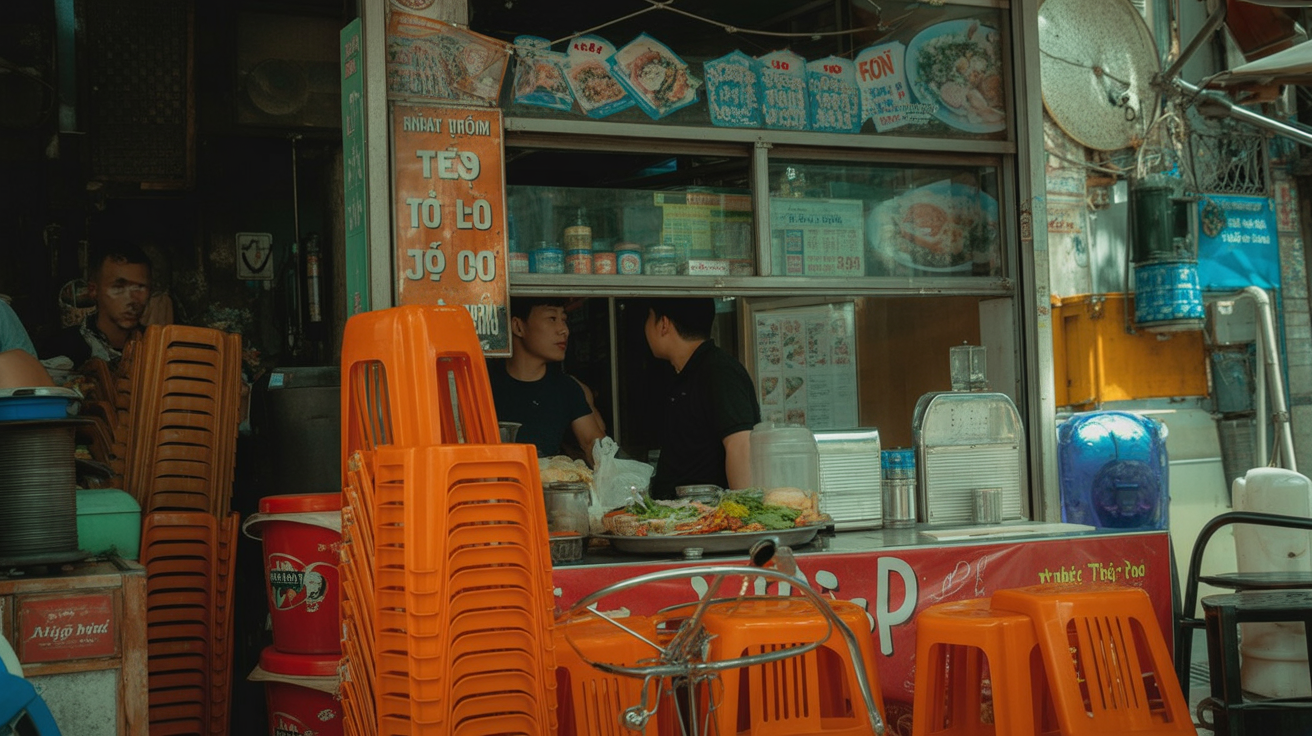
Street food in Vietnam is not budget food. It’s just food. The same bowl of phở (say: fuh) that costs 30,000–60,000 VND (~$1.20–2.30) at a plastic-stool joint in Hanoi costs 120,000–200,000 VND (~$4.60–7.60) at a tourist restaurant 100 meters away with the same broth. The quality is usually better at the plastic-stool version.
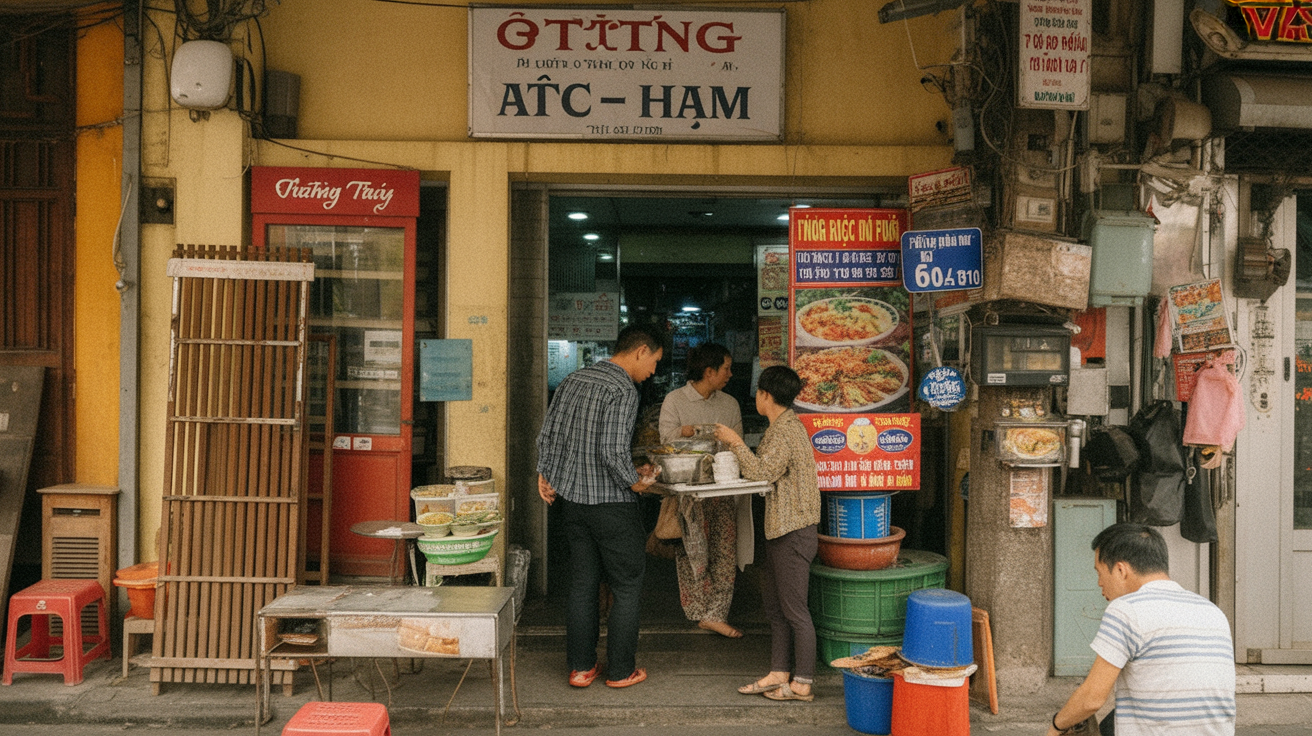
What a shoestring food day actually looks like: bánh mì (say: ban mee) for breakfast at 25,000–35,000 VND (~$1–1.35), a bowl of bún chả (say: boon cha) or cơm bình dân (say: com bing dan — rice buffet) for lunch at 40,000–60,000 VND (~$1.50–2.30), and phở or cơm tấm (say: com tam — broken rice) for dinner at 40,000–70,000 VND (~$1.50–2.65). Total: 105,000–165,000 VND (~$4–6.30). Drinks: bia hơi (say: bee-ah hoy, street draft beer) at 6,250 VND per glass ($0.25) — genuinely the cheapest beer you’ll find anywhere on earth — or Vietnamese iced coffee (cà phê sữa đá, say: ca fay sua da) at 20,000–35,000 VND (~$0.75–1.35).
Budget confession: I spent my first week eating at restaurants with English menus because I didn’t know how to order at the street stalls. I spent 3–4x more than I needed to and the food was worse. The fix is a translation app and the willingness to point at what someone else is eating. You don’t need to speak Vietnamese to eat Vietnamese food — you just need to be willing to sit down at whatever plastic stool the cook pulls out for you.
The Big Budget Variables: What Changes Everything
Your daily average is set by accommodation and food. But three specific experiences have the power to blow the weekly budget in ways that catch first-timers off guard:
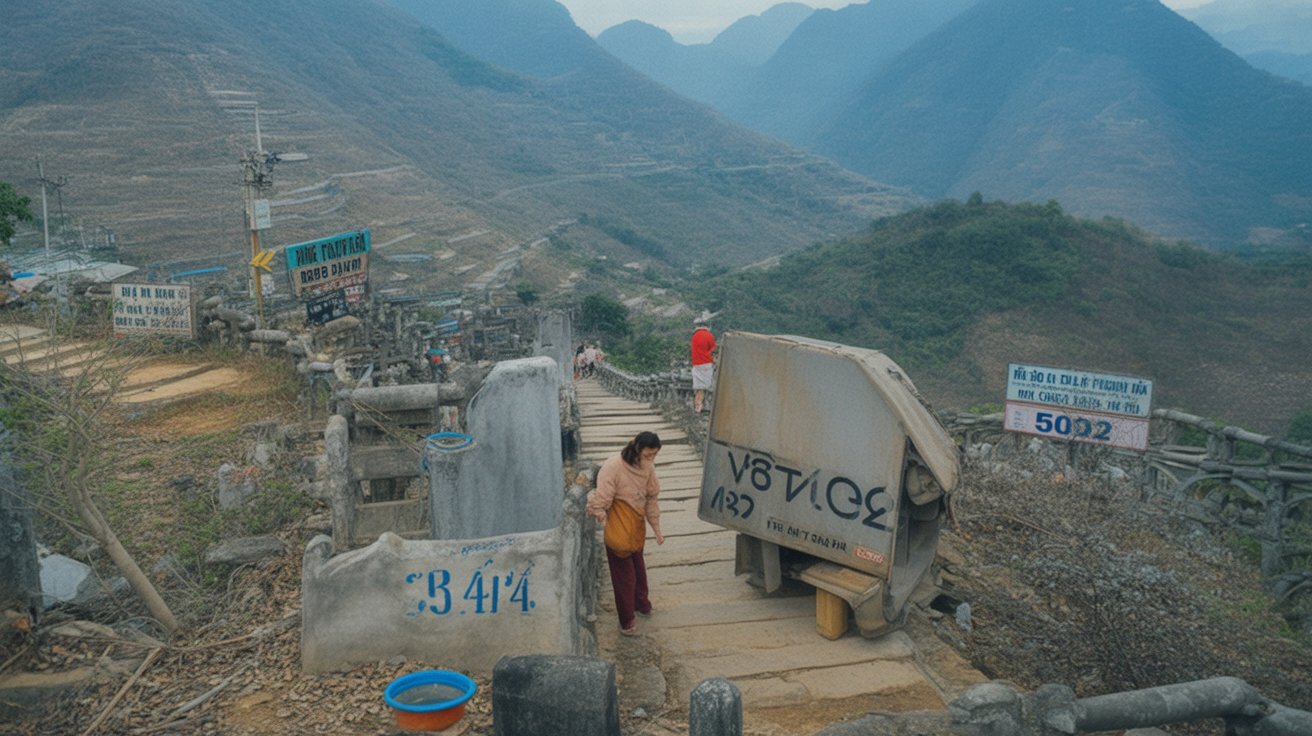
Ha Giang Loop: Budget It Separately
The Ha Giang Loop is the highlight of northern Vietnam for most travelers who do it. It’s also a lump-sum cost that doesn’t average cleanly into your daily budget. Here’s how it breaks down:
Self-drive 4-day loop: Motorbike rental 180,000–250,000 VND/day (~$7–10) + restricted area permit 250,000 VND (~$10 one-time) + accommodation 150,000–300,000 VND/night + fuel ~200,000 VND total (~$8) + food. Total: approximately 1,500,000–2,500,000 VND (~$57–95) for the 4 days. That averages to roughly $14–24/day extra on top of your normal daily spend — or treat it as a flat $60–95 block against your weekly budget.
Easy rider (guided, 4-day): 4,800,000–6,000,000 VND (~$182–228) all-in for a guide who rides their own bike with you on the back. Accommodation and meals additional. This is the right call if you can’t ride a semi-auto motorbike — the Ma Pi Leng pass is not a beginners-welcome road. Full Ha Giang Loop cost breakdown here.
Ha Long Bay: The Tempting Splurge
Ha Long Bay overnight cruises start at around 2,000,000 VND (~$76) per person for budget boats and go to 5,000,000 VND (~$190) for mid-range. Day trips exist at around 800,000–1,500,000 VND (~$30–57) but aren’t worth it — the bay is most impressive when you’re on it at dawn, which requires an overnight. Budget it as a lump sum against the week it falls, not a daily figure. See the Ha Long Bay cruise guide for how to avoid the scammy budget boats.
Tours vs. DIY: The Math
Full-day organized tours from hostels (Ninh Binh, Mekong Delta, Cu Chi Tunnels) run 1,000,000–2,000,000 VND (~$38–76) including transport, guide, and lunch. These look expensive against a $30/day daily budget until you add up the DIY components separately — and realize the hostel group tour is sometimes cheaper and always less logistically painful. Choose based on what you value: control or convenience. The prices are closer than they look.
Intercity Transport: How to Get Between Places Cheaply
Vietnam’s transport network is genuinely well-developed for budget travelers. The key decision at each city is: bus, train, or flight?
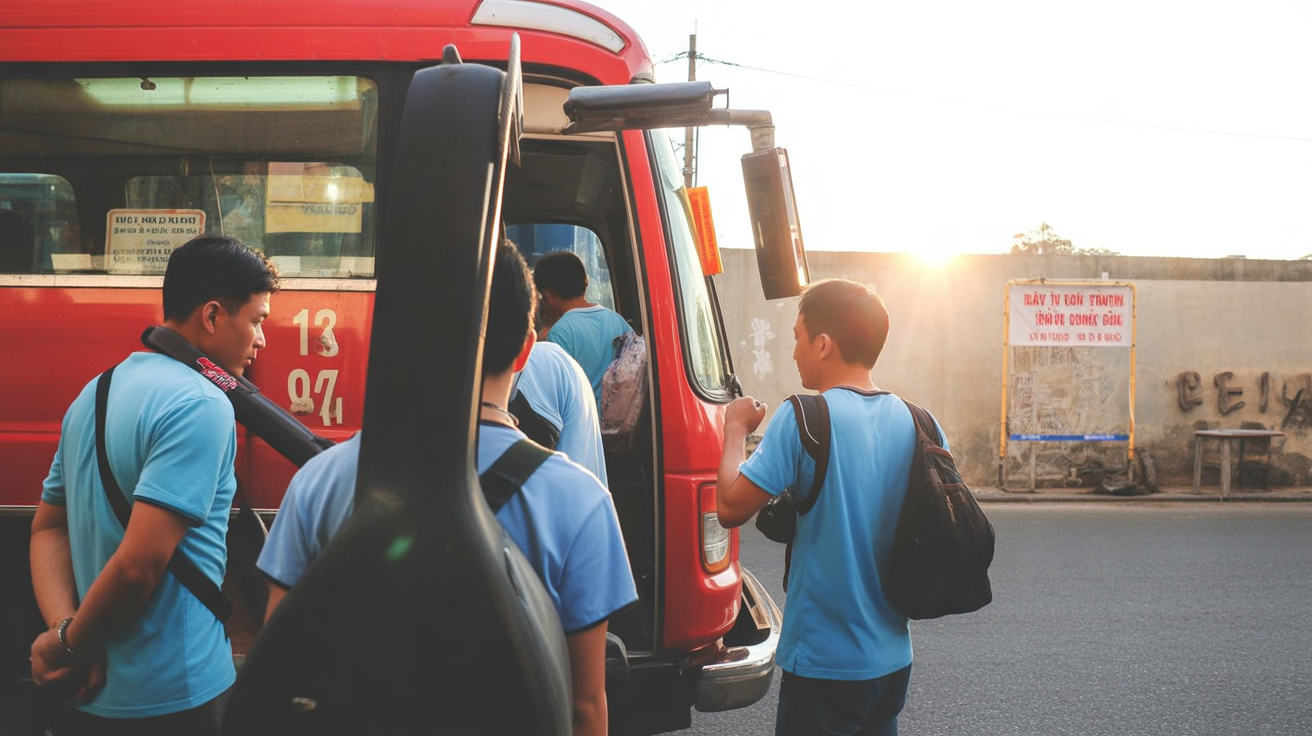 sleeper bus — saves a hotel night and moves you 300km while you sleep” loading=”lazy” width=”1200″ height=”675″ style=”width:100%;height:auto;”>
Sleeper buses: 250,000–750,000 VND (~$10–28) for most routes. The overnight bus from Hanoi to Hue (13 hours) or Hue to Hoi An (4 hours) is the budget move — you’re moving while you sleep, which saves both a hotel night and the next morning’s transport cost. Booking through your hostel or 12Go Asia is reliable and adds minimal markup.
12Go covers most Vietnam routes — sleeper buses, trains, and island ferries. Compare schedules and book in advance during peak season (Dec–Feb, Jun–Aug).
Trains: Soft sleeper from Hanoi to Hue runs 700,000–1,200,000 VND (~$27–46). More comfortable than a bus, similar price for the overnight option. Worth it for the longer southern legs (Da Nang to Nha Trang, Nha Trang to HCMC).
Budget flights: VietJet and Bamboo Airways domestic routes start at 400,000 VND (~$15) if booked 3–4 weeks in advance. A flight from Hanoi to Da Nang takes 75 minutes and saves 13 hours of bus time. The math works when: (a) you value time more than money, (b) the route is over 600km, or (c) the overland alternative involves connections.
The 2-Week Budget Itinerary Under $40/Day
This is the route with the most verified data: Hanoi → Ninh Binh → Phong Nha → Hue → Hoi An → Da Nang. Two weeks, north to central, all overland.
Add Ha Giang Loop instead of (or before) Ninh Binh: add $60–95 for self-drive, or $230–280 for easy rider. The north Vietnam itinerary covers this decision in detail, including the Ha Giang motorbike guide if you go self-drive. For a full breakdown of every option, our Vietnam transport guide covers buses, trains, and flights with current prices and booking tips.
City-by-City Budget Reality Check
Every city in Vietnam has a different budget baseline. The same habits that cost $25/day in Ninh Binh cost $35/day in Hanoi and $28/day in Hue. Here’s what actually changes by destination:
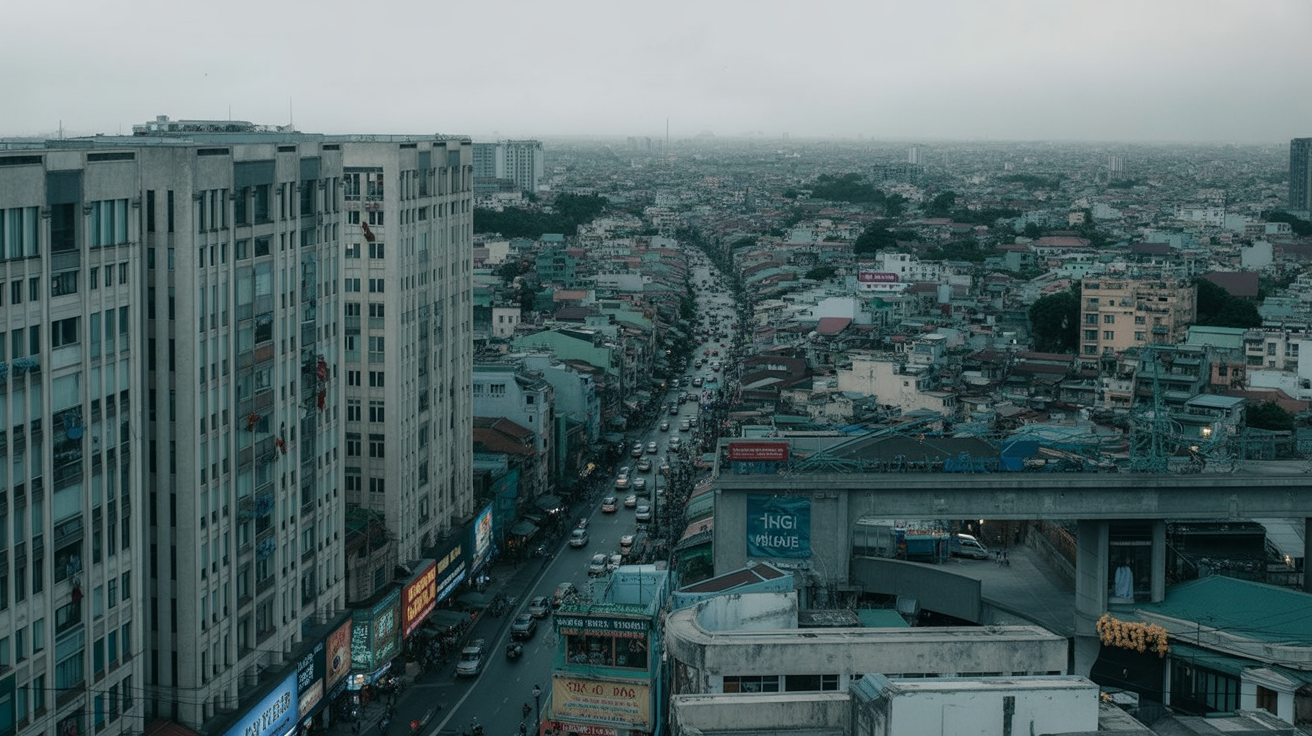
Hanoi (KD: higher tourist density, moderate cost): Hostel dorms 150,000–300,000 VND (~$6–12), street food 40,000–70,000 VND per dish (~$1.50–2.70). Old Quarter has tourist-price traps around the lake — walk two blocks back and prices drop 40%. A typical day: dorm + 3 street meals + Grab rides + one museum = 700,000–850,000 VND (~$27–32). The biggest Hanoi budget risk is bar tabs — the Old Quarter beer streets are cheap until 1am when they aren’t.
Ninh Binh (lowest cost on the north itinerary): Guesthouses in Tam Coc village: 200,000–500,000 VND (~$8–19). Trang An boat tour: 200,000 VND (~$8) total. Street food: 30,000–50,000 VND per meal (~$1.20–1.90). A full two-night Ninh Binh visit including Trang An, Mua Cave entry (100,000 VND), transport from Hanoi, and food runs roughly 1,000,000–1,500,000 VND (~$38–57) total.
Ha Giang (highest variable cost): The permit (250,000 VND, ~$10) and motorbike rental (720,000–1,000,000 VND/~$27–38 for 4 days at 180,000–250,000 VND/day) are fixed costs regardless of how you budget elsewhere. Food in Ha Giang and along the loop is cheap: 40,000–80,000 VND per meal (~$1.50–3). Guesthouse dorms in Đồng Văn: 150,000–200,000 VND (~$6–8). Total for a self-drive 4-day loop from Ha Giang city: 1,800,000–3,000,000 VND (~$68–114) not including the bus from Hanoi.
Hoi An (budget ceiling on central Vietnam): Hoi An is more expensive than anywhere north of Da Nang. Ancient Town entry tickets: 120,000 VND (~$4.60). Decent dorm beds: 200,000–350,000 VND (~$8–13) — the cheapest in the city, compared to 150,000 VND in Hanoi. Food in Ancient Town is double the price of food 200m outside it. Budget: stick to markets and the streets around Cẩm Nam bridge for eating, walk to the Ancient Town for sightseeing.
Ho Chi Minh City (moderate cost, high temptation): Ben Thanh Market area around District 1 has tourist prices. Go to Chợ Bình Tây (Binh Tay Market in District 6) for food that locals actually eat. War Remnants Museum: 40,000 VND (~$1.60). Dorms in the backpacker area: 150,000–300,000 VND (~$6–12). The temptation in HCMC is rooftop bars — they run 150,000–500,000 VND per cocktail. Worth one visit. Not worth every night.
How to Stay Under $30/Day in Vietnam (The Real Tactics)
This is not about deprivation. It’s about making the right decisions early, before habits set in.
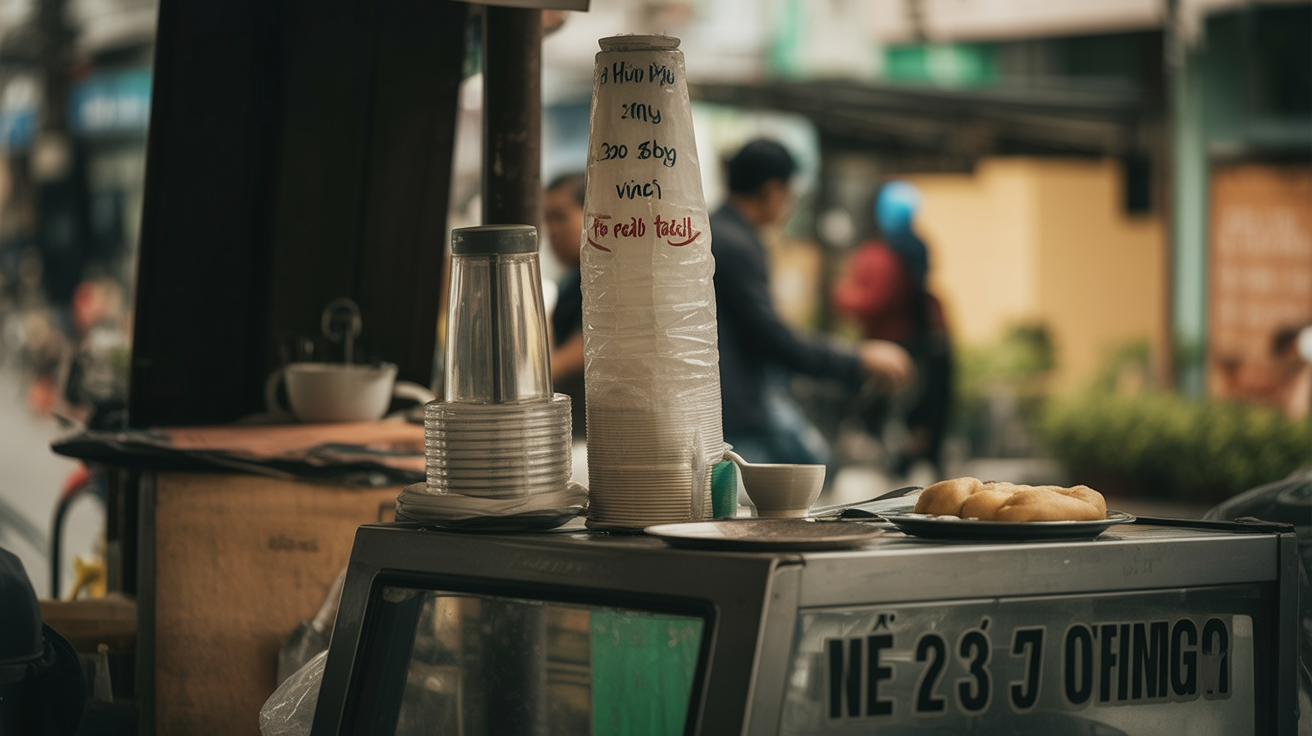
Eat breakfast at a market, not a café: Tourist-area cafes charge 80,000–120,000 VND (~$3–4.60) for a breakfast that’s worse than what you’d get at a market for 25,000–40,000 VND (~$1–1.50). Find the nearest chợ (say: choh, market) and eat there for the first meal of every day. Bánh mì, bún bò, cháo (say: chow, rice congee) — all available, all excellent, all under $2.
Always use Grab for transport: Tourist-quoted xe ôm prices in Old Quarter areas start at 100,000–200,000 VND (~$4–8) for rides worth 30,000–50,000 VND on Grab. Every Grab ride you don’t take is money spent on a tourist premium instead of a meal. Open the app before you decide you need a taxi.
Use sleeper buses, not domestic flights: A flight from Hanoi to Da Nang costs 600,000–1,200,000 VND ($23–46) with fees. A sleeper bus costs 350,000–500,000 VND ($13–19) and eliminates a hotel night if it’s overnight. Budget travelers who fly to save time are paying more total when you count the saved accommodation.
Book the overnight train or bus, not the day service: An overnight journey saves both the transport cost and a night’s accommodation. The 12-hour Hanoi–Hue bus at 9pm costs 350,000–450,000 VND ($13–17) and you wake up in Hue. The same journey by day bus costs roughly the same but you arrive needing a hotel room. The math is simple.
Buy SIM at the airport, not the street: Airport Viettel and Mobifone stalls sell legitimate 30-day SIM cards for 150,000–200,000 VND (~$6–8) with 5–15GB data. Street sellers in tourist areas sell the same SIMs for 300,000–500,000 VND. Get yours before you leave the terminal.
The Budget Mistakes That Cost People Money
Paying tourist-price for motorbike rides: Unmetered xe ôm (say: say-ohm, motorbike taxi) drivers around tourist areas quote 200,000–400,000 VND for rides worth 40,000–60,000 VND. Use Grab for every motorbike and car ride. The price shows before you confirm. No negotiation, no anxiety.
Buying water bottles every day: 10,000–15,000 VND per 500ml bottle. A reusable bottle and a LifeStraw filter (or iodine tablets for remote areas) saves money and waste. Most hostels have a filtered water station.
Eating within 50 meters of a major tourist site: The price of the same dish roughly doubles with every 50 meters closer you are to a UNESCO site or major temple. Walk a block or two away, sit where you see Vietnamese people eating, point at what someone else ordered. The food is better and the price is a third less.
Booking through the wrong tour operator: Ha Long Bay has a well-documented ecosystem of budget cruise operators that overcharge for the boat quality. Book only through platforms with verified reviews (GetYourGuide, Klook, or directly via the cruise company’s own website). The $25–30 “day trip” to Ha Long Bay from Hanoi is a logistics disaster — factor in 3.5 hours each way and you’re paying to stare at karsts from a bus window. Overnight only, and budget accordingly.
Frequently Asked Questions
What’s the best way to carry money in Vietnam?
A practical setup that works for most budget travelers: withdraw a week’s worth of VND at once (5,000,000–7,000,000 VND / ~$190–265 for a shoestring week) to minimize ATM fee hits. Keep a small amount of USD separately as a true emergency backup. Don’t rely on credit cards for day-to-day spending — the merchant fee pass-through in Vietnam can add 2–3% invisibly to every purchase. Cash is king, and Vietnamese Đồng is the currency that earns you respect at the plastic-stool end of the market.
The Bottom Line
Vietnam’s budget travel reputation is earned. The country is genuinely affordable by any international measure — and it punishes no one for spending less. The street stalls that cost $1 are often better than the restaurants that cost $10. The overnight buses that save you a hotel night are often more comfortable than the mid-range coaches. The hostel scene is good enough that budget doesn’t mean miserable.
The main budget variable isn’t your daily spending — it’s which major experience you choose. Ha Giang or Ha Long Bay? Self-drive or easy rider? These decisions matter more than whether you eat one restaurant meal per day. Make them deliberately.
For the full route, the complete Vietnam itinerary guide has 2-week, 3-week, and 1-month options with specific stops and time allocations that pair with this budget framework. Our Vietnam itinerary guide can help you fit this into a longer trip.
Two things worth sorting before you land: a Vietnam eSIM so you have data the moment you clear customs, and travel insurance — medical costs for uninsured foreigners in Vietnam are significant.
Airalo eSIMs activate instantly. Buy before departure — airport SIM queues in Vietnam can take 30+ minutes.
Frequently Asked Questions
Is $40 per day realistic for Vietnam in 2026?
Yes, with discipline. $40/day (~1,050,000 VND) covers: budget guesthouse $8–12, street food and local restaurants $8–12, transport $5–8, and a buffer for entrance fees. The biggest variable is intercity transport — overnight sleeper buses keep costs down vs domestic flights.
What is the cheapest way to travel between cities in Vietnam?
Overnight sleeper bus. Hanoi to Hue: 180,000–250,000 VND (~$6.85–9.50). Hue to Hoi An: 120,000–180,000 VND (~$4.55–6.85). Hoi An to Ho Chi Minh City: 350,000–500,000 VND (~$13.30–19). Overnight buses save a night’s accommodation and cover ground while you sleep. Book through Phuong Trang (Futa) or Hoang Long.
What are the biggest budget mistakes travelers make in Vietnam?
Three common ones: booking tours through hotel receptions (30–50% markup vs street-level), taking airport metered taxis instead of Grab (~3× the price), and eating at tourist-area restaurants when identical food is 2 streets away at half the cost. Buying bottled water constantly also adds up — a refill bottle saves 30,000–50,000 VND (~$1.15–1.90) per day. See our Vietnam budget guide for a full breakdown of daily costs by destination and travel style.