Last updated: May 2026 — prices and logistics verified May 2026.
Second trip: stayed in a trekking village homestay, 7km down the valley. Woke up to chickens, a H’mong grandmother making rice wine at 6am, and rice terraces dropping away into the mist outside the window. Same Sapa. Completely different experience.
Where you sleep in Sapa determines your entire trip. This guide cuts through the noise and tells you exactly where to stay — and more importantly, where not to.
Main Town vs Village — Make This Decision First
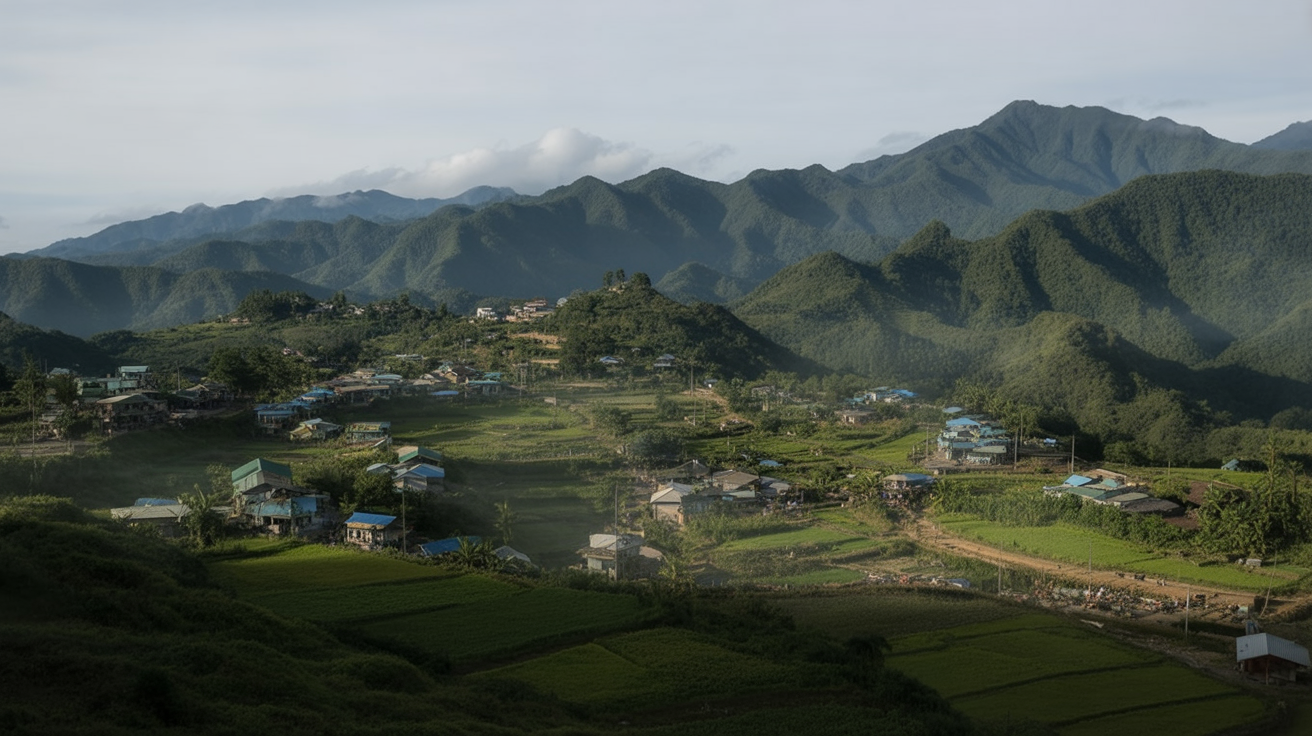
This is the only question that actually matters when booking Sapa accommodation. Everything else is secondary. Sapa town sits at 1,600 metres, surrounded by rice terraces — but the town itself is a tourist infrastructure hub. Concrete hotels, souvenir shops, Vietnamese-Chinese day-trippers, and Sun World cable car queues. It is not the mountain village experience you came for.
→Who It’s For
Stay in Sapa town if: you have mobility issues, you’re there for just 1 night, or you need reliable WiFi for work. Stay in a village if: you came for trekking, cultural immersion, or just to see what Sapa is actually about. If you’re genuinely unsure — choose the village.
Ta Van and Lao Chai Villages — Where to Actually Book
Ta Van (say: ta van) sits 7km southeast of Sapa in the Muong Hoa (say: moong hwa) Valley, reachable by motorbike taxi (xe ôm, say: say-ohm) in about 30 minutes for 50,000–80,000 VND (~$2–3). The valley drops steeply from the road, rice terraces cascading down to a small river. In September, the paddies turn gold before harvest. In April, they’re electric green. Both are worth the extra distance from town.
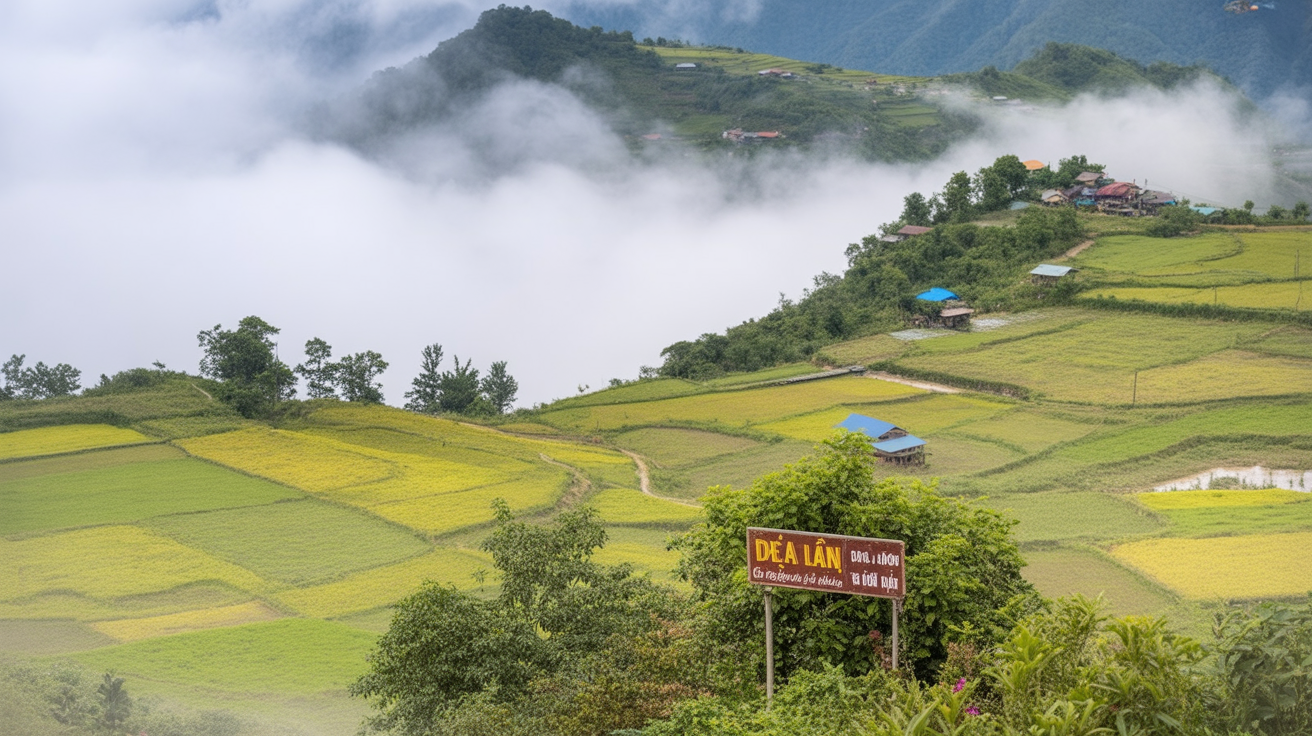
Lao Chai (say: lao chai) is the H’mong village directly adjacent to Ta Van — they blur together on the ground. The communities here are Black H’mong (Hmong Đen), recognizable by the indigo-dyed clothes the women wear. That dye smell — earthy, chemical, and ancient all at once — hits you the moment you enter a working household.
Accommodation in this area breaks into two types: basic family homestays (150,000–200,000 VND per person per night, ~$6–8, usually including dinner and breakfast) and newer boutique guesthouses built for travellers who want village proximity without roughing it.
★Jake’s Pick
H’mong Sisters Homestay in Ta Van starts from 150,000 VND (~$6) per person including breakfast. It’s not fancy — thin mattresses, shared cold-water shower, one bare lightbulb per room — but the family has been hosting travelers for years and the grandmother’s rice wine at dinner is not optional. In the best possible way.
For something a step up: **Ta Van Ecostay** charges 650,000–920,000 VND (~$25–35)/night for a private room with hot shower and wifi. The garden faces directly onto the terraces. **Phori’s House** (1,050,000–1,580,000 VND/night, ~$40–60) has proper bungalows on a two-thousand-square-metre plot with organic gardens — this is the Instagram-famous option and it earns it, though book at least two weeks ahead in peak months.
↗Insider Tip
Most village homestays don’t take online bookings through platforms — they rely on WhatsApp or direct message. Check the Ta Van Community Booking Group on Facebook (search “Ta Van Village Accommodation Sapa”) or ask at Sapa’s visitor center. If you show up unbooked in shoulder season you’ll likely find space; in October or April, you won’t.
Cat Cat Village — If You Need to Stay Close to Town
Cat Cat (say: kat kat) is the compromise option — a Flower H’mong village 2km from the Sapa town center, reachable on foot in about 20 minutes down a steep stone path. The village charges a 70,000 VND (~$2.65) entrance fee and sees hundreds of day visitors. By 10am it’s packed with tour groups. But it’s also genuinely beautiful, with wooden stilt houses perched above a stream and a small waterfall at the valley bottom.
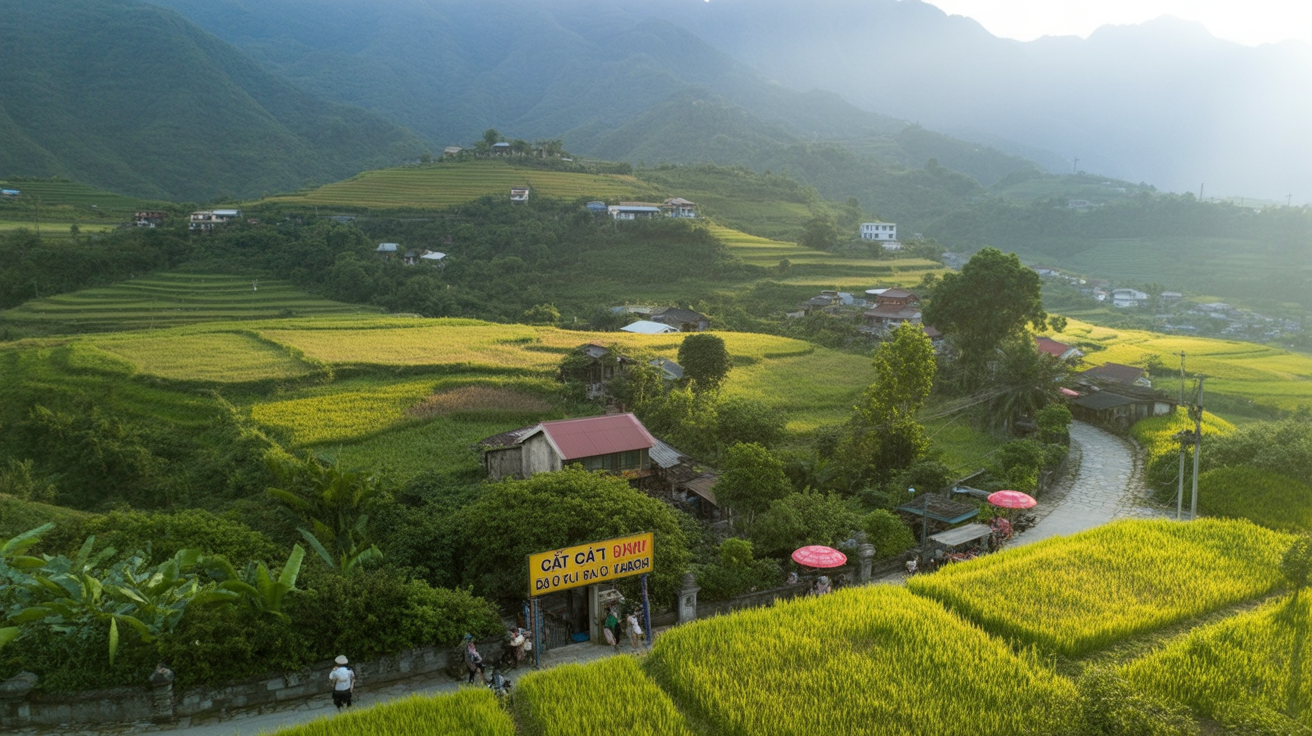
A handful of guesthouses operate inside or just above the village, mostly family-run, priced around 300,000–500,000 VND (~$11–19)/night for a basic private room. Not Ta Van’s depth of experience, but you’re waking up to terraces rather than concrete, and you can walk into town for dinner without hiring a motorbike.
→Who It’s For
Cat Cat suits travelers who want to be close to Sapa town’s restaurants and bus station (for onward travel) but can’t stomach another downtown hotel. Not for serious trekkers — the village-walk energy is more tourist trail than cultural immersion.
Sapa Main Town: Budget Hostels Under $15
If you’re catching an overnight bus back to Hanoi the next morning or need to organize a last-minute guided trek through an agency, staying in town makes logistical sense. Budget accommodation is clustered around Cầu Mây Street (say: co my) and the streets immediately south of the main market.
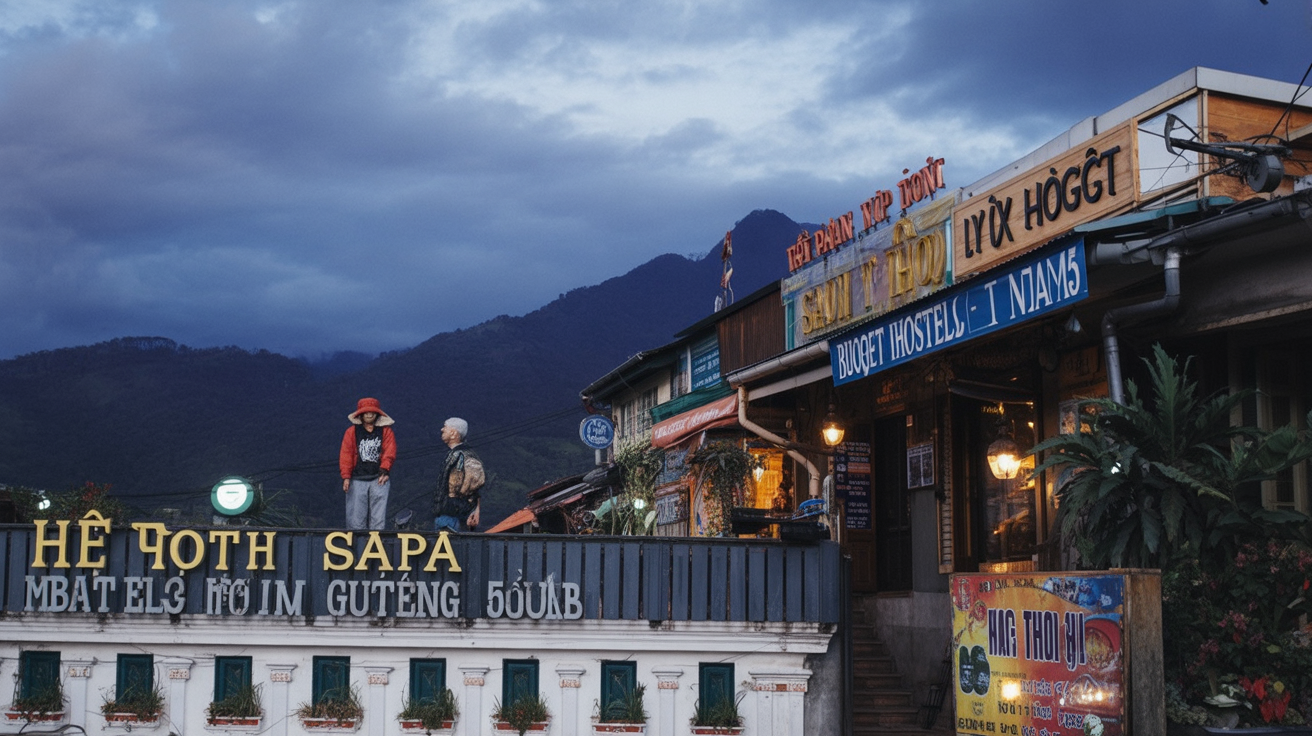
Dorm beds start around 120,000–200,000 VND (~$5–8) in the better-run hostels. For a private double with bathroom, 300,000–500,000 VND (~$11–19) is realistic on weekdays. The caveat: Sapa town on Friday or Saturday nights operates at a different price level — and noise level. The Vietnamese domestic tourism crowd arrives on overnight buses from Hanoi, turns the main square into a night market, and fills the hostels with groups playing card games until 2am.
⚠Real Talk
The “mountain view” hotel rooms in central Sapa mostly face other hotels or the parking lot behind them. The actual mountain views go to the properties on the far side of town — Sapa O’Chau Social Hostel on Thách Sơn Street gets genuine valley views from its terrace, and it’s run as a social enterprise training H’mong women in hospitality. Worth the extra walk.
Mid-Range Hotels in Town: $30–70/Night
The mid-range bracket in Sapa runs from renovated guesthouses to three-star hotel blocks, most clustered near the church square or along Fansipan Road. Rooms in this range typically include hot water, wifi, breakfast, and some kind of balcony or valley view — though “valley view” varies wildly from property to property.
Expect to pay 800,000–1,800,000 VND (~$30–68)/night for a decent double in this range. The competitive pressure from village homestays and budget hostels means quality in the $40–50 range has improved significantly in recent years. The practical advantage: you’re 10 minutes from the cable car station, the bus station, and the night market.
ℹKnow Before You Go
Mid-range hotel prices in Sapa spike dramatically on weekends and during the Cloud Festival (Lễ hội mây, say: lay hoi may) held in late April. During the festival, the same room that costs 1,000,000 VND (~$38) on a Tuesday can hit 5,000,000 VND (~$190) on the festival weekend. Book 3–4 weeks ahead minimum if your trip overlaps with any public holiday or local festival.
High-End: Topas Ecolodge and the Luxury Options
Topas Ecolodge sits 18km from Sapa town on a rocky ridge at 1,400 metres. The bungalows are stone-and-thatch structures clinging to the hillside, with nothing but valley below. Electricity comes from solar panels, hot water from solar heating, and dinner is whatever the kitchen grew or sourced locally that week. Rates run roughly 3,900,000–7,800,000 VND (~$150–300)/night depending on season and bungalow type.
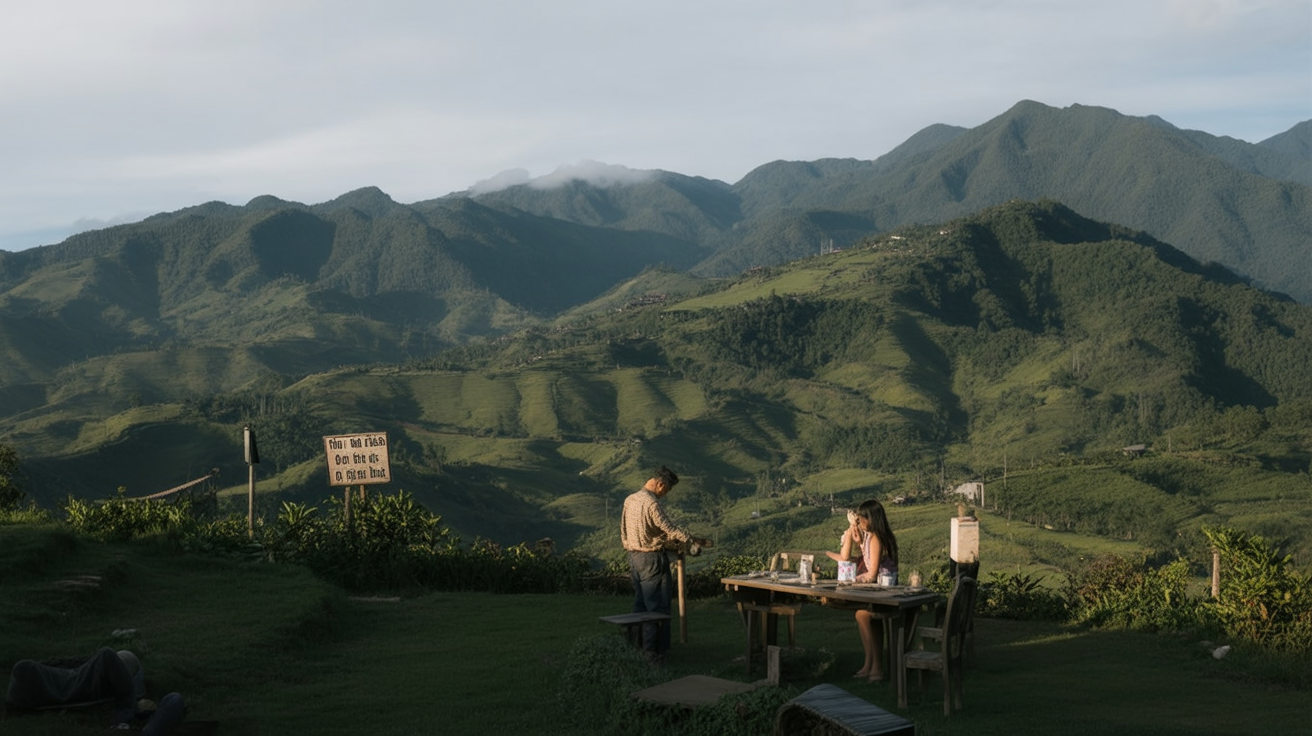
It is genuinely one of the best hotels in northern Vietnam. The trade-off: you’re committed. No popping into town for dinner. No flexible trekking arrangements through local agencies. Everything is organized through the lodge.
Within Sapa town, the Victoria Sapa Resort (French colonial-style, opened 1933 as a hill station retreat) and the newer Sapa Jade Hill Resort occupy the upper end of the market. Both run above 4,000,000 VND (~$150)/night in peak season, and both deliver on the mountain setting in ways budget options can’t.
→Who It’s For
Topas is for couples on a splurge trip or travelers who want resort-level comfort with actual environmental credentials. Victoria Sapa is for history buffs who want to sleep where French colonists slept. Neither makes sense for budget travelers — the money goes much further in a Ta Van homestay.
What No One Tells You About Booking Sapa
Three things consistently catch travelers off guard:

Weekend crowds are a different category of problem. Sapa sits close enough to the Chinese border that weekend day-trippers from Yunnan province are common. The Fansipan cable car queue on a Saturday can hit 75–90 minutes. The town square fills with domestic tour groups by midday. If your dates are flexible, travel mid-week — Tuesday through Thursday gives you a genuinely different experience of the same town.
The “authentic village” label covers a range. Cat Cat Village charges entrance fees and has a handicraft shopping zone at the bottom. Ta Van and Lao Chai are still working farming communities, but the number of homestays has grown fast in the last five years. If you want somewhere less visited, ask specifically for accommodation in Tả Phìn (say: ta phin) village, 12km north of Sapa — Red Dao community, far fewer tourists, and the women do traditional herbal baths that are worth the journey on their own.
Cash only in the villages. Sapa town has ATMs (Vietcombank and Agribank are most reliable, fees around 33,000–55,000 VND/~$1.25–2.10 per withdrawal). Beyond town, bring all the cash you need. Card readers do not exist in Ta Van or Lao Chai.
↗Insider Tip
The herbal bath (tắm thuốc, say: tam thuoc) is a Red Dao tradition in Tả Phìn village — a tub of boiled mountain herbs used for everything from sore muscles to cold prevention. After two days of ridge-line trekking, your legs will consider it a religious experience. Cost: 100,000–200,000 VND (~$4–8). Ask your homestay host to arrange it.
Tả Phìn Village — The Underrated Alternative
Most visitors to Sapa have never heard of Tả Phìn (say: ta phin). Which is exactly why it’s worth mentioning.
The village sits 12km north of Sapa town on a secondary road that drops through pine forest before opening onto Red Dao (say: zow) farming land. Red Dao women wear elaborate embroidered headscarves and silver jewelry — different from the Black H’mong communities in Ta Van. The textile work here is finer, the silver jewelry heavier, and the herbal traditions run deeper. This is the community where the medicinal herbal bath (tắm thuốc, say: tam thuoc) originated. Women here have been boiling mountain plants — dozens of species, some with names only the grandmothers know — to treat muscle pain, fever, and cold prevention for generations.

Accommodation in Tả Phìn is genuinely limited — a handful of family homestays, no boutique guesthouses, no Instagram-famous bungalows. That’s the point. Rates are similar to Ta Van: 150,000–200,000 VND (~$6–8) per person including dinner and breakfast. The herbal bath costs an additional 100,000–200,000 VND (~$4–8), arranged through your host family.
Getting there requires a motorbike taxi from Sapa town — around 30–40 minutes, 80,000–120,000 VND (~$3–5) one-way. The village receives a fraction of Ta Van’s visitor numbers. In October, you might be the only foreigner staying there. That gap in crowds means the family you stay with is actually glad to see you, rather than processing you as the fourteenth tourist group of the week.
→Who It’s For
Tả Phìn is for travelers doing at least 2 nights in the Sapa area who want a genuinely different experience from the Ta Van circuit. It’s particularly good for anyone interested in traditional textiles, herbal medicine, or Red Dao culture specifically. Not for first-timers who need the reassurance of other travelers around them.
One honest caveat: the trekking from Tả Phìn connects to different trails than the Muong Hoa Valley circuit. If your priority is the rice terrace landscape photography that defines Sapa’s Instagram presence, stay in Ta Van. If you want cultural depth over landscape, Tả Phìn.
Getting to Your Accommodation Without Overpaying
The logistical gap between Sapa bus station and your actual accommodation is where most travelers hemorrhage money unnecessarily. Here’s what actually happens:
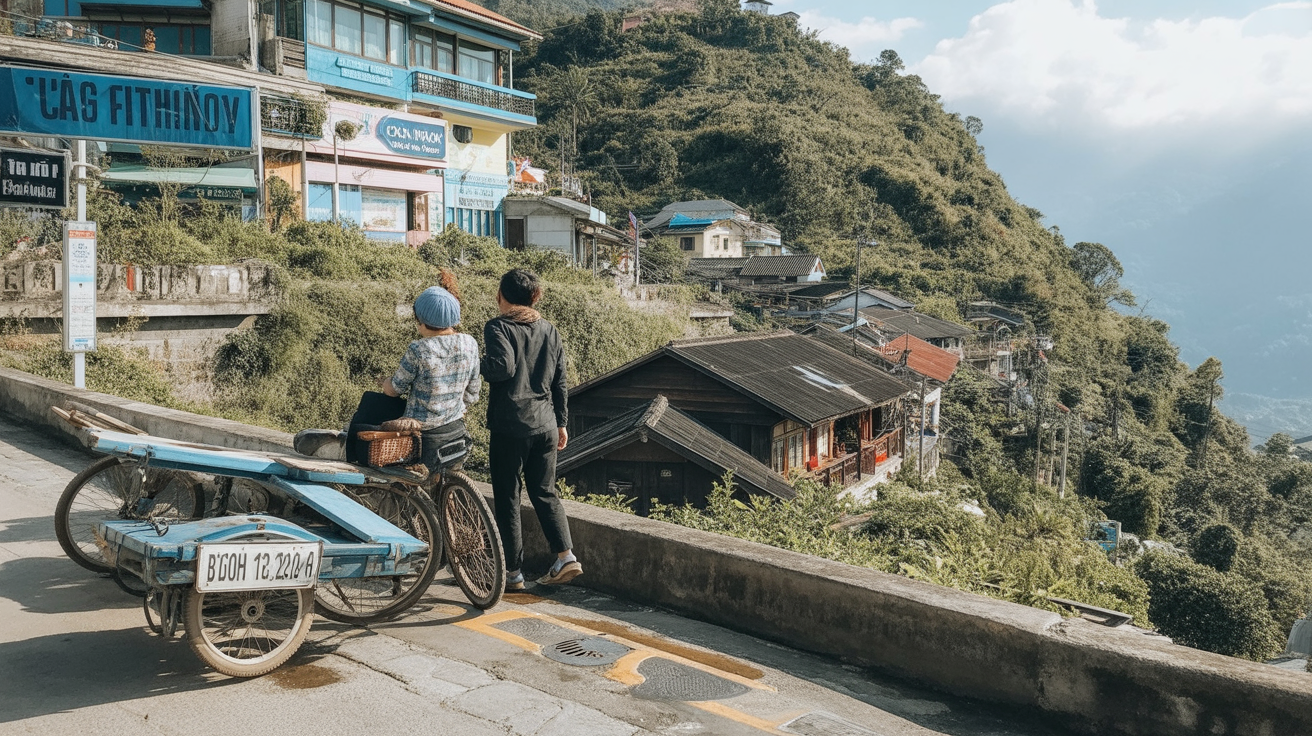
Your overnight bus from Hanoi arrives at Sapa bus station around 5–6am. You are tired. Every taxi and xe ôm driver in the area knows this. The first price they offer you for a ride to Ta Van village is typically 200,000–300,000 VND. The correct price is 50,000–80,000 VND for a motorbike taxi or 100,000–150,000 VND for a car. Walk away from the first offer. Walk toward the street rather than standing at the bus exit. The price drops fast.
12Go covers most Vietnam routes — sleeper buses, trains, and island ferries. Compare schedules and book in advance during peak season (Dec–Feb, Jun–Aug).
For Cat Cat Village: it’s a 20-minute walk from the town center. Follow the signs from the main square, take the steep stone path down. Don’t take a taxi for this — it’s not worth it and the walk is part of the experience.
For Topas Ecolodge: they operate a transfer service from Sapa town (confirm when booking — included in some packages, charged separately in others, around 200,000–400,000 VND/~$8–15 one-way). Don’t attempt it on a rented motorbike at night — the ridge road is unlit and slippery after rain.
If you’re arriving by the limousine van from Hanoi rather than the overnight bus, the van typically drops at a central location in Sapa town. From there, coordinate with your homestay in advance — many Ta Van properties can arrange motorbike pickup for 50,000–80,000 VND (~$2–3) if you message them the night before. Ask when you book. Getting the overnight journey sorted first — our Hanoi to Sapa transport guide covers every option and which limousine van companies actually show up on time.
ℹKnow Before You Go
Sapa’s bus station and the drop-off points for different van operators are not in the same location. Confirm exactly where your transport drops you before you leave Hanoi — and have your accommodation’s address and phone number in Vietnamese text ready to show a driver. Google Maps works in the villages but requires mobile data; download offline maps for Lao Cai province before you leave Hanoi.
One more thing: the overnight bus back to Hanoi departs from Sapa bus station, not from your village. Allow 30–45 minutes to get from Ta Van or Tả Phìn to the station, longer if it’s raining and roads are muddy. Homestay hosts can arrange xe ôm transfers for the departure — book it the afternoon before, not morning-of.
Packing for Sapa Nights — What the Hotel Reviews Don’t Mention
The mountain temperature gap catches people badly. Hanoi in May runs 32–36°C. Sapa at the same time runs 15–22°C. In December through February, nights drop to 5–10°C and occasionally colder on the ridges. Sapa’s tourist industry sells hiking gear and cheap fleeces from market stalls — useful in an emergency, not great quality.
What to bring regardless of season:
- A proper warm layer — fleece or down jacket. Not the “might be cold” kind. The real thing.
- Rain gear — Sapa gets afternoon showers even in dry season; the mountain mist makes everything damp
- Warm socks — tile floors in budget homestays are cold at night
- Power bank — village homestays often have limited electrical outlets
- Enough cash — ATMs only in Sapa town (Vietcombank on Cầu Mây Street most reliable)
Village homestays in Ta Van and Tả Phìn vary widely on blanket quality. The good ones have thick quilts; the budget ones have thin synthetic blankets that feel fine at 8pm and leave you cold at 3am. Before you pay and go to sleep, look at the bedding. If it looks thin, ask for an extra blanket. Every homestay has them — they just don’t always put them out automatically.
⚠Real Talk
The “mountain view” promised by budget guesthouses in Sapa town is, in most cases, a view of another hotel with mountains somewhere behind it. If mountain views from your bed actually matter to you, pay for Topas or stay in the valley — the view from a Ta Van homestay looking up at the terraces at dawn costs $6 a night and is better than anything a Sapa town hotel window offers at $40.
Frequently Asked Questions
Is it safe to stay in a Sapa homestay?
Yes — Sapa homestays have operated for decades and the families hosting travelers are well-practiced at it. Lock your valuables (most homestays have a padlock room or safe box on request). The main practical consideration is cold: mountain temperatures drop to 5–10°C in December–February. Confirm your homestay has proper blankets and, ideally, a heater. The good ones do; the cheap ones don’t always.
Can you do Sapa as a day trip from Hanoi?
Technically yes via the cable car tour operators who run day excursions. In practice: a 5–6 hour drive each way for a few hours in the mountains is punishing and misses the point. The rice terraces, the light, the village atmosphere — these things reveal themselves over at least one night. Hanoi to Sapa overnight sleeper bus is the standard move: leave at 9–10pm, arrive at dawn, full day in the mountains, night in a village, return the following evening. Minimum viable Sapa.
What’s the best time to visit Sapa?
September–October for the golden rice terraces before harvest. March–April for spring green and flowering peach trees. December–January for crisp clear air and the small chance of snow on the higher peaks — rare but it happens. Avoid May–August: monsoon rains, leeches on the trek paths, and visibility that makes the mountain views you came for disappear entirely. A north Vietnam itinerary built around Sapa should account for this.
Is Sapa or Ha Giang better for a northern Vietnam mountain trip?
Different trips, different travelers. Sapa has better infrastructure, shorter journey from Hanoi (5–6 hours vs 8–10 for Ha Giang), and rice terrace scenery that’s genuinely among the best in Southeast Asia. Ha Giang has the dramatic limestone karst landscape, the Ma Pi Leng Pass, and a rawer, less-developed feel — but it requires more commitment and riding comfort. If you have 3+ weeks across north Vietnam, do both. If you have 4 days, Sapa is easier to execute well.
Do I need to book a guide for trekking from my accommodation?
Not legally required — you can trek independently using trails marked on apps like Maps.me or AllTrails. But trails fork constantly, signage is minimal, and getting lost in the Muong Hoa Valley with a dead phone is a real outcome for independent trekkers. A local H’mong guide costs 300,000–500,000 VND (~$11–19)/day, speaks the language of the communities you pass through, and knows which paths are passable after rain. For solo travelers especially: hire a guide for at least your first day. Most Ta Van homestays can connect you with a local — your host’s cousin or neighbor, typically. More money stays in the community this way than booking through a Sapa town agency. The Muong Hoa Valley trail system is harder to navigate without local knowledge than it looks — our Sapa trekking guide covers route options, how to find a guide, and the seasonal leech situation.
The Bottom Line on Where to Stay in Sapa
Book Ta Van. If Ta Van is full, book Lao Chai. If you need to be in town for logistics, stay one night in a Sapa center guesthouse and then move to the valley. The town has its uses — bus connections, gear shops, the Saturday market — but it is not where Sapa’s value lives.
The value is in the 6am mist over the rice terraces, the grandmother pressing a glass of warm rice wine into your hands before breakfast, the sound of water buffalo moving through a field you could reach by walking out your front door. None of that costs much. It just requires booking the right place.
town, 30 min motorbike, 50,000–80,000 VND/~$2–3)
Budget pick: Family homestay, Ta Van — 150,000–200,000 VND (~$6–8) incl. breakfast + dinner
Mid-range pick: Ta Van Ecostay — 650,000–920,000 VND (~$25–35), private room with hot shower
Splurge: Topas Ecolodge — 3,900,000–7,800,000 VND (~$150–300), stone bungalows on ridge
Book ahead: 3–4 weeks for Oct and Apr; 7–10 days for Mar, Nov
Avoid: Sapa town on weekends; April Cloud Festival (5× price spike); Cat Cat Village 10am+
Cash only: Bring all you need — ATMs only in Sapa town, none in villages
–>