Last updated: May 2026
Why the Mekong Delta Matters
The Mekong Delta (Đồng bằng sông Cửu Long — literally “Nine Dragon River Delta”) covers 40,000 square kilometers of flat alluvial plain and is home to 18 million people. It produces 50% of Vietnam’s rice, 65% of Vietnam’s fruit and vegetables, and the majority of Vietnam’s freshwater fish. The waterway system — 28,000km of canals, rivers, and channels — is the operational infrastructure of a region where roads were historically impassable during flood season and boats were the only transport.
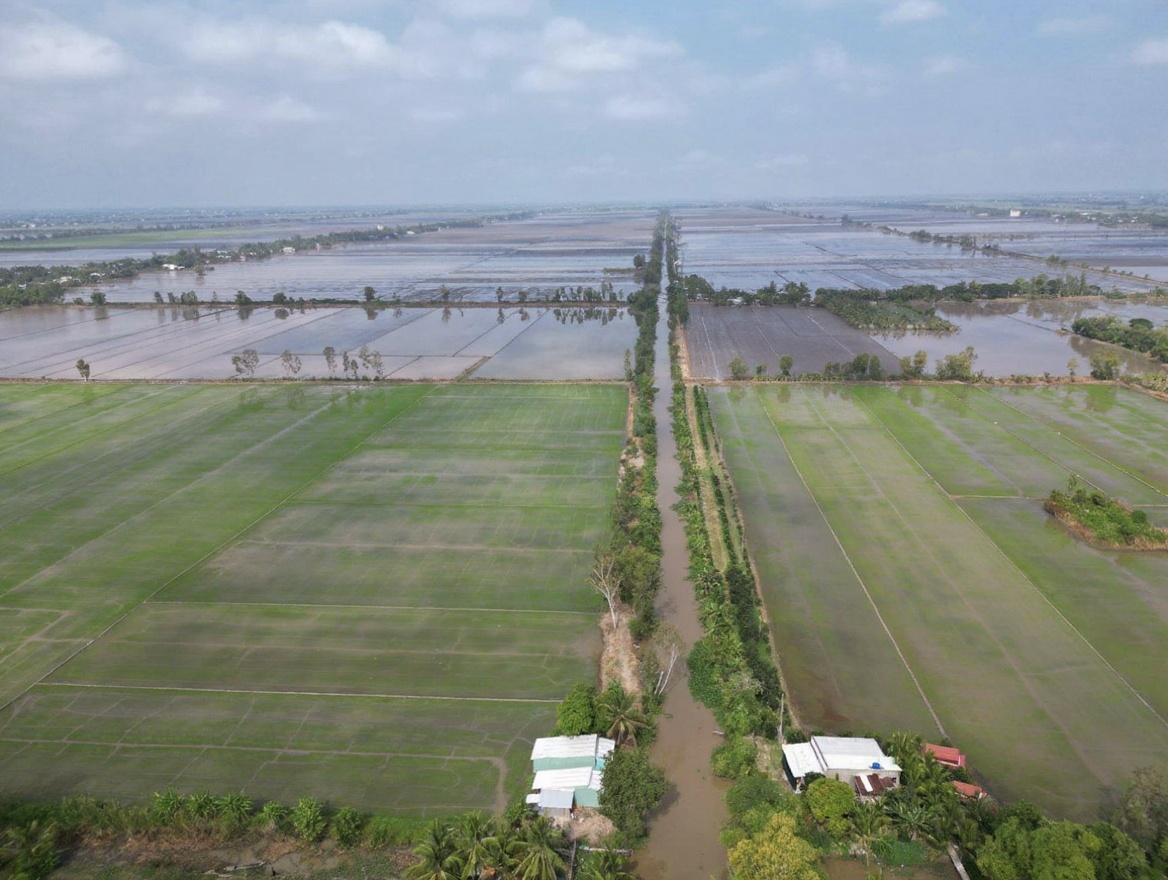
The result is a landscape unlike anywhere else in Vietnam: flat, green, and threaded with water channels. Houses face the canals rather than the roads. The rice paddies in the dry season are a luminous pale gold; in the wet season they flood to the horizon. Markets operate on the water. Transport decisions are made based on tide and current. The floating markets aren’t a tourist show — they’re the commercial logic of a region where truck transport is secondary to boat transport, and where the waterway network was built over centuries to move produce efficiently through terrain that roads couldn’t reliably cross.
This is what makes the Mekong Delta different from every other destination on the Vietnam travel circuit. There’s no ancient town, no dramatic mountain scenery, no colonial architecture. The attraction is the working system of a river delta, visible at human scale from a longtail boat. For a visual overview of the region’s geography, see our Mekong Delta map covering all nine tributaries and major towns.
Can Tho — The Best Base
Can Tho is the largest city in the Mekong Delta — 1.2 million people, a proper urban center with a functioning riverfront, good food, and the best access point for the delta’s main tourist activity (Cai Rang floating market). Most independent travelers use Can Tho as their only Mekong base; those with more time add Chau Doc (near Cambodia) or Ha Tien (for the Phu Quoc ferry).
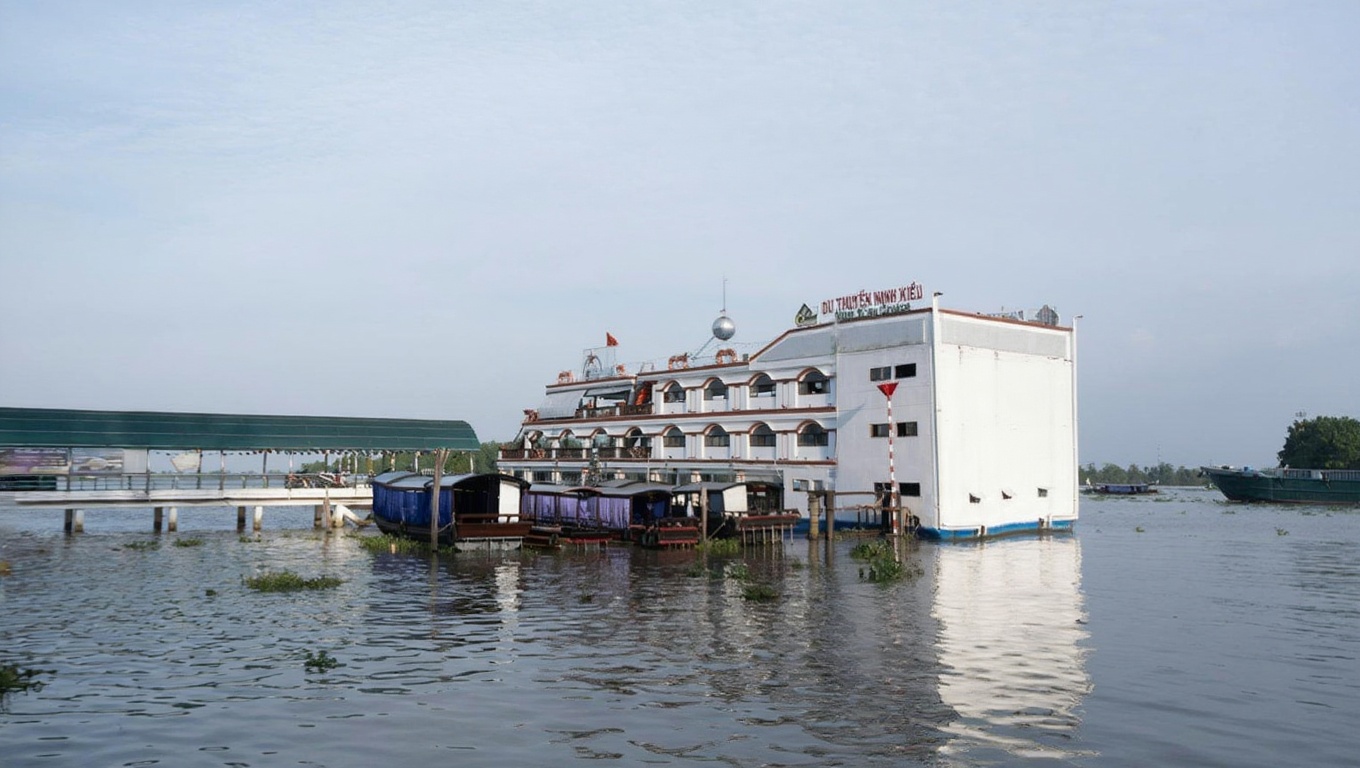
Ninh Kieu wharf (Bến Ninh Kiều): The main riverfront promenade is where you hire boats for the floating market and canal trips, watch the evening river traffic, and find the concentration of good riverside restaurants. The Ho Chi Minh statue on the wharf overlooks the river. Best at 5am (departure for Cai Rang) and again at 6pm (evening activity). The Mekong Delta is one piece of a larger picture covered in our southern Vietnam travel guide.
Cai Rang floating market: The wholesale fruit and vegetable market 6km from the center, operating from 5–8:30am. See our floating markets guide for the full breakdown of how to visit, what to expect, and why the day-trip approach doesn’t work. Short version: private longtail boat from Ninh Kieu at 5:30am, 150,000–250,000 VND/hour.
Canal boat trips: After the floating market, the delta’s inland waterway network is the main activity. A 2–3 hour afternoon boat through the small canals (kênh) northeast of Can Tho passes floating fish farms, riverside houses with vegetable gardens at water’s edge, wooden bridges, and the constant movement of delivery boats. The canal network feels genuinely removed from the tourist infrastructure — a functional agricultural water highway that has no interest in being scenic but is.
What to Eat in Can Tho
Can Tho’s food scene is one of the best reasons to overnight here instead of day-tripping from Saigon.
Bánh canh cua (crab noodle soup): Thick rice-flour noodles in a rich orange crab broth, topped with crab claws and sometimes shrimp. The version in Can Tho and across the delta uses river crabs with a sweeter, slightly earthy flavor compared to the sea crabs used in Saigon versions. Available at market stalls and roadside shops from 5am to 11am. Price: 40,000–70,000 VND (~$1.50–2.70).
Bánh xèo (sizzling rice crepe): The Mekong Delta version is larger than the central Vietnamese version — a full plate-sized crepe of crispy rice batter folded over bean sprouts, shrimp, pork, and mung beans. Served with fresh lettuce, herbs (mint, perilla, fish lettuce), and nuoc cham fish sauce. At a good local restaurant: 60,000–100,000 VND. Look for places where the crepe sound — the hiss of batter hitting hot oil — is audible from the street.
Hủ tiếu Nam Vang (Phnom Penh-style noodle soup): A Cambodian-Vietnamese hybrid that originated in the Mekong Delta due to the Khmer and Vietnamese community crossover. Clear pork bone broth, thin rice noodles, minced pork, shrimp, liver, and crispy garlic. The broth is lighter and more delicate than phở — you can taste where the pork ends and the garlic begins. One of the best noodle soups in the south. Available at specialized hủ tiếu stalls throughout Can Tho: 45,000–80,000 VND. Ask for it at breakfast time; most stalls serve until noon.
Fresh river fish: The delta’s rivers produce basa (catfish), snakehead fish, and multiple species of freshwater fish not found elsewhere. Grilled whole with lemongrass and chili, steamed with ginger and rice wine, or deep-fried with fresh herbs. At a riverside restaurant near Ninh Kieu: 150,000–300,000 VND for a whole fish serving two.
Beyond Can Tho — Chau Doc
Chau Doc (Châu Đốc) is 100km northwest of Can Tho, near the Cambodian border — 2 hours by bus (80,000–100,000 VND) or 1.5 hours by speedboat (200,000 VND, faster but significantly louder). It’s a working border town with a substantial Cham Muslim community, Khmer Buddhist temples, and floating fish farms on the Bassac River that produce the catfish farmed and exported throughout Vietnam.
Why visit Chau Doc: Sam Mountain (Núi Sam), 5km from town — a 230-meter hill with temples, pagodas, and a Cham tower at various elevations, and a view from the summit over flooded rice paddies stretching to Cambodia. On a clear morning the view extends into Cambodian territory across the flat delta plain. The floating fish farms on the Bassac River are visited by boat from the town waterfront — cages of catfish suspended at river level, some housing the farming families who live on the water year-round.
Chau Doc is also the gateway to Cambodia by speedboat up the Mekong — Phnom Penh is 5–6 hours by fast boat or 1.5 hours by flight from the nearby airport. For overland travelers crossing to Cambodia, Chau Doc → Phnom Penh is the most scenic option.
Accommodation in Can Tho
Budget guesthouses cluster on the streets near Ninh Kieu wharf — staying close to the wharf means a 5-minute walk to your 5:30am boat. Recommended area: the 3–4 streets running parallel to the waterfront between the Ho Chi Minh statue and the night market section.
Budget (200,000–350,000 VND/night ~$7.60–13): Private room with AC, private or shared bathroom. Properties on Hai Ba Trung Street and Pham Ngu Lao Street (Can Tho’s backpacker area) are the most concentrated. Check reviews specifically for noise — several guesthouses are adjacent to karaoke venues that run until 11pm.
$80/night.
Most travelers don’t need more than two nights in Can Tho. The main limitation: mid-range room quality isn’t exceptional for the price compared to Vietnamese cities with more tourism infrastructure. Budget guesthouses are generally good value; mid-range hotels offer river views and AC for a reasonable premium.
What Else to See Beyond the Floating Market
Bình Thủy Ancient House (Nhà cổ Bình Thủy): 10km north of Can Tho center. A 19th-century merchant house built in the French colonial period — teak furniture, ornate floor tiles, preserved reception rooms, family altar. Used as a film location for several Vietnamese historical period dramas. Free entry. Open daily 8am–5pm. Worth 45 minutes if you have an afternoon free.
Can Tho market (Chợ Cần Thơ): The main wet market in the city center — fresh produce, fish, meat, and the kind of ground-floor activity that morning markets in Vietnamese cities do well. Not as dramatic as the floating market but worth 30 minutes to buy something for breakfast and understand the supply chain you saw at Cai Rang.
Fruit orchards: Several working fruit orchards around Can Tho and the surrounding district accept visitors — you walk through the orchard, eat the seasonal fruit, and pay a flat entry fee of 50,000–80,000 VND. Dragon fruit, rambutan, longan, and jackfruit depending on season. Most guesthouse-run boat tours to the floating market include an orchard stop. If you’re doing a private boat: the My Khanh Tourist Village (25km from Can Tho) or smaller family orchards reached by canal are both options. The seasonal fruit is fresh and cheap; the orchard experience is brief but pleasantly genuine if you arrive without a scripted tour group.
Ninh Kieu Night Market and riverside: The area around the Ninh Kieu wharf from 6pm onwards — street food stalls, riverside seating, and the consistent movement of river traffic as evening boat tours and cargo vessels pass. The night market food stalls sell banh xeo, grilled fish, and tropical fruit at local prices. Better atmosphere than most formal night markets because it’s integrated into the working riverside rather than set up as a tourism product.
Ha Tien — The Phu Quoc Gateway
Ha Tien (Hà Tiên) is in the far west of the delta, 90km from Ha Tien to Phu Quoc by fast ferry (1 hour, 200,000–280,000 VND). The most popular overland circuit from Saigon through the Mekong to Phu Quoc: Saigon → Can Tho (1–2 nights) → Chau Doc (1 night) → Ha Tien (1 night) → Phu Quoc ferry. Total transit time from Saigon to Phu Quoc via this route: 2–3 days versus 55 minutes by direct flight.
Ha Tien itself is a relaxed small town with a Cambodian border nearby (Xa Xia crossing, open to foreigners), a limestone-cave complex (Grotto of Ngoc Tien), and a market with excellent Khmer-influenced food. It’s worth one night as a staging point for the Phu Quoc ferry — more than that requires specific interest in border-area travel or the nearby islands.
For the complete Saigon-to-Phu Quoc transport options including the Mekong overland route, see our Phu Quoc from Saigon guide.
Getting to the Mekong Delta
Saigon to Can Tho: FUTA (Phương Trang) bus — the best option. 3–3.5 hours, 110,000–150,000 VND (~$4.20–5.70). Departs Mien Tay bus station (southwest Saigon) roughly every 30 minutes from 5am. Modern air-conditioned coaches. Arrives at Can Tho bus station — 3km from Ninh Kieu wharf, Grab to the center: 30,000–40,000 VND.
Private car/minivan: 350,000–500,000 VND one way for a shared minivan, door-to-door from central Saigon. Slightly faster than the bus. Book through your Saigon guesthouse.
Day trip operators (not recommended): Multiple Saigon tour agencies offer “Mekong Delta day tours” for 350,000–600,000 VND. These go to My Tho, not Can Tho, and involve a tourist boat on a market that operates for tourists rather than commerce. The value is poor. If you have only one day, skip the Mekong entirely rather than doing the day-trip version — it’s not representative of what the delta actually is. For full transport options and logistics, see our Mekong Delta from Saigon guide.
Getting Around the Delta
Within Can Tho, Grab is reliable during business hours and most of the evening. For the 5am floating market departure, you’ll need either a pre-booked Grab (set the pickup time the night before) or walk to Ninh Kieu — most central accommodation is within 15 minutes on foot.
Between delta towns, the bus network is functional: Can Tho to Chau Doc (2 hours, 80,000–100,000 VND), Can Tho to Ha Tien (3.5 hours, 110,000–150,000 VND), Can Tho to My Tho (2 hours, 60,000–90,000 VND). The Mekong Express and FUTA buses cover the main routes; buy tickets at the bus station or through your guesthouse.
12Go covers most Vietnam routes — sleeper buses, trains, and island ferries. Compare schedules and book in advance during peak season (Dec–Feb, Jun–Aug).
Speedboats operate between Can Tho and Chau Doc (1.5 hours, 200,000 VND) — faster than the bus and more scenic since you’re on the river, but significantly noisier and the life jackets are less reliable. The boat from Chau Doc to Phnom Penh (Cambodia) operates daily and takes 5–6 hours upstream by fast boat (30–35 USD). This is the Mekong overland crossing for travelers heading to Cambodia from the south.
Motorbike rental in Can Tho: 150,000–200,000 VND/day from guesthouses. Useful for reaching Binh Thuy Ancient House and the outer market areas, less necessary than in other Vietnamese destinations since the main activities are boat-based.
Best Time to Visit the Mekong Delta
The delta has two distinct seasons with different experiences:
Dry season (November–April): Lower water levels mean the canal network is navigable but less dramatically lush. Good visibility on the floating market. Prices lower, fewer tourists. The best general window: November and February–April (avoiding the domestic Vietnamese New Year rush in January–February). Temperatures in the delta during dry season: 28–35°C, with little variation throughout. Humidity is lower than the rest of Vietnam at this latitude.
Wet season (May–October): The delta floods — dramatically. The rice paddies become shallow lakes, the canals overflow their banks, and the movement of water through the landscape is constant. Water levels peak in September–October, when some lower-lying roads become impassable and boat transport is genuinely the primary option for remote villages. This is when the delta looks most like its name: a genuine river plain under water. The floating markets operate year-round regardless of season. Canal boat trips are more scenic with high water because you can access channels that are too shallow in dry season. The main downside: daily afternoon thunderstorms and high humidity. Pack light rain gear and plan outdoor activities for mornings.
What I Got Wrong About the Mekong Delta
I did the My Tho day tour from Saigon in year one. The “floating market” had eight boats. The coconut candy factory had a conveyor belt running for tourists with no actual production happening. I ate a buffet lunch in a restaurant that was clearly built for the day-tour groups. The whole thing felt like a Vietnam theme park exhibit.
Second time, I stayed two nights in Can Tho, woke at 4:45am for Cai Rang, and spent the afternoon on a private canal boat through the narrow waterways east of the city. The scale difference was extreme — not just the floating market (hundreds of boats versus eight) but the whole texture of the experience. The canal trip passed through a working agricultural landscape: fish farms, fruit orchards, women washing vegetables at the water’s edge, boys jumping off bridges. A man on a bicycle on a 2-meter-wide concrete path between paddies, moving at the same speed as our boat, waved as we passed.
The Mekong Delta is not a Saigon day trip. It’s an overnight destination that requires the specific logistics — the 5am boat, the canal afternoon, the evening riverside — to reveal itself properly.
Two things worth sorting before you land: a Vietnam eSIM so you have data the moment you clear customs, and travel insurance — medical costs for uninsured foreigners in Vietnam are significant.
Airalo eSIMs activate instantly. Buy before departure — airport SIM queues in Vietnam can take 30+ minutes.
Frequently Asked Questions
Is the Mekong Delta worth visiting?
Yes — with the right approach. Staying overnight in Can Tho and visiting Cai Rang floating market at dawn is a genuinely distinctive Vietnam experience. Doing the Mekong Delta as a Saigon day trip to My Tho is not worth your time. The difference between these two approaches is the difference between experiencing the delta and looking at a tourist exhibit about it.
How many days do you need in the Mekong Delta?
Two nights in Can Tho is the minimum that makes the logistics worthwhile — one evening arriving, one 5am market morning, one afternoon canal trip, and a departure on day three. Add one night in Chau Doc for Sam Mountain and the floating fish farms. Add one night in Ha Tien if you’re continuing to Phu Quoc by ferry. The full Saigon → Can Tho → Chau Doc → Ha Tien → Phu Quoc circuit works as a 5-day overland journey.
What is the Mekong Delta famous for?
Rice production (50% of Vietnam’s national output), tropical fruit (the delta produces most of Vietnam’s dragon fruit, rambutan, longan, and durian), freshwater fish and catfish farming (the basa catfish farmed here is exported globally), and floating markets. The delta is also home to a culturally diverse population including Kinh Vietnamese, Khmer Krom (Cambodian Khmer), and Cham Muslim communities — particularly concentrated in the Chau Doc area near Cambodia.
Is the Mekong Delta safe for solo travelers?
Yes — Can Tho is a functional Vietnamese city with standard urban safety considerations (motorbike theft if you leave bags unattended, basic street-smart awareness). The boat trips on the river and canals are operated by licensed local operators with life jackets available; the waterways are calm and the trips are low-risk. Solo travelers find Can Tho easy to navigate independently. The main solo-travel consideration is boats: private boat hire is more expensive per person solo, but guesthouse-organized shared boat tours (50,000–80,000 VND/person) solve this at low cost.
FAQ
What is the Mekong Delta?
The Mekong Delta is the southernmost region of Vietnam — a 40,000 square kilometer network of rivers, canals, rice paddies, and floating villages where the Mekong River fans out into nine tributaries before reaching the South China Sea. It’s Vietnam’s rice bowl, producing more than half the country’s rice, and home to 17 million people.
What is the best way to see the Mekong Delta?
An overnight trip based in Can Tho — this gives you the early morning Cai Rang floating market plus time to explore by canal boat through the smaller waterways. Motorbike touring between Can Tho, Ben Tre, and Vinh Long covers the most ground. Day tours from Saigon reach My Tho but miss the authentic delta experience that requires staying at least one night.
Is the Mekong Delta safe for tourists?
Yes — it’s one of the safer regions of Vietnam. The main hazards are road flooding during monsoon season (May–October) and getting lost in the canal network without navigation help. Crime against tourists is extremely low. Waterborne diseases (from swimming in canal water) are the main health consideration.
What is the Mekong Delta famous for?
Floating markets (Cai Rang, Phong Dien), fruit orchards (dragon fruit, durian, rambutan, mangosteen), coconut products in Ben Tre, rice cultivation on an industrial scale, and the Khmer Buddhist culture in the southern delta around Soc Trang. The wetland ecosystem is also significant for bird watching (Tram Chim National Park).
What is the food like in the Mekong Delta?
Distinct from the rest of Vietnam. Key dishes: hủ tiếu (pork and noodle soup, sweeter and lighter than northern pho), cơm tấm đặc biệt (broken rice plate with multiple toppings), bánh xèo (sizzling rice crepe), fresh spring rolls with Mekong herbs, and the extraordinary range of tropical fruit — vendors sell entire baskets of freshly cut fruit for 30,000–50,000 VND.