
Updated: May 2026
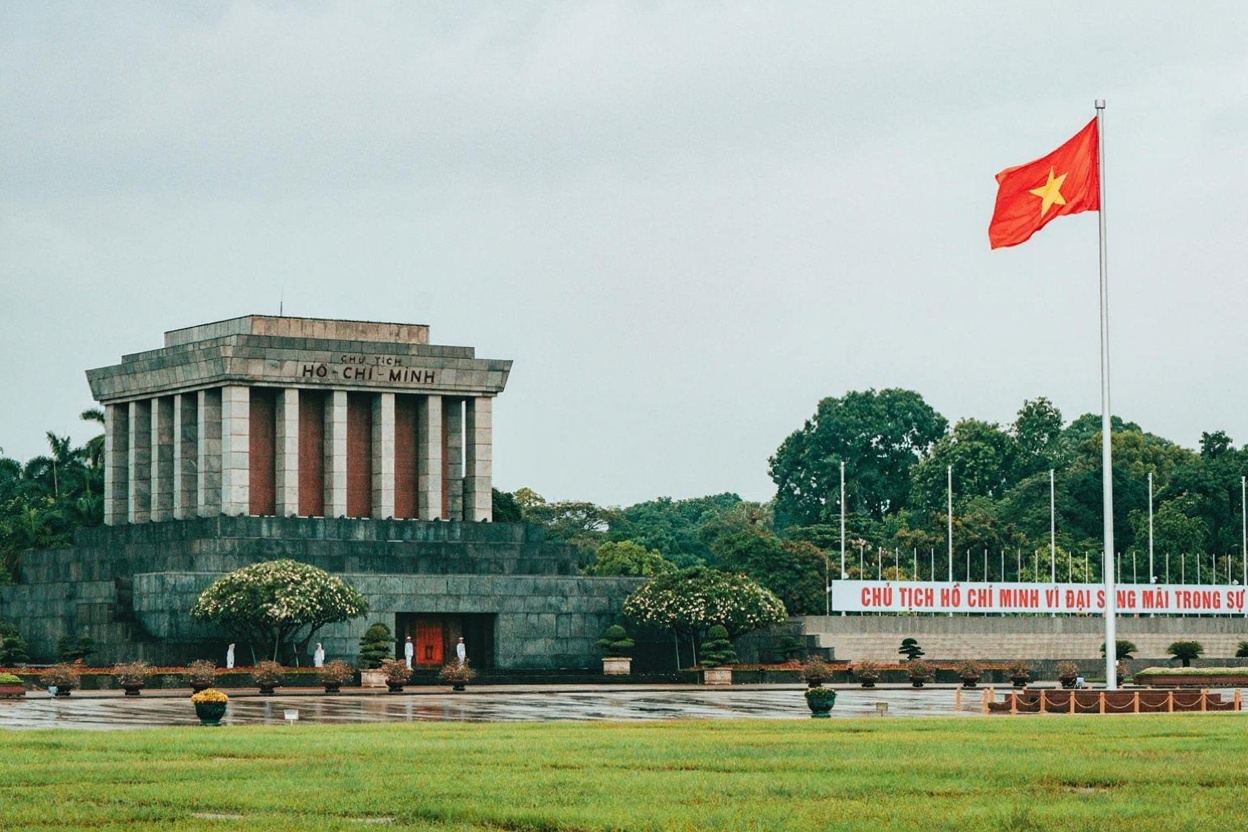
The format below is the most popular and practical 14-day structure: Hanoi north, a northern highlight (Ha Long Bay or Ha Giang — choose one), fly or train south to the central coast, and end in Ho Chi Minh City. It’s popular because it genuinely works — each leg has enough time for depth rather than a single rushed day per city.
Day by Day: The Classic North-to-South Arc
Days 1–2: Hanoi
Arrive in Hanoi. First day: recover from the flight, eat something at a street stall, walk the Old Quarter. The narrow streets, the Hoan Kiem Lake, the traffic — give yourself the afternoon to absorb Hanoi before trying to accomplish anything specific. Day 2: Hoan Kiem Lake and Ngoc Son Temple in the morning (15,000 VND admission), the Temple of Literature (35,000 VND), street food lunch near the Ba Dinh area, Hanoi Old Quarter walking food tour in the evening. You’ll eat bún chả, bánh mì, and phở within 48 hours of landing — this is correct.
Day 3: Ninh Binh day trip (or overnight)
Ninh Binh is 90 minutes from Hanoi and covers the limestone karst scenery most people associate with Ha Long Bay — minus the cruise and at a fraction of the cost. The Tràng An boat circuit (250,000 VND, 3 hours) winds through flooded limestone valleys and temple cave systems. Bich Dong Pagoda is a 30-minute tuk-tuk from Tràng An. Mua Cave viewpoint gives you the Instagram panoramic of the valley. Day trip costs: transport + boat + entry fees ≈ 500,000 VND ($20). Option: stay one night in Ninh Binh town to see the landscape at dawn before returning to Hanoi.
Days 4–6: Ha Long Bay overnight cruise OR Ha Giang (choose one)
Option A: Ha Long Bay (2 nights, 3 days): Depart from Hanoi on a morning bus, board the boat at noon. Two-night cruise: limestone karsts, kayaking, cave visits, sunset on the deck. Return to Hanoi late on day 6. Budget: $150–250 for a mid-range 2-night cruise (price per person, double occupancy). Book through GetYourGuide, Klook, or directly with operators like Paradise Cruises or Bhaya for verified quality. Note: Ha Long Bay delivered on the landscape but the better-value version involves staying in Cat Ba Island and doing day trips into the bay — 30–40% cheaper, more flexibility.
Option B: Ha Giang Loop (3–4 days): Overnight bus from Hanoi to Ha Giang town (7 hours, 200,000–280,000 VND). Get your permit at City Hall. Ride the loop self-drive or with an Easy Rider guide. Return to Hanoi by overnight bus on day 7 or 8. This is physically more demanding but provides the most dramatic landscape in Vietnam. See the Ha Giang solo guide for the full route. Note: if you do Ha Giang instead of Ha Long, compress days 7–9 to eliminate one extra transit.
Day 7: Fly Hanoi → Da Nang (or Hue)
Flights are 1 hour and cost $25–60 booked 1–2 weeks ahead on VietJet, Bamboo, or Vietnam Airlines. Flying this leg saves a full day vs. the 12+ hour train. Option: fly to Hue instead of Da Nang if you want to see Hue’s Imperial Citadel before Hoi An. The Da Nang option allows you to drive or taxi to Hoi An directly (45 minutes, 200,000–300,000 VND by taxi or Grab).
Days 7–9: Hoi An (3 nights)
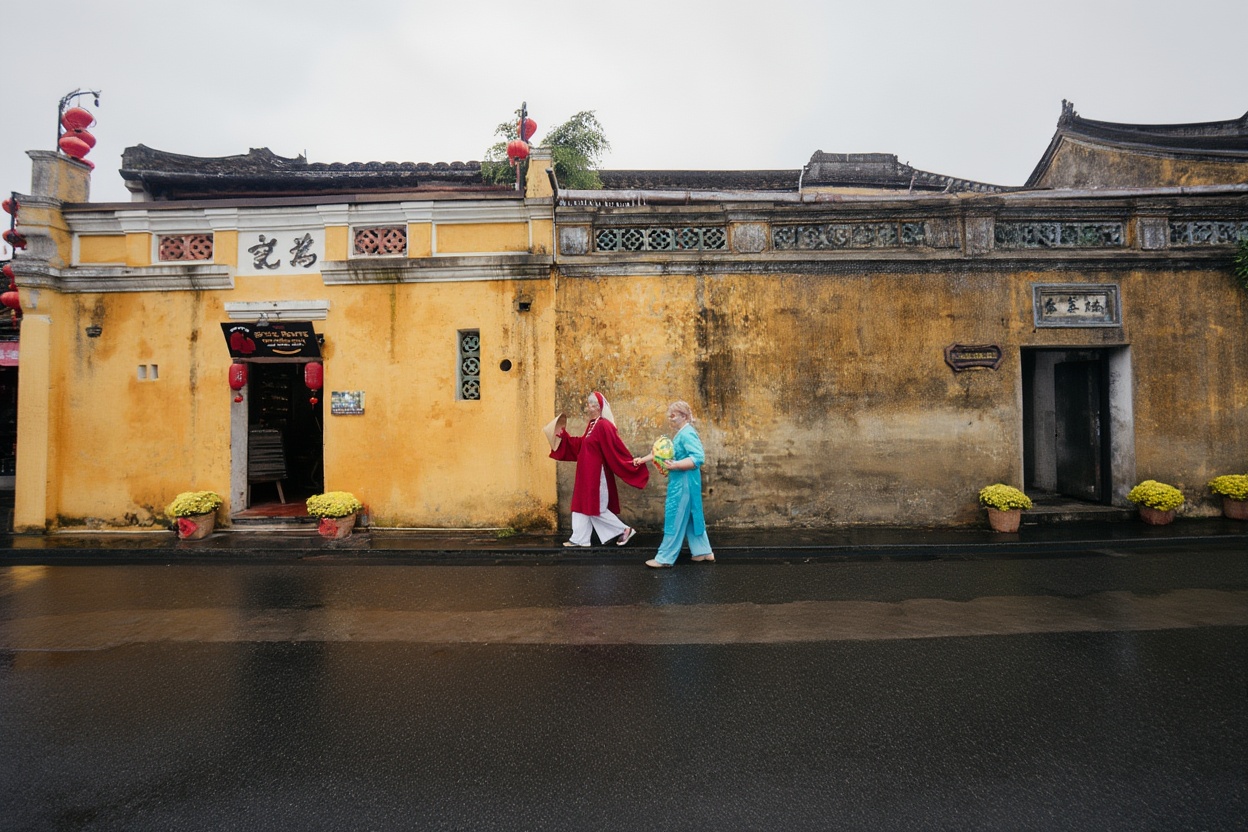
Hoi An is the most compact day-to-day pleasant experience in Vietnam — the Ancient Town is walkable, the food is excellent, the tailors and craft shops offer genuine quality, and the beaches (An Bang, Cua Dai) are 15 minutes by bicycle. Three nights is the sweet spot: one full day in the Ancient Town (Hoi An Museum, Tan Ky Merchant House, Japanese Covered Bridge, White Lantern Market at night), one day at the beach or on a bicycle through the rice paddies to Cam Thanh water coconut forest, one flex day for cooking class or day trip to My Son Sanctuary (70,000 VND, 45 minutes away).
Day 10: Hue (day trip or 1 night)
The 3-hour train from Da Nang to Hue crosses the Hai Van Pass — one of the most scenic rail segments in Southeast Asia. The Hue Imperial Citadel (150,000 VND) is a half-day. The royal tombs (Tu Duc, Minh Mang, Khai Dinh) require another half-day and transport (rental motorbike or tour). Option: stay one night in Hue rather than making it a day trip from Hoi An — the Hue food scene (bún bò Huế, bánh khoái, cơm hến) justifies it. One night → 2 nights, push your HCMC arrival back accordingly.
Days 11–12: Da Nang (1–2 nights, or transit only)
Da Nang is Vietnam’s most livable city — wide streets, beaches, good coffee. It’s not a must-stay destination for two-week travelers who’ve already done Hoi An 45 minutes south. Worth considering if you want beach time in a less crowded setting than Hoi An’s An Bang or want to see Marble Mountain (40,000 VND, sunset views over Da Nang bay) and the Dragon Bridge (watch it breathe fire on weekends at 9pm). Optional: skip Da Nang as an overnight and fly directly from Da Nang airport to HCMC.
Days 12–14: Ho Chi Minh City (2–3 nights)
HCMC in 2–3 days: War Remnants Museum (40,000 VND — emotionally demanding, start here on day 1 when you have full bandwidth), the Bến Thành Market area food streets for breakfast, the Cu Chi Tunnels as a day trip (130,000 VND, 1.5 hours from city center), Chợ Lớn (Chinatown) for Cantonese breakfast on the final morning. The city is impossible to see fully in 2–3 days — it rewards specializing. If food is your focus, skip the tourist sites and spend those days moving through Districts 3, 4, and 5 with a food itinerary. If history is your focus, War Remnants Museum → Independence Palace → Jade Emperor Pagoda covers the main sites in two full days. If you have more flexibility, our northern Vietnam guide covers the full range of options beyond the loop.
The Alternative: Central Focus (Beach and Mountains)
Not every 14-day traveler wants the full north-to-south arc. If you’re coming specifically for beaches and the central highlands, this alternative structure delivers more beach time and similar cultural depth:
Days 1–3: Da Nang / Hoi An (fly directly from international into Da Nang)
Days 4–5: Hue (train from Da Nang)
Days 6–8: Phong Nha (bus from Hue — the cave country, Paradise Cave, Phong Nha Cave)
Days 9–11: Hoi An return (bus/train from Phong Nha)
Days 12–14: Da Nang beaches (My Khe, Non Nuoc) or Nha Trang (budget flight from Da Nang)
This structure gives you more consecutive beach days and less flight time. It’s better suited for travelers who specifically want to dive in Nha Trang or spend extended time at Hoi An’s An Bang Beach.
Budget and Costs: 14 Days Realistic
| Category | Budget ($40-60/day) | Mid-Range ($80-120/day) |
|---|---|---|
| Accommodation | 200,000–400,000 VND/night ($8–16) | 500,000–1,000,000 VND/night ($20–40) |
| Food | 150,000–250,000 VND/day ($6–10) | 300,000–600,000 VND/day ($12–24) |
| Internal flights (3) | 1,500,000–3,000,000 VND total ($60–120) | Same — flights don’t have a mid-range premium |
| Activities and entry | 100,000–200,000 VND/day ($4–8) | 300,000–600,000 VND/day ($12–24) |
| Transport (local) | 50,000–150,000 VND/day ($2–6) | 150,000–350,000 VND/day ($6–14) |
| Ha Long cruise (1 cost) | 3,000,000–4,000,000 VND ($120–160) for budget 2-night | 5,000,000–8,000,000 VND ($200–320) for mid-range |
Two-week total estimates:
- Budget traveler (hostels, street food, local transport): $550–750 USD excluding international flights
- Mid-range traveler (private rooms, restaurant meals, select tours): $1,100–1,700 USD excluding international flights
Pacing: How Much Is Too Much in One Day?
The travel day problem in Vietnam is underestimated at the planning stage. A flight from Hanoi to Da Nang takes 1 hour in the air — but add check-in 90 minutes early, 30 minutes to a taxi to the airport, 45 minutes to collect bags and get a Grab the other end, and you’ve spent 4 hours door-to-door. A “day” that starts with a flight in the morning becomes a half-day, and if you’ve added a museum visit after landing, it becomes an exhausting full day.
Rules that prevent the overpackaged day problem:
- Flight days are travel days — plan for arrival at accommodation by mid-afternoon, one short walk or meal, nothing more
- Bus days (Hoi An to Hue, Hue to Phong Nha) require realistic time budgeting — 3 hours becomes 4.5 hours with pickup, traffic, and stops
- Museums and historical sites in Vietnam take longer than the brochure suggests — the War Remnants Museum in HCMC takes most people 2.5–3 hours, not 1.5
- Leave one full unscheduled day in each major stop — the best things you’ll do in Vietnam are usually things you discovered by walking, not things you planned
The specific mistake of the 14-day trip is planning 10+ activities. A day in Hoi An that includes morning at the Ancient Town, bicycle to Cam Thanh coconut forest, An Bang Beach afternoon, and lantern market at night sounds complete. It’s exhausting. One of those activities would have been enjoyed more deeply. Two of them would have been enjoyed well. Four means you arrive at each slightly wishing you were still at the last.
What to Actually Do in Each City: The Edited List
Every Vietnam guidebook has a master list of things to see. For a 14-day trip, edit it aggressively. These are the high-return activities by city — everything worth doing if you only have 1–3 days:
Hanoi (2 days): Hoan Kiem Lake at 6am (before tourists, during tai chi and badminton). Hoan Kiem Market for breakfast. Temple of Literature (genuine historical weight, not just a photo spot). Old Quarter food walk — starting at any street food cluster on Bà Triệu or Hàng Điếu. Skip: the Ho Chi Minh Mausoleum if you don’t have a specific interest in Vietnamese political history (long queue, brief experience). Skip: the Ethnic Minority Museum if you’re going to Sa Pa or Ha Giang (see it in person instead).
Hoi An (3 days): Full day in the Ancient Town without a plan — buy an Ancient Town ticket (120,000 VND, see five sites), eat bánh mì from the Madam Khanh cart on Phan Chu Trinh, walk through the covered Japanese Bridge when it’s empty at 7am. Rent a bicycle and go to Cam Thanh village (coconut basket boats). An Bang Beach on the third day. Skip: most tailor shops unless you have specific garment needs (many quotes are inflated for tourists) and enough time for proper fittings. Skip: the big night market if the lantern market is your real goal — they’re different experiences. For a full breakdown of what to prioritize, the Saigon things to do guide covers every neighborhood and day-trip worth your time.
Ho Chi Minh City (2–3 days): War Remnants Museum on your first full day when you have emotional bandwidth. Breakfast in Chợ Lớn or cơm tấm in District 3. Cu Chi Tunnels as a half-day (leave by 8am to avoid midday heat). Independence Palace for the Cold War history counterpoint to the war museum. Bến Thành Market for context on what a Vietnamese market looks like — don’t buy anything, just observe the price tier difference between tourist stalls and local stalls. Evening on Bùi Viện if you want the backpacker atmosphere once; never go back.
When to Go: 14-Day Planning by Season
Vietnam’s climate creates a planning problem because the country is long enough that north and south have opposite weather patterns. November–March is the best window for the south (dry, comfortable) but this is monsoon season for the central coast including Hoi An. October–November hits the Ha Giang harvest and the south pre-peak, but the central coast is entering its worst flooding period.
The least-bad compromise for the full north-to-south arc in 14 days: February or March — Hanoi is cool but clear, Ha Giang blossoms are emerging, the central coast is transitioning out of its monsoon, and HCMC is in full dry season. Or November: Ha Giang harvest peak, south in perfect weather — accept that Hoi An flooding in early November is possible and plan flexibility for the central leg.
December and January are reliable across most of the arc. Ha Giang is cold (bring warm layers) but clear. HCMC is perfect. Hoi An is in its best weather. The trade-off: this is peak season for both domestic and international tourism, meaning Ha Long Bay and Ha Giang are at their most crowded and accommodation prices in major cities are at their highest.
Frequently Asked Questions
Is 14 days enough for Vietnam?
Yes — with the right structure. 14 days is enough for Hanoi, one northern highlight (Ha Long Bay or Ha Giang), the central coast (Hoi An and Hue), and Ho Chi Minh City. It’s not enough to also do Sapa, the Mekong Delta, Nha Trang, and Phu Quoc. Choose your arc and commit to it — depth beats breadth at this trip length.
Should I fly or take the train in Vietnam?
Fly between Hanoi and Da Nang (saves 12+ hours vs. train) and between Da Nang and HCMC (saves 16+ hours). Take the train for Hue to Da Nang or Da Nang to Hue — the Hai Van Pass section is one of the most scenic train journeys in Southeast Asia and only takes 3 hours. Budget airlines (VietJet, Bamboo) regularly have Hanoi to Da Nang for under $40 booked a week ahead.
What should I skip on a 14-day Vietnam trip?
Sapa (requires 4+ days to do properly and is far north), the Mekong Delta (requires 2–3 days and is best combined with HCMC), Nha Trang (beach time better spent in Hoi An or Phu Quoc unless diving is the specific goal), and the full Ha Giang Loop if you’re doing Ha Long Bay — they’re both multi-day and on opposite ends of the itinerary. Do one northern highlight, not both.
How do I book flights within Vietnam?
Book directly with VietJet (vietjetair.com), Bamboo Airways (bambooairways.com), or Vietnam Airlines (vietnamairlines.com). Google Flights shows comparison prices but you’ll often find slightly better rates booking directly. Book internal flights when you confirm your overall travel dates — 2–3 weeks ahead gets you good prices, last week often doesn’t. The major internal routes (Hanoi–Da Nang, Da Nang–HCMC, Hanoi–HCMC) have multiple flights daily. Budget for 1–3 million VND ($40–120) per internal flight in economy, depending on timing and airline.
Do I need to book accommodation in advance for 14 days?
Depends on season and accommodation type. During peak season (November–March, Vietnamese public holidays), book Hoi An and Ha Long cruise options 2–4 weeks ahead. Major cities (Hanoi, HCMC, Da Nang) have enough inventory that 3–7 days ahead is usually sufficient for budget and mid-range hotels. During low season, booking 1–2 days ahead is often fine. Ha Giang accommodation can be booked on arrival except around the Mèo Vạc Sunday market weekends in peak season.
Should I travel Vietnam north-to-south or south-to-north?
North-to-south is the most common structure because most international travelers arrive in Hanoi on cheaper flights and the arc naturally flows to HCMC for a departure. South-to-north also works well — start in HCMC (good for acclimatizing to Vietnam, lower-intensity than Hanoi), work up through central Vietnam, and end in Hanoi or Ha Giang. No significant practical difference; choose based on your entry/exit city and whether you want to start or end with the northern mountains.
What visa do I need for 14 days in Vietnam?
Most nationalities apply for Vietnam’s e-visa before arrival. Single-entry e-visa: $25 USD, valid for up to 90 days. Apply at evisa.immigration.gov.vn (the official government site — not third-party sites that charge $30–60). Processing time: 3 business days typically. Some nationalities are eligible for visa exemption — check the official list before applying. US, UK, EU, Canadian, Australian, and most other Western passport holders qualify for the e-visa.
Vietnam in 14 days is a complete experience when structured correctly. The mistake is treating it as a 21-day trip compressed — it’s not, and the compression shows in every rushed connection. Treat it as a 14-day trip with a specific focus and it rewards you with depth that a longer, more scattered itinerary sometimes can’t achieve.
SIM Card and Connectivity: Before You Leave the Airport
Internet access in Vietnam is excellent and cheap. Get a local SIM card at the airport on arrival — not from a tourist desk (marked-up prices), but from one of the carrier booths inside arrivals: Viettel, Mobifone, or Vietnamobile all have official counters. Cost: 100,000–200,000 VND ($4–8) for 30 days with 30–100GB of data depending on the plan. Activation takes 5 minutes.
Why this matters for a 14-day trip: Grab (the ride-hailing app) requires an active phone connection to function, and Grab is how you move within cities cheaply and safely. Google Maps navigation for walking and transport works properly with a data connection. Booking hotels and restaurants last-minute is how you stay flexible. A working local SIM resolves all of this from hour one after landing. For a full breakdown of what to prioritize, the Hoi An things to do guide covers every day-by-day option in detail.
Alternative: eSIM through Airalo or Holafly before departure. More convenient (no physical card), slightly more expensive (~$15 for 30 days). Works immediately on landing without finding a booth. Best for travelers who want connectivity before clearing customs. I’ve used both approaches and now default to eSIM — the extra few dollars is worth not fumbling with a SIM tray in arrivals while jetlagged.
The full Vietnam itinerary guide covers different trip lengths and regional structures. For the most popular extension of this itinerary, the 2-week Vietnam guide covers the same arc with more day-by-day specifics. If you’re starting in the south and working north, our southern Vietnam guide covers the HCMC-to-central-coast arc in detail.
FAQ
Is 14 days enough to see Vietnam?
Two weeks is the minimum to do the north-south route justice without feeling rushed. A 14-day itinerary covering Hanoi, Ninh Binh, Hue, Hoi An, and Saigon works — you’ll have 2–3 nights in each place. To add Ha Giang Loop, Ha Long Bay, or a beach extension, you need 3 weeks minimum.
What is the best 14-day Vietnam itinerary?
Hanoi (3 nights) → Ninh Binh (2 nights) → Hue (2 nights) → Hoi An (3 nights) → Da Nang for flight → Saigon (3 nights). This covers the essential north-central-south divide, mixes city and landscape, and doesn’t waste time on long transport days. Flying Saigon–Hanoi (or reverse) to avoid retracing the route.
Should I go north to south or south to north in Vietnam?
Either works — there’s no significant difference in transport quality or cost. North to south (Hanoi first) is slightly more popular because Hanoi feels more ‘old Vietnam’ as a starting point and Saigon is a better city for a last-night splurge before flying home. South to north works if you’re flying into Saigon.
How do you get around Vietnam in 14 days?
Fly Hanoi–Saigon (or reverse) for the long-distance leg. For the north-central section: sleeper bus or train between Hanoi, Ninh Binh, Hue, and Hoi An. Budget airlines (VietJet, Bamboo) run Da Nang–Saigon if you want to save a day. A private minivan for Hue to Hoi An via the Hai Van Pass is popular and costs $25–35 split between a group.
What should I skip in a 14-day Vietnam itinerary?
Skip: Sa Pa (beautiful but takes 2 days travel from Hanoi), Phu Quoc (beach time requires 3+ nights to justify the travel), Ha Giang Loop (needs 4 days minimum and motorbike confidence). Add these on a return trip or a 3-week itinerary. For 14 days, keep to the classic route and do it properly rather than rushing to fit in everywhere.