Last updated: May 2026 — Domestic flight prices, Ha Long cruise options, and inter-city transport times verified.
The first time I did a 2-week Vietnam trip, I tried to do everything.
Hanoi for two nights. Ha Long Bay. Overnight bus to Hue. Train to Hoi An. Another bus to Da Lat. Then Ho Chi Minh City. Then a boat to Phu Quoc because someone on the hostel rooftop told me the beaches were “incredible.” Getting the overnight journey sorted first — our Hanoi to Sapa transport guide covers every option and which limousine van companies actually show up on time. Getting from Hanoi to Ha Long Bay pier is included in most cruise packages — our Hanoi to Ha Long Bay guide covers what’s included, which pier to confirm, and what to do if you arrive early.
I arrived home and realized I’d spent 60% of those fourteen days in transit — on buses that smelled like instant noodles and someone’s feet, on sleeper berths with overhead lights that never fully turned off, in airports waiting for budget flights I’d booked three days out at full price.
The cities I remember from that trip aren’t the ones I spent the most time in. They’re the ones I wasn’t exhausted in.
This itinerary is the version I give people now. One direction. Six stops. Two domestic flights that save you two days of your life. And enough time in each place that you actually understand what you’re looking at before you leave.
✓Quick Answer
The best 2-week Vietnam itinerary runs Hanoi (3 nights) → Ha Long Bay overnight cruise (2 nights) → fly to Da Nang → Hue (2 nights) → Hoi An (3 nights) → fly to Ho Chi Minh City (2 nights) + 2 buffer days. Two domestic flights (Hanoi–Da Nang and Da Nang–HCMC, ~$28–60 each) save 26+ hours compared to overland. Total in-country budget: $700–$1,400 depending on travel style.
The 2-Week Route at a Glance
Days 1–3: Hanoi
Hanoi lands hard. The flight comes in late, the air hits you like warm soup the moment you step outside, and the motorbikes start before you’ve found the taxi rank.
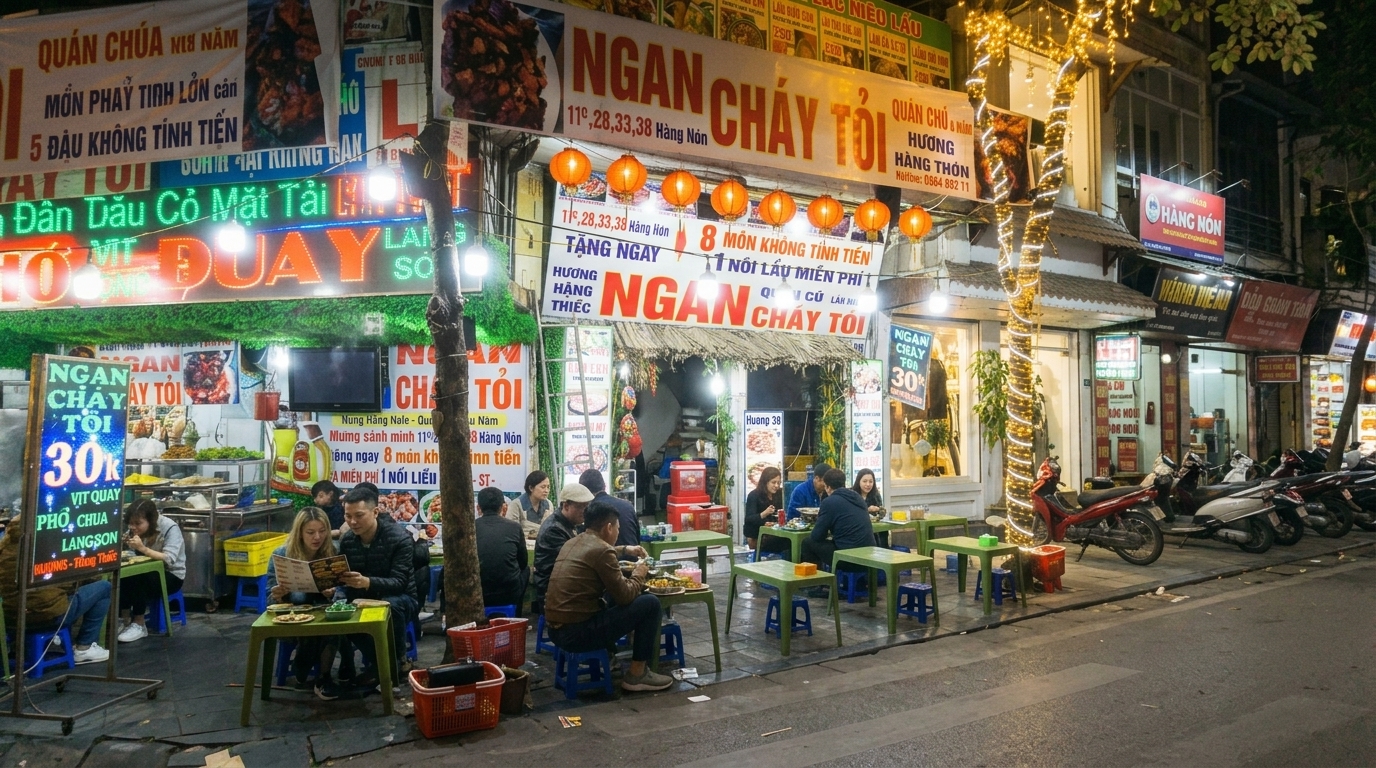
Don’t try to do anything on Day 1. Get to your guesthouse. Eat whatever the nearest stall is serving. Sleep with the ceiling fan on and the window closed — the Old Quarter at midnight is still fully operational.
Day 2 is your real first day. Start at Hoàn Kiếm Lake (say: hwahn kyem) at 7am — the road around the lake closes to motorbikes on weekend mornings, and even on weekdays the early hour means you can actually hear the water and the badminton paddles instead of a wall of engine noise. Thirty minutes here feels like an entirely different city from the one you arrived in.
Hoa Lo Prison after breakfast — 45 minutes, 30,000 VND (~$1.20). More important than it sounds. The prison held Vietnamese revolutionary fighters during the French colonial period, then American POWs during the Vietnam War. Both periods are displayed, neither sanitized. It reframes everything you’ll see for the rest of the trip.
Old Quarter walking in the afternoon. The 36 Guild Streets (each street historically sold one type of goods — Hàng Bạc for silver, Hàng Gai for silk — still roughly true today) are best on foot, best before 11am, best if you have no destination in mind and just let yourself get briefly lost in the wrong direction.
★Jake’s Pick
Bún Chả Hương Liên at 24 Lê Văn Hưu — this is where Obama ate with Anthony Bourdain in 2016. Still worth going, not for the fame but because the bún chả (say: boon chah — grilled pork patties in cold sweet broth with rice noodles on the side) is genuinely excellent and the combo costs 100,000 VND (~$4). Go for lunch. The line moves fast, the stools are plastic, and the staff has absolutely no interest in the Obama angle.
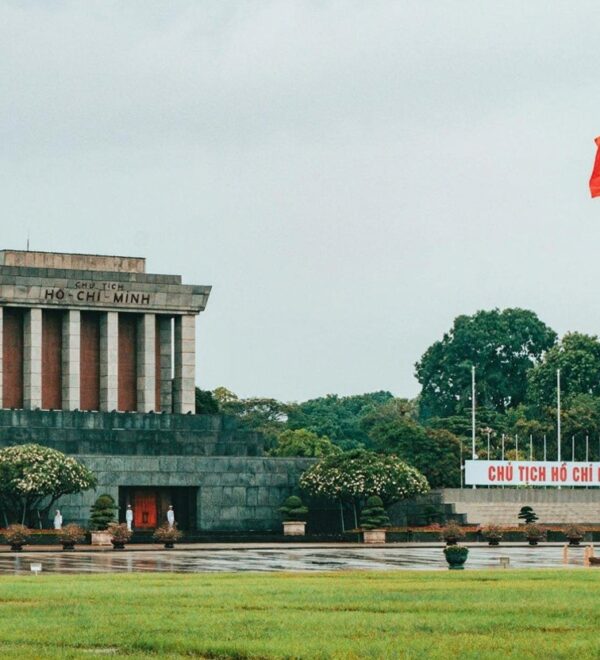
Day 3: Choose one — the day trip to Ninh Binh (2 hours by express bus, Trang An boat circuit at 20.2514° N, 105.9422° E is 2.5 hours through cave-threaded waterways, 250,000 VND / ~$9.80) or the Ho Chi Minh Mausoleum complex (open 8–11am, closed Monday and Friday, free entry for the mausoleum, allow 2 hours). If you only have one full day in Hanoi before the Ha Long cruise — skip both and just walk. West Lake at dawn, an iced coffee at a plastic stool, a meal somewhere you can’t read the menu. That’s the version of Hanoi that stays with you.
ℹKnow Before You Go
Grab is how you move in Hanoi — not street taxis. Multiple travelers document systematic overcharging by non-metered taxis, including drivers who confuse 100,000 VND (~$4) and 10,000 VND (~$0.40) notes deliberately. Download Grab before you land. The fare appears in the app, the driver knows you can see it, and the bill arrives on your phone. It eliminates the entire category of transit fraud.
Days 4–5: Ha Long Bay Overnight Cruise
The cruise bus departs your Hanoi hotel around 8am, reaches Tuan Chau pier around noon, and launches into Ha Long Bay — 20.9101° N, 107.1839° E — at 1pm.

The first hour on the water rearranges your expectations. The karst islands rise straight out of the emerald water — not gently, not gradually, but abruptly, like something pushed up from below. The smell is salt and diesel and wet limestone, and the sound is competing boat horns until you get away from the pier, then nothing except water and occasional seabirds.
Book mid-range: 3,000,000–4,500,000 VND per person (~$120–175) all-inclusive. The budget cruise at half that price is a different experience — smaller cabins, reheated food, boats with diesel in the air below deck. The mid-range boats have proper kayaking equipment, seafood that was caught that morning, and a deck where you can watch the sunset from something other than a plastic chair bolted to fiberglass.
Heritage Cruises, Era Cruises, and Paradise Cruises are solid mid-range operators. Book directly through their websites or via your Hanoi guesthouse — both are equally reliable. Book 2–3 weeks ahead in peak season (October–April); boats fill up faster than you’d expect for something that costs $150.
What actually happens: afternoon kayaking into hidden lagoons (the one at Luon Cave, about 3km into the bay, is a 20-minute paddle through a tunnel in the cliff face into a bowl of water surrounded by vertical limestone on all sides — quietly extraordinary). Sunset on the deck with a beer. Seafood dinner family-style. Night moored in a protected bay. Set an alarm for 6am — the sunrise over the bay, before the other boats wake up, is the image people come here for and then can’t describe properly when they get home.
Back in Hanoi by 5pm on Day 5. Evening flight Hanoi → Da Nang.
⚠Real Talk
Ha Long Bay is genuinely beautiful and genuinely crowded. The peak season (October–March) puts hundreds of boats on the water simultaneously. If you’ve seen karst landscapes elsewhere — Ninh Binh, Ha Giang, Phong Nha — the Ha Long component of this route is the most expensive and most transit-heavy stop, and cutting it to add a third night in Hoi An is a defensible trade. If this is your first time in Vietnam and you haven’t seen a karst seascape, go. It earns its reputation.
Day 5 Evening — Transport: Fly Hanoi to Da Nang, Transfer to Hue
After returning from Ha Long by 5pm: check back into your Hanoi guesthouse, grab your bags (most will store luggage), and take a Grab to Nội Bài Airport. Evening flights Hanoi → Da Nang (HAN → DAD) depart 7pm–9pm on Vietjet or Vietnam Airlines — book the 7pm where possible to arrive Da Nang around 8:30pm.
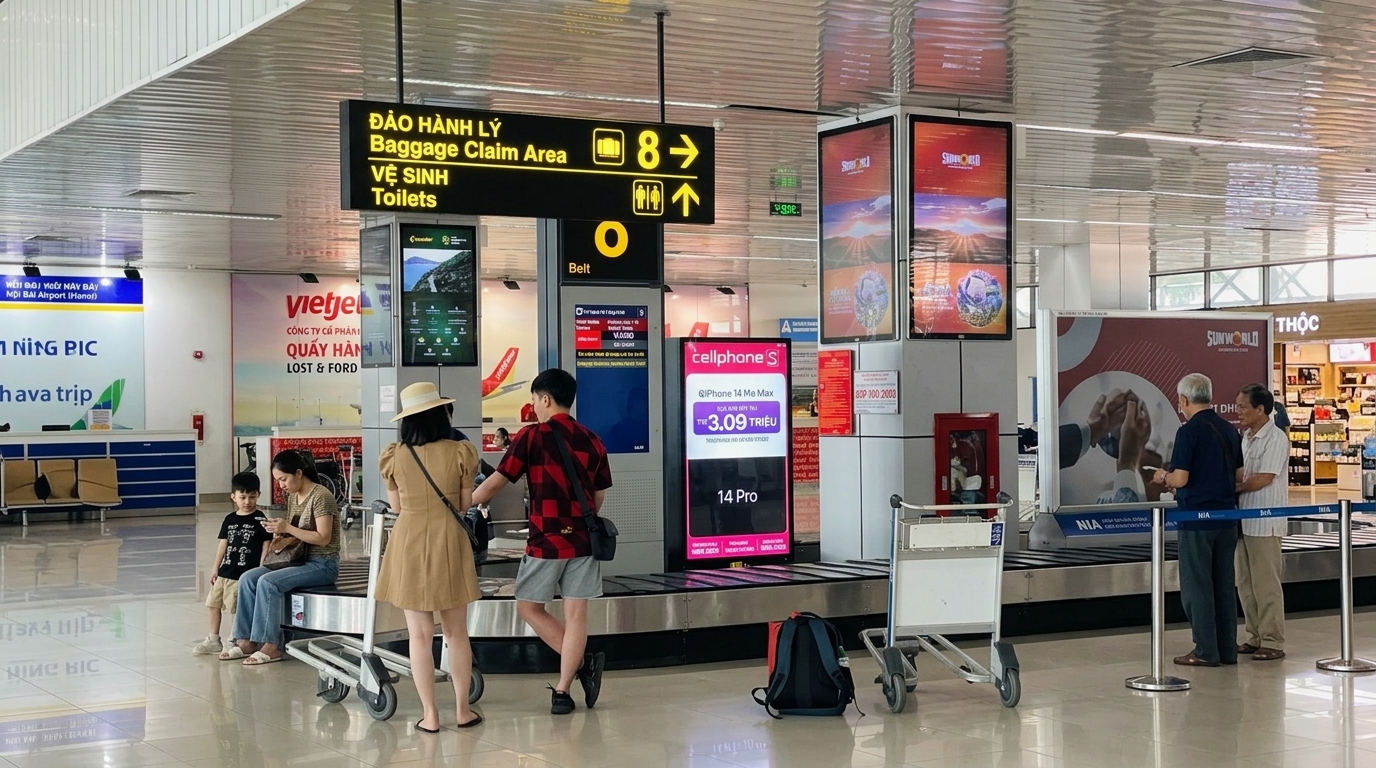
At Da Nang airport, take a Grab or negotiate a fixed-price taxi to Hue: 2 hours, 600,000–900,000 VND (~$24–35) for a private car. You arrive in Hue by 10:30–11pm. Check in, sleep.
12Go covers most Vietnam routes — sleeper buses, trains, and island ferries. Compare schedules and book in advance during peak season (Dec–Feb, Jun–Aug).
Why not fly directly Hanoi → Hue? The Hanoi–Da Nang flight runs more frequently, has more budget options, and the road from Da Nang to Hue passes through the Hải Vân Pass — a drive you want to do in daylight, which the next morning’s departure from Hue will give you via the reverse route.
Days 6–7: Hue
Two days is correct for Hue on a 2-week itinerary. Not one (too rushed), not three (unless you’re adding Phong Nha as a side trip, in which case restructure the whole segment).
Day 6: Imperial City at 16.4698° N, 107.5796° E at 7:30am — arrive before the tour groups, before the sun gets serious. Entry 200,000 VND (~$7.85). The three-layer complex (Citadel → Imperial City → Forbidden Purple City ruins) takes 3 hours if you move with intention and stop for the 9am Nhã nhạc court music performance at the Imperial Theater. The smell in the early morning is old stone and jasmine incense from the side shrines. By 10am it’s direct sun on exposed ground and you’ll understand why arriving at 7:30am wasn’t optional.
Lunch: bún bò Huế (say: boon baw hway) — the city’s signature noodle soup, spicier and more complex than Hanoi’s bún bò, with lemongrass-forward pork bone broth and thick round noodles. 30,000–60,000 VND (~$1.20–2.35) at a plastic-stool place. This is categorically different food from Hanoi. Eat it twice.
Afternoon: Lăng Tự Đức royal tomb at 16.4587° N, 107.5487° E — 150,000 VND (~$5.90), about 8km south of the city. The most atmospheric of the seven royal tombs — the emperor lived here for fifteen years while still alive, not just as a burial site, which gives it a strange lived-in quality. Frangipani dropping blossoms onto a lotus lake. Bamboo groves. Birdsong instead of motorbikes. Give it 1.5 hours.
Evening: walk the south bank of the Perfume River (Lê Lợi Street), dinner at a restaurant along the river where you can eat bánh bèo (say: banh bay-oh — tiny steamed rice cakes with dried shrimp and scallion oil, served in ceramic dishes, 25,000–40,000 VND / ~$1–1.55 per serving) alongside whatever else looks right.
Day 7: Morning optional — Thien Mu Pagoda (Chùa Thiên Mụ, free, 30 minutes, ride a bicycle along the south bank river road: 25,000–40,000 VND/day rental) or a second royal tomb if you want one more. Depart for Hoi An by early afternoon.
Transport Hue → Hoi An: Private car via Hải Vân Pass, 3–4 hours, 800,000–1,200,000 VND (~$31–47). Tell the driver explicitly: đèo Hải Vân, không qua hầm — the pass, not the tunnel. The tunnel saves 20 minutes and costs you the best 20 minutes of driving in Vietnam. At the summit of the pass, you’re at 496 meters on a mountain ridge with the South China Sea on both sides. Stop for 20 minutes. It’s worth it.
Days 8–10: Hoi An
Three nights in Hoi An is the right call. Two nights means you leave before you’ve understood it. Four nights starts to feel like you’re just waiting for something else to happen.
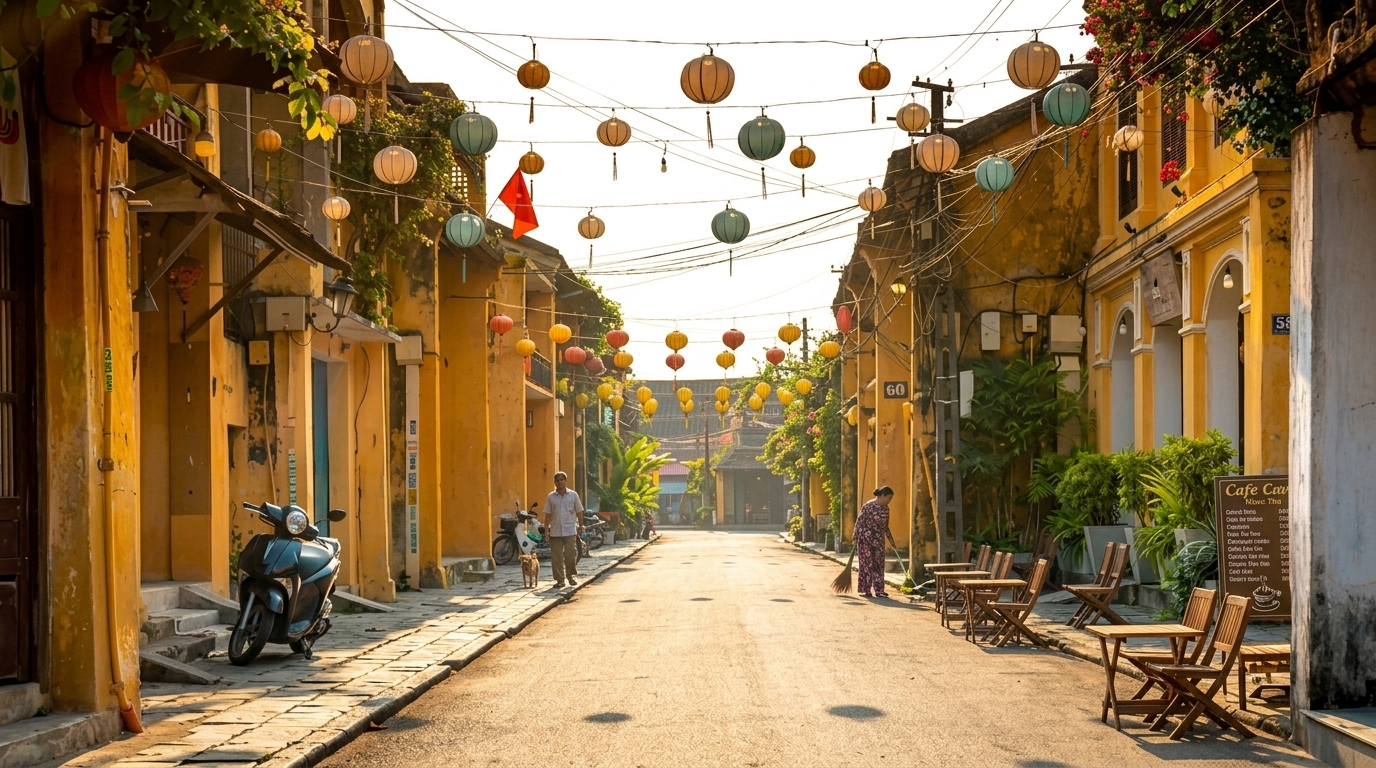
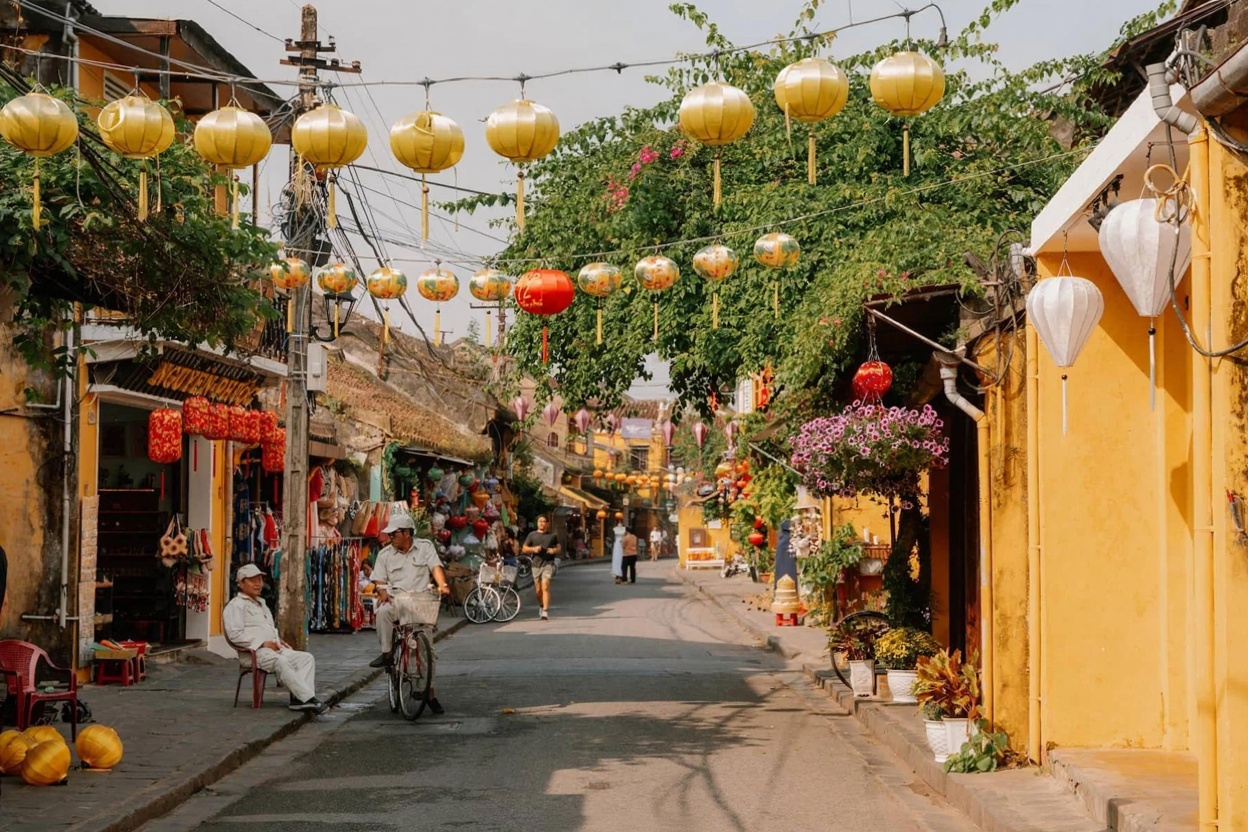
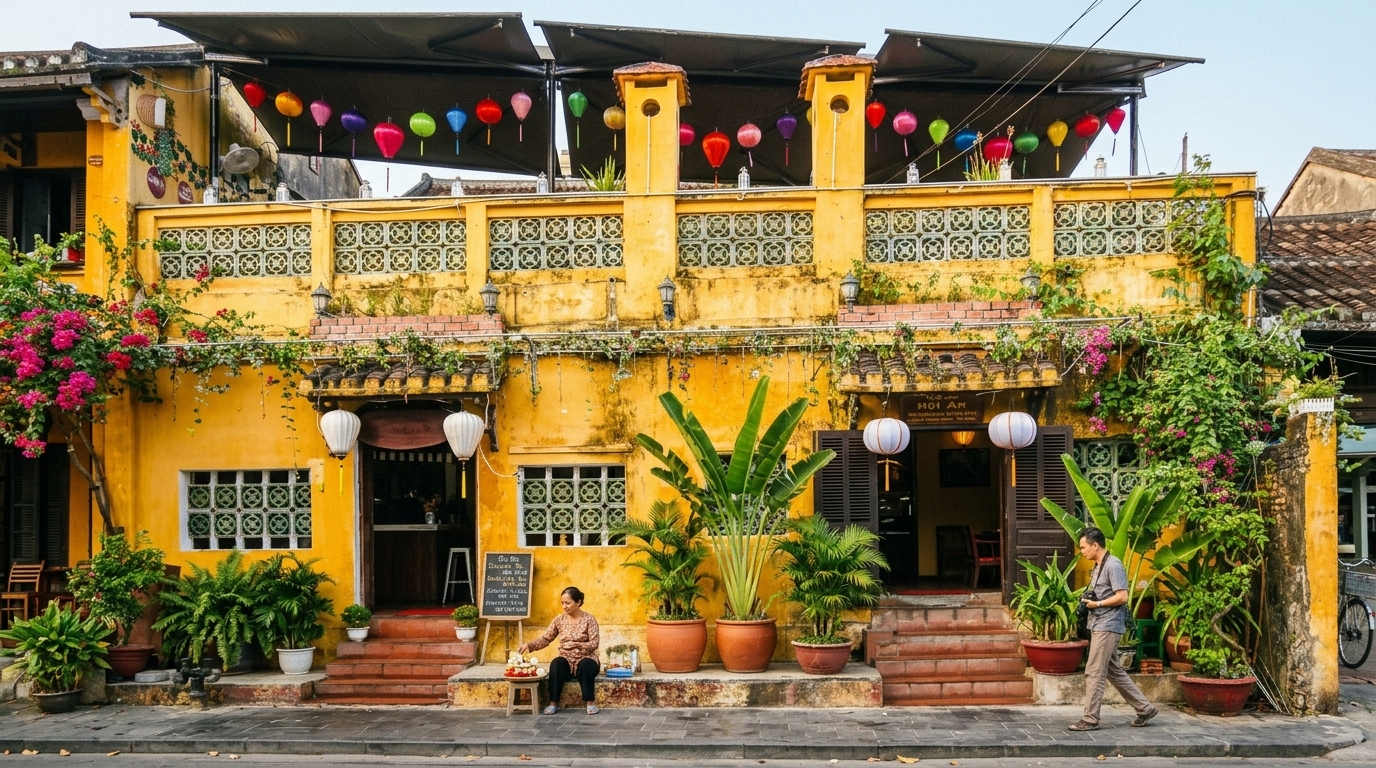
Day 8: Ancient Town at 15.8801° N, 108.3380° E before 9am. This is when the alleys off Trần Phú Street are quiet enough to actually see the tile roofs and yellow-washed walls — the compressed Japanese-Chinese merchant architecture that makes Hoi An look unlike anywhere else in Vietnam. By 10am those same alleys are shoulder-to-shoulder with tour groups and the light is gone. Go early.
Breakfast at Bánh Mì Phượng (Phượng’s, Cẩm Phô Street near the market) — 30,000 VND (~$1.20) for a bánh mì made with pork that’s been marinating since the night before and a baguette baked that morning. The bread is lighter than anywhere else because the recipe here is different. There’s usually a line. The line moves in under five minutes.
Afternoon: bicycle to An Bang Beach (25,000 VND/day rental, 5km from the Ancient Town, flat road). The beach is wide and quiet on weekdays. The South China Sea at An Bang is not dramatic — it’s warm and shallow and calm — which is exactly what you want after two days of imperial ruins and overnight cruises.
Day 9: Cooking class or My Son Sanctuary — pick one, not both. The half-day cooking class (800,000–1,200,000 VND / ~$31–47 at Red Bridge Cooking School or Thuan Tinh Island) starts at the market, picks fresh herbs, and ends with you eating what you made. My Son Sanctuary at 15.7637° N, 108.1237° E is 1.5 hours from Hoi An — Cham Hindu temples from the 4th–13th centuries, half-ruined, set in a jungle valley between mountains. 150,000 VND (~$5.90) entry. Go at 7am and leave by noon; the afternoon heat in that valley is punishing in a way that’s not interesting.
If you ordered custom clothes on Day 8, Day 9 afternoon is when you pick them up — the good tailors (ask your guesthouse for a recommendation, not a commission) need 24–48 hours and two fittings. For a full breakdown of what to do beyond the Ancient Town, our Hoi An things to do guide covers beaches, cooking classes, and day trips.
Day 10: Slow morning in the Ancient Town or a second beach afternoon. Transfer to Da Nang airport at 4pm (30 minutes by Grab, 200,000–300,000 VND / ~$7.85–11.75). Evening flight to Ho Chi Minh City.
ℹKnow Before You Go
Hoi An’s Ancient Town entry ticket (120,000 VND / ~$4.70) covers 5 of 21 heritage sites. The ticket kiosks are at the town entrances and they’re strictly enforced. Streets and cafes are free — only the interiors require the ticket. Don’t buy a ticket just to walk around; buy it if you specifically want the Japanese Covered Bridge interior, Tan Ky Ancient House, or the Assembly Halls. Otherwise the town is completely enjoyable without paying.
Days 11–12: Ho Chi Minh City
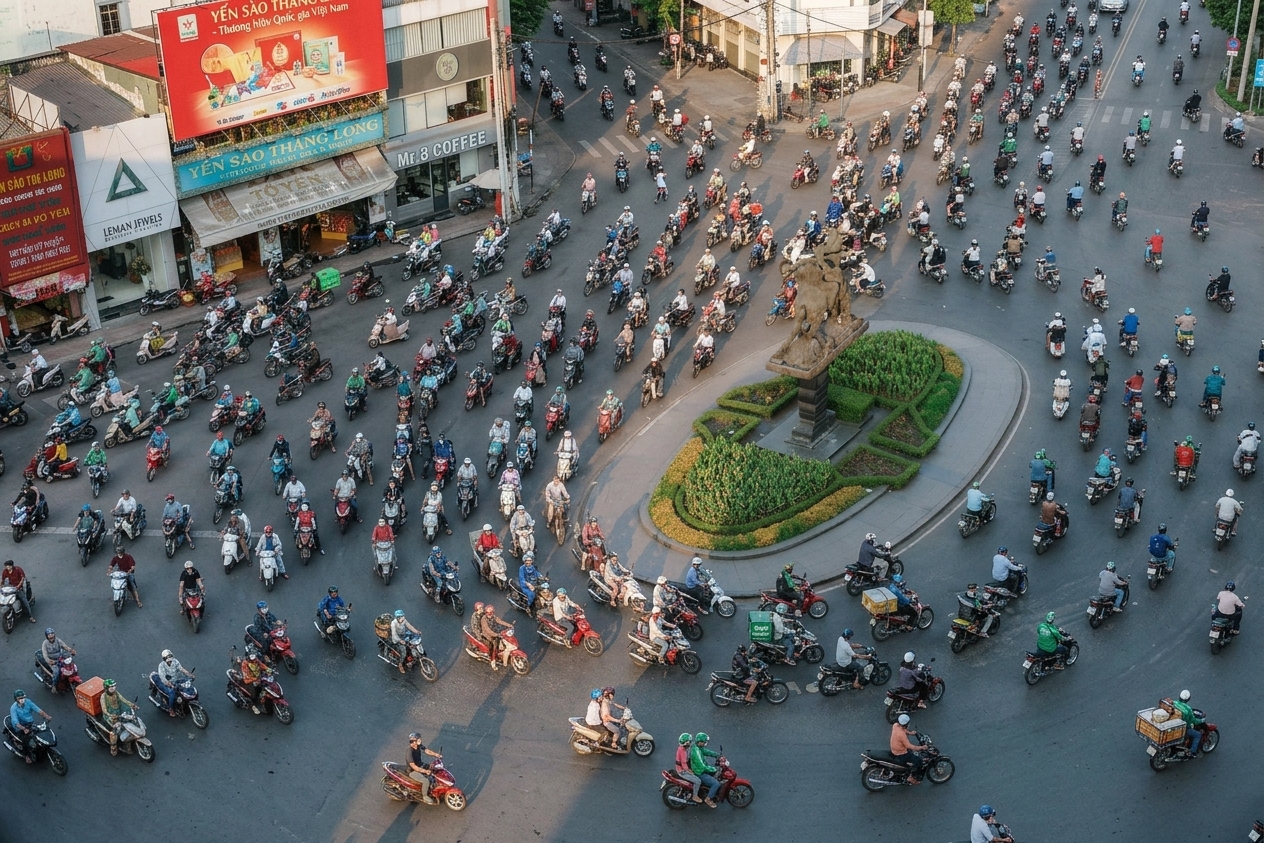
Two days in Ho Chi Minh City (Saigon) is not enough — it’s the largest city in Vietnam, 9 million people, chaotic in a specific way that’s completely unlike Hanoi’s chaos. But on a 14-day route that’s been covering the whole country, it’s what you’ve got. Use it deliberately.
Day 11: War Remnants Museum at 10.7794° N, 106.6927° E — 40,000 VND (~$1.55 entry), 3 hours minimum. The third floor is the most important photography exhibition in Vietnam, possibly Southeast Asia: the American War documented by photojournalists from both sides, including the most famous conflict photographs ever taken. Budget emotional recovery time after. Don’t try to rush through it and then do something cheerful immediately after.
Cu Chi Tunnels in the afternoon — 40km north of the city, half-day organized tour from your guesthouse: 350,000–500,000 VND (~$13.70–19.60) including transport and guide. The guerrilla tunnel network that runs 250km beneath the Cu Chi region. You can crawl through a widened tourist section; even widened, it’s claustrophobic in a way that changes how you understand the war. The context that clicks underground doesn’t click from any amount of reading.
Day 12: Reunification Palace at 10.7769° N, 106.6953° E — 40,000 VND (~$1.55), 2 hours. The building where the South Vietnamese government surrendered on April 30, 1975, preserved exactly as it was on that day. The war rooms, the bunker, the rooftop helipad. Jade Emperor Pagoda (Chùa Ngọc Hoàng, say: choo-a ngawk hwang) in the afternoon — free entry, genuinely beautiful, incense smoke turning the afternoon light gold inside the main hall, turtles released into the pond outside. The most visually complex temple in southern Vietnam.
District 3 for dinner — better local food than District 1, fewer backpackers, restaurants where you can point at what the table next to you is eating and get the same thing for 80,000–150,000 VND (~$3.15–5.90).
Days 13–14: Buffer Days
These days are not optional extras. They are structural. One day on this route will go sideways — flight delay, food that doesn’t agree with you, a place that’s better than expected and you want an extra morning. Without buffer days, every disruption cascades. Our Saigon things to do guide covers how to prioritize the city when you’re working with limited days.
Use the buffer in Hoi An if you want to extend the best stop on the route, or at the end in Ho Chi Minh City if you want more time in the south. If nothing goes wrong and you want to use them productively: the Mekong Delta day trip to My Tho (2 hours from HCMC, 350,000–600,000 VND / ~$13.70–23.55 for a half-day tour) is a reasonable addition on a buffer day — it won’t give you the real Mekong, but it gives you the river and the floating markets and a boat between the delta channels, which is more than nothing.
The Mistake I Made My First Time
I didn’t build buffer days in. I built buffer fantasies in — vague plans to “maybe add Da Lat if there’s time” and “possibly a beach day somewhere.” There was never time. There was always a bus catching, a hostel checkout, a domestic flight at 6am that required leaving at 4am to be safe.
The thing about Vietnam on 2 weeks is that the transit works — the country is connected, the budget flights are cheap, the buses run on time often enough. The thing that doesn’t work is using every available day for transit and then arriving at each destination already tired from the last one.
The second version of this trip — the one where I blocked two buffer days at the end and let Hoi An run to three nights — was the one where I understood what the trip was actually for.
The 2-Week Vietnam Budget Breakdown
What You Can’t Do on 2 Weeks (And What to Do Instead)
Ha Giang Loop: The most spectacular ride in Vietnam, and absolutely impossible to do justice on 2 weeks without gutting the rest of the trip. The Loop requires a minimum of 4 days riding plus 2 days transport from Hanoi and back — that’s 6 days for one region. Save it for a dedicated northern Vietnam trip. When you do it, don’t rush it.
Mekong Delta: A My Tho day trip from Ho Chi Minh City gives you “I went to the Mekong” bragging rights. The Can Tho floating markets at 5am, the river channels between delta islands, the ferry connections between villages — that takes 3–4 days minimum and needs an overnight. On 2 weeks, use the buffer day for the My Tho day trip if you need a river experience. Otherwise come back specifically for the Mekong.
Klook has the widest selection for Vietnam and is usually the cheapest. KKday is strong on day trips and local experiences.
— Hang Sơn Đoòng (the world’s largest cave), Paradise Cave, Dark Cave. If caves are specifically your thing, restructure: extend Hue to 3 nights and do a 1-day Phong Nha side trip from there (3 hours each way, tour 700,000–1,200,000 VND / ~$27.45–47.05). It changes the pacing of the central segment but it’s worth it if you know going in that it’s a priority.
Phu Quoc or any island: Adding an island means a flight diversion and losing 2 days minimum to transit. The beaches in Hoi An (An Bang, Cua Dai) and Da Nang (My Khe) are accessible from the main route without any diversion. If you specifically need Phu Quoc, make it a separate 5-day trip from Ho Chi Minh City.
→Who It’s For
This 2-week route works for first-time Vietnam visitors arriving into Hanoi and departing from Ho Chi Minh City (or vice versa), who want a complete north-to-south picture without sacrificing depth for breadth. If you’ve done this route before and want the second trip: Ha Giang instead of Ha Long, Phong Nha replacing the Hue segment, and Mekong Delta in place of Cu Chi. Completely different Vietnam.
South-to-North Option
The route works identically in reverse — fly into Ho Chi Minh City, end in Hanoi. The practical difference: Hanoi is an easier city to decompress in at the end of a trip than to arrive jet-lagged into. Ho Chi Minh City is overwhelming in a way that’s better when you’re already in a Vietnam headspace, not fresh off a 20-hour journey.
South-to-north works better if: your international flights route through HCMC, you’re traveling December–February (south is drier in those months), or your preferred flights in are to SGN and out of HAN.
2-Week Vietnam FAQ
How much does a 2-week Vietnam trip cost?
Budget travelers spending on dorms, local food, and sleeper buses: $480–730 in-country (excluding international flights and visa). Mid-range travelers with private rooms and domestic flights on long legs: $830–1,435. Add $25 for the Vietnam e-visa and $600–1,400 for international return flights from the US or Europe. The biggest variable is the Ha Long Bay cruise — the difference between a $80 budget cruise and a $175 mid-range boat is significant in experience quality.
Should I go north to south or south to north on 2 weeks?
North to south if your international flights route through Hanoi (HAN) on arrival — most US and European connections do. South to north if your flights route through Ho Chi Minh City (SGN) or if you’re traveling December–February when the south is drier. The cities don’t change; only the order changes. Both work.
Can I add Ha Giang to a 2-week Vietnam itinerary?
Only if you cut Ha Long Bay entirely and shorten one other stop. Ha Giang from Hanoi requires 2 days travel each way + minimum 4 days on the Loop = 8 days of your 14 just for the northern segment. That leaves 6 days for Hue, Hoi An, and Ho Chi Minh City — which is workable but tight and eliminates any buffer. If Ha Giang is the priority, restructure around it rather than trying to add it onto the standard route.
What’s the best time of year for a 2-week Vietnam trip?
February–April is the most reliable window for all regions simultaneously — dry season throughout, mild temperatures in the north, beach weather in Hoi An. May–August: hot in central Vietnam but fine everywhere else, best sea conditions on the coast. September–November: high risk period for central Vietnam — typhoon season can flood Hoi An in October and close the central region for weeks. December–January: good in the north and south, still variable in the central region. If traveling in the September–November window, consider doing the route south-to-north to spend less time in the central region during typhoon exposure.