
For everything else about the city, our Hanoi travel guide has the full picture.
Last updated: May 2026 — Internal flight prices, Ha Long Bay cruise options, and Cu Chi transport logistics verified.
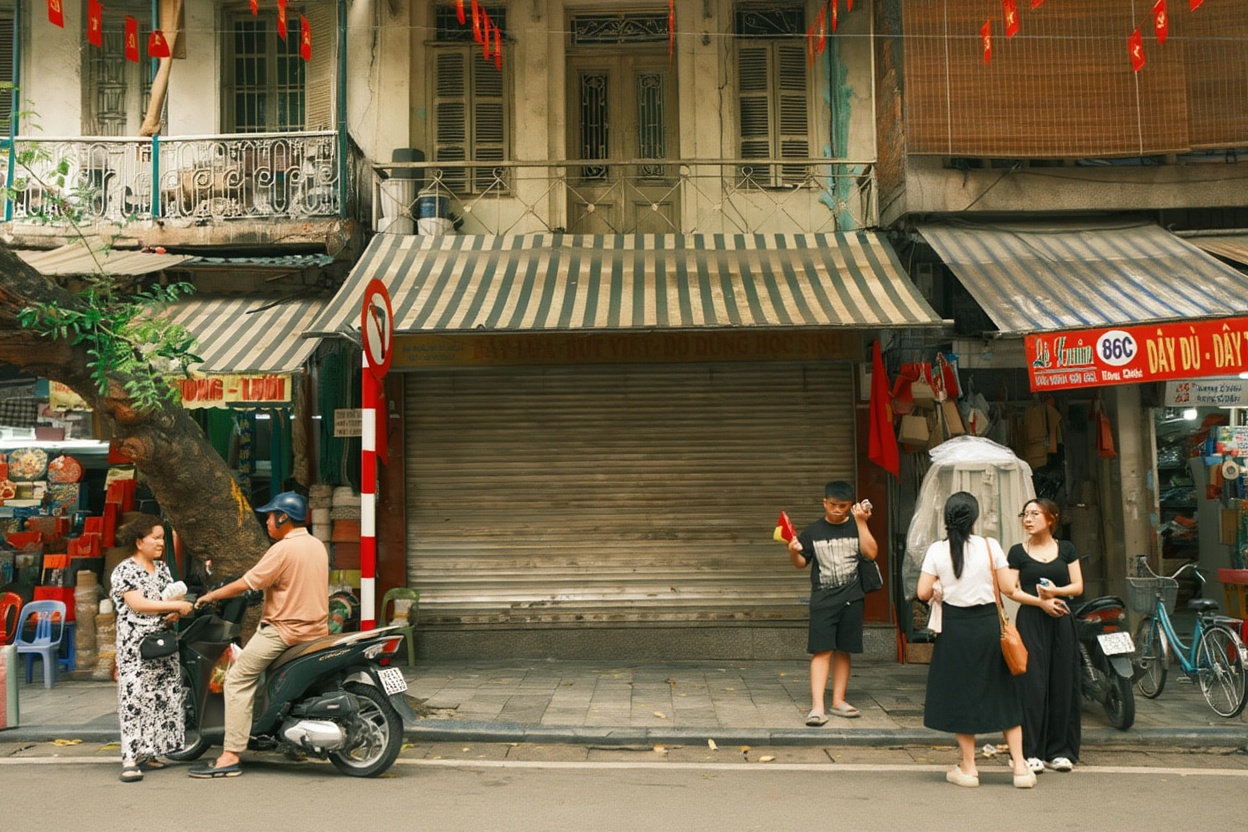
Here’s the thing nobody tells you before your first trip: Vietnam is 1,650 kilometers tip to tip. That’s London to Athens. On a 7-day trip, you do not have time for that.
Seven days works when you pick a region and own it. Below are three itineraries — one for each entry point — that actually respect your time.
Why a 7-Day Vietnam Itinerary Needs a Single Region
Internal flights help but don’t solve the math. Hanoi to Ho Chi Minh City costs $30–80 one way — but you’re burning half a day minimum on transport, airport time, and getting oriented in a new city. Do that twice on a 7-day trip and you’ve sacrificed 2 full days to logistics.

The north-to-south route — Hanoi → Ha Long → Hue → Hoi An → HCMC — needs a minimum of 14 days done properly. If you see that route in a “7 days” format, the writer is telling you what you want to hear.
⚠Real Talk
Every travel blog’s “ultimate 7-day Vietnam itinerary” that hits five cities is written by someone optimizing for search clicks, not for your actual trip. The best 7-day Vietnam trip I’ve done was spent almost entirely in one city. I still talk about it four years later.
Pick where your flights go. Start from that entry point and go deep.
Option 1: North Vietnam — 7 Days (Hanoi + Ha Long + Ninh Binh)
This is the strongest route for first-timers flying into Hanoi. Three contrasting environments — city, sea, countryside — without a single domestic flight or long bus ride.
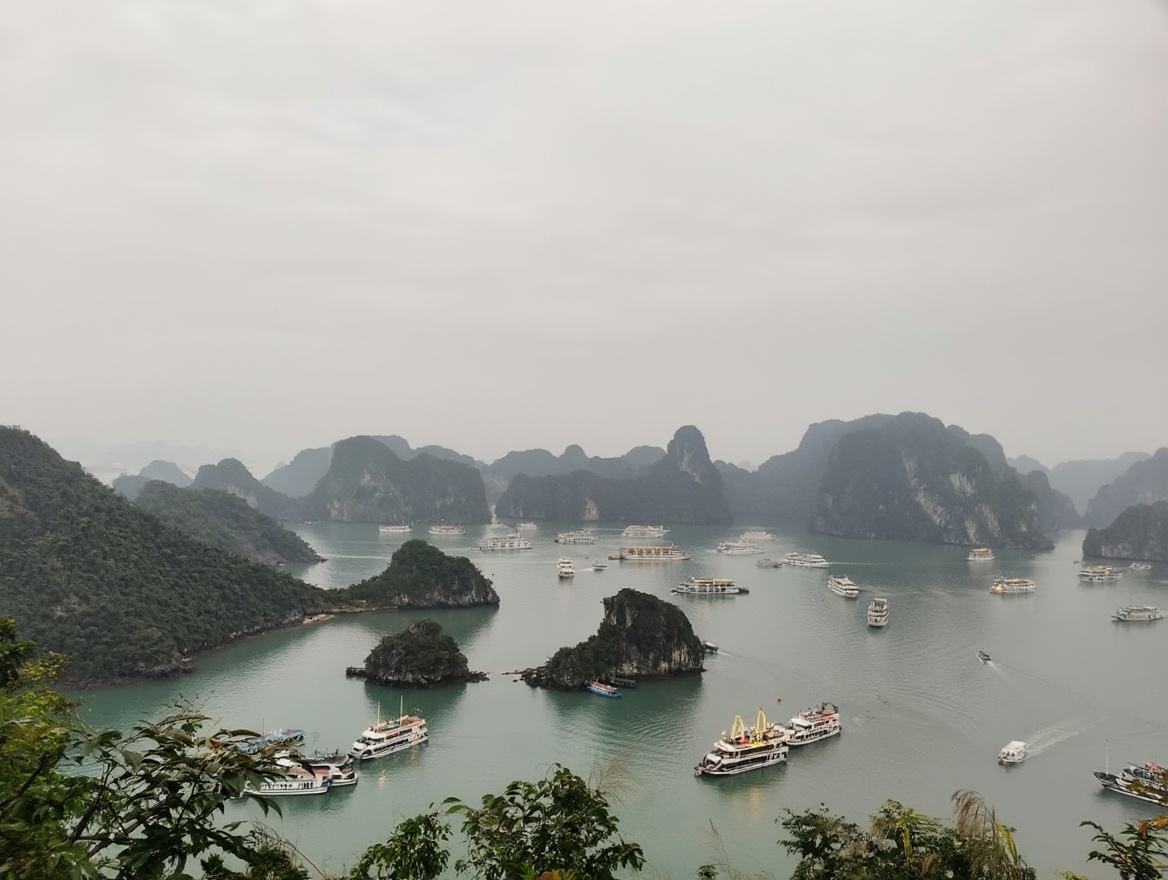 Ha Long Bay on a 2-night cruise — this is what the north is built around
→Who It’s For
First-time visitors who want a real taste of northern Vietnam without scrambling across the country. Street food obsessives. People who want at least one jaw-drop landscape moment.
Day 1–3: Hanoi (3 nights)
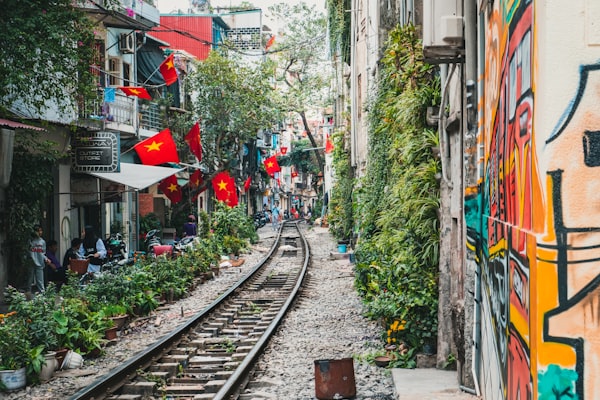
Land, drop your bag, do nothing ambitious on Day 1. The jet lag will make you stupid. Use the evening to find a Bia Hoi (say: bee-uh hoy) corner — the plastic-stool street beer spots where a glass costs 6,000–10,000 VND (~$0.25–0.40) — and let the city arrive at its own pace.
Day 2 is the serious day. Start at Hoàn Kiếm Lake (say: hwahn kyem) at 7am — before the tour groups reclaim the shoreline — when the tai chi practitioners still own the stones around the water. Cross to Hoa Lo Prison by 9am. Budget 45 minutes. The French colonial section, where Vietnamese independence figures were held, is more affecting than the American POW rooms. It shouldn’t be, given the American narrative around it, but it is.
Afternoon: eat your way through Hàng Bông Street. Bún chả (say: boon cha) at Bún Chả Đắc Kim — 21 Nguyễn Hữu Huân, 60,000–80,000 VND (~$2.30–3.00) — is the move. The charcoal smoke from the grill drifts out onto the pavement. You’ll smell it before you see it.
Day 3: either day-trip to Ninh Binh (2 hours each way by limousine van, 200,000 VND / ~$7.60) — Trang An boat circuit plus Mua Cave viewpoint is one of the best single days in northern Vietnam — or spend the day in West Lake, finishing at the Temple of Literature before the 5pm closing. I’d do Ninh Binh if you haven’t booked an overnight there for Day 6.
↗Insider Tip
Book your Ha Long cruise before you leave home — don’t buy at the bus station kiosks in Hanoi. Mid-range 2-day/1-night cruises run 2,500,000–4,000,000 VND (~$95–152) per person. Budget cruises at 1,200,000–1,500,000 VND smell like diesel and serve reheated seafood. The extra 80 dollars changes the experience entirely.
Day 4–5: Ha Long Bay (2 nights/1 night cruise)
Bus from Hanoi departs 8am, reaches Tuan Chau pier around 12:30pm. The cruise launches early afternoon — kayaking into cave lagoons while the sun is still high, seafood dinner on deck when the karst silhouettes blacken against the sky, the quiet of being anchored in the middle of a UNESCO bay with no sound except water against the hull.
Return to Hanoi pier by 3pm on Day 5. Transfers get you back to the city by 6pm. That’s fine — you’re tired. Dinner, early bed.
Day 6: Ninh Binh (1 night or day trip)
If you skipped it on Day 3: overnight in Ninh Binh is better than a day trip but both work. Trang An (say: trang an) boat circuit in the morning — 250,000 VND (~$9.50) per person, 2.5 hours through limestone cave tunnels that smell of damp rock and river moss. Mua Cave viewpoint in the afternoon: 100,000 VND (~$3.80) entry, 500 stone steps, 40 minutes up. Go at 4pm, not noon. The light over the rice paddies at that hour is extraordinary and the crowd is half what it is at 11am.
Day 7: Hanoi → departure
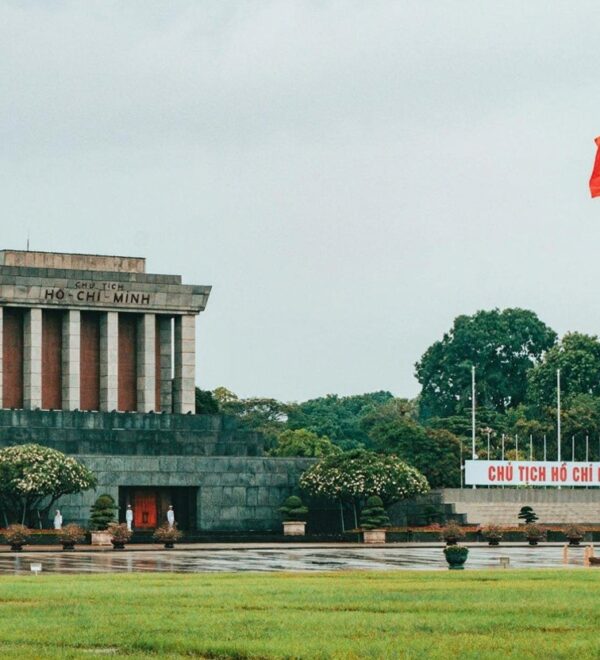
Morning in Hanoi, afternoon flight. Or use the morning for the Ho Chi Minh Mausoleum complex (Lăng Bác — say: lung bak) if you skipped it: open Tuesday–Thursday and Saturday–Sunday, 8–11am only. The embalmed body is genuinely strange. The surrounding garden complex is worth an hour regardless.
Option 2: Central Vietnam — 7 Days (Da Nang → Hội An → Huế)
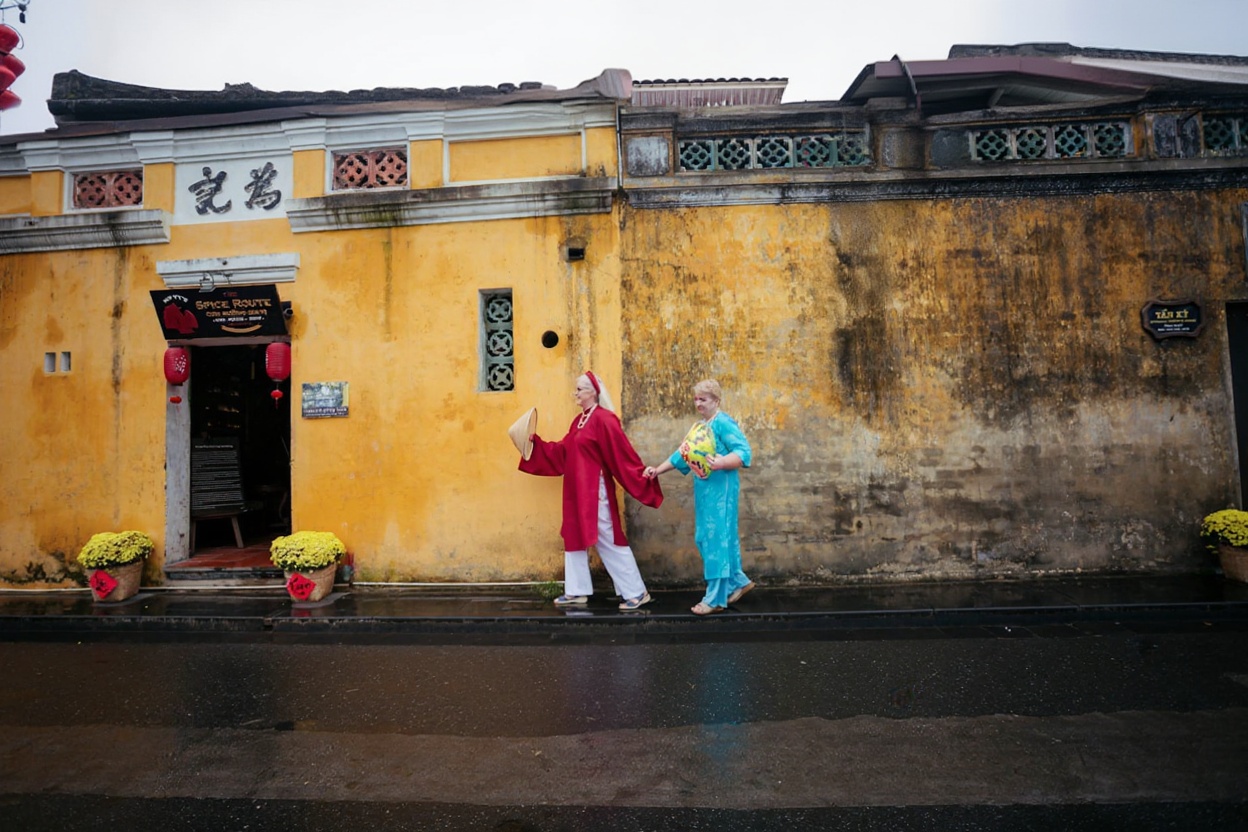
The most culturally dense route per day in Vietnam. Three UNESCO sites — Hội An Ancient Town, the Imperial City of Huế, and My Son Sanctuary — within a 3-hour radius. Plus the only road in Southeast Asia that genuinely makes you pull over: Hải Vân Pass.
→Who It’s For
History and architecture people. Anyone who’s already done the north or south and wants something different. Hội An is also Vietnam’s tailor town — if you want custom-made clothing, this is the route.
Day 1: Da Nang → Hội An
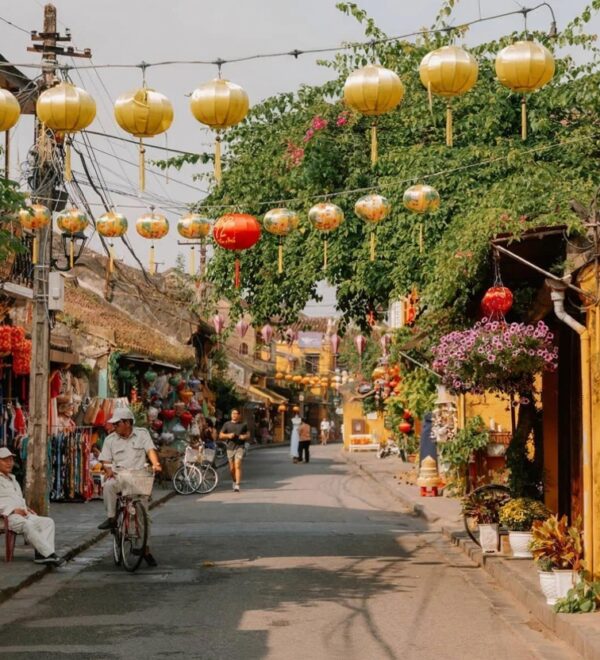
Da Nang airport to Hội An by Grab: 45 minutes, 250,000–350,000 VND (~$9.50–13). Go straight to Hội An — there’s nothing in Da Nang that can’t wait for a half-day on your way back out. Check in to anything in or near the Old Quarter. Walk the Ancient Town at dusk when the lanterns come on. The smell of incense from the Assembly Halls mixes with whatever’s frying at the stalls on Trần Phú Street. That first evening walk costs nothing and tells you more about Hội An than any guided tour.
Days 2–4: Hội An (3 nights)
Day 2: Ancient Town deep-dive. Japanese Covered Bridge (Chùa Cầu — say: chooa cow) is the postcard shot and worth seeing at 7am before it becomes a selfie queue. Morning Market on Trần Quý Cáp Street for breakfast — Bánh Mì Phượng at number 2B is genuinely the most famous bánh mì in Vietnam, 30,000–35,000 VND (~$1.15–1.35), queue starts at 10am and moves fast. Bicycle to An Bàng Beach in the afternoon: 5km east of the Ancient Town, less crowded than Cửa Đại, consistent surf in the mornings.
Day 3: half-day cooking class (800,000–1,200,000 VND / ~$30–46 including market walk and 4-course meal) or day trip to Mỹ Sơn Sanctuary (say: mee sun) — the Cham Hindu temples 40km west. 150,000 VND (~$5.70) entry. It’s not Angkor Wat but it’s genuinely eerie — a working temple complex until the 1200s, bombed into partial ruins during the Vietnam War, moss-covered and quiet in a way that Hội An town is not.
Day 4: slow morning. Private car or bus toward Huế after lunch. Have the driver go over Hải Vân Pass — not through the tunnel. The 20 minutes over the top gives you views of Da Nang Bay below on one side and the East Sea on the other, the road clinging to the mountain edge, a single French bunker still watching the coast. It’s a mountain pass. It’s worth it.
Days 5–6: Huế (2 nights)
Day 5: Royal Tombs afternoon — Lăng Tự Đức (say: lung too duck) is the most beautiful of the imperial tombs, set in a forested lake complex 7km south of the city. 200,000 VND (~$7.60) entry, give it 1.5 hours. The tomb was built while the emperor was still alive — he worked on it himself, apparently. That context changes how it feels to walk through it.
Day 6: Imperial City (Đại Nội — say: die noy) from 7:30am. 200,000 VND (~$7.60), 3 hours minimum for the inner compounds. Thien Mu Pagoda (Chùa Thiên Mụ — say: chooa tyen moo) on the way back — free, sits on a bluff above the Hương River with a 7-story octagonal tower that’s been there since 1601. That evening: Bún Bò Huế (say: boon bo hway) at dinner — the real version uses fermented shrimp paste and lemongrass and it’s not subtle. Find Bún Bò Cô Liên on Lý Thường Kiệt Street. 45,000–55,000 VND (~$1.70–2.10).
Day 7: Huế → Da Nang → departure
Huế to Da Nang airport by Grab or private taxi: 2.5 hours, 600,000–900,000 VND (~$23–34). Allow 3.5 hours total for the transfer plus airport check-in. Or fly from Phú Bài Airport (PHU) in Huế directly — check if your onward connection works from there before booking.
Option 3: South Vietnam — 7 Days (HCMC + Mekong + Cu Chi)
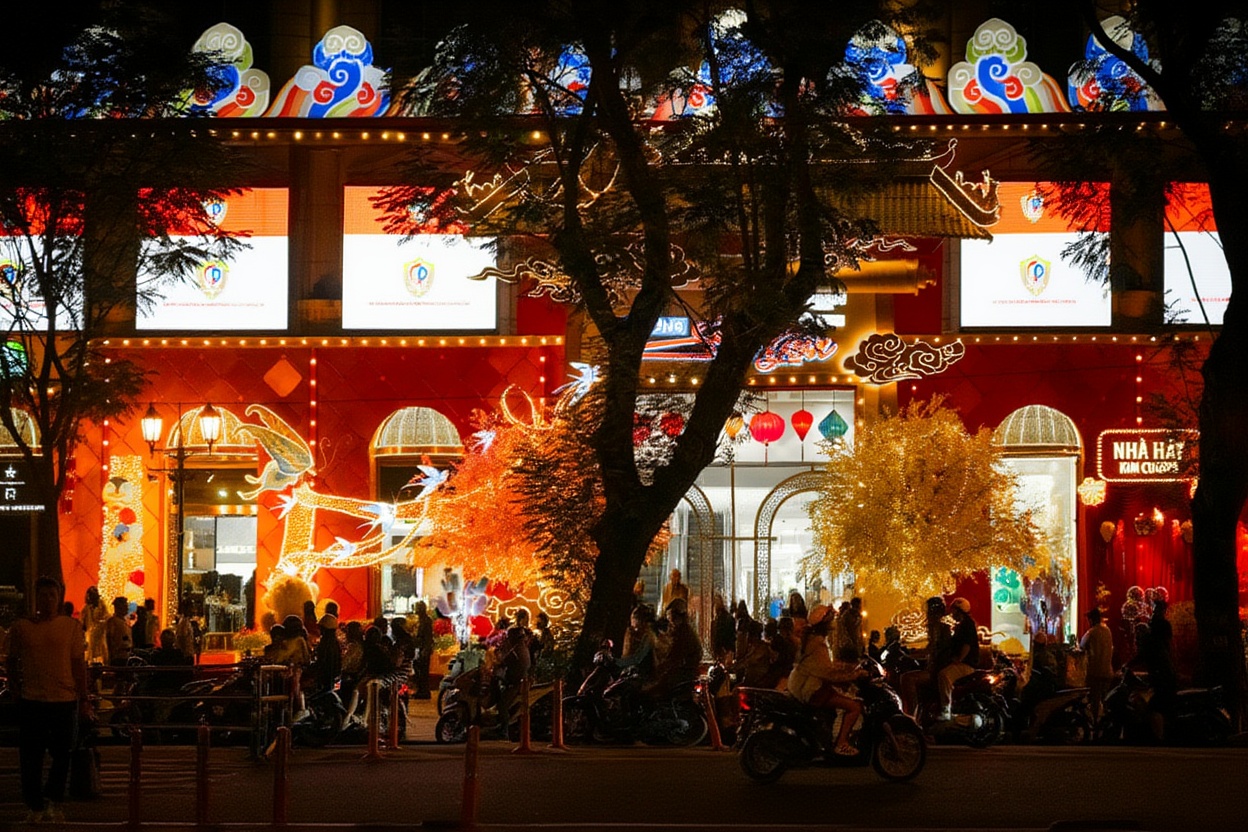
The south is the easiest entry for visitors flying from North America and Australia — Tân Sơn Nhất Airport has more direct connections. Ho Chi Minh City is denser, louder, and more disorienting than Hanoi on arrival. It settles into you after 48 hours.
→Who It’s For
People flying via Bangkok or Singapore with limited onward connection time. Vietnam War history travelers. Anyone who wants a working city with real grit, not a heritage-trail tourist loop.
Days 1–3: Ho Chi Minh City (3 nights)
Day 1: land, get to District 1, survive. The motorbike density at the Ben Thành roundabout on your first night — a thousand bikes flowing through an intersection with no apparent rules — is the city’s opening argument. You either find it thrilling or you don’t. Dinner in District 3, not District 1: the restaurants along Võ Văn Tần Street have fewer tourists and better food at the same price.
Day 2: War Remnants Museum (Bảo Tàng Chứng Tích Chiến Tranh — say: bow tang choong tich chen tran) opens at 7:30am. 40,000 VND (~$1.50) entry. Budget 3 hours and do not rush it. The third floor’s photographs are among the most powerful anti-war documentation ever assembled in a single space. The smell of old government building — floor wax and iron — is part of the experience. Lunch break. Reunification Palace (Dinh Thống Nhất) in the afternoon: 40,000 VND (~$1.50), the war rooms in the basement are genuinely strange, a ’70s time capsule underground.
Day 3: Jade Emperor Pagoda (Chùa Ngọc Hoàng — say: chooa ngok hwang) in District 3 — free entry, genuinely beautiful, incense smoke so thick by 9am that the air turns visible. Chợ Lớn (Chinatown) for lunch: An Đông Market for the chaos of it, bánh bao and steamed pork buns from street carts outside.
Day 4: Củ Chi Tunnels
40km northwest of Ho Chi Minh City. Half-day organized tour from your guesthouse: 350,000–500,000 VND (~$13–19) including transport and English-speaking guide, better than going alone. The tunnel experience is claustrophobic in a way that’s genuinely visceral — the largest section you can squeeze through is about 60cm wide and 80cm high. I crawled through 100 meters of it and arrived at the other end sweating and suddenly very clear on why the guerrilla strategy worked. Back in Ho Chi Minh City by 4pm.
Day 5: Mekong Delta day trip
Mỹ Tho (say: mee toe) is the closest Mekong town — 2 hours by bus, 70,000–90,000 VND (~$2.65–3.40) from Miền Tây bus terminal. Organized day trips from Ho Chi Minh City run 400,000–700,000 VND (~$15–26) and handle the boat transfers. A day trip gets you onto the water and through some coconut candy workshops, which is the tourist-facing version of the Mekong. It’s honest enough for a single day. If you want the real Mekong — Cần Thơ (say: kan toe) floating markets at 5am, actual river life — that needs an overnight and costs you a full extra day. On a 7-day trip, Mỹ Tho is the practical choice.
Days 6–7: HCMC buffer + departure
Day 6 for anything you rushed or missed. Bến Thành Market (say: ben tan) is the famous one — not for shopping (tourist prices) but for the surrounding streets, especially Phan Bội Châu Street where the food stalls open at 6am. Day 7: departure. Tân Sơn Nhất is 30–45 minutes from District 1 by Grab, 120,000–180,000 VND (~$4.55–6.85). Leave 3 hours for the airport.
What I Got Wrong the First Time I Had 7 Days Here
I flew into Hanoi with a plan to cover the whole country. My logic: see as much as possible, regret nothing. By Day 3 I was on a sleeper bus toward Huế. By Day 5 I was on another bus to Hội An.
The buses smell like diesel and instant noodles. Someone always opens the window at 3am when it’s cold. I arrived home having technically visited five cities and genuinely understood none of them. Hội An in my memory is 14 hours. Hanoi is 2 days I don’t remember clearly.
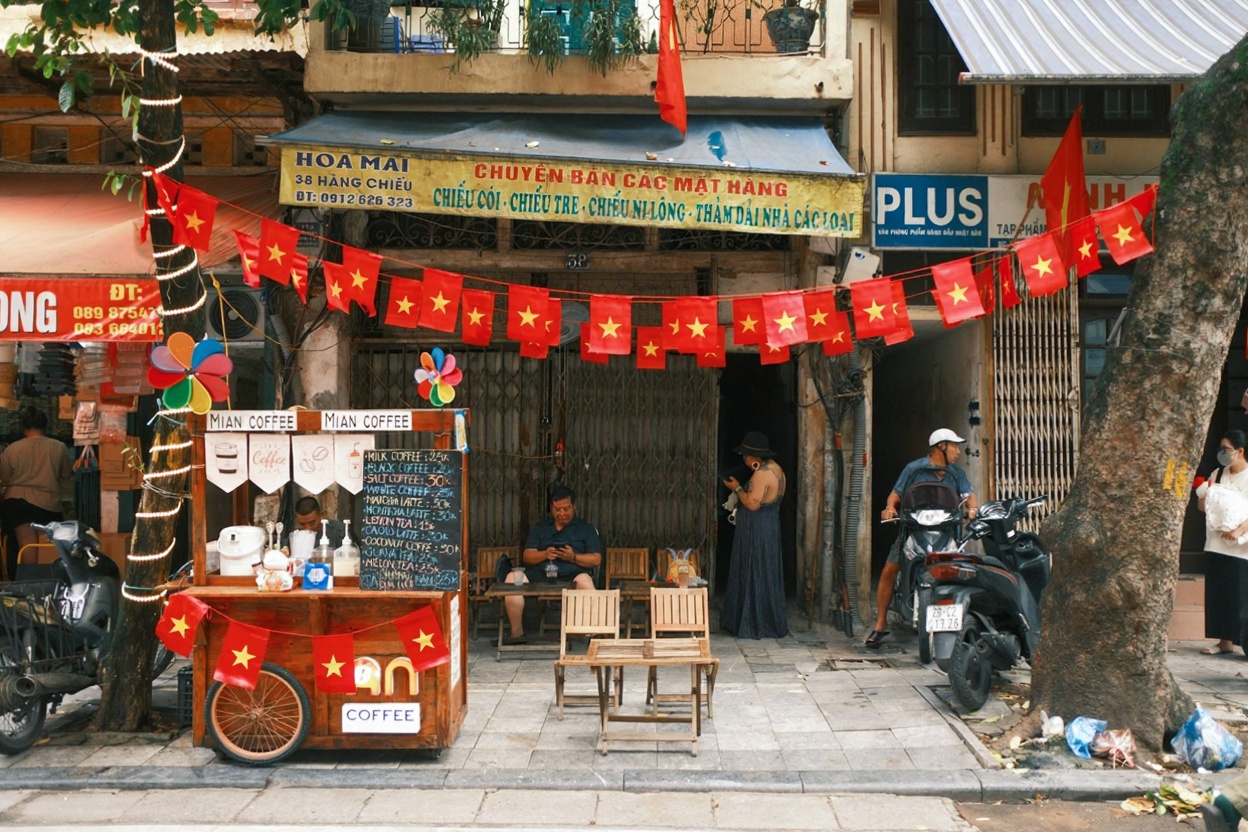
The second time I had a week in Vietnam — this was before I moved here permanently — I stayed in Hanoi the whole time. I went back to the same pho place three mornings in a row. I watched the same bia hoi corner change from afternoon to evening on two separate days. I found an alley off Hàng Bông Street that I never would have found on a one-night stop.
That’s the trip I still talk about. Not the five-city sprint.
7-Day Vietnam Itinerary FAQ
Can I do Hanoi and Hội An in 7 days?
Yes — fly Hanoi to Da Nang (1.5 hours, 800,000–2,000,000 VND / ~$30–76). That leaves 3 nights in Hanoi and 3 nights in Hội An with 1 travel day. No Ha Long Bay, no Ninh Binh. If that specific combination is what you want, it works. If you want Ha Long Bay, you need 10 days minimum. For a full breakdown of what to see and do there, our Ho Chi Minh City things to do guide covers every neighborhood worth your time.
What’s the best time to visit Vietnam for a 7-day trip?
February–April is the most reliable window across all three regions simultaneously. North only: October–March is fine. Central Vietnam: February–August is the drier period — the coast floods badly in October–November, which will ruin a Hội An trip. South Vietnam: December–April is dry season. If you’re locked into one region, check the local weather rather than the national average.
What’s the biggest mistake on a 7-day Vietnam trip?
Trying to do the whole country. I’ve described this above — it’s the sprint itinerary, and it produces a trip you can’t explain at dinner parties because none of the places had time to land.
What Travelers Actually Say: The Consensus
The loudest recurring complaint across traveler reviews of 7-day Vietnam itineraries: realizing on day 4 that the plan was too ambitious. Stories of arriving exhausted in a new city at 11pm, eating at whatever was open near the bus station, and spending the next morning in a taxi to the next destination. That’s not travel — that’s logistics with a Grab receipt at the end of it.

The travelers who report the most satisfying 7-day trips picked one anchor city, made a day trip or overnight to one nearby destination, and left the schedule loose enough to stay an extra night somewhere that surprised them. The Ha Long cruise gets strong reviews when booked mid-range (2,500,000–4,000,000 VND per person). The Ninh Binh alternative gets equally strong reviews for travelers who went in without expectations and came out saying it was the best two days of their Vietnam trip.
⚠Real Talk
The itineraries that try to cover north and central in 7 days — Hanoi + Ha Long + Hue + Hoi An — don’t fail because the destinations are bad. They fail because you’re spending day 3 on a Hanoi-to-Danang flight and day 6 rushing the Hoi An Ancient Town to make a night bus. The places are real. The math isn’t.
Two things worth sorting before you land: a Vietnam eSIM so you have data the moment you clear customs, and travel insurance — medical costs for uninsured foreigners in Vietnam are significant.
Airalo eSIMs activate instantly. Buy before departure — airport SIM queues in Vietnam can take 30+ minutes.
Pick a Region and Go
One week in Vietnam. One region. That’s the framework.
The north works if you fly into Hanoi — street food, Ha Long Bay, karst countryside in one clean arc. The central route is the best pure cultural hit in the country for the time available. The south is the right choice if your flights land in Ho Chi Minh City and you want history without heritage-trail fatigue.
All three leave you wanting more. That’s the point. Come back for the regions you didn’t do — they’ll still be there, and you’ll see them properly instead of from a sleeper bus at 3am.
If you have more time, Vietnam Itinerary 2 Weeks lays out the full north-to-south route with proper pacing at each stop.
Can I do a 7-day Vietnam itinerary without flying?
Technically yes, but not comfortably. Hanoi to Hoi An by overnight train is 16 hours — doable, even scenic. Hoi An to Saigon adds another full day. You end up spending three of your seven days on transport. One domestic flight saves you a day and usually costs under 30 USD.