
Bánh mì is a 25,000 VND ($1) street food that occupies a specific cultural position: it’s the lunch of office workers, the breakfast of motorbike taxi drivers, the late-night snack for anyone still standing at 11pm. It’s also arguably the most successful food fusion in colonial history — a French baguette filled with ingredients that would have confused any French baker, producing something completely Vietnamese in the process. I’ve eaten one for breakfast most mornings this week and will eat another tomorrow. Anthony Bourdain called it the greatest sandwich in the world. He wasn’t wrong, and the Vietnamese have been quietly aware of this for the past century while everyone else was catching up.
It sounds simple. A bread roll, some protein, some vegetables, some condiments. But the version you eat in Hội An at a specific cart on a specific street corner doesn’t taste like anything you’d find in Hanoi, and neither resembles what you get at a Vietnamese restaurant in Houston. The bread, the pâté, the ratios — they’re all different, and the differences matter. Here’s how to eat bánh mì like you mean it. And once you understand what makes the good ones good, you’ll know why the 7am cart with the charcoal grill and the line of motorbike drivers is always the right choice over the air-conditioned shop charging triple the price.
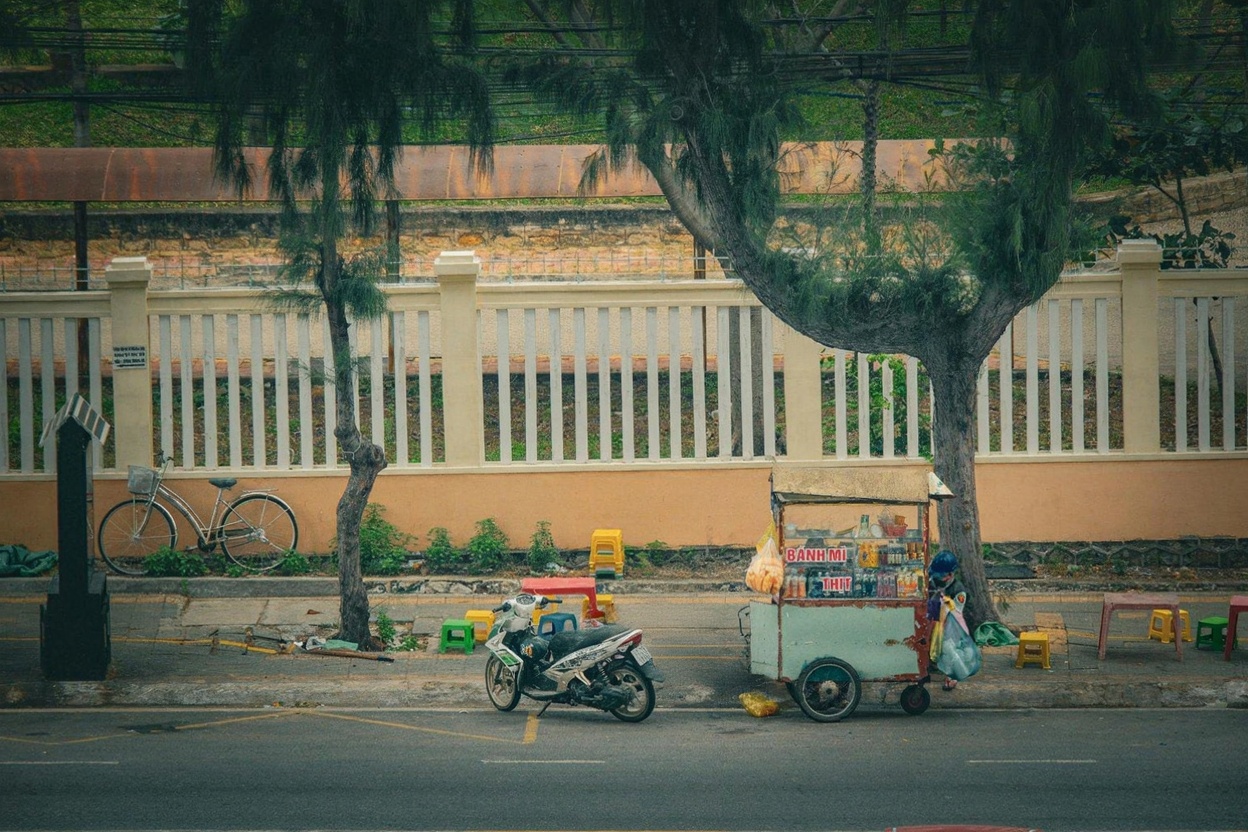
What’s Actually Inside a Bánh Mì
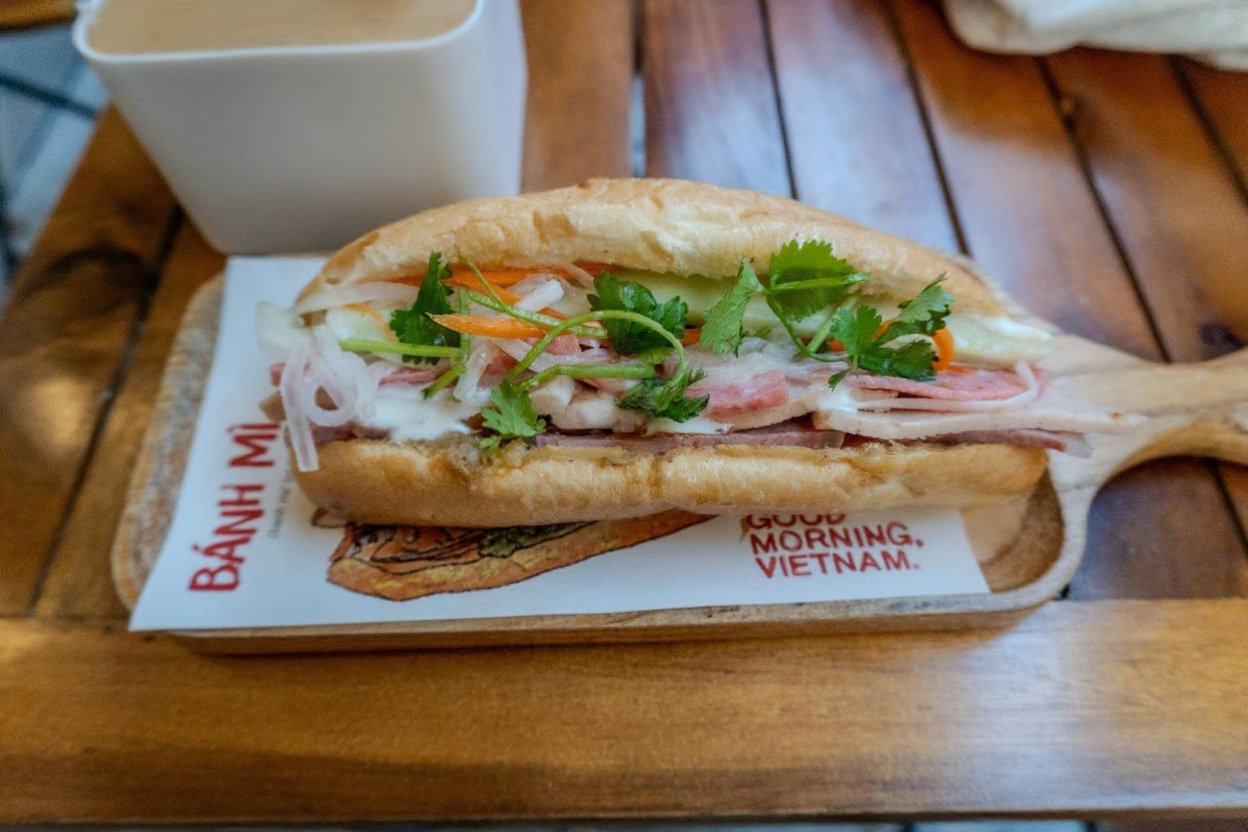
The standard bánh mì đặc biệt (special bánh mì) contains a carefully considered combination of elements:
The bread: Vietnamese baguette (bánh mì) is not French baguette. It uses a mix of wheat and rice flour, which makes the crust shatter-crisp and the interior lighter and airier than a standard baguette. It’s slightly shorter and wider than a French baguette, and it stales faster — most bánh mì carts bake fresh batches at 5–6am and again at 10–11am. A bánh mì eaten within two hours of baking is dramatically better than one bought at 4pm from the morning batch. This is why the 7am bánh mì from the cart outside the market tastes so much better than the 3pm version from the tourist café.
Pâté (pa-tê): A thin layer of pork liver pâté spread on the inside of the bread. This is the French element that stayed after independence — but the Vietnamese pâté is typically coarser and more robustly seasoned than French versions. It provides the fat and depth that binds all the other components together.
Mayonnaise: Vietnamese mayo, which is thinner and slightly tangier than Hellmann’s. Applied to both interior surfaces of the bread before the pâté.
Protein: The range includes: chả lụa (steamed Vietnamese pork roll, white and smooth), thịt nướng (grilled pork slices, marinated with lemongrass and fish sauce), chả chiên (fried pork patty), trứng (fried egg, for bánh mì trứng), xíu mại (pork and tomato meatballs in sauce), and in tourist areas, grilled chicken or grilled beef. The classic version has chả lụa plus thịt nướng plus a slice of cured meat.
Pickled daikon and carrot (đồ chua): Julienned and quick-pickled in vinegar, sugar, and salt. This is essential — the acidity cuts through the fat of the pâté and meat, and without it the bánh mì becomes heavy. Any vendor who skimps on the đồ chua is building an inferior sandwich.
Fresh cucumber: Thin slices layered in the center for freshness and crunch.
Cilantro and Vietnamese coriander (ngò gai): A handful dropped in at the end. The herbaceous freshness is what makes a bánh mì taste like a Vietnamese sandwich rather than a pork roll.
Chili: Fresh sliced red chili or chili sauce on request. “Ít cay” (a little spicy) or “không cay” (not spicy) modulates this if you’re chili-sensitive.
Sauce / seasoning: Some vendors add a dash of soy sauce, maggi seasoning, or their own house sauce. This varies by vendor and region.
The History: How Bánh Mì Became Vietnamese
French bakers arrived in Vietnam in the 1860s with the colonial administration, bringing baguettes and the croissant culture that still shows up in Vietnamese breakfast habits today. By the early 20th century, Vietnamese bakers were adapting the baguette for local grain availability — rice flour added to the wheat mixture changed the texture, making the crust more delicate and the crumb airier.
The filled sandwich form developed in Saigon’s market culture in the early 20th century, gradually accumulating the Vietnamese ingredients that transformed it: pickled vegetables, fish sauce-marinated meat, local herbs, the ubiquitous pâté that French-trained Vietnamese chefs adapted with local spices. By the mid-20th century, the bánh mì was a distinctly Vietnamese creation that happened to use French bread as its vehicle.
The Vietnam War accelerated the spread of bánh mì culture. Saigon’s street food economy thrived during the war years, with bánh mì carts offering fast, cheap, portable protein to workers and soldiers. After reunification in 1975, the Vietnamese diaspora carried bánh mì to the US, Australia, and France — the Vietnamese neighborhoods of Little Saigon in Orange County, Springvale in Melbourne, and the 13th arrondissement in Paris all developed bánh mì shop clusters that are now multi-generational institutions.
The bánh mì’s arrival on Western food media timelines — Anthony Bourdain in Hội An, the bánh mì emoji being added to Unicode in 2020 — represents a recent chapter of global recognition for something that’s been a staple of Vietnamese daily life for a century.
Beyond the Classic: Other Bánh Mì Variations
The standard bánh mì đặc biệt is the canonical version, but Vietnam has developed a range of variations worth knowing:
Bánh mì bơ đường (butter and sugar): The breakfast version sold near school gates and morning markets — the bread spread with butter and sugar, nothing else. Simple, slightly sweet, eaten in 90 seconds at a plastic stool. Children love it; adults who ate it as children still eat it. It costs 5,000–10,000 VND and is unambiguously comfort food.
Bánh mì phá lấu: Street food primarily in HCMC, where the protein is braised offal (liver, intestines, ear) in a spiced coconut milk and star anise broth. The offal is tender and intensely flavored; the broth soaks into the bread. Not for the faint-hearted but genuinely excellent if you eat offal. Often sold from carts by Teochew-Chinese Vietnamese vendors in Quận 5 (Chợ Lớn area).
Bánh mì chả cá: Fish cake bánh mì, popular in coastal cities and Da Nang specifically. The protein is Vietnamese cha ca (grilled fish cake, different from the Hanoi dish of the same name) — a dense, lightly spiced fish patty that’s grilled until slightly charred on the outside. The fish cake adds a lighter protein option with oceanic freshness.
Bánh mì xíu mại: The Saigon breakfast version where the bread is served with a bowl of pork meatballs (xíu mại) in tomato and lemongrass-based sauce. You tear pieces of bread and dip them into the sauce — it’s more of a bread-and-soup combination than a sandwich, and it’s served at sit-down stalls rather than cart takeaway. Common at Saigon’s morning markets from 5–9am.
Bánh mì nướng (grilled/toasted bánh mì): The bread is split, brushed with butter or oil, and toasted over a charcoal grill before filling. The toasted version has a different texture — crunchier throughout rather than just the crust — and the butter flavor adds richness. Some vendors do this routinely; others only on request (“nướng lên đi” — can you toast it?).
Crunchy top bánh mì: A handful of specialty shops now do a version where the bread goes into a small sandwich press — the result is essentially a panini-style bánh mì with a uniformly crunchy exterior and warmed interior. More common in Hanoi and at higher-end bánh mì shops.
Bánh Mì as Vietnamese Breakfast Culture
Bánh mì is primarily morning food in Vietnam. The 6–9am window is the peak trading period for most carts — the bread is freshest, the charcoal grills are active for thịt nướng, and the demand is highest from people heading to work, school, and market. Understanding this means understanding when to eat it.
The ideal bánh mì eating time is 7–8am from a cart that’s been open since before you got there. The bread was baked at 5–6am and is still at its optimal crust texture. The pork was marinated overnight and went on the grill at dawn. The đồ chua was made the day before and has had time to pickle properly. Everything about the 7am version is better than the 2pm version from the same cart.
The bánh mì also marks the intersection of Vietnamese street food with the broader morning eating culture. The same sidewalk where a bánh mì cart operates at 7am might have a phở stall at 6am and a bún bò Huế cart at 8:30am. Vietnamese breakfast is not a single-item meal — you might eat bánh mì from a cart, then sit for a cà phê at the plastic stool place next door, then pick up a bánh cuốn (steamed rice roll) on your way somewhere. The bánh mì is part of a mobile, grab-and-go breakfast culture that the rest of the world is only beginning to replicate.
Regional Variations: Hanoi vs Saigon vs Hội An
Bánh mì is the rare Vietnamese food with pronounced regional variation — not in the components but in the emphasis and proportion.
Saigon (HCMC) bánh mì: The Saigon version is the standard-bearer. Generous filling, thinner bread crust, heavier on the protein and condiments. Bánh mì in Saigon is a meal, not a snack — the filling-to-bread ratio tips toward the filling. The xíu mại variant (pork meatballs in tomato-lemongrass sauce) is distinctly South Vietnamese. Huỳnh Hoa at 26 Lê Thị Riêng is the most famous Saigon vendor — a two-hour queue destination that produces a genuinely exceptional sandwich where the grilled pork takes most of the interior space. For the full picture on eating your way through the city, our Vietnam street food Saigon guide covers the broader scene beyond bánh mì.
Hanoi bánh mì: Generally lighter and drier than the Saigon version. The bread is thicker-crusted (more French-adjacent); the filling is more restrained; the pâté and chả lụa take prominence over the grilled meat. Some Hanoi versions add a thin layer of cha bông (dried pork floss) that adds a different texture. There’s less sauce overall — Hanoi cooking tends toward cleaner, less condiment-heavy profiles than southern Vietnamese cooking. Still excellent, but a different experience from Saigon bánh mì.
Hội An bánh mì: The most internationally famous version — Phượng Bánh Mì (Madam Khánh) at 115 Trần Cao Vân has been called the best bánh mì in the world by Anthony Bourdain and has the queues to match. The Hội An version layers the ingredients more carefully than most vendors, uses particularly good house-made pâté, and takes the time to ensure every element is in the right proportion. It’s genuinely excellent and worth the queue. The tourist price is also notably higher than standard street carts — 35,000–45,000 VND vs 20,000–25,000 VND elsewhere — but still cheap by any absolute standard. For everything else worth eating in the city, our Hội An food guide covers the full picture beyond bánh mì.
Da Nang bánh mì: Similar to Hội An, slightly more char on the grilled meat. Often eaten at breakfast with a bowl of bún (noodle soup) on the side.
The Price Range and What It Tells You
Bánh mì prices in Vietnam: 15,000–30,000 VND ($0.60–1.20) from a street cart; 25,000–45,000 VND ($1–1.80) from an established shop; 50,000–80,000 VND ($2–3.20) from tourist-facing cafes or hotels. The price broadly correlates with the setting but not necessarily with the quality — the best bánh mì I’ve had in Vietnam cost 25,000 VND from a cart outside a Hanoi bus station, and some 60,000 VND tourist versions were worse.
What the price actually reflects: the cost of bread (rice flour prices have risen with inflation), quality of protein (thịt nướng with lemongrass-marinated pork vs plain chopped ham), and location premium (tourist street vs residential area). A 25,000 VND bánh mì with fresh-baked bread, house-made pâté, and properly balanced đồ chua is excellent. A 15,000 VND bánh mì with soft bread and minimal filling is the budget option — still filling, still tastes like Vietnam.
Bánh Mì for Dietary Restrictions
Vegetarian bánh mì: Available at vegetarian and Buddhist-vegetarian (chay) restaurants throughout Vietnam. The protein is replaced with tofu, mushrooms, or mock meat; pâté is replaced with a mushroom or bean paste. Look for “bánh mì chay” at dedicated vegetarian restaurants, particularly those near pagodas where the clientele is primarily Buddhist. Quality varies considerably — the best vegetarian versions have excellent đồ chua and creative mock protein; the worst are a roll with tofu and sad vegetables.
No-pork bánh mì: Some vendors will substitute beef or chicken for pork if asked. “Không có thịt heo” (no pork) gets the message across. Dedicated halal bánh mì shops exist in areas with Muslim Vietnamese communities (Cham communities in the south, some Hanoi neighborhoods).
Egg bánh mì (bánh mì trứng): A fried egg replaces most of the meat — common for breakfast. Often sold at market stalls at 5–8am alongside the morning rush. The egg version is typically cheaper (15,000–20,000 VND) and lighter than the full-protein version.
How to Order
At a street cart, the standard transaction: say “một bánh mì đặc biệt” (one special bánh mì), watch it get made in front of you, hand over 25,000 VND. The vendor has done this ten thousand times and will produce a complete bánh mì in 60–90 seconds.
Modifications you can request:
“Nhiều rau” — more vegetables (đồ chua and herbs)
“Ít thịt” — less meat
“Không cay” — not spicy (skip the chili)
“Ít cay” — a little spicy
“Không có pâté” — no pâté (for those who don’t like liver)
“Thêm trứng” — add an egg
Pointing also works. Most bánh mì carts have the ingredients visible — point at what you want added or skipped. The vendor will nod and adjust without any issue.
Two things worth sorting before you land: a Vietnam eSIM so you have data the moment you clear customs, and travel insurance — medical costs for uninsured foreigners in Vietnam are significant.
Airalo eSIMs activate instantly. Buy before departure — airport SIM queues in Vietnam can take 30+ minutes.
Frequently Asked Questions
Is bánh mì safe to eat from street carts?
Yes, with standard food safety reasoning. The bread is baked fresh that day; cooked proteins (grilled pork, pâté, chả lụa) are cooked and safe; the pickled vegetables (đồ chua) are acidic enough to inhibit bacteria; the fresh herbs and cucumber carry minimal risk. The highest-risk element is fresh cucumber and raw herbs from uncertain water sources, but the risk is low at busy, well-trafficked carts. Eating bánh mì from a cart that’s doing brisk business — where turnover is high and ingredients are fresh — is standard practice for millions of people daily. Avoid the one sitting with unsold sandwiches from six hours ago.
Where is the best bánh mì in Vietnam?
Honest answer: the best bánh mì in Vietnam is the one from the cart near wherever you’re staying that was baked that morning. The famous names (Phượng in Hội An, Huỳnh Hoa in Saigon) are genuinely excellent and worth the queue if you’re a bánh mì enthusiast. But the regional variation and the freshness factor mean that a random good cart in any Vietnamese city makes a sandwich that is 90% as good. If you want the famous version: Phượng (Bánh Mì Phượng, 2B Phan Châu Trinh, Hội An), Huỳnh Hoa (26 Lê Thị Riêng, Quận 1, HCMC), Bánh Mì 37 Nguyễn Trãi (Hanoi).
What’s the difference between bánh mì and a Vietnamese sub?
They’re the same thing — “bánh mì” literally means “wheat bread” in Vietnamese but has become the universal term for the filled sandwich. “Vietnamese sub” is the translation used for menus in Western countries. The difference you might notice is that Vietnamese-American bánh mì shops often use softer bread (more American sub roll texture) while authentic Vietnamese versions use the rice flour baguette that shatters when you bite it. The fillings in Vietnamese-American shops have also often been adapted toward American palates — less pâté, more straightforward proteins, sometimes mayonnaise substituted with cream cheese. None of this is bad, but it’s different from the street-cart original.
What is chả lụa and is it the same everywhere?
Chả lụa is Vietnamese steamed pork roll — lean pork is pounded into a smooth paste with fish sauce and sugar, wrapped in banana leaves, and steamed until firm. The result is a pale, dense, slightly springy cylinder with a clean pork flavor. It’s one of the standard proteins in bánh mì đặc biệt and is also eaten on its own as a topping for bún (vermicelli soup) and cơm (rice dishes). The name means “silk sausage” (lụa = silk), referring to the texture. Versions vary slightly by region — Saigon chả lụa tends to be more delicately seasoned; Hanoi versions can be slightly denser. The key quality indicator at a bánh mì stall: chả lụa should be white to pale pink and firm, not grey or soft. Grey chả lụa has been sitting out.
Can I make bánh mì at home in the US?
Yes, though the bread is the hardest part to replicate. Vietnamese baguette uses a mixture of bread flour and rice flour — King Arthur bread flour plus white rice flour (not glutinous rice flour) in roughly a 4:1 ratio produces a reasonable approximation at home. The bake needs a very hot oven (240°C/465°F) with steam in the first 10 minutes to get the shatter crust. For the fillings: chả lụa is available frozen at Vietnamese grocery stores in most US cities with a Vietnamese community; pâté is available at Vietnamese markets or use a good French liver pâté. Đồ chua (pickled daikon and carrot) is quick to make — julienned daikon and carrot, rice vinegar, sugar, salt, 30 minutes in the fridge. The bánh mì is forgiving of substitutions in most elements except the bread and the đồ chua — those two define the character more than anything else.