Updated: June 2026
My first Hội An cooking class cost 350,000 VND and lasted about two hours.
We made spring rolls, fried rice, and a dish the instructor called “Hội An special.” None of them tasted like anything I’d eaten in the previous week. The teacher’s English extended to “roll this way” and “more oil.” I left with a recipe card I’ve never opened and a vague sense that cooking Vietnamese food might actually be impossible.
Three weeks later, a friend visiting from Austin convinced me to try Red Bridge.
Boat down the Thu Bồn River. A real chef who’d trained at a Saigon hotel kitchen. Market at 8am — she explained what fermented shrimp paste actually smells like before you add it versus after. We made cao lầu, white rose dumplings, and a version of bánh xèo (say: ban say-oh — the sizzling pancake) that made the sound the name promises. I’ve made it at home twice since.
This guide is for people who want the second version, not the first.
Why Hội An for a Cooking Class
Vietnam has cooking classes in Hanoi and Saigon, but Hội An occupies a specific place in Vietnamese food geography. The city has two dishes that exist essentially nowhere else: cao lầu and bánh bao vạc (white rose dumplings).
Cao lầu (say: cow-low) is a noodle dish using noodles made with water specifically from Hội An’s Ba Lễ Well — the mineral content supposedly gives them a particular texture. White rose dumplings are translucent steamed pouches of shrimp filling that look exactly like the name suggests. You can learn to make these in Hội An. You cannot make the authentic versions elsewhere because the ingredients don’t travel.
The city’s broader food culture — its connection to Chinese merchant, Japanese trading, and French colonial influences — also means the culinary depth here is unusual for a city this size. Cooking classes reflect that layering in a way that Hanoi and Saigon classes don’t quite replicate.
✓Quick Answer
For a cooking class that teaches genuinely Hội An-specific dishes (cao lầu, white rose dumplings, bánh xèo), spend at least 900,000 VND (~$35). Classes at that price point include a real market visit and instruction in dishes you can’t learn identically anywhere else in Vietnam.
The Best Hội An Cooking Schools
There are dozens of cooking schools in Hội An. These are the ones worth your half-day:

Red Bridge Cooking School — the standard against which others get measured. A vintage wooden boat takes you from the Ancient Town dock down the Thu Bồn River to a dedicated cooking farm and herb garden. Half-day class (~3 hours) costs around 1,100,000–1,300,000 VND (~$42–50) including the boat, market, and lunch. Full-day version adds a deeper dish range. Small groups, English-fluent chefs, Hội An-specific recipes. The boat trip alone is 30 minutes each way through river traffic and countryside — you don’t get this anywhere in town.
Morning Glory Cooking School — run by chef Trinh Diem Vy, who also owns the Morning Glory restaurant on Trần Phú Street (one of the best meals in the city). Classes are held above the restaurant. Market visit at Chợ Hội An, then back to the kitchen for instruction on 4–5 dishes. Half-day from 850,000–1,000,000 VND (~$33–38). The best option if you want to stay in the Ancient Town rather than go out on a boat. Chef Vy’s food philosophy — anchored in authentic Central Vietnamese cooking rather than tourist-adapted versions — shows in what gets taught.
Thuan Tinh Island Cooking School — a boat across the river to a small island, less commercial than Red Bridge, more intimate. Smaller groups. The setting is genuinely local: a family home converted into a kitchen with a garden growing the herbs you’ll use in the class. Around 700,000–900,000 VND (~$27–35) including transfer. The English can be less polished than Red Bridge but the cooking is authentic and the experience feels less produced.
Gioan Cookery School — the budget option that’s actually good. No boat, no farm, but solid instruction, small groups, good English-speaking teachers, and TripAdvisor reviews consistently calling it one of the best value classes in town. Around 550,000–700,000 VND (~$21–27). If your budget is firm, this is where to look.
Four Seasons Cooking Academy — at the Four Seasons Resort, 12km from town. Premium experience, professional kitchen, high-quality ingredients, full-on resort setting. Roughly 3,000,000–4,000,000 VND (~$115–154) per person. Worth it if you’re staying at the resort; not worth the taxi plus premium if you’re not.
The Market Visit: Why This Part Matters
The best Hội An cooking classes start at Chợ Hội An — the central market on Trần Quý Cáp Street, 15.8777° N, 108.3303° E.
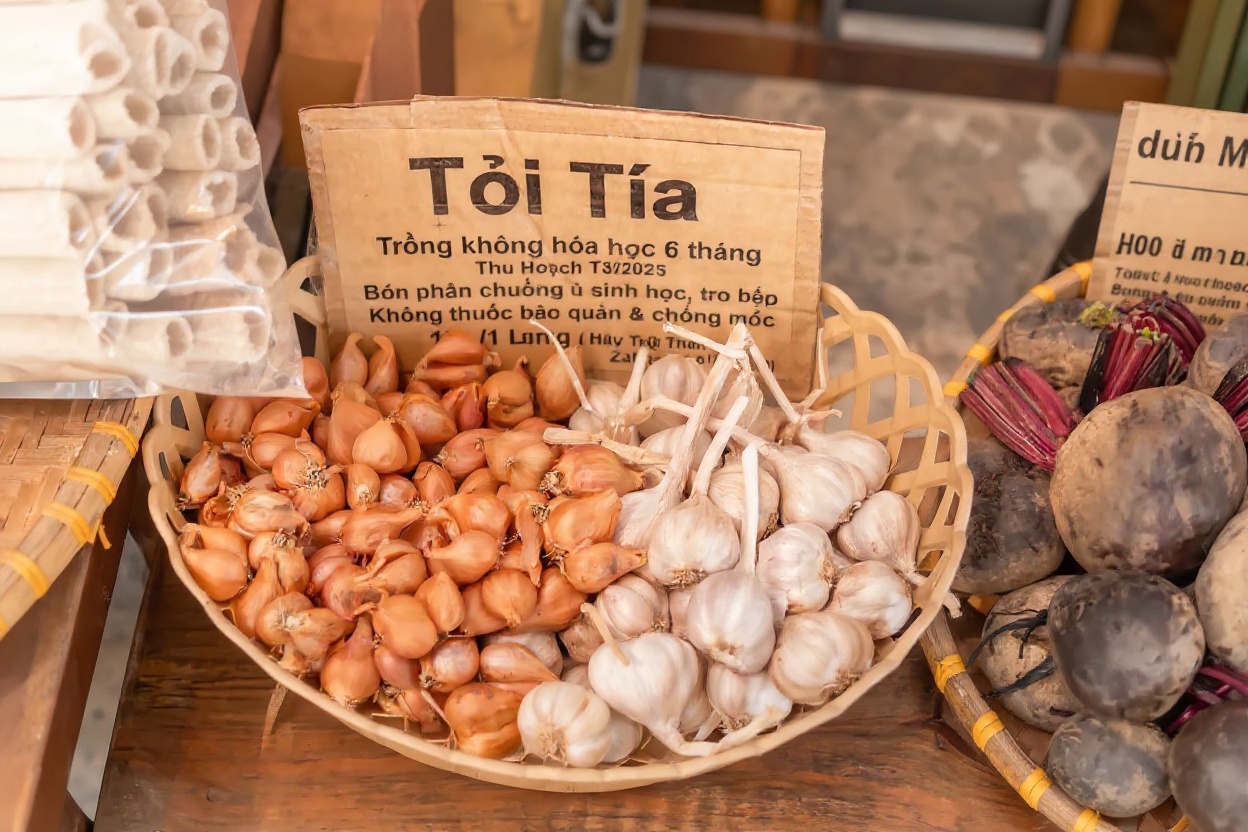
This isn’t just atmosphere. A good chef will walk you through ingredient selection in a way that changes how you cook for the rest of the trip. At the market, I learned: how to pick galangal versus ginger (different root, different flavor profile, different use), what fermented black bean paste looks like versus shrimp paste and why you’d use one over the other, and which herbs at the pile that looks like “just greens” are perilla versus sawtooth coriander versus Vietnamese basil.
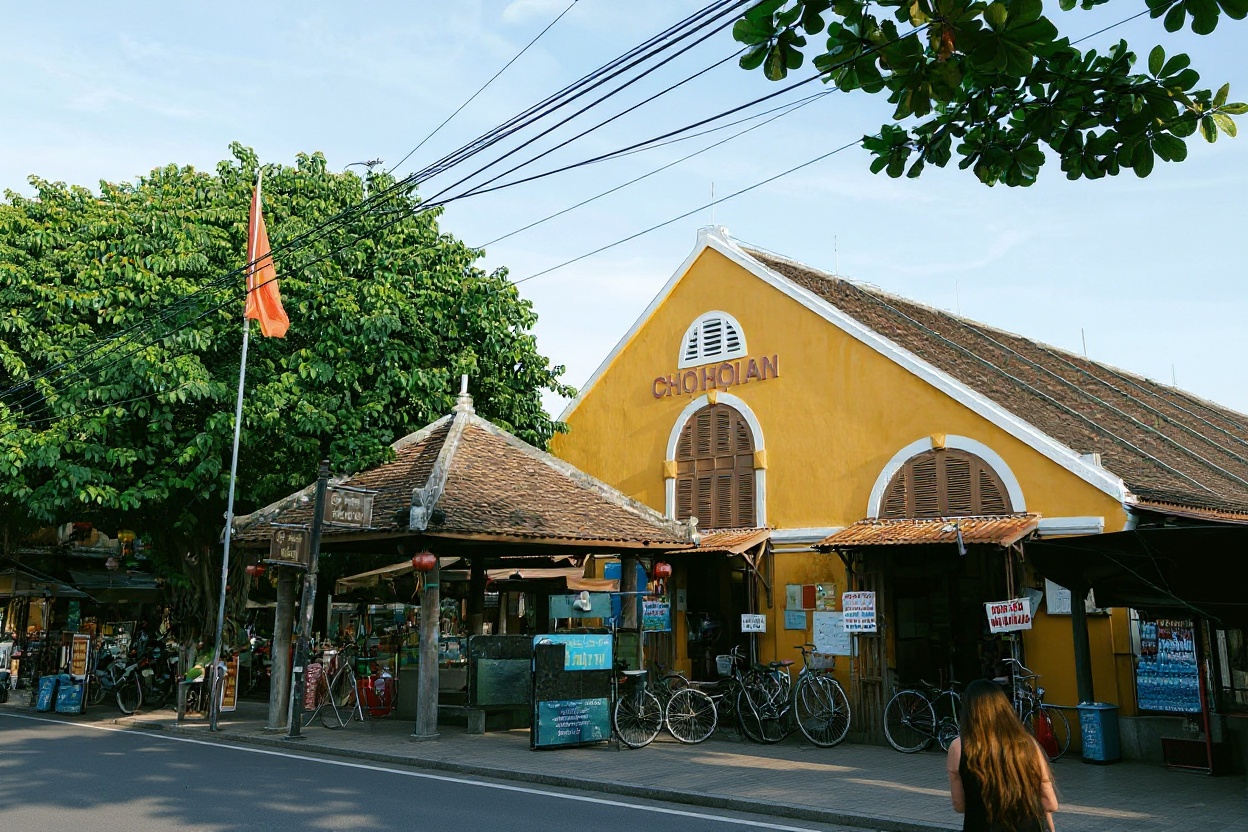
An instructor who treats the market as a formality — 10 minutes, a few photos, back on the bus — is a sign the class itself will be similarly shallow. An instructor who stops at the fermented tofu stall and explains why it smells different from Chinese dòufu rǔ is someone who’s going to teach you something real.
Market visits are most productive between 7–9am, before the tourist crowd arrives and before the vendors pack up the freshest stock. Book morning classes.
What You’ll Actually Learn to Cook
The dishes vary by school, but the best Hội An classes include at least one of the city’s signature dishes:
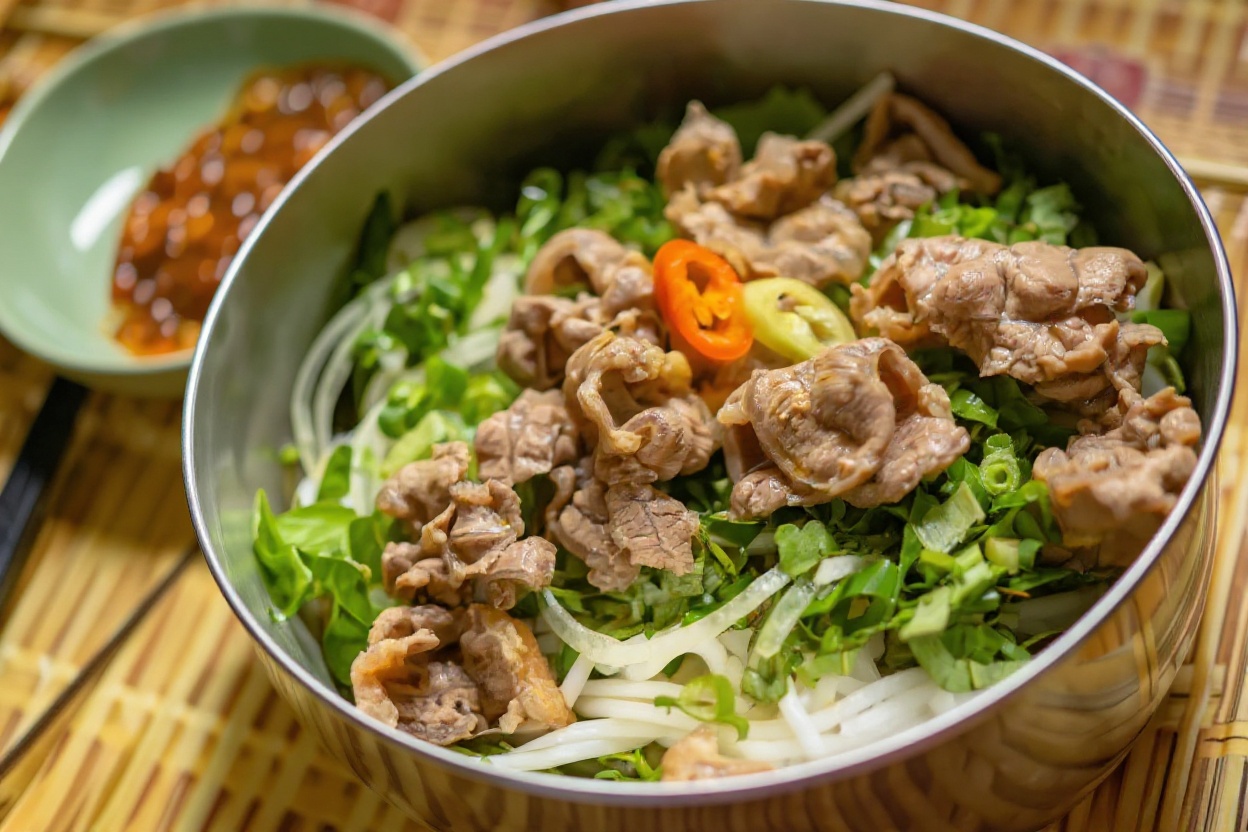
Cao lầu — the Hội An noodle. Thick, chewy noodles with pork, bean sprouts, herbs, and a soy-based broth. The authentic noodles require Ba Lễ Well water to make correctly — most classes use the real thing or source locally. Learning to make the broth and char the pork properly is the skill worth taking home.
Bánh bao vạc (White Rose Dumplings) — translucent steamed shrimp dumplings, named for their resemblance to a white rose. Delicate, time-consuming to shape, genuinely satisfying when they come out right. If a class teaches these, it’s a sign the instructor takes technique seriously.
Bánh xèo — the sizzling rice pancake with pork, shrimp, and bean sprouts. The sound when you pour the rice flour batter into the hot oil is the whole experience. Getting the batter right (too thin and it falls apart, too thick and it’s doughy) is a skill. Good classes spend time on this.
Gỏi cuốn (Fresh spring rolls) — rice paper rolls with herbs, shrimp, and pork. More assembly than cooking, but the herb selection and dipping sauce ratios are what separate a good roll from a bland one. Easy to replicate at home once you understand the herb balance.
Phở or bún bò Huế — some full-day classes teach broth-making. Time-consuming but the technique (charring the aromatics, layering the spices) translates to any broth-based cooking.
What Makes a Good Class vs a Tourist Trap
The tells are quick once you know what to look for:
Group size: Maximum 12–15 people per class is the ceiling for real instruction. Above that, you’re watching rather than cooking. Ask before booking.
Recipe cards: A good class gives you recipes you can actually use at home — with real measurements, not vague “add to taste” instructions. If the recipe card is laminated and generic, that’s a sign.
Dish selection: Classes teaching only fried rice, spring rolls, and “noodle soup” are teaching tourist-menu dishes. A Hội An-specific class should include at least one of: cao lầu, white rose dumplings, bánh xèo. If none of these are on the menu, you’re not getting the local experience you’re paying for.
Market visit quality: Has the chef walked this market a hundred times and knows the vendors by name? Or is the market visit 10 minutes of photos before getting back on the bus? Ask what the market visit covers when you book.
⚠Real Talk
Street touts in Hội An’s Ancient Town sell cooking classes for 300,000–400,000 VND and will tell you the location “nearby.” This usually means a shared kitchen with 25 people and an instructor who doesn’t speak enough English to explain why you’re doing each step. Spend the extra $10–15 and book through a named school directly or via GetYourGuide where reviews are verified.
Half-Day vs Full-Day: Which to Choose
Most people do the half-day class. Most people make the right call.
A half-day class (roughly 8am–12pm or 9am–1pm) covers the market visit, instruction on 3–5 dishes, and a sit-down meal of what you made. That’s enough time to learn the techniques that stick, eat well, and be back in the Ancient Town before the afternoon heat peaks.
Full-day classes (8am–3pm or 4pm) add more dishes, sometimes a second market visit or a trip to a herb garden, and usually a more complex central dish like a clay-pot fish broth or a multi-element salad. The extra content is genuinely good — the issue is that four to five hours of cooking in a Vietnamese kitchen in midsummer is physically demanding. Worth it if you’re serious about learning and not mid-way through a packed 10-day itinerary. Not worth it if you’ll be exhausted by hour three and just want to eat.
My recommendation: half-day, morning class, Red Bridge or Morning Glory. If you love it enough to want more, ask the school about booking a second class the following day — some offer a discount for returning students.
Private Classes: Worth Considering for Groups and Couples
Most cooking schools offer private class options at a premium — typically 1.5x to 2x the group class price, but the class is just your group.
Private classes are worth the cost if:
You’re traveling as a couple celebrating something. You’re part of a group of 4–6 friends who want a dedicated kitchen and a teacher you’re not sharing with strangers. One or more people in your group has dietary restrictions that are hard to accommodate in a group setting (full vegetarian, severe allergies). You want to learn specific dishes and have time to go deeper on them rather than the standard menu.
Private classes at Red Bridge: roughly 3,000,000–4,500,000 VND (~$115–175) for the whole group, not per person. For a group of 4, that’s competitive with group class pricing. For a couple, it’s a genuine splurge that some people find worth every dong.
How to Book
Book directly through the school’s website for the best price and confirmed spot. Red Bridge, Morning Glory, and Thuan Tinh all have direct booking.
For verified reviews and easy cancellation: GetYourGuide and Viator both list the top Hội An cooking schools with real traveler reviews. Prices on these platforms sometimes run 10–15% higher than direct booking, but you get cancellation protection and review verification.
Best time to book: 2–3 days ahead in low season, 1–2 weeks ahead in peak season (February and August have both school holidays and Western tourist peaks). Morning Glory and Red Bridge sell out most quickly.
Classes typically run 8am–12pm (half-day) or 8am–3pm (full-day). The morning start is important — it lines up with the market visit while the vendors and produce are at their best.
Practical Tips Before You Go
Small things that make the class better:
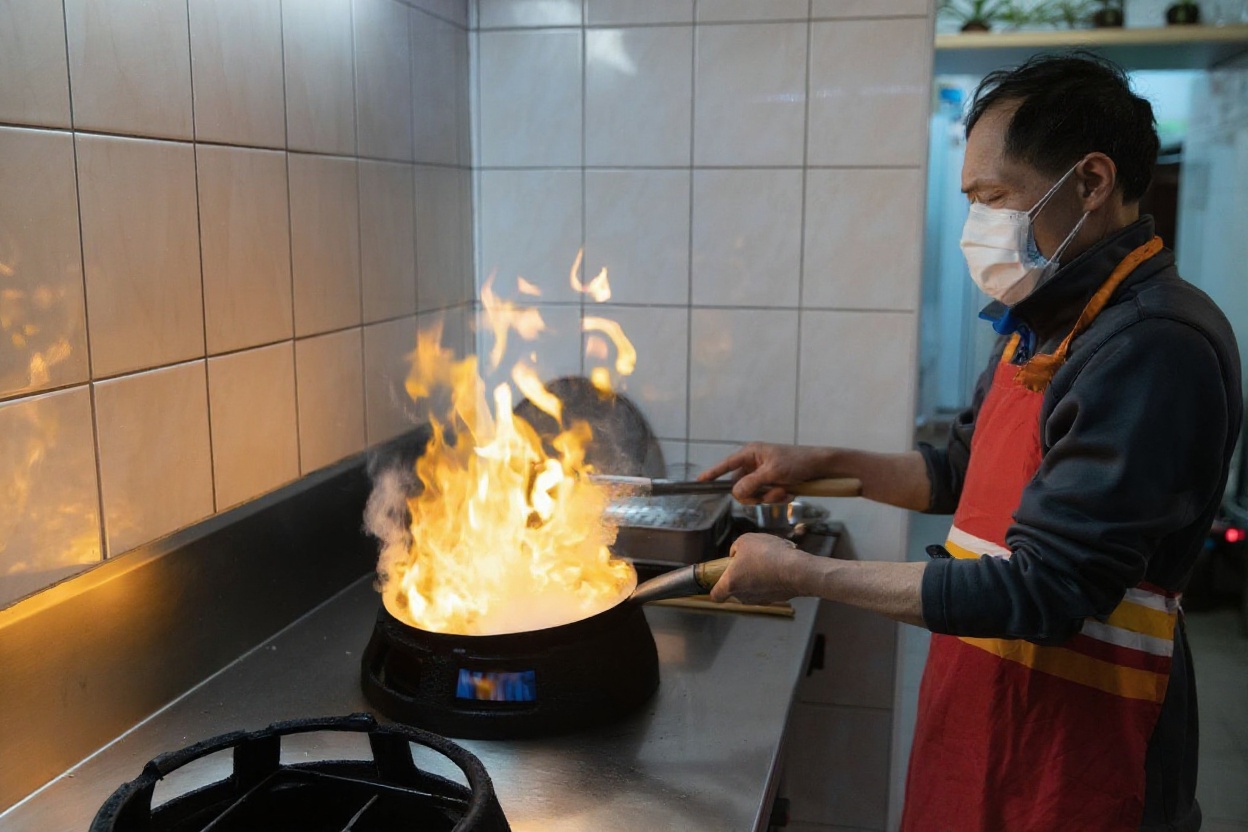
Wear closed-toe shoes. You’re standing in a kitchen with hot woks and oil. Several schools require it. Open sandals are a liability.
Bring a notebook. Recipe cards are provided but they’re often abbreviated. Writing your own notes during the instruction — especially on the fermentation steps and the herb combinations — means you’ll actually be able to replicate dishes at home. Phone photos of the recipe card at the end are a reliable backup.
Eat a light breakfast. The class ends with a full meal of everything you made. Arriving already full is a waste. A cà phê sữa đá (iced coffee with condensed milk) and a bánh mì at 7am is the right call before an 8am cooking class.
Ask about dietary restrictions when booking. Most schools handle vegetarian well — they teach vegetarian versions of the main dishes in parallel. Vegan is trickier (fish sauce is fundamental to Central Vietnamese cooking) but workable if you flag it in advance. Gluten intolerance is manageable with advance notice. Shellfish allergies in a Vietnamese kitchen are more complicated — discuss specifically.
Go to the same chef’s restaurant afterward if there is one. Morning Glory has a restaurant on the same street. Eating the professional version of what you just learned to make creates a useful before/after comparison and a deeper appreciation for what the chef can do at speed. Book a table for dinner the same evening.
Hội An Cooking Classes: Common Questions
Which is the best cooking class in Hội An?
Red Bridge Cooking School is the most complete experience — boat ride, dedicated farm kitchen, authentic Hội An dishes, English-fluent chefs, small groups. For best value in town without the boat, Morning Glory Cooking School (run by chef Trinh Diem Vy) is the strongest option. For budget travelers, Gioan Cookery School is solid at 550,000–700,000 VND (~$21–27). All three include a Hội An market visit.
How much does a cooking class in Hội An cost?
Budget class (no market, basic dishes): 350,000–500,000 VND (~$13–19). Solid half-day class with market visit: 700,000–1,000,000 VND (~$27–38). Premium school with boat transfer or river farm setting: 1,100,000–1,500,000 VND (~$42–58). Private classes or resort-based experiences: 2,000,000–4,000,000 VND (~$77–154). Avoid anything under 500,000 VND — you get what you pay for and it’s not the authentic experience.
What dishes do Hội An cooking classes teach?
The best classes teach Hội An-specific dishes: cao lầu (thick noodle dish with pork), bánh bao vạc (white rose dumplings), and bánh xèo (sizzling rice pancake with shrimp and pork). General Vietnamese classes also cover fresh spring rolls (gỏi cuốn), phở broth technique, and herb-heavy salads. Ask the school what’s on the menu before booking — if cao lầu or white rose dumplings aren’t included, it’s a generic class, not a Hội An one.
Do I need cooking experience for a Hội An cooking class?
No — all reputable Hội An cooking schools explicitly accept beginners. The skill level required is “can follow instructions and use a spoon.” Even complex-looking dishes like white rose dumplings are broken into achievable steps. The classes are more about technique and ingredient knowledge than prior cooking ability. One TripAdvisor reviewer noted: “great for all levels of skill and the chefs have a great sense of humor.” That’s consistently accurate for the top schools.
How do Hội An cooking classes differ from cooking classes in Hanoi or Saigon?
Hội An classes teach dishes specific to Central Vietnam — cao lầu, white rose dumplings, mì Quảng — that aren’t authentically available anywhere else. Hanoi classes focus on northern dishes (phở, bún chả, bánh cuốn). Saigon classes lean toward southern-style and fusion. If you’re doing one cooking class in Vietnam and want to learn something geographically unique, Hội An is the answer. For the full Hội An food picture beyond cooking classes, the Hội An things to do guide covers the best restaurants and street food as well.
The bad class taught me that Vietnamese cooking is complicated. The good class taught me that it’s actually logical — every ingredient has a reason, every technique has a principle. Once that clicks, you’ll cook differently. Not necessarily Vietnamese food specifically. Just better.
One last thought: if you can only do one activity in Hội An that isn’t walking the Ancient Town, a morning cooking class beats a boat trip, beats a lantern-making workshop, beats a tailoring session. Food is the thing Hội An does better than anywhere in Vietnam, and a cooking class is the one experience that follows you home. You’ll use the bánh xèo technique. You’ll understand fish sauce differently. You’ll stop buying pad thai kits and start making the real thing. Worth the half-day, worth the market at 8am, worth the smell of shrimp paste on your hands all afternoon.
Book morning Glory or Red Bridge. Do the market properly. Make the cao lầu. Eat it for lunch. It’s a good half-day in one of Vietnam’s best food cities.
For everything else Hội An is worth doing — from lantern-lit evening walks to bicycle rides through the rice paddies — the Hội An things to do guide has the full picture without the filler.