Last updated: May 2026 — prices and logistics verified May 2026.
Three weeks into the north and I still hadn’t run out of things to do.
What nobody tells you is that northern Vietnam alone — Hanoi, Ninh Binh, Ha Giang, Sapa — can fill three weeks without any padding. This is the north Vietnam itinerary I give anyone willing to skip the rushed coast-to-coast and actually stay somewhere long enough to feel it.
✓Quick Answer
A north Vietnam itinerary covers Hanoi (3 nights), Ninh Binh (2 nights), and the Ha Giang Loop (4 nights) in 10 days minimum. Add Sapa (3–4 nights) for 2 weeks. Budget ~$35–50/day. Fly into and out of Hanoi — no one-way route south required.
What “North Vietnam” Actually Covers
North Vietnam (Bắc Việt Nam, say: bac vyet nam) is not a small area.
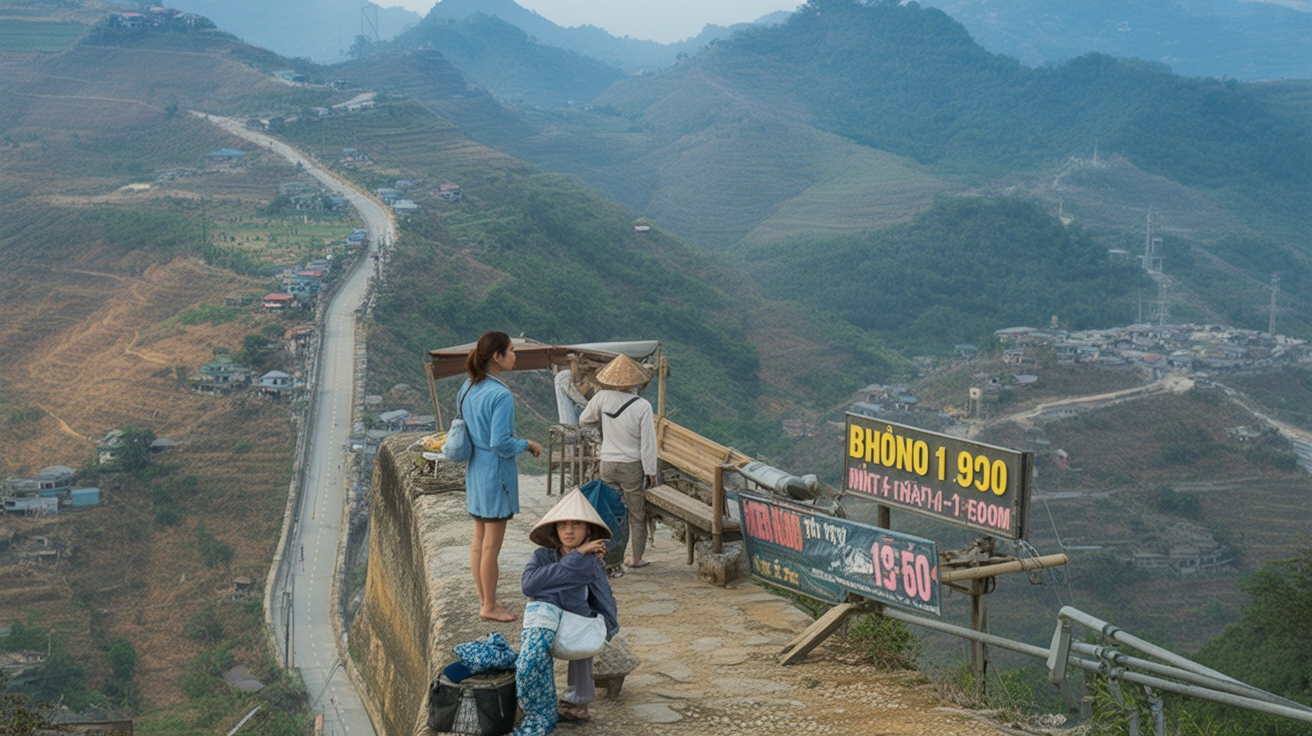
From Hanoi to the Chinese border is an eight-hour overnight bus in one direction. To Lao Cai (the gateway to Sapa) is another eight hours northwest. Ha Giang and Sapa are not neighbors — they’re in opposite directions from the capital.
The four anchors of any north Vietnam itinerary:
- Hanoi — capital, cultural base, controlled chaos that grows on you by day three
- Ninh Binh — limestone karst boat routes, no cruise ships, two hours south
- Ha Giang — the Loop, the H’mong villages, the most dramatic road in Vietnam, eight hours north
- Sapa — rice terraces, trekking, eight hours northwest by overnight train
Most travelers do Ha Giang or Sapa, not both. With three weeks, you can do both — comfortably, not crammed.
→WHO IT’S FOR
This itinerary is for independent travelers with 2–3 weeks who want depth over breadth. You’ll skip the beach entirely. You’ll spend time on mountain roads. You need to be comfortable with overnight sleeper buses, guesthouses with intermittent hot water, and occasional motorbike self-navigation. If you want guaranteed beach days, look at the full Vietnam itinerary instead.
The Route at a Glance
Two options below: the 10-day minimum and the 2-week version with Sapa. Both fly into Hanoi and fly out of Hanoi — no pressure to rush south.

Days 1–3: Hanoi — The City That Doesn’t Ease You In
Hanoi doesn’t ask permission. The airport taxi line is a negotiation before you’ve found your gate exit. The first motorbike nearly takes off your elbow as you cross the road. The bún bò Hà Nội (say: boon baw hah noy) arrives before you’ve figured out where to sit.
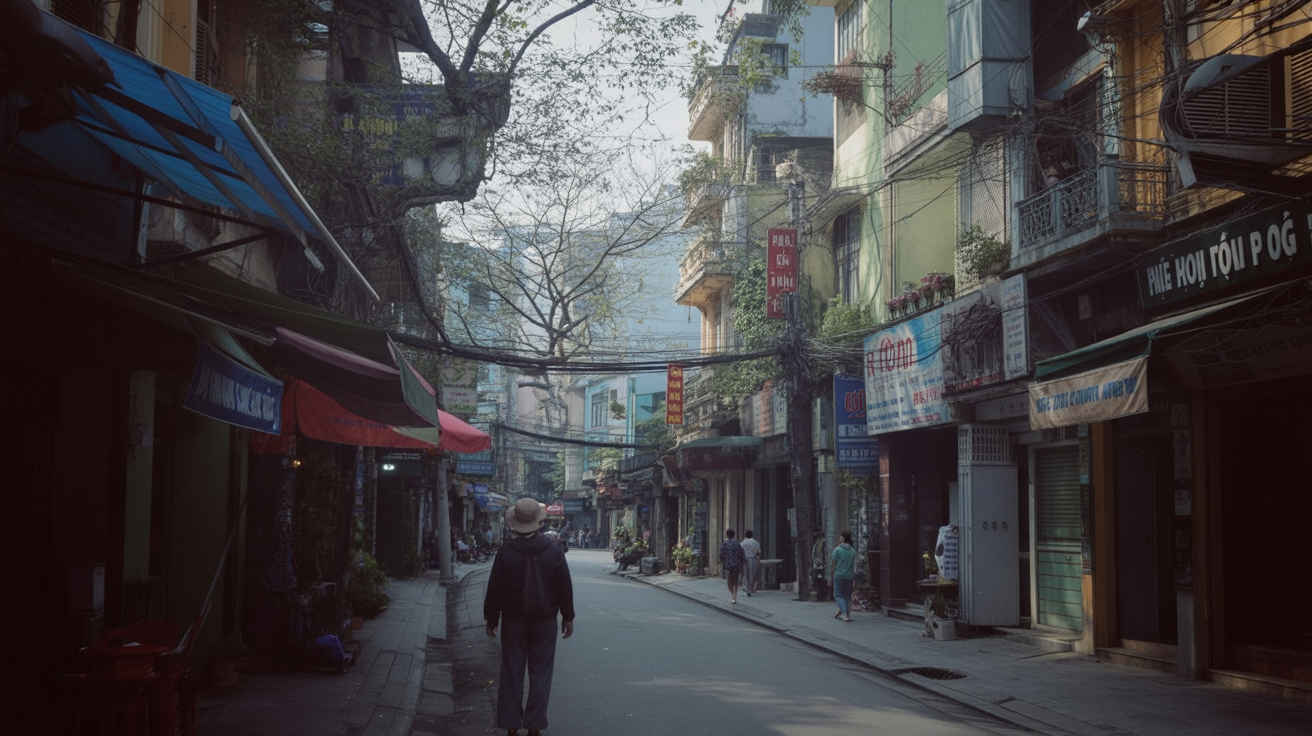
Three days here is the right amount. One day to absorb. One to explore. One to actually enjoy it without the anxiety of feeling behind.
Day 1: Land, drop bags, don’t plan anything. Walk from your guesthouse to Hoan Kiem Lake. Find a bún bò or bánh mì (say: ban mee) stall and eat on a plastic stool. Watch the traffic. Go to bed by 10pm. The Old Quarter at midnight is still fully operational, but you won’t appreciate it yet.
Day 2: Vietnamese Women’s Museum on Lý Thường Kiệt — genuinely good, not just politically interesting. Afternoon: walk Phan Đình Phùng, the tree-canopied colonial street that explains why certain colonizers never left. Evening: find a cà phê trứng (egg coffee, say: cah feh chung) place with a hand-lettered menu and four tables. Not the famous one on Đinh Tiên Hoàng — find a smaller room two streets back.
Day 3: Tây Hồ (West Lake) by bicycle at 6am before anyone else arrives. The water smells of morning rice cooking from the surrounding lanes. Trấn Quốc Pagoda at the south end: free to enter, thirty minutes maximum. Afternoon: book your Ninh Binh transport. A limousine van from the Old Quarter departs daily, 250,000 VND (~$10), door-to-door, about two hours.
↗Insider Tip
Pick one direction per day in Hanoi. The Old Quarter north-to-south on Hàng Gai and Hàng Bông takes an afternoon. The lake perimeter takes a morning. Trying to do everything at once means you see nothing — the city rewards slow walking, not ticking boxes.
For accommodation: mid-range guesthouses near Hoàn Kiếm Lake run 600,000–900,000 VND (~$23–34/night) for private rooms with AC. Dorms at 100,000–250,000 VND (~$4–10) if you want to meet people. See where to stay in Hanoi — neighborhood choice matters more than you think.
Days 4–5: Ninh Binh — Ha Long Bay Without the Boats
I almost skipped Ninh Binh. Ha Long Bay had more photos, more write-ups, more of everything. Then I went and realized: same limestone geology, minus 1,400 vessels and the floating souvenir shops.

Two nights. One full day of boats and temples. One early morning at Mua Cave before heading north.
Day 4: Arrive by noon. Check in near Tam Coc or Trang An village — not Ninh Binh city, which has nothing for travelers. Book the Trang An boat tour that afternoon: 200,000 VND (~$8) per person, three cave passages, temples carved into cliff faces at water level. The caves smell of limestone dust and cool damp air. Your rower paddles with their feet when they need both hands free. The whole circuit takes three hours.
Day 5: Hang Múa (Mua Cave, say: moo-ah) at dawn — entry 100,000 VND (~$4), 500 stone steps, views over the valley from the top that make the climb feel shorter than it was. Be down by 8am before the tour groups arrive. After: lunch in the village, then the overnight sleeper bus to Ha Giang.
⚠Real Talk
Trang An beats Tam Coc for most people — longer, goes through actual caves, quieter. I’ve written the full Tam Coc vs. Trang An comparison if you want the breakdown. Short version: do Trang An, skip the second boat tour, go climb Mua Cave instead.
Small guesthouses along the Trang An river road: 350,000–600,000 VND (~$13–23/night). More options in the Ninh Binh accommodation guide. Book the overnight bus to Ha Giang through your guesthouse — they know which operators run on time.
Days 6–9: Ha Giang Loop — The Part That Changes the Trip
I did the Ha Giang Loop in three days the first time. I’d read a blog that said “you can do it in 3 days” and believed it.
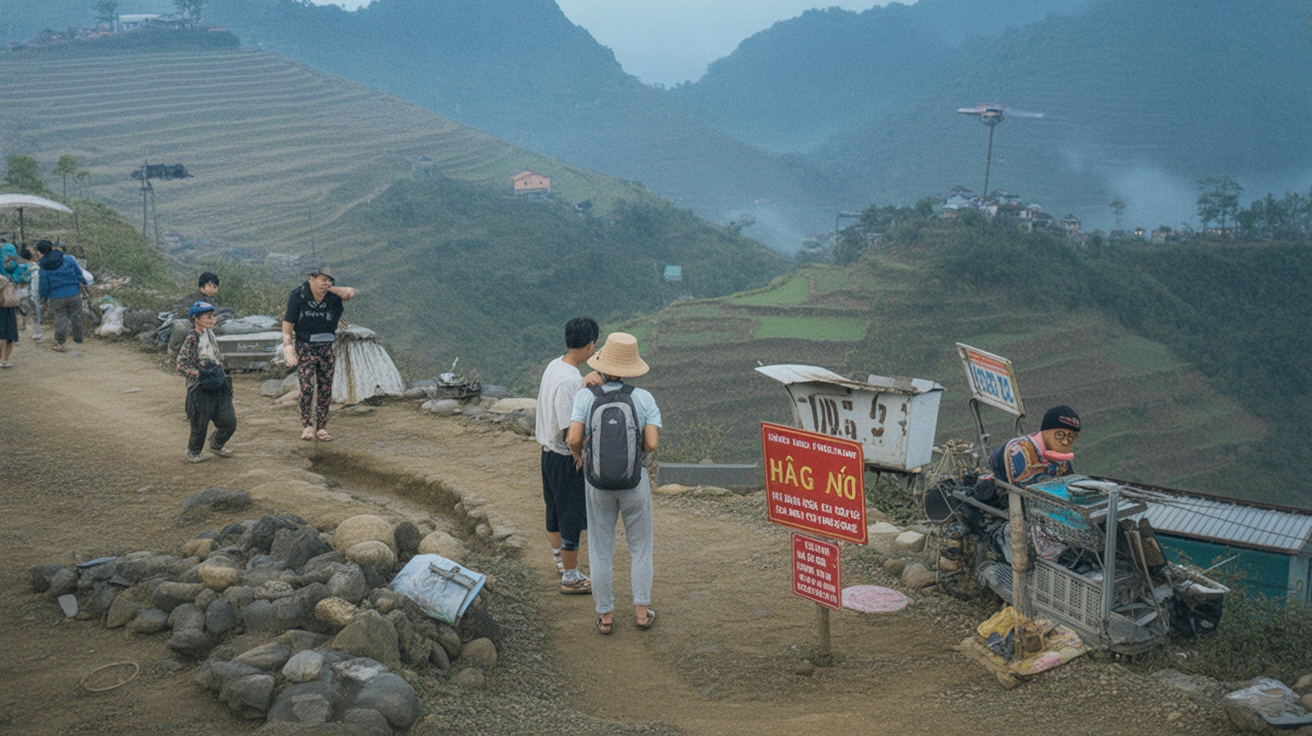
Technically correct. Practically, I arrived back in Ha Giang city with saddle sores, sunburned forearms, and the specific regret of having spent 40 minutes in Meo Vac (say: meh-oh vac) — a Sunday market town that deserved three hours — because I was behind schedule. I rushed the thing that should not be rushed.
The second time: four days, no fixed timeline past the overnight guesthouse bookings. Different trip entirely.
Day 6 (Ha Giang → Yen Minh, ~80km): Pick up your motorbike rental by 8am. Semi-automatic (110–125cc): 180,000–250,000 VND/day (~$7–10). Collect your restricted area permit from the Ha Giang police station on the way out: 250,000 VND (~$10), non-negotiable, 30–45 minutes. The road climbs immediately. By Quản Bạ Pass you’re above the cloud layer. Stop. Turn off the engine. Below: Twin Mountains emerging through the haze.
Day 7 (Yen Minh → Dong Van, ~50km): Shorter distance, slower pace. Đồng Văn old town (say: dong van) has a French colonial quarter that looks like it was placed here by accident and stayed by intention. Walk the perimeter at dusk when the light goes gold on the limestone. If the Sunday market aligns with your timing, add an extra hour.
Day 8 (Dong Van → Meo Vac, ~40km): Today includes Ma Pi Leng Pass (say: mah pee leng). Twenty kilometers of road between limestone towers, dropping 700 meters in four switchbacks, ending with the Nho Que River jade-green and completely still at the canyon floor. Stop at the top for thirty minutes. Take the Nho Que boat trip from Ta Lang Harbor at the bottom if you want to be inside the canyon itself.
Day 9 (Meo Vac → Ha Giang city, return): Meo Vac Sunday market at 7am — wood smoke from corn wine stills, H’mong women in indigo skirts sorting herbs, the specific din of two overlapping dialects. Don’t photograph without asking first. Return to Ha Giang city, catch the overnight bus back to Hanoi.
For full Ha Giang logistics: Ha Giang Loop guide. For motorbike specifics: Ha Giang motorbike rental guide. For real cost breakdown: Ha Giang budget.
ℹKnow Before You Go
Ha Giang requires a restricted area permit for foreign nationals (250,000 VND, ~$10). Collect it at the Ha Giang Police Department before starting the loop — it cannot be obtained online or in Hanoi. Your guesthouse in Ha Giang city handles the logistics and walks you through it. Budget 45 minutes at the station.
Days 11–14 (2-Week Version): Sapa — Trekking with Less Drama, More Views
After Ha Giang, Sapa feels like a different country. Not lesser — different. Where Ha Giang is raw and thin-tourism, Sapa has a tourist strip: Swiss-chalet hotels, English menus, cable car tickets. It can jar coming straight from the Loop.

What Sapa still has: genuinely excellent trekking, H’mong villages in the valley below town (increasingly visited but still real), and rice terraces in September–October that are fluorescent green in a way cameras underperform at capturing.
Klook has the widest selection for Vietnam and is usually the cheapest. KKday is strong on day trips and local experiences.
noi to Lao Cai (~8.5 hours), then shared minibus to Sapa (~45 min). Soft sleeper berths: ~600,000–900,000 VND (~$23–34). Book via Vexere or 12Go — weekends sell out fast.
What to do: A full-day trek through Lao Chai and Ta Van villages with a local H’mong guide: ~650,000–1,050,000 VND (~$25–40)/day including guide. The Fansipan cable car (entry ~700,000 VND, ~$27) is worth doing once for the panorama. The trekking is better. The guide matters more than the route.
⚠Real Talk
Sapa in peak season (October, Chinese New Year, Vietnamese summer school holidays) is genuinely crowded in town. The trekking gets you away from it. If the rice terraces are your reason — September to early October is non-negotiable. Brown terraces in November look like dirt. Timing is everything here.
Ha Giang vs. Sapa: If You Can Only Do One
The question I get most about this itinerary. Here’s the honest answer:
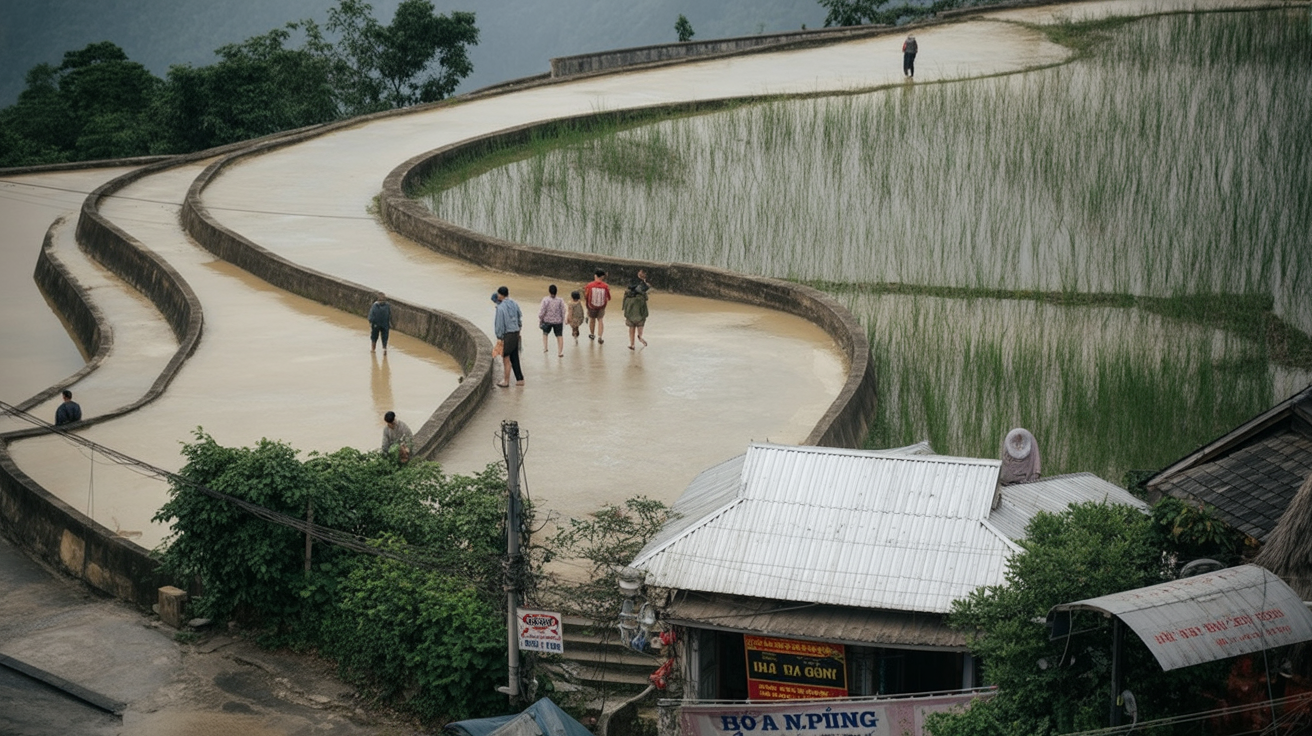
Travelers on r/VietnamTravel consistently describe Ha Giang as the more “life-changing” experience for independent travelers, while Sapa draws recommendations for people who prefer structured trekking and accessible infrastructure. Both are worth doing. Ha Giang wins on raw drama. Sapa wins on accessibility.
Transport Logistics: Getting Around the North
All northern transport runs through Hanoi. This is actually useful — you return to the same city between trips, and the airport is where you landed.

Hanoi → Ninh Binh: Limousine van, 250,000 VND (~$10), departs from Old Quarter hotels daily. ~2 hours. Book through your guesthouse. Don’t take the local bus — it takes three hours and drops you outside town. Full breakdown: Hanoi to Ninh Binh guide.
12Go covers most Vietnam routes — sleeper buses, trains, and island ferries. Compare schedules and book in advance during peak season (Dec–Feb, Jun–Aug).
Hanoi → Ha Giang: Overnight sleeper bus from Mỹ Đình Bus Station, 250,000–400,000 VND (~$10–15). Departs 8–9pm, arrives Ha Giang city 4–6am. Reliable operators: Bằng Phấn, Quang Tuyến, Mạnh Quân. Book via Vexere. More detail: Hanoi to Ha Giang transport guide.
Ha Giang → Hanoi: Return bus from Ha Giang bus station. Same operators, book the night before through your guesthouse.
Hanoi → Sapa: Overnight train to Lao Cai station (~8.5 hours), then shared minibus to Sapa (~45 min). Book Livitrans or Victoria Express for more reliable carriages. Tickets sell out fast on weekends and in October — book 1–2 weeks ahead.
North Vietnam Budget Breakdown
Best Time to Visit North Vietnam
North Vietnam has four distinct seasons and none of them are neutral. Getting the timing right changes the experience significantly — especially for Ha Giang, where road conditions and the specific colors of the landscape shift dramatically by month.
October–November (best overall): The golden window. Sapa rice terraces hit peak yellow-gold before harvest (early October). Ha Giang buckwheat flowers bloom in pink waves across the karst highlands (mid-October to mid-November). Temperatures in Hanoi drop to comfortable cycling weather. This is the month everyone wants — book Ha Giang guesthouses 2–3 weeks in advance.
March–April (second best): Spring flowers in Ha Giang, clear skies, temperatures rising but not yet brutal. Good for trekking in Sapa before the summer crowds. Hanoi is pleasant at 20–25°C. One caveat: peach and cherry blossoms in the north can be unpredictable by exact week — ask guesthouses for the current bloom status rather than trusting published estimates.
December–February (cold but manageable): Hanoi gets genuinely cold (10–15°C), which surprises most visitors. Ha Giang is colder still and may have fog that limits visibility on mountain passes. Sapa can drop near freezing at night. Worth going if your dates are fixed — the landscapes are still spectacular, just dress for it.
June–August (manageable but hot): Hanoi becomes a sauna — 35°C with humidity. Ha Giang roads after monsoon rains have occasional mudslides and reduced visibility. Sapa is cooler than the lowlands but sees heavy rain. Budget travelers come anyway because prices drop. If you’re going in summer, start riding Ha Giang by 7am before the afternoon heat.
Two things worth sorting before you land: a Vietnam eSIM so you have data the moment you clear customs, and travel insurance — medical costs for uninsured foreigners in Vietnam are significant.
Airalo eSIMs activate instantly. Buy before departure — airport SIM queues in Vietnam can take 30+ minutes.
Frequently Asked Questions — North Vietnam Itinerary
How many days do I need for north Vietnam?
A one-week north Vietnam trip means choosing one of the three main destinations and accepting you’ll miss the others. Ten days is the honest minimum for all three.
Should I do Ha Giang or Ha Long Bay?
Ha Giang is less expensive and more memorable for most independent travelers. Ha Long Bay is more famous. Both are in the north, but they’re not direct competitors — read the day trips from Hanoi guide for the Ha Long decision specifically.
Is Ha Giang Loop safe for solo riders?
Motorbike accidents on Ha Giang happen when people go too fast on unfamiliar roads in unfamiliar conditions. Four days means you’ve calibrated to the road quality by day two. Read the Ha Giang solo guide for the full safety breakdown.
What’s the best time of year for north Vietnam?
October–November is the standout window: rice harvest in Sapa, buckwheat flowers in Ha Giang, cool temperatures in Hanoi. March–April is second best — flowers, clear skies, before the heat. January–February is cold but manageable. June–August: Hanoi is sweaty, Ha Giang roads are muddier but passable. For Ha Giang timing specifically: Ha Giang best time guide.
Can I do north Vietnam without renting a motorbike?
Yes. For Ha Giang, easy riders (local guide-drivers) handle all the riding — you sit on the back. For Ninh Binh, a bicycle is sufficient for getting around the valley. For Sapa, trekking guides provide all transport within the trek. Renting your own motorbike is optional, not mandatory.